
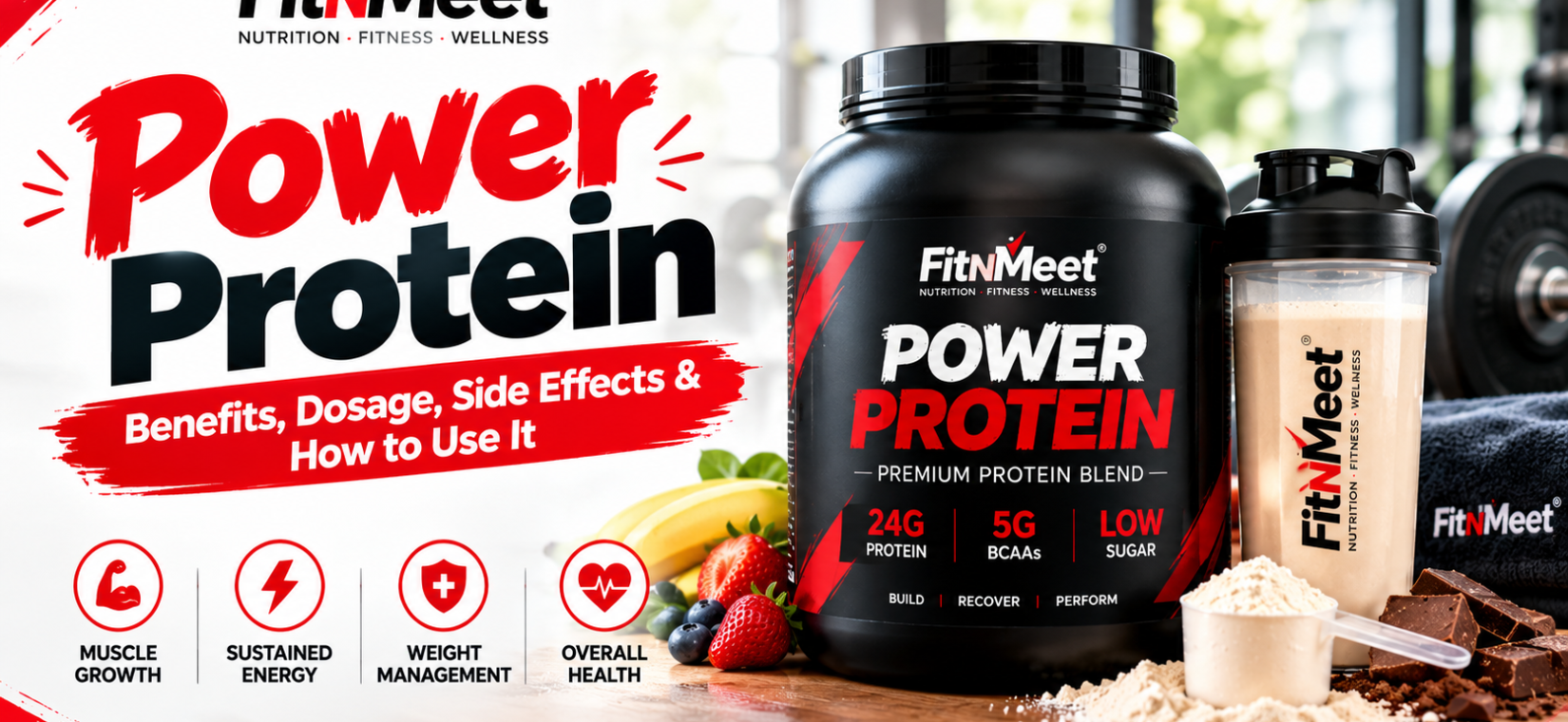
Power protein is a concentrated protein supplement — typically whey, casein, or plant-based powder — that helps active people hit daily protein targets for muscle repair and growth. A standard serving delivers 20 to 30 grams of complete protein, and research shows pairing it with resistance training and 1.6–2.2 g/kg of daily protein maximizes muscle gains.
Power protein in one sentence: a high-protein supplement that supplies the amino-acid building blocks your muscles need after training, filling the gap between what your diet provides and what your training demands.
What Is Power Protein?
Power protein is a concentrated protein supplement formulated to deliver a large amount of high-quality protein in a small, convenient serving. Most come as powders you mix with water or milk, though bars and ready-to-drink shakes fall under the same umbrella. A typical scoop provides 20 to 30 grams of protein and roughly 100 to 150 calories, making it one of the most efficient ways to raise your daily protein intake without cooking another meal.
The core ingredient in most formulas is whey protein — the liquid fraction of milk left over from cheese production. Whey is considered a “complete” protein because it contains all nine essential amino acids, and it is especially rich in leucine, the amino acid that triggers muscle protein synthesis. The body cannot store protein the way it stores fat or carbohydrate, so you need a steady daily supply; power protein exists to make that supply easier to hit.
Not all power protein is whey-based. Casein protein, another milk derivative, digests slowly over 6 to 8 hours and is popular before bed. Plant-based blends — usually pea, rice, soy, or a combination — serve people who avoid dairy, and modern blends match whey’s amino acid profile closely when formulated correctly. Egg-white and collagen powders exist too, though collagen is low in leucine and not ideal as a primary muscle-building protein. According to Wikipedia’s overview of protein supplements, these products are among the most widely used sports nutrition aids in the world.
What separates a power protein product from an ordinary protein snack is intent and concentration. A Greek yogurt might give you 15 grams of protein alongside fat and sugar; a single shake gives you 25 grams with minimal filler. That concentration is what makes it a tool rather than a treat — it is engineered for one job: delivering protein efficiently. Whether you are chasing hypertrophy, trying to preserve muscle while losing fat, or simply filling a dietary gap, the supplement is built to close that gap fast.
Why Power Protein Matters for Training and Recovery
Resistance training damages muscle fibers on a microscopic level. That damage is the stimulus for growth, but growth only happens if your body has enough protein to rebuild the fibers thicker and stronger than before. This rebuilding process, called muscle protein synthesis, stays elevated for 24 to 48 hours after a workout — and it runs on amino acids. Without enough dietary protein, you blunt the very adaptation you are training for.
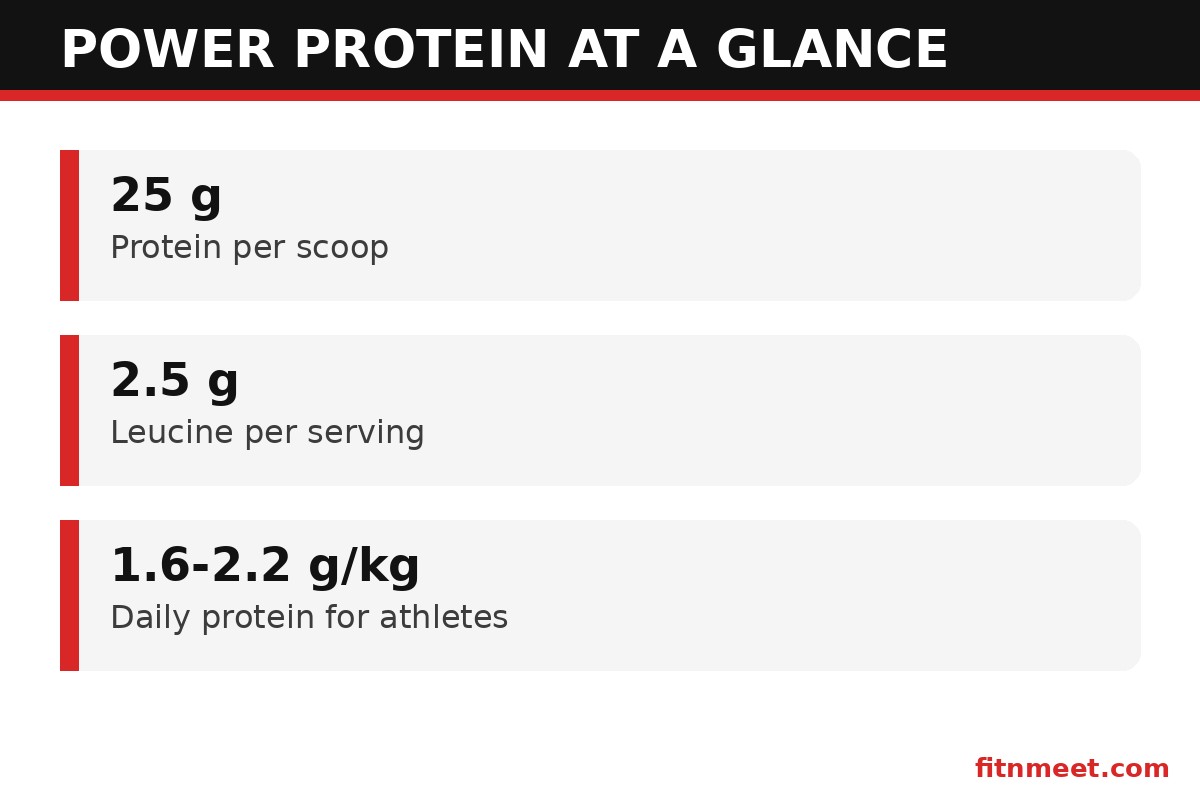
This is the central reason these concentrated supplements matter: most people underestimate how much protein training requires. The standard recommended dietary allowance is 0.8 grams per kilogram of body weight per day, but that figure is the minimum to avoid deficiency in sedentary adults — not the optimum for people who lift. A landmark meta-analysis by Morton and colleagues (2018), covering 49 studies and 1,863 participants, found that protein intakes up to 1.6 g/kg/day progressively increased muscle mass and strength gains from resistance training, with possible benefits up to 2.2 g/kg/day. For a 75 kg lifter, that means roughly 120 to 165 grams of protein daily — an amount that is genuinely hard to reach from whole foods alone, especially if you train early, work long hours, or eat smaller meals.
Power protein bridges that gap. One or two shakes per day can contribute 40 to 60 grams of protein — nearly half a lifter’s target — for the cost and effort of a glass of water. It is not magic; it is arithmetic. The supplement simply makes a high-protein diet practical.
Timing plays a secondary but real role. The old “30-minute anabolic window” has been softened by research — total daily intake matters far more than the stopwatch — but consuming power protein within 1 to 2 hours of training is still sensible practice, since muscle protein synthesis is elevated and amino acids are immediately useful. Many lifters use a shake post-workout for exactly this reason, and browse FitnMeet’s protein collection for options that fit their schedule.
Power Protein Benefits Backed by Science
The benefits of power protein are really the benefits of adequate protein intake, delivered conveniently.
- Greater muscle growth. The Morton et al. meta-analysis found that protein supplementation plus resistance training produced measurably more fat-free mass than training alone. It is simply the most convenient vehicle for that extra protein.
- Faster recovery between sessions. Higher protein intakes reduce markers of muscle damage and perceived soreness after hard training, letting you train again sooner. Whey-based formulas are particularly useful here because their rapid digestion delivers amino acids quickly when muscles need them.
- Muscle preservation during fat loss. When you diet, your body wants to shed muscle along with fat. Studies consistently show that keeping protein high — around 2.0 to 2.4 g/kg/day during a cut — preserves lean mass. A scoop or two makes hitting that elevated target realistic without blowing your calorie budget.
- Appetite control and satiety. Protein is the most satiating macronutrient. Trials show high-protein diets reduce spontaneous calorie intake by up to 400 calories per day in some people. A shake between meals can quietly suppress hunger.
- Bone and metabolic health. Adequate protein supports bone mineral density, especially in older adults, and high-protein diets improve glycemic control markers. These effects belong to protein itself — the powder is just a delivery system.
- Convenience that drives consistency. The unsexy truth: the best diet is the one you follow. A shake takes 30 seconds to prepare, travels anywhere, and removes the most common excuse for missing protein targets.
One honest caveat: if you already eat 1.6 g/kg/day or more from food, adding more powder will not build extra muscle on top. The supplement’s benefit is closing a dietary shortfall, not adding a pharmacological effect. Check your current intake first — track three typical days — before deciding you need a supplement at all.
How to Use Power Protein (Step-by-Step)
Getting the most from power protein is about routine, not ritual. Follow these steps:
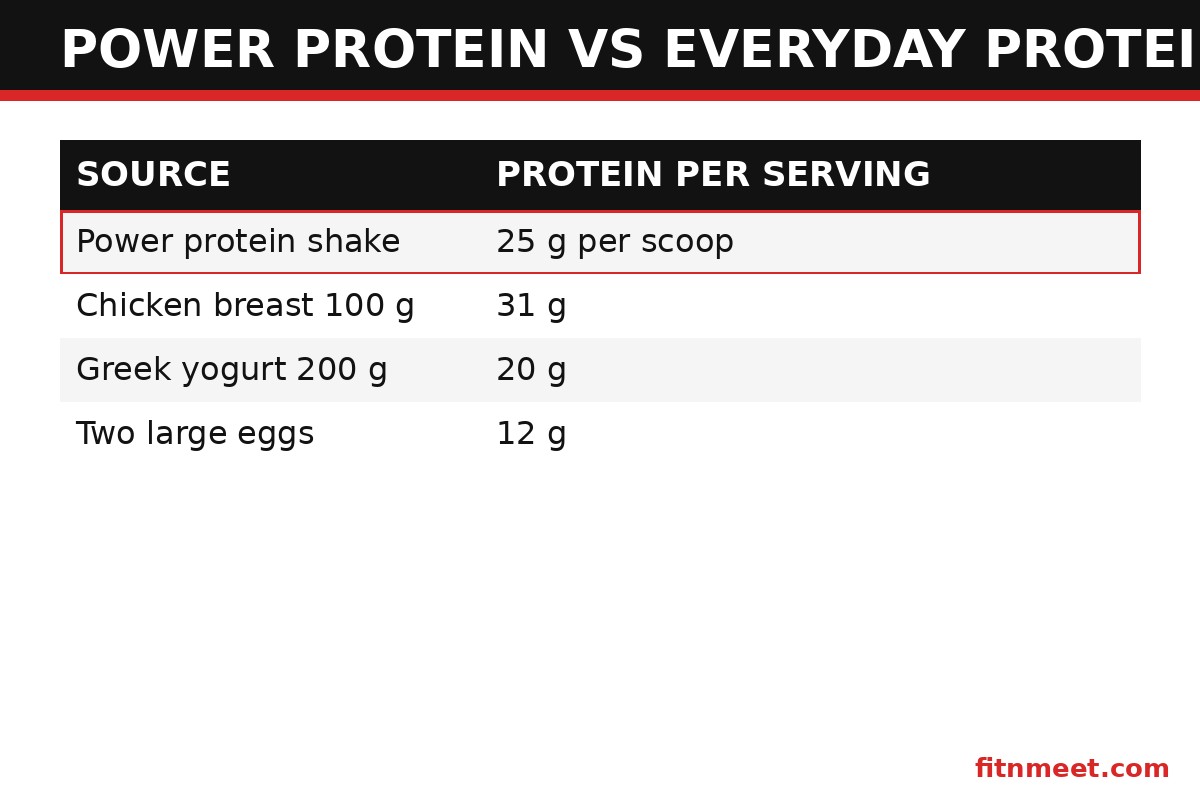
- Calculate your target. Multiply your body weight in kilograms by 1.6 (baseline for lifters) to 2.2 (hard gainers or dieters). A 70 kg lifter targets 112 to 154 grams daily. This is the number your servings should help you reach.
- Audit your food first. Log a normal day of eating. If you already hit your target from meals, you do not need power protein. If you land 40 to 60 grams short — the common case — one to two servings closes the gap.
- Pick the right type. Whey isolate or concentrate is the default for most lifters (fast-digesting, leucine-rich). Choose casein or a blend before bed. Pick a plant-based powder if you avoid dairy — look for one that lists a complete amino acid profile.
- Time it sensibly. Have one serving within 1 to 2 hours after training, mixed with water or milk. Use a second serving to replace a low-protein snack or breakfast gap. Total daily intake matters more than perfect timing.
- Mix for your goals. Cutting? Mix with water to keep calories near 120 per serving. Bulking? Mix with milk and add oats or a banana for an easy 400-plus-calorie shake.
- Stay consistent for 8 to 12 weeks. Muscle protein synthesis compounds over months, not days. Judge the supplement by whether your training log and measurements move over a full training block, not by how you feel after one shake.
Power Protein Dosage: How Much Do You Need?
Protein dosage has two layers: how much protein you need per day, and how many servings it takes to get there. Start with daily targets based on your goal:
| Goal | Daily protein target (per kg body weight) | For a 75 kg person |
|---|---|---|
| Sedentary maintenance | 1.0–1.2 g/kg | 75–90 g |
| Recreational lifting | 1.4–1.6 g/kg | 105–120 g |
| Serious muscle gain | 1.6–2.2 g/kg | 120–165 g |
| Fat loss (preserve muscle) | 2.0–2.4 g/kg | 150–180 g |
| Older adults (50+) | 1.2–1.6 g/kg | 90–120 g |
Per-serving, one scoop typically delivers 20 to 30 grams of protein. Most lifters use 1 to 2 servings per day — more is rarely necessary, since whole foods should still provide the majority of your intake. The U.S. National Institutes of Health’s dietary supplements for exercise fact sheet notes that protein needs for athletes range well above the standard RDA, and that supplements can help athletes meet those elevated needs.
Practical dosage example: a 75 kg lifter targeting 140 g/day eats roughly 90 g from meals. Two 25-gram shakes add 50 g, landing exactly on target. That is the whole dosage logic — measure the gap, fill the gap, do not exceed it by much. Chronically exceeding 2.5 g/kg/day offers no additional muscle benefit in the research and just costs money.
Power Protein Side Effects and Safety
Power protein is one of the most studied supplements in sports nutrition, and its safety profile is strong for healthy people. Whey protein has been consumed by humans for millennia as part of dairy, and concentrated forms have been studied in trials lasting up to a year without serious adverse effects. Still, a few issues are worth knowing:
- Digestive discomfort. The most common complaint — bloating, gas, or cramps — usually comes from lactose in whey concentrate or from sugar alcohols in flavored products. Switching to whey isolate (which is nearly lactose-free) or a plant-based powder typically resolves it.
- Kidney concerns. High protein intake does not damage healthy kidneys — this myth persists despite multiple studies finding no harm in people with normal kidney function. However, people with existing kidney disease should not increase protein without medical supervision.
- Calorie creep. Power protein shakes mixed with milk, peanut butter, and fruit can quietly become 600-calorie meals. If you are cutting, this is the real “side effect” to watch — track the full shake, not just the scoop.
- Heavy metal contamination. Independent testing has occasionally found trace heavy metals in some protein powders. Buying from manufacturers that publish third-party testing (NSF Certified for Sport or Informed Sport) is the practical safeguard.
- Not for infants or as a meal replacement for children. Power protein is formulated for active adults; children should get protein from food unless a pediatrician advises otherwise.
People with milk allergy (distinct from lactose intolerance) must avoid whey and casein entirely and choose plant-based options. Anyone with a medical condition should clear supplementation with their doctor first.
Power Protein vs Other Protein Sources
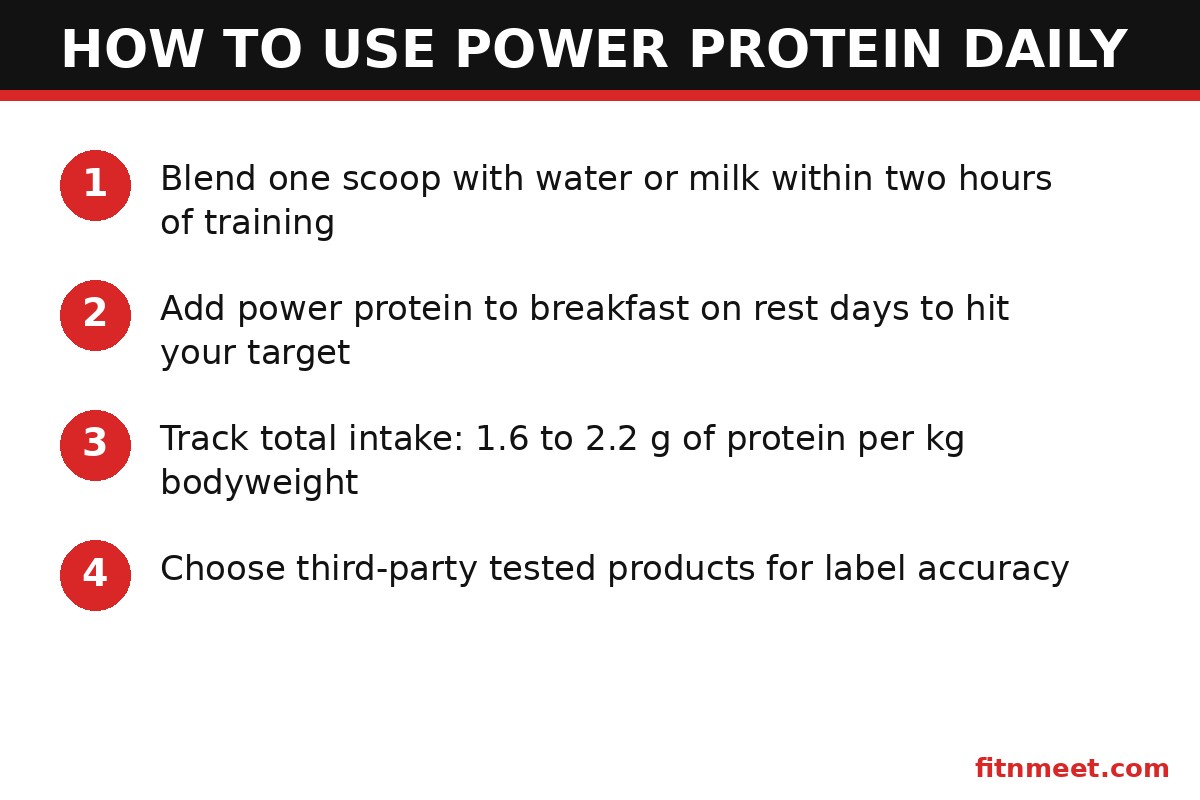
How does it compare to getting your protein from food or other supplements? The table below lays it out:
| Factor | Power Protein (whey) | Chicken Breast | Greek Yogurt | Eggs |
|---|---|---|---|---|
| Protein per serving | 25 g per scoop | 26 g per 100 g | 17 g per 170 g | 18 g per 3 large |
| Calories per serving | ~120 | ~165 | ~100 | ~210 |
| Leucine content | ~2.5 g (high) | ~2.0 g | ~1.5 g | ~1.6 g |
| Prep time | Under 1 minute | 20–30 minutes | None | 10 minutes |
| Cost per 25 g protein | Low (~$1) | Moderate | Moderate | Low |
| Portability | Excellent | Poor | Good | Poor |
The honest summary: whole foods win on micronutrients and satiety, while the supplement wins on convenience, cost per gram, and leucine density. The research-backed approach is to build your diet on whole foods and use shakes to fill the gaps — not to replace meals wholesale. Lifters serious about performance also pair their protein strategy with smart training fuel from FitnMeet’s sports nutrition range, since carbohydrates and hydration matter for workout quality too.
Alternatives to Power Protein
Power protein is a convenience product, not a necessity. Every gram of protein it provides can come from food if you plan for it. Solid alternatives include:
- Whole-food protein: chicken, turkey, fish, eggs, Greek yogurt, cottage cheese, lentils, and tofu. A 200 g chicken breast plus 250 g Greek yogurt already delivers around 70 grams of protein.
- Mass gainer shakes: for hard gainers who struggle to eat enough calories, gainers combine protein with carbohydrates — but check the sugar content, which can be excessive.
- Protein-fortified foods: high-protein oats, skyr, and protein bread can quietly add 10 to 20 grams per meal without any powder.
- Essential amino acid (EAA) supplements: lower in total protein but useful intra-workout for some athletes; they do not replace the total-protein contribution of power protein.
The decision is practical: if your schedule, appetite, or budget makes 140-plus grams of daily protein from food difficult, the powder earns its place. If you comfortably eat that much already, spend the money on better groceries — or on the training gear in FitnMeet’s shop — instead.
Frequently Asked Questions
What is power protein used for?
Power protein is used to help active people reach their daily protein targets for muscle growth, recovery, and muscle preservation during fat loss. A typical serving provides 20 to 30 grams of complete protein, making it a convenient way to close the gap between dietary intake and training demands.
How much power protein should I take per day?
Most lifters use 1 to 2 servings of power protein per day (20 to 60 grams of protein), sized to fill the gap between food intake and a daily target of 1.6 to 2.2 grams of protein per kilogram of body weight. Whole foods should still provide the majority of your protein.
When is the best time to take power protein?
Total daily intake matters more than exact timing, but having a serving within 1 to 2 hours after training is sensible since muscle protein synthesis is elevated. A second serving works well to replace a low-protein snack or to boost a light breakfast.
Is power protein safe for kidneys?
In healthy people, high protein intake from power protein does not damage the kidneys — multiple studies confirm this. However, people with existing kidney disease should not increase protein intake without medical supervision.
Can power protein help with weight loss?
Yes. Protein is the most satiating macronutrient, and keeping intake around 2.0 to 2.4 g/kg per day during a calorie deficit preserves muscle while you lose fat. A power protein shake can suppress hunger between meals without adding many calories when mixed with water.
Is whey or plant-based power protein better?
Whey power protein is slightly superior for muscle building due to its high leucine content and fast digestion. However, well-formulated plant blends (pea plus rice, for example) come close, and they are the better choice for anyone avoiding dairy.
Do beginners need power protein?
Beginners do not need power protein specifically, but they do need enough total protein — around 1.6 g/kg per day. If a beginner’s diet already provides that, a supplement adds nothing. If it falls short, power protein is a simple fix.
Conclusion
Power protein is not magic — it is concentrated, convenient protein, and its value is exactly that. For lifters who struggle to eat 1.6 to 2.2 grams of protein per kilogram daily from food alone, one or two shakes close the gap that would otherwise blunt muscle growth and slow recovery. Choose a third-party-tested product, dose it to your measured shortfall rather than by habit, and judge it over a full training block. To put the strategy into practice, browse FitnMeet’s whey protein isolate and the wider muscle development collection to find a protein powder option that fits your training.
This article is for informational purposes only and is not medical advice. Consult a healthcare professional before starting any supplement.