
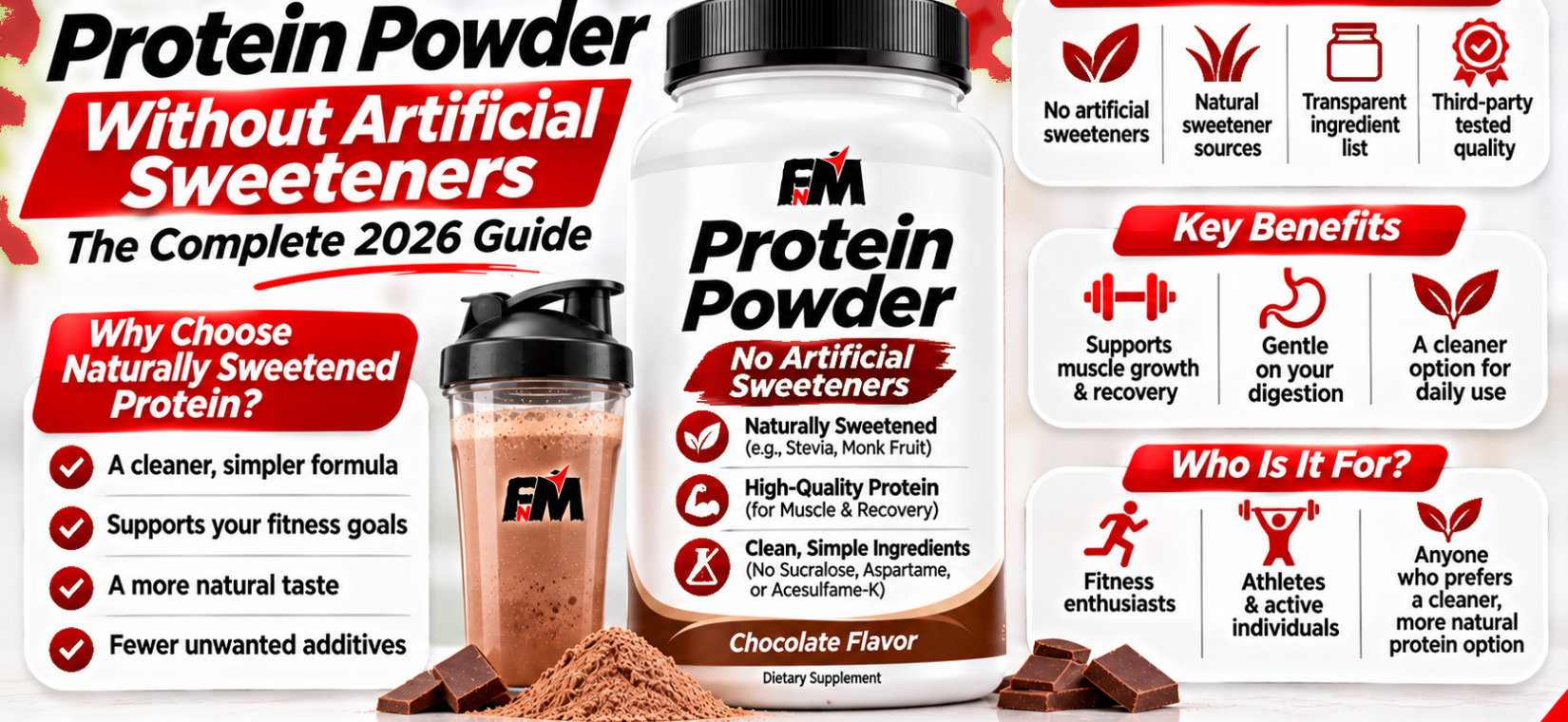
Protein powder without artificial sweeteners is protein powder sweetened with stevia, monk fruit, or left unsweetened instead of sucralose or acesulfame potassium. It suits people who dislike the aftertaste of artificial sweeteners or prefer cleaner labels. Unsweetened versions offer the most control, letting you add your own fruit or honey.
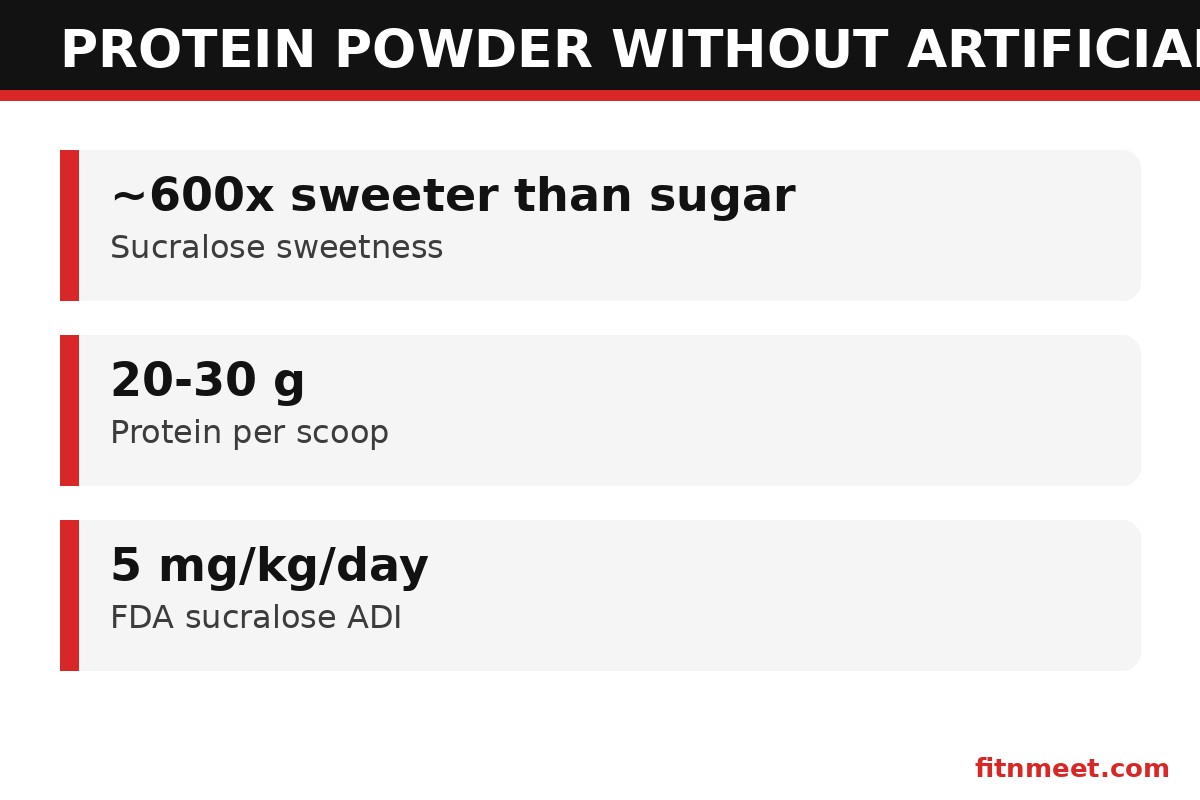
Stat snapshot: Sucralose is roughly 600 times sweeter than sugar; a single scoop of conventional protein powder can contain two or more artificial sweeteners. A quality protein powder without artificial sweeteners delivers 20–30 g of protein and 0 mg of sucralose, aspartame, or Ace-K per serving.
Key Stats Snapshot: Protein Powder Without Artificial Sweeteners
Before going deep, here are the headline numbers behind the shift toward protein powder without artificial sweeteners:
- Sweetener intensity: sucralose is about 600 times sweeter than sucrose, and acesulfame potassium (Ace-K) is about 200 times sweeter, which is why tiny amounts flavor an entire 30-gram scoop.
- Label reality: many mainstream protein powders list two or even three artificial sweeteners plus artificial flavors in a single product, according to typical supplement facts panels.
- FDA acceptable daily intake (ADI): the FDA sets the ADI for sucralose at 5 mg per kilogram of body weight per day — an amount most people never approach, but heavy multi-scoop users can get closer than they think.
- Protein target: the International Society of Sports Nutrition recommends 1.2–2.0 g of protein per kilogram of body weight daily for active individuals, which is why one or two shakes a day can make sense during training blocks.
- Natural swap: stevia leaf extract (steviol glycosides) and monk fruit extract (mogrosides) are the two most common natural sweeteners used in protein powder without artificial sweeteners, both carrying FDA GRAS status for their intended uses.
What Is Protein Powder Without Artificial Sweeteners?
A protein powder without artificial sweeteners is exactly what the name promises: a concentrated protein supplement — whey, casein, egg, soy, pea, or rice protein, or a blend — that is flavored or sweetened without synthetic high-intensity sweeteners. Instead, it relies on plant-derived sweeteners such as stevia and monk fruit, on real cocoa, vanilla extract, or fruit powders, or in some cases on no sweetener at all (unflavored powders).
To understand why this category exists, it helps to know what goes into conventional protein powder. Unflavored protein isolate tastes chalky and slightly bitter, so manufacturers sweeten flavored versions heavily. The cheapest way to do that is with artificial sweeteners: sucralose, acesulfame potassium, aspartame, and sometimes neotame. These are hundreds of times sweeter than sugar, dissolve well, survive processing, and add zero calories — all attractive to formulators. You can read how these substances work on Wikipedia’s sugar substitute overview.
The problem for many consumers is not that these sweeteners are proven dangerous at normal doses — regulators consider them safe within ADI limits — but that some people dislike the aftertaste, experience digestive discomfort, or simply prefer fewer synthetic ingredients in products they consume daily for years. Surveys of supplement buyers consistently show “clean label” as a top purchasing driver, and protein powder without artificial sweeteners is the industry’s direct answer to that demand.
It is important to understand what the label claims actually mean. In the United States, “no artificial sweeteners” is not a tightly regulated front-of-pack claim like “low fat,” so shoppers must verify by reading the ingredient list. A legitimate protein powder without artificial sweeteners will show its sweetener source clearly — “stevia leaf extract,” “monk fruit extract,” or “unsweetened” — and will not hide sucralose, Ace-K, or aspartame behind “flavor systems” or “natural and artificial flavors.” If a label says “no artificial flavors” but still lists sucralose, it is not what you are looking for.
Browse FitnMeet’s protein collection to compare formulas side by side, and check individual ingredient panels rather than trusting front-label marketing alone.
Benefits of Protein Powder Without Artificial Sweeteners
Switching to a protein powder without artificial sweeteners changes very little about the core nutrition — you still get a complete or complementary amino acid profile depending on the source — but it changes the sweetener experience meaningfully. Here are the documented benefits, each with the evidence behind it.
0 mg
Artificial sweeteners per serving in a true protein powder without artificial sweeteners — no sucralose, no Ace-K, no aspartame.
20–30 g
Protein per typical scoop, identical to conventional flavored powders — the sweetener change does not reduce protein content.
5 mg/kg/day
FDA ADI for sucralose. A 70 kg adult’s ADI is 350 mg/day — a single scoop contains roughly 30–60 mg, so heavy users of multiple servings plus other sweetened foods can accumulate a meaningful fraction.
1. No synthetic sweetener aftertaste
The most commonly cited benefit is taste. Sucralose and Ace-K leave a lingering metallic or overly sweet aftertaste that a significant minority of consumers find unpleasant. Stevia and monk fruit have their own taste profiles — stevia can be mildly bitter at high doses, monk fruit tends to be cleaner — but many people find them easier to drink daily for months or years.
2. Fewer reported digestive complaints
Some users report bloating or digestive discomfort with products heavy in artificial sweeteners and sugar alcohols (many “no sugar” powders pair sucralose with sugar alcohols like erythritol or maltitol). A protein powder without artificial sweeteners that uses modest amounts of stevia or monk fruit typically contains fewer total sweetening agents, and anecdotal reports suggest better tolerance, though controlled trials on this specific comparison are limited.
3. Aligns with clean-label eating patterns
People who eat mostly whole foods often apply the same standard to supplements. A protein powder without artificial sweeteners fits naturally into whole-food, paleo-leaning, or minimally processed eating styles because the sweetener ingredients — stevia leaf, monk fruit — are minimally processed plant extracts rather than synthesized molecules.
4. Easier to use in cooking and baking
Unflavored or naturally sweetened powders blend better into oatmeal, smoothies, and baked goods where artificial sweetener bitterness can intensify under heat. Whey isolate powders without sucralose are a favorite for protein pancakes and overnight oats.
5. Same muscle-building support
The protein itself does the work of muscle protein synthesis, and the sweetener type does not change the amino acid profile. Whey isolate without artificial sweeteners supports recovery just as effectively as whey with them — the ISSN’s protein recommendations apply identically.
Shopping for protein? Compare whey isolates, plant-based blends, and naturally sweetened options in the FitnMeet protein collection — and always check the ingredient panel for sucralose, Ace-K, or aspartame before you buy.
How It Works: Sweeteners in Protein Powder
To choose well, you need to know how sweeteners function in a protein powder without artificial sweeteners versus a conventional one. The core engineering challenge is the same: protein isolate tastes bad on its own, so formulators need something that masks chalkiness and bitterness at very low cost and calorie impact.
Artificial sweeteners (sucralose, Ace-K, aspartame) bind intensely to sweet taste receptors, so a few dozen milligrams do the job of several grams of sugar. They are heat-stable and cheap, which is why they dominate the mainstream market. Sucralose is made by chlorinating sucrose; Ace-K is a potassium salt of a synthetic compound. Neither contributes calories at the doses used, and both are excreted largely unchanged.
Natural high-intensity sweeteners work on the same taste receptors but come from plants. Steviol glycosides from Stevia rebaudiana leaves are 200–350 times sweeter than sugar; mogrosides from monk fruit (Siraitia grosvenorii) are 100–250 times sweeter. Both are recognized by the FDA as generally recognized as safe (GRAS) for use in foods and beverages, and both are heat-stable enough for baking. The FDA’s overview of high-intensity sweeteners permitted in food covers both artificial and natural options with their regulatory status.
Unsweetened protein powder skips sweeteners entirely — the most minimal option. It is the purest form of protein powder without artificial sweeteners and gives you full control: add banana, honey, cocoa, or dates yourself. The trade-off is taste when mixed with water alone; most unsweetened users blend it into smoothies or oatmeal.
One more nuance: “naturally flavored” is not the same as “naturally sweetened.” A powder can claim natural flavors while still containing sucralose — flavors and sweeteners are separate ingredient categories on the label. The only reliable check is the full ingredient list.
Dosage and Usage: How to Use Protein Powder Without Artificial Sweeteners
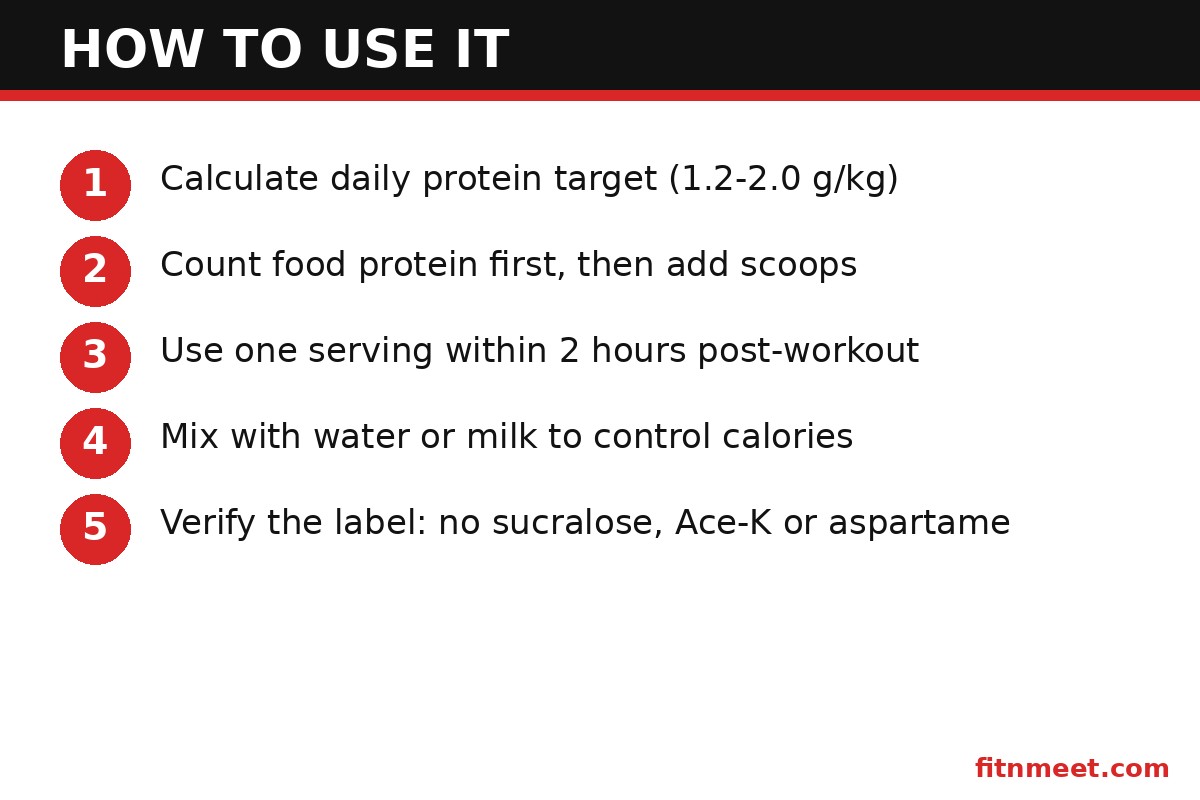
Dosage works exactly like any protein powder — the sweetener difference does not change serving logic. Follow this checklist to use a protein powder without artificial sweeteners correctly:
- ☐ Calculate your daily target. Active adults: 1.2–2.0 g protein per kg body weight. A 75 kg lifter needs roughly 90–150 g/day; the NIH’s protein guidance (ODS fact sheet on protein for athletes) aligns with this range.
- ☐ Count food protein first. If your meals already provide 100 g, one 25 g scoop closes the gap; if they provide 60 g, you may need two scoops.
- ☐ Time one serving post-workout. 20–40 g within 2 hours of training supports muscle protein synthesis; total daily intake matters more than exact timing.
- ☐ Mix with water or milk. Water keeps calories at ~110–130 per scoop; milk adds 8 g protein and ~150 calories per cup.
- ☐ Check the sweetener line. Confirm “stevia leaf extract,” “monk fruit extract,” or “unsweetened” — and no sucralose, acesulfame-K, or aspartame.
- ☐ Start with one serving daily. Assess taste and tolerance for a week before adding a second scoop.
For lifters comparing formulas, FitnMeet’s whey protein isolate is a good reference for what a clean ingredient panel looks like — high protein per scoop, minimal extras.
Comparisons: Protein Powder Without Artificial Sweeteners vs Alternatives
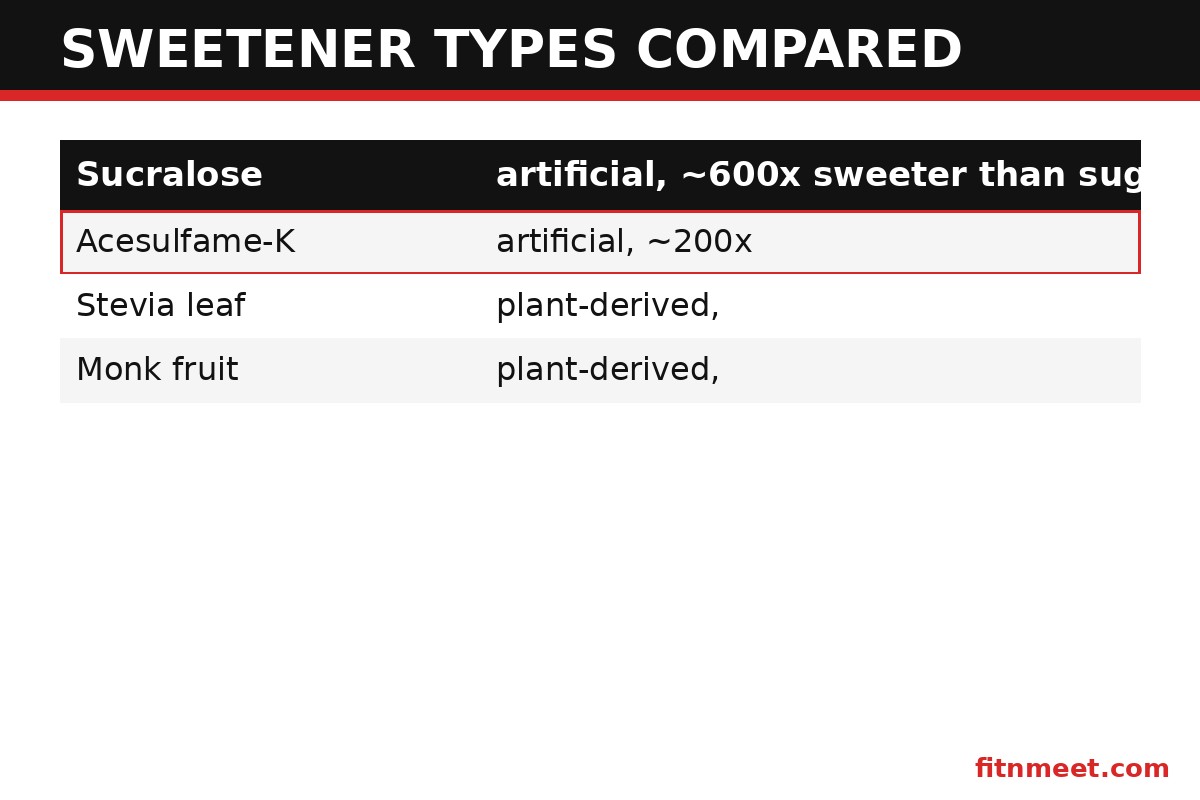
| Sweetener | Type | Sweetness vs sugar | Calories | Aftertaste notes |
|---|---|---|---|---|
| Sucralose | Artificial | ~600× | 0 | Clean for most, chemical note for some |
| Acesulfame-K | Artificial | ~200× | 0 | Slightly bitter/metallic at higher doses |
| Aspartame | Artificial | ~200× | ~0 | Not heat-stable; rarely in powders now |
| Stevia leaf extract | Natural | 200–350× | 0 | Mild herbal/bitter note if overdosed |
| Monk fruit extract | Natural | 100–250× | 0 | Cleanest taste profile of the naturals |
| None (unsweetened) | — | — | 0 | Plain/chalky; best blended into food |
Protein powder without artificial sweeteners vs conventional powder: nutritionally near-identical (same protein grams, similar calories); the difference is entirely in sweetener ingredients and taste. Choose unsweetened if you want zero sweetener of any kind; choose stevia/monk fruit if you want flavored without synthetics.
Protein powder without artificial sweeteners vs sugar-sweetened powder: sugar-sweetened powders add 10–20 g of sugar per scoop — 40–80 extra calories and a blood-sugar spike. Natural zero-calorie sweeteners avoid both, making them the better daily-driver choice for most goals.
Side Effects and Safety of Protein Powder Without Artificial Sweeteners
Protein powder itself is safe for healthy adults at recommended intakes; side effects almost always come from excess total protein, lactose (in whey concentrate), or additives — not from the absence of artificial sweeteners.
- Stevia safety: high-purity steviol glycosides are GRAS per the FDA; the ADI set by JECFA is 4 mg/kg/day (steviol equivalents). Normal protein-powder use stays far below this.
- Monk fruit safety: mogroside extracts are GRAS with no established ADI limit, reflecting a strong safety profile at food-use levels.
- Digestive tolerance: some stevia-sweetened products can cause mild bloating in sensitive users; monk fruit is generally the gentlest.
- Protein excess: consistently exceeding 2.2 g/kg/day offers no extra benefit and can displace other nutrients; people with kidney disease should consult a doctor before high-protein supplementation.
- Lactose: whey concentrate contains some lactose; lactose-sensitive buyers should choose whey isolate or plant-based protein powder without artificial sweeteners.
One honest caveat: “natural” does not automatically mean healthier. A protein powder without artificial sweeteners that still contains 15 g of added sugar per scoop is worse than a sucralose-sweetened one for most goals. Judge the full nutrition panel — protein, sugar, calories, ingredients — not the marketing claim alone.
Alternatives to Protein Powder Without Artificial Sweeteners
- Unflavored whey isolate: the purest option — protein only. Sweeten yourself with fruit or honey. See FitnMeet’s whey isolate options for reference.
- Whole-food protein: Greek yogurt (15–20 g per cup), eggs (6 g each), chicken breast (26 g per 3 oz) — no label-reading required.
- Egg white protein powder: naturally neutral-tasting, dairy-free, and easy to find unsweetened.
- Collagen peptides: unflavored by nature; note it is not a complete protein, so it complements rather than replaces whey. Browse the FitnMeet shop for everyday staples.
Frequently Asked Questions About Protein Powder Without Artificial Sweeteners
What is protein powder without artificial sweeteners?
Protein powder without artificial sweeteners is a protein supplement flavored with natural sweeteners like stevia leaf extract or monk fruit extract (or left unsweetened) instead of synthetic sweeteners such as sucralose, acesulfame potassium, or aspartame. It provides the same 20-30 grams of protein per serving as conventional powders.
Is protein powder without artificial sweeteners healthier?
It avoids synthetic sweeteners that some consumers prefer to limit, and regulators consider both artificial and natural sweeteners safe within established daily limits. The biggest health factor is still the protein content, sugar, and calories on the label, so read the full nutrition panel.
What natural sweeteners are used in protein powder without artificial sweeteners?
The two most common are stevia leaf extract (steviol glycosides, 200-350x sweeter than sugar) and monk fruit extract (mogrosides, 100-250x sweeter than sugar). Both have FDA GRAS status. Some products also use small amounts of coconut sugar, honey powder, or fruit powders.
Does protein powder without artificial sweeteners taste worse?
Taste is subjective. Many people prefer the cleaner flavor of stevia or monk fruit over the metallic aftertaste some notice with sucralose or Ace-K. Stevia can taste slightly bitter if overused, so well-formulated products balance the dose carefully.
How do I verify a protein powder has no artificial sweeteners?
Read the ingredient list, not the front label. Look for stevia leaf extract, monk fruit extract, or an unsweetened formula, and confirm there is no sucralose, acesulfame potassium (Ace-K), aspartame, or neotame anywhere in the ingredients.
How many scoops of protein powder without artificial sweeteners per day?
Most active adults need 1.2-2.0 g of protein per kg of body weight daily. One or two scoops (20-50 g protein) per day is typical, depending on how much protein your meals already provide. One serving post-workout is the most common pattern.
Is unsweetened protein powder the same as protein powder without artificial sweeteners?
Unsweetened powder is a subset: it contains no sweetener of any kind. A protein powder without artificial sweeteners may still contain natural sweeteners like stevia or monk fruit. Choose unsweetened for total control, or naturally sweetened for ready-to-drink flavor.
Conclusion
A protein powder without artificial sweeteners gives you the same muscle-supporting protein as conventional powders — 20–30 g per scoop — while swapping sucralose and Ace-K for stevia, monk fruit, or nothing at all. Read the ingredient list carefully, match servings to your 1.2–2.0 g/kg daily target, and judge the whole nutrition panel rather than one marketing claim.
Ready to upgrade your shake? Browse FitnMeet’s protein collection and check ingredient panels side by side — and explore the sports nutrition range for everything else your training needs.
Disclaimer: This article is for informational purposes only and is not medical advice. Consult a qualified healthcare professional before starting any supplement, especially if you are pregnant, breastfeeding, managing a medical condition such as kidney disease, or taking medication.