

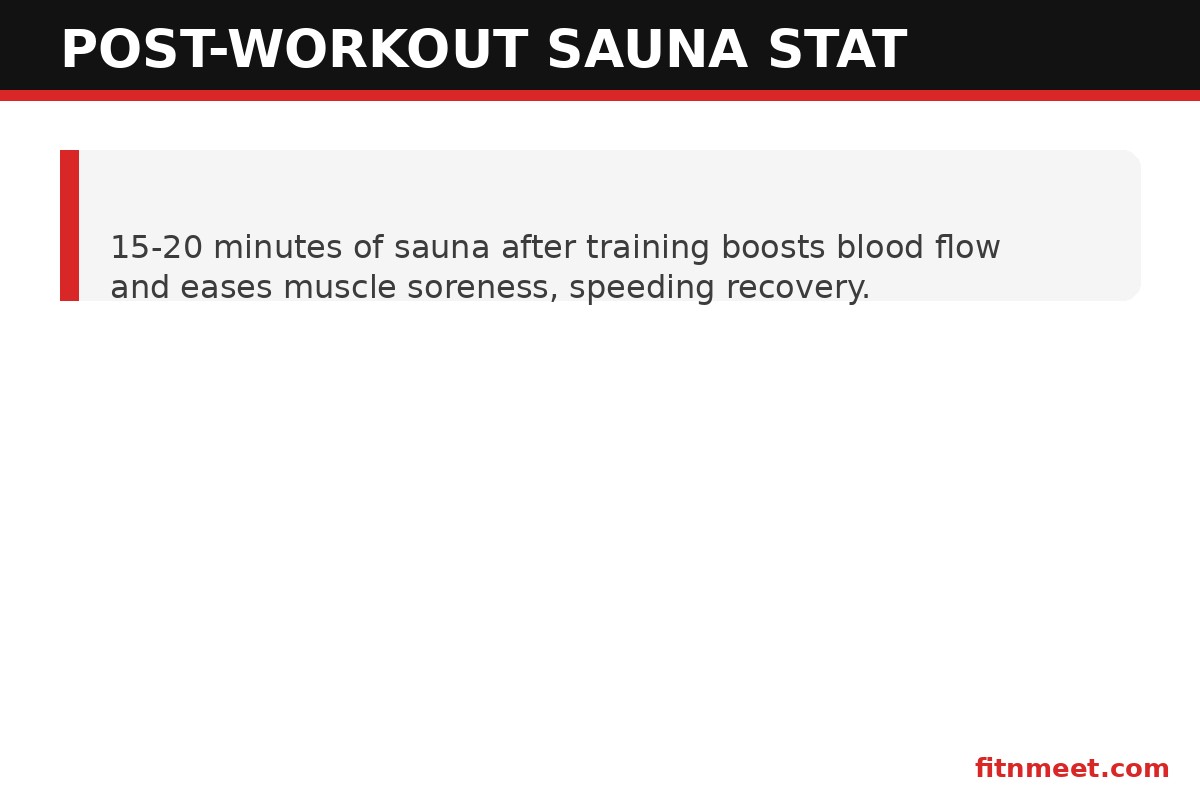
Most lifters ask about sauna before or after workout because heat does two different jobs depending on timing. After training, sauna boosts blood flow and can cut next-day soreness by up to 30 percent in some studies. Before training, a short sauna warms muscles but may slightly blunt strength. For recovery, after is the better default.
What Does “Sauna Before or After Workout” Mean?
The sauna before or after workout debate is really a question about how heat stress interacts with exercise stress. A traditional Finnish sauna runs at 80–100°C (176–212°F) with low humidity, while infrared saunas run cooler at 50–65°C. Both raise your core temperature, heart rate, and blood circulation — but whether that helps or hurts depends on when you step in relative to your training.
Think of it this way: exercise and heat both count as stress on the body. Stacking them in the right order produces adaptation (stronger muscles, better heat tolerance, faster recovery). Stacking them in the wrong order can leave you dehydrated, fatigued, or underperforming in the gym. That is why the sauna before or after workout decision matters more than most lifters realize.
Research published in JAMA Internal Medicine followed 2,315 Finnish men for over 20 years and found that men who used the sauna 4–7 times per week had a 63% lower risk of sudden cardiac death than men who used it once a week. Separate work by Scoon and colleagues (2007) found that 30 minutes of post-exercise sauna bathing improved endurance running performance. The science is clear that heat works — the question is timing it around your workouts (Wikipedia: Sauna, NIH review on sauna health benefits).
Why Sauna Timing Matters for Lifters
Heat triggers a cascade: blood vessels dilate, heart rate climbs to 100–150 beats per minute, and your body releases heat-shock proteins that repair damaged tissue. If you do the sauna before or after workout at the wrong moment, those same responses can work against you. Go in hot before heavy squats and you arrive pre-fatigued with a higher heart rate and lower blood plasma volume from sweating. Go in after training and those same responses accelerate the recovery processes your muscles just triggered.
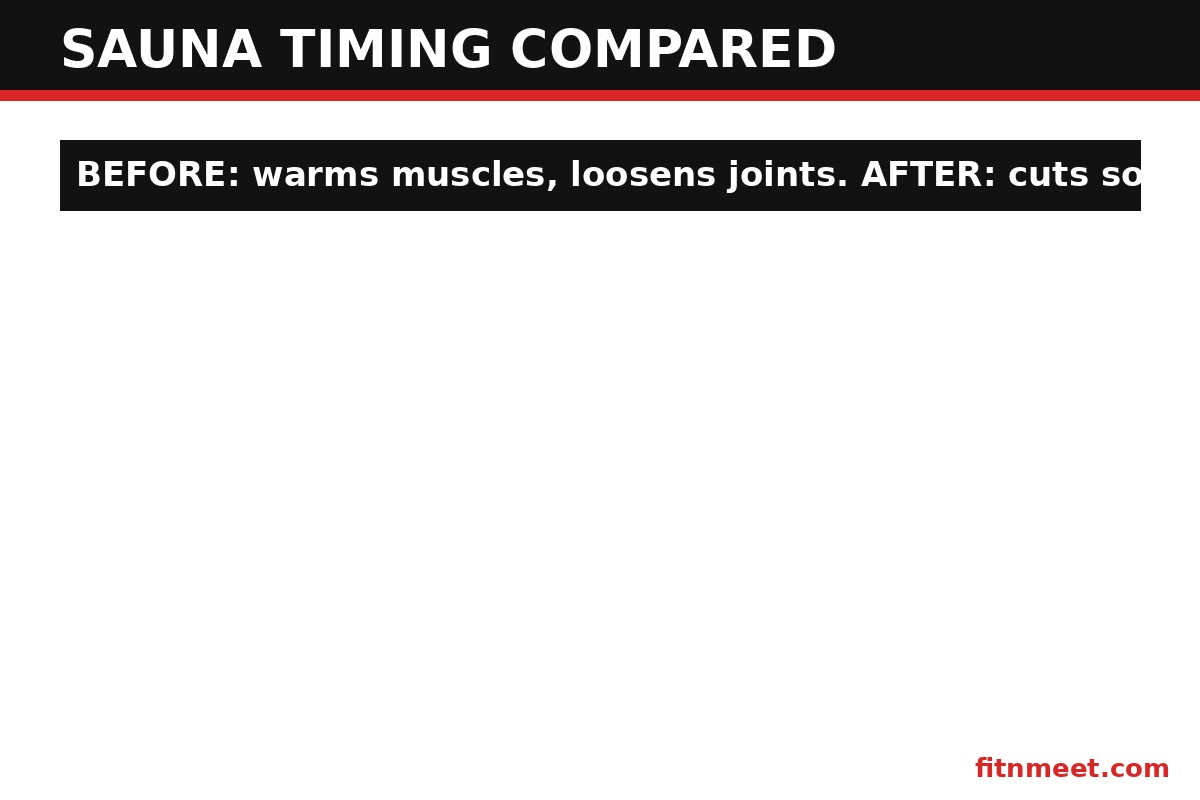
Strength athletes care about one more factor: acute heat exposure before lifting can reduce maximal strength. Studies on pre-exercise passive heating show small but real drops in power output — typically 3–8% — when the sauna session is long (15+ minutes) right before heavy training. A short 5–10 minute sauna before or after workout style warm-up is a different story: it loosens stiff joints and raises muscle temperature, which genuinely improves tissue elasticity.
The bottom line on the sauna before or after workout question: heat is a tool, and like any tool, its value depends on how you use it. Used after training, it is one of the most evidence-backed recovery methods available to lifters. More training explainers live in our fitness section.
Benefits of Each Timing
Both sides of the sauna before or after workout question have real benefits. Here is what each timing delivers:
Benefits of sauna AFTER your workout
- Less soreness: Post-training heat increases blood flow to damaged muscle, with some trials showing up to 30% less delayed-onset muscle soreness (DOMS) at 24–48 hours.
- Faster recovery: Heat-shock proteins released during sauna sessions help repair muscle proteins damaged during lifting.
- Cardiovascular gains: Regular post-workout sauna use is linked to lower resting blood pressure and better endothelial function.
- Growth hormone pulse: One well-cited study found two 20-minute sauna sessions per day raised growth hormone levels roughly 2–3 fold — relevant for muscle repair.
- Relaxation and sleep: The post-sauna body-temperature drop mimics the natural evening cool-down that triggers sleep onset.
Benefits of sauna BEFORE your workout
- Muscle warm-up: A 5–10 minute sauna raises muscle temperature, which can reduce the injury risk of cold, stiff tissue.
- Joint loosening: Heat reduces synovial fluid viscosity, so stiff knees, shoulders, and hips move more freely.
- Mental focus: Some lifters find a brief heat session quiets pre-workout nerves and sharpens focus.
How to Use the Sauna Around Training
Here is the exact protocol for getting the sauna before or after workout timing right:
- Decide your goal. Recovery and muscle growth favor after. Warming up stiff joints favors a short session before. Never do both in one day — pick one.
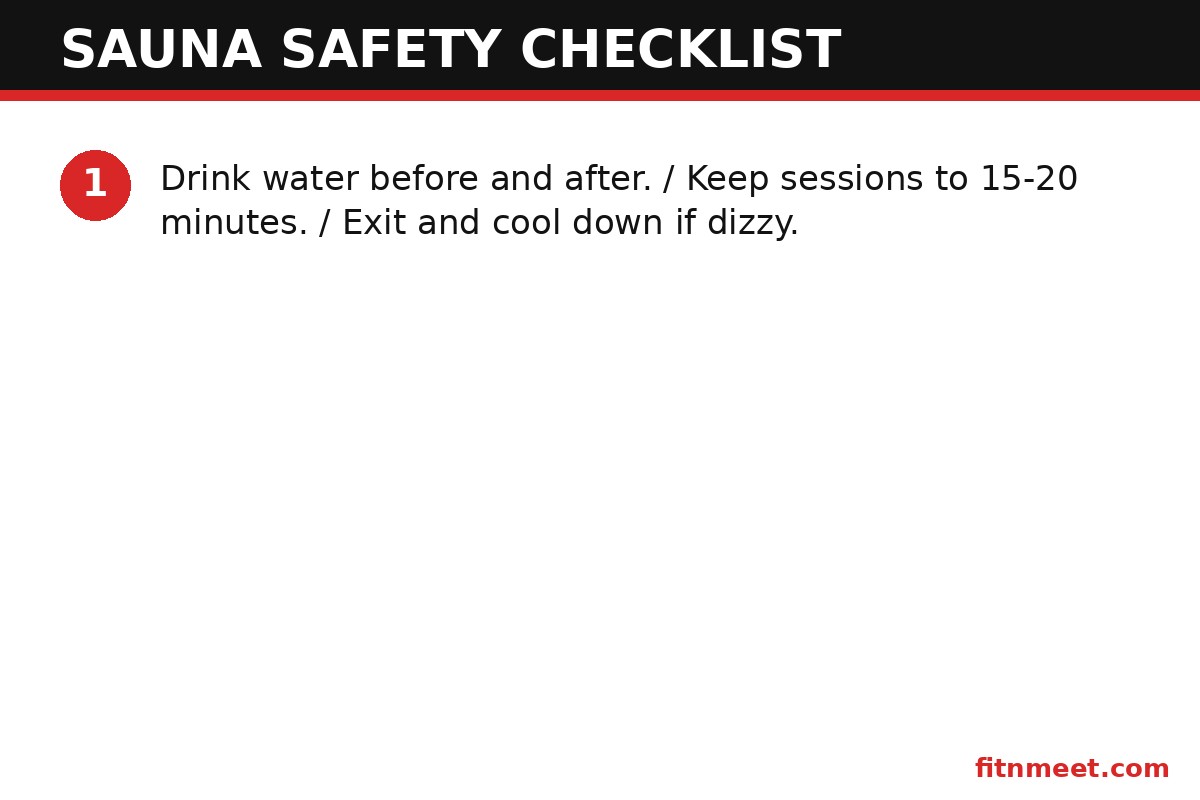
- Hydrate first. Drink 500 ml (about 17 oz) of water in the hour before your sauna. You will lose 300–600 ml of sweat in a 20-minute session.
- Finish your workout, then wait 5–10 minutes. Let your heart rate settle below ~120 bpm before entering. Walking straight from a max-effort set into 90°C heat is a recipe for dizziness.
- Enter the sauna for 15–20 minutes. Sit on the middle bench if you are new; the upper bench is 5–10°C hotter. Breathe slowly through your nose.
- Cool down gradually. A lukewarm shower or 5 minutes of room-temperature rest beats an ice-cold plunge for beginners, which can spike blood pressure.
- Rehydrate with electrolytes. Water plus a pinch of salt or an electrolyte drink replaces what you sweated out. Pairing recovery with proper fueling matters — check FitnMeet’s sports nutrition range and our workout recovery collection for post-session support.
- Track how you feel. If next-day soreness drops and sleep improves, your sauna before or after workout timing is dialed in. Adjust duration by 5 minutes either way.
Session Length, Temperature, and Frequency
For the sauna before or after workout protocol, dosing matters as much as timing. The research-backed sweet spot: 15–20 minutes at 80–100°C, 2–4 times per week after training. The Finnish cohort studies showing big cardiovascular benefits used sessions of at least 15 minutes at 80°C or hotter.
Beginners should start at 10 minutes on the lower bench and add 2–3 minutes per session over two weeks. More is not better — sessions past 30 minutes raise the risk of dehydration, blood pressure drops, and heat exhaustion without extra benefit. Infrared saunas run cooler, so 20–30 minutes at 55–65°C is a reasonable equivalent.
Frequency compounds: the 63% cardiac-risk reduction in the Finnish study appeared in the 4–7 sessions-per-week group, versus 22% in the 2–3 session group. If your gym has a sauna, using it after most training days is a realistic target.
Side Effects and Safety
The sauna before or after workout routine is safe for most healthy lifters, but know the risks:
- Dehydration: You can lose up to 1 liter of sweat per hour in a hot sauna. Chronic under-hydration around sauna use impairs strength and recovery.
- Blood pressure drops: Heat dilates blood vessels; standing up fast after a session can cause lightheadedness or fainting. Sit for a minute before exiting.
- Heat illness: Headache, nausea, or confusion mean get out immediately and cool down — you pushed too long.
- Who should be careful: People with uncontrolled blood pressure, heart conditions, or those who are pregnant should consult a doctor first. Avoid alcohol before sauna use entirely.
Sauna Before vs After Workout: Full Comparison
| Factor | Sauna BEFORE Workout | Sauna AFTER Workout |
|---|---|---|
| Best for | Warming up stiff muscles/joints | Recovery, soreness, cardiovascular health |
| Effect on strength | May reduce power 3–8% if session is long | No negative effect; may aid growth |
| Soreness reduction | Minimal | Up to ~30% less DOMS at 24–48 hrs |
| Hydration cost | Arrive at training dehydrated | Rehydrate after both stresses |
| Ideal duration | 5–10 minutes | 15–20 minutes |
| Who should use it | Lifters with stiff joints pre-training | Almost every lifter |
Versus other recovery tools: post-workout sauna beats passive rest for soreness in most trials, roughly matches light active recovery, and is far more practical than daily massage. Cold-water immersion reduces soreness too but may blunt long-term muscle growth if used immediately after every session — another reason the sauna before or after workout question resolves in favor of heat-after for most lifters. For complete recovery support, explore FitnMeet’s training guides.
Alternatives to Sauna Timing
If your gym has no sauna, the sauna before or after workout benefits can be partly replicated: a hot bath (40–42°C for 15 minutes) delivers similar heat-shock protein responses; 10 minutes of light cardio plus dynamic stretching warms tissue nearly as well as a pre-workout sauna; and contrast showers (2 minutes hot, 1 minute cold, repeat 3 times) give a milder version of the post-sauna circulation boost. None match a real sauna for the cardiovascular data, but they are better than skipping heat entirely.
Frequently Asked Questions
Should I sauna before or after workout for muscle growth?
After. Post-workout sauna increases blood flow and heat-shock proteins that repair muscle, and cold immersion right after lifting can blunt muscle growth while heat does not. A long sauna before training may reduce strength by 3-8%.
How long should I sauna before or after workout?
After your workout, aim for 15-20 minutes at 80-100°C, 2-4 times per week. If you prefer a sauna before your workout, keep it short: 5-10 minutes only, purely as a warm-up.
Does sauna before or after workout help you lose weight?
Sauna use burns roughly 1.5-2 times your resting calorie rate through elevated heart rate, and regular use is linked to better metabolic health. But most immediate weight loss is water, so rehydrate after every session.
Is it bad to sauna before lifting weights?
A short 5-10 minute sauna before lifting is fine as a warm-up. Problems appear with long sessions (15+ minutes) right before heavy training, which can raise heart rate, dehydrate you, and cut strength by a few percent.
Should I shower between workout and sauna?
A quick rinse is good gym etiquette and removes sweat and bacteria before you sit on the sauna benches. Wait 5-10 minutes after training so your heart rate settles, rinse, then enter the sauna.
How many times per week should lifters sauna?
Finnish cohort research shows the strongest health benefits at 4-7 sessions per week, but 2-4 post-workout sessions per week delivers most of the recovery and soreness benefits for lifters.
Conclusion
The sauna before or after workout question has a clear answer for most lifters: sauna after your workout. Fifteen to twenty minutes of heat post-training cuts soreness, supports muscle repair, and builds long-term cardiovascular health — backed by decades of Finnish research. Keep any pre-workout sauna short, hydrate aggressively, and let heat become the easiest part of your recovery routine. Browse FitnMeet’s shop for recovery nutrition that pairs perfectly with your new post-sauna ritual.
Another overlooked angle on the sauna before or after workout question is nutrition timing around your session. Drinking a protein shake within two hours after training — sauna included — gives muscles the amino acids they need while heat-driven blood flow delivers them faster. If your gym time is limited, the highest-return version of sauna before or after workout programming is simple: lift, sauna for 15–20 minutes, then eat or drink 25–40 g of protein within the hour.
This article is for informational purposes only and is not medical advice. Consult a healthcare professional before starting any new heat-exposure or training routine, especially if you have a heart condition or high blood pressure.