
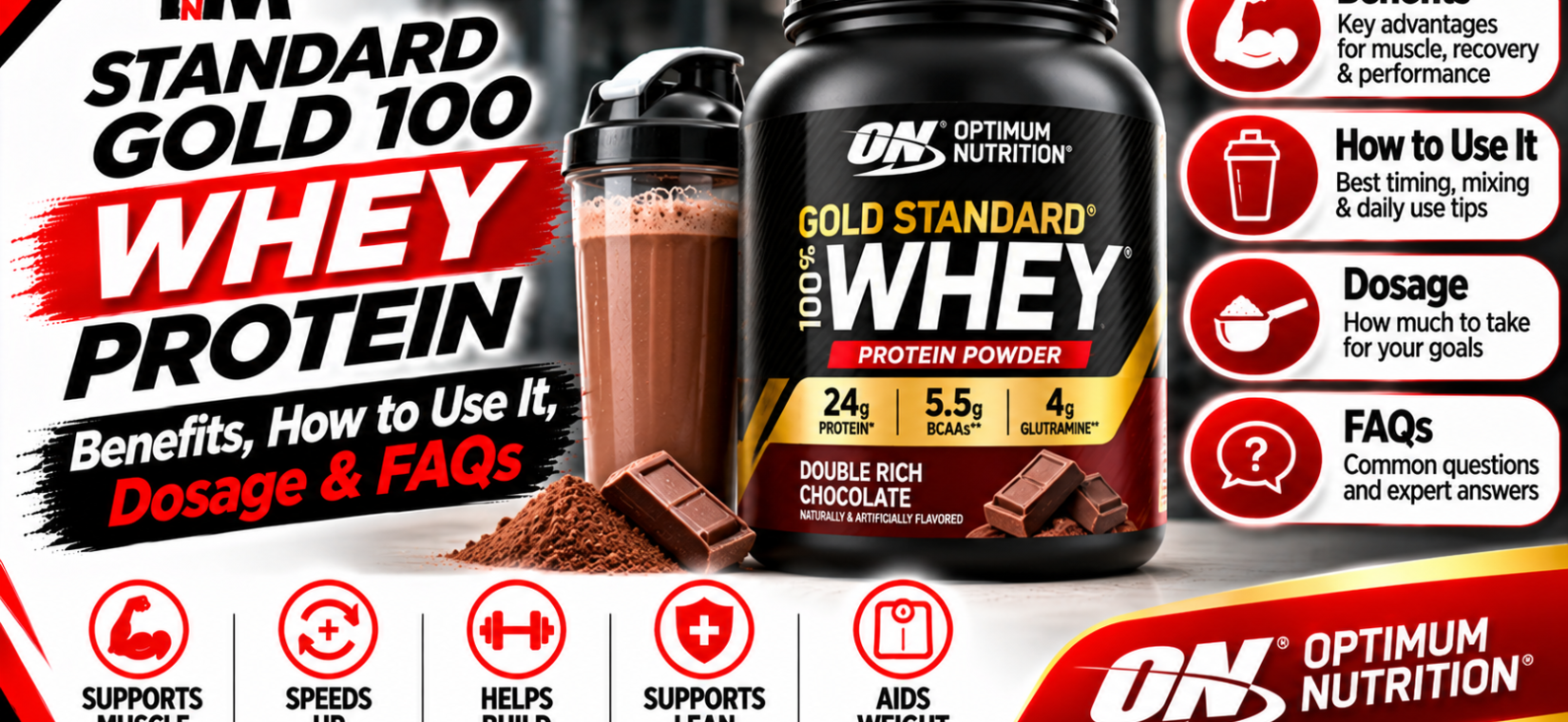
Standard gold 100 whey protein is a well-known style of whey protein supplement built on a whey protein isolate and concentrate blend. A typical serving provides 24 grams of protein with low sugar and fast absorption for post-workout recovery. When comparing options in this category, prioritize protein per serving and third-party testing over marketing claims.
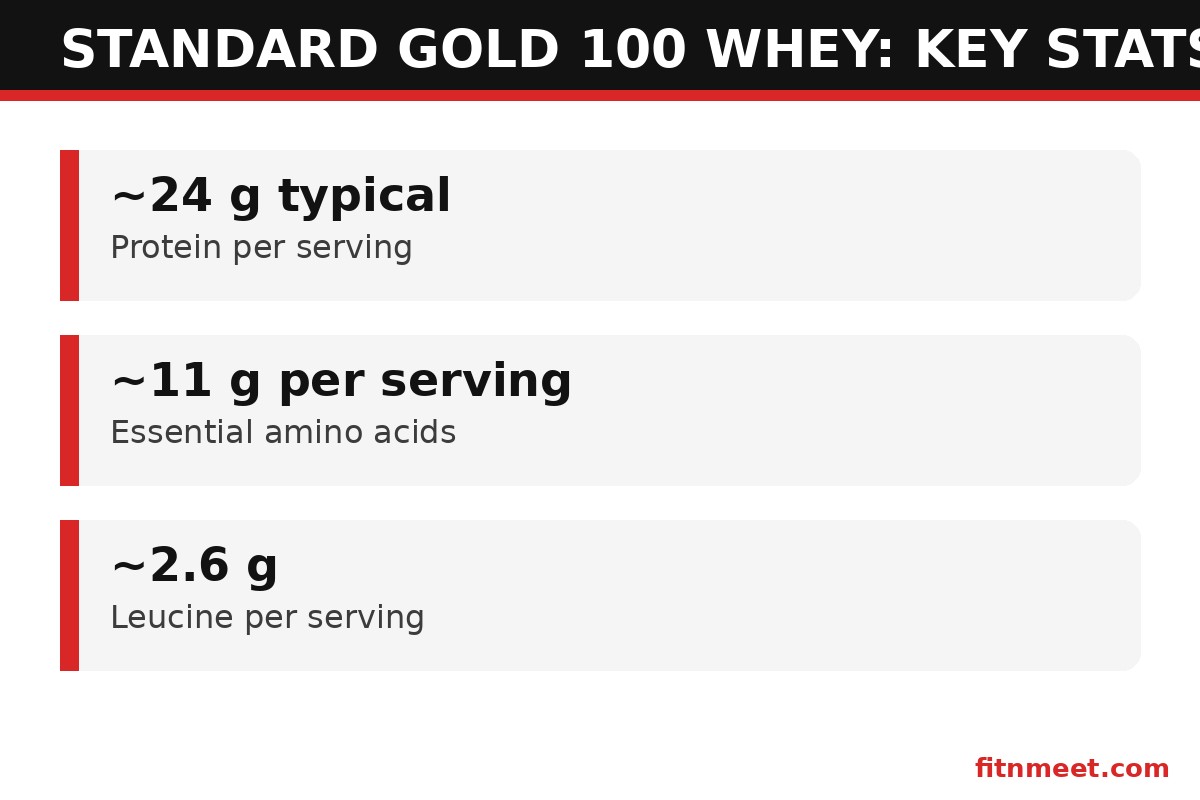
~24 g protein per serving · ~11 g EAAs · ~5.5 g BCAAs · ~2.6 g leucine · 1.0 PDCAAS score
Typical values for a standard gold 100 whey protein serving (check your product label for exact numbers).
Key Stats Snapshot
Protein per serving
~24 g
A typical serving of standard gold 100 whey protein delivers about 24 grams of protein — roughly half the FDA daily value of 50 g.
Essential amino acids
~11 g
Each serving supplies around 11 grams of EAAs, the building blocks your body cannot make on its own.
Leucine trigger dose
~2.6 g
Research suggests ~2.5 g of leucine maximally stimulates muscle protein synthesis — one serving clears that bar.
Digestion speed
~60–90 min
Whey is a fast-digesting protein, with amino acids peaking in the blood about an hour after drinking a shake.
What Is Standard Gold 100 Whey Protein?
Standard gold 100 whey protein is a category of whey protein powder built around three ideas: a “gold standard” quality benchmark, “100” meaning the protein comes entirely from whey (no soy or other fillers), and a blend of whey fractions — usually whey protein isolate (WPI) as the primary source, supported by whey protein concentrate (WPC) and whey peptides. The result is a powder that is typically 70–80% protein by weight, mixes easily, and digests quickly.
Whey itself is the liquid left over from cheese production. When filtered and dried, it becomes the complete protein prized by athletes: it contains all nine essential amino acids, scores a perfect 1.0 on the PDCAAS protein-quality scale, and is especially rich in the branched-chain amino acids (BCAAs) leucine, isoleucine, and valine. You can read the technical background on Wikipedia’s whey protein page.
A standard gold 100 whey protein product is designed as an everyday training protein rather than a niche specialty powder. It is typically low in sugar (1–3 g per serving), moderate in calories (120–140 per scoop), and flavored for daily use — chocolate, vanilla, and strawberry being the classics. Because the formula centers on whey isolate, lactose content is usually low, though not zero.
Benefits of Standard Gold 100 Whey Protein
The evidence for whey protein is among the strongest in all of sports nutrition. Here is what a daily standard gold 100 whey protein shake can do, in list form:
- Builds muscle: In a meta-analysis of randomized trials, whey protein supplementation combined with resistance training produced significantly greater gains in lean mass than training alone. The leucine content is the key driver — ~2.6 g per serving hits the threshold for triggering muscle protein synthesis.
- Speeds recovery: Fast digestion means amino acids reach damaged muscle fibers within 60–90 minutes, supporting repair after hard sessions. Pair it with options from the workout recovery collection for a complete post-training stack.
- Supports fat loss: Protein is the most satiating macronutrient, and higher-protein diets consistently improve body-composition outcomes during calorie deficits. A standard gold 100 whey protein shake adds 24 g of protein for ~130 calories — an excellent ratio when cutting.
- Convenient daily protein: Most adults aiming to build muscle need 1.6–2.2 g of protein per kg of bodyweight daily. For an 80 kg lifter that is 128–176 g; one shake covers roughly a sixth of that in seconds.
- Immune support: Whey contains immunoglobulins and lactoferrin, and adequate protein intake supports immune function during heavy training blocks.
- Bone health: Contrary to old myths, higher protein intake is associated with better bone mineral density when calcium intake is adequate.
- Versatility: A standard gold 100 whey protein powder works in shakes, oatmeal, smoothies, pancakes, and baking — making it easy to hit protein targets without extra cooking.
How It Works in the Body
When you drink a standard gold 100 whey protein shake, digestion begins almost immediately. Whey empties from the stomach faster than casein or whole-food proteins, and its amino acids — particularly leucine — spike in the bloodstream within about an hour. That leucine spike activates the mTOR pathway, the master switch for muscle protein synthesis (MPS). Research shows MPS stays elevated for roughly 3–5 hours after a leucine-rich protein dose.
The isolate fraction in a standard gold 100 whey protein blend matters here: whey protein isolate is filtered to 90%+ protein with most lactose and fat removed, so it digests even faster and is gentler on sensitive stomachs than concentrate alone. The concentrate fraction contributes beneficial subfractions like lactoferrin and immunoglobulins, while added whey peptides (pre-digested chains) absorb fastest of all. Together, the blend delivers both speed and a sustained amino acid supply.
For athletes curious about protein science, the NIH publishes detailed guidance on protein needs for exercise performance, including the 1.2–2.0 g/kg/day range recommended for active individuals. One practical implication: because a standard gold 100 whey protein shake digests so quickly, it pairs well with a slower protein later in the day. Many lifters use their standard gold 100 whey protein serving post-workout and rely on casein-rich foods like Greek yogurt or cottage cheese in the evening, creating a fast-then-slow amino acid curve that covers both the immediate recovery window and overnight repair.
Dosage and Usage
How much standard gold 100 whey protein should you take? Use this checklist to dial in your intake:
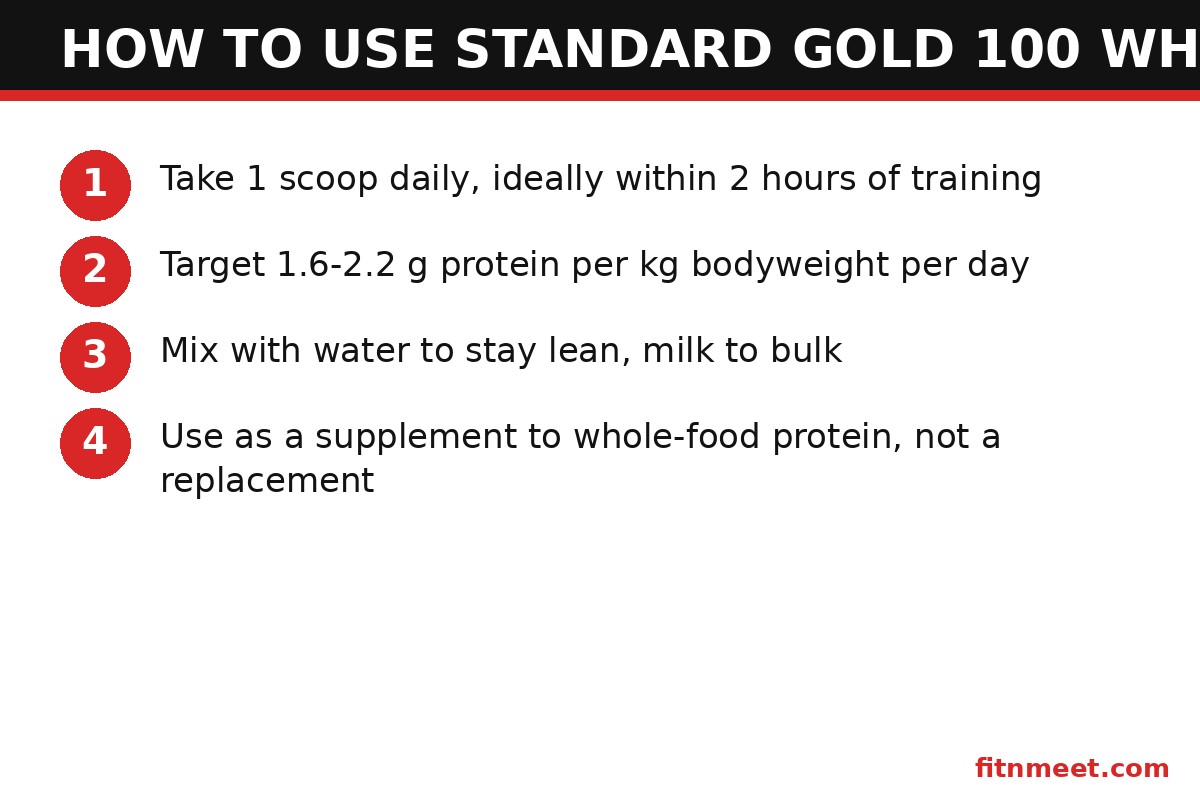
- ☐ Start with one serving (1 scoop) daily. One serving of standard gold 100 whey protein provides ~24 g protein — enough to meaningfully move most people toward their target.
- ☐ Time it around training. Drink your shake within 2 hours of your workout. The old “30-minute anabolic window” is overstated, but post-workout is still a convenient anchor.
- ☐ Calculate your total. Multiply bodyweight in kg by 1.6–2.2 for your daily protein target. Add a second scoop of standard gold 100 whey protein if whole foods fall short.
- ☐ Mix with water or milk. Water keeps it lean (~130 cal); milk adds ~8 g extra protein and ~150 calories per cup — useful when bulking.
- ☐ Use it as a meal tool, not a meal replacement. A standard gold 100 whey protein shake is a supplement to real food. Anchor each meal with whole-food protein first.
- ☐ Stay hydrated. Higher protein intakes work best with adequate water — aim for 35–40 ml per kg of bodyweight daily.
- ☐ Track for two weeks. Log protein intake for 14 days; adjust scoops up or down so you consistently land in your target range.
Stock up on training protein: Compare whey options in the FitnMeet protein collection — including isolate formulas like whey protein isolate for maximum protein per scoop.
Standard Gold 100 Whey Protein Comparisons
Whey fractions: concentrate vs isolate vs hydrolysate
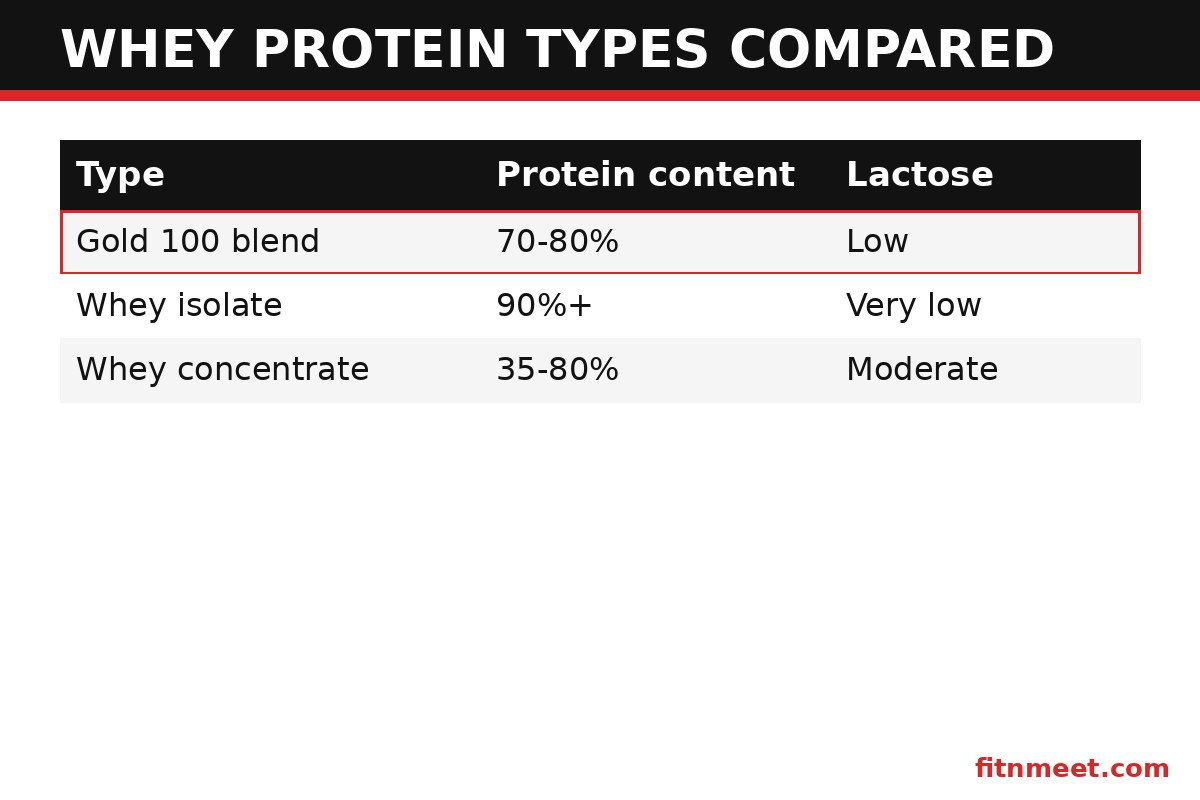
| Type | Protein content | Lactose | Price | Best for |
|---|---|---|---|---|
| Standard gold 100 whey protein (blend) | ~70–80% | Low | $$ | Everyday training — balance of quality and value |
| Whey concentrate (WPC) | ~35–80% | Moderate | $ | Budget buyers who tolerate lactose |
| Whey isolate (WPI) | 90%+ | Very low | $$$ | Lactose-sensitive users, cutting phases |
| Whey hydrolysate | ~80–90% | Very low | $$$$ | Fastest absorption; clinical/sensitive-stomach use |
Standard gold 100 whey protein vs other protein sources
| Protein source | Protein per serving | Digestion speed | Leucine | Notes |
|---|---|---|---|---|
| Standard gold 100 whey protein | ~24 g | Fast (60–90 min) | ~2.6 g | Best all-rounder for training |
| Casein | ~24 g | Slow (6–8 hrs) | ~2.0 g | Better before bed |
| Egg white protein | ~20 g | Medium | ~1.7 g | Dairy-free, complete aminos |
| Pea + rice blend | ~20–24 g | Medium | ~1.6 g | Best plant-based option |
| Chicken breast (100 g) | ~31 g | Slow (whole food) | ~2.7 g | Requires cooking; most filling |
Side Effects and Safety
Whey protein is one of the most studied supplements in existence, with an excellent safety record in healthy adults. The most common issues with a standard gold 100 whey protein shake are digestive: bloating, gas, or cramps, almost always linked to lactose. Because these blends lean on isolate, most people tolerate them well; if you are very sensitive, a pure isolate or lactose-free formula is the safer pick.
Myths worth clearing up: whey protein does not damage healthy kidneys — that concern comes from misreading data on pre-existing kidney disease, where protein is restricted for different reasons. In healthy people, intakes up to 2.2 g/kg/day show no adverse kidney effects in trials lasting up to a year. Acne flare-ups are occasionally reported anecdotally, likely related to dairy bioactives rather than protein itself. Choose products with third-party testing, and avoid stacking multiple protein products that push you far beyond your calculated needs — excess protein is simply expensive calories.
Alternatives
- Pure whey isolate: If a standard gold 100 whey protein blend still bothers your stomach, a 90%+ isolate with near-zero lactose is the next step up.
- Casein: Slower-digesting milk protein — better as a nighttime shake for overnight amino acid delivery.
- Plant blends: Pea + rice or soy proteins work for dairy-free diets; look for 20 g+ protein and added BCAAs to close the leucine gap.
- Whole foods: Greek yogurt (~15–20 g protein per cup), eggs, chicken, and fish remain the foundation — a standard gold 100 whey protein shake is the convenience layer on top. Browse the sports nutrition collection for complementary training nutrition.
Frequently Asked Questions
What is standard gold 100 whey protein?
Standard gold 100 whey protein is a whey protein powder made from 100% whey protein – typically a blend of whey isolate, concentrate and peptides. A serving usually provides about 24 grams of complete protein with all essential amino acids.
How much protein is in standard gold 100 whey protein?
A typical serving delivers around 24 grams of protein, about 11 grams of essential amino acids, 5.5 grams of BCAAs and roughly 2.6 grams of leucine. Exact numbers vary by product, so always check the label.
When should I take standard gold 100 whey protein?
The most popular time is within 2 hours after training. It also works well as a between-meal snack or blended into breakfast. Total daily protein intake matters more than precise timing.
Is standard gold 100 whey protein good for weight loss?
Yes. With roughly 24 grams of protein for only 120-140 calories per serving, it helps preserve muscle and control hunger during a calorie deficit, both of which support fat loss.
Does standard gold 100 whey protein contain lactose?
These blends are usually low in lactose because they are built around whey isolate, but they are not lactose-free. Very sensitive individuals should choose a pure whey isolate or lactose-free formula instead.
How many scoops of standard gold 100 whey protein per day?
Most people do well with 1-2 scoops daily. Calculate your target (1.6-2.2 g protein per kg bodyweight), fill most of it with whole foods, and use scoops of standard gold 100 whey protein to close the gap.
Conclusion
A standard gold 100 whey protein powder earns its reputation: ~24 grams of fast, complete protein per serving, a leucine dose that clears the muscle-building threshold, and the versatility to fit bulking, cutting, or maintenance. It will not replace consistent training or whole-food nutrition, but as the convenience layer of a high-protein diet, few products do the job better.
Compare quality whey options in the FitnMeet protein collection or head to the FitnMeet shop to stock your training staple.
This article is for informational purposes only and is not medical advice. Consult a healthcare professional before starting any supplement.