
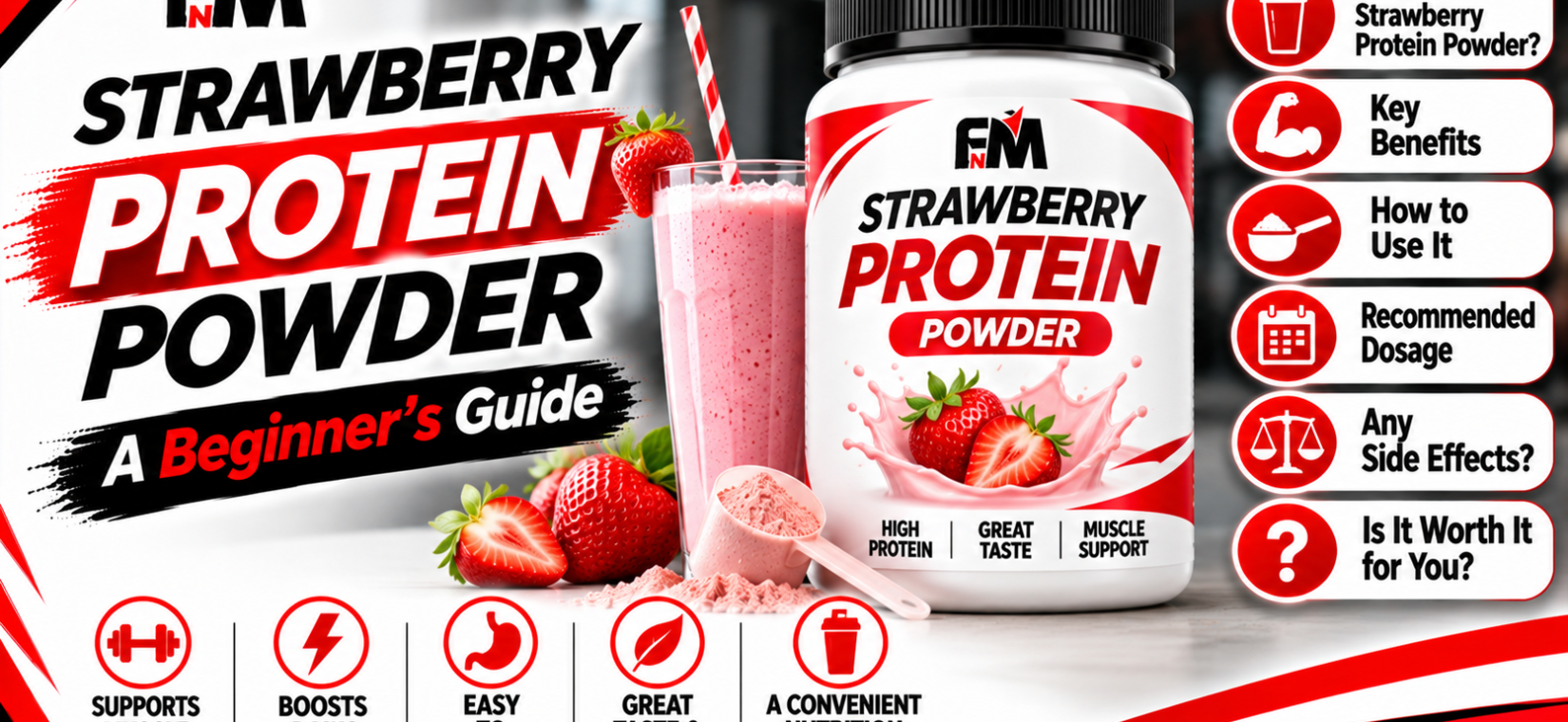
Strawberry protein powder is protein powder — usually whey, sometimes plant-based — flavored to taste like strawberries. A typical scoop delivers 20–25 grams of protein for 120–160 calories, making it one of the easiest ways for beginners to hit daily protein targets without cooking another chicken breast.
👋 Start here: If you are new to supplements, strawberry protein powder is the friendliest entry point. It tastes good, mixes easily, costs less per gram of protein than most whole foods, and one scoop a day is enough to start. Everything below explains what to buy, how much to take, and how to actually enjoy it.
Strawberry Protein Powder: Explained Simply
Think of strawberry protein powder as a shortcut. Your muscles need protein to recover and grow after training — about 1.6–2.2 grams per kilogram of body weight daily if you lift. Getting that from food alone means a lot of eggs, chicken, and Greek yogurt. A scoop hands you 20–25 grams in a tasty 30-second shake. That is the entire concept.
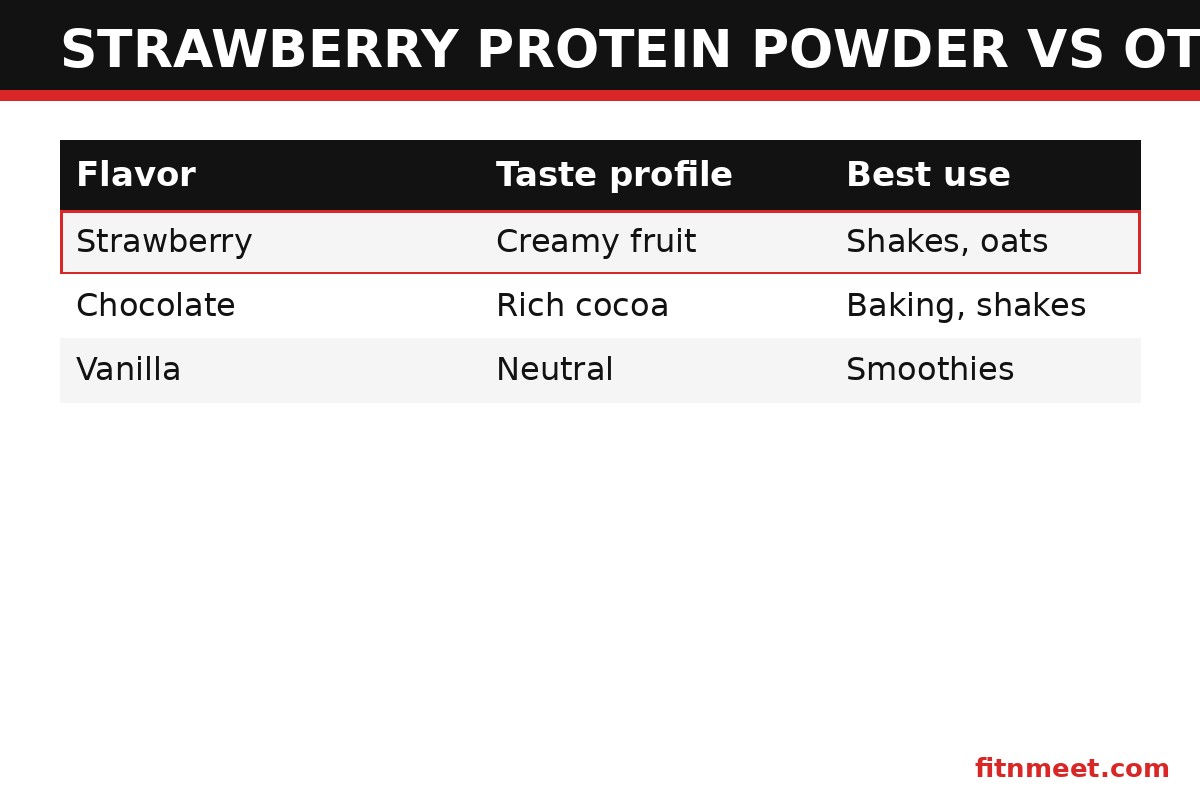
The “strawberry” part is just flavor. Underneath, it is the same protein as the unflavored or chocolate versions — most often whey (from milk), sometimes a plant blend. The flavoring does not change what the protein does in your body. So choosing strawberry over chocolate is purely a taste decision, like picking a yogurt flavor.
One more simple truth for beginners: protein powder is food, not a drug. It will not build muscle by itself — training does that. It just makes hitting your protein target easier. Keep that framing and you will never be disappointed by it.
What Is Strawberry Protein Powder?
Strawberry protein powder starts as a base protein — usually whey concentrate or isolate (milk-derived, complete amino acid profile, fast digesting) or a plant blend (pea + rice is the common pairing, chosen so the combined amino acids cover each other’s gaps). To that base, manufacturers add strawberry flavoring (natural, artificial, or a mix), a sweetener (sucralose, stevia, acesulfame-K, or sugar), and usually a thickener like lecithin or xanthan gum so it mixes smoothly. The protein chemistry background is on Wikipedia’s whey protein page.
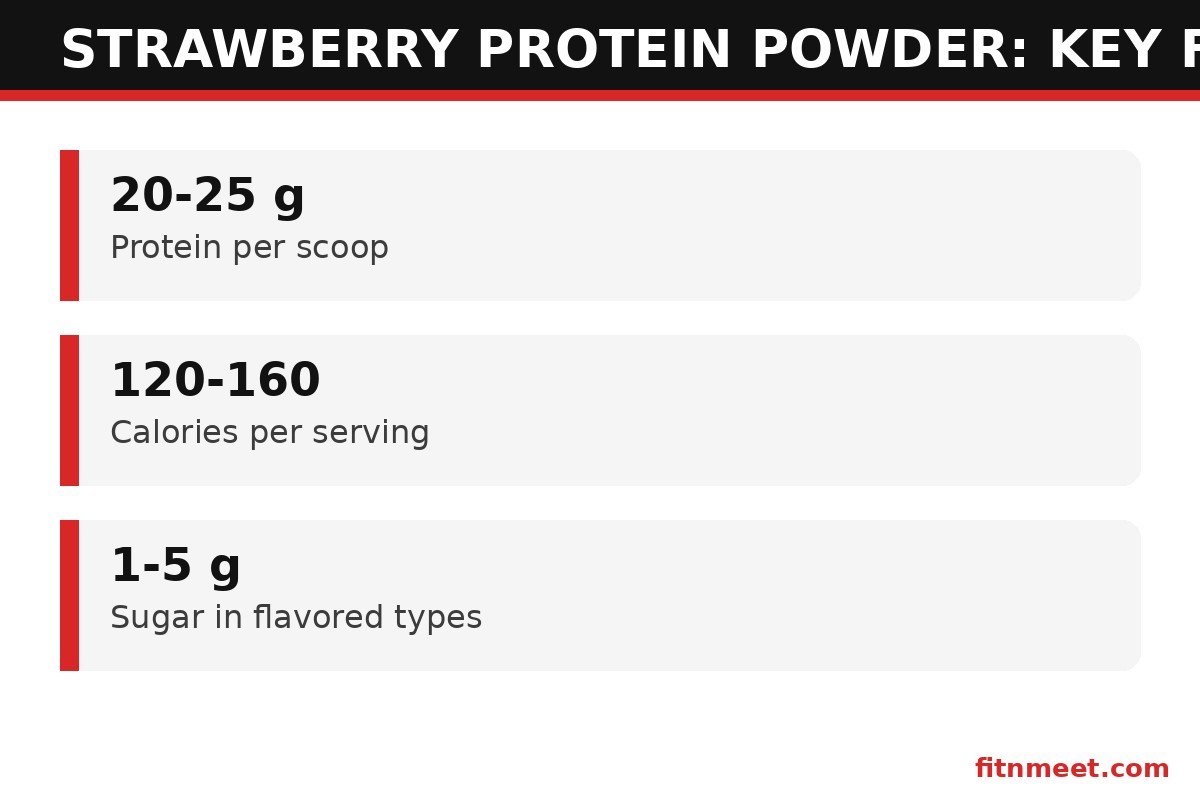
A typical label reads: 20–25 g protein, 120–160 calories, 1–5 g sugar, 1–3 g fat per scoop (about 30 g of powder). Compare that to a chicken breast (~31 g protein per 100 g cooked) and you see the trade: slightly less protein per serving, vastly more convenience.
What separates a good one from a mediocre one? Three label checks: protein per scoop (aim for 20+ g), sugar (under ~5 g unless you want the calories), and ingredient list length (shorter is generally better — protein, flavor, sweetener, thickener, done). Fancy extras like added creatine or “proprietary blends” usually just muddy the dose. For label-reading practice, compare with FitnMeet’s protein collection.
Why Beginners Care About Strawberry Protein Powder
Beginners face a specific problem: everything is new, motivation is fragile, and anything unpleasant gets abandoned. It solves the compliance problem that sinks most supplement routines. Chocolate can taste chalky in cheap formulas; unflavored is genuinely hard to drink. Strawberry flavoring masks the “protein” taste better than most flavors, which means beginners actually finish the tub instead of abandoning it after a week.
There is also a practical nutrition reason. New lifters notoriously under-eat protein — studies of recreational gym-goers routinely find intakes around 1.0–1.2 g/kg, well under the 1.6+ g/kg associated with better training outcomes. One daily shake closes roughly half that gap with zero cooking. For a beginner, that single habit can be the difference between spinning wheels and visible progress in the first three months.
Finally, versatility matters when you are learning. It blends beautifully into oatmeal, yogurt, smoothies, and even pancake batter — it is the easiest flavor to “hide” in foods you already eat. That flexibility turns supplementation from a chore into a normal part of meals.
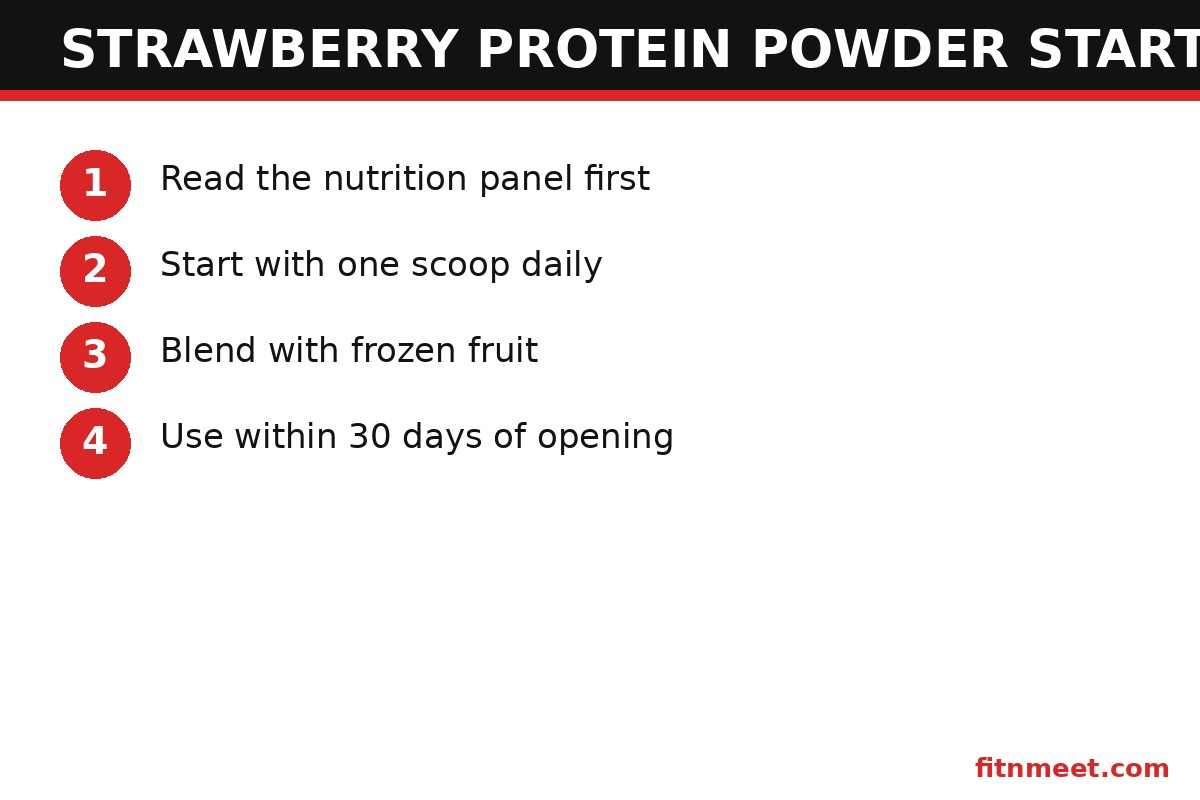
Getting Started with Strawberry Protein Powder: Your 5-Step Plan
Follow this plan in order. It takes two weeks and removes every common beginner stumble.
Step 1: Buy one tub, not three
Start with a single small tub — whey concentrate if budget matters, isolate if dairy usually bothers your stomach. Do not stockpile flavors you have never tasted. A beginner-friendly option is whey protein isolate, which digests easily and keeps the strawberry protein powder flavor clean and smooth.
Step 2: Learn the basic shake
One scoop + 300–350 ml of cold water or milk in a shaker bottle. Shake 15–20 seconds. Drink within a couple of hours of training, or whenever your day lacks protein. Cold liquid mixes far better than warm.
Step 3: Add it to one meal
Pick your weakest protein meal — usually breakfast — and add the shake there for one week. Overnight oats + a scoop of strawberry protein powder is the classic beginner combo: ~35 g protein before 9 a.m.
Step 4: Track for a week
Log protein for 7 days (any free app). Most beginners discover they were 30–50 g short of target; the shake was covering it. Adjust food or add a half-scoop second serving as needed.
Step 5: Decide if it stays
After two weeks, ask: did I drink it most days? Did training recovery feel fine? If yes, it is a keeper — buy the bigger tub next time. If you dreaded it, try a different flavor before quitting; sometimes strawberry just is not your thing, and that is fine. Other options exist in FitnMeet’s plant-based protein range.
Benefits of Strawberry Protein Powder
Hits protein targets easily
The core benefit: 20–25 g of complete protein in 30 seconds. For beginners struggling to reach 1.6 g/kg, strawberry protein powder is the lowest-effort fix available.
Supports muscle recovery
Whey-based strawberry protein powder digests in 1–2 hours and delivers ~2–2.5 g of leucine per scoop — the amino acid that switches on muscle protein synthesis after training.
Tastes good enough to stick with
Compliance is a genuine benefit. The best supplement is the one you take; strawberry flavoring consistently ranks among the most drinkable, which is why it is a smart beginner pick.
Helps control appetite
Protein is the most satiating macronutrient. A mid-afternoon shake measurably reduces snacking at dinner in appetite studies — useful if your goal includes fat loss.
Versatile in the kitchen
Unlike chocolate (which dominates everything) the strawberry version plays well in oats, yogurt bowls, smoothies, and baking. One tub, many uses.
Budget-friendly protein
Per gram of protein, powder usually beats meat, fish, and protein bars. A beginner tub delivering 30 servings at ~25 g protein each is among the cheapest complete protein sources available.
Common Strawberry Protein Powder Mistakes
- Replacing meals entirely. A shake is a supplement, not a meal replacement. Whole foods bring fiber, micronutrients, and chewing-mediated satiety that powder cannot. One to two shakes a day; the rest real food.
- Ignoring the sugar. Some formulas pack 8–15 g of sugar per scoop to taste like dessert. Check the label — you want protein, not a milkshake in disguise.
- Expecting miracles. Powder without progressive training builds nothing. If your lifts are not going up, the problem is the program, not the supplement shelf.
- Mixing with too little liquid. Thick, clumpy shakes get abandoned. Use at least 300 ml per scoop and shake properly — or blend with ice for a genuinely enjoyable texture.
- Buying the giant tub first. Taste is personal. Finish a small tub before committing to 5 pounds of a flavor you might hate by week three.
- Forgetting total daily protein. The shake is one piece. If the rest of your day is protein-free, one scoop will not save you. Track the total, not the ritual.
Strawberry Protein Powder: Dosage Basics
Keep it simple with these beginner numbers:
- Daily target: 1.6–2.2 g of protein per kg of body weight (a 70 kg beginner: 112–154 g/day).
- Powder’s job: fill the gap between food and target — usually 1 scoop (20–25 g), occasionally 2.
- Per serving: 1 scoop is the sweet spot; it delivers enough leucine (~2–2.5 g) to trigger muscle protein synthesis.
- Timing: within a few hours of training is sensible, but total daily intake matters far more than the clock.
- Starting dose: begin with one scoop daily for two weeks. Add a second only if food logs show you are still short.
Learn to sanity-check any label with the FDA’s Nutrition Facts guide — the % Daily Value column uses a 50 g protein reference. Deeper protein guidance: FitnMeet’s nutrition articles and shop.
Strawberry Protein Powder: Safety
It is as safe as the protein it contains — whey and plant proteins have decades of safe use. The realistic issues are mild: digestive grumbling if you jump straight to two scoops (ramp up), lactose-related bloating with whey concentrate (switch to isolate), and the rare milk or soy allergy (read the allergen line, and take allergies seriously).
Two reassurances beginners often need: protein powder does not damage healthy kidneys at normal intakes (the myth comes from confusing kidney-disease diets with causes), and “artificial sweeteners” in most formulas are used at levels far below regulatory safety limits. If sweeteners bother you philosophically, unsweetened or stevia-sweetened options exist. Buy from reputable sellers, check for third-party testing seals when available, and remember — it is food, not medicine.
Strawberry Protein Powder: FAQs
What is strawberry protein powder?
Strawberry protein powder is protein powder (usually whey, sometimes plant-based) flavored to taste like strawberries. A typical scoop provides 20-25 grams of protein for 120-160 calories. The strawberry flavoring does not change the protein’s nutritional function – it is purely a taste choice.
Is strawberry protein powder good for beginners?
Yes – it is one of the best beginner choices. The flavor masks the chalky protein taste better than most options, which helps beginners actually stick with the habit. One scoop daily is enough to start, and it mixes easily into shakes, oats, and smoothies.
How much strawberry protein powder should I take?
Start with one scoop (20-25 g protein) per day and track your total intake for a week. Aim for 1.6-2.2 g of protein per kg of body weight daily from all sources. Add a second scoop only if food logs show you are still short of target.
When should I drink strawberry protein powder?
Within a few hours of training is sensible, but total daily protein matters far more than exact timing. Many beginners do best adding it to breakfast – the day’s weakest protein meal – as overnight oats or a morning shake.
Does strawberry protein powder help build muscle?
It helps the same way any quality protein does: by making it easier to reach the daily protein target that supports muscle protein synthesis after training. The powder itself does not build muscle – progressive resistance training does. Think of it as convenient raw material, not a shortcut.
Is strawberry protein powder safe?
Yes for healthy people. It is food-grade protein with flavoring, not a drug. Mild digestive adjustment is possible when starting (ramp up gradually), and those with milk allergy should choose plant-based versions and read allergen labels. It does not harm healthy kidneys at normal intakes.
Conclusion
You now know everything a beginner needs: it is tasty, convenient protein — 20–25 grams a scoop — that makes hitting your daily target dramatically easier. Buy a small tub, start with one scoop a day, add it to breakfast, and track for two weeks. If training is consistent and protein is covered, progress follows. It really is that straightforward, and that is exactly why this is the perfect first supplement.
Ready to begin? Browse beginner-friendly options in FitnMeet’s protein collection and shop — and keep learning with the nutrition guides.
This article is for informational purposes only and is not medical advice. Consult a healthcare professional before starting any supplement.