
Vegan skincare products are skincare formulations made without any animal-derived ingredients — no beeswax, lanolin, collagen, carmine, or squalene from sharks — and typically (though not always) cruelty-free. They cleanse, moisturize, and protect skin using plant-based and lab-made alternatives, and perform comparably to conventional products when formulated with proven actives.
A Familiar Bathroom-Shelf Scenario
Maya, 29, trains five mornings a week and eats mostly plant-based. Last month she decided her skincare should match her values — so she tossed her conventional moisturizer and bought the first bottle labeled “vegan skincare products” she found. Two weeks later her cheeks were tight, flaky, and stinging. The product was vegan, yes. It was also fragranced, alcohol-heavy, and completely wrong for her dry, training-stressed skin.
Maya’s story is the reason this guide exists. Switching to it is a values decision — but choosing well among them is a formulation decision. Vegan doesn’t automatically mean gentle, effective, or right for your skin type. What follows blends the relatable reality of that bathroom shelf with the evidence you need to get it right the first time.
What Are Vegan Skincare Products?
Vegan skincare products are defined by what they exclude: zero animal-derived ingredients. That means no beeswax, honey, lanolin (sheep wool grease), collagen or elastin (animal tissue), carmine (crushed insects, used as red pigment), guanine (fish scales, for shimmer), or shark-derived squalene. Instead, they use plant oils, butters, waxes (candelilla, carnauba), and biotechnology-derived alternatives — including lab-made squalane from olives or sugarcane, which is molecularly identical to the shark version.
Two clarifications Maya wishes she’d known earlier. First, vegan ≠ cruelty-free, legally speaking. “Vegan” describes ingredients; “cruelty-free” describes testing. A product can be vegan but tested on animals (rare now, but possible), or cruelty-free but contain beeswax. Look for both claims — and third-party logos like Leaping Bunny or PETA’s Beauty Without Bunnies — if both matter to you. Second, vegan ≠ natural or organic. Many excellent it contain lab-synthesized actives (niacinamide, retinol alternatives like bakuchiol, peptides), which is good news: the most evidence-backed skincare ingredients are made in labs, not squeezed from plants.
Regulatory context: in the US, the FDA regulates skincare as cosmetics — “vegan” is a marketing term, not a regulated certification. That makes third-party vegan trademarks (Vegan Society, Vegan Action) meaningful: they verify the claim independently. Background on a core category: Wikipedia’s moisturizer article explains how these products actually work on skin barrier function.
Why Vegan Skincare Products Matter
For Maya, the “why” was alignment: her training discipline, her mostly plant-based eating, and her skincare finally telling one coherent story. That values-alignment is the primary driver for most buyers — surveys of beauty consumers consistently show ethics and environmental concern ranking alongside efficacy in purchase decisions for vegan skincare products.
The environmental case is concrete. Shark-derived squalene historically required harvesting deep-sea sharks for their livers; the industry’s shift to olive and sugarcane squalane eliminated that pressure. Carmine production consumes vast insect quantities for pigment. Choosing it removes your shelf from those supply chains — a small act multiplied across millions of bathrooms.
There’s also a practical performance angle athletes appreciate: training stresses skin. Sweat, friction, frequent showering, and sun exposure degrade the barrier. It formulated for barrier support — ceramides, squalane, niacinamide — address exactly that damage, regardless of the vegan label. The label got Maya in the door; the formulation is what fixed her flaky cheeks. Readers managing training-related skin stress may also find FitnMeet’s health articles useful for the inside-out picture (hydration, nutrition, recovery).
Benefits of Vegan Skincare Products
Stripped of marketing, here is what well-formulated vegan skincare products actually offer:
- Ethical alignment without performance sacrifice. Modern vegan formulas match conventional ones on efficacy because the best actives (retinoids, vitamin C, AHAs, niacinamide, peptides) were always vegan-compatible — they’re synthesized, not harvested.
- Fewer common irritants. Many vegan lines skip lanolin and beeswax — two ingredients with documented (if uncommon) allergy and comedogenicity profiles — and lean on squalane and ceramides, which have excellent tolerability data.
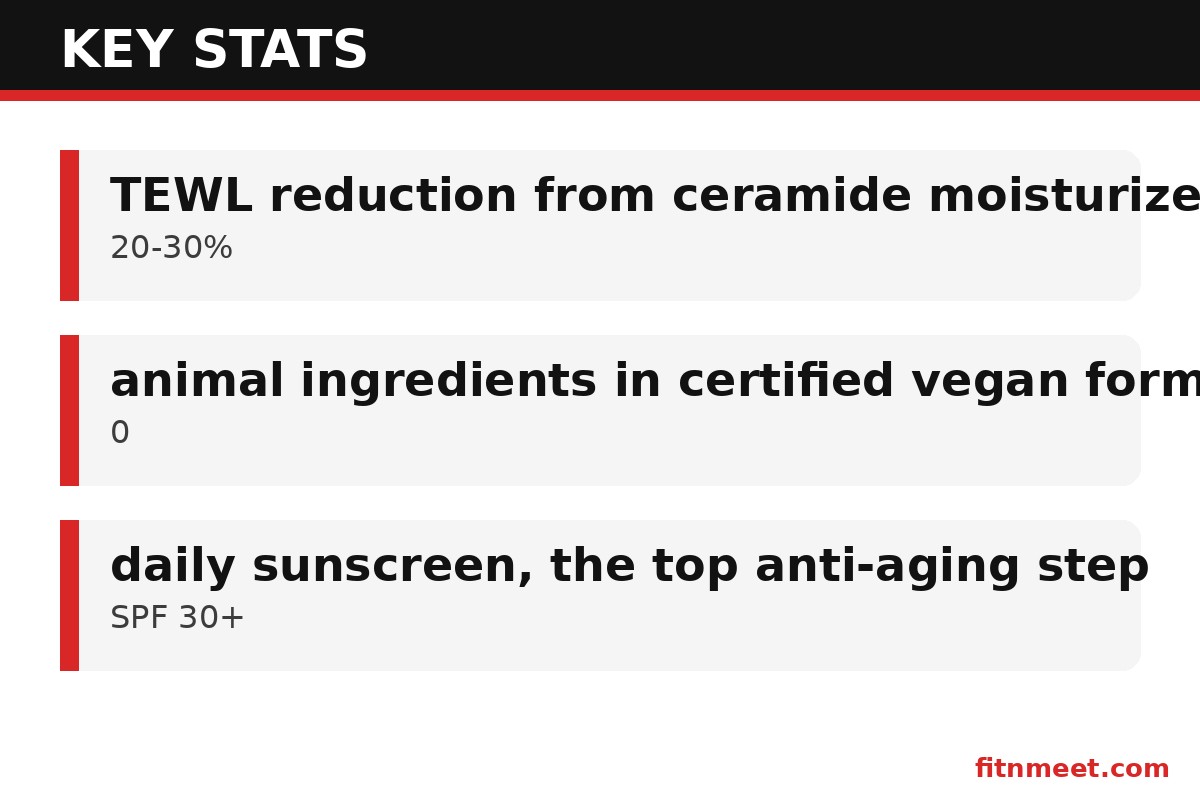
- Barrier-friendly formulations. The plant-oil and ceramide base common in it directly supports the stratum corneum. Studies on ceramide-containing moisturizers show measurable transepidermal water loss (TEWL) reductions of 20–30% within 2–4 weeks.
- Transparency pressure. Vegan-certified brands tend toward fuller ingredient disclosure (the certification requires it), which helps sensitive-skin buyers avoid their personal triggers.
- Environmental footprint. Plant and biotech sourcing generally carries a lighter ecological load than animal harvesting — particularly versus shark squalene and insect carmine.
What they don’t automatically offer: gentleness (vegan products can still contain harsh fragrance, drying alcohols, or high-strength acids), suitability for your skin type, or superiority to a well-chosen conventional product. Maya’s flaky-cheek episode is the cautionary tale — her vegan moisturizer was 12% alcohol denat. Vegan, yes. Kind to dry skin, no.
How to Use Vegan Skincare Products: Maya’s Routine
After her false start, Maya rebuilt her routine story-style — one product at a time, thinnest to thickest, AM and PM. Here’s the framework she (and you) can follow:
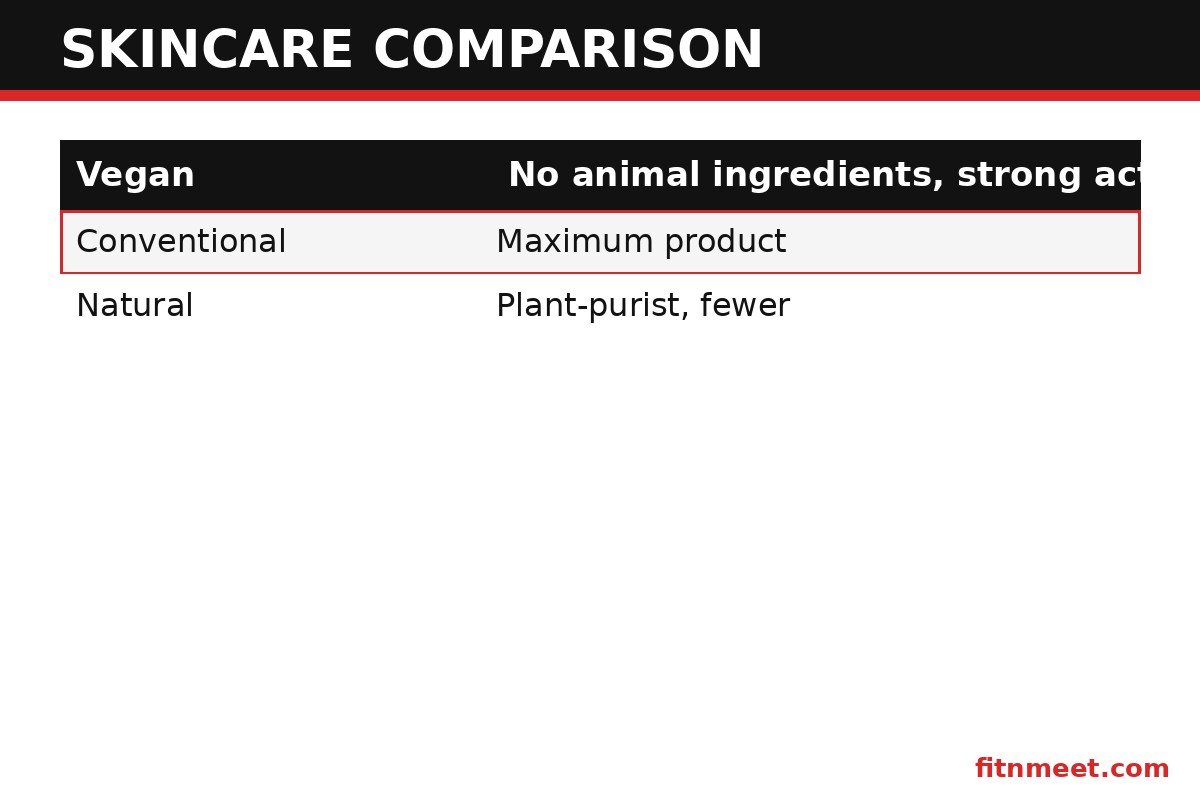
Morning — protect: (1) Gentle vegan cleanser, lukewarm water, 30 seconds. (2) Vitamin C serum (10–15% L-ascorbic acid or derivative) — antioxidant shield under sunscreen. (3) Lightweight vegan moisturizer with niacinamide. (4) Mineral or vegan chemical SPF 30+ — non-negotiable; UV damage dwarfs every other skin concern, and excellent vegan sunscreens exist.
Evening — repair: (1) Same gentle cleanser (double-cleanse with a vegan cleansing balm if you wore sunscreen/makeup). (2) Treatment: bakuchiol (the vegan-friendly retinol alternative with RCT support for fine lines at 0.5–1%, twice daily) or an AHA 2–3 nights/week. (3) Richer vegan night moisturizer with ceramides and squalane to seal everything in.
Maya’s rules that actually matter: introduce one new product every 1–2 weeks (so you know what caused any reaction); patch-test on the jawline for 48 hours; give actives 6–12 weeks before judging (skin cell turnover takes ~28 days, longer with age); and never layer strong acids with retinoids/bakuchiol on the same night when starting out.
Building the shelf? Start with three: cleanser, moisturizer, sunscreen. Everything else is optimization. Browse FitnMeet’s shop for wellness staples, and check the FitnMeet blog for training-recovery content that complements the outside-in work your skincare does.
How Much to Use: The Dosage of Skincare
Skincare has dosages too — and most people under-apply the one product that matters most:
- Sunscreen: 1/4 teaspoon for the face alone (about two finger-lengths); most people apply 25–50% of the tested amount, cutting real-world SPF dramatically. Reapply every 2 hours in sun.
- Serums: pea-sized to dime-sized amount — 3–4 drops. More isn’t better; it’s waste.
- Moisturizer: nickel-sized dollop for face; more for neck and chest (which age visibly and deserve the routine too).
- Cleanser: dime-sized; over-cleansing strips the barrier that your vegan moisturizer is trying to rebuild.
- Exfoliating acids: 2–3 nights per week maximum when starting; daily use is an advanced move, not a beginner default.
What to Watch For
Maya’s checklist before any vegan skincare product earns shelf space:
- Hidden animal ingredients: “fragrance” can mask animal-derived musks; “squalene” (with an ‘e’) may be shark-derived while “squalane” (with an ‘a’) is typically olive/sugarcane — verify the source. Collagen, elastin, and keratin in skincare are animal-derived unless specified as vegan.
- “Vegan” without cruelty-free: decide if both matter to you, then verify both. Leaping Bunny covers testing; Vegan Society/Vegan Action cover ingredients.
- Irritants hiding behind the halo: fragrance/parfum, denatured alcohol high on the list, essential oils (common sensitizers despite the natural aura). Vegan and irritating can coexist.
- Unrealistic claims: no cream — vegan or otherwise — removes deep wrinkles, shrinks pores permanently, or “detoxes” skin. The evidence hierarchy in skincare is clear: sunscreen > retinoids > vitamin C > everything else.
- Patch-test everything: 48 hours on the jawline or inner forearm before full-face use, especially with active-heavy vegan skincare products. A past tolerance doesn’t guarantee future tolerance — formulations change.
Vegan Skincare Products vs Conventional vs “Natural”
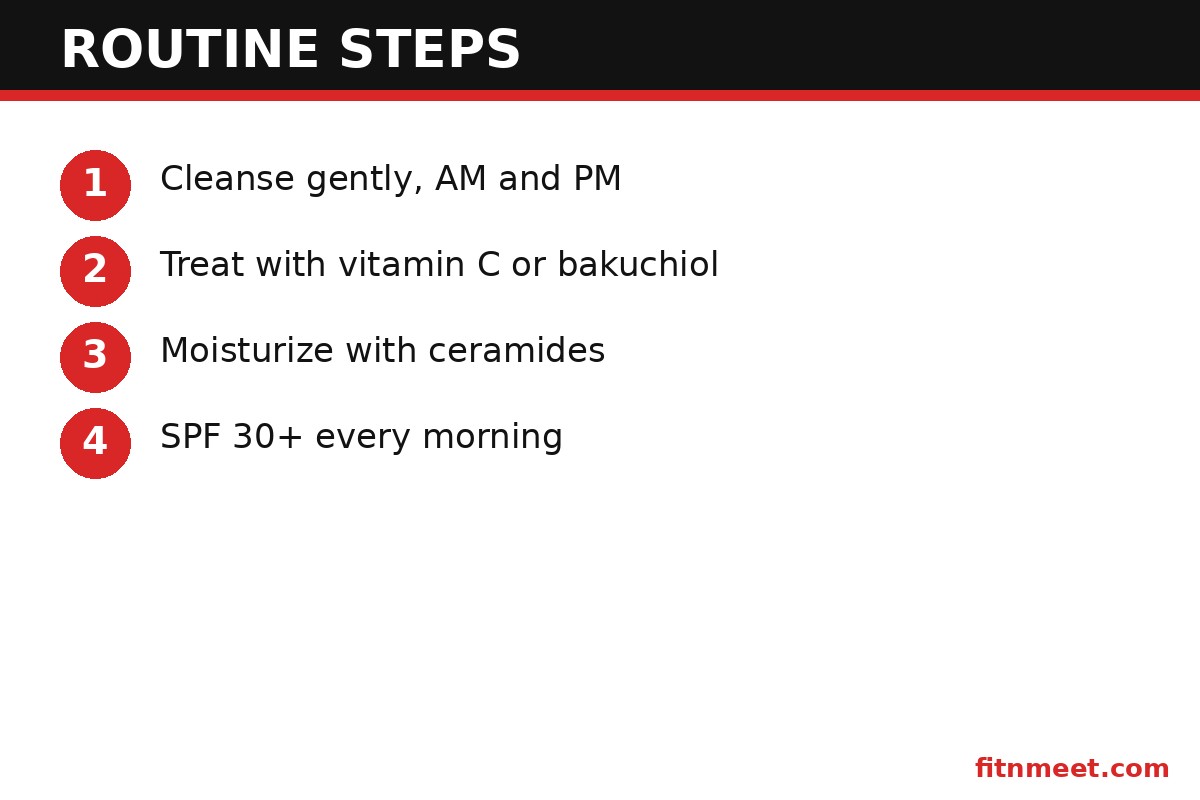
| Feature | Vegan Skincare Products | Conventional | “Natural”/Organic |
|---|---|---|---|
| Animal ingredients | None | Common (lanolin, beeswax, collagen) | Often present (beeswax, honey) |
| Animal testing | Often cruelty-free (verify) | Varies | Often cruelty-free |
| Lab-made actives | Yes (niacinamide, peptides) | Yes | Limited by philosophy |
| Efficacy evidence | Strong (when well-formulated) | Strong | Mixed (fewer potent actives) |
| Irritant risk | Low–moderate | Low–moderate | Moderate (essential oils) |
| Price | $$–$$$ | $–$$$ | $$–$$$$ |
| Best for | Ethics + performance | Maximum choice | Plant-purist preference |
Maya’s conclusion after six months: her shelf is now fully vegan skincare products — not because vegan magically fixed her skin, but because she learned to shop by formulation within the vegan category. Her current routine costs less than her old one, her barrier is intact, and her values and vanity finally agree. If that sounds like your goal, start with the three basics, verify both vegan and cruelty-free claims, and let consistency do the heavy lifting. The FitnMeet team curates wellness content with the same evidence-first lens — no halos, just what works.
Frequently Asked Questions
Are vegan skincare products better for skin?
Not automatically. Well-formulated vegan skincare products perform comparably to conventional ones because the most evidence-backed actives (niacinamide, vitamin C, retinoids, ceramides) are vegan-compatible. But vegan products can still contain irritants like fragrance or drying alcohols. Judge by formulation, not by the vegan label alone.
What is the difference between vegan and cruelty-free skincare?
Vegan means no animal-derived ingredients; cruelty-free means no animal testing. They are independent claims — a product can be one without the other. If both matter to you, look for both labels, ideally backed by third-party certifications like the Vegan Society and Leaping Bunny.
Do vegan skincare products work for anti-aging?
Yes, when they contain proven actives. Bakuchiol (0.5–1%) has randomized-trial support as a gentler retinol alternative for fine lines; vitamin C, niacinamide, peptides, and AHAs are all vegan-compatible and evidence-backed. Sunscreen remains the single most effective anti-aging product regardless of category.
Are vegan skincare products good for sensitive skin?
They can be, but vegan does not guarantee gentleness. For sensitive skin, choose fragrance-free vegan skincare products with barrier-supporting ingredients (ceramides, squalane, niacinamide) and avoid denatured alcohol and essential oils. Always patch-test new products for 48 hours.
What ingredients should vegans avoid in skincare?
Beeswax, honey, lanolin, collagen, elastin, keratin, carmine (red pigment from insects), guanine (fish scales), and squalene with an ‘e’ (often shark-derived; squalane with an ‘a’ is typically plant-derived). Also check ambiguous terms like fragrance and glycerin for their source if strictness matters to you.
How do I build a vegan skincare routine as a beginner?
Start with three products: a gentle vegan cleanser, a moisturizer suited to your skin type, and an SPF 30+ sunscreen. Use them consistently for 4–6 weeks, then add one active at a time (vitamin C in the morning or bakuchiol/AHA at night). Introduce new products 1–2 weeks apart and patch-test each.
Is vegan skincare more expensive?
Not necessarily. Vegan skincare products span drugstore to luxury pricing, just like conventional ones. Because many effective vegan formulas center on affordable actives (niacinamide, squalane), a complete basic routine can cost less than a conventional prestige routine.
Conclusion
Six months after her flaky-cheek false start, Maya’s skin has never looked better — and every product on her shelf is vegan. Her secret wasn’t the label; it was learning to read past it: proven actives, honest concentrations, patch tests, and the patience to let a simple routine work. That’s the real promise of vegan skincare products — not magic, but alignment: values you can defend and skin you can see. Start with cleanser, moisturizer, and sunscreen, verify the claims that matter to you, and join the community of people proving that clean beauty and real results aren’t compromises. Explore more evidence-first wellness guides at FitnMeet.
This article is for informational purposes only and is not medical advice. Patch-test new skincare products and consult a dermatologist for persistent skin concerns.