
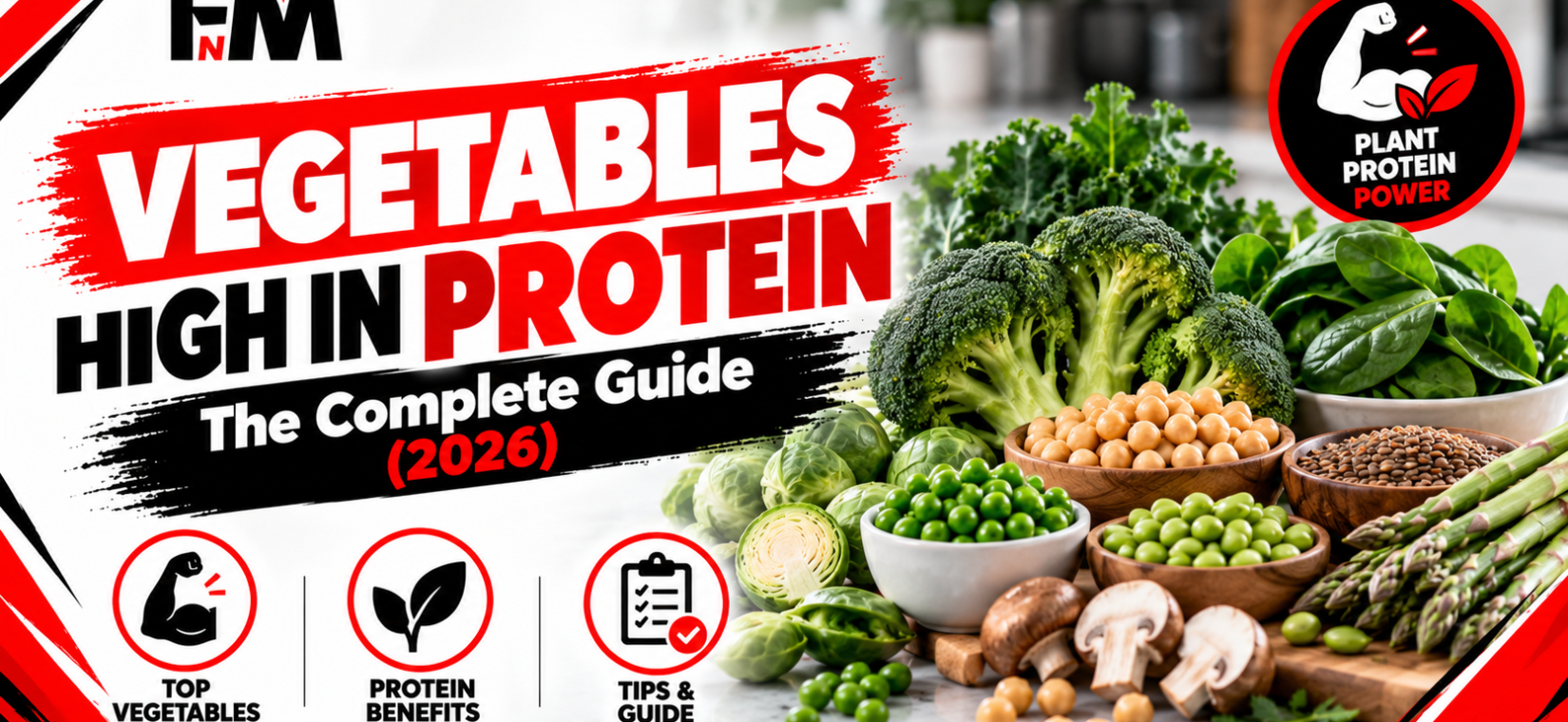
Vegetables high in protein include edamame, lentils, peas, spinach, and Brussels sprouts, though no vegetable matches meat or legumes gram for gram. Edamame leads with about 17 grams per cooked cup. Combine high-protein vegetables with grains, beans, or soy foods to cover all essential amino acids on a plant-based diet.
Quick Answer: The Top 7 Vegetables High in Protein
If you want the short list of vegetables high in protein, start here (protein per 100 g cooked, approximate):
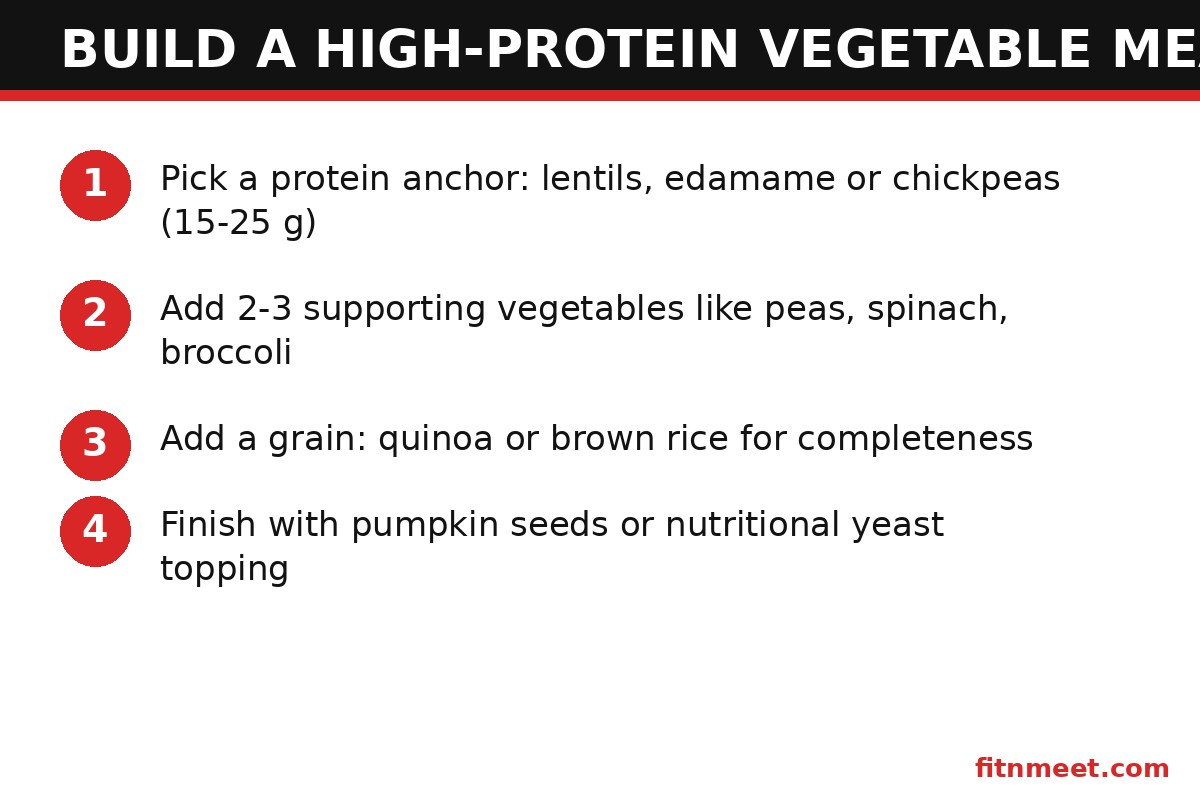
- Edamame — ~11 g
- Lentils — ~9 g
- Chickpeas — ~9 g
- Black beans / kidney beans — ~8–9 g
- Green peas — ~5 g
- Spinach — ~2.9 g
- Broccoli — ~2.8 g
Pro tip: Botanists classify beans, lentils, and peas as legumes, not vegetables — but nutritionally they are the backbone of any list of vegetables high in protein. Do not skip them in favor of lettuce.
Pro tip: Protein numbers below are per 100 g cooked weight unless stated. Raw-to-cooked conversions change everything — dry lentils are ~24 g protein per 100 g but triple in weight when cooked.
What Counts as Vegetables High in Protein?
Let us be honest: compared with chicken breast (~31 g per 100 g) or Greek yogurt (~10 g per 100 g), even the best vegetables high in protein look modest. True vegetables — leafy greens, crucifers, roots — typically deliver 1–4 g per 100 g. The heavy hitters are legumes and soy foods, which nutrition guides group with vegetables for practical meal-planning purposes.
That distinction matters because it sets expectations. Nobody builds 150 g of daily protein from broccoli alone (you would need over 5 kg of it). But vegetables high in protein earn their place differently: they add meaningful protein on top of fiber, micronutrients, and volume — and a cup of lentils plus a cup of edamame already delivers ~30 g of protein, roughly what is in a chicken breast, for a fraction of the cost.
Did you know? Soybeans are the only widely available plant food with a protein quality score (PDCAAS) of 1.0 — equal to meat, eggs, and dairy. That makes edamame and tempeh the highest-quality vegetables high in protein you can eat.
Why Protein-Rich Vegetables Matter
Most people trying to eat more protein default to animal foods, which works but has trade-offs: cost, saturated fat, and environmental footprint. Vegetables high in protein solve a different problem — they let you raise protein intake while also raising fiber intake. The average adult gets only about 15 g of fiber daily against a recommended 25–38 g; a single cup of lentils adds ~15 g of fiber alongside its 18 g of protein.
For athletes, the angle is recovery nutrition on a budget. A post-workout bowl built from vegetables high in protein plus grains delivers the carbs needed to replenish glycogen and 25–35 g of protein for muscle repair. For vegetarians and vegans, these foods are not optional extras — they are the foundation of adequate intake. And for anyone cutting calories, the volume-to-protein ratio of vegetables is unbeatable: 200 g of broccoli is about 70 calories with ~6 g protein and massive plate coverage.
Step-by-Step Guide: Building High-Protein Vegetable Meals
Here is the exact process for turning vegetables high in protein into meals that actually hit your targets.
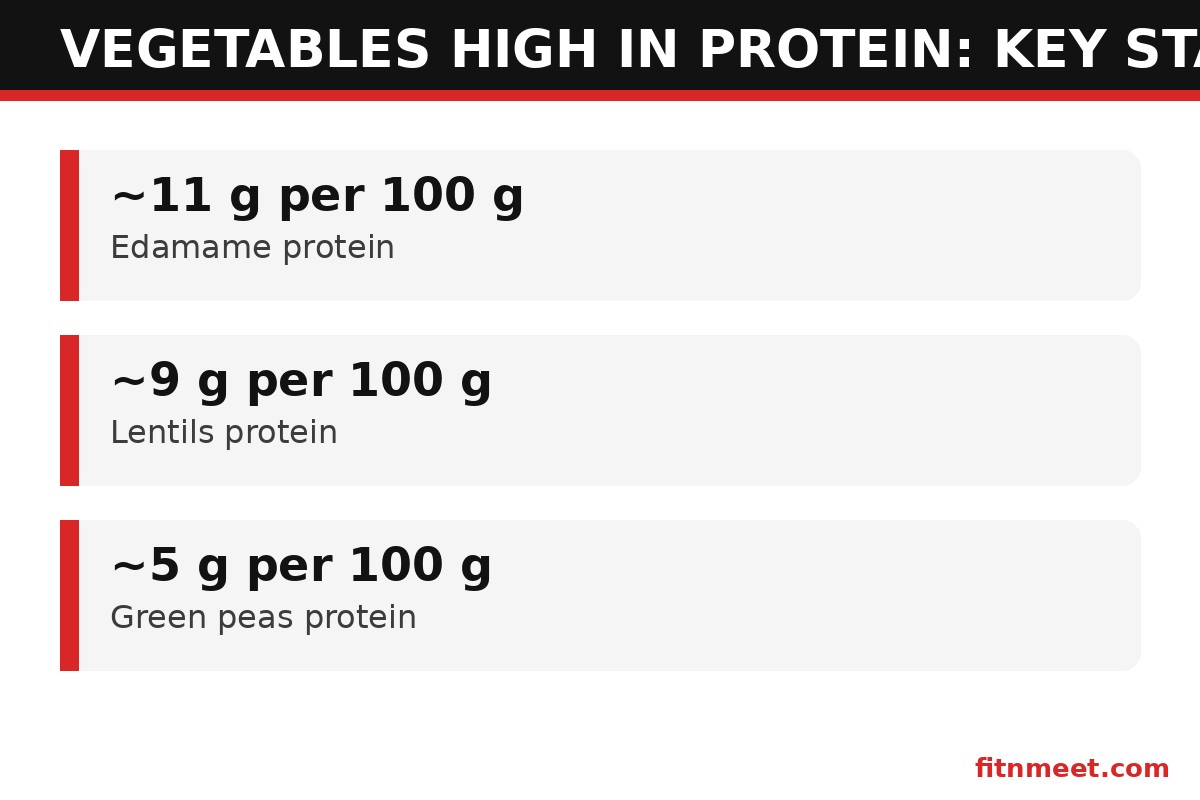
- Pick your protein anchor (aim for 15–25 g).
- Choose one: 150 g edamame (~17 g), 200 g cooked lentils (~18 g), 200 g chickpeas (~18 g), or 150 g tempeh (~28 g).
- This anchor does the heavy lifting; everything else is support.
- Add 2–3 supporting vegetables high in protein.
- Examples: 100 g peas (+5 g), 100 g spinach (+2.9 g), 150 g broccoli (+4.2 g), 100 g Brussels sprouts (+3.4 g).
- Two cups of mixed supporting veg typically add 8–12 g.
- Add a grain for completeness and calories.
- 1 cup cooked quinoa adds ~8 g protein; brown rice adds ~5 g.
- Grains complement legume amino acid profiles (legumes are lower in methionine; grains supply it).
- Finish with a protein-dense topping.
- 30 g pumpkin seeds (+9 g), 2 tbsp nutritional yeast (+8 g), or 50 g feta (+7 g).
- Do the math once, then eyeball forever.
- Example bowl: lentils (18 g) + peas (5 g) + quinoa (8 g) + pumpkin seeds (9 g) = ~40 g protein.
- Build 3–4 template meals from vegetables high in protein and rotate them weekly.
Pro tip: Frozen edamame and peas are nutritionally equal to fresh and cost far less. Keeping your freezer stocked with vegetables high in protein removes the “nothing to cook” excuse.
🛒 High-protein vegetable shopping list
- Dry red lentils, chickpeas, black beans (pantry)
- Frozen edamame and green peas (freezer)
- Fresh spinach, broccoli, Brussels sprouts (produce)
- Quinoa and pumpkin seeds (protein boosters)
Pair your grocery run with training fuel from the FitnMeet protein collection for days when whole food is not enough.
How Much to Eat: Daily Targets
Protein needs depend on activity. The RDA is 0.8 g/kg/day (a minimum, not an optimum), while active adults do best at 1.6–2.2 g/kg/day. For an 80 kg lifter, that is 128–176 g daily — a big number to hit with vegetables high in protein alone, which is why most plant-based athletes combine them with soy foods, grains, and occasionally a protein powder.
A realistic daily framework using vegetables high in protein:
| Meal | What to eat | Protein |
|---|---|---|
| Breakfast | Tofu scramble (150 g tofu) + spinach | ~15 g |
| Lunch | Lentil bowl (200 g lentils) + quinoa + peas | ~31 g |
| Snack | Edamame (100 g) + pumpkin seeds (20 g) | ~17 g |
| Dinner | Chickpea curry (200 g chickpeas) + brown rice + broccoli | ~27 g |
| Total | ~90 g |
That ~90 g from vegetables high in protein covers more than half of an athlete’s target; the remainder comes from grains, nuts, and — if needed — a shake. Read the FitnMeet nutrition articles for more plant-based meal frameworks.
Benefits of Vegetables High in Protein
Did you know? People who get more protein from plant sources show lower markers of inflammation in several large cohort studies — likely thanks to the fiber and phytonutrients that come packaged with vegetables high in protein.
- Double-duty nutrition: Unlike meat, vegetables high in protein deliver fiber (5–15 g per cup of legumes), folate, iron, magnesium, and potassium in the same bite.
- Heart-friendly profile: Swapping some animal protein for legumes is linked to lower LDL cholesterol — legume fiber binds bile acids, increasing cholesterol excretion.
- Budget muscle-building: Dry lentils cost a fraction of meat per gram of protein. A kilogram of dry lentils (~240 g protein) typically costs less than a single chicken breast equivalent.
- Satiety and weight control: The protein-plus-fiber combination is the most filling pairing in nutrition science, making vegetables high in protein ideal for cutting phases.
- Gut health: Legume fibers feed beneficial gut bacteria, producing short-chain fatty acids like butyrate that support colon health.
Mistakes to Avoid
- Counting only “true” vegetables. If you exclude legumes and soy, your list of vegetables high in protein tops out at ~4 g per 100 g and you will never hit meaningful targets.
- Ignoring amino acid completeness. Most plant proteins are low in one essential amino acid (usually methionine or lysine). Pair legumes with grains across the day — you do not need to combine them in a single meal, despite the old myth.
- Jumping from 15 g to 40 g of fiber overnight. Suddenly doubling legume intake causes gas and bloating. Increase vegetables high in protein gradually over 2–3 weeks and drink more water.
- Forgetting leucine. Plant meals are often lower in leucine; soy foods and pumpkin seeds are the best plant leucine sources among vegetables high in protein.
- Raw kidney beans. Undercooked kidney beans contain phytohaemagglutinin, a toxin destroyed by boiling for 10+ minutes. Always boil — slow cookers may not get hot enough.
Vegetables High in Protein: Comparisons
Protein content ranked (per 100 g cooked)
| Vegetable | Protein / 100 g | Fiber / 100 g | Calories / 100 g |
|---|---|---|---|
| Edamame | ~11 g | 5 g | 121 |
| Lentils | ~9 g | 8 g | 116 |
| Chickpeas | ~9 g | 7 g | 164 |
| Black beans | ~9 g | 9 g | 132 |
| Green peas | ~5 g | 6 g | 81 |
| Brussels sprouts | ~3.4 g | 4 g | 43 |
| Artichoke | ~3.3 g | 5 g | 47 |
| Sweet corn | ~3.3 g | 2 g | 86 |
| Mushrooms | ~3.1 g | 1 g | 22 |
| Spinach | ~2.9 g | 2 g | 23 |
| Broccoli | ~2.8 g | 3 g | 35 |
| Asparagus | ~2.2 g | 2 g | 20 |
| Potato | ~2.0 g | 2 g | 77 |
Vegetables high in protein vs animal proteins
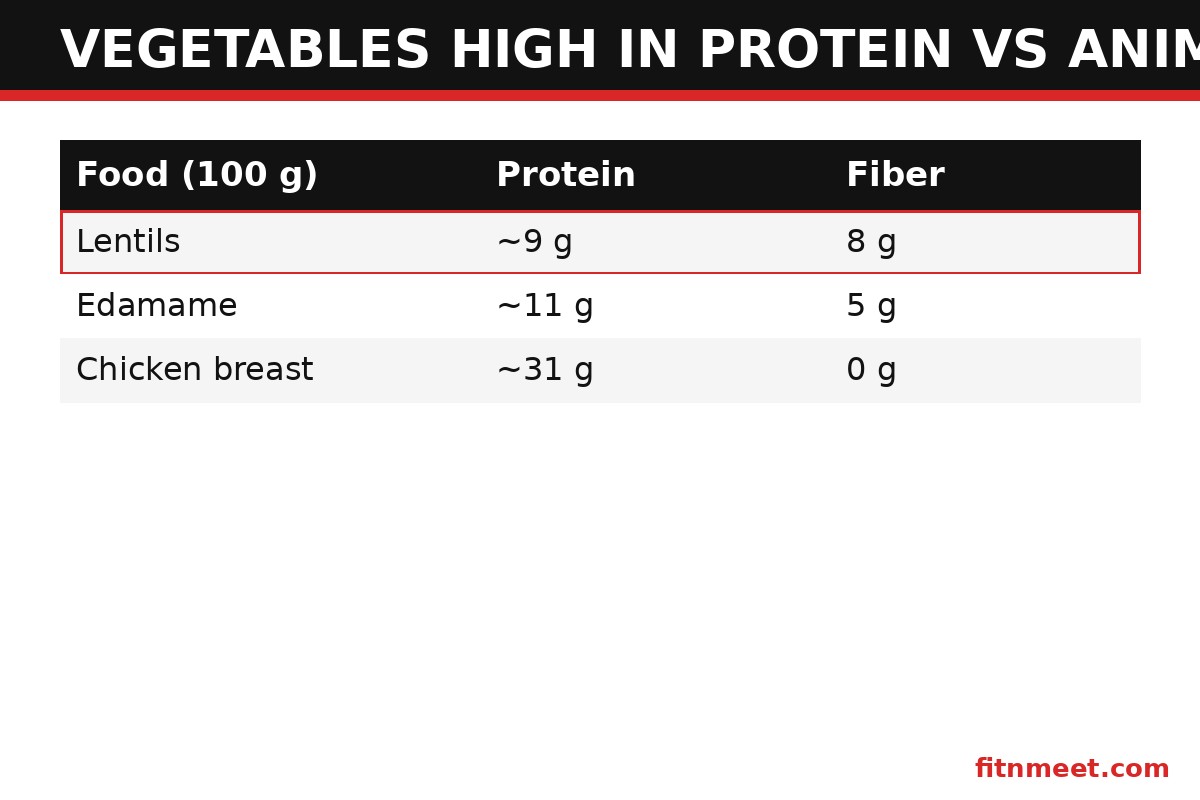
| Food (100 g) | Protein | Fiber | Cost per 20 g protein |
|---|---|---|---|
| Lentils (cooked) | ~9 g | 8 g | Very low |
| Edamame | ~11 g | 5 g | Low |
| Chicken breast | ~31 g | 0 g | Medium |
| Greek yogurt | ~10 g | 0 g | Medium |
| Eggs (2 large) | ~12 g | 0 g | Low |
The takeaway: vegetables high in protein cannot match meat gram-for-gram, but they win on fiber, cost, and versatility. Most successful high-protein plant eaters use both — vegetables and legumes as the base, plus soy foods and grains to close the gap. Background reading: Wikipedia’s overview of protein as a nutrient and the FDA’s daily value reference (50 g protein/day).
Side Effects and Considerations
Vegetables high in protein are among the safest foods you can eat, but a few practical notes apply. The fiber surge from suddenly adding lots of legumes causes gas and bloating in many people — increase portions gradually and rinse canned beans well (rinsing removes some gas-producing oligosaccharides). People with gout should note that legumes are moderately high in purines; they are generally still fine in normal portions but worth discussing with a doctor during flare-ups.
Those with soy allergies should skip edamame, tofu, and tempeh and lean on lentils, peas, and chickpeas instead. And while cruciferous vegetables high in protein like broccoli and Brussels sprouts contain goitrogens, normal cooked portions do not affect thyroid function in people with adequate iodine intake — this is a myth that refuses to die. Explore more plant-powered eating in the FitnMeet health section.
Frequently Asked Questions
Which vegetables are highest in protein?
Edamame tops the list at about 11 g protein per 100 g, followed by lentils, chickpeas and black beans at 8-9 g. Among true vegetables, green peas (5 g), spinach (2.9 g) and broccoli (2.8 g) lead the pack.
Can you get enough protein from vegetables high in protein alone?
It is possible but challenging for athletes. A day built around vegetables high in protein can reach 80-100 g; very active people usually add grains, nuts, soy foods or a protein powder to reach 1.6-2.2 g per kg of bodyweight.
Are beans considered vegetables high in protein?
Botanically beans are legumes, but nutritionally they anchor every practical list of vegetables high in protein. Lentils, chickpeas and black beans deliver 8-9 g protein per 100 g cooked – triple what most true vegetables offer.
What is the best high-protein vegetable for muscle building?
Edamame and tempeh are the best choices: soy is the only plant protein with a perfect 1.0 PDCAAS quality score, and both are rich in leucine, the amino acid that triggers muscle protein synthesis.
How do vegetables high in protein compare to meat?
Gram for gram, meat has 2-3 times more protein. But vegetables high in protein add fiber, cost far less, and still contribute meaningfully – a lentil-and-edamame bowl can match a chicken breast at roughly 30 g protein.
Do vegetables high in protein cause bloating?
They can at first, because legumes are rich in fiber and oligosaccharides. Increase portions gradually over 2-3 weeks, rinse canned beans, drink plenty of water, and your gut bacteria will adapt.
Which vegetables high in protein are best for weight loss?
Broccoli, spinach, green peas and mushrooms – they deliver 2-5 g protein per 100 g for only 20-80 calories, giving huge plate volume. Pair them with lentils or edamame to raise the protein total while keeping calories low.
Conclusion
The best vegetables high in protein — edamame, lentils, chickpeas, peas, and their supporting cast of greens and crucifers — will not replace a steak gram-for-gram, but that was never their job. Their job is to add 20–40 g of quality protein to your day while also delivering fiber, micronutrients, and food volume that animal proteins cannot. Build your meals anchor-first with the step-by-step system above, and hitting your protein target gets noticeably easier — and cheaper.
For days when whole food falls short, the FitnMeet shop has protein options to close the gap, and the FitnMeet blog has more plant-based nutrition guides.
This article is for informational purposes only and is not medical advice. Consult a healthcare professional before making major dietary changes.