
NMN (nicotinamide mononucleotide) is a naturally occurring compound that serves as a direct precursor to NAD+, a coenzyme essential for cellular energy production and DNA repair. NAD+ levels decline with age, and this NAD+ precursor supplementation is being studied for its potential to restore NAD+ levels and support healthy aging.
What Is NMN?
NMN stands for nicotinamide mononucleotide, a nucleotide derived from ribose, nicotinamide, and nicotinamide riboside. It occurs naturally in the human body and in small amounts in foods such as broccoli, cabbage, cucumber, edamame, and avocado. In the body, NMN plays a critical role as the final step before the production of NAD+ (nicotinamide adenine dinucleotide), one of the most important coenzymes in human biology.
To understand why NMN has become one of the most talked-about molecules in longevity science, you first need to understand NAD+. Every cell in your body relies on NAD+ to convert the food you eat into usable cellular energy (ATP). NAD+ also activates sirtuins, a family of proteins linked to DNA repair, gene expression, and cellular stress resistance. The problem is that NAD+ levels decline steadily as we age — research suggests levels may fall by roughly half between young adulthood and middle age in some tissues.
This is where NMN enters the picture. Because it converts directly into NAD+ inside cells, supplementing with this NAD+ precursor is one strategy researchers are investigating to replenish declining NAD+ levels. Unlike plain vitamin B3 (niacin), which must go through several enzymatic steps to become NAD+, NMN is only one conversion step away, making it an efficient precursor. You can read more about the chemistry of NMN on Wikipedia’s nicotinamide mononucleotide page.
It is important to be clear about what this supplement is and is not. It is not a drug, not a hormone, and not a stimulant. It does not give you an energy “buzz” the way caffeine does. Instead, it works at the cellular level, supporting the biochemical machinery your cells use every second of every day. Most of the excitement around it comes from animal research — particularly studies in aging mice — plus a growing but still small number of human clinical trials.
Why NMN Matters: NAD+ and Aging
Scientists describe NAD+ as a “helper molecule” because it assists enzymes in hundreds of metabolic reactions. Two of its most important jobs are energy metabolism and cellular repair. In energy metabolism, NAD+ shuttles electrons in the mitochondria, the power plants of the cell, enabling the production of ATP. In cellular repair, NAD+ is consumed by enzymes called PARPs (involved in DNA repair) and sirtuins (involved in regulating aging-related genes).
Here is the catch: unlike some molecules the body recycles efficiently, NAD+ gets used up. PARPs and sirtuins literally consume NAD+ as they do their work, breaking it down in the process. When you are young, your body replenishes NAD+ quickly. As you age, production slows while consumption continues, creating a deficit. Researchers have linked this NAD+ decline to many hallmarks of aging, including reduced mitochondrial function, slower DNA repair, increased inflammation, and metabolic slowdown.
NMN supplementation aims to refill this deficit. In landmark animal studies, giving NMN to aging mice restored NAD+ levels in multiple tissues and improved markers of metabolic health, vascular function, and physical endurance. A widely cited 2016 study in Cell Metabolism found that long-term NMN administration mitigated age-associated physiological decline in mice. These results sparked intense interest — but mice are not humans, and the leap from rodent studies to human benefits is exactly what current clinical trials are trying to bridge.
For readers of FitnMeet’s anti-aging collection, the practical takeaway is this: NMN is one of the most scientifically interesting — but still early-stage — approaches to supporting cellular health as you age. It is not a magic bullet, and honest discussion of the evidence matters more than hype.
NMN Benefits: What the Research Shows
Let us separate what the science actually supports from what marketing claims. Below are the most-studied potential benefits of NMN, with an honest assessment of the evidence level for each.
1. Restoring NAD+ levels
This is the best-established effect of NMN. Human trials have confirmed that oral NMN supplementation raises NAD+ levels in the blood. A 2022 randomized, double-blind trial found that daily NMN doses of 300 mg, 600 mg, and 900 mg all significantly increased blood NAD+ concentrations in middle-aged adults over 60 days, with the effect being dose-dependent. If your goal with NMN is simply to raise NAD+ — the mechanism everything else depends on — the evidence here is solid.
2. Metabolic health and insulin sensitivity
One of the most encouraging human findings comes from a 2021 randomized trial published in Science (Yoshino et al.). Postmenopausal women with prediabetes who took 250 mg of NMN daily for 10 weeks showed improved muscle insulin sensitivity compared to placebo. Insulin sensitivity is a key marker of metabolic health, and its decline is closely tied to aging and type 2 diabetes risk. That said, this was a small study — 25 participants — and larger trials are needed before drawing firm conclusions about NMN for metabolic health.
3. Physical endurance and muscle function
In aging mice, it improved vascular health and exercise endurance, with treated mice running significantly farther than controls. Human data is thinner but emerging: a 2021 trial in amateur runners found that middle-aged and older adults taking NMN showed dose-dependent improvements in aerobic capacity. For active adults browsing FitnMeet’s sports nutrition range, this is an area to watch — but NMN should not be viewed as a performance enhancer with proven effects in trained athletes yet.
4. Cardiovascular and vascular support
Animal research suggests NMN supports the function of blood vessel linings (endothelial function), which tends to deteriorate with age. Improved endothelial function is associated with healthier blood flow and blood pressure regulation. Human cardiovascular outcome data for NMN does not yet exist, so this remains a promising but unproven benefit.
5. Cellular repair and longevity pathways
By raising NAD+, the supplement indirectly supports sirtuin activity and DNA repair enzymes. In theory, this is the core “longevity” mechanism. In practice, no human study has shown that this NAD+ precursor extends lifespan or healthspan — such trials would take decades. Anyone claiming proven life-extension benefits from it is getting ahead of the science.
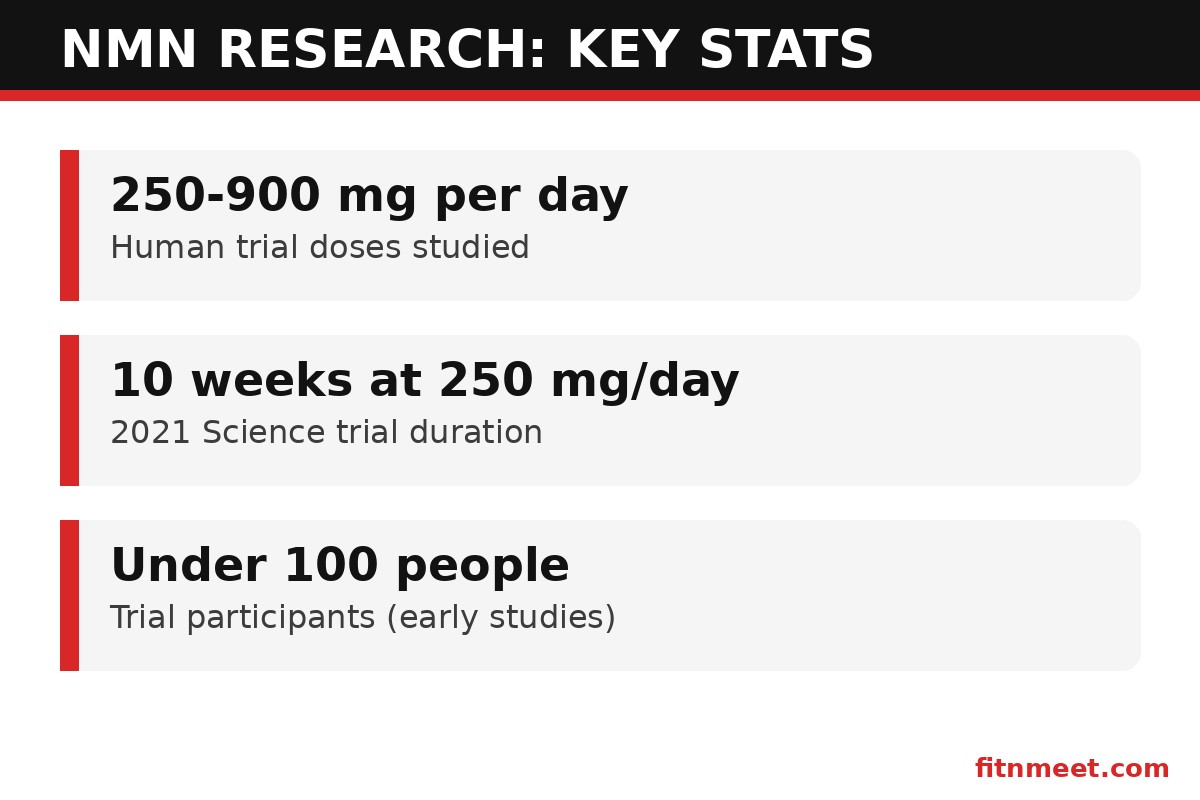
Bottom line on the supplement benefits: this NAD+ precursor reliably raises NAD+ levels in humans. Early trials hint at metabolic and endurance benefits, but the research is young — most studies involve fewer than 100 people and last 2–3 months. Treat it as a promising cellular-health supplement, not a proven anti-aging drug.
NMN Dosage: How Much Should You Take?
There is no officially established dosage, because it is a research-stage supplement rather than an approved nutrient with a recommended daily intake. However, human clinical trials give us useful reference points:
- 250 mg per day: the dose used in the 2021 Yoshino trial that improved muscle insulin sensitivity in postmenopausal women with prediabetes over 10 weeks.
- 300–900 mg per day: the dose range tested in a 60-day trial in middle-aged adults, where all doses raised blood NAD+ levels in a dose-dependent manner.
- Up to 1,000 mg per day: used in some safety trials without serious adverse events reported over short durations.
Most these products on the market offer 250–500 mg per capsule, which aligns with the doses studied in humans. A common-sense starting approach — discussed with your healthcare provider — is to begin at the lower end of the studied range (around 250 mg daily) and assess tolerance before considering higher amounts. More is not automatically better: the dose-response research is still thin, and the long-term effects of high-dose this NAD+ precursor in humans are unknown.
Timing is another open question. Because NAD+ is involved in energy metabolism and circadian rhythm regulation, many users take the supplement in the morning. There is no strong clinical evidence proving morning is superior to evening, but taking it earlier in the day is the most common practice in both trials and real-world use. The supplement can be taken with or without food; some users prefer taking it on an empty stomach for potentially faster absorption, though this has not been rigorously compared.
How to Take NMN (Step-by-Step)
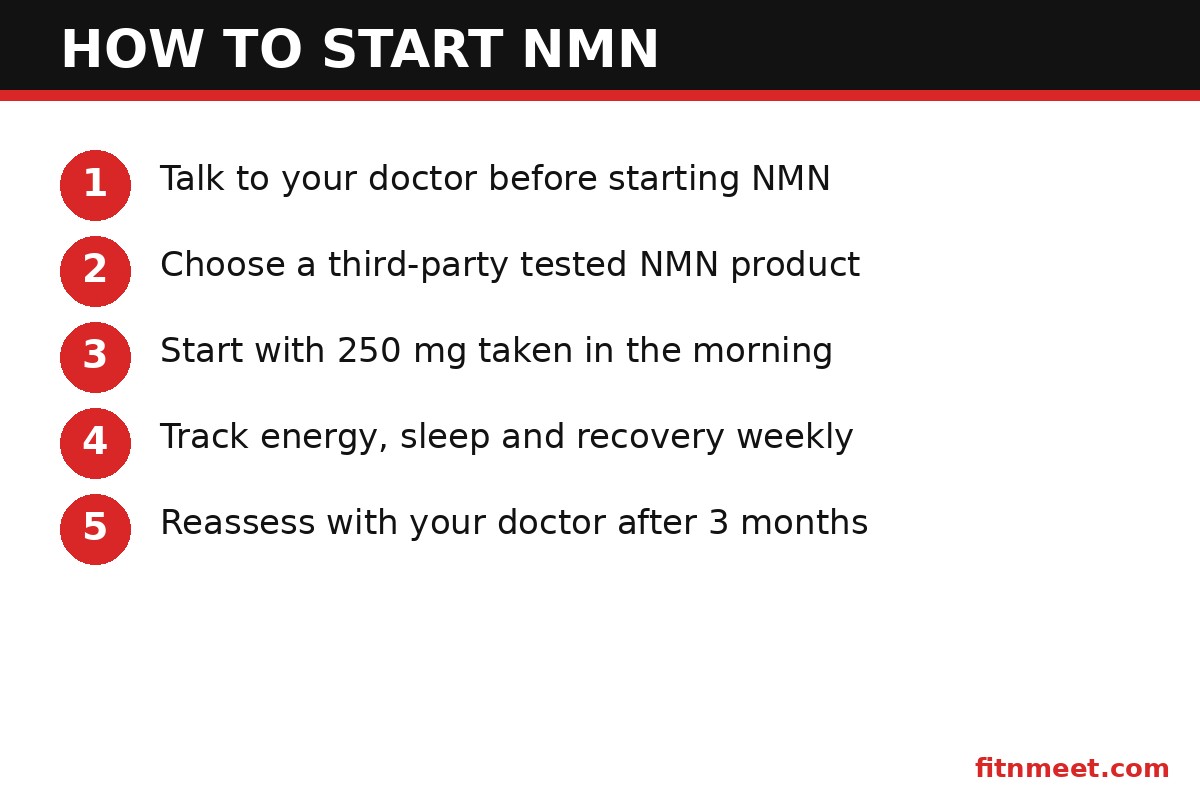
- Talk to your doctor first. This is especially important if you take prescription medications, have a chronic condition, or are pregnant or breastfeeding. This nad+ precursor research is early, and professional guidance matters.
- Choose a reputable product. Look for third-party testing (a certificate of analysis), transparent labeling of the supplement content per serving, and manufacturing in certified facilities. Avoid products making disease-cure claims — those are red flags.
- Start with 250 mg daily. Take it in the morning with water, with or without food, for at least 8–12 weeks — the timeframe used in most human trials.
- Track how you feel. Keep simple notes on energy, sleep quality, and exercise recovery. Subjective tracking will not prove anything scientifically, but it helps you and your doctor evaluate whether continuing makes sense.
- Reassess after 3 months. Review with your healthcare provider whether to continue, adjust the dose, or stop. Supplements should be re-evaluated periodically, not taken on autopilot forever.
NMN vs NR: Which NAD+ Precursor Is Better?
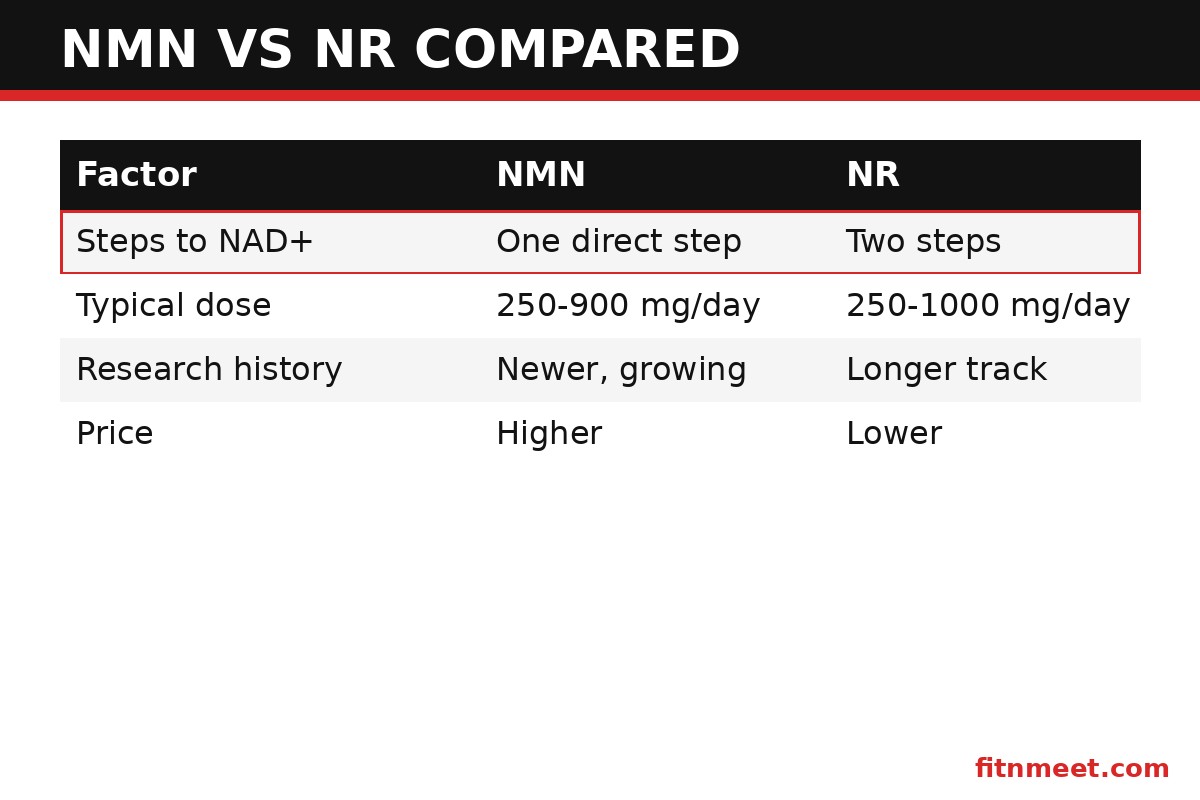
The most common question after “what is the supplement” is how this NAD+ precursor compares to NR (nicotinamide riboside), the other leading NAD+ precursor. Both ultimately raise NAD+, but they differ in a few practical ways:
| Factor | NMN | NR |
|---|---|---|
| Full name | Nicotinamide mononucleotide | Nicotinamide riboside |
| Steps to NAD+ | One (direct conversion) | Two (NR → the supplement → NAD+) |
| Human trial volume | Growing; several small RCTs since 2021 | Larger; studied since the mid-2010s |
| Typical studied dose | 250–900 mg/day | 250–1,000 mg/day |
| US regulatory status | Uncertain — FDA has questioned supplement status | Generally recognized history as supplement ingredient |
| Price | Generally higher | Generally lower |
Head-to-head human trials comparing this NAD+ precursor and NR directly are essentially nonexistent, so claims that one is definitively “better” are not evidence-based. NR has a longer human research history, while it is one step closer to NAD+ biochemically. You can compare the chemistry yourself via Wikipedia’s nicotinamide riboside article. For most people, the practical differences come down to price, availability, and personal response — ideally evaluated with a clinician.
NMN Side Effects and Safety
In published human trials lasting up to 12–24 weeks, It has been generally well tolerated, with no serious adverse events attributed to it. Reported side effects have been mild and infrequent, including occasional digestive discomfort, nausea, or headache — the same mild complaints seen in placebo groups at similar rates.
However, “well tolerated in short trials” is not the same as “proven safe long-term.” Important unknowns remain:
- Long-term safety: no human studies have followed users for years. Theoretical concerns raised in scientific commentary include whether chronically elevated NAD+ could affect processes like cellular senescence, but these are hypotheses, not findings.
- Drug interactions: the supplement’s interactions with prescription medications have not been systematically studied.
- Cancer considerations: because NAD+ supports cellular metabolism generally, some researchers have raised theoretical questions about NAD+ precursors in the context of existing cancers. Anyone with a history of cancer should discuss this NAD+ precursor with their oncologist first.
- Regulatory status: in the United States, the FDA has taken the position that NMN may be excluded from the legal definition of a dietary supplement (the “drug preclusion” provision), creating regulatory uncertainty. The FDA’s dietary supplement Q&A page explains how supplement regulation works generally.
Disclaimer: This article is for informational purposes only and is not medical advice. It is a research-stage supplement. Consult a qualified healthcare professional before starting the supplement or any new supplement, especially if you are pregnant, breastfeeding, managing a medical condition, or taking medication.
Alternatives to NMN
If this NAD+ precursor does not feel like the right fit — because of cost, regulatory uncertainty, or the early-stage evidence — several alternatives support the same NAD+ and cellular-health pathways:
- Nicotinamide riboside (NR): the closest alternative, with a longer human trial history.
- Lifestyle NAD+ boosters: regular exercise, quality sleep, and time-restricted eating all influence NAD+ metabolism — with far stronger evidence than any pill.
- Foundational nutrition: a solid base of vitamins, adequate protein, and micronutrients supports the same metabolic machinery. Browse the FitnMeet shop for everyday essentials.
- Resveratrol and sirtuin support: sometimes stacked with NAD+ precursors in longevity protocols, though evidence is also early.
Frequently Asked Questions About NMN
What does NMN do in the body?
NMN (nicotinamide mononucleotide) is converted directly into NAD+, a coenzyme your cells need for energy production, DNA repair, and regulating aging-related genes. Supplementing with NMN raises NAD+ levels, which naturally decline with age.
How long does it take for NMN to work?
Human trials showing measurable effects (such as raised NAD+ levels or improved insulin sensitivity) typically lasted 8 to 12 weeks of daily supplementation. NMN is not a stimulant, so you should not expect to feel an immediate effect.
What is the best NMN dosage?
There is no official recommended dosage. Human trials have used 250 mg to 900 mg per day, with 250 mg daily being the most common starting point studied. Always discuss dosage with a healthcare professional.
Is NMN better than NR?
No head-to-head human trial has proven one superior. NR has a longer research history, while NMN is biochemically one step closer to NAD+. Both raise NAD+ levels in humans.
Are there side effects of NMN?
In short-term human trials, NMN has been well tolerated with only mild, infrequent side effects such as digestive discomfort or headache. Long-term safety data does not yet exist.
Should I take NMN in the morning or at night?
Most users and trials use NMN in the morning, since NAD+ is tied to energy metabolism and circadian rhythms. No clinical trial has proven one timing superior, so consistency matters more than the hour.
Conclusion
It is one of the most genuinely interesting molecules in modern longevity research: a direct NAD+ precursor with solid mechanistic rationale, encouraging animal data, and a small but growing base of human trials showing it raises NAD+ and may support metabolic health. It is equally important to remember what it is not — not a proven life-extender, not a substitute for exercise and sleep, and not without open questions about long-term safety and regulation.
If you decide to explore this NAD+ precursor, do it the smart way: discuss it with your doctor, choose a third-party-tested product, start with a studied dose, and keep your foundations strong. For everyday cellular-health support, explore FitnMeet’s anti-aging collection and learn more about FitnMeet — and check the FitnMeet blog for more science-based guides.