
The best protein powder is a high-quality, third-party-tested powder that fits your goals: whey isolate for maximum protein per serving, whey concentrate for value, or plant blends for dairy-free diets. Look for 20–30 grams of protein per serving, minimal added sugars, and a complete amino acid profile.
Protein Powder: Key Stats at a Glance
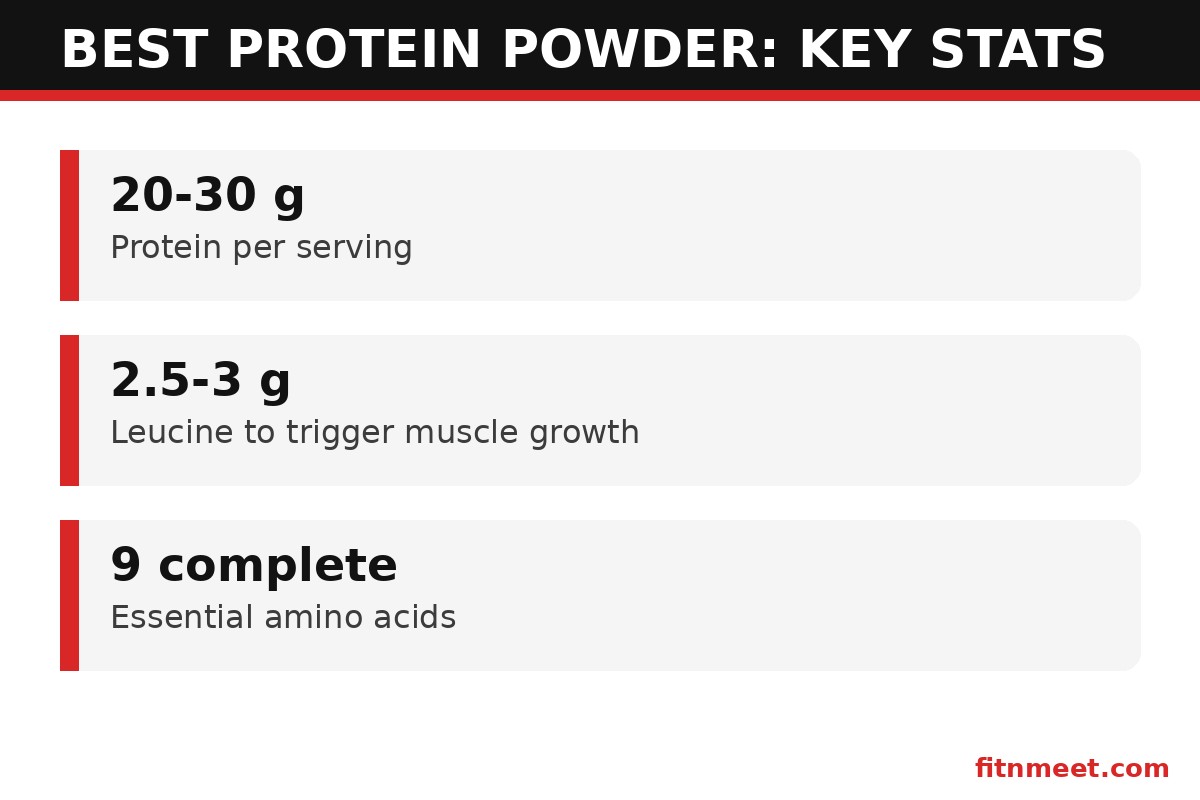
20–30 g — protein per serving in the best protein powder products · 9 — essential amino acids in a complete protein · 2.5–3 g — leucine per serving needed to trigger muscle protein synthesis · ~1.6 g/kg — daily protein target for active adults building muscle
What Is Protein Powder?
Protein powder is a concentrated source of dietary protein made by extracting protein from animal or plant foods and drying it into powder form. The best protein powder products deliver 20–30 grams of protein per serving with minimal fillers, and they exist to solve a simple problem: most active people struggle to eat enough protein from whole foods alone to support muscle repair, recovery, and growth.
The category breaks into a few major families. Whey protein — derived from milk during cheese production — is the most popular and most studied; Wikipedia’s whey protein article details how it is filtered and dried. Casein, the other milk protein, digests slowly. Plant-based powders (pea, rice, soy, hemp blends) serve dairy-free and vegan athletes. Egg white protein sits in between as a dairy-free complete protein. Each type can be the best protein powder for a different person — which is exactly why “best” depends on your goals, digestion, diet, and budget rather than a single universal winner.
Quality markers separate the best protein powder from mediocre ones: a complete essential amino acid profile, third-party testing for heavy metals and banned substances (look for NSF Certified for Sport or Informed-Sport marks), transparent labeling with protein content verified per serving, and no proprietary blends hiding underdosed ingredients. FitnMeet’s protein collection focuses on these quality basics.
Benefits of the Best Protein Powder
Supports muscle growth and repair
The headline benefit. Resistance training creates microscopic muscle damage; dietary protein supplies the amino acids needed to repair and build that tissue. Meta-analyses of randomized trials consistently show that protein supplementation augments the muscle-building effects of resistance training, with the clearest benefits in people whose baseline protein intake is low. The best protein powder for muscle gain is typically a whey isolate or concentrate with at least 2.5 g of leucine per serving — leucine is the key amino acid that switches on muscle protein synthesis.
Convenient, measurable protein intake
A chicken breast has roughly 30 g of protein — but also requires cooking, chewing, and planning. The best protein powder delivers a similar amount in 30 seconds with a shaker bottle, and the dose is printed on the label. For busy lifters, that measurability is the real benefit: you know exactly what you consumed, which makes hitting daily targets far easier.
Supports fat loss while preserving muscle
During a calorie deficit, the body tends to break down muscle along with fat. Higher protein intake — around 1.6–2.2 g per kg of body weight daily — helps preserve lean mass while dieting. Protein is also the most satiating macronutrient, so the best protein powder for weight loss can double as a hunger-management tool between meals.
Recovery and reduced soreness
Fast-digesting protein after training supplies amino acids during the post-workout recovery window. While total daily protein matters more than precise timing, many athletes find that the best protein powder taken within a couple of hours after training supports consistent recovery — especially when paired with FitnMeet’s workout recovery nutrition basics like sleep and hydration.
How Protein Powder Works
Your body builds and repairs tissue using amino acids — the building blocks of protein. Of the 20 amino acids, 9 are “essential,” meaning you must get them from food; Wikipedia’s protein nutrient article lists all nine. The best protein powder is simply a dense, convenient delivery system for these amino acids, particularly the branched-chain amino acids (BCAAs) leucine, isoleucine, and valine.
Here is the mechanism in plain language. When you drink a protein shake, digestion breaks the protein into amino acids and peptides that enter your bloodstream. Rising blood amino acid levels — especially leucine — activate a cellular pathway called mTOR, which signals muscle cells to start building new muscle protein. This process, muscle protein synthesis, runs for several hours after each protein-rich meal. The best protein powder does not do anything magical here; it just delivers the raw materials efficiently. Whey digests fast (amino acids peak within about an hour), making it popular post-workout, while casein clots in the stomach and releases amino acids slowly over 6–8 hours, making it popular before bed.
One nuance worth knowing: your body can only use so much protein for muscle building in one sitting. Research suggests roughly 0.3–0.4 g of protein per kg of body weight per meal (about 25–40 g for most adults) maximally stimulates muscle protein synthesis. Beyond that, extra protein is simply used as energy or excreted. So the best protein powder strategy is spreading 3–5 protein-rich meals across the day — not chugging a triple-scoop shake once.
How to Choose the Best Protein Powder: The Checklist
Use this checklist to find the best protein powder for your situation. Check off each box as you evaluate a product:
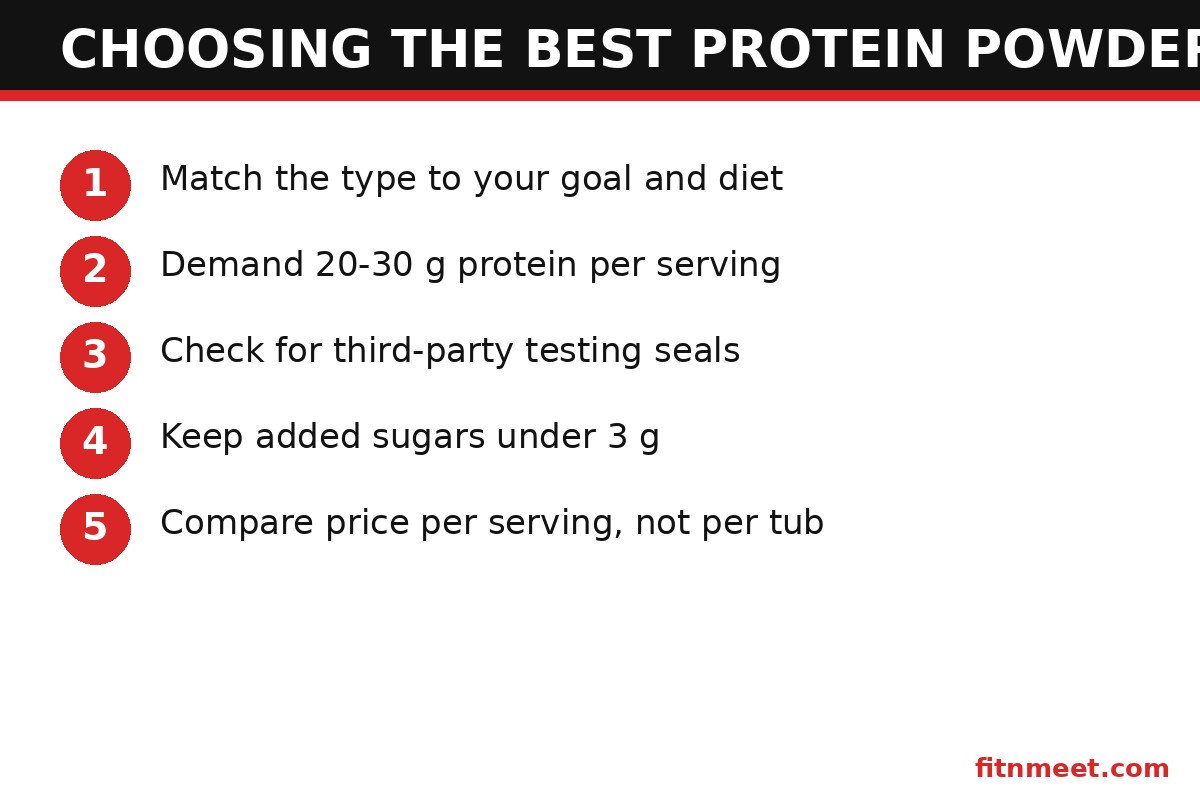
- ☐ Goal match: muscle gain → whey isolate or concentrate; dairy-free → pea/rice blend or soy; nighttime → casein; budget → concentrate.
- ☐ 20–30 g protein per serving with the exact grams stated on the label — not hidden in a proprietary blend.
- ☐ Complete amino acid profile with at least 2.5 g leucine per serving (check the label or amino acid profile).
- ☐ Third-party tested: NSF Certified for Sport, Informed-Sport, or equivalent — especially if you compete in tested sports.
- ☐ Low in added sugars: under ~3 g sugar per serving unless it is a mass gainer (a different product category).
- ☐ Digestibility: whey isolate or hydrolysate if concentrate causes bloating; look for added digestive enzymes if you are sensitive.
- ☐ Taste and mixability you will actually use: the best protein powder is the one you drink consistently. Sample single servings before committing to a 5 lb tub.
- ☐ Price per serving: divide tub price by servings. The best protein powder for your wallet is often a well-reviewed concentrate, not the priciest isolate.
A practical example: if you are a 180 lb lifter who tolerates dairy and trains 4 days a week, the best protein powder for you is probably a whey isolate like FitnMeet’s whey protein isolate — high protein per serving, low lactose, easy digestion. If you are dairy-sensitive or vegan, a chocolate pea-rice blend such as FitnMeet’s vegan protein powder may be the best protein powder choice for your diet. Context decides.
Protein Powder Dosage: How Much Do You Need?
Protein powder dosage is really a question about total daily protein. Evidence-based targets from sports nutrition research:
- Sedentary adults: ~0.8 g per kg of body weight (the basic RDA) — most people need no powder at all.
- Active adults / general fitness: 1.2–1.6 g per kg daily.
- Building muscle: 1.6–2.2 g per kg daily — the range where meta-analyses show maximal benefit for lean mass gains.
- Dieting / fat loss: 1.8–2.4 g per kg daily to preserve muscle in a deficit.
Do the math for yourself: a 180 lb (82 kg) lifter building muscle needs roughly 130–180 g of protein per day. If whole foods provide 100 g, one or two scoops of the best protein powder (25–50 g) closes the gap exactly. That is the right way to think about dosage — powder fills the gap between your diet and your target; it does not replace meals. The NIH Office of Dietary Supplements fact sheet on protein for exercise performance provides the professional-level background on these numbers.
Timing matters less than totals, but a sensible pattern is: one serving within a few hours after training, and optionally one serving at another low-protein meal (many people skimp on protein at breakfast). The best protein powder habit is consistency across weeks, not precision to the minute.
Best Protein Powder Types Compared
| Type | Best for | Protein/serving | Digestion speed | Watch-outs |
|---|---|---|---|---|
| Whey concentrate | Best value muscle building | 22–25 g | Fast | Contains some lactose; may bloat sensitive users |
| Whey isolate | Maximum protein, low lactose | 25–30 g | Fast | Pricier; still dairy-based |
| Whey hydrolysate | Sensitive stomachs | 23–28 g | Fastest | Most expensive; can taste bitter |
| Casein | Nighttime / meal replacement | 22–25 g | Slow (6–8 h) | Thick texture; dairy-based |
| Pea + rice blend | Vegan complete protein | 20–25 g | Medium | Earthy taste; check leucine content |
| Soy isolate | Vegan, complete aminos | 23–27 g | Medium | Some avoid due to phytoestrogen concerns (evidence is weak) |
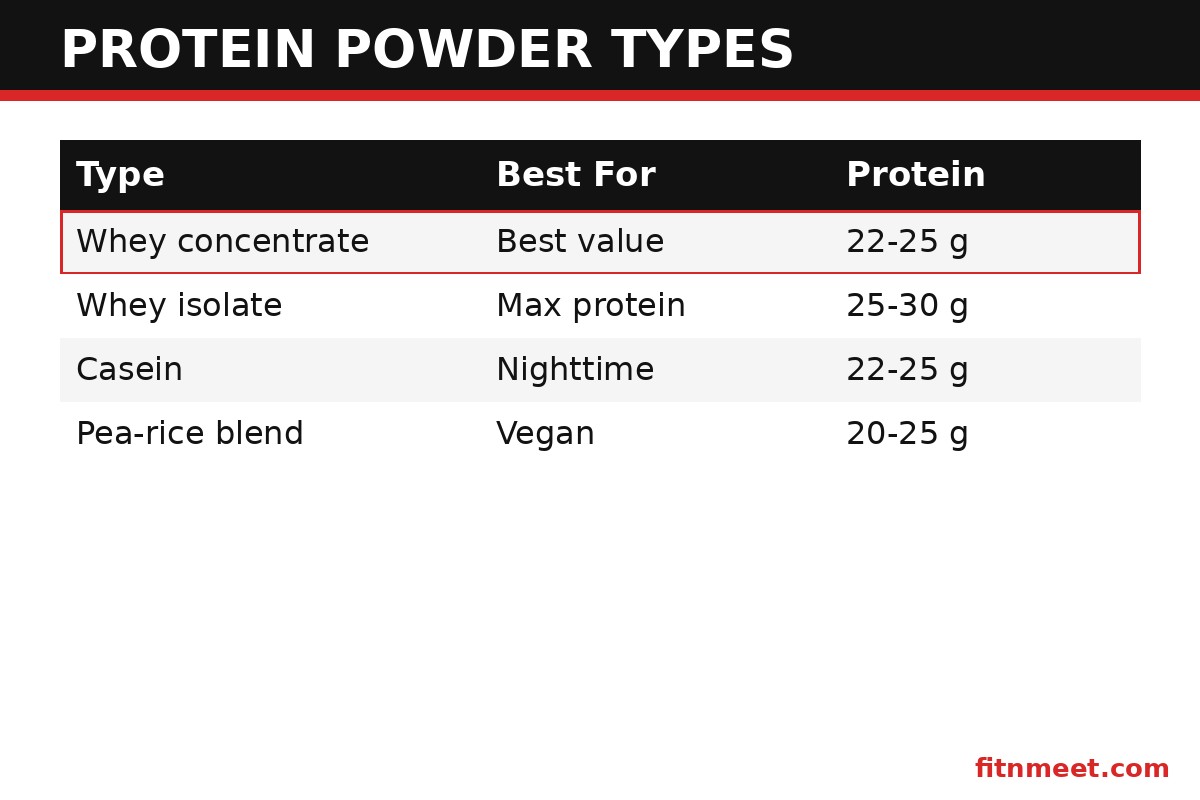
For most gym-goers, the practical winner is simple: whey isolate if your budget allows and you tolerate dairy — it is the best protein powder for pure protein per serving. Whey concentrate is the best protein powder for value. A pea-rice blend is the best protein powder for vegan athletes. Anyone telling you there is one “best protein powder” for all 8 billion humans is selling something.
Side Effects and Safety
Protein powder is one of the most studied supplements in existence, and for healthy adults it has an excellent safety record. The main issues are practical, not dangerous:
- Digestive discomfort: bloating or gas, usually from lactose in whey concentrate — switching to an isolate or a plant-based best protein powder typically resolves it.
- Heavy metals: independent testing organizations have occasionally found trace heavy metals in some protein powders. This is why third-party testing (NSF, Informed-Sport) matters when choosing the best protein powder — it is the single most important quality filter.
- Kidney concerns: high protein intake does not damage healthy kidneys — that myth comes from studies on people with pre-existing kidney disease. If you have kidney issues, discuss protein intake with your doctor first.
- Added junk: some mass-market powders pack in sugars, artificial sweeteners, and fillers. The best protein powder labels are short and legible.
Disclaimer: This article is for informational purposes only and is not medical advice. Consult a healthcare professional about your protein needs, especially if you have kidney disease, are pregnant, or manage a chronic condition.
Alternatives to Protein Powder
No powder is mandatory. Whole-food alternatives that deliver 25–30 g of protein per serving include:
- Greek yogurt (1 cup): ~20–25 g protein, plus probiotics.
- Cottage cheese (1 cup): ~25 g protein, slow-digesting casein.
- Chicken breast (4 oz): ~35 g protein, minimal fat.
- Lentils + rice (1.5 cups cooked): ~18 g protein, fully plant-based and cheap.
- Ready-to-drink shakes: the same best protein powder formulas in grab-and-go bottles for travel days.
Powder wins on convenience and cost per gram; whole foods win on micronutrients and satiety. Most successful athletes use both — and round out their stack with muscle development nutrition and the broader FitnMeet shop range.
Frequently Asked Questions About the Best Protein Powder
What is the best protein powder for muscle gain?
For muscle gain, the best protein powder is typically a whey isolate or whey concentrate with 25-30 grams of protein and at least 2.5 grams of leucine per serving. Whey is the most studied protein for muscle protein synthesis, and meta-analyses show it augments lean mass gains from resistance training.
Is whey or plant protein powder better?
Whey generally has a slight edge for muscle building due to higher leucine content and faster digestion. However, a well-formulated pea and rice blend provides a complete amino acid profile and works well for dairy-free or vegan athletes. The best protein powder for you depends on your diet and digestion.
How many scoops of protein powder per day?
Most people need 1-2 scoops (25-50 grams of protein) per day to fill the gap between their diet and their target of 1.6-2.2 grams of protein per kilogram of body weight. Calculate your whole-food intake first, then use powder to close the gap.
When should I drink protein powder?
Total daily protein matters more than exact timing, but a practical pattern is one serving within a few hours after training and optionally one at a low-protein meal like breakfast. Consistency across weeks beats precision to the minute.
Does protein powder cause kidney damage?
No. In healthy adults, high protein intake does not damage the kidneys. This myth comes from research on people with pre-existing kidney disease, who do need to moderate protein. If you have kidney issues, talk to your doctor first.
What should I avoid in a protein powder?
Avoid proprietary blends that hide protein amounts, excessive added sugars (over 5 grams per serving in a standard powder), and products without third-party testing. The best protein powder has a short, transparent label with verified protein content.
Conclusion
The best protein powder is not a single product — it is the product that matches your goals, diet, digestion, and budget while clearing the quality bar: 20–30 g of complete protein per serving, third-party testing, and a clean label. For most lifters that means a whey isolate or concentrate; for dairy-free athletes, a quality plant blend.
Start with the checklist above, calculate your actual daily protein gap, and choose accordingly. Browse FitnMeet’s protein powder collection to compare options, explore the muscle development range for a complete stack, and keep reading the FitnMeet blog for more evidence-based nutrition guides.