
High protein foods are foods that deliver a large amount of protein relative to their calories — generally at least 10 grams of protein per serving. The best high protein foods include chicken breast, fish, eggs, Greek yogurt, lentils, and tofu, supporting muscle growth, satiety, and healthy weight management.
What Are High Protein Foods?
A food earns the “high protein” label when it provides a substantial dose of protein relative to its calorie count — as a rule of thumb, at least 10 grams of protein per serving, or 20%+ of its calories from protein. Protein, as Wikipedia’s nutrient article explains, is built from amino acids, nine of which are essential and must come from your diet. High protein foods are simply the most efficient vehicles for delivering those amino acids.
Pro tip: Judge high protein foods by protein density, not just total grams. 30 g of protein in a 600-calorie meal is less impressive than 30 g in 300 calories when you are managing body composition.
Protein quality matters too. Animal-based high protein foods (meat, dairy, eggs) are “complete” — they contain all nine essential amino acids in good proportions. Most plant-based high protein foods are incomplete on their own but become complete when combined (rice + beans, hummus + pita). Variety across the day solves this naturally, so plant-based eaters have nothing to fear as long as they mix sources.
Why High Protein Foods Matter
Three evidence-backed reasons to build your diet around high protein foods:
1. Muscle maintenance and growth. Resistance training plus adequate protein is the proven formula for building lean mass. Research consistently shows intakes around 1.6–2.2 g of protein per kg of body weight maximize muscle growth in active adults. High protein foods are how you hit those numbers without living on shakes.
2. Satiety and fat loss. Protein is the most satiating macronutrient — it suppresses hunger hormones like ghrelin more effectively than carbs or fat. In calorie deficits, diets rich in high protein foods preserve lean mass while fat comes off, which is why FitnMeet’s weight loss nutrition guidance starts with protein targets.
3. Metabolic health. Protein has the highest thermic effect of food — your body burns roughly 20–30% of protein calories just digesting it, versus 5–10% for carbs and 0–3% for fat. Higher-protein diets are also associated with better blood sugar control and healthier aging, partly because they help preserve muscle mass, which is a key metabolic organ.
The 25 Best High Protein Foods
Ranked by protein per typical serving, grouped for easy meal planning. All values are approximate for standard servings.
Meat & poultry high protein foods
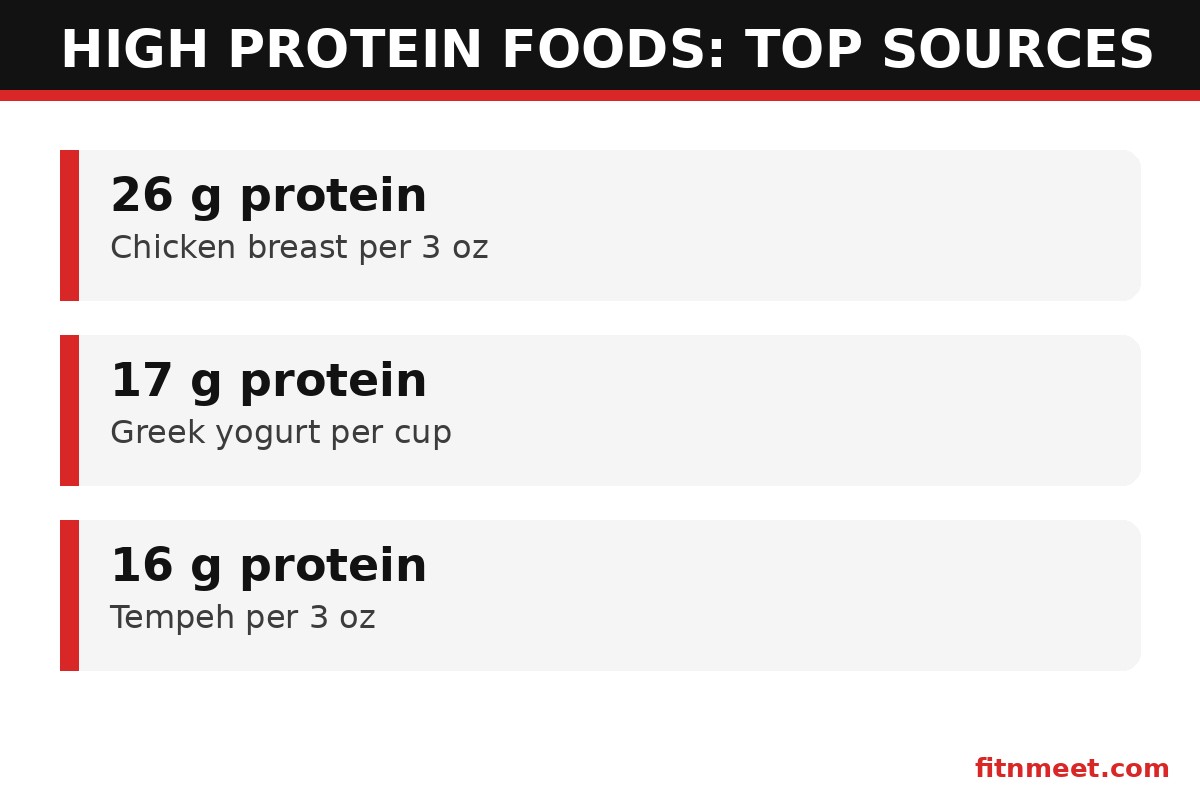
- Chicken breast (3 oz cooked): 26 g protein. The undisputed king of high protein foods — lean, cheap, versatile. The backbone of most muscle-building diets.
- Turkey breast (3 oz cooked): 26 g protein. Nutritionally near-identical to chicken; choose based on price and preference.
- Lean beef, 90% lean (3 oz cooked): 25 g protein. Also rich in iron, zinc, and creatine — nutrients lifters need.
- Pork tenderloin (3 oz cooked): 22 g protein. The leanest cut of pork; comparable to chicken breast in leanness.
Fish & seafood high protein foods
- Tuna, canned in water (3 oz): 25 g protein. Pantry-friendly high protein food; watch mercury intake if eating daily — vary with other fish.
- Halibut (3 oz cooked): 23 g protein. Mild white fish, excellent protein density.
- Salmon (3 oz cooked): 22 g protein. Slightly less protein than white fish but adds heart-healthy omega-3 fats.
- Shrimp (3 oz cooked): 18 g protein. Very low calorie for the protein delivered — ideal during fat loss.
Dairy & egg high protein foods
- Greek yogurt, plain (170 g): 17 g protein. Twice the protein of regular yogurt; the ultimate high protein food snack.
- Cottage cheese (1/2 cup): 14 g protein. Slow-digesting casein makes it a great evening high protein food.
- Eggs (2 large): 12 g protein. The reference standard for protein quality; affordable and endlessly versatile.
- Milk (1 cup): 8 g protein. Simple, cheap; chocolate milk is a legitimately effective post-workout option.
- Cheddar cheese (1 oz): 7 g protein. Calorie-dense, so portion it — but a genuine high protein food.
Pro tip: Plain Greek yogurt + a scoop of protein powder = a 40 g protein snack that tastes like dessert.
Plant-based high protein foods
- Tempeh (3 oz): 16 g protein. Fermented soy; the highest-protein whole plant food on this list.
- Tofu, firm (1/2 cup): 10 g protein. Absorbs any flavor; press it before cooking for the best texture.
- Edamame (1/2 cup shelled): 9 g protein. A complete plant protein — rare and valuable.
- Lentils (1/2 cup cooked): 9 g protein. Cheap, fiber-rich high protein food; pair with rice for complete aminos.
- Pumpkin seeds (1 oz): 9 g protein. The highest-protein seed; great on salads and oatmeal.
- Quinoa (1 cup cooked): 8 g protein. One of few complete-protein grains.
- Chickpeas (1/2 cup): 7 g protein. Hummus counts — especially with whole-grain pita.
- Black beans (1/2 cup): 7 g protein. Pair with corn or rice for a complete amino acid profile.
- Peanuts (1 oz): 7 g protein. Protein plus healthy fats; watch portions (calorie-dense).
- Almonds (1 oz): 6 g protein. Good, but more of a fat source — treat as a bonus, not a primary high protein food.
- Oats, dry (1/2 cup): 5 g protein. The highest-protein common grain; cook with milk and add nuts to push past 15 g.
How to Build a High Protein Day (Step-by-Step)
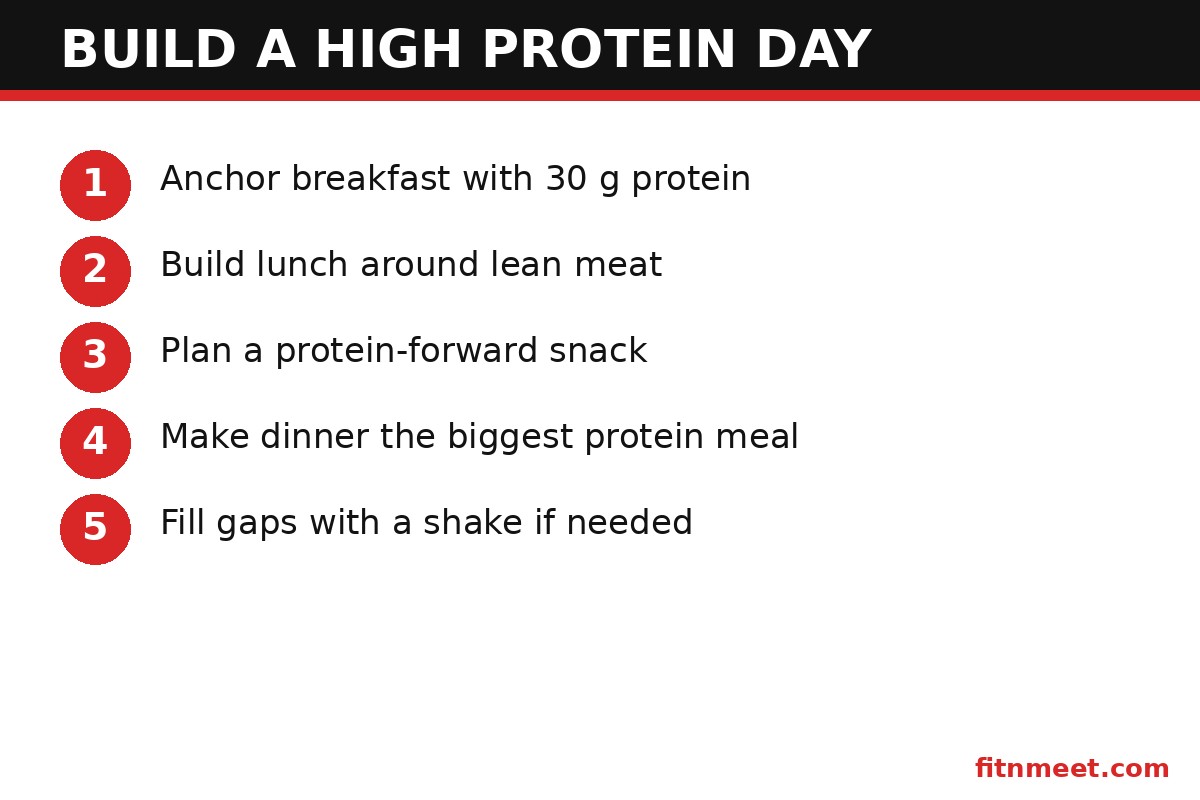
Knowing the list is not enough — here is how to assemble it into a day delivering roughly 150 g of protein (suitable for a ~75 kg active adult).
Step 1 — Anchor breakfast with 30 g. Greek yogurt (17 g) + oats cooked in milk (10 g) + almonds (6 g) ≈ 33 g. Most people undereat protein at breakfast; fixing this one meal changes everything.
Step 2 — Build lunch around a palm-and-a-half of protein. Chicken breast (26 g) + quinoa (8 g) + chickpeas (7 g) over greens ≈ 40 g. Batch-cook the chicken on Sunday.
Step 3 — Plan a protein-forward snack. Cottage cheese (14 g) with pumpkin seeds (9 g) ≈ 23 g — kills the 4 p.m. slump better than coffee.
Step 4 — Make dinner the biggest protein meal. Salmon (22 g) + lentils (9 g) + edamame (9 g) ≈ 40 g. Rotate fish, beef, tofu, and tempeh through the week.
Step 5 — Fill gaps with a shake if needed. If whole foods land you at 120 g, one scoop of protein powder (25 g) from FitnMeet’s sports nutrition range closes the gap. For a convenient option, a whey protein isolate shake delivers 25 grams with minimal carbs, which helps on training days when whole food is not practical. Powder is a tool, not a foundation.
Animal vs Plant: High Protein Foods Compared
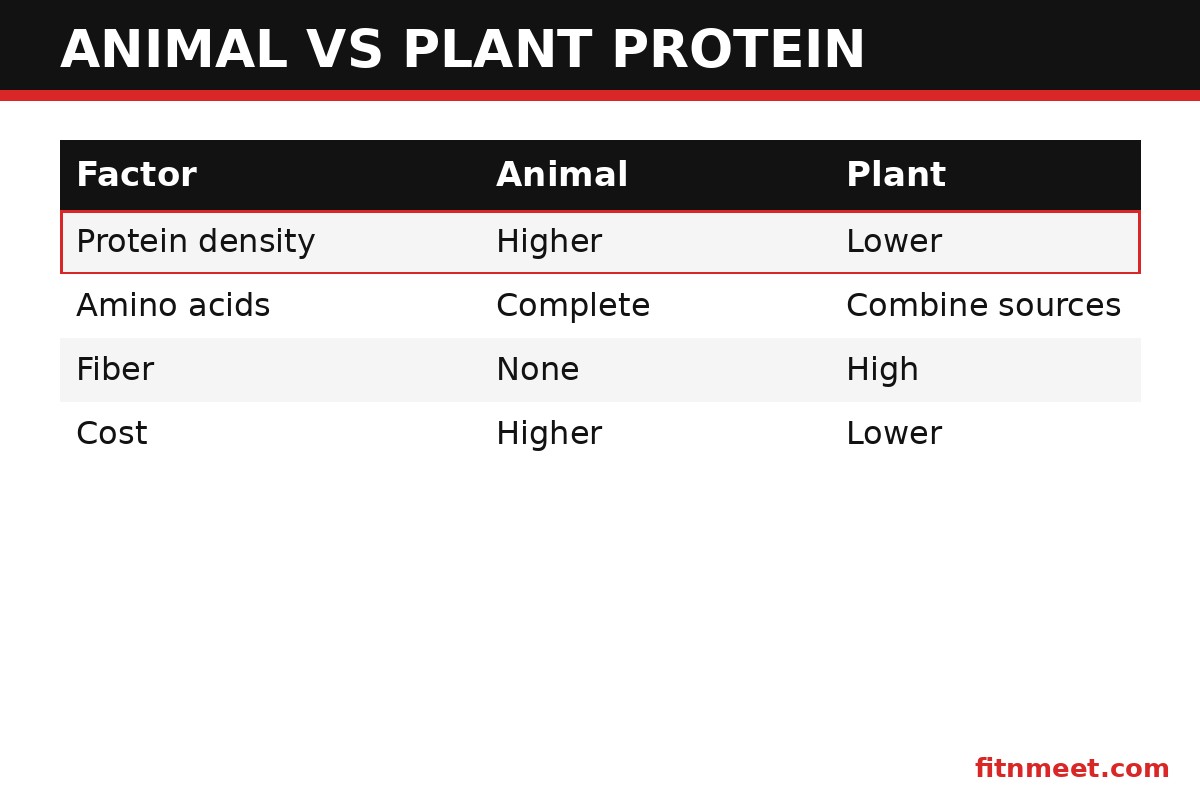
| Factor | Animal high protein foods | Plant high protein foods |
|---|---|---|
| Protein density | Higher per serving | Lower; need larger portions |
| Amino acid profile | Complete | Mostly incomplete — combine sources |
| Leucine per meal | Easily hits 2.5 g+ threshold | Needs planning (soy, blends) |
| Fiber | None | High — bonus for gut health |
| Cost | Higher (meat, fish) | Lower (beans, lentils) |
| Best for | Maximum muscle building simplicity | Health, budget, ethics, environment |
For more on fueling training, browse FitnMeet’s nutrition articles and the full FitnMeet shop.
Mistakes to Avoid with High Protein Foods
- Ignoring protein at breakfast. Skipping morning protein wastes the easiest win of the day — redistribute, don’t just add.
- Assuming “high protein” on the label means healthy. Many protein bars and snacks are candy bars with whey. Read the sugar and ingredient list.
- Eating only chicken breast. Variety prevents diet fatigue and covers micronutrients — rotate through all 25 high protein foods on this list.
- Neglecting fiber. All-animal high protein diets can constipate. Keep beans, lentils, and vegetables in the rotation.
- Overcooking lean proteins. Dry chicken breast is why people quit high protein diets. Brine it, don’t nuke it.
- Forgetting hydration. Higher protein intake pairs best with higher water intake — aim for pale-yellow urine as your gauge.
Side Effects and Safety
For healthy people, diets built on high protein foods are safe and well-studied. A few honest caveats:
- Kidneys: high protein does not damage healthy kidneys; the concern applies only to pre-existing kidney disease.
- Digestion: jumping from low to very high protein quickly can cause bloating — increase gradually over 1–2 weeks.
- Processed meats: bacon, sausage, and deli meats are technically high protein foods, but regular processed-meat intake is linked to health risks. Prefer the unprocessed options on this list.
- Mercury in fish: vary your seafood; the FDA’s advice on eating fish lists the best low-mercury choices.
Disclaimer: This article is for informational purposes only and is not medical advice. Protein needs vary with age, kidney function, and health conditions — consult a healthcare professional for personalized guidance.
Frequently Asked Questions About High Protein Foods
What are the highest protein foods per serving?
Per typical serving, the highest protein foods are chicken and turkey breast (26 grams per 3 ounces), lean beef and canned tuna (25 grams), salmon and pork tenderloin (22 grams), and Greek yogurt (17 grams per cup). These animal-based options lead on protein density.
What are the best high protein foods for vegetarians?
The best vegetarian high protein foods are tempeh (16 grams per 3 ounces), firm tofu (10 grams per half cup), edamame and lentils (9 grams per half cup), Greek yogurt and cottage cheese (14-17 grams), and eggs (6 grams each). Combining grains with legumes provides complete amino acid profiles.
How much protein do I need per day?
Active adults generally need 1.2-1.6 grams of protein per kilogram of body weight daily; those building muscle should target 1.6-2.2 grams per kilogram. For a 75 kg (165 lb) person, that is roughly 120-165 grams of protein from high protein foods each day.
Are high protein foods good for weight loss?
Yes. Protein is the most satiating macronutrient, and higher-protein diets help preserve lean muscle during calorie deficits. Aim for 1.8-2.4 grams per kilogram daily while dieting, built around the high protein foods on this list.
Can you get enough protein on a plant-based diet?
Absolutely. Tempeh, tofu, edamame, lentils, chickpeas, quinoa, and soy milk are all strong plant-based choices. The key is variety and volume – combine legumes with grains through the day, and consider a plant protein powder to fill gaps.
Is too much protein bad for your kidneys?
In healthy people, no – high protein intake does not damage healthy kidneys. This concern comes from studies on people with pre-existing kidney disease. If you have kidney issues, discuss protein targets with your doctor before increasing intake.
What is a good high protein breakfast?
Greek yogurt with oats and nuts (30+ grams), a 3-egg omelet with cheese (24 grams), or cottage cheese with pumpkin seeds (23 grams) are all excellent high protein breakfasts that keep you full until lunch.
Conclusion
High protein foods are the foundation every fitness goal is built on — muscle growth, fat loss, satiety, and healthy aging all run on adequate protein. Start with the 25 foods on this list, anchor each meal with a protein source using the 5-step day plan, and track for two weeks until it becomes habit.
When whole foods fall short, FitnMeet’s protein collection fills the gap, and the FitnMeet blog has more evidence-based nutrition guides. Pick three high protein foods from this list to add to your next grocery run — your future self will thank you.