
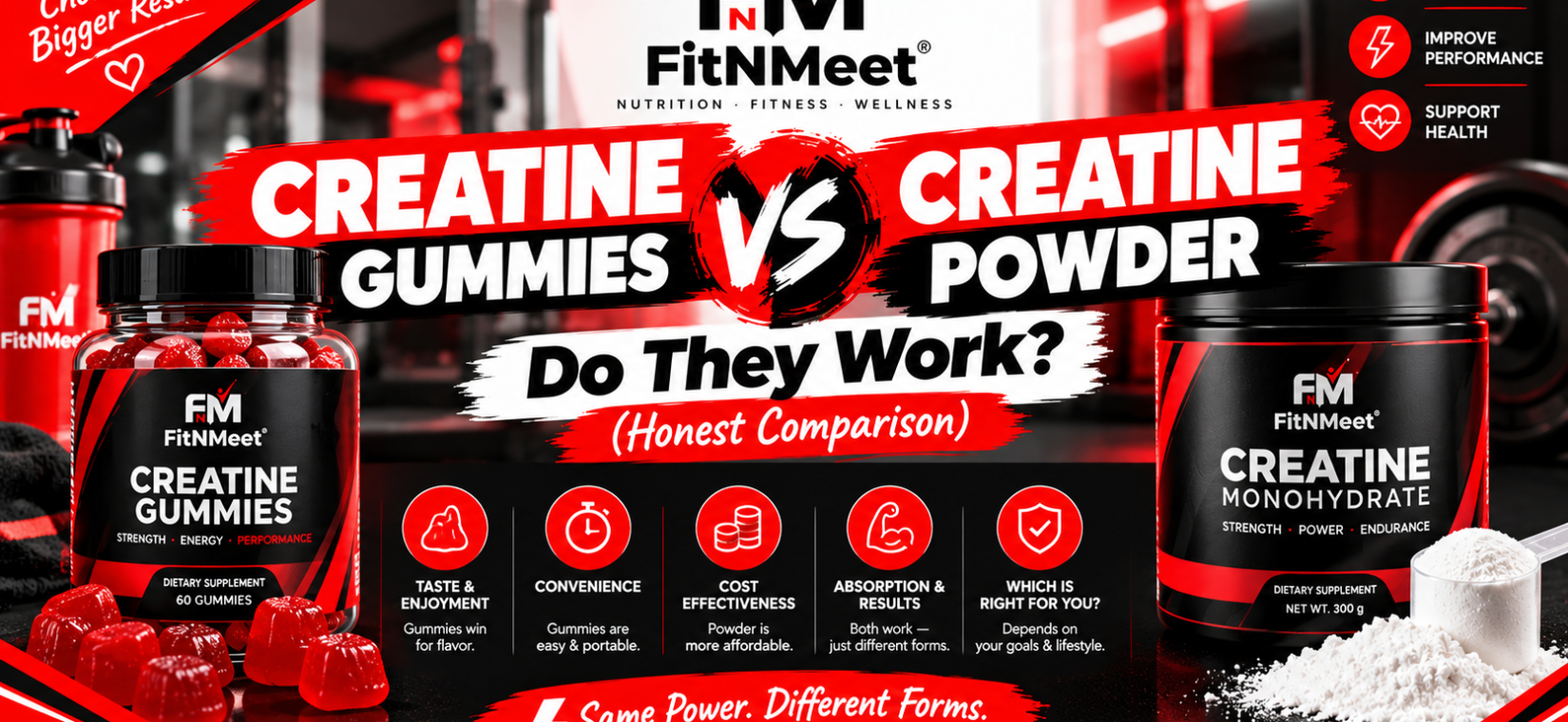
Creatine gummies pack the world’s most studied sports supplement into a chewable, candy-like format — typically 1 to 5 grams of creatine monohydrate per gummy. They promise the strength and muscle benefits of creatine without the powder, the shaker bottle, or the gritty texture. But do they actually work as well as classic creatine powder, or are you paying candy prices for supplement results?
Short answer: the creatine inside is the same. What differs is dose accuracy, cost per gram, and convenience. This guide breaks down everything: how creatine gummies work, the honest head-to-head comparison with powder, proper dosing, what to watch for on labels, who each format suits best, the mistakes that waste your money, and answers to the most common questions.
What Are Creatine Gummies?
Creatine gummies are chewable supplements that deliver creatine — almost always creatine monohydrate — in a gummy candy base with flavoring and sweeteners. Each gummy typically contains 1 to 5 grams of creatine, and a daily serving is usually 2 to 5 gummies depending on the brand’s formulation.
They exist for the same reason protein water and other alternative formats exist: some people hate powder. Mixing, shakers, gritty texture, and the daily ritual put people off. A fruity chewable that you can take anywhere removes every friction point — and in supplementation, consistency beats perfection. The best creatine is the one you actually take every day.
The gummy base itself is usually gelatin or pectin, plus sweeteners, flavoring, citric acid, and coloring. That base is also the source of most of the format’s downsides, from added sugar to melting in a hot gym bag, which we cover below.
Do Creatine Gummies Actually Work?
Yes — provided the dose is right. Creatine monohydrate is creatine monohydrate whether it arrives in powder or gummy form. The studies showing creatine’s benefits for strength, power, and muscle mass used 3 to 5 grams daily of creatine monohydrate, and gummies delivering that full dose should work the same way. Your muscles do not know what the creatine was packaged in; they only care how much arrives.
This is backed by the International Society of Sports Nutrition position stand on creatine, published on PubMed, which reviewed the extensive evidence and concluded creatine monohydrate is safe and effective for increasing strength, power, and muscle mass. The position stand covers the ingredient itself — and the ingredient in quality gummies is identical.
The real question is not whether the format works in theory, but whether your specific product delivers a full clinical dose in practice. That is where most gummy products stumble, as the next section explains.
Creatine Gummies vs Powder: Head-to-Head
Here is the honest comparison across every factor that matters.
Effectiveness
Tie. Same active ingredient, same mechanism: saturating muscle creatine phosphate stores. Gram for gram of actual creatine monohydrate, results are identical. Dose is what matters, not delivery format.
Absorption
Near-tie, slight edge to powder dissolved in warm water on an empty stomach, which is the fastest-absorbed classic method. In practice, the difference is negligible — both saturate muscles fully within weeks of consistent use.
Convenience
Gummies win clearly. No water, no shaker, no mixing, no timing around workouts. Toss them in your bag and chew anytime — at your desk, in the car, between meetings. This is the format’s entire reason to exist.
Taste and texture
Gummies win for most people: fruity and candy-like versus powder’s neutral-to-slightly-chalky profile. Micronized powder in water is nearly tasteless, but “nearly” still loses to actual candy flavor for picky users.
Cost per gram
Powder wins by a landslide. A month of quality creatine monohydrate powder costs a few dollars; gummies often cost 5 to 10 times more per gram of creatine. Over a year, the difference can be hundreds of dollars for the identical ingredient.
Dose accuracy
Powder wins. A 5-gram scoop is exact every time. Gummy creatine content can vary between pieces, and some labels obscure the actual creatine per gummy behind “proprietary blends” or serving-size games. Always verify grams of creatine, not gummy count.
Stomach comfort
Mixed. Some users digest gummies better than powder; others react to sugar alcohols, gelling agents, or the sheer volume of chewables needed. Powder dissolved fully in warm water remains the gentlest classic option for sensitive stomachs.
Shelf life and storage
Powder wins. Creatine powder is extremely stable for years. Gummies can melt in heat, dry out, or degrade faster — a real issue for gym bags in summer or warm climates.
Overall verdict: powder is the smarter buy for almost everyone on cost, dosing precision, and stability. Gummies are a legitimate premium option for people who will not take powder consistently — because consistent gummies beat abandoned powder every time.
How Creatine Works: The 60-Second Science
Your muscles run on ATP, cellular energy that depletes in seconds during hard effort. Creatine phosphate acts as a rapid backup battery, donating phosphate to rebuild ATP between reps and sets. Supplementing with 3 to 5 grams daily saturates your muscles’ creatine stores, letting you squeeze out extra reps, recover faster between sets, and train harder over time — which is what actually builds strength and muscle.
This mechanism is identical regardless of format. For a deeper dive into the ingredient itself, see our creatine monohydrate guide.
Benefits of Creatine (Any Form)
- Increased strength and power: the most replicated finding in all of sports nutrition, across dozens of trials.
- More muscle mass: especially when combined with resistance training, via harder training and cellular hydration.
- Faster recovery between sets: creatine replenishes the ATP-PCr energy system, so rest periods go further.
- Possible cognitive support: emerging research on memory and mental fatigue, particularly under stress or sleep deprivation — promising but early.
- Unmatched safety record: decades of studies in healthy adults show no harm to kidneys or liver at recommended doses, per the ISSN position stand.
- Beginner-friendly: no cycling required, no hormonal effects, effective for novices and advanced lifters alike.
How to Take Creatine Gummies: Dosage Guide
Follow these rules and the format works as well as powder:
- Daily dose: 3 to 5 grams of actual creatine. Count grams, not gummies. If each gummy has 1 gram, you need 3 to 5 gummies; if 2.5 grams each, two gummies does it.
- Timing: anytime. Consistency matters far more than pre- versus post-workout timing. Take them with a meal you never skip.
- Loading phase: optional. 20 grams daily for 5 to 7 days saturates muscles faster, but most people can skip it — 5 grams daily gets you to the same saturation within about a month.
- Stay hydrated. Creatine pulls water into muscle cells; drink plenty of water daily.
- Take it daily, including rest days. Muscle saturation is a 24/7 project, not a workout-day event.
Stacking creatine with protein is the classic muscle-building combo — our creatine and protein stack guide explains how to combine them.
What to Watch Out For When Buying
- Underdosed products: if the label hides creatine content behind a “proprietary blend” or lists only gummy count, skip it. You need grams of creatine monohydrate, printed clearly.
- Exotic creatine forms: creatine HCl, ethyl ester, or buffered versions in gummy form rarely justify their markup — monohydrate has by far the strongest evidence and is cheapest.
- Sugar content: some gummies pack significant sugar per serving to taste like candy. Sugar-free options exist if you are tracking carbs.
- Sugar alcohols: maltitol and sorbitol can cause digestive distress in sensitive people, especially at 4 to 5 gummies per day.
- Melting risk: gummies melt in heat. Do not leave them in a hot car or sunny gym bag.
- Third-party testing: look for NSF or Informed Sport certification if you are a tested athlete — gummy manufacturing has more quality-control variables than simple powder.
5 Mistakes to Avoid With Creatine Gummies
1. Counting gummies instead of grams
The number one error. “Take 2 gummies daily” means nothing until you know the creatine per gummy. Two 1-gram gummies is an underdose; the label’s serving suggestion is marketing, not science.
2. Paying the candy premium unnecessarily
If you tolerate powder fine, gummies are a luxury tax of 5 to 10x per gram. Reserve the premium for when convenience genuinely changes your consistency.
3. Expecting faster results than powder
Marketing sometimes implies gummies work “better.” They do not — saturation timelines are identical. Anyone promising faster gains from a format is selling, not informing.
4. Skipping rest days
Creatine works by keeping muscles saturated around the clock. Taking gummies only on training days stretches the saturation timeline for no benefit.
5. Ignoring total sugar and calories
Five gummies can add meaningful sugar and 50+ calories. During a strict cut, that matters — check the panel and budget accordingly.
Who Should Choose Gummies — and Who Should Stick With Powder
Not everyone needs the same format. Here is how to decide honestly.
Choose creatine gummies if: you travel constantly and hate packing powder; you have tried powder three times and quit each time; you need something you can take at your desk without a shaker; taste is the difference between supplementing and skipping; or you are buying for a beginner who will not do the powder ritual.
Stick with powder if: budget matters, since the 5 to 10x price gap is real money over a year; you want exact dosing for a loading phase or precise protocols; you are a tested athlete who needs certified products, because powder has far more third-party-tested options; you already mix a daily shake, where tossing in a scoop costs nothing extra; or you train in heat where gummies melt.
The hybrid approach many lifters land on: powder at home, gummies in the travel bag. You get the economy of powder for 90 percent of doses and the convenience of gummies for the 10 percent where powder would be skipped. Since both deliver identical creatine monohydrate, mixing formats does not compromise results — total daily grams is all that counts.
Creatine Gummies FAQs
Are they as effective as powder?
Gram for gram of creatine monohydrate, yes. The practical differences are cost, convenience, and dose transparency — where powder usually wins.
How many should I take per day?
Enough to reach 3 to 5 grams of actual creatine. Read the label: if each gummy contains 1 gram, you need 3 to 5 gummies daily.
Do they have side effects?
The same profile as creatine powder: generally very safe, with mild stomach discomfort or temporary water retention in some users. The gummy base can add issues from sugar alcohols in sensitive individuals.
Can beginners take them?
Yes. Creatine is one of the safest, most effective supplements for beginners and advanced lifters alike, and no cycling is required. Women benefit equally — see our guide on creatine for women.
Do I need to load with gummies?
No. Loading (20g/day for a week) is optional with any form. A steady 3 to 5 grams daily saturates muscles within about a month with less digestive risk and lower cost.
Can I take them with pre-workout?
Yes, there are no negative interactions with common pre-workout ingredients like caffeine or citrulline. Timing does not matter much, so take them whenever you will remember.
Can I switch between gummies and powder?
Yes. Since both deliver creatine monohydrate, you can switch freely or even mix formats — powder at home, gummies when traveling. What matters is hitting 3 to 5 grams daily, not which format each dose comes in.
What is the cheapest way to take creatine?
Plain creatine monohydrate powder, like our 300g creatine monohydrate powder, costs a fraction of gummies per serving with identical effectiveness.
Do gummies expire faster than powder?
Generally yes. Powder is stable for years; gummies have shorter shelf lives and degrade faster in heat and humidity. Check expiration dates and store them cool and dry.
The Bottom Line: Should You Buy Creatine Gummies?
Creatine gummies work — the science is clear that the ingredient, creatine monohydrate, is effective and safe at 3 to 5 grams daily regardless of format. The honest tradeoff: you pay 5 to 10 times more per gram for convenience, taste, and zero prep. If powder’s friction means you skip days, gummies are worth every cent, because consistent gummies beat abandoned powder. If you mix powder without complaint, keep your money and stick with the creatine monohydrate powder gold standard.