

Protein powder for body recomposition helps you build muscle while losing fat by making high protein intakes (1.6 to 2.4 g per kg daily) practical during a calorie deficit. Studies show higher protein preserves and even builds lean mass while fat drops, something low-protein diets consistently fail to do.
What Body Recomposition Is (And the Mechanism)
Body recomposition means gaining muscle and losing fat at the same time, so your weight may barely change while your physique transforms. For decades, textbooks called it nearly impossible except in beginners. That view has softened: controlled trials now show recomposition is achievable in beginners, detrained lifters, people with higher body fat, and even trained individuals under the right conditions.
The mechanism is straightforward thermodynamics plus physiology. Fat loss requires an energy deficit; muscle gain requires sufficient amino acids and a training stimulus. Protein powder for body recomposition bridges the conflict: it supplies the amino acid building blocks for muscle protein synthesis without adding many calories, letting you stay in a deficit while feeding muscle.
Why is protein powder for body recomposition more useful than just eating more chicken? Practicality. Hitting 1.6 to 2.4 grams of protein per kilogram of bodyweight daily from whole foods alone is difficult for busy people, especially in a calorie deficit where every calorie counts. A scoop of whey delivers 25 grams of protein for about 120 calories, a protein density few whole foods match.
What the Research Says
Three lines of evidence matter for protein powder for body recomposition:
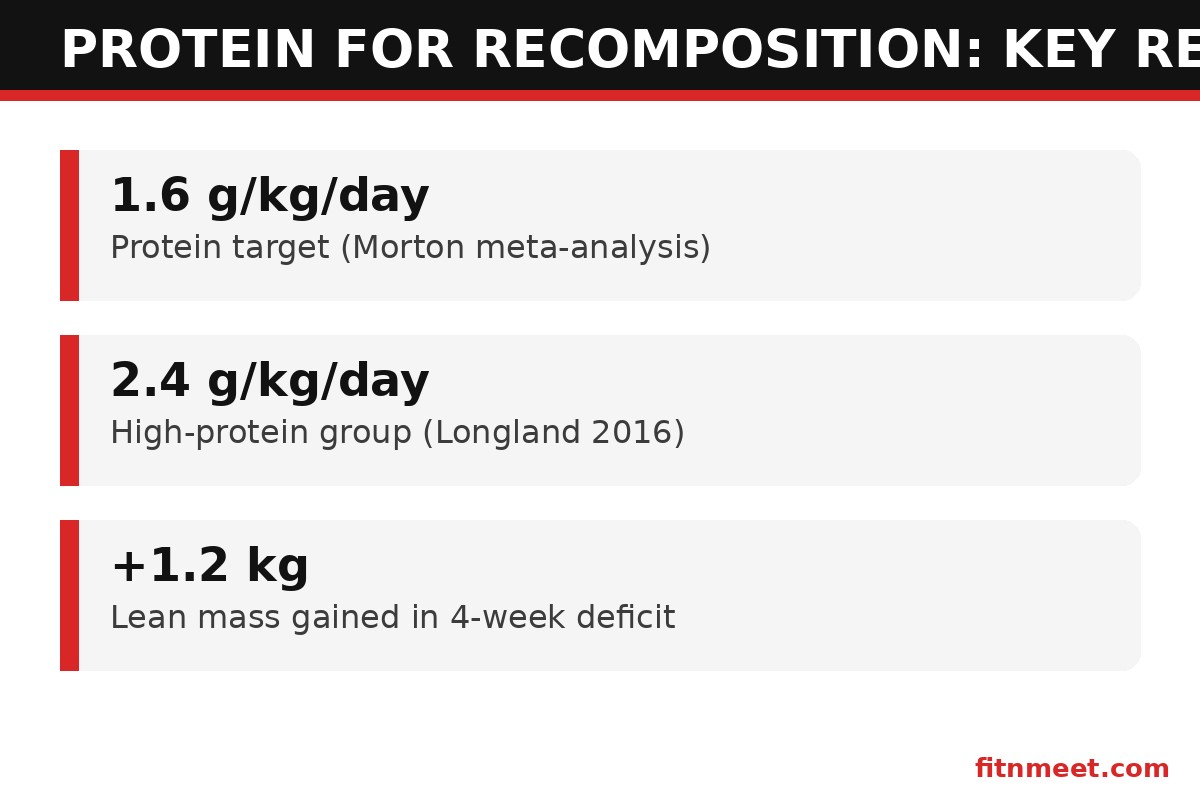
1. Higher protein preserves muscle in a deficit. The Longland 2016 trial described above is the landmark: 2.4 g/kg/day during a steep 4-week deficit produced lean mass gains alongside fat loss in trained men doing hard resistance and interval training six days per week. Lower protein (1.2 g/kg) lost lean mass.
2. Protein needs rise when calories fall. The 1.6 g/kg figure from Morton applies to energy balance or surplus. During deficits, researchers commonly recommend 2.0 to 2.4 g/kg to protect muscle, because the body burns more amino acids for fuel when carbs and fats are restricted.
3. Timing matters less than totals. A 2013 meta-analysis by Schoenfeld and colleagues found that total daily protein intake predicted muscle gains far better than precise post-workout timing. Protein powder for body recomposition works because it raises the daily total conveniently, not because of any magic anabolic window.
Benefits of Protein Powder for Body Recomposition
- Muscle preservation in a deficit: The primary, best-evidenced benefit. High protein plus lifting signals the body to burn fat rather than muscle for the missing calories.
- Greater satiety per calorie: Protein is the most satiating macronutrient, raising fullness hormones (PYY, GLP-1). A protein shake between meals makes deficits noticeably easier to sustain.
- Higher thermic effect: Digesting protein costs 20 to 30 percent of its calories, versus 5 to 10 percent for carbs and near zero for fat. That metabolic tax works in your favor during recomposition.
- Leucine-triggered muscle protein synthesis: Whey is about 10 to 12 percent leucine, and 2.5 to 3 grams of leucine per serving maximally triggers muscle protein synthesis. One scoop typically clears that threshold.
- Convenience and compliance: The unglamorous truth is that protein powder for body recomposition succeeds because it removes friction. A 30-second shake after training beats skipping protein because cooking felt like too much.
- Cost per gram: Quality whey often costs less per gram of protein than meat, fish, or restaurant meals, making high-protein dieting cheaper, not more expensive.
How It Works in the Body
After you drink protein powder for body recomposition, digestion breaks the protein into amino acids that enter the bloodstream within 30 to 90 minutes (whey is fast; casein is slow). Rising blood amino acids, especially leucine, activate the mTOR pathway in muscle cells, switching on muscle protein synthesis, the process of building new muscle tissue.
Muscle mass at any moment reflects the balance between synthesis and breakdown. Resistance training sensitizes muscles to amino acids for up to 24 hours, which is why trained lifters use protein more efficiently than sedentary people. In a calorie deficit, breakdown rates rise; high protein intake keeps synthesis high enough to stay net positive, or at least net neutral, instead of losing muscle.
Thinking practically about protein powder for body recomposition, the shake itself is the least complicated part of the equation. Mix one scoop with water or milk, drink it when whole-food protein is inconvenient, and move on. Where people go wrong is treating protein powder for body recomposition as a fat burner rather than a protein delivery tool: it does not directly burn fat, it simply makes the high-protein, moderate-deficit conditions for recomposition easier to sustain day after day. Consistency across twelve weeks beats perfection across twelve days, so choose a flavor and format you will actually drink daily.
Protein also influences the fat-loss side. Its satiety effect reduces spontaneous calorie intake, and its thermic effect means a 2,000-calorie high-protein diet effectively delivers fewer usable calories than a 2,000-calorie low-protein diet. These mechanisms explain why protein powder for body recomposition is not just a muscle supplement but a fat-loss ally: it attacks both sides of the recomposition equation simultaneously.
Dosage: How Much Protein Powder for Body Recomposition
| Scenario | Daily protein target | Example (80 kg person) |
|---|---|---|
| Maintenance / slight deficit | 1.6-2.0 g/kg | 128-160 g/day |
| Moderate deficit (300-500 kcal) | 2.0-2.4 g/kg | 160-192 g/day |
| Aggressive deficit | 2.2-2.6 g/kg | 176-208 g/day (short-term only) |
| Per-meal dose | 0.4 g/kg or 25-40 g | 32 g per meal across 4-5 meals |
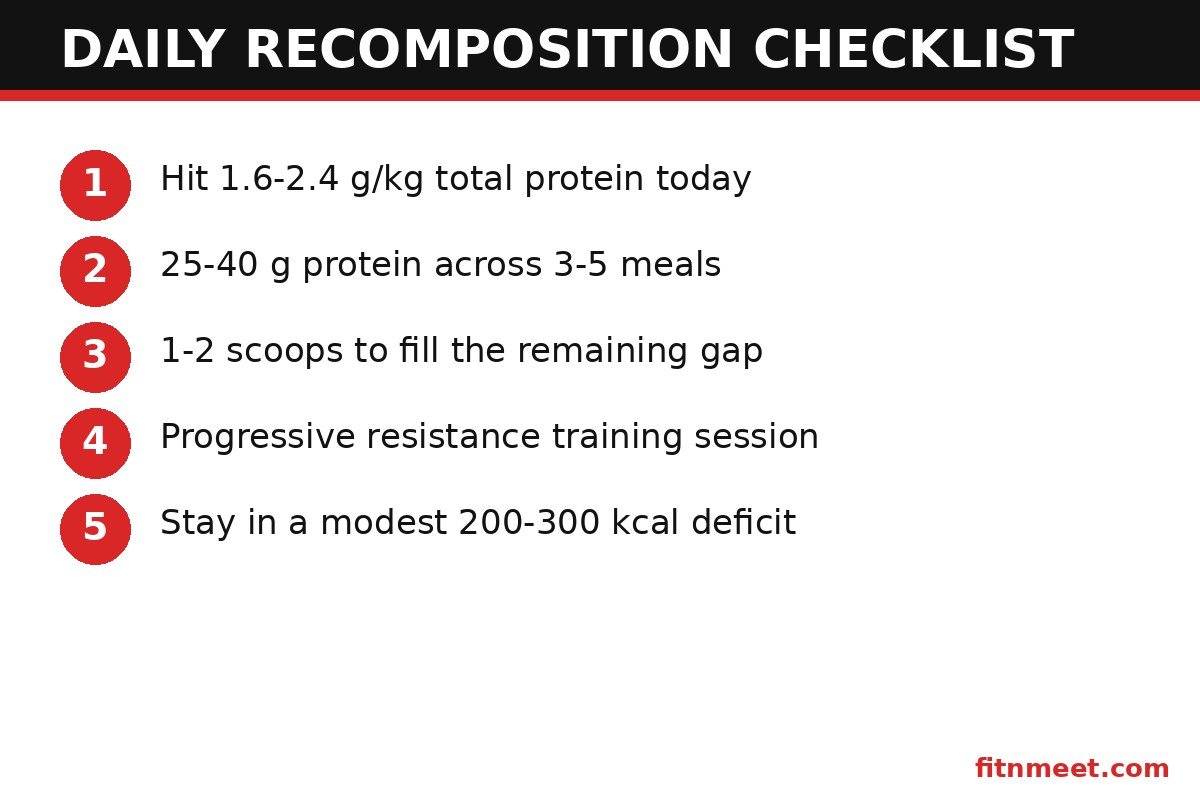
Practical dosing of protein powder for body recomposition: use 1 to 2 scoops (25 to 50 grams of protein) daily to fill the gap between what your meals provide and your target. Most people do best placing one shake post-workout or between meals where protein would otherwise be low. Distribute intake across 3 to 5 protein-containing meals; each should supply at least 25 grams to maximally stimulate muscle protein synthesis.
Do not exceed your calorie budget chasing protein. Two scoops add roughly 240 calories; account for them in your deficit math. And remember the research hierarchy: total daily protein first, distribution second, timing a distant third. Background on protein as a nutrient is summarized in the Wikipedia overview of protein, and the NIH fact sheet on exercise and athletic performance discusses protein needs for active individuals. For quality options suited to recomposition phases, see FitnMeet’s whey protein isolate and the broader protein collection.
Side Effects and Safety
Protein powder for body recomposition is safe for healthy people at the doses above, but a few caveats apply:
- Kidney concerns are overstated for healthy kidneys: High protein intakes have not been shown to damage healthy kidneys in clinical trials. People with existing kidney disease should follow their doctor’s protein guidance.
- Digestive issues: Whey concentrate can cause bloating in lactose-sensitive users; whey isolate or plant proteins usually solve this.
- Calorie creep: Protein powder for body recomposition only works inside a controlled deficit. Untracked shakes with milk, peanut butter, and fruit can quietly erase a 300-calorie deficit.
- Contaminant quality: Buy from reputable manufacturers with third-party testing. Independent analyses have occasionally found heavy metals in low-quality powders, a reason to favor established, tested products.
- Nutrient displacement: Shakes should supplement meals, not replace all of them. Whole foods supply fiber, micronutrients, and phytonutrients that powders lack.
Pair your recomposition diet with training programs from FitnMeet’s strength training section and fat-loss nutrition context from FitnMeet’s weight-loss guides.
Protein Powder vs Alternatives for Recomposition
| Option | Protein per serving | Leucine | Calories | Best for |
|---|---|---|---|---|
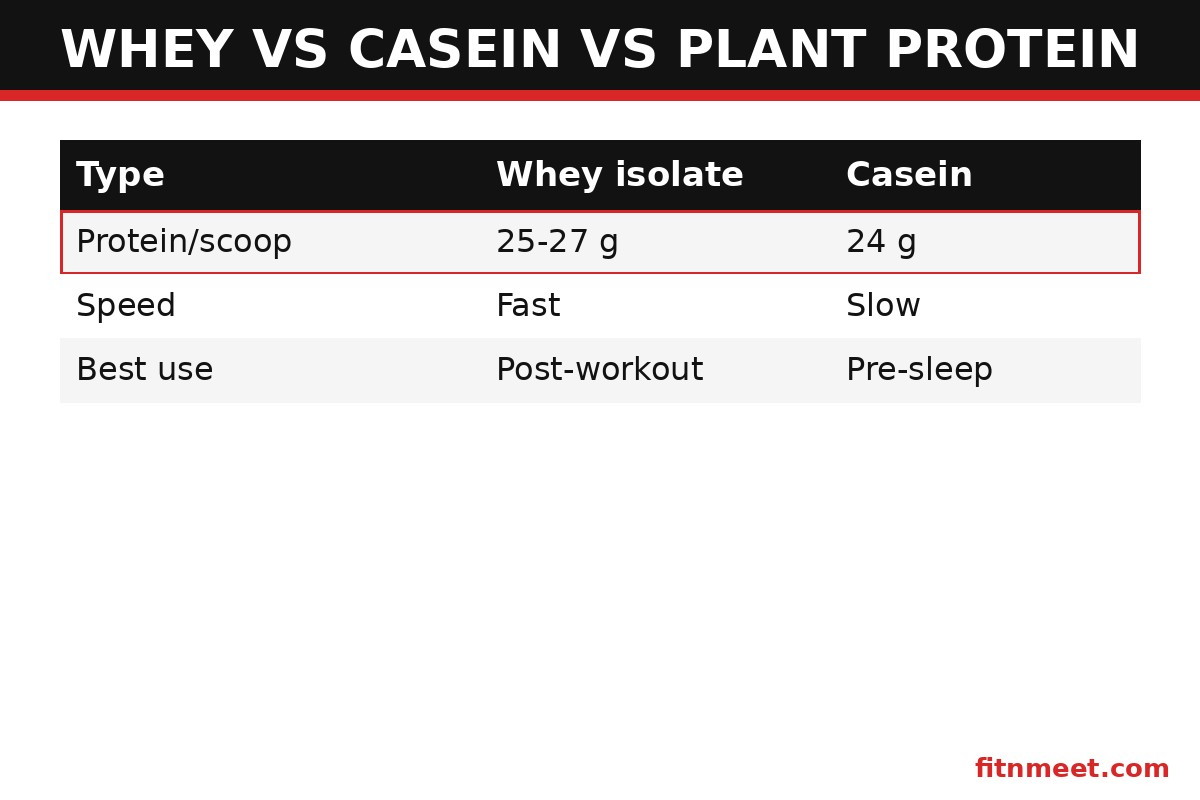
| Whey isolate | 25-27 g | ~2.7 g | 110-130 | Maximum protein density in a deficit |
| Whey concentrate | 22-25 g | ~2.5 g | 120-140 | Budget recomposition |
| Casein | 24 g | ~2.2 g | 120 | Pre-sleep slow-release protein |
| Plant blend (pea+rice) | 20-25 g | ~1.8 g | 120-150 | Dairy-free or vegan dieters |
| Whole food (chicken breast) | 31 g / 100 g | ~2.7 g | 165 | Those who prefer chewing their protein |
| Greek yogurt | 15-20 g / 170 g | ~1.8 g | 100-150 | High-satiety whole-food option |
Whey isolate is the default choice for protein powder for body recomposition because it delivers the most protein and leucine per calorie. Casein earns a place before bed for its slow release. Plant blends work but check that the label shows at least 2 grams of leucine or simply use a slightly larger serving. Whole foods remain excellent; powder is a tool for the gaps, not a replacement for meals.
Frequently Asked Questions
Can you really build muscle and lose fat at the same time?
Yes, under the right conditions. Studies show recomposition occurs most reliably in beginners, detrained lifters, and people with higher body fat, but trained individuals can also recomp with high protein (around 2 g/kg), progressive training, and a modest deficit of 200 to 300 calories.
How much protein powder for body recomposition should I take daily?
Aim for 1.6 to 2.4 g/kg of total daily protein from all sources. Use 1 to 2 scoops of protein powder (25 to 50 g protein) to fill whatever gap remains after your meals. Count the shake’s calories inside your deficit.
Is whey or casein better for body recomposition?
Whey is better around workouts and between meals because its fast leucine delivery maximally triggers muscle protein synthesis. Casein is useful before bed for slow overnight amino acid release. Many people use whey by day and casein at night.
Will protein powder for body recomposition work without exercise?
Only partially. High protein without resistance training preserves some muscle in a deficit, but the muscle-building half of recomposition requires progressive lifting. Protein supplies the bricks; training is the construction crew.
Can I use protein powder for body recomposition on keto?
Yes. Unflavored or low-carb whey isolate fits keto macros easily. Just verify the label: some flavored powders contain 5 to 10 grams of sugar per scoop, which matters on strict carb limits.
How long does body recomposition take?
Visible changes typically need 12 to 16 weeks of consistent training, high protein, and a modest deficit. The Longland trial showed measurable recomposition in 4 weeks under extreme conditions, but sustainable real-world recomposition is a multi-month project.
In research-toned summary: protein powder for body recomposition is one of the few supplements with direct trial evidence for simultaneous muscle gain and fat loss, provided protein reaches 1.6 to 2.4 g/kg, training is progressive, and the deficit stays modest. It works through leucine-driven muscle protein synthesis, superior satiety, and a high thermic effect, not through any proprietary mechanism.
Put the science to work: calculate your daily target from the table above, cover most of it with whole foods, and fill the gap with 1 to 2 daily shakes. Explore FitnMeet’s muscle development collection and shop the full range to support your recomposition phase.
Disclaimer: This article is for informational purposes only and is not medical advice. Consult a healthcare professional before starting any supplement.