
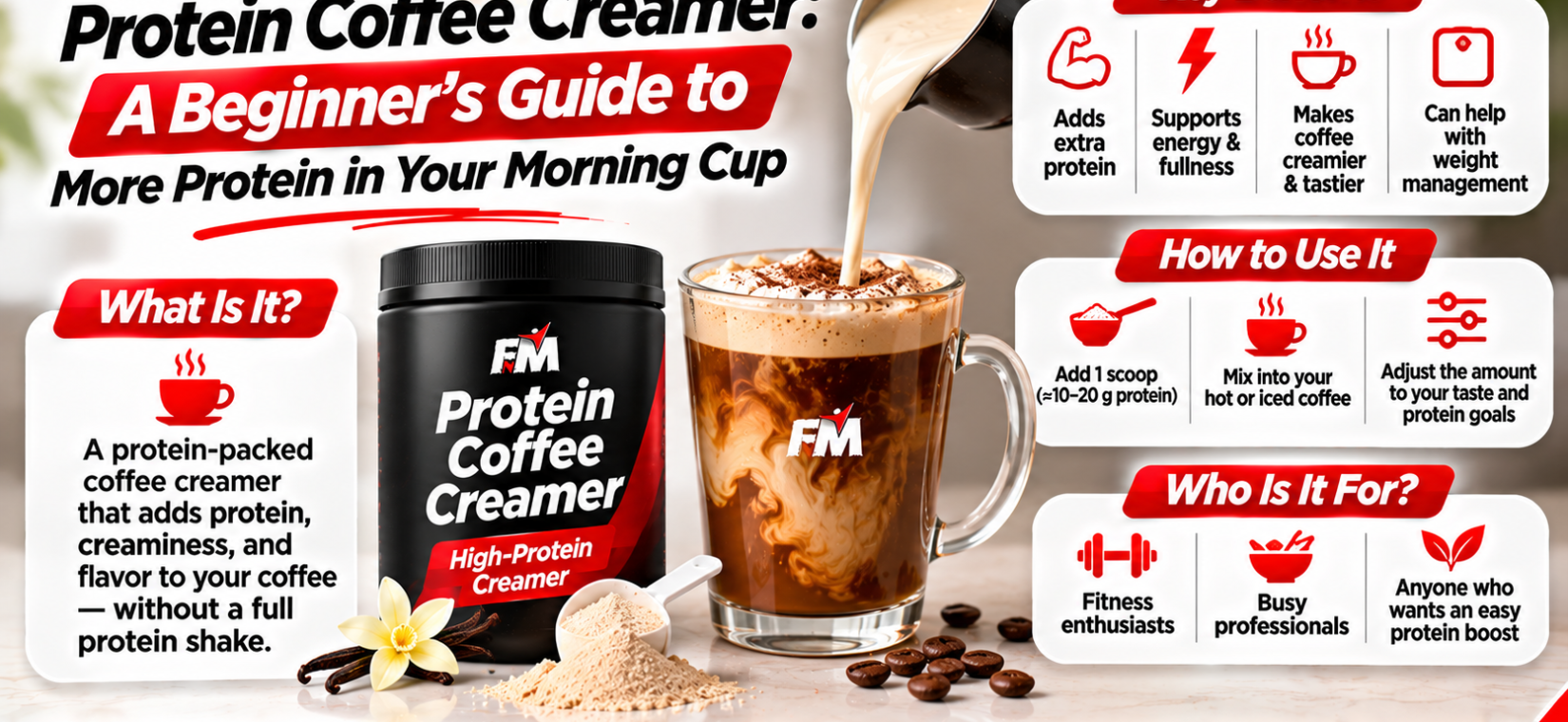
Protein coffee creamer is a coffee creamer fortified with extra protein — usually 5 to 15 grams per serving from whey, collagen, or plant sources — compared to almost zero in regular creamer. A protein coffee creamer turns your morning coffee into a light protein boost, helping you hit daily protein targets without cooking a second breakfast.
☕ Start here: New to protein coffee creamer? Here’s the 30-second version: it’s creamer with 5–15 g of added protein per serving. Stir one serving into your morning coffee. That’s it — you’ve just added meaningful protein to a habit you already have. The rest of this guide covers choosing a good one and avoiding the sugary traps.
The protein coffee creamer, Explained Simply
Think of your regular morning coffee. The protein coffee creamer you add makes it taste good but does almost nothing nutritionally — a splash of regular creamer has maybe 20–50 calories and less than a gram of protein. A protein coffee creamer keeps the creamy taste but adds a meaningful dose of protein, typically 5 to 15 grams per serving. It’s the same habit, upgraded.
Why does that matter? Because most people undereat protein at breakfast. A typical breakfast of coffee and toast might deliver 5–8 grams of protein, while research on muscle maintenance suggests aiming for roughly 25–40 grams of protein per meal for active adults. That gap is exactly where protein coffee creamer fits — it won’t close the whole gap, but it turns a near-zero-protein habit into a 10–15 gram contributor without any extra cooking or chewing.
The protein inside usually comes from one of three sources: whey protein (complete amino acid profile, the most studied), collagen peptides (dissolves beautifully in hot liquid, though lower in some essential amino acids), or plant proteins (pea, soy, or blends — the dairy-free option). Each works; the best choice depends on your diet and digestion, which we’ll cover below.
What Exactly Is The protein coffee creamer?
Protein coffee creamer is a functional food product — a creamer base (dairy, or a dairy-free emulsion of oils and plant ingredients) blended with concentrated protein. It comes in two formats: powders (scoop into hot coffee and stir) and liquids (pour like traditional creamer). Powders generally pack more protein per serving and cost less per gram; liquids win on convenience. Background on conventional creamers is on Wikipedia’s non-dairy creamer page.
A typical label reads something like: 60–100 calories, 10 g protein, 2–5 g fat, 3–8 g carbohydrates per serving. Compare that to a tablespoon of standard liquid creamer: ~35 calories, 0 g protein, and often 5 g of sugar. The upgrade is obvious — but labels vary enormously, which is why the “mistakes” section below matters more than any single product recommendation. (We don’t recommend specific brands here — we teach you to read the label yourself.)
One honest framing: protein coffee creamer is a supplement to your diet, not a foundation. Ten grams of protein from creamer counts exactly the same as ten grams from eggs toward your daily total — protein is protein — but it shouldn’t replace learning to build genuinely high-protein meals. Think of it as the easiest 10 grams of your day, not the most important.
Why Beginners Care: The Morning Protein Gap
Here’s the pattern dietitians see constantly: someone starts training, eats a decent lunch and dinner, but breakfast is coffee and a muffin — maybe 6 grams of protein before noon. Then they wonder why recovery lags and hunger hits at 10 a.m. Protein distributes best across the day: studies on muscle protein synthesis show that spreading protein into 3–4 protein-containing meals outperforms back-loading it all at dinner.
For a beginner, changing breakfast is the highest-friction change — mornings are rushed, cooking motivation is zero, and appetite is low. Protein coffee creamer sidesteps all of that. You were going to drink the coffee anyway. Now it carries 10–15 grams of protein. For lifters working through FitnMeet’s nutrition guides, it’s the lowest-effort dietary upgrade available.
☕ Start here — the math: If you weigh 170 lb and target ~120–150 g of protein daily, one serving of the protein coffee creamer (10–15 g) covers roughly 10% of your day before you’ve eaten a single bite of food. Small habit, real numbers. You can compare more formulas in our sports nutrition range.
Getting Started: Your 5-Step Beginner Plan
- Read three labels before buying. Compare protein per serving (aim for 10 g+), sugar per serving (aim for under 5 g), and total calories. The FDA’s guide to reading Nutrition Facts labels shows exactly where to look. Pick the best of the three — don’t just grab the first one.
- Start with half a serving. Some protein creamers (especially whey-based ones) can cause mild digestive gurgling if you’re not used to them. Half a serving for 3–4 days, then full serving.
- Mix it right. For powders: add the protein coffee creamer to your mug first, pour in a splash of hot coffee, stir into a paste, then add the rest — no clumps. For liquids: pour and stir normally. A handheld frother ($10) makes both formats dramatically creamier.
- Time it with your routine. Morning coffee is the obvious slot. A second serving works as an afternoon bridge if lunch was light — but count the calories if you’re managing weight.
- Reassess after two weeks. Are you less hungry mid-morning? Hitting protein targets more easily? If yes, it’s earned its place. If not, the product (or the habit) may not be for you — and that’s fine.
Benefits of The protein coffee creamer
- Effortless protein. Ten to fifteen grams of protein with zero prep, zero chewing, and zero change to your morning routine. For beginners, removing friction is the entire game.
- Better satiety. Protein is the most filling macronutrient. Coffee that carries 12 g of protein keeps you fuller until lunch than black coffee or sugary creamer — useful if mid-morning snacking derails your eating.
- Supports training recovery. If you train in the morning, protein plus coffee’s caffeine is a genuinely effective pre-workout combination: caffeine for performance, protein to start the recovery clock. Pair it with a proper post-workout meal and staples from FitnMeet’s protein collection.
- Replaces sugary creamers. Many flavored creamers deliver 5–10 g of sugar per tablespoon with nothing else. Swapping to a low-sugar the protein coffee creamer cuts empty sugar while adding nutrition — a double win.
- Budget-friendly protein. At roughly $0.50–$1.00 per serving, the product is among the cheaper protein sources per gram — competitive with eggs and far cheaper than coffee-shop protein drinks.
5 Common Beginner Mistakes
- Buying on flavor, ignoring the label. Some “protein” creamers contain 5 g of protein and 12 g of sugar — that’s dessert, not nutrition. Protein first, sugar second, flavor third.
- Counting it as a meal. The protein coffee creamer has 60–100 calories — it’s a supplement to breakfast, not breakfast. Pair it with eggs, Greek yogurt, or oatmeal for a real meal.
- Using two or three servings “for extra protein.” That triples the calories and cost. If you need 30 g of protein, eat food — the protein coffee creamer’s job is the easy first 10–15 g.
- Choosing collagen and expecting muscle-building protein. Collagen dissolves beautifully and is great for skin/joint support, but it’s low in leucine and incomplete for muscle protein synthesis. For training goals, whey or a complete plant blend is the better protein source in your protein coffee creamer.
- Ignoring caffeine timing. A protein coffee creamer doesn’t change the fact that it’s riding on coffee. Keep total caffeine moderate (under ~400 mg/day for most adults) and avoid late-afternoon servings if sleep matters — and it does.
Dosage Basics: How Much Protein Do You Need?
The protein coffee creamer is one piece of a daily total. General evidence-based targets:
| Goal | Daily protein target | Creamer’s role |
|---|---|---|
| General health (sedentary) | ~0.7 g per lb bodyweight | One serving covers ~10% of the day |
| Active / recreational training | ~0.8–1.0 g per lb | One serving = easy morning contribution |
| Muscle building | ~1.0 g per lb | One serving plus 3 protein-rich meals |
| Fat loss (preserve muscle) | ~1.0–1.2 g per lb | Helps satiety between meals |
One serving per day is the standard dose — that single serving of this creamer is the whole strategy. Two servings is reasonable if both replace something worse (like a sugary afternoon latte), but don’t let creamer calories sneak past your daily budget. Whole-food protein should still supply the majority of your intake; the whey protein isolate in FitnMeet’s shop is the workhorse for shakes when you need bigger doses.
Safety and Things to Watch
- Added sugars. The #1 trap. Some products hide 8–12 g of sugar per serving behind “protein” branding. Under 5 g is the target; zero-sugar options exist.
- Artificial sweeteners. Many use sucralose or acesulfame-K. They’re FDA-approved and safe at normal intakes, but if you dislike the taste or prefer to avoid them, choose unsweetened or stevia-sweetened versions.
- Lactose and dairy sensitivity. Whey-based creamers contain some lactose. If dairy bothers you, choose plant-based or collagen options, or lactose-free whey isolate versions.
- Caffeine interaction. The protein coffee creamer doesn’t add caffeine, but it makes coffee more habit-forming as a “health” drink. Keep your total coffee intake where it was.
- Not for kids as a protein strategy. Children get adequate protein from food; protein-fortified coffee products are formulated for adults.
Frequently Asked Questions
What is protein coffee creamer?
Protein coffee creamer is a coffee creamer fortified with 5 to 15 grams of protein per serving, usually from whey, collagen, or plant sources. It comes in powder and liquid formats and is designed to add meaningful protein to your morning coffee with minimal effort.
Is protein coffee creamer healthy?
It can be, if you choose well. Look for at least 10 grams of protein, under 5 grams of sugar, and reasonable calories (60 to 100 per serving). Avoid products where sugar outweighs protein, and treat it as a supplement to real meals, not a replacement.
How much protein is in protein coffee creamer?
Most products provide 5 to 15 grams of protein per serving. Powders tend to offer more protein per serving than liquids. Always check the label, as the range between products is wide.
Can protein coffee creamer replace breakfast?
No. At 60 to 100 calories per serving, it is a supplement to breakfast, not breakfast itself. Pair it with eggs, Greek yogurt, oatmeal, or another protein-rich food for a complete morning meal.
Which is better: whey or collagen protein creamer?
For muscle-building and training goals, whey (or a complete plant blend) is better because it provides all essential amino acids including leucine. Collagen dissolves more smoothly and supports skin and joints, but is incomplete as a muscle-building protein.
Can I make my own protein coffee creamer?
Yes. Stir a half-scoop of unflavored or vanilla whey isolate into a splash of hot milk or coffee to make a paste, then add the rest of your coffee. It is cheaper per gram of protein than pre-made creamers, though less convenient.
Does protein coffee creamer have a lot of sugar?
It depends entirely on the product. Good options have under 5 grams of sugar per serving; poor ones have 8 to 12 grams. Read the Nutrition Facts label and choose protein-forward, low-sugar products.
Conclusion
This creamer is the rare nutrition upgrade that asks nothing of you: same coffee, same routine, 10–15 extra grams of protein. Read the label (protein high, sugar low), start with half servings, mix it into a paste first, and let it cover the easiest 10% of your daily protein. Then build real meals around it. Small habit, real numbers — that’s the whole pitch. Want to go further with your protein intake? Browse FitnMeet’s shop and explore the protein collection for shakes that do the heavy lifting.
This article is for informational purposes only and is not medical advice. Consult a healthcare professional before making significant dietary changes, especially if you have kidney disease, diabetes, or food allergies.