
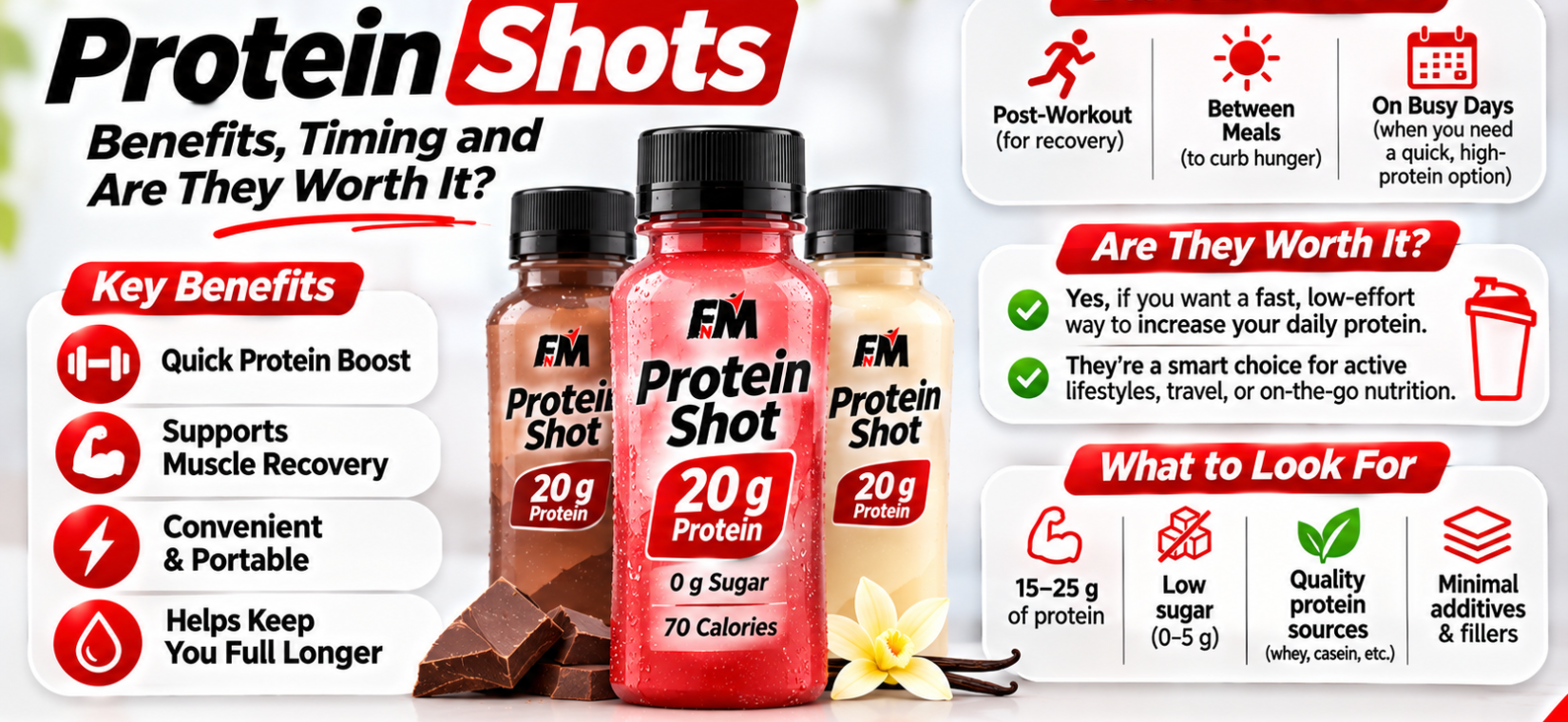
Protein shots are ultra-concentrated liquid protein supplements delivering 25 to 30 grams of protein in a 2.5 to 3 ounce bottle — about the size of an energy shot. Designed for people who can’t stomach big shakes, they offer the fastest, most portable way to hit your protein target.
These shots: Direct Answer
Protein shots are concentrated liquid protein — typically 25 grams of whey or collagen protein in a 2.9-ounce bottle with 100–170 calories and little or no sugar. They exist for one reason: delivering a full serving of protein to people who won’t or can’t drink a 16-ounce shake. They’re worth it if portability and speed matter more to you than cost per gram; they are not worth it as your daily primary protein source, where powder wins on price by a wide margin.
A: Travelers, shift workers, bariatric surgery patients with tiny stomach capacity, older adults with low appetite, and anyone who gags on thick shakes. If none of those describe you, standard protein powder is the better buy.
The shots: Fast Facts
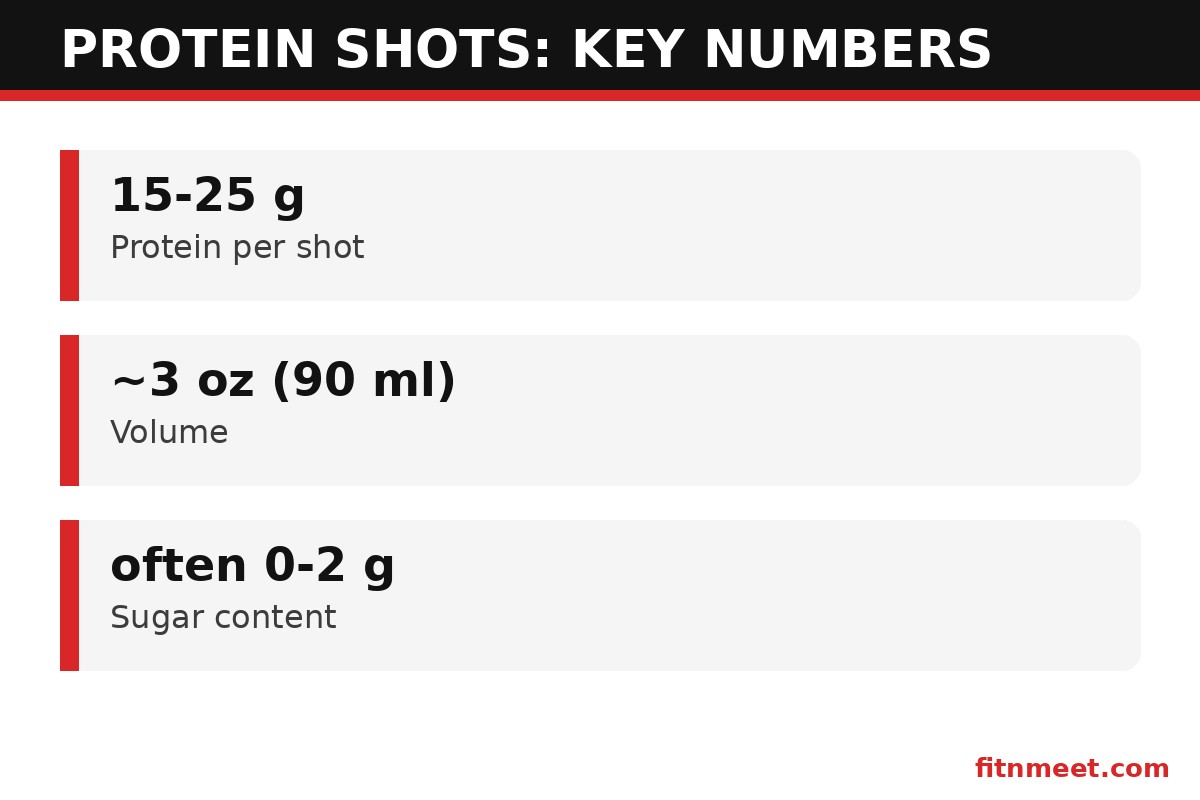
- Protein: 25–30g per 2.5–3 oz bottle
- Calories: 100–170 per shot
- Sugar: usually 0–1g (sweetened with sucralose or stevia)
- Protein type: whey isolate, milk protein isolate, or collagen peptides
- Cost: $2–$4 per shot vs ~$1 per 25g from powder
- Best use: travel, post-surgery, appetite issues, emergency protein
- Not for: meal replacement, daily primary protein, bulking calories
What Are Protein Shots?
These shots are shelf-stable, ready-to-drink protein concentrates sold in small bottles resembling 5-hour energy shots. The category was originally developed for bariatric surgery patients, who need 60–80 grams of protein daily but can only tolerate tiny volumes in the months after surgery — a full shake is physically impossible, but a 3-ounce protein shot is manageable. The format then spread to the broader market of travelers, nurses, drivers and gym-goers who wanted protein without the shaker bottle.
Inside the bottle is usually whey protein isolate or milk protein isolate concentrated to remarkable density: 25 grams of protein in 3 ounces means the liquid is nearly 30 percent protein by weight. Collagen-based versions are also common; they deliver the same grams but lack tryptophan, making them incomplete proteins — fine as a supplement, weaker as a primary source. Most are lactose-free or very low lactose, sweetened with sucralose, acesulfame potassium or stevia, and flavored like fruit punch, grape or orange. Texture is the main complaint: concentrated protein liquids can feel syrupy or leave an aftertaste, which manufacturers mask with acidity and strong flavoring.
One genuine physiological advantage of the format: liquids empty from the stomach faster than solids, so the amino acids in these shots reach the bloodstream quickly — typically peaking within 30 to 60 minutes, similar to a whey shake and faster than a protein bar or whole-food meal. For post-workout use this is a mild plus, though total daily protein still dominates outcomes. The flip side of rapid gastric emptying is that some users report slight nausea if they drink a shot on a completely empty stomach before intense training; having it with a banana or a few crackers solves that for most people.
Read labels carefully. Some “protein shots” are actually energy shots with 5 grams of protein and 200 mg of caffeine — not the same product. A real protein shot lists 20+ grams of protein, minimal caffeine (usually zero), and a complete nutrition panel. For background on the underlying ingredient, see how protein supplements work and compare staples in FitnMeet’s protein collection.
Benefits of These shots
- Maximum portability. A protein shot fits in a pocket, purse or glove box — no shaker, no water, no refrigeration. Nothing else delivers 25 grams of protein this conveniently.
- Tiny volume. Three ounces versus sixteen for a shake. For bariatric patients, the elderly with early satiety, or anyone nauseated by large volumes, these shots are sometimes the only viable protein supplement.
- Speed. Twist, drink, done in ten seconds. Shift workers and drivers who can’t stop for a shake get their protein between tasks.
- Precise dosing. Each protein shot is exactly 25–30 grams — useful for hitting clinical protein targets (common in post-surgical protocols) without measuring.
- Low lactose. Most use isolate-grade protein with negligible lactose, suiting sensitive stomachs better than concentrate powders.
- Appetite-friendly. Small, quick and gone — these shots don’t blunt appetite for the next real meal the way a 300-calorie shake can, which matters for hardgainers and older adults.
A: Gram for gram of the same protein type, yes — 25g of whey isolate is 25g regardless of volume. The difference is cost, calories and convenience, not muscle-building effectiveness.
How to Use Protein Shots
Step 1 — Pick the right moment. These shots shine when a shake is impractical: during travel, between back-to-back commitments, post-workout when you’re rushing, or as the pre-bed top-up when you’re 25 grams short.
Step 2 — Chill if possible. Room-temperature shots are drinkable; chilled ones taste significantly better. Keep a few in the fridge at work or in a cooler bag.
Step 3 — Drink it straight, then chase. Knock back the 3 ounces, then drink 8–12 ounces of water. The water chase clears the syrupy aftertaste and aids digestion.
Step 4 — Count it like any protein. One protein shot = one 25–30g serving toward your daily 1.6–2.2 g/kg target. Log it; don’t double-count with a shake in the same window.
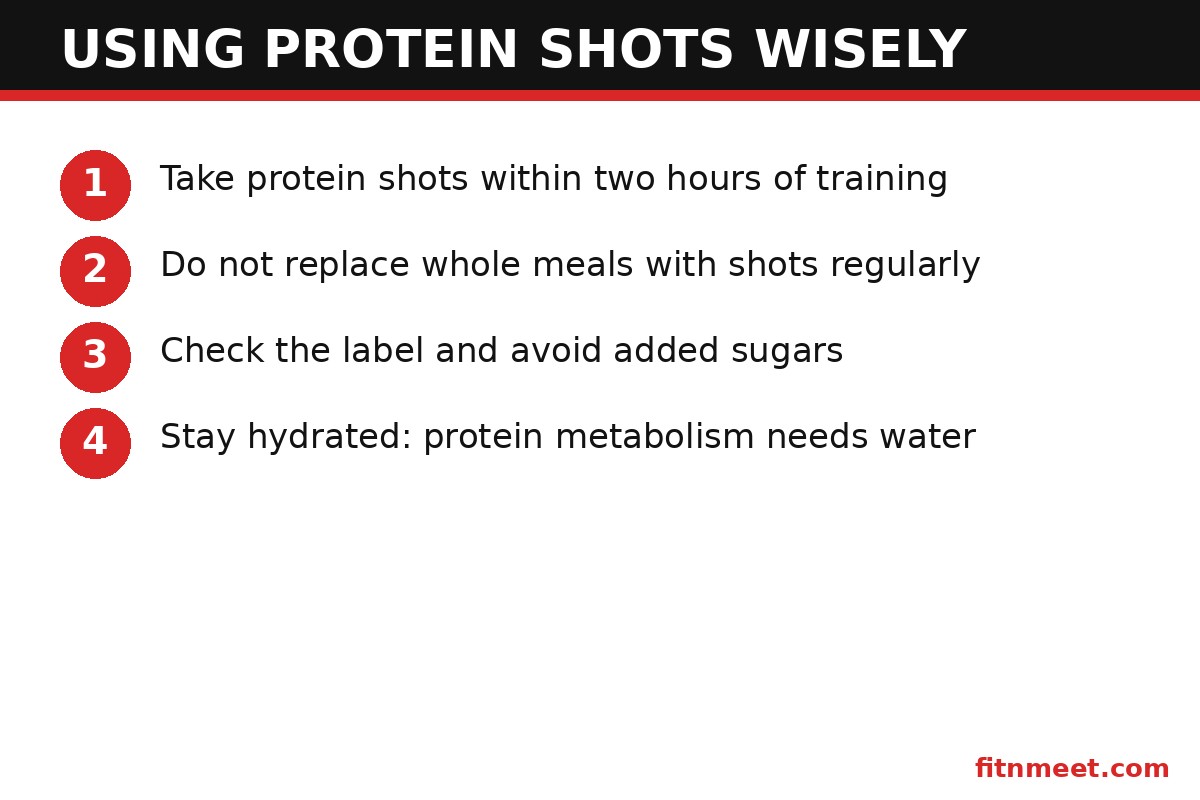
Step 5 — Limit to 1–2 per day. These shots supplement your diet; at $2–$4 each, they’re the most expensive protein you’ll buy. Use them strategically, not habitually.
People Also Ask About The shots
Are protein shots bad for your kidneys?
No, in healthy people. The kidney concern around protein applies to very high total protein intakes (consistently above 2.5–3 g/kg/day) in those with pre-existing kidney disease — not to a single protein shot. Healthy kidneys handle supplemental protein normally. If you have kidney disease, discuss all protein supplements with your doctor.
Can protein shots replace meals?
No. A protein shot has 100–170 calories and almost no fiber, fats or micronutrients — it’s protein, not food. Real meal replacements provide 250–400 calories with balanced macros. Using these shots as meals leads to under-fueling; use them between meals instead. More evidence-based explainers live in our nutrition section.
Why do protein shots taste so strong?
Concentration. Dissolving 25 grams of protein into 3 ounces of liquid creates an intense, syrupy texture that needs heavy flavoring and acidity to be palatable. Chilling and the water chase tame it considerably.
Are collagen protein shots as good as whey protein shots?
For total protein grams, they’re comparable; for muscle building, whey wins — it’s a complete protein rich in leucine (~2.5g per shot), while collagen lacks tryptophan and is low in leucine. Choose whey or milk protein isolate shots for training goals; collagen shots are fine for general supplementation.
How many the shots per day is safe?
One to two daily is the sensible max for most people. Beyond that, the cost becomes absurd and you’d be better served by powder. Total daily protein — not shot count — is what matters for safety; stay within 1.6–2.2 g/kg unless professionally advised otherwise.
Protein Shots Comparisons
| Factor | Protein shots | Protein powder | Ready-to-drink shake | Protein bar |
|---|---|---|---|---|
| Protein per serving | 25–30g | 24–30g | 20–30g | 20g |
| Volume | 3 oz | 16 oz mixed | 11–14 oz | Solid |
| Calories | 100–170 | 120–150 | 160–220 | 230–280 |
| Cost per 25g protein | $2–$4 | $0.80–$1.20 | $2–$3 | $1.50–$2.50 |
| Portability | Excellent | Poor (needs mixing) | Good | Excellent |
| Prep needed | None | Shaker + liquid | None | None |
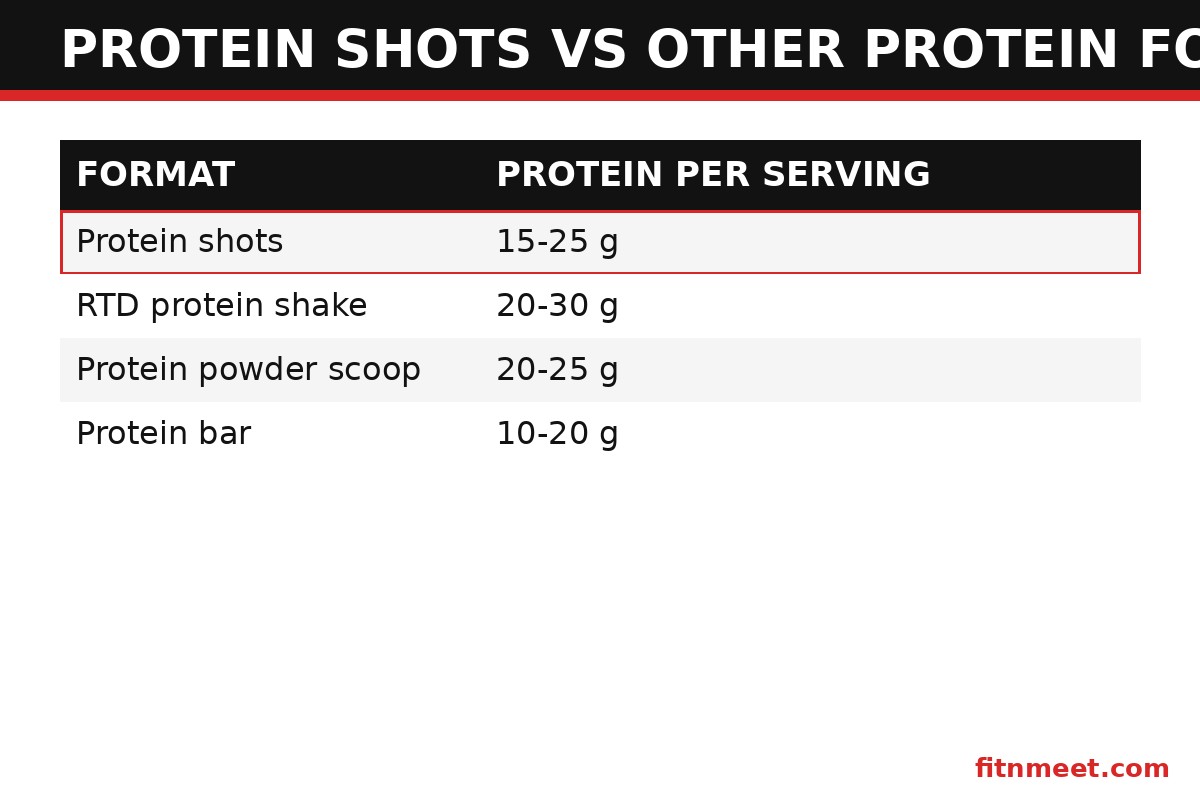
The table tells the real story: these shots win on volume-to-protein ratio and nothing else. Powder beats these shots on cost by 3–4×; RTDs match their convenience at lower cost per gram; bars match portability with more satiety. So these shots earn their place only where tiny volume is the decisive factor — post-bariatric life, severe appetite issues, or travel where every ounce counts. For everyone else, they’re an expensive convenience, not a smart staple. Compare honest options in FitnMeet’s sports nutrition range and the main shop.
These shots Safety
Protein shots are as safe as the protein they’re made from — whey and milk protein isolates have decades of safety data. The usual cautions apply: milk-allergic individuals must avoid whey/milk-based versions (collagen versions are the alternative); lactose-sensitive users should confirm “lactose-free” on the label; and people with kidney disease should clear increased protein intake with a doctor. Don’t exceed 1–2 shots daily as a matter of economics and dietary balance, keep total protein within sensible ranges, and remember these are supplements — whole food still anchors the diet. See the FDA’s supplement guidance for label-reading basics.
A word on sweeteners, since these shots rely on them heavily: most use sucralose, acesulfame potassium or stevia to mask the intense savory note of concentrated protein. All three are approved food additives with established acceptable daily intakes, and the amounts in 1–2 shots sit far below those limits. If you prefer to avoid non-nutritive sweeteners entirely, look for the few unsweetened or stevia-only options — but expect a blander, more “brothy” taste. Also check the sodium: concentrated protein products can carry 200–400 mg per bottle, worth knowing if you’re tracking intake for blood pressure reasons.
This article is for informational purposes only and is not medical advice. Consult a healthcare professional before starting any supplement.
Full FAQ: Protein Shots
How much protein is in a protein shot?
Most protein shots contain 25 to 30 grams of protein per 2.5 to 3 ounce bottle, with 100 to 170 calories and 0 to 1 gram of sugar. Always verify on the label, as energy-shot impostors may contain far less protein.
Are protein shots worth the money?
It depends on your situation. They cost $2 to $4 per 25 grams of protein versus about $1 from powder. They are worth it when tiny volume and maximum portability are essential, such as travel or post-bariatric needs, but wasteful as a daily staple.
Can I drink a protein shot every day?
Yes, one protein shot daily is fine as part of a balanced diet. Limit yourself to 1 to 2 per day for cost reasons, count the protein toward your daily 1.6 to 2.2 g/kg target, and don’t use them as meal replacements.
Do protein shots help build muscle?
They contribute protein like any source: 25 grams of whey isolate from a protein shot supports muscle protein synthesis the same as 25 grams from powder. Total daily protein and training matter far more than the delivery format.
What’s the difference between whey and collagen protein shots?
Whey protein shots provide complete protein rich in leucine, better for muscle building. Collagen protein shots deliver the same grams but lack tryptophan, making them incomplete. Choose whey or milk protein isolate for training goals.
Do protein shots expire?
Yes. Unopened bottles typically last 12 to 18 months at room temperature. Check the best-by date, avoid bottles stored in hot cars for extended periods, and discard any with off smells or swollen packaging.
Conclusion
The shots are a specialist tool: 25–30 grams of protein in 3 ounces, unmatched for portability and tiny-volume needs, overpriced for everyday use. If you’re a traveler, shift worker, bariatric patient or appetite-challenged lifter, these shots solve a real problem. If you just want cheap daily protein, powder wins by a mile. Use these shots strategically — 1–2 when shakes aren’t possible — and build your foundation on whole food plus a quality powder. The honest verdict: they are the most convenient protein ever packaged and the most expensive per gram you’ll ever buy. Both facts can be true at once — which is exactly why they belong in your gym bag for emergencies, not in your daily meal plan as a staple. Browse FitnMeet’s protein collection including staples like vanilla whey protein powder to cover your daily needs affordably.