
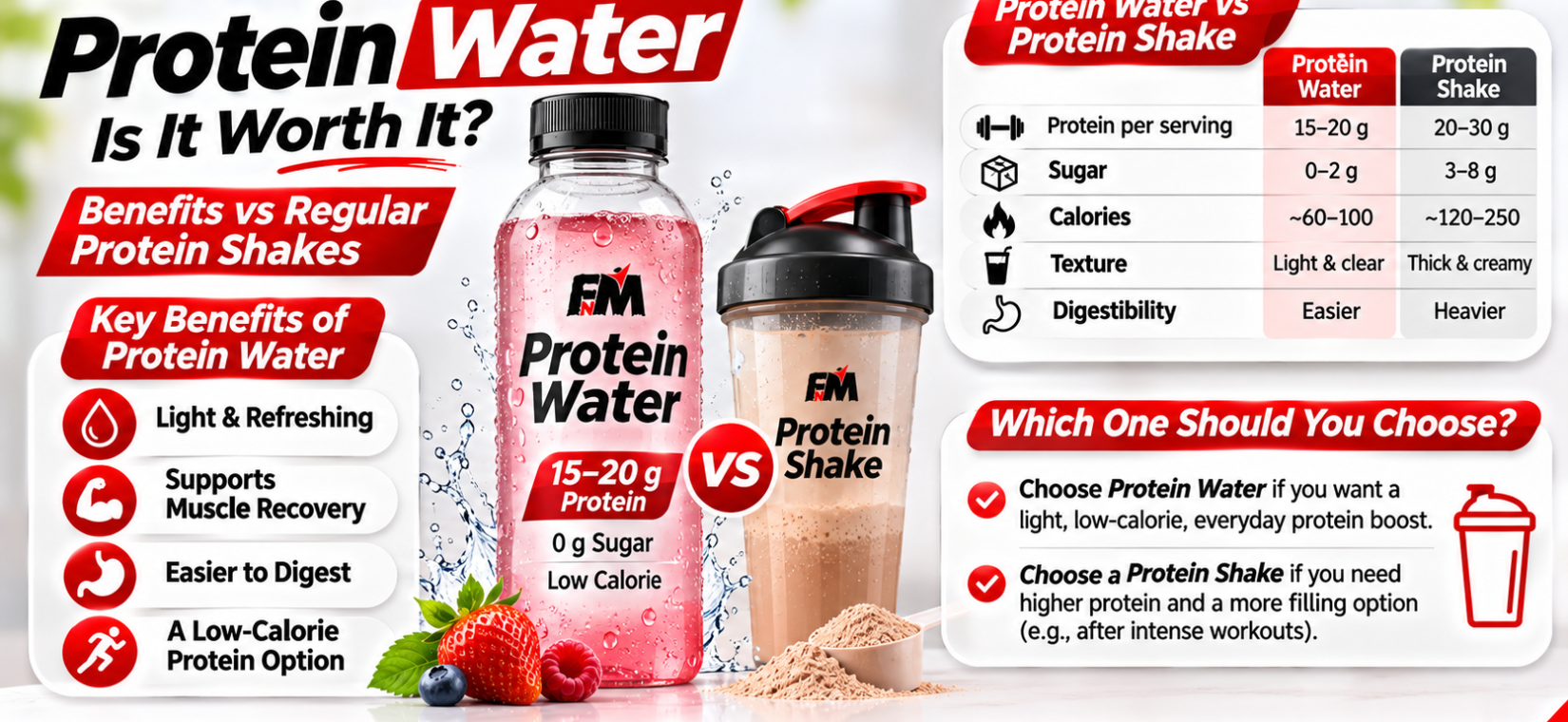
Protein water is water mixed with protein — usually whey protein isolate — creating a light, clear drink with 10–20 grams of protein and 60–90 calories per bottle. It tastes like flavored water and digests easily. Protein water is worth it if heavy shakes bother you; it is not worth it if you want the cheapest protein per gram.
Protein Water, Explained Simply
Start here: Think of the drink as the “light mode” of protein shakes. Same core ingredient (whey protein isolate), but instead of a thick milky drink, you get something that looks, pours, and tastes like lightly flavored water. If regular shakes feel heavy, milky, or hard to digest, protein water was made for you.
Here is the simplest analogy: a protein shake is like a glass of milk with extra protein stirred in — creamy, filling, and a small meal in itself. Protein water is like a sports drink with protein added — light, refreshing, and easy to sip. Both deliver protein to your muscles. They just feel completely different going down, and that difference is the whole story.
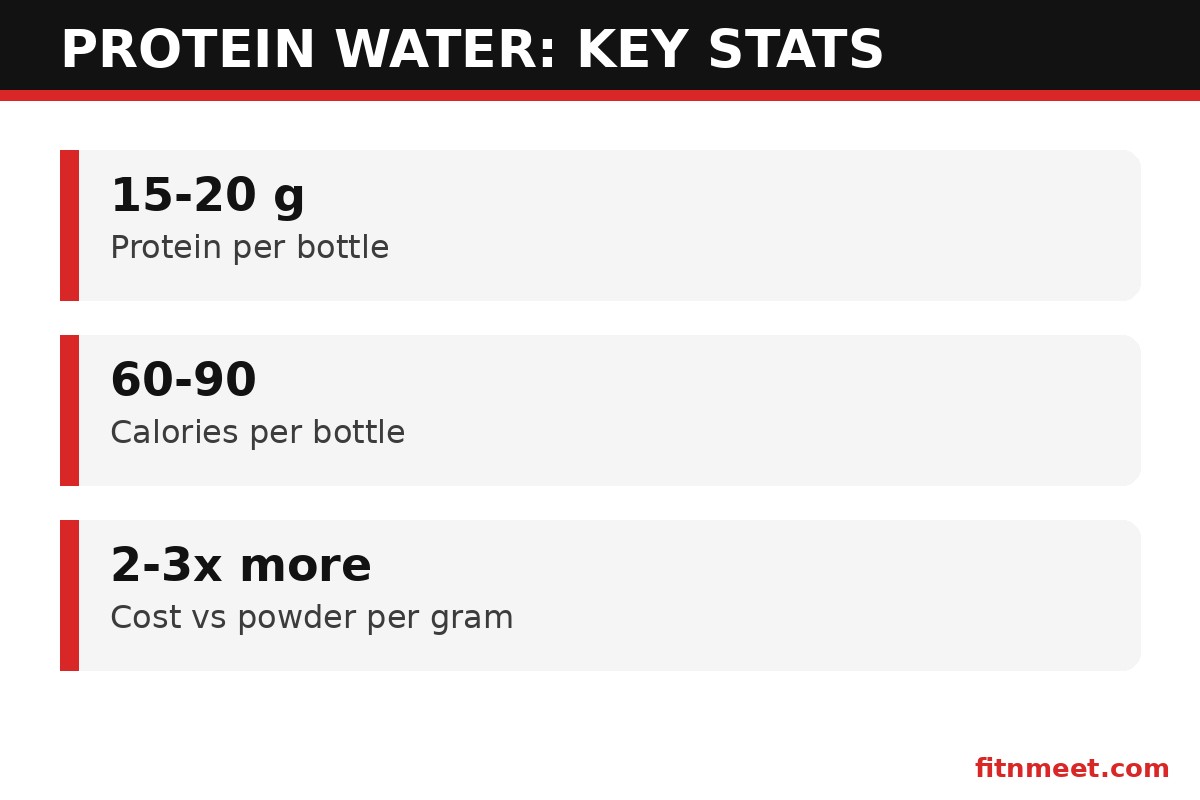
One stat to remember: a typical bottle delivers 15-20 grams of protein — about the same as 3 eggs or a small chicken breast — for roughly 70-90 calories. That is a lot of protein for very few calories, which is why dieters love it.
What Exactly Is Protein Water?
Protein water is made by dissolving whey protein isolate — the most filtered form of whey, with most fat and lactose removed — into water with flavoring and a little acid (usually citric acid) to keep it clear and stable. The isolate part matters: regular whey concentrate turns cloudy and milky in water, while isolate stays transparent. That is the entire technical difference between the drink and a thin protein shake.
What is in a typical bottle?
- 15-20 g whey protein isolate — the active ingredient; look for “whey protein isolate” (not concentrate) on the label
- 60-90 calories — far fewer than a milky shake with milk (200-300 calories)
- 0-2 g sugar — most use zero-calorie sweeteners; check the label if that matters to you
- Water, natural flavors, citric acid — the base that keeps it clear and shelf-stable
- Sometimes added electrolytes — a nice bonus for post-workout hydration
How it differs from its cousins
Protein water is not the same as BCAA drinks (which contain only 3 amino acids, not complete protein — and complete protein beats BCAAs for muscle building), not the same as “protein soda” or protein coffee (different delivery, same idea), and not the same as collagen water (collagen is incomplete protein, missing the key muscle-building amino acid tryptophan). When you buy protein water, you are buying complete whey protein in a light format. Protein quality matters as much as format.
Why Beginners Care About The drink
Beginners care about protein water for three practical reasons. First, many new lifters cannot stomach traditional shakes — the thickness, the milkiness, the bloating from lactose in cheap concentrate. Protein water sidesteps all three: it is thin, clear, and made from lactose-free isolate. Second, beginners often train after work and need something portable that does not require a shaker bottle, milk, or refrigeration timing — a grab-and-go bottle solves that. Third, beginners cutting weight need high protein with minimal calories, and the drink’s ~70 calories per 15-20 g is one of the leanest protein deliveries available.
One stat to remember: whey protein isolate is ~90% protein by weight versus ~80% for concentrate — which is why protein water can pack 20 g of protein into a light, clear drink without the milk solids that make shakes heavy.
Getting Started: Your 5-Step Protein Water Plan
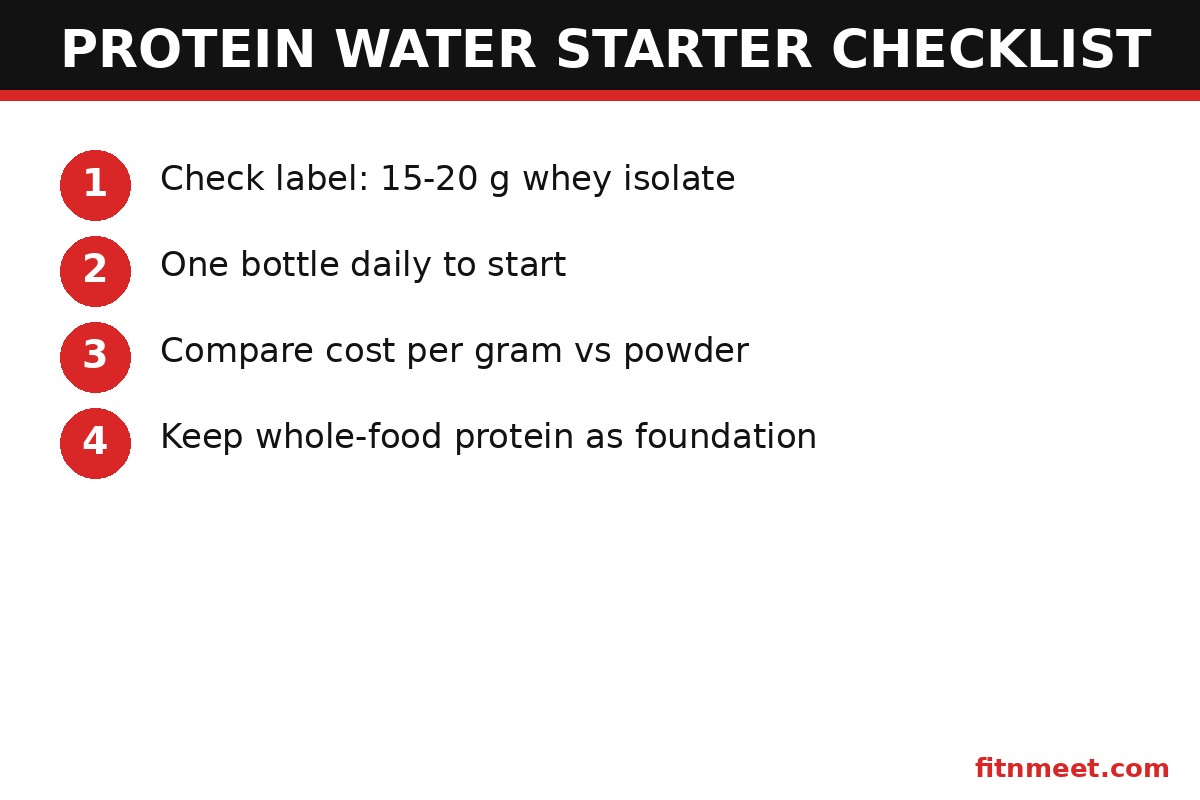
New to the drink? Follow this beginner plan:
Step 1: Figure out if you need it
Track your protein for 3 days. If you are consistently 20-40 g short of your target (0.7-1.0 g per pound of bodyweight), protein water can close that gap. If you already hit your target from food, you do not need it — save your money.
Step 2: Start with one bottle per day
Use it where it fits most naturally: post-workout, mid-afternoon, or as an evening snack replacement. One bottle (15-20 g) is enough to learn whether you like the format.
Step 3: Time it around training (loosely)
Drink it within a couple of hours after training, or sip it during your workout for hydration plus amino acids. Do not stress about a 30-minute window — total daily protein matters far more than timing.
Step 4: Compare the cost honestly
Do the per-gram math: divide the bottle price by grams of protein. Protein water typically costs 2-3× more per gram than whey powder. If budget matters, powder at home + water in a shaker is the economical version of the same idea.
Step 5: Keep whole food as the foundation
It is a supplement — a gap-filler. It should never replace protein-rich meals. If you find yourself drinking 3 bottles a day instead of eating, step back and fix the meals first.
Start here: Buy a small variety pack first, not a case. Protein water flavors vary wildly between manufacturers — find one you actually enjoy drinking before committing, because the best protein supplement is the one you will consistently use.
Benefits of The drink
Light and easy to digest
The #1 reason people switch. No milk, no thickness, no lactose (isolate-based) — protein water digests like water, making it ideal for sensitive stomachs and for sipping during workouts when a heavy shake would slosh.
One stat to remember: whey isolate contains less than 1% lactose versus ~5% in concentrate — the reason protein water rarely causes the bloating some people get from shakes.
Hydration plus protein in one
Post-workout, you need fluids and amino acids. It delivers both in a single bottle, and versions with added electrolytes cover sodium and potassium too. It will not replace a dedicated sports drink for long endurance sessions, but for a 60-minute lifting session it is plenty.
Weight-loss friendly
At 60-90 calories for 15-20 g protein, protein water is one of the most calorie-efficient protein sources available — comparable to egg whites or shrimp. High protein plus low calories is the core formula for preserving muscle in a deficit.
Portable and convenient
No shaker, no milk, no clumps, no fridge required until opened. For travel, office drawers, and gym bags, ready-to-drink protein water beats powder on convenience — which is exactly what the premium price pays for. More evidence-based explainers live in our nutrition section.
Lactose-free by construction
Because it is built on whey isolate, the drink is effectively lactose-free. If dairy-based shakes upset your stomach, protein water (or switching your powder to isolate) usually solves it. Our health articles cover more digestion-friendly nutrition strategies.
Common Protein Water Mistakes
- Mistake 1: Assuming all “protein drinks” are equal. Check the label for grams of protein and the source. Some “protein waters” contain only 5-10 g (a snack, not a serving) or use collagen (incomplete protein). Aim for 15-20 g of whey isolate.
- Mistake 2: Paying premium prices blindly. At $2.50-3.50 per bottle, the drink is a convenience luxury. A tub of whey isolate mixed with water at home delivers the same nutrition for roughly a third of the cost per gram.
- Mistake 3: Replacing meals with bottles. Protein water has almost no fiber, minimal micronutrients, and low satiety compared to a real meal. Two bottles do not equal lunch.
- Mistake 4: Ignoring sweeteners. Most protein waters use sucralose, acesulfame-K, or stevia. These are considered safe by regulators, but if you dislike the taste or prefer to avoid them, check labels — unsweetened options exist.
- Mistake 5: Expecting it to build muscle alone. Protein water supports muscle building only in the context of training and adequate total daily protein. The bottle does not lift the weights for you.
Dosage Basics: How Much and When
Keep it simple. Your total daily protein target is 0.7-1.0 g per pound of bodyweight (the FDA Daily Value for protein is 50 g on a 2,000-calorie diet, but active people need more). It typically contributes 15-20 g per bottle — so 1-2 bottles per day is the sensible range, filling gaps rather than forming the foundation.
When to drink it
- Post-workout: within 1-2 hours after training, alongside your next meal
- Between meals: mid-morning or mid-afternoon to keep protein intake spread across the day
- During training: sipped through a lifting session for hydration + amino acids
- Evening: as a light, low-calorie snack alternative — though casein or food protein is better before bed for overnight muscle repair
Do not exceed 2 bottles daily as a rule of thumb — beyond that, you are overpaying for protein that cheaper powder or food would provide. If you like the format, consider buying whey isolate powder and mixing it with water yourself: same clear, light drink at a fraction of the price. See whey protein isolate in our protein collection.
Safety Notes
Protein water is as safe as the whey isolate it is made from — which is to say, very safe for healthy people. Whey protein has decades of safety data at intakes far above one or two bottles. The realistic cautions: people with milk allergy (not just lactose intolerance — true allergy) should avoid whey-based the drink entirely; those with kidney disease should consult a doctor about any high-protein product; and anyone sensitive to caffeine should check labels, since a few “protein energy waters” add caffeine without making it obvious.
One quality note: because protein water is a ready-to-drink product, buy from reputable manufacturers and check expiration dates — protein can degrade and flavors can turn in old or heat-abused bottles. Powder you mix fresh at home avoids this issue entirely.
Disclaimer: This article is for informational purposes only and is not medical advice. Supplements are not a substitute for a balanced diet, training, sleep, or professional healthcare. Always consult a qualified healthcare professional before starting any supplement, especially if you are pregnant, nursing, managing a medical condition, or taking medication.
Frequently Asked Questions
Is the drink as good as a protein shake?
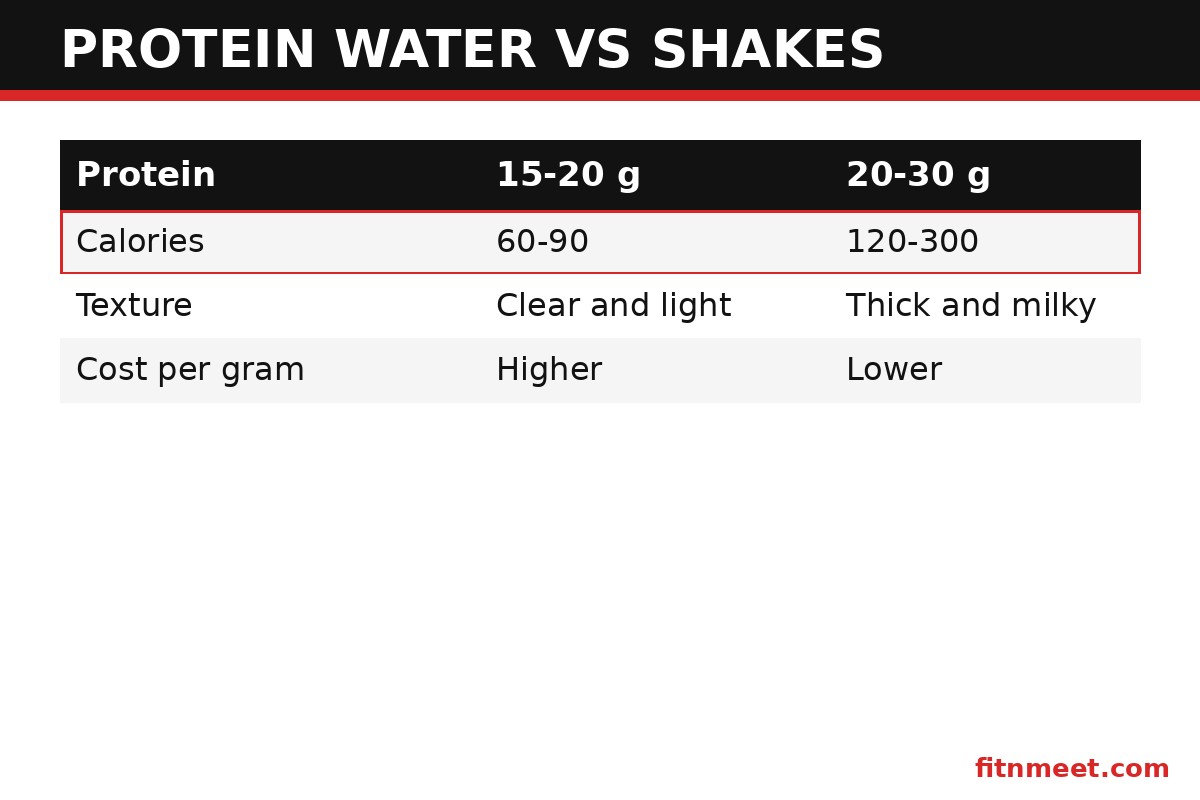
Nutritionally, yes — both deliver complete whey protein. The differences are texture (clear and light vs. thick and milky), calories (60-90 vs. 120-300 with milk), satiety (shakes keep you fuller), and cost (protein water costs 2-3x more per gram). Choose based on preference and budget, not effectiveness.
How much protein is in protein water?
Most the drink bottles contain 10-20 grams of protein, typically from whey protein isolate. Look for at least 15 grams per bottle — products with under 10 grams are closer to flavored water than a protein serving.
Is protein water good for weight loss?
It can help. At 60-90 calories for 15-20 grams of protein, protein water is one of the most calorie-efficient protein sources available, and high protein intake preserves muscle and increases fullness during fat loss. It works best replacing higher-calorie snacks, not meals.
Can I drink the drink every day?
Yes — 1-2 bottles daily is fine for healthy people. It is simply whey protein in water. Just make sure whole-food protein remains your foundation, and consider whether the cost makes sense versus mixing whey isolate powder with water at home.
Does protein water have lactose?
Effectively no. Protein water is made with whey protein isolate, which contains less than 1% lactose (versus ~5% in whey concentrate). Most lactose-sensitive people tolerate it well, though those with true milk allergy should avoid it.
Is the drink better than BCAA drinks?
For muscle building, yes. Protein water provides complete protein with all nine essential amino acids; BCAA drinks provide only three amino acids (leucine, isoleucine, valine). Research shows complete protein stimulates muscle protein synthesis more effectively than BCAAs alone.
Conclusion
Protein water is a genuinely useful option — not a gimmick, not a miracle. If heavy shakes bother your stomach, if you need grab-and-go protein, or if you want maximum protein per calorie, it earns its place. If budget is tight, whey isolate powder mixed with water gives you the same thing for less. Either way, you are covering your protein bases, and that is what counts. Want to explore your options? Browse FitnMeet’s shop and check the protein collection to find your fit — and keep learning with our training and nutrition guides.