
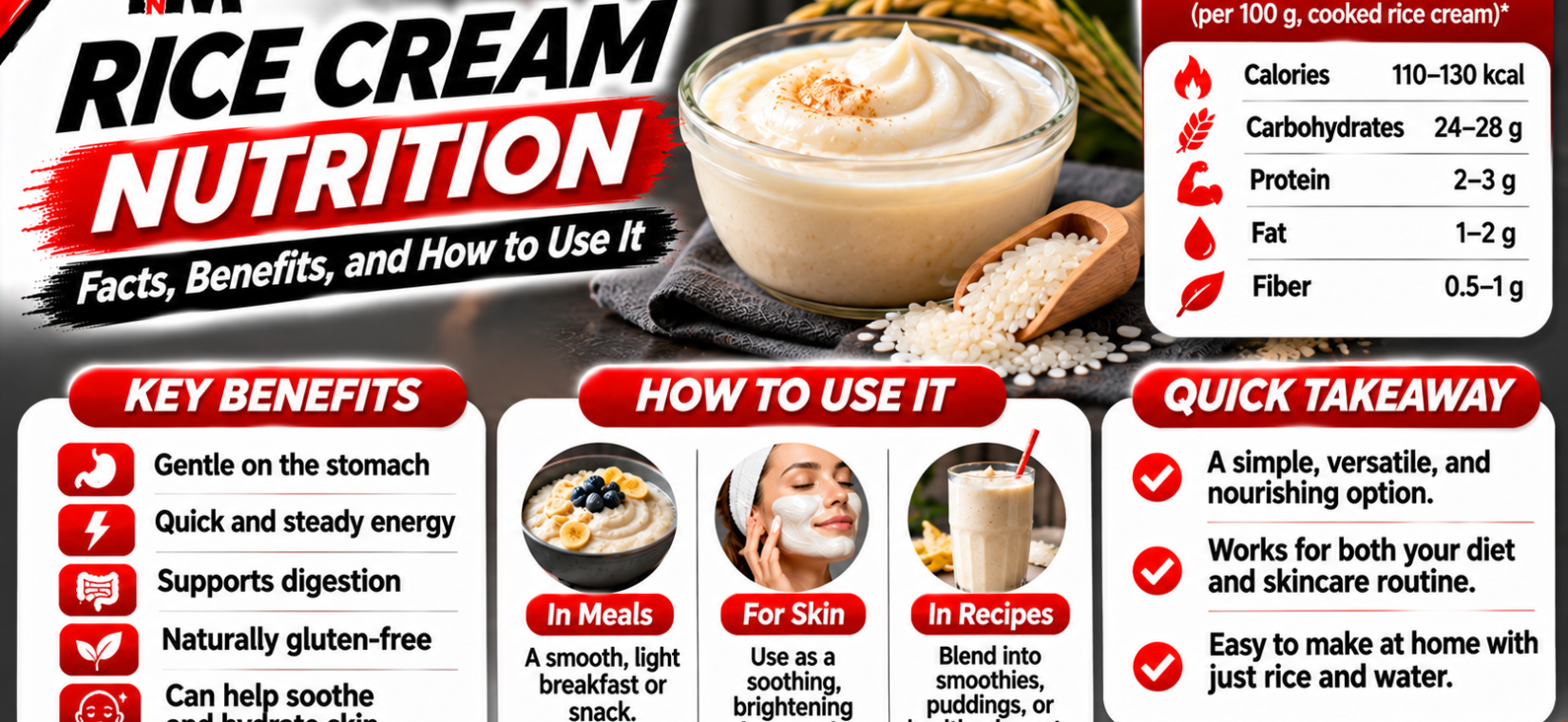
Rice cream nutrition refers to the nutritional profile of cream of rice, a hot cereal made from ground white rice. A typical serving provides around 40 grams of fast-digesting carbs with minimal fiber and fat, making it popular as a pre-workout meal. It is naturally gluten-free but low in protein, so pair it with a protein source.
IN 30 SECONDS — Rice cream = ground white rice porridge · ~30 g carbs per serving · very low fiber = fast digestion · ideal 60–90 min pre-workout · mix with protein powder for a complete pre-training meal · cheaper than most carb powders.
Rice Cream Nutrition: Fast Facts
- What it is: finely ground white rice, cooked with water or milk into a smooth hot porridge (sold as “cream of rice”).
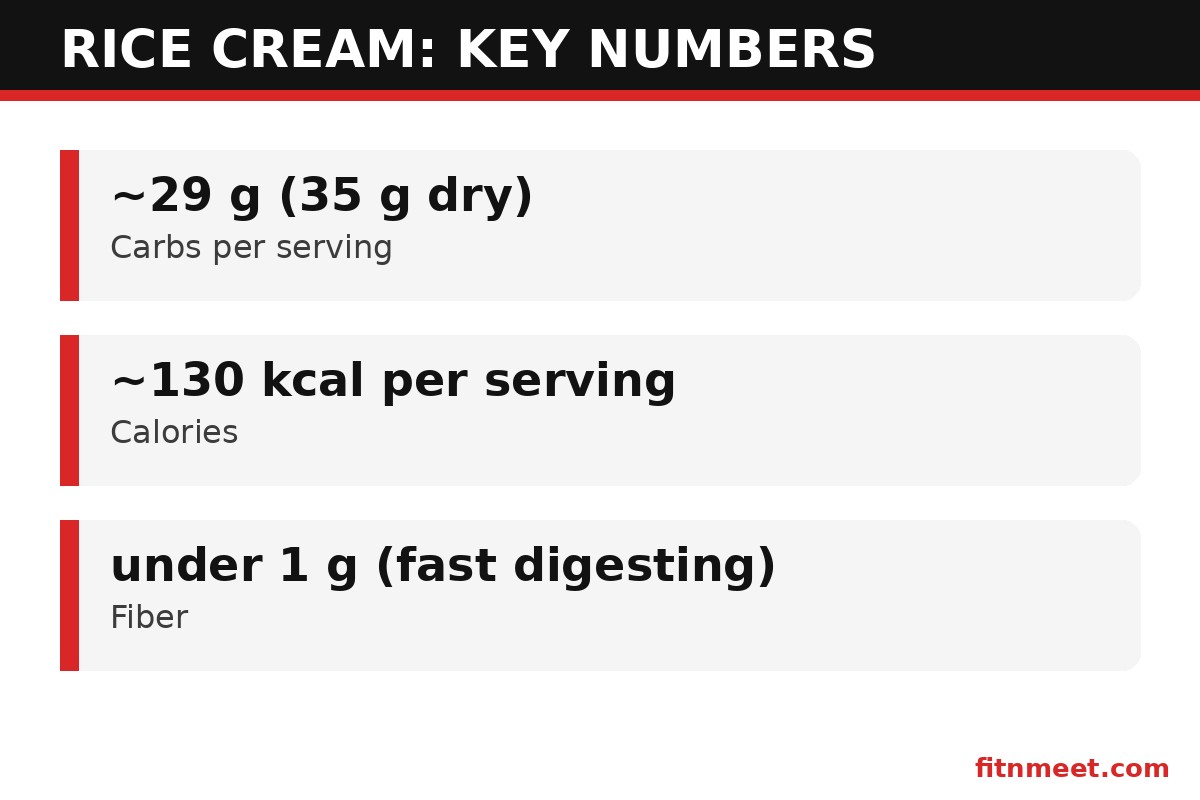
- Calories: ~130 kcal per 35 g dry serving (about 1 cup cooked).
- Carbohydrates: ~28–30 g per serving — the entire point of rice cream nutrition.
- Fiber: under 1 g per serving — very low, which is why it digests fast.
- Protein: ~2–3 g per serving (most lifters add whey to fix this).
- Fat: under 0.5 g — essentially fat-free.
- Gluten: naturally gluten-free (check labels for cross-contamination if celiac).
- Glycemic index: high (~70+) — fast energy, not slow-release.
- Cost: roughly $0.20–0.30 per serving — among the cheapest carb sources in the grocery store.
- Best use: pre-workout meal 60–90 minutes before training.
Q: Why is rice cream nutrition so popular with bodybuilders?
A: Because it solves the pre-workout dilemma: lifters need substantial carbs for training energy, but heavy, fibrous foods cause bloating and sluggishness. Rice cream nutrition delivers 30 g of carbs that clear the stomach quickly — energy without the food baby.
What Is Rice Cream?
Rice cream — sold in most countries as cream of rice — is white rice milled into a fine semolina-like granule. Cooked in liquid for 2–3 minutes, it becomes a smooth, mild porridge with a texture between oatmeal and grits. Unlike instant oatmeal packets, plain rice cream contains exactly one ingredient: rice. No added sugar, no flavorings, no preservatives — which is why rice cream nutrition labels are refreshingly boring.
The defining trait of rice cream nutrition is what is missing: fiber, fat, and protein are all minimal. White rice has the bran and germ removed, stripping most fiber and micronutrients along with it. What remains is essentially pure starch — and for a pre-workout carb, that is a feature, not a bug. Starch digests quickly and predictably, producing a fast, clean rise in blood glucose right when training demands it. The Wikipedia rice article covers the grain’s processing, and the FDA’s food resources explain how to read the nutrition labels on cereal products.
Q: Is rice cream the same as rice porridge or congee?
A: Closely related but not identical. Congee is whole rice grains slow-cooked until they break down; rice cream starts from pre-ground rice, so it cooks in minutes with a smoother texture. Rice cream nutrition is nearly identical to congee’s per gram of rice — the difference is convenience and texture, not nutrients.
Full nutrition breakdown
| Nutrient (per 35 g dry) | Amount | % Daily Value* |
|---|---|---|
| Calories | 130 kcal | 7% |
| Total carbohydrate | 29 g | 11% |
| Dietary fiber | 0.5 g | 2% |
| Total sugars | 0 g | 0% |
| Protein | 2.5 g | 5% |
| Total fat | 0 g | 0% |
| Iron (if enriched) | ~4 mg | ~20% |
| B vitamins (if enriched) | varies | 10–25% |
*Percent Daily Values based on a 2,000-calorie diet. Values vary by brand; enriched versions add iron and B vitamins.
What Are the Benefits of Rice Cream?
Q: What are the main benefits shown in rice cream nutrition data?
A: Fast-digesting energy (high-GI carbs with minimal fiber), an ultra-gentle profile for sensitive stomachs, natural gluten-free status, and extreme affordability. It is a functional carb, not a micronutrient source.
Fast, predictable pre-workout energy
The headline benefit of rice cream nutrition: ~30 g of high-glycemic carbs that digest in 30–60 minutes, versus 2+ hours for a fibrous meal. Eaten 60–90 minutes pre-workout, it tops up muscle glycogen without sitting heavy. Lifters who get nauseous from pre-workout oats almost universally tolerate rice cream.
Gentle on the digestive system
Low fiber + low fat + no gluten = one of the easiest carb sources to digest. Rice cream nutrition makes it a staple for athletes with IBS, during stomach bugs, and in cutting phases when digestion is already stressed. Pediatricians have recommended rice cereal as a first food for the same reason for decades.
Versatile base for complete meals
Plain rice cream is a blank canvas: stir in a scoop of whey and you have ~30 g carbs + ~25 g protein for under $1. Add banana, honey, or berries for flavor and extra carbs. Few pre-workout meals beat it on the macros-per-dollar ratio.
Allergy-friendly
Naturally gluten-free, dairy-free (cooked in water), nut-free, and soy-free as sold. For athletes juggling multiple intolerances, rice cream nutrition offers a carb source with almost nothing to react to. More evidence-based explainers live in our health section.
How Do You Prepare Rice Cream?
Q: What is the basic rice cream recipe?
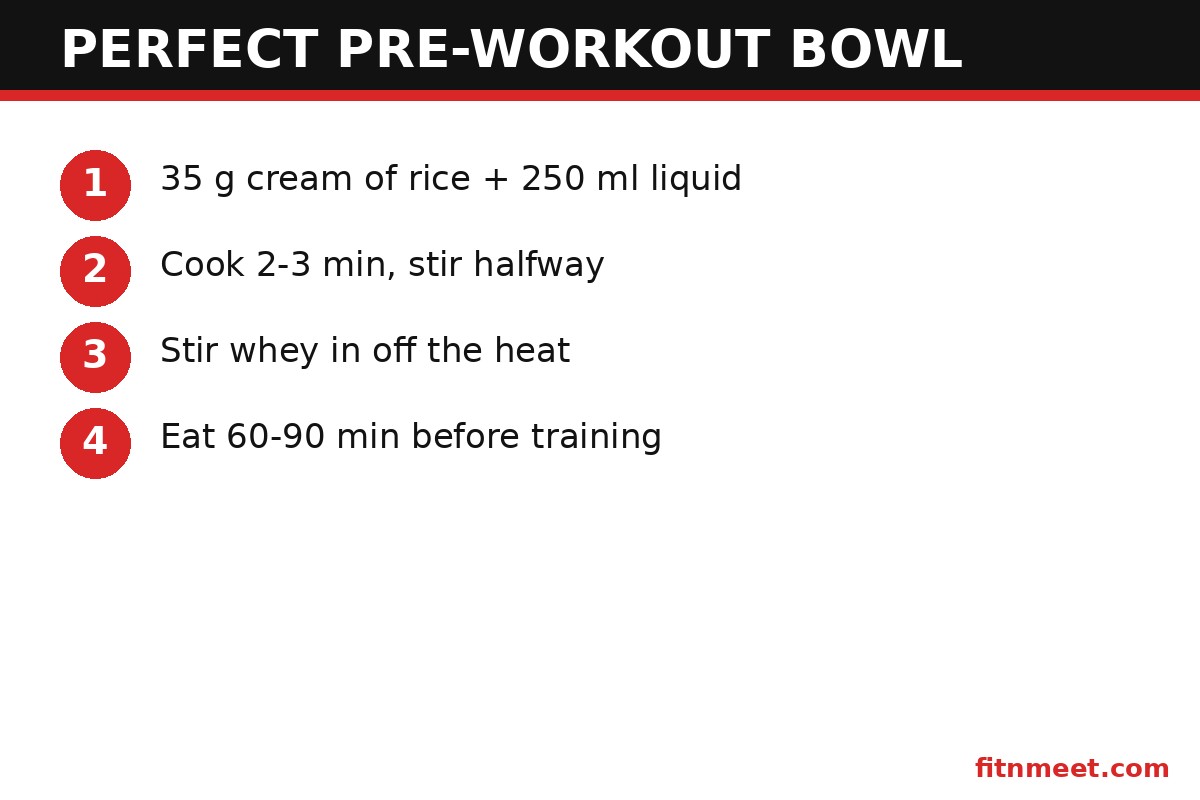
A: Whisk 35 g (about 1/4 cup) cream of rice into 250 ml water or milk, microwave 2–3 minutes (stirring halfway) or simmer on the stove, then stir in protein powder off the heat. Total time: under 5 minutes.
FAQ-style preparation steps:
How much water per serving? About 250 ml (1 cup) per 35 g dry. More liquid = thinner porridge; less = thicker. There is no wrong answer, only texture preference.
Microwave or stovetop? Microwave is faster (2–3 min with a mid-stir); stovetop gives smoother texture with constant whisking. Both produce identical rice cream nutrition — heat method changes texture, not nutrients.
When do you add protein powder? After cooking, off the heat. Stirring whey into boiling porridge can make it clumpy and denature the texture (the protein still works, it just looks sad). Let it cool 1 minute, then stir.
How do you make it taste good? Plain rice cream is bland by design. The classic lifter’s bowl: cream of rice + vanilla or chocolate whey + banana + cinnamon + pinch of salt. The salt matters — it sharpens the flavor enormously for zero calories.
Can you meal-prep it? Yes, with a caveat: it thickens dramatically as it cools (starch retrogradation). Prep it slightly thinner than you like, refrigerate up to 3 days, and stir in a splash of water when reheating.
How much should you eat pre-workout? One serving (35 g dry, ~30 g carbs) suits most lifters 60–90 minutes before training. Bigger athletes or longer sessions: 1.5–2 servings (45–60 g carbs). Pair it with 20–30 g protein — whey from the FitnMeet protein collection is the obvious partner.
People Also Ask About Rice Cream
Is rice cream healthier than oatmeal?
Different, not healthier. Rice cream nutrition wins on digestibility and pre-workout speed (low fiber, high GI); oatmeal wins on fiber (~4 g), micronutrients, and satiety. Choose rice cream before training, oats for breakfast. Neither is “unhealthy” — they are tools for different jobs.
Does rice cream spike blood sugar?
Yes — it is a high-GI food, and rice cream nutrition data confirms a fast glucose rise. For pre-workout purposes that is the goal. For sedentary snacking or diabetes management, pair it with protein, fat, or fiber to blunt the spike, or choose a lower-GI carb instead.
Is rice cream good for weight loss?
It can fit — 130 kcal for a filling bowl is reasonable — but its low fiber means less satiety per calorie than oats. During a cut, most people do better with higher-fiber carbs; save rice cream nutrition for the pre-workout window where fast carbs earn their place.
Can babies eat rice cream?
Yes — iron-fortified rice cereal has been a standard first food for generations, precisely because rice cream nutrition is so gentle. (Modern guidance also encourages varied grains; rice cereal remains fine, just not the only grain.)
Does rice cream contain arsenic?
Rice can accumulate inorganic arsenic from soil — a known issue for all rice products, not specific to rice cream. The FDA monitors levels; varied diets keep exposure low. Rinsing does not help ground rice, but eating rice cream as one carb among many (oats, potatoes, wheat) rather than the sole staple minimizes concern. More on food contaminants is available through the FDA’s food safety resources.
Rice Cream vs Oats vs Other Carbs
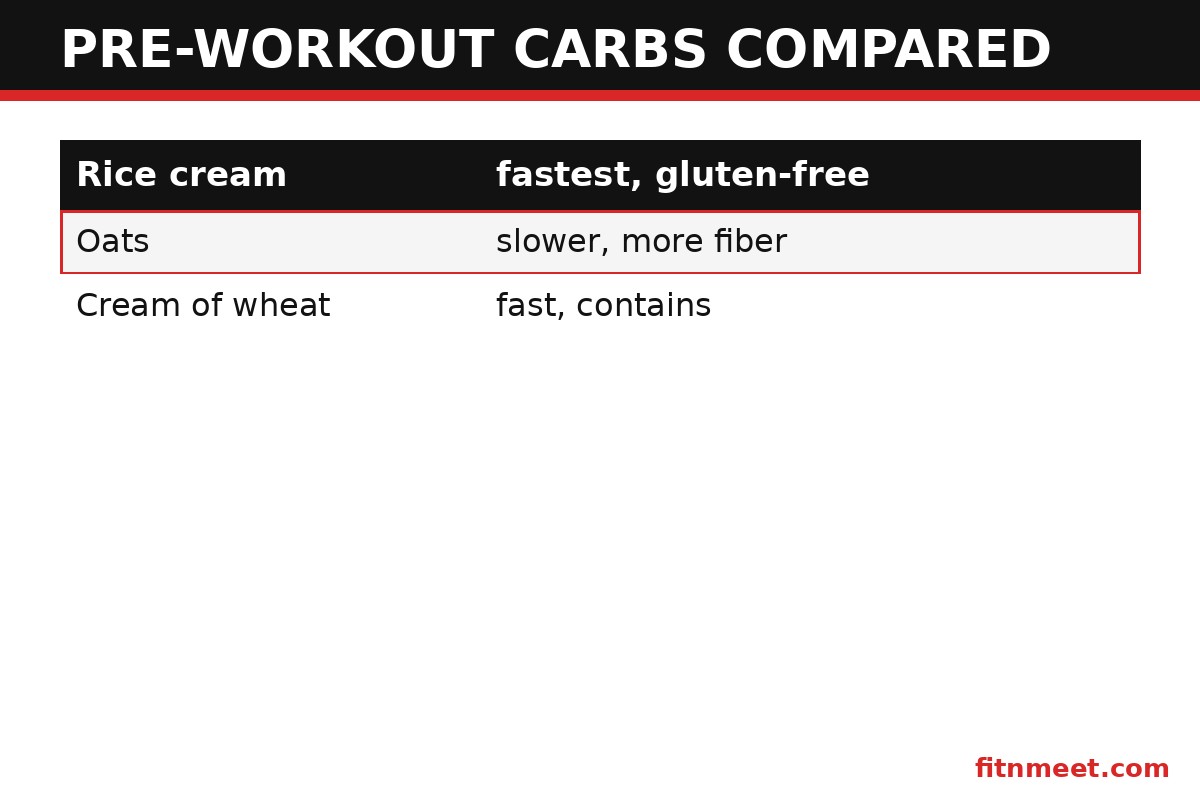
| Per 35 g dry | Rice cream | Instant oats | Cream of wheat | White rice (cooked equiv.) |
|---|---|---|---|---|
| Calories | 130 | 130 | 120 | 130 |
| Carbs | 29 g | 23 g | 26 g | 28 g |
| Fiber | 0.5 g | 4 g | 1 g | 0.5 g |
| Protein | 2.5 g | 5 g | 4 g | 2.5 g |
| Digestion speed | Fastest | Slow | Fast | Fast |
| Gluten-free | Yes | Often contaminated | No (wheat) | Yes |
| Pre-workout pick? | Best | Too heavy for most | Good | Good (less convenient) |
The table makes the positioning clear: rice cream nutrition dominates the pre-workout use case specifically because of what it lacks. Oats are the better everyday breakfast; cream of wheat is the closest substitute (but contains gluten); plain white rice is nutritionally identical but less convenient as a quick porridge. For the broader nutrition picture, browse the FitnMeet nutrition guides and health support collection.
Is Rice Cream Safe and Healthy?
Q: Are there any downsides in rice cream nutrition?
A: Three honest ones: it is high-GI (bad for blood-sugar control as a sedentary snack), low in fiber and micronutrients (unenriched), and rice products carry trace arsenic — a variety issue, not a poison issue. None of these matter much for a pre-workout bowl in an otherwise balanced diet.
Rice cream is as safe as white rice — one of the most consumed foods on earth. The sensible framing: it is a functional carb, not a nutritious carb. Use it where fast energy matters (pre-workout), get your fiber and micronutrients from vegetables, fruits, and whole grains at other meals, and the overall diet is excellent. Athletes sometimes fall into the trap of eating like every meal is pre-workout; rice cream nutrition belongs in the training window, with more nutrient-dense carbs elsewhere.
This article is for informational purposes only and is not medical advice. Consult a healthcare professional before starting any supplement or exercise program.
Frequently Asked Questions
What is rice cream nutrition?
Rice cream nutrition refers to the nutritional profile of cream of rice — finely ground white rice cooked as porridge. Per 35 g dry serving: ~130 calories, ~29 g carbs, under 1 g fiber, ~2.5 g protein, almost no fat. It is a fast-digesting, high-glycemic carb source, naturally gluten-free.
Is rice cream good before a workout?
Excellent — it is one of the best pre-workout carbs. Rice cream nutrition delivers ~30 g of fast-digesting carbs that clear the stomach in 30–60 minutes, providing training energy without bloating. Eat one serving 60–90 minutes pre-workout, ideally with 20–30 g of protein.
Is rice cream healthier than oats?
Neither is healthier overall — they serve different purposes. Rice cream nutrition wins for pre-workout (faster digestion, lower fiber, gluten-free); oats win for breakfast (4 g fiber, more protein, better satiety). Use rice cream around training and oats at other meals.
How many carbs are in rice cream?
About 28–30 g of carbohydrates per 35 g dry serving (roughly 1 cup cooked), with essentially zero sugar and under 1 g of fiber. Nearly all the calories in rice cream nutrition come from starch, which is why it digests so quickly.
Is rice cream gluten-free?
Yes, rice is naturally gluten-free, so plain rice cream nutrition is gluten-free as sold. If you have celiac disease, check the label for certified gluten-free status to rule out cross-contamination in the milling facility.
Can I eat rice cream every day?
Yes, but keep it in its lane. Daily rice cream as a pre-workout carb is fine; daily rice cream as your main carb at every meal would shortchange fiber and micronutrients. Rice cream nutrition is a functional fuel — balance it with vegetables, fruits, and whole grains elsewhere.
How do you make rice cream taste better?
Stir protein powder in off the heat, then add banana, honey, berries, or cinnamon plus a pinch of salt — the salt transforms the flavor for zero calories. The classic lifter’s bowl is cream of rice + whey + banana + cinnamon.
Is cream of wheat the same as rice cream?
No — cream of wheat is ground wheat (contains gluten), while rice cream is ground rice (gluten-free). Their nutrition is similar: both are fast-digesting, low-fiber hot cereals. Rice cream nutrition is the safer pick for gluten-free athletes; otherwise they are interchangeable pre-workout.
Conclusion
Rice cream nutrition is beautifully simple: ~30 g of fast carbs, almost no fiber or fat, gentle on the stomach, and cheaper than any carb powder. As a pre-workout meal 60–90 minutes before training — especially with a scoop of whey stirred in — it is genuinely hard to beat. Just remember its lane: training fuel, not an all-day health food.
Build your perfect pre-workout bowl with protein from FitnMeet’s shop — and keep learning with the nutrition guides on the FitnMeet blog.