
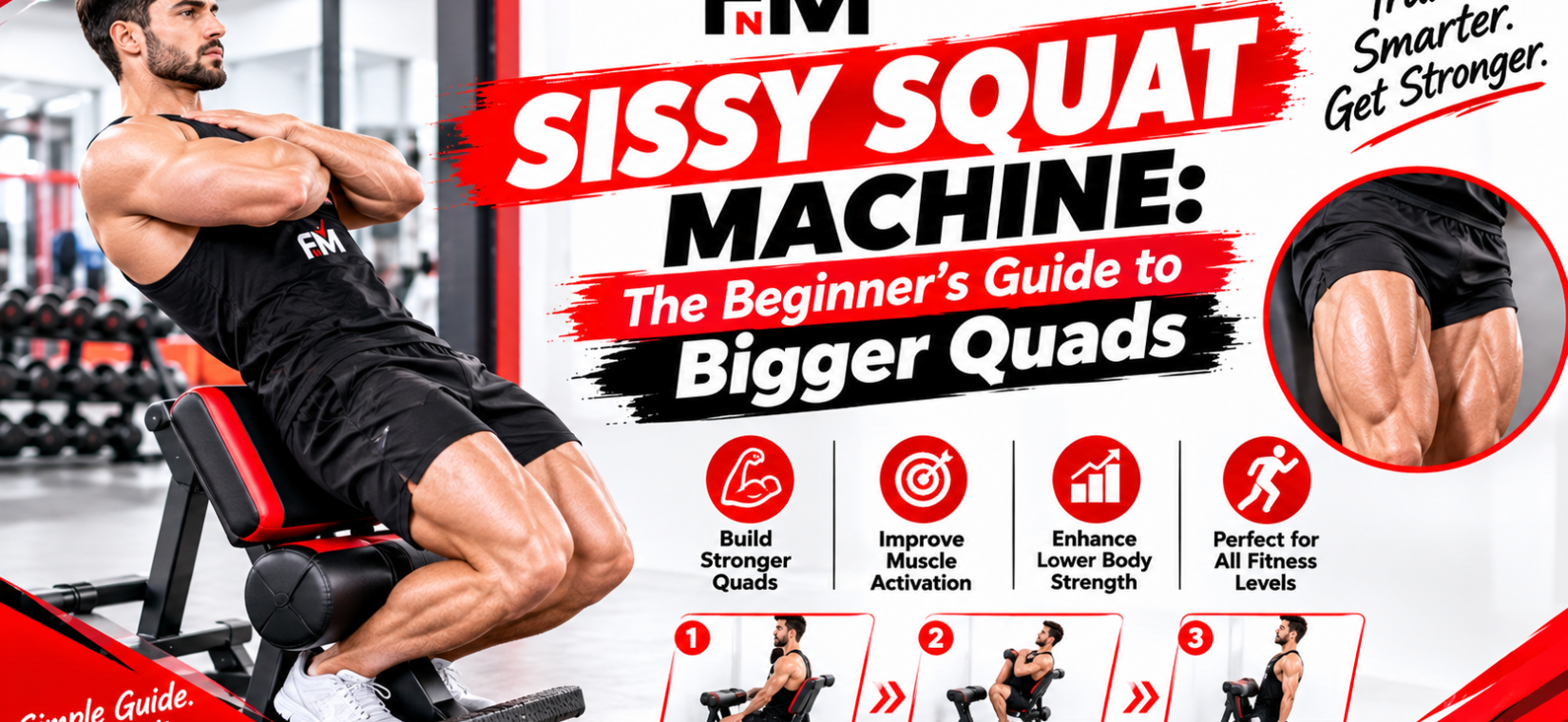
The sissy squat machine locks your feet and lower legs in place so you can perform sissy squats — a quad-isolation exercise where you lean your torso back while bending the knees deeply. The sissy squat machine is ideal for beginners because the pads guide your movement, letting you build strong quadriceps with just bodyweight before adding load.
👋 Start here — the 30-second version: The sissy squat machine locks your feet in place and supports your calves so you can lean back and squat straight down on your knees. It isolates your quadriceps (front thigh muscles) like almost nothing else. Start with bodyweight only, do 3 sets of 8–10 slow reps, twice a week — and your quads will grow. Everything below explains exactly how.
What Is the Sissy Squat Machine?
Let us clear up the name first, because every beginner asks. The “sissy” in sissy squat machine has nothing to do with being weak — the exercise is named after Sisyphus, the figure from Greek myth, and old-school bodybuilders adopted it as a brutal quadriceps builder. There is nothing sissy about it: your quads will be shaking after one proper set.
📝 Newbie note — “quadriceps”: your quads are the four muscles on the front of your thigh. They straighten your knee — every step upstairs, every time you stand up from a chair. The sissy squat machine trains them in isolation, meaning the quads do almost all the work.
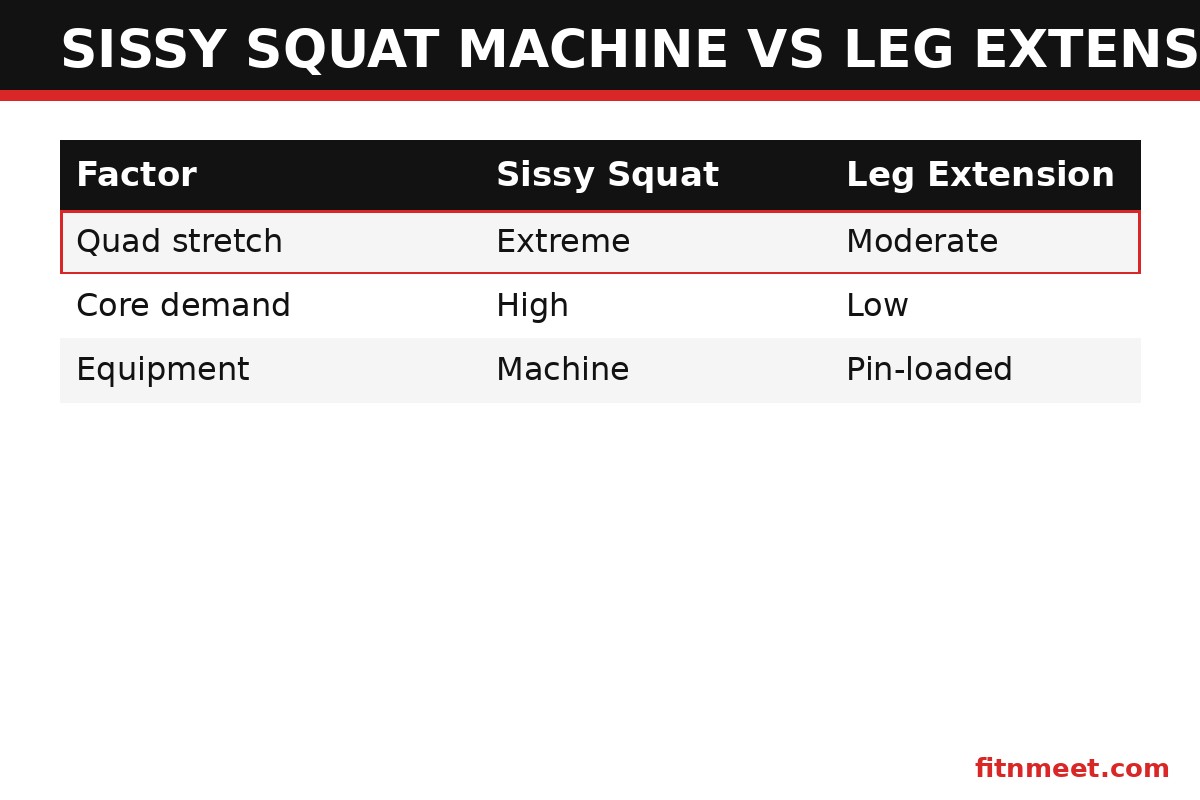
The machine itself is simple: a platform for your feet with rollers or pads that lock your ankles in place, plus a padded support behind your calves. A free-standing sissy squat (no machine) requires serious balance and ankle mobility. The sissy squat machine removes both problems — your feet are anchored, your calves are braced, and you can focus 100 percent on the quad muscles doing the work.
The movement: with feet locked and torso upright, you bend your knees and lean your whole body backward as one straight line from knees to shoulders, lowering until your knees are deeply bent and your quads are stretched. Then you drive back up by straightening the knees. Because your hips stay extended (unlike a regular squat, where the hips bend), the rectus femoris — the quad muscle that crosses both the hip and knee — gets loaded through a huge range of motion.
Why Beginners Love the Sissy Squat Machine
- No balance required. The machine holds you. You cannot fall over, so all your mental energy goes into the muscles.
- Bodyweight is enough. Most beginners cannot do 8 clean reps with bodyweight alone. You do not need to touch a barbell for weeks.
- Guided movement path. The pads keep your lower legs vertical and your torso aligned — the machine teaches the form.
- Instant quad feedback. You feel the target muscles working from rep one, which makes learning faster and more motivating.
- Joint-friendly loading. With no bar on your back and no heavy weights, your spine stays completely unloaded while your quads get serious work.
- Small footprint. The sissy squat machine takes up little gym space and needs no spotter, plates or rack.
📝 Newbie note — “progressive overload”: this is the fancy term for the simple idea behind all muscle growth — do a little more over time. One more rep this week, a slightly deeper squat next week. The sissy squat machine makes this easy because you control every variable.
Your First Workout on the Sissy Squat Machine
Here is your entire first session, start to finish. It takes about 15 minutes.
- Warm up (5 minutes). Walk or cycle lightly for 3 minutes, then do 10 bodyweight squats and 10 walking lunges per leg. Warm quads handle the deep knee bend far more comfortably.
- Set up the machine (2 minutes). Adjust the foot rollers so your ankles feel snug but not pinched, and the calf pad so it sits just below your knee crease. Stand tall, feet hip-width, toes pointing slightly out.
- Practice set (1 set of 5, very shallow). Holding the machine’s handles lightly, bend your knees and lean back just a few inches, then return. This is only about learning the balance — do not go deep yet.
- Working sets (3 sets of 8–10 reps). Now perform full reps: lean back as one straight line until you feel a strong quad stretch, pause 1 second, drive back up. Rest 90 seconds between sets. Stop each set when your form starts to wobble — not when you collapse.
- Cool down (3 minutes). Gentle quad stretching: standing quad stretch, 30 seconds per leg, twice.
What to wear and bring: flat-soled shoes (running shoes with squishy heels make the sissy squat machine feel unstable), comfortable shorts or leggings that let you see your knee position, and a water bottle. That is the entire equipment list — the sissy squat machine needs nothing else, which is part of its beginner charm.
Difficulty: ★★☆☆☆ — challenging for the quads, but the machine does the balancing for you.

Step-by-Step: How to Use It
- Lock your feet in. Slide your feet under the ankle rollers so the pads press firmly on the front of your ankles. Your feet should feel completely anchored — if your heels lift, tighten the adjustment.
- Set the calf pad. The rear pad should contact the back of your lower legs just below the knees. This pad is what stops you from falling backward.
- Stand tall. Feet hip-width apart, chest up, core braced (tighten your stomach like someone is about to poke it), arms crossed over your chest or holding the handles lightly.
- Lean back as one piece. Bend your knees and let your torso travel backward in a straight line from knees to shoulders. Think “plank in reverse.” Do not bend at the hips — hips stay extended the whole time.
- Go as deep as your knees allow. Beginners: stop when you feel a strong stretch. Over weeks, aim to lower until your hamstrings nearly touch your calves.
- Pause and drive up. Hold the bottom for 1 second, then straighten your knees to return to standing. Squeeze your quads hard at the top.
- Breathe. Inhale on the way down, exhale as you drive up. Never hold your breath through the sticking point.
📝 Newbie note — “eccentric”: the lowering part of the rep. On the sissy squat machine, the slow lowering (take 2–3 seconds) builds more quad muscle than rushing down. Control the descent and you will grow faster. More equipment guides live in our strength training section.
Common Beginner Mistakes
- Bending at the hips. If your butt pushes back like a regular squat, your quads lose tension. Keep hips extended — straight line from knees to shoulders.
- Going too deep too soon. Depth is earned over weeks. Forcing depth on day one strains the knees and teaches bad patterns.
- Bouncing out of the bottom. The stretch at the bottom is where growth happens — bouncing skips it and stresses the knee. Pause 1 second, every rep.
- Holding your breath. Breath-holding spikes blood pressure unnecessarily on a bodyweight exercise. Breathe with the rep.
- Adding weight in week one. Master 3 sets of 12 clean bodyweight reps first. A weight plate comes later — impatience is how knees get cranky.
- Skipping the warm-up. Cold quads and a deep knee bend are a bad combination. Five minutes of warming up prevents weeks of aching.
- Training quads daily. Beginners grow best training the sissy squat machine 2 times per week with rest days between. More is not better when you are starting.
Progressions: What Comes Next
Once 3 sets of 12 bodyweight reps feel solid, climb this ladder:
- Level 1 — Bodyweight, full depth (you are here). Difficulty: ★★☆☆☆
- Level 2 — Slower tempo. 4 seconds down, 2-second pause, 1 second up. Same reps, far harder. Difficulty: ★★★☆☆
- Level 3 — Added weight. Hold a 5–10 lb plate at your chest. Add weight only when Level 2 feels manageable. Difficulty: ★★★★☆
- Level 4 — 1.5 reps. Go all the way down, come halfway up, go back down, then all the way up — that is one rep. Brutal quad time-under-tension. Difficulty: ★★★★☆
- Level 5 — Superset with squats. Finish leg day with sissy squat machine sets right after barbell or goblet squats. Advanced quad specialization. Difficulty: ★★★★★
Move up one level at a time, spending 2 to 4 weeks at each. There is no prize for rushing — the prize is quads that keep growing month after month.
Safety Tips
- Respect your knees. The sissy squat machine loads the knee joint significantly. If you have a history of knee injury, meniscus issues or arthritis, check with a physiotherapist before starting.
- Progress depth gradually. Add an inch of depth per week, not per workout. Tendons adapt slower than muscles.
- Keep reps smooth. No bouncing, no jerking, no grinding ugly reps. If the last rep looks nothing like the first, the set is over.
- Support recovery. Sore quads for 24–48 hours is normal; sharp knee pain is not. Eat enough protein to support repair — FitnMeet’s muscle development and workout recovery picks in the shop can help.
- Balance your training. Quads are only half the leg. Pair sissy squat machine work with hamstring exercises (Romanian deadlifts, leg curls) to keep knees happy.
This article is for informational purposes only and is not medical advice. Consult a healthcare professional before starting any supplement or exercise program.
Frequently Asked Questions
What does the sissy squat machine do?
The sissy squat machine locks your feet and calves in place so you can lean back and squat down on your knees, isolating the quadriceps through a deep range of motion. It removes the balance challenge of free sissy squats, making it ideal for beginners.
Is the sissy squat machine good for beginners?
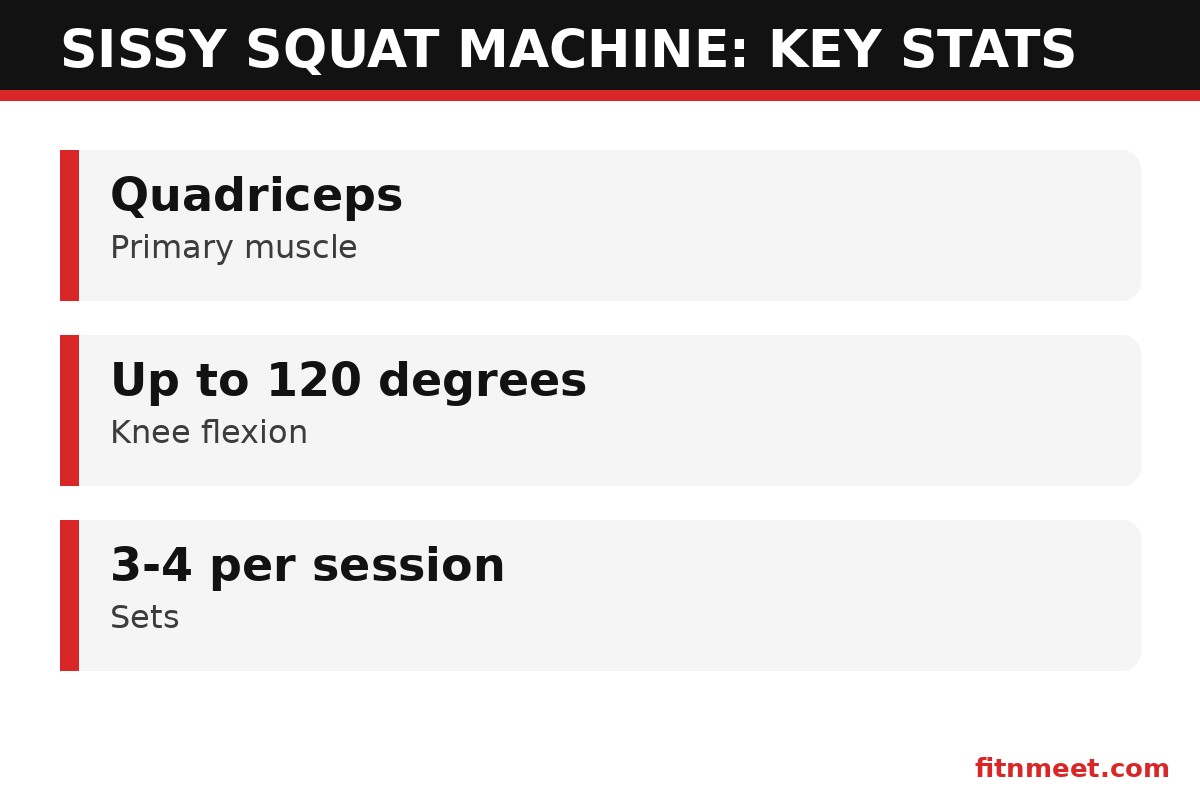
Yes — it is one of the most beginner-friendly quad exercises. The machine guides your movement, bodyweight provides plenty of resistance at first, and there is no barbell, no spotter and no balance requirement. Start with 3 sets of 8 to 10 reps twice per week.
Is the sissy squat machine bad for knees?
It loads the knees significantly, so people with existing knee injuries should get professional advice first. For healthy knees, starting with bodyweight, progressing depth gradually and avoiding bouncing keeps the sissy squat machine safe and productive.
What muscles does the sissy squat machine work?
Primarily the quadriceps — especially the rectus femoris, which gets stretched at the hip and loaded at the knee simultaneously. The hip flexors and core assist with stabilization.
How often should a beginner use the sissy squat machine?
Twice per week with at least 48 hours between sessions is ideal for beginners. That frequency builds skill and muscle while giving knees and tendons time to adapt.
When should I add weight on the sissy squat machine?
Add weight only after you can do 3 sets of 12 clean, full-depth bodyweight reps with 1-second pauses. Start with a 5 to 10 lb plate held at your chest and progress slowly.
Conclusion
The sissy squat machine might be the most underrated beginner tool in the gym: it takes a historically advanced bodybuilding exercise and makes it safe, guided and brutally effective with zero added weight. Learn the lean-back, own the pause at the bottom, train twice a week, and progress one level at a time. Share this guide with a gym buddy and learn the movement together — everything is easier and more fun with a training partner. Your quads will respond — and six months from now, you will be the person other beginners ask for advice.
🎯 Your beginner bundle: bookmark this guide, schedule two 15-minute sissy squat machine sessions this week, and fuel your recovery with the basics from FitnMeet’s shop. Keep learning with more beginner-friendly guides in the fitness section — future-you says thanks.