

Urinary tract supplements are products — usually cranberry extract, D-mannose, probiotics, or combinations — taken to support urinary tract health and reduce the recurrence of urinary tract infections (UTIs). The evidence is strongest for cranberry products with standardized proanthocyanidin (PAC) content for prevention in recurrent sufferers. No supplement treats an active infection — that requires medical care.
A Familiar Story
It’s a Tuesday morning, and Maya has that feeling again — the unmistakable burn she’s come to dread. This is the third time in eight months. Her doctor treats each episode with antibiotics, which work, but between infections she feels helpless: cranberry juice from the grocery store (mostly sugar water), internet forums full of conflicting advice, and a medicine cabinet of half-finished bottles. “There has to be something I can do between infections,” she tells her friend. There is — but it’s not what the juice aisle suggests.
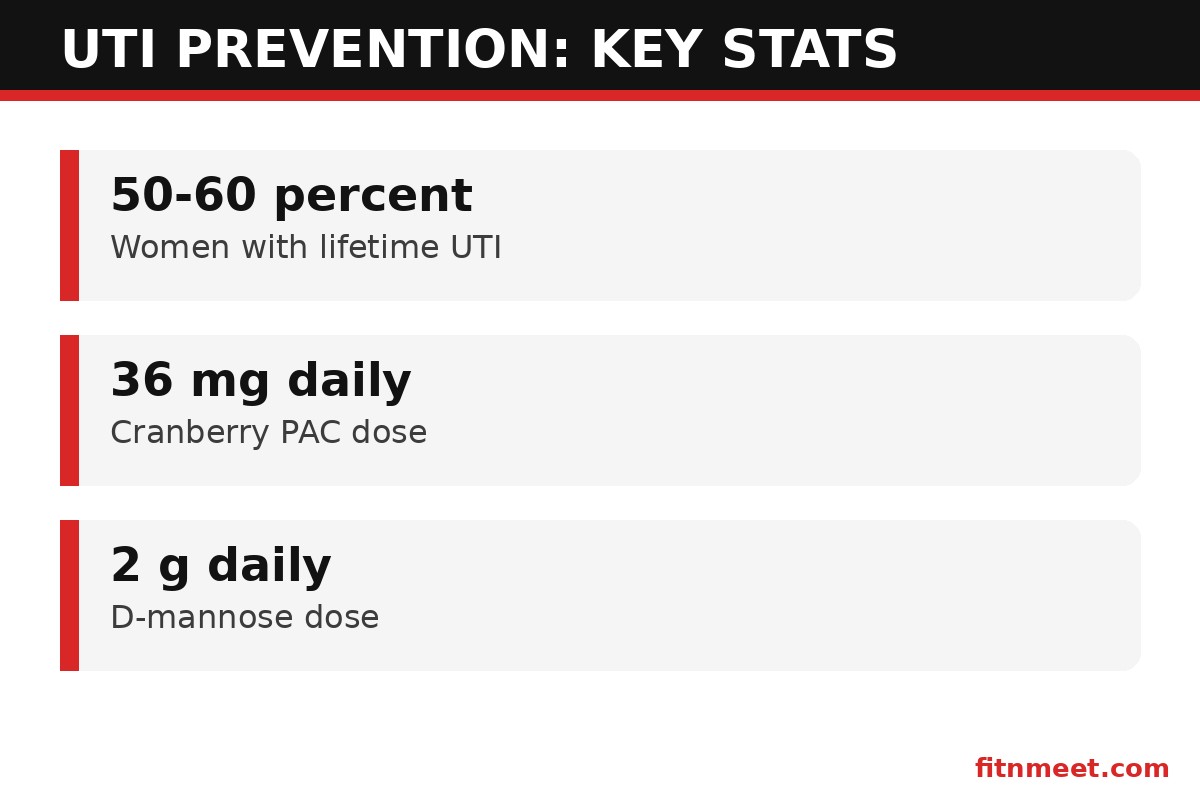
Maya’s story is remarkably common. An estimated 50–60% of women experience at least one urinary tract infection in their lifetime, and roughly a quarter of those go on to have recurrent infections — defined as two in six months or three in a year. UTIs send an estimated 8.1 million people to US doctors’ offices every year. The question isn’t whether urinary tract supplements are popular — it’s which ones have evidence, which are hype, and how to use them without delaying real treatment when it matters.
📌 Takeaway: Recurrent UTIs are one of the most common — and most frustrating — health issues women face. Prevention between episodes is where urinary tract supplements can genuinely help; treating an active infection is not their job.
What Are Urinary Tract Supplements?
Urinary tract supplements are dietary supplements formulated to support the health of the urinary system — the kidneys, ureters, bladder, and urethra. The category centers on four ingredient families. Cranberry extract (standardized for PACs — proanthocyanidins) is the most studied; PACs are the compounds believed to interfere with E. coli bacteria adhering to the bladder wall. D-mannose is a simple sugar, related to glucose, that in theory works similarly — binding to E. coli so the bacteria flush out with urine rather than gripping the bladder lining. Probiotics (mainly Lactobacillus strains) aim to support the protective vaginal and urinary microbiome. Vitamin C and herbal blends (uva ursi, dandelion, marshmallow root) round out the category with thinner evidence.
The critical distinction the whole category turns on: prevention vs. treatment. Nearly all positive research on urinary tract supplements concerns reducing recurrence in people prone to UTIs — taken daily over months. Almost none supports using them to treat an active, symptomatic infection, which needs prompt medical evaluation and usually antibiotics. You can read the clinical background on Wikipedia’s urinary tract infection page and the NIH’s patient guide via the National Institute of Diabetes and Digestive and Kidney Diseases.
📌 Takeaway: Urinary tract supplements = daily prevention tools built on cranberry PACs, D-mannose, or probiotics. They are not antibiotics and must never delay treatment of an active infection.
Why Urinary Tract Health Matters
Maya’s frustration has a clinical dimension worth understanding. About 80–90% of uncomplicated UTIs are caused by a single bacterium, Escherichia coli, which migrates from the digestive tract to the urethra and bladder. Women are disproportionately affected because of shorter urethras — roughly 8 times the UTI rate of men. Each infection typically requires antibiotics, and repeated courses contribute to the broader problem of antibiotic resistance — one reason prevention research matters beyond individual comfort.
The recurrence cycle is what breaks people. After a first UTI, an estimated 20–30% of women have a recurrence within 3–4 months; after two, the odds climb further. Each episode means days of discomfort, missed work, and another antibiotic course with its own side effects (yeast infections, gut disruption). Breaking that cycle — even partially — is enormously valuable, which is exactly the job description urinary tract supplements are auditioning for.
📌 Takeaway: E. coli causes the vast majority of UTIs; recurrence is the real enemy; and every prevented infection is an antibiotic course avoided.
Benefits of Urinary Tract Supplements: What the Evidence Says
Cranberry PACs — the best-evidenced option
Maya’s grocery-store cranberry juice was mostly sugar water — but standardized cranberry extract is a different product. A major 2023 Cochrane systematic review (50 trials, thousands of participants) concluded that cranberry products reduce the risk of symptomatic, culture-verified UTIs — with the clearest benefit in women with recurrent UTIs, and in children. The effective products in trials were those standardized to 36 mg of PACs daily — a detail that separates evidence-based urinary tract supplements from candy-flavored impostors. The proposed mechanism: PACs (specifically A-type proanthocyanidins) reduce E. coli adhesion to uroepithelial cells.
D-mannose — promising but thinner evidence
Small randomized trials suggest D-mannose (typically 2 g daily) may reduce UTI recurrence comparably to low-dose prophylactic antibiotics in some studies — but the trials are small (often under 200 participants) and heterogeneous. Mechanistically plausible, anecdotally popular, but not yet Cochrane-grade. Consider it a reasonable second-line option, not a first-line one.
Probiotics — the microbiome angle
Lactobacillus-dominant vaginal flora is associated with lower UTI risk, and disrupting it (via antibiotics, spermicides) raises risk. Oral and vaginal probiotic trials show mixed results for UTI prevention — some positive signals, no consensus. Worth considering as part of a broader strategy, especially after antibiotic courses, but not a standalone solution.
Vitamin C — limited support
The theory (acidified urine inhibits bacterial growth) is elegant; the evidence is weak. Small, inconsistent trials. Vitamin C won’t hurt — see the NIH vitamin C fact sheet for its genuine benefits — but don’t buy urinary tract supplements for the vitamin C content.
📌 Takeaway: Ranked by evidence: (1) standardized cranberry PACs at 36 mg/day — solid; (2) D-mannose at 2 g/day — promising; (3) probiotics — plausible adjunct; (4) vitamin C/herbals — weak. Buy for the PAC number, not the berry pictures.
How to Use Urinary Tract Supplements: Maya’s Story Continues
Six weeks after that Tuesday morning, Maya has a system. Here’s the story-framed routine her clinician helped her build — and the steps any recurrent sufferer can adapt: For broader women’s wellness nutrition guidance, browse the FitnMeet nutrition articles for diet habits that complement urinary tract supplements.
- Confirm the pattern with your doctor first. Before buying any urinary tract supplements, Maya got proper testing to confirm her infections were bacterial UTIs (not interstitial cystitis or other lookalikes) and discussed prevention options. Supplements complement medical care — they don’t replace diagnosis.
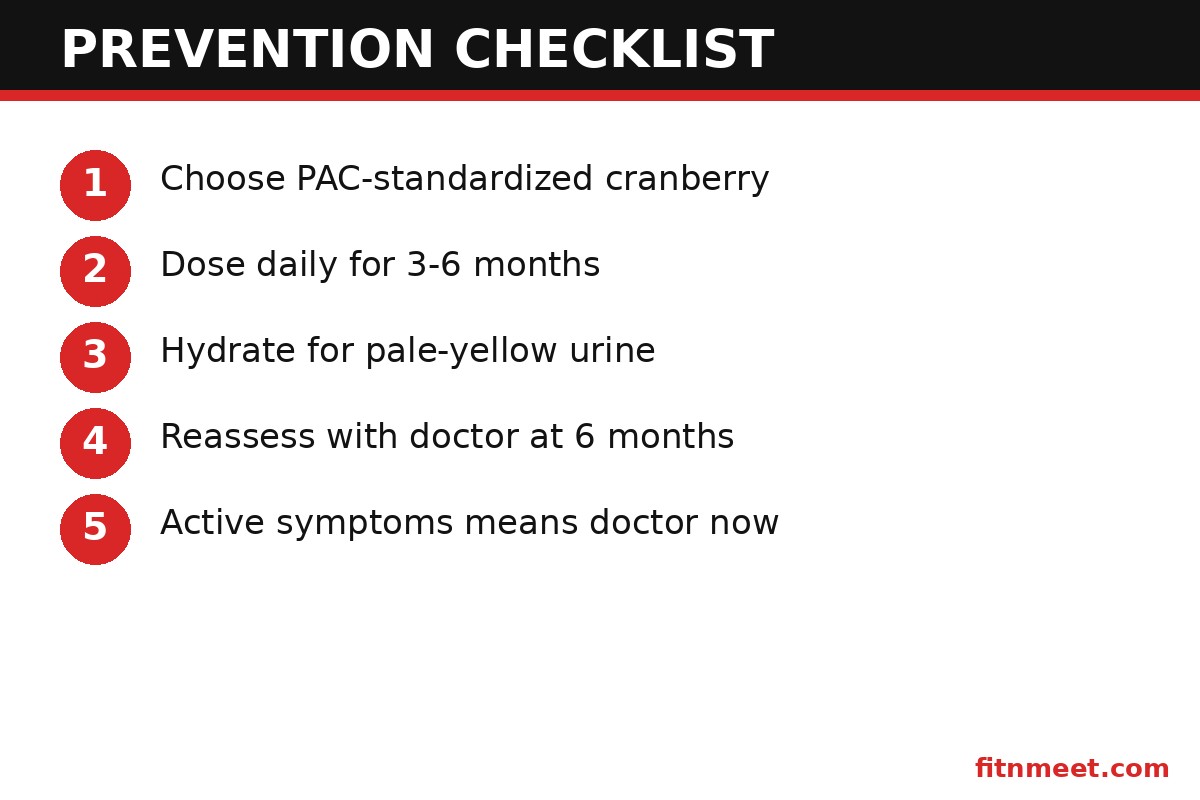
- Choose PAC-standardized cranberry. Maya switched from juice to capsules standardized to 36 mg PACs daily — the trial dose. She ignored products that listed only “cranberry fruit powder” with no PAC number, since those have no proven dose.
- Take it daily, not just when symptomatic. Prevention trials dosed every day for months. Maya takes her capsule with breakfast — habit-stacking it onto an existing routine so she never forgets.
- Hydrate deliberately. The unglamorous co-star: adequate water intake (enough for pale-yellow urine) mechanically flushes bacteria. No supplement outworks chronic dehydration.
- Reassess at 6 months. Maya’s clinician set a review point: fewer episodes → continue; no change → discuss alternatives (including prophylactic strategies). Urinary tract supplements earn their place with results, not hope.
📌 Takeaway: Doctor first, PAC-standardized product, daily dosing for months, hydration alongside, and an honest 6-month review. That’s the complete playbook.
Urinary Tract Supplements: Dosage Guide
| Ingredient | Studied daily dose | Form | Evidence level |
|---|---|---|---|
| Cranberry PACs | 36 mg PACs | Capsule/tablet (standardized) | Strong (Cochrane 2023) |
| D-mannose | 2 g | Powder or capsule | Moderate (small RCTs) |
| Probiotics | 1–10 billion CFU Lactobacillus | Capsule | Mixed |
| Vitamin C | 500–1000 mg | Tablet | Weak |
Dosing rules: take cranberry PAC products daily for at least 3–6 months before judging — the trials ran for months, not days. D-mannose is typically split into 1 g twice daily with water. Don’t megadose cranberry: more PACs beyond 36 mg/day have no proven added benefit, and excess vitamin C just makes expensive urine. And critically: if active UTI symptoms appear — burning, urgency, fever, back pain, blood in urine — stop the prevention mindset and seek medical care promptly. Delayed treatment risks kidney infection (pyelonephritis), which is genuinely dangerous.
📌 Takeaway: 36 mg PACs daily for months (cranberry) or 2 g/day (D-mannose). Judge at 6 months. Active symptoms = doctor, not supplements.
Urinary Tract Supplements: What to Watch For
- The juice trap. Grocery cranberry juice cocktail is ~7% juice and ~93% sugar water — it cannot deliver 36 mg of PACs without absurd sugar intake. Only standardized extracts count.
- “Proprietary blends” hiding the PAC number. If the label won’t state PAC milligrams, assume it’s underdosed. Transparency is the quality signal.
- Drug interactions. Cranberry may interact with warfarin (case reports of INR elevation) — anyone on blood thinners must consult their doctor first. D-mannose is generally well tolerated but can cause loose stools at higher doses.
- Delaying treatment. The most dangerous misuse of urinary tract supplements: treating an active infection with cranberry instead of seeing a doctor. Fever, flank/back pain, nausea, or symptoms lasting over 24–48 hours need medical evaluation — kidney infections can develop quickly.
- Recurrence despite prevention. If infections continue at the same rate after 6 months of proper dosing, the strategy isn’t working — return to your clinician rather than stacking more supplements.
- Pregnancy. UTIs in pregnancy need prompt medical treatment (risks include preterm labor); discuss any preventive supplement with your obstetric provider first.
For general supplement questions, FitnMeet’s FAQ page covers the basics — and the health support collection focuses on evidence-led daily formulas.
📌 Takeaway: Demand the PAC number, watch warfarin interactions, and never let supplements delay treatment of active symptoms. Prevention is the lane — stay in it.
Urinary Tract Supplements Compared
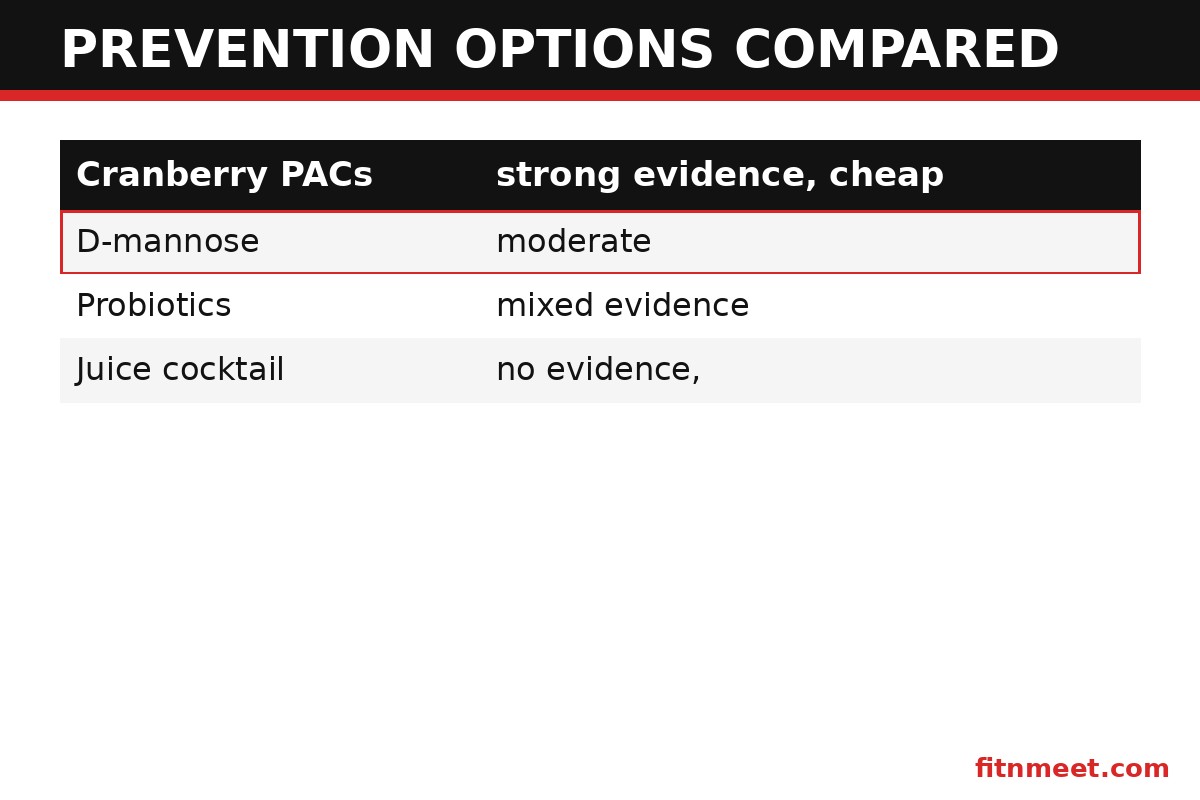
| Option | Role | Evidence for prevention | Cost | Key limitation |
|---|---|---|---|---|
| Cranberry PACs (36 mg/day) | Daily prevention | Strong — Cochrane 2023 | Low ($10–20/mo) | Must be PAC-standardized |
| D-mannose (2 g/day) | Daily prevention | Moderate — small RCTs | Medium ($20–35/mo) | Thinner evidence base |
| Probiotics | Adjunct prevention | Mixed | Medium | Strain-specific effects |
| Cranberry juice cocktail | — | None at drinkable doses | Low | Sugar water, not medicine |
| Low-dose prophylactic antibiotics | Prevention (prescription) | Strong | Rx | Resistance risk; side effects |
| Behavioral measures | Prevention | Moderate | Free | Often insufficient alone |
The honest comparison: for Maya and millions like her, standardized cranberry PACs are the best first-line urinary tract supplements — cheapest, safest, best-evidenced. D-mannose is a reasonable add-on or alternative. Behavioral measures (hydration, post-intercourse urination, avoiding spermicides) cost nothing and stack with everything. Prescription prophylaxis remains the heavy artillery for severe recurrence — a conversation for the doctor, not the supplement aisle. Support your overall wellness foundation with FitnMeet’s vitamins and shop ranges.
Frequently Asked Questions
Do urinary tract supplements actually work?
For prevention, the best ones do. A 2023 Cochrane review of 50 trials concluded cranberry products reduce the risk of symptomatic UTIs, particularly in women with recurrent infections — provided the product is standardized to 36 mg of PACs daily. D-mannose shows promise in smaller trials. No supplement has good evidence for treating an active infection.
Can urinary tract supplements cure an active UTI?
No. Urinary tract supplements are prevention tools, not treatments. An active UTI with burning, urgency, fever, or back pain needs prompt medical evaluation and usually antibiotics. Delaying treatment risks the infection spreading to the kidneys, which is genuinely dangerous.
How long do urinary tract supplements take to work?
The prevention trials dosed daily for 3-12 months, so expect to commit for at least 3-6 months before judging results. These are slow-building preventive interventions — they reduce the odds of the next infection rather than producing any noticeable day-to-day feeling.
Is cranberry juice as good as cranberry supplements?
No. Grocery cranberry juice cocktail is typically about 7% juice with added sugar — you cannot reach the studied 36 mg PAC dose without drinking absurd sugary volumes. Only PAC-standardized cranberry extract capsules or tablets deliver the trial dose practically.
Are urinary tract supplements safe?
Cranberry extract and D-mannose are well tolerated by most people. The main caution: cranberry may interact with the blood thinner warfarin, so anyone on anticoagulants must consult their doctor first. High-dose D-mannose can cause loose stools. Pregnant women should discuss any preventive supplement with their obstetric provider.
What is the best urinary tract supplement?
By evidence ranking: a cranberry product standardized to 36 mg of PACs daily is the best-supported first choice for recurrent-UTI prevention. D-mannose (2 g/day) is the leading alternative or add-on. Combine either with good hydration and behavioral measures, and reassess with your clinician at 6 months.
Conclusion: Maya’s Ending
Eight months later, Maya has had one mild episode instead of three — caught early, treated promptly, no drama. She can’t prove the cranberry PACs did it; maybe it was the hydration habit, maybe luck. But for the first time in years, she isn’t dreading the next one. “I finally feel like I’m doing something,” she says, “instead of just waiting.”
That’s the honest promise of urinary tract supplements: not a cure, not magic — but a daily, evidence-backed way to tilt the odds. Choose PAC-standardized cranberry at 36 mg/day (or D-mannose at 2 g/day), dose daily for months, hydrate, and keep your clinician in the loop. If recurrent UTIs are your story too, you’re not alone — and now you have a playbook.
Build your prevention foundation with the evidence-led formulas in FitnMeet’s health support collection — and share this guide with anyone stuck in the recurrence cycle.
This article is for informational purposes only and is not medical advice. Urinary tract supplements do not treat active infections. Seek prompt medical care for UTI symptoms — especially fever, back pain, nausea, or blood in urine — and consult a healthcare professional before starting any supplement, particularly if pregnant, nursing, or taking blood thinners.