
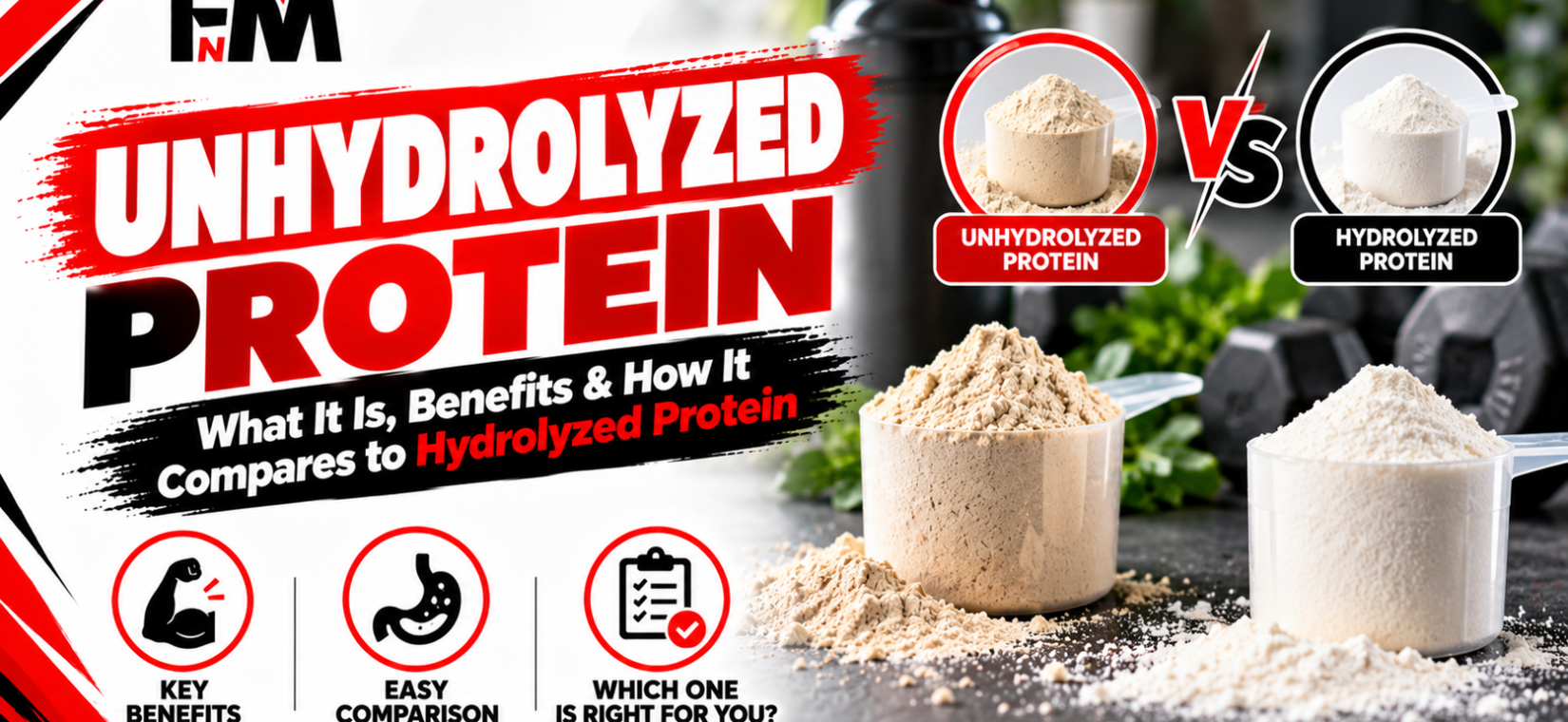
Unhydrolyzed protein is protein in its intact, full-length form — not pre-broken into peptides by enzymatic hydrolysis. Whey concentrate, casein, egg white, and most whole foods are intact proteins. They digest more slowly than hydrolyzed proteins but deliver the same amino acids, and research shows little difference in muscle-building results for healthy adults.
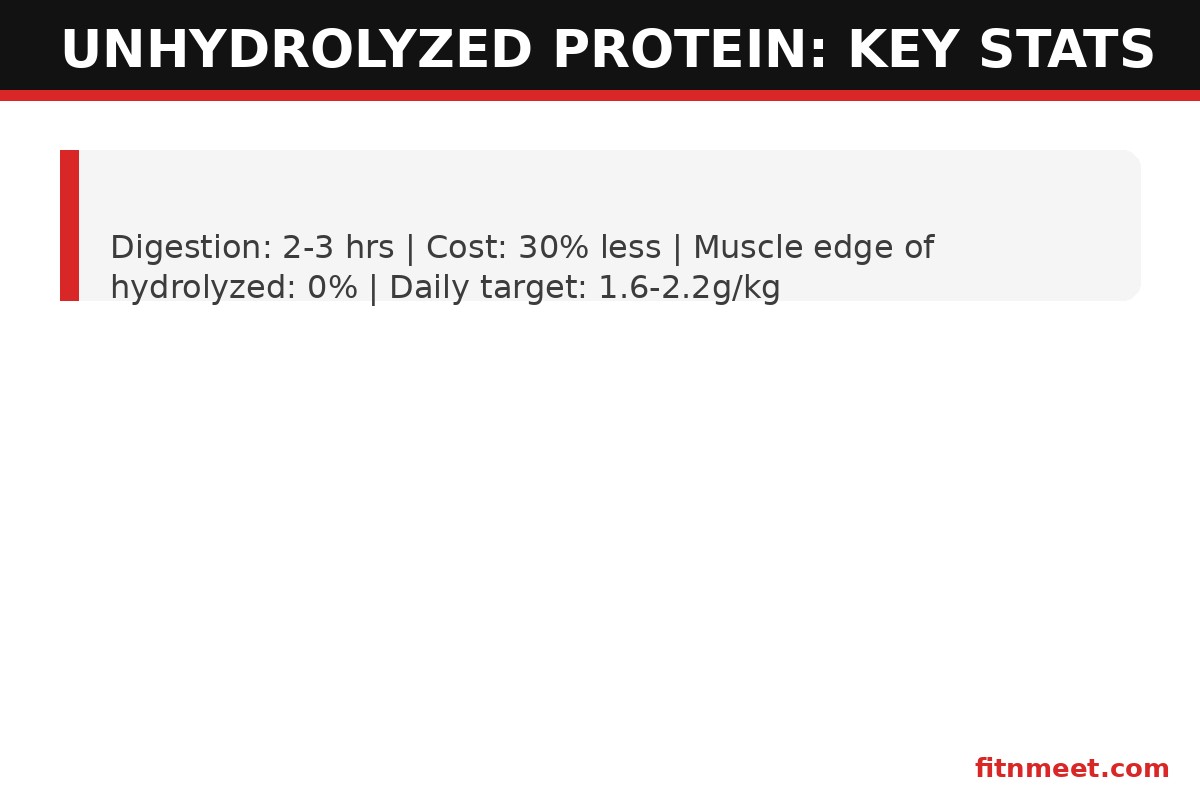
2–3 hours typical digestion window for intact whey · 0% pre-digested peptides · ~30% cheaper than hydrolyzed equivalents · 1.6–2.2 g/kg daily protein target for lifters
Unhydrolyzed Protein: Key Stats Snapshot
Digestion time
2–3 hrs
for intact whey to fully release amino acids, versus ~30–60 minutes for hydrolyzed whey
Price gap
~30%
typical premium charged for hydrolyzed protein over unhydrolyzed protein equivalents
Muscle synthesis edge
0%
measurable advantage of hydrolyzed versions for muscle protein synthesis in healthy adults across trials
Daily target
1.6–2.2 g/kg
total daily protein recommended for muscle gain — source matters less than hitting this number
What Is Unhydrolyzed Protein?
Unhydrolyzed protein is simply protein that has not been pre-digested. The long chains of amino acids are still intact, exactly as they exist in milk, eggs, meat, or plants. When a label says “whey protein concentrate,” “milk protein isolate,” “casein,” or “egg white protein” without the word “hydrolyzed,” you are looking at the intact form. It is the default form of nearly every protein powder on the shelf and virtually all the protein in your diet.
To understand the term, you need its opposite. Hydrolysis is a manufacturing process that uses enzymes (or acids) to chop protein chains into shorter peptides before you ever swallow them — essentially pre-digesting the protein in the factory. Hydrolyzed whey, hydrolyzed casein, and hydrolyzed collagen are the results. The intact form skips that step, leaving your own digestive system to do the chopping.
One common confusion: denatured is not hydrolyzed. Heat, acidity, or blending can denature a protein — unfolding its 3D shape — without breaking the amino acid chain itself. Your whey shake is denatured the moment it hits stomach acid, but it remains intact until enzymes actually sever the peptide bonds. Denaturation is harmless to nutritional value; it is just unfolding, not dismantling. More background on protein structure is on Wikipedia’s protein page.
Why does the distinction matter? Supplement marketing often implies that hydrolyzed = superior because it is “faster.” Faster absorption is real — hydrolyzed proteins do spike blood amino acids sooner — but as the trials below show, faster does not automatically mean better for muscle growth, satiety, or value. Understanding this distinction helps you see through that marketing and buy on evidence instead.
Benefits of Unhydrolyzed Protein
Because unhydrolyzed protein is the nutritional baseline — the form humans have digested for millennia — its “benefits” are really the proven benefits of quality protein itself, plus a few practical edges over hydrolyzed versions:
Satiety advantage
Higher
slower gastric emptying keeps you fuller longer than fast-absorbing hydrolyzed proteins
Allergen labeling
Clearer
intact milk proteins are well-characterized allergens; hydrolysis fragments are harder to predict
- Complete amino acid delivery: unhydrolyzed protein contains every amino acid from the source in its natural ratios. Whey concentrate, for example, delivers roughly 11–12% leucine by weight — the key trigger for muscle protein synthesis — identical to its hydrolyzed counterpart, since hydrolysis does not create or destroy amino acids.
- Better satiety per gram: intact proteins, especially casein, slow gastric emptying. A 2011 appetite study found casein suppressed hunger more effectively than faster-digesting proteins over a 3-hour window. If your protein shake doubles as a meal replacement, unhydrolyzed protein keeps you satisfied longer.
- Lower cost: skipping the enzymatic hydrolysis step keeps manufacturing cheaper. Hydrolyzed whey typically costs 25–40% more than the equivalent intact protein — money that buys no measurable muscle advantage for healthy adults.
- Better taste and texture: hydrolysis exposes bitter-tasting peptide fragments. Ask anyone who has tried both: intact protein powders taste noticeably better, which matters for a supplement you drink daily for years.
- Full bioactive fractions: whey contains minor fractions like lactoferrin, immunoglobulins, and glycomacropeptide that are partially degraded by aggressive hydrolysis. If you value these, unhydrolyzed protein preserves them intact.
- Proven muscle results: every landmark protein trial establishing the 1.6–2.2 g/kg guideline — including the 2018 Morton meta-analysis of 49 studies and 1,863 participants — was built overwhelmingly on intact protein sources. The evidence base is unhydrolyzed protein.
Shopping for protein? Start with the proven baseline: an unhydrolyzed whey like FitnMeet’s whey protein isolate covers muscle-building needs for most lifters at a better price than hydrolyzed formulas. Browse the full protein collection to compare options.
How Unhydrolyzed Protein Works in the Body
When you consume unhydrolyzed protein, digestion proceeds in the order your body evolved for. In the stomach, acid denatures the protein and the enzyme pepsin begins clipping the chains. In the small intestine, pancreatic proteases (trypsin, chymotrypsin) continue the breakdown, and brush-border peptidases finish the job — releasing free amino acids plus di- and tripeptides that are absorbed through dedicated transporters into the bloodstream.
The whole process takes roughly 2–3 hours for whey and 6–7 hours for casein, which clots into a gel in stomach acid and releases amino acids in a slow trickle. This sustained release is a feature, not a bug: a 1997 landmark study (Boirie et al., Proceedings of the National Academy of Sciences) showed that slow proteins like casein produced better whole-body protein retention over 7 hours than fast proteins, because the steady amino acid supply continuously suppressed protein breakdown.
Hydrolyzed protein short-circuits the early steps — the factory has already done the stomach’s job — so amino acids hit the blood in 30–60 minutes with a sharper, higher peak. That sounds advantageous, and for clinical situations it is: hydrolyzed formulas are standard for patients with compromised digestion and for hypoallergenic infant formulas managing cow’s milk allergy. But in healthy adults, the decisive 2009 trial (Koopman et al., American Journal of Clinical Nutrition) found that while hydrolyzed casein spiked blood amino acids faster in elderly men, muscle protein synthesis over 6 hours was identical to intact casein. Speed of delivery did not change the muscular outcome.
The NIH Office of Dietary Supplements notes that protein quality is best judged by amino acid profile and digestibility — both of which unhydrolyzed protein from quality sources delivers fully.
Unhydrolyzed Protein Dosage and Usage
Because unhydrolyzed protein is just normal protein, dosing follows the standard evidence-based protein guidelines — no special protocol needed: Pair those protein guidelines with progressive overload — the FitnMeet strength training category covers programming for muscle gain.
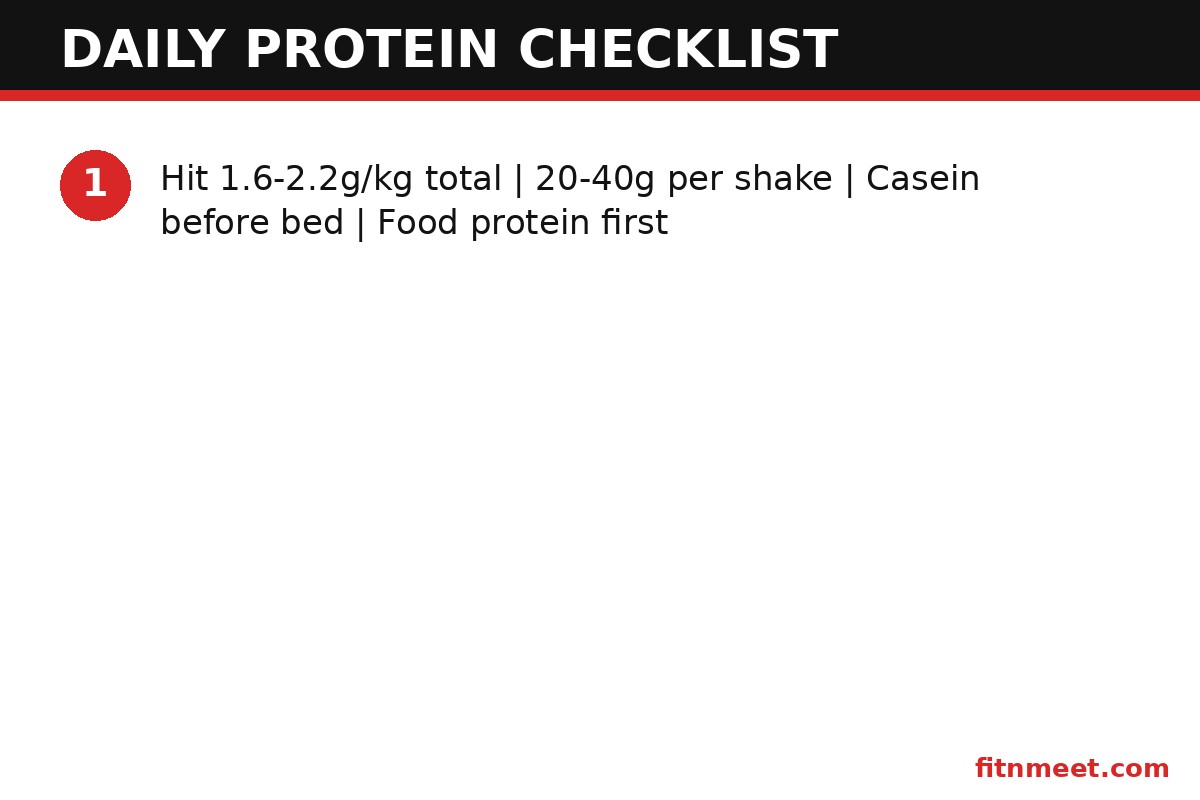
- ☐ Hit 1.6–2.2 g of total protein per kg of body weight daily if building muscle (the Morton 2018 meta-analysis ceiling). A 80 kg lifter needs roughly 130–175 g per day from all sources.
- ☐ Use 20–40 g of unhydrolyzed protein per shake — enough to deliver the ~2–3 g leucine threshold that maximally triggers muscle protein synthesis.
- ☐ Time one serving within a few hours of training — total daily intake matters most, but post-workout protein remains a sensible anchor habit.
- ☐ Choose casein (or a blend) before bed — its 6–7 hour slow release covers overnight recovery; a 2012 trial (Res et al.) showed 40 g of pre-sleep casein boosted overnight muscle protein synthesis by ~22%.
- ☐ Count food protein first — shakes fill the gap between what you eat and your target; most lifters need only 1–2 servings daily.
- ☐ Skip hydrolyzed unless you have a medical reason — digestive disorders or diagnosed milk-protein allergy are the legitimate use cases, ideally guided by a clinician.
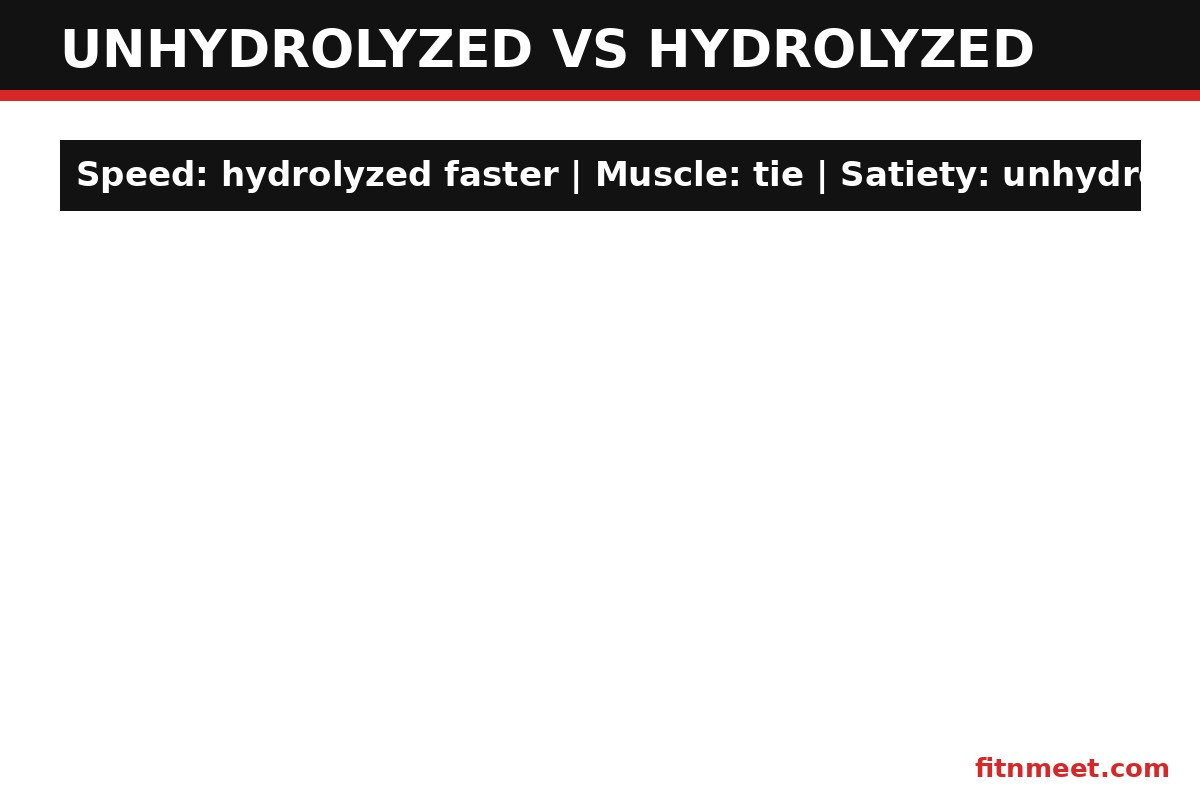
Unhydrolyzed vs Hydrolyzed Protein: Comparison
| Factor | Unhydrolyzed Protein | Hydrolyzed Protein |
|---|---|---|
| Processing | Intact chains; your gut does the work | Enzymatically pre-digested into peptides |
| Absorption speed | 2–3 hrs (whey); 6–7 hrs (casein) | 30–60 min amino acid peak |
| Muscle protein synthesis | Reference standard | No significant advantage (Koopman 2009) |
| Satiety | Higher — slower gastric emptying | Lower — rapid clearance |
| Taste | Clean, milky | Often bitter (exposed peptides) |
| Cost | Baseline | ~25–40% more expensive |
| Allergenicity | Standard milk/egg allergen | Reduced — used in hypoallergenic formulas |
| Best for | Healthy athletes, daily use, dieting | Clinical digestion issues, infant allergy formulas |
The verdict is straightforward: for healthy lifters, intact protein delivers the same amino acids, the same muscle outcomes, better satiety, better taste, and a lower price. Hydrolyzed protein earns its premium only in medical contexts. Spend the savings on more total protein or better food — that is where results actually come from. Compare real options in FitnMeet’s sports nutrition range.
Side Effects and Safety
Unhydrolyzed protein has the safety profile of ordinary food protein, because that is what it is. Across decades of trials at intakes up to 2.2 g/kg/day and beyond, no adverse effects have been found in healthy adults with normal kidney function. The common complaints are mild and familiar:
- Digestive discomfort: bloating or gas, usually from lactose in whey concentrate rather than the protein itself — switching to an isolate resolves it for most people.
- Milk or egg allergy: unhydrolyzed protein retains the full allergenic epitopes of its source. Anyone with a diagnosed milk or egg allergy must avoid the corresponding source; this is one case where hydrolyzed (hypoallergenic) formulas are genuinely indicated.
- Kidney myths: high protein does not damage healthy kidneys — this has been tested repeatedly, including a 2016 trial (Antonio et al.) with intakes above 3 g/kg/day showing no kidney harm in trained men. People with existing chronic kidney disease should follow their nephrologist’s guidance.
The FDA’s dietary supplement Q&A reminds consumers that protein powders are regulated as foods/supplements, so choosing products from reputable manufacturers with transparent labels remains the smartest safety step.
Disclaimer: This article is for informational purposes only and is not medical advice. Consult a qualified healthcare professional before starting any supplement, especially if you are pregnant, breastfeeding, managing a medical condition, or taking medication.
Alternatives to Unhydrolyzed Protein
- Hydrolyzed protein: the pre-digested alternative — worth it for clinical digestive issues or milk-allergy formulas, overkill for healthy lifters.
- Whole-food protein: meat, eggs, dairy, legumes — nutritionally equivalent per gram; shakes are a convenience tool, not a requirement.
- Plant protein blends: pea + rice blends approximate a complete amino acid profile for dairy-free lifters; check FitnMeet’s protein collection for options.
- Essential amino acids (EAAs): for intra-workout use where speed matters and calories must stay minimal — a niche alternative, not a daily driver.
Frequently Asked Questions About Unhydrolyzed Protein
What does unhydrolyzed protein mean?
Unhydrolyzed protein means the protein chains are intact and have not been pre-broken into peptides by enzymatic hydrolysis. Whey concentrate, casein, and egg white protein are all intact proteins, as is the protein in whole foods.
Is unhydrolyzed protein better than hydrolyzed protein?
For healthy adults, yes on value: trials show hydrolyzed protein offers no muscle-building advantage over the intact form, while costing 25-40% more and tasting more bitter. Hydrolyzed protein is better only for medical digestive issues or hypoallergenic formulas.
Is whey protein isolate unhydrolyzed?
Yes, standard whey protein isolate is intact protein. Isolation (filtering out lactose and fat) is a different process from hydrolysis (enzymatically cutting protein chains). Only products explicitly labeled hydrolyzed have undergone hydrolysis.
Does unhydrolyzed protein digest slower?
Yes. Intact whey takes about 2-3 hours to fully release its amino acids, and casein takes 6-7 hours. This slower release improves satiety and, for casein, produced better overnight protein retention than fast proteins in clinical studies.
How much unhydrolyzed protein should I take daily?
Follow standard protein targets: 1.6-2.2 grams per kilogram of body weight per day for muscle gain. A typical shake provides 20-40 grams; count it toward your total along with food protein.
Can unhydrolyzed protein cause allergies?
Yes. Intact protein keeps the full allergenic structures of its source, so people with milk or egg allergies must avoid the corresponding type. Extensively hydrolyzed formulas are the alternative used for diagnosed cow’s milk allergy.
Conclusion
Unhydrolyzed protein is not a special ingredient — it is the honest baseline of sports nutrition. Intact, affordable, great-tasting, and backed by the entire body of protein research, it delivers identical muscle-building results to hydrolyzed protein for healthy adults at 25–40% lower cost. Unless a clinician has told you otherwise, the unhydrolyzed tub is the smart buy.
Hit your 1.6–2.2 g/kg daily target, train hard, sleep well, and let the basics do the work. Explore FitnMeet’s protein collection and the FitnMeet shop for quality unhydrolyzed options — and check the FitnMeet blog for more no-hype nutrition guides.