
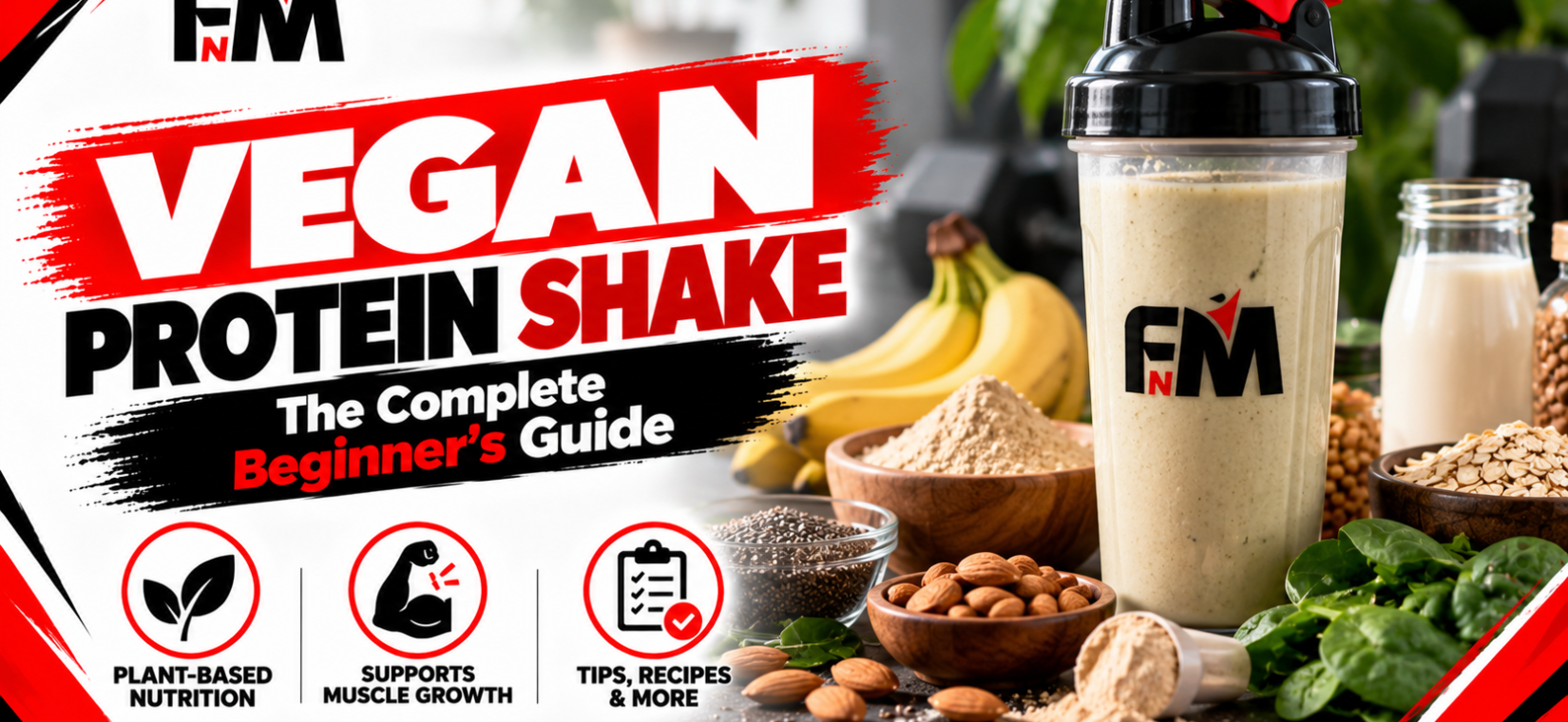
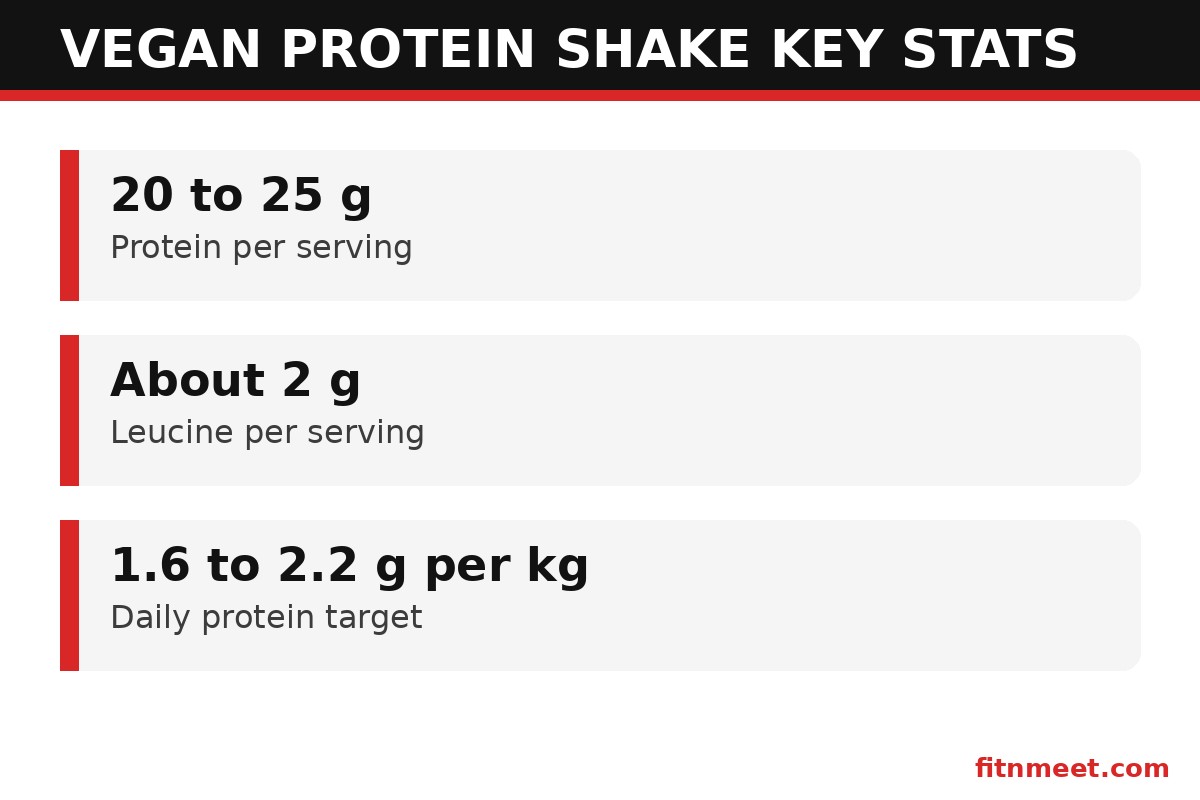
Vegan protein shake is a protein shake made from plant proteins like pea, rice, hemp, or soy, blended with water or plant milk. Pea-rice blends taste best and provide a complete amino acid profile. A serving typically delivers 20 to 25 grams of protein, matching whey for muscle-building support when total daily protein is adequate.
Start here: If you are new to all of this, a vegan protein shake is just a flavored drink with extra plant protein mixed in. You do not need to be vegan to drink one — you just need a tasty, convenient way to hit your protein target. Everything below explains it in plain language, no science degree required.
Vegan Protein Shakes Explained Simply
Think of a vegan protein shake like a smoothie with a job. A regular smoothie gives you fruit, flavor, and some vitamins. A vegan protein shake adds a scoop of plant protein powder — and suddenly that tasty drink also delivers the building blocks your muscles need after a workout.
Here is the simple analogy: your muscles are like a brick wall that gets slightly damaged every time you train. Protein provides the new bricks. A vegan protein shake is just a convenient delivery truck for those bricks, made entirely from plants. One glass, 20 to 25 grams of protein, done in two minutes.
You do not need to be vegan to benefit. Many people who eat meat still drink a vegan protein shake because they are lactose intolerant, because they want variety, or simply because they like the taste. The “vegan” part describes the ingredients, not a membership requirement.
What Is a Vegan Protein Shake?
A vegan protein shake combines a plant-based protein powder with a liquid and usually some extras for flavor and texture. The powder is the engine; everything else is personal preference.
The main protein sources
Pea protein is the most common base. It is rich in branched-chain amino acids (especially leucine, the key trigger for muscle protein synthesis), mixes reasonably well, and is inexpensive. Its amino acid profile is strong except for slightly lower methionine.
Rice protein is hypoallergenic and gentle on digestion but lower in lysine. That is why you will often see pea and rice blended together — each covers the other’s weak spot, producing a complete amino acid profile similar to animal protein.
Soy protein is the most research-backed plant protein, with a complete amino acid profile and decades of studies supporting its ability to build muscle comparably to whey. Some people avoid it over taste or personal preference, but the evidence for its effectiveness is solid.
Hemp, pumpkin seed, and chia appear in premium blends, adding fiber, omega fats, and minerals along with moderate protein. They rarely serve as the sole protein source because their protein concentration is lower.
What “complete protein” means
Your body needs nine essential amino acids from food. A protein containing all nine in sufficient amounts is “complete.” Most single plant proteins fall slightly short on one amino acid, but blends — and a varied daily diet — solve this completely. The idea that plant proteins “don’t count” is outdated: total daily intake and variety matter far more than any single source.
Why Beginners Care About the Vegan Protein Shake
Three beginner realities make this drink disproportionately useful. First, most beginners under-eat protein. The RDA is 0.8 grams per kilogram of bodyweight, but active people need 1.2 to 2.0 g/kg — a 70 kg beginner training three times a week needs roughly 110 to 140 grams daily, and most fall well short without trying.
Second, convenience decides consistency. A beginner who must cook chicken breast four times a day will quit the diet before the training. A vegan protein shake takes 60 seconds, requires no cooking, and travels anywhere. The best nutrition plan is the one you actually follow.
Third, digestion. Many beginners discover that whey protein causes bloating or discomfort — lactose intolerance affects the majority of the world’s adults to some degree. Plant-based powders sidestep dairy entirely, which is why even non-vegans often switch after one uncomfortable month on whey.
Getting Started: Your 5-Step Beginner Plan
Follow this plan in order. By step five, you will have a daily shake habit that sticks.
Step 1: Pick a blended powder. Choose a pea-plus-rice blend or a soy-based powder as your first tub. Blends give you a complete amino acid profile without any nutritional homework. Chocolate and vanilla flavors are the most forgiving for beginners — unflavored plant protein can taste earthy.
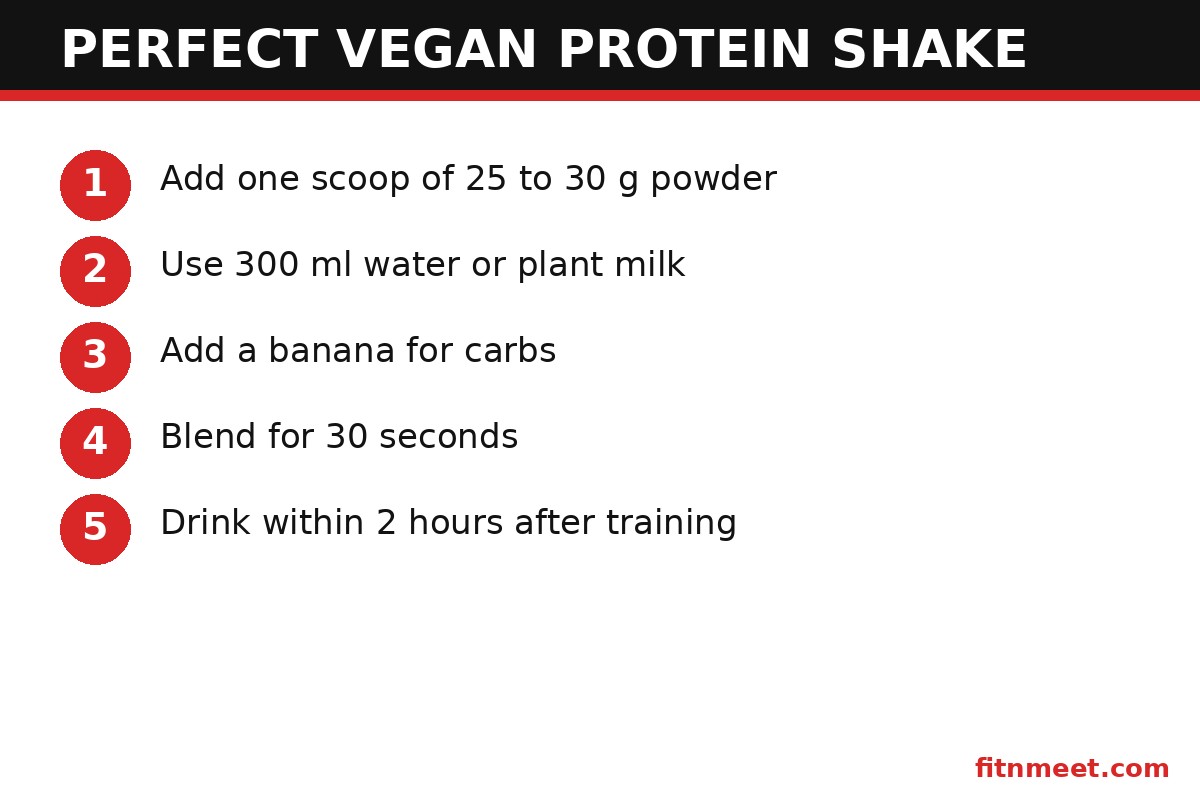
Step 2: Master the basic shake. One scoop of powder plus 300 to 400 ml of cold water or oat milk, shaken for 20 seconds. Drink it within an hour after training, or whenever your day lacks protein. That is the entire recipe to start.
Step 3: Upgrade to a smoothie. Once the basic shake is habit, blend your powder with a banana, a spoonful of peanut butter, and oat milk. You have just built a 400-calorie, 30-gram-protein breakfast that tastes like dessert.
Step 4: Time it around training. Have your vegan protein shake within two hours after workouts, when muscles are most receptive to protein. On rest days, use it to fill whichever meal is lightest on protein — usually breakfast or snacks.
Step 5: Track for two weeks. Aim for 1.2 to 1.6 grams of protein per kilogram of bodyweight daily, with the shake covering 20 to 30 grams of that total. After two weeks, adjust: still sore and tired? Add a little. Feeling great? You have found your level.
Benefits of a Vegan Protein Shake
Muscle repair and growth
Resistance training breaks muscle down; protein rebuilds it bigger. A vegan protein shake delivering 20 to 25 grams of quality plant protein after training supplies the leucine and essential amino acids that trigger muscle protein synthesis — the process behind every gain you will ever make. The National Institutes of Health notes that regular strength exercise combined with adequate protein is the foundation of healthy muscle aging.
Satiety and weight management
Protein is the most filling macronutrient. A mid-afternoon vegan protein shake kills the vending-machine craving far more effectively than a granola bar with the same calories, making it a quiet ally for anyone managing weight.
Heart-friendly nutrition
Plant protein powders are naturally cholesterol-free and typically low in saturated fat. For beginners watching cardiovascular markers, swapping a daily animal-protein serving for a plant-based shake is a small change with a meaningful nutritional profile shift.
Gut comfort
No lactose, no dairy proteins — the two most common shake-related digestive complaints disappear. Many blends also include a few grams of fiber, which whey shakes lack entirely.
Simple stat to remember
One stat per section, as promised: a 70 kg active beginner needs roughly 110–140 g of protein daily — and a single vegan protein shake covers about 20% of that in under a minute. For deeper nutrition reading, see FitnMeet’s nutrition articles.
Common Beginner Mistakes
Mistake 1: Buying on price alone
The cheapest tub is often pure rice protein with 12 grams per scoop and a chalky texture. Spend slightly more on a tested blend — the cost per gram of actual protein is what matters, not the cost per tub.
Mistake 2: Replacing meals entirely
A vegan protein shake is a supplement, not a food group. Beginners who replace two meals a day with shakes miss out on fiber, micronutrients, and the satisfaction of real food — and usually rebound within weeks.
Mistake 3: Ignoring total daily protein
One shake does not fix a 60-gram-protein diet. Calculate your target (1.2–1.6 g/kg), add up a typical day, and let the shake fill the gap — not the other way around.
Mistake 4: Giving up after one bad-tasting shake
Plant powders vary enormously between brands and flavors. One gritty vanilla does not condemn the category — try a different brand or blend it with frozen banana and peanut butter before judging.
Dosage Basics: How Much Protein Do You Need?
Forget complicated formulas. Use this table:
| Your situation | Daily protein target | Shake’s role |
|---|---|---|
| Lightly active beginner | 1.2 g per kg bodyweight | 1 shake (20–25 g) |
| Training 3–4x per week | 1.6 g per kg bodyweight | 1–2 shakes |
| Building muscle aggressively | 1.8–2.0 g per kg | 2 shakes + protein-rich meals |
| 70 kg training beginner (example) | ~112 g per day | 1–2 shakes cover 40–50 g |
Spread protein across 3–4 meals rather than loading it all at dinner — muscle protein synthesis responds best to 20–40 grams per eating occasion. Your vegan protein shake counts as one of those occasions.
Safety of Vegan Protein Shakes
Vegan protein powders are foods, not drugs, and their safety profile is excellent for healthy adults. Two sensible precautions: choose third-party tested products, because independent analyses have occasionally found heavy metals in plant-based powders sourced from contaminated soils — testing marks like NSF Certified for Sport or Informed Sport screen for this. And if you have kidney disease, discuss higher protein intakes with your doctor first, as with any protein supplement.
Soy-based shakes deserve a note: despite internet folklore, human studies do not show feminizing hormonal effects from normal soy protein intake in men or women. The phytoestrogen concern comes from rodent studies at extreme doses, not from a daily shake. For background on protein as a nutrient, see Wikipedia’s protein overview.
This article is for informational purposes only and is not medical advice. Consult a healthcare professional before starting any supplement.
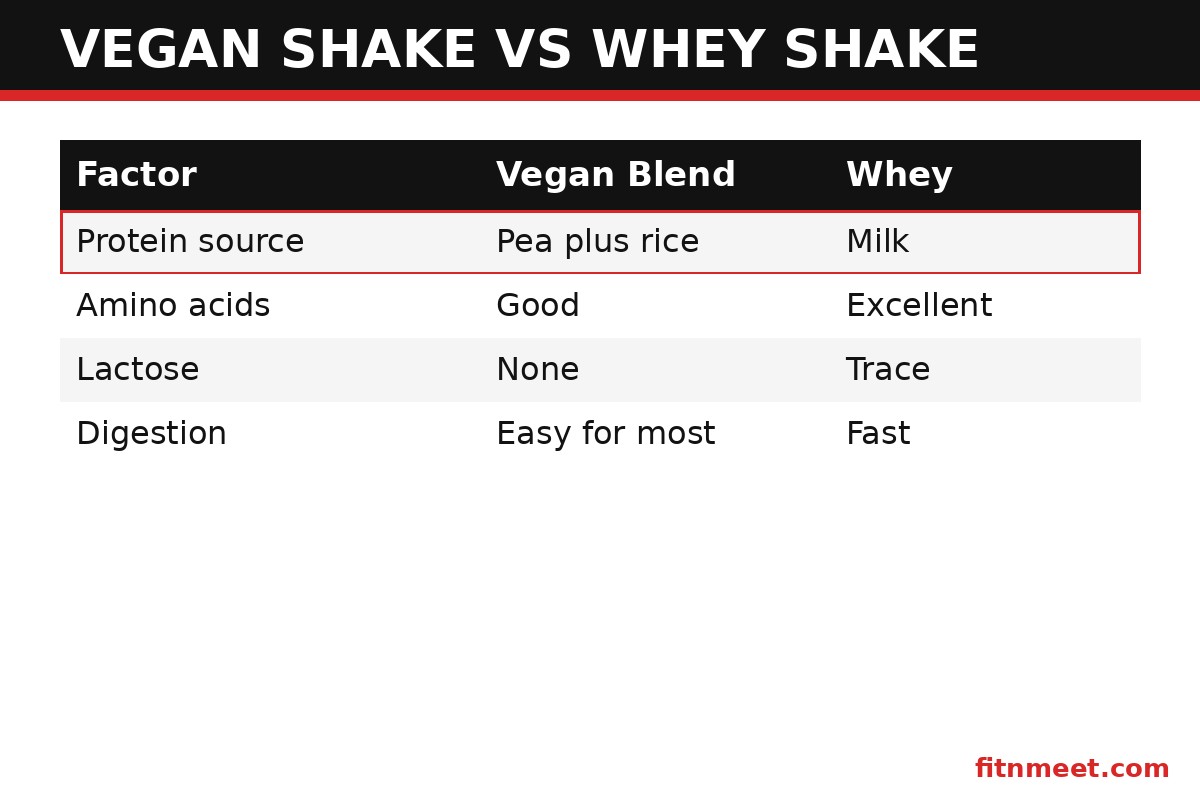
Vegan Protein Shake vs Whey Shake
| Factor | Vegan Protein Shake | Whey Shake |
|---|---|---|
| Protein per serving | 20–25 g | 20–25 g |
| Amino acid profile | Complete (in blends) | Complete |
| Digestion speed | Moderate | Fast |
| Lactose | None | Present (isolate: minimal) |
| Fiber | 2–5 g typical | ~0 g |
| Muscle-building evidence | Strong (soy, pea blends) | Strongest evidence base |
| Best for | Dairy-free, vegans, variety | Maximum convenience, fast absorption |
The honest summary: whey has the deepest research base and a slight digestion-speed edge, but a quality vegan protein shake matches it where it counts — daily muscle-building results. Choose based on your digestion, ethics, and taste buds.
Vegan Protein Shake FAQs
Is a vegan protein shake as good as whey for building muscle?
When protein dose and total daily intake are matched, yes. Studies comparing soy or pea-rice blends with whey find similar muscle and strength gains over 8–12 week training programs. Whey digests slightly faster and has a small leucine edge per gram, but a well-formulated vegan protein shake with 20–25 g protein closes that gap completely.
How many vegan protein shakes can I have per day?
One to two shakes daily is the sweet spot for most beginners — enough to meaningfully boost protein intake without displacing whole foods. Your shake should supplement meals, not replace them: aim to get at least two-thirds of your protein from foods like lentils, tofu, tempeh, and grains.
Do vegan protein shakes cause bloating?
They are generally easier on digestion than whey because they contain no lactose. Some beginners notice mild bloating from the fiber in pea-based powders — starting with half a scoop for the first week and drinking plenty of water usually resolves it. Persistent issues may mean trying a different protein base, such as soy or rice.
Can I lose weight with a vegan protein shake?
A shake can help: protein increases satiety and preserves muscle during a calorie deficit, both of which support fat loss. Use water or unsweetened almond milk to keep calories near 120–150 per serving, and treat the shake as a snack replacement rather than an addition.
What should I look for on the label?
Check four things: at least 20 g protein per serving, a short ingredient list, third-party testing marks (such as NSF or Informed Sport), and sugar under 5 g unless it is a mass-gainer style product. Avoid proprietary blends that hide individual protein amounts.
Can kids or teenagers drink vegan protein shakes?
Teenage athletes can use them to supplement an already solid diet, but whole foods should come first during growth years. For children, a shake is unnecessary unless a pediatrician or dietitian recommends extra protein. When in doubt, ask a healthcare professional.
Conclusion: Your First Shake Awaits
Starting is simpler than you think: pick a blended pea-rice or soy powder in chocolate or vanilla, shake one scoop with cold water or oat milk, and drink it after training or whenever your day runs short on protein. That single habit covers a fifth of a beginner’s daily needs in 60 seconds. You have the plan, the recipes, and the numbers — now build the habit. Try FitnMeet’s chocolate vegan protein powder, browse the full protein range including vanilla plant-based protein, or start at the shop — your muscles will thank you.