
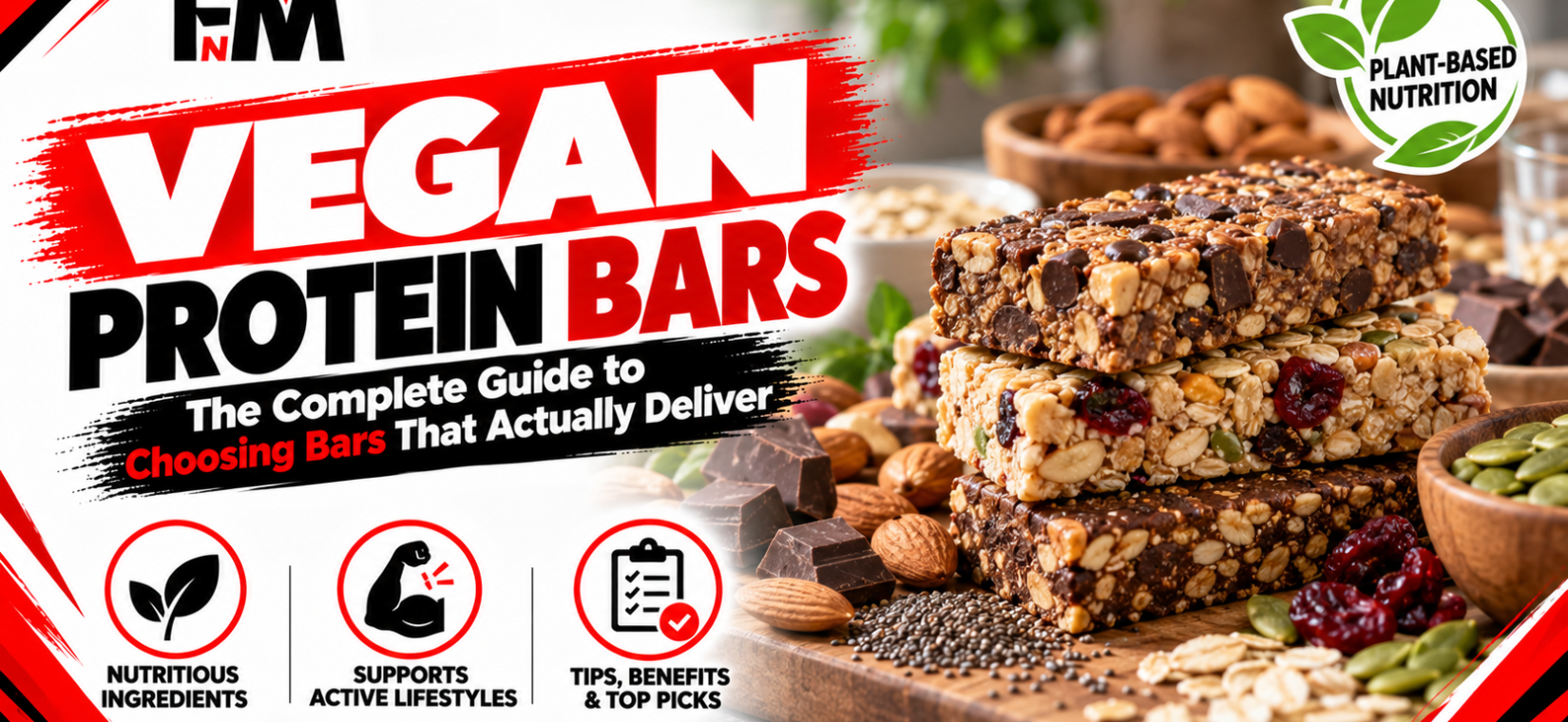
Vegan protein bars are protein bars made without animal products, using pea, rice, soy, or nut proteins instead of whey or milk. A solid bar delivers 15 to 20 grams of protein with reasonable sugar. Texture can be denser than whey bars, so try a single bar before committing to a box.
Vegan protein bars are portable snack bars that deliver 10 to 20 grams of plant-based protein per serving, typically from pea, soy, rice, or peanut protein, without any animal-derived ingredients. The best these bars combine a complete amino acid profile with moderate sugar, meaningful fiber, and a texture you will actually enjoy. They work well as post-workout fuel, travel snacks, or convenient meal replacements in a plant-based diet.
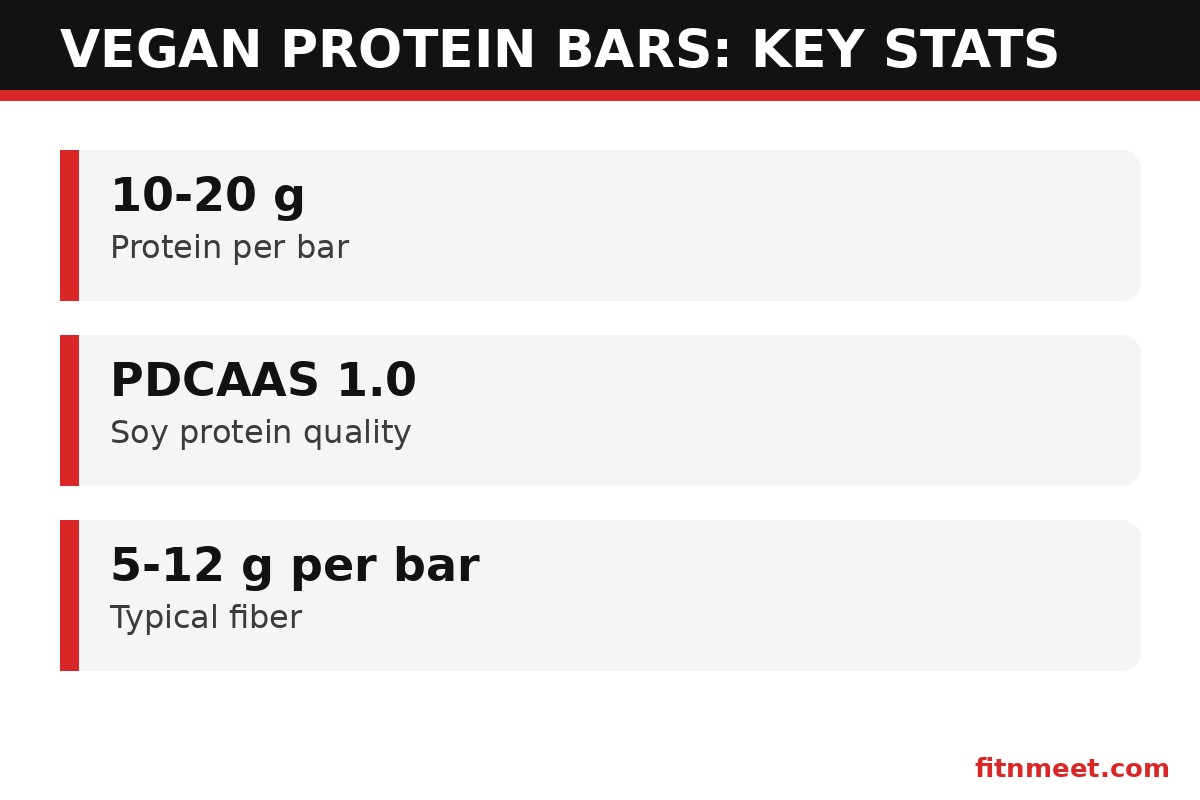
Vegan Protein Bars: Key Stats Snapshot
Before diving in, here is the data that matters most when judging these products:
Protein per bar
10–20 g
The range in most these bars; 15 g+ is ideal for training support.
Soy protein quality
1.0 PDCAAS
Soy scores a perfect 1.0 on the protein digestibility scale — equal to whey.
Leucine threshold
~2–3 g
Leucine needed per meal to maximally trigger muscle protein synthesis.
Daily protein target
1.6–2.2 g/kg
Recommended intake for active people building or maintaining muscle. For meal-planning strategies that hit those protein targets on plants, explore the FitnMeet nutrition articles.
These numbers explain the whole category: vegan protein bars are judged on protein quantity, protein quality (amino acid profile), and what comes along for the ride (sugar, fiber, fats). Keep them in mind as you read — every claim below ties back to these benchmarks.
What Are Vegan Protein Bars?
Plant-based bars are snack bars formulated without milk, eggs, whey, honey, or any other animal-derived ingredient, built instead around plant protein sources. The protein in these protein bars most often comes from soy protein isolate, pea protein isolate, brown rice protein, peanut butter or peanut flour, and increasingly from blends of fava bean or pumpkin seed protein.
The defining challenge for such bars is the amino acid profile. Most single plant proteins are low in at least one essential amino acid — pea protein is low in methionine, rice protein is low in lysine. That is why the better these products use blends: pea plus rice, or soy (which is complete on its own), to cover all nine essential amino acids. When you read a label on vegan protein bars, the protein blend tells you more than the marketing copy.
These bars also differ from conventional bars in their binders and sweeteners. Without whey or milk protein to hold texture, plant-based bars rely on soluble fibers (tapioca fiber, chicory root), nut butters, and sugar alcohols or allulose for sweetness. This gives many these protein bars a meaningful fiber content — often 5 to 12 grams — which is a genuine nutritional plus.
A useful definition: such bars are best understood as convenient plant-protein delivery vehicles, not health foods by default. Some vegan protein bars are essentially candy bars with added pea protein; others are genuinely well-formulated training fuel. The label — protein grams, sugar grams, fiber grams, ingredient list length — separates the two.
Benefits of Vegan Protein Bars
Muscle support
15 g+
Bars hitting 15 g+ protein meaningfully contribute to daily muscle-building targets.
Fiber bonus
5–12 g
Typical fiber in these products — up to half the daily 25–30 g target.
Satiety window
2–3 hrs
Protein-plus-fiber combo keeps hunger down between meals.
- Convenient plant protein for active vegans. Hitting 1.6–2.2 g of protein per kilogram of bodyweight is harder on a plant-based diet; these bars make the math easier with 10–20 g in a pocket-sized package.
- Complete amino acids when blended well. Plant-based bars built on soy or pea-plus-rice blends deliver all essential amino acids, supporting muscle protein synthesis comparably to dairy-based bars in practical use.
- High fiber intake. Many vegan protein bars supply 5–12 g of fiber from chicory root, tapioca fiber, or nuts — supporting digestion and satiety in a way whey bars rarely match.
- No dairy, no lactose. For the estimated 65 percent of adults with reduced lactose digestion, these protein bars avoid the bloating that whey-based bars can cause.
- Lower saturated fat. Such bars typically contain less saturated fat than bars built on milk chocolate and whey, which suits heart-conscious macros.
- Portability for training and travel. These products need no refrigeration or shaker bottle, making them the most practical protein source for commutes, flights, and gym bags.
- Allergen flexibility. Many these bars are also gluten-free and soy-free (using pea protein), serving people juggling multiple dietary restrictions.
How Vegan Protein Bars Work
Vegan protein bars work the same way any protein food works: digestion breaks the protein into amino acids, which enter the bloodstream and become available for muscle protein synthesis, enzyme production, and tissue repair. The practical question for plant-based bars is whether the amino acid mix is sufficient to trigger and sustain that synthesis.
The key lever is leucine. Research on muscle protein synthesis shows that roughly 2 to 3 grams of leucine per meal maximally stimulates the mTOR pathway that drives muscle building. Dairy proteins are leucine-rich; plant proteins are generally leaner in leucine. A 20 g serving of pea protein delivers around 1.6 g of leucine — good, but this is why the strongest these protein bars push toward 20 g of protein per bar rather than 10 g.
Digestibility is the second factor. Soy protein isolate digests at roughly 90+ percent efficiency with a PDCAAS of 1.0, effectively matching whey. Pea protein scores around 0.89 — still strong. Blends in well-made such bars compensate for individual weaknesses, which is why “pea + rice” or soy-based these products outperform single-source rice-protein bars in practice.
Finally, vegan protein bars work through the fiber effect: soluble fibers in these bars slow gastric emptying, steadying blood sugar and extending satiety. That makes plant-based bars genuinely useful for appetite management during fat-loss phases, not just for protein delivery.
Vegan Protein Bars: Dosage and Usage
There is no official “dosage” for such bars, but usage guidelines keep them effective rather than just caloric:
- Post-workout: one bar with 15–20 g protein within 2 hours of training, paired with a carbohydrate source for recovery.
- Daily cap: 1–2 vegan protein bars per day for most people; they supplement whole-food protein rather than replacing it.
- Meal replacement: only bars with 15 g+ protein, 5 g+ fiber, and 250–350 calories qualify; add fruit or nuts to round out the meal.
- Fat-loss phases: choose these products under 250 calories with at least 15 g protein and 5 g fiber to protect satiety per calorie.
- Children and teens: these bars are fine as occasional snacks, but whole foods should carry the protein load during growth.
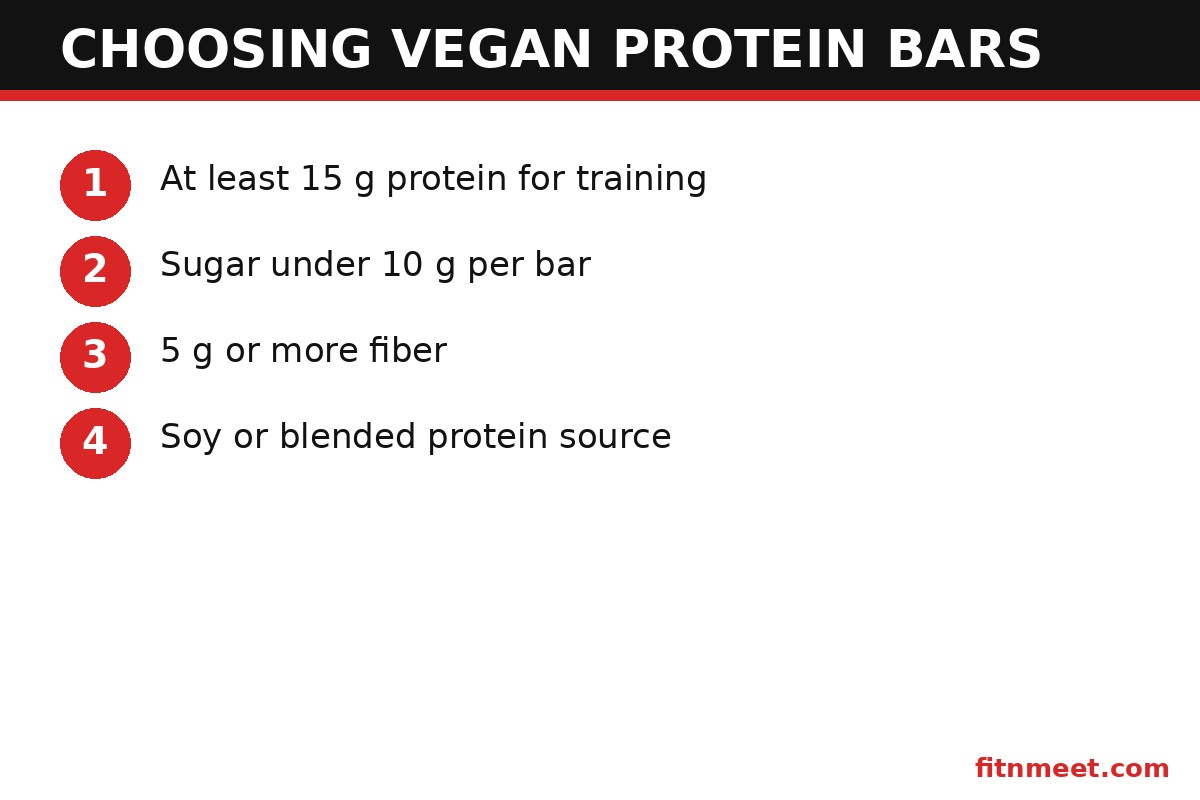
How to fit plant-based bars into your day — a quick checklist:
- ☐ Pick bars with at least 15 g protein if training is the goal
- ☐ Keep sugar under 10 g per bar (sugar alcohols excluded)
- ☐ Confirm a complete protein source: soy, or a pea-plus-rice blend
- ☐ Check fiber: 5 g or more per bar is a good sign
- ☐ Eat within 2 hours after training for recovery
- ☐ Count the bar’s 200–300 calories in your daily total
- ☐ Rotate flavors to avoid taste fatigue and stick with the habit
Vegan Protein Bars Compared
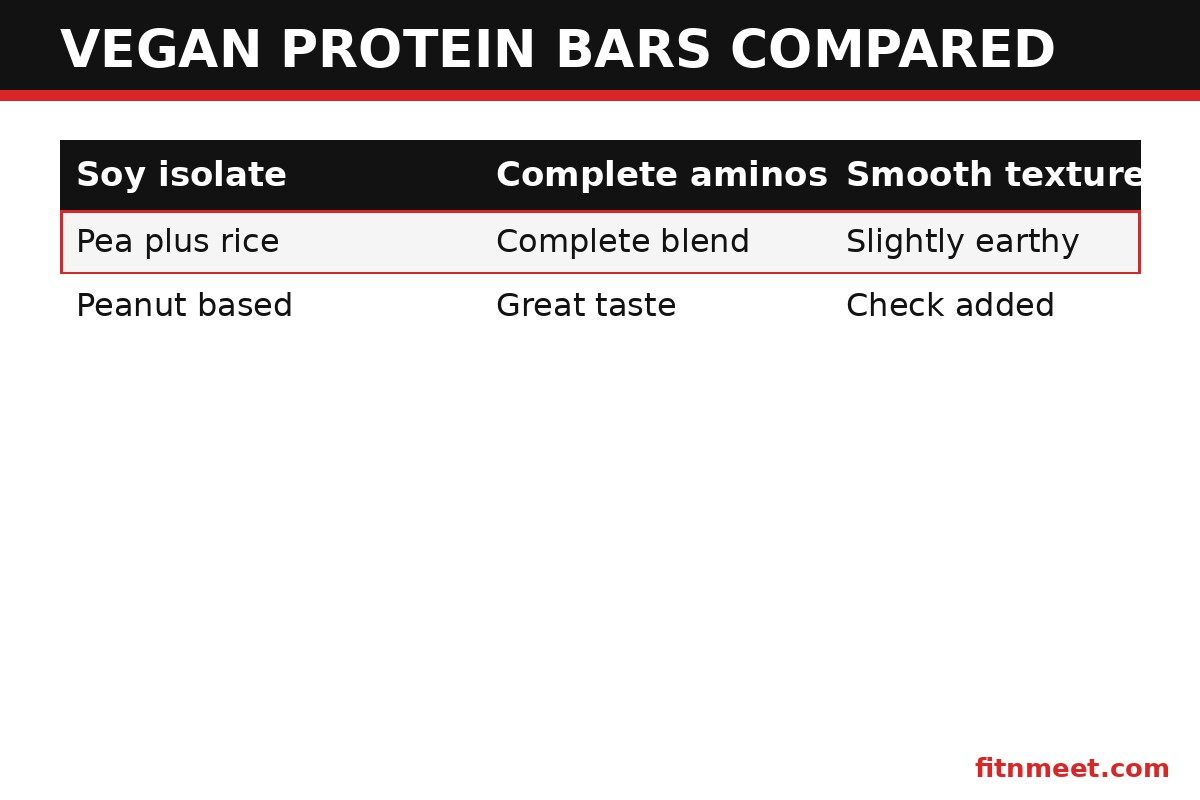
| Protein base | Typical protein | Amino acid profile | Texture / taste | Best for |
|---|---|---|---|---|
| Soy protein isolate | 15–20 g | Complete (PDCAAS 1.0) | Smooth, neutral | Maximum protein quality in such bars |
| Pea + rice blend | 12–20 g | Complete when blended | Slightly earthy, dense | Soy-free these products with full aminos |
| Peanut butter / peanut flour | 10–15 g | Incomplete alone | Rich, dessert-like | Taste-first these bars; check added sugar |
| Rice protein alone | 10–14 g | Low in lysine | Gritty if cheap | Usually the weakest vegan protein bars nutritionally |
| Fava / pumpkin seed | 12–18 g | Strong, emerging data | Varies by brand | Newer premium plant-based bars |
These protein bars also compare favorably against whey bars on fiber and lactose, while whey bars keep a small edge on leucine density per gram. For most trainees, that difference is erased by choosing such bars at the 20 g protein level rather than the 10 g level — quantity compensates for the modest quality gap. For more on fueling plant-based training, browse the FitnMeet sports nutrition range.
Side Effects and Safety of Vegan Protein Bars
These products are safe for daily use within the 1–2 bar guideline, but a few issues come up:
- Sugar alcohol sensitivity. Many vegan protein bars use erythritol, maltitol, or allulose. In sensitive people, more than 15–20 g of sugar alcohols per day can cause gas and bloating. If these bars upset your stomach, switch to bars sweetened with dates or cane sugar in modest amounts.
- Fiber overload. Two high-fiber plant-based bars plus a fiber-rich diet can push daily fiber past 40 g quickly, causing discomfort. Build up gradually.
- Soy considerations. Soy-based these protein bars are safe for the vast majority; the phytoestrogen concern is not supported at normal intakes. True soy allergy is the exception — choose pea-based such bars instead.
- Calorie creep. At 200–350 calories each, vegan protein bars can quietly stall fat loss if eaten as extras rather than as planned snacks.
- Heavy metals. Independent testing has occasionally found trace cadmium in plant-protein products (cocoa and rice can accumulate it). Sticking to reputable, third-party-tested these products mitigates this low-level risk.
Alternatives to Vegan Protein Bars
- Vegan protein powder + fruit. A scoop of vegan protein powder blended with banana delivers 20–25 g protein for fewer calories and less cost per gram than most these bars.
- Roasted chickpeas or edamame. Whole-food crunch with 7–10 g protein per handful and no sugar alcohols.
- Overnight oats with soy milk and peanut butter. Roughly 20 g protein in a genuinely filling breakfast that beats most plant-based bars on satiety per dollar.
- Tempeh or tofu snacks. Savory options for people tired of sweet vegan protein bars.
- Homemade date-and-oat bars. Control the sugar and protein precisely; add pea protein isolate to reach 15 g per bar.
- Whey bars (non-vegan). If veganism is a preference rather than a requirement, whey bars offer slightly better leucine density — though these protein bars have closed most of the gap.
Vegan Protein Bars: FAQs
Are vegan protein bars as good as whey protein bars?
For most trainees, yes — provided you choose vegan protein bars with 15 to 20 g of protein from soy or a pea-plus-rice blend. Whey has a small leucine advantage per gram, but higher-protein vegan protein bars close the gap. Vegan protein bars also typically offer more fiber and no lactose.
How much protein should vegan protein bars have?
Look for at least 15 g of protein per bar if your goal is training support or meal replacement; 10 to 12 g is fine for a casual snack. Check that the protein comes from soy or a blended source so the amino acid profile is complete.
Can vegan protein bars help build muscle?
Yes. Muscle growth depends on total daily protein (1.6 to 2.2 g per kg of bodyweight) and training stimulus. Vegan protein bars contribute meaningfully to that total, especially post-workout. One 20 g bar supplies roughly a quarter of a 80 kg lifter’s per-meal protein target.
Are vegan protein bars good for weight loss?
They can be: the protein-plus-fiber combination in good vegan protein bars supports satiety, which helps control total calories. Choose bars under 250 calories with 15 g+ protein and 5 g+ fiber, and count them as planned snacks rather than extras.
Do vegan protein bars cause bloating?
Some do, usually because of sugar alcohols (maltitol, erythritol) or very high fiber rather than the plant protein itself. If vegan protein bars bloat you, try bars sweetened without sugar alcohols, or pea-based bars if soy is the issue.
How many vegan protein bars can I eat per day?
One to two vegan protein bars per day is a sensible range for most active people. They should supplement whole-food protein — lentils, tofu, tempeh, soy milk — not replace it, and their 200 to 350 calories each count toward your daily total.
Conclusion
These products have grown up: the best of them now deliver 15–20 g of complete plant protein with real fiber and sensible sugar, making them legitimate training fuel rather than candy in disguise. Judge them by the label — protein grams, protein source, sugar, and fiber — and use them to fill the gaps between whole-food meals.
Compare plant-based options in FitnMeet’s protein collection and sports nutrition range, or start at the FitnMeet shop. Background reading: the Wikipedia overview of protein bars, the Wikipedia article on soy protein, and the FDA’s guide to reading nutrition labels.
This article is for informational purposes only and is not medical advice. Consult a healthcare professional before starting any supplement.