
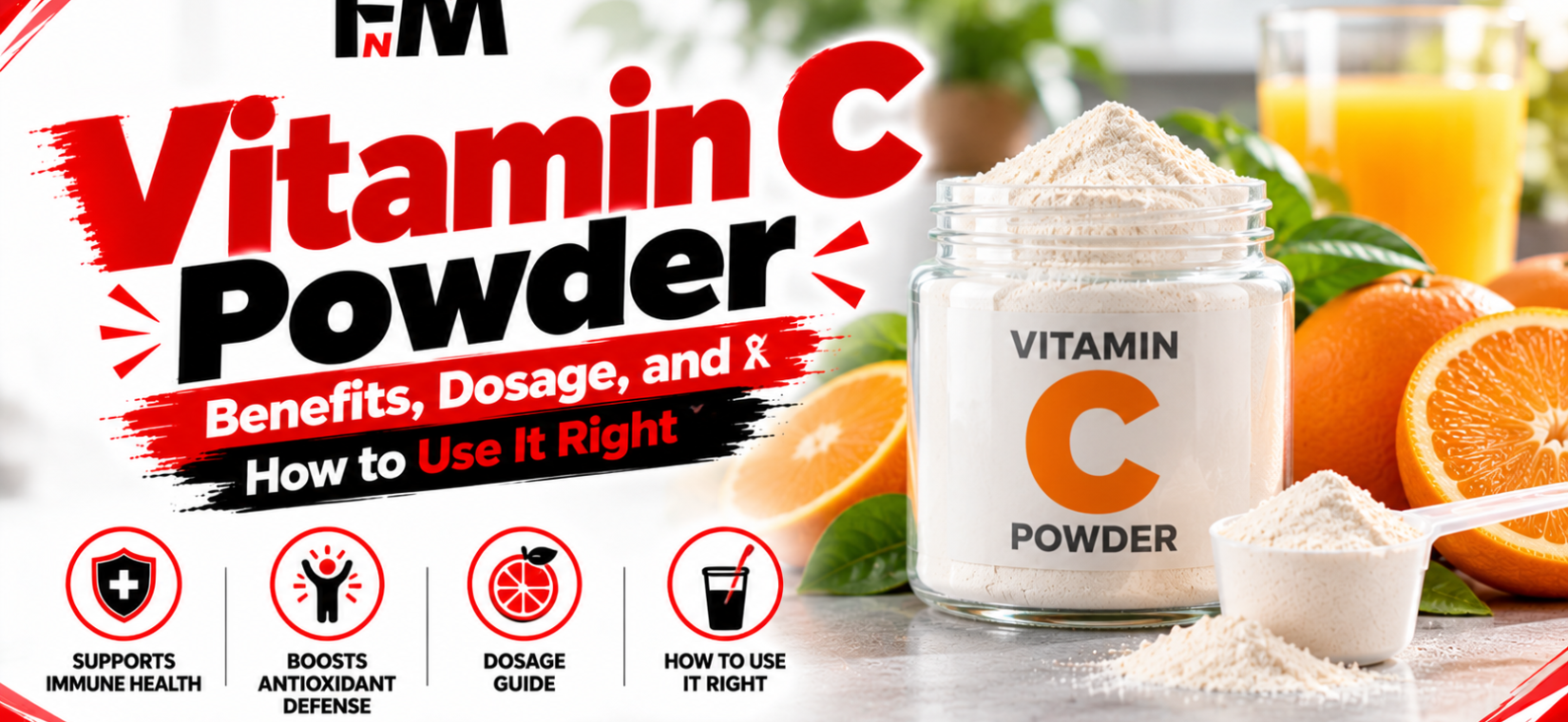
Vitamin C powder is a concentrated, water-soluble form of ascorbic acid that dissolves quickly in drinks. One level scoop typically provides 500 to 1,000 milligrams, far above the 90-milligram daily requirement for adult men. People use it for immune support, skin health, and antioxidant protection, and it absorbs just as well as capsules.
Definition: Vitamin C powder is pure ascorbic acid (sometimes sold as sodium ascorbate, the buffered form) ground into a fine, fast-dissolving powder. Unlike tablets, the powder lets you measure flexible doses, mix it into water or juice, and avoid the binders and coatings found in pills.
What Is Vitamin C Powder?
Vitamin C powder is exactly what it sounds like: vitamin C (ascorbic acid) in a loose, powdered form instead of a tablet or capsule. Most products on the market are pure L-ascorbic acid with no fillers, which means a single gram of vitamin C powder delivers a full gram of the vitamin — no binders, no coatings, no dyes. Some versions use sodium ascorbate, a buffered form that is gentler on sensitive stomachs because it is less acidic.
The big practical difference between vitamin C powder and pills is dose control. A standard tablet locks you into a fixed amount, usually 500 or 1,000 milligrams. With the powder, you can measure anything from a small 100-milligram maintenance sprinkle to a full gram using the included scoop or a kitchen scale. That flexibility is the main reason athletes, travelers, and people who dislike swallowing pills reach for the powdered form first.
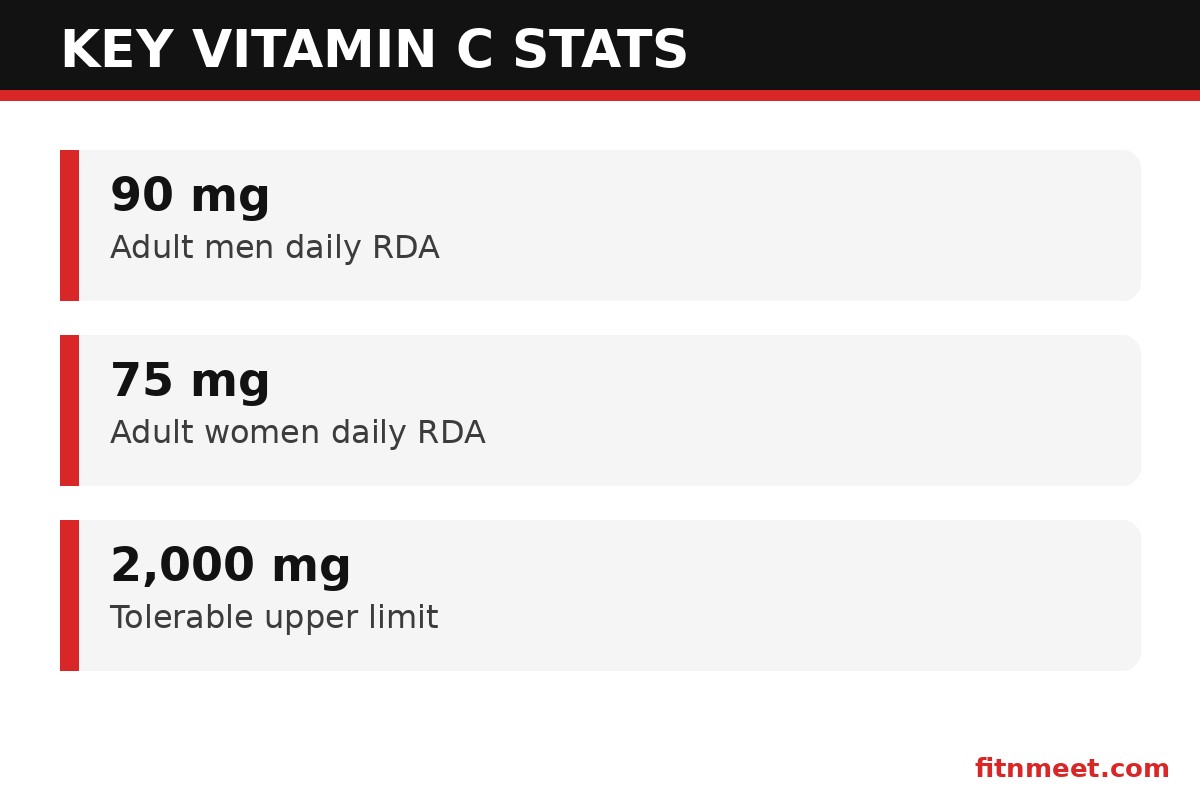
It is worth knowing what vitamin C itself does, because the powder is just a delivery format. Vitamin C is an essential water-soluble vitamin, which means your body cannot make it and cannot store large amounts of it — you need a steady supply from food or supplements. It acts as an antioxidant, helps build collagen, supports immune cell function, and improves the absorption of non-heme iron from plant foods. According to the National Institutes of Health Office of Dietary Supplements, the recommended dietary allowance is 90 mg per day for adult men and 75 mg per day for adult women, with smokers needing an extra 35 mg daily. You can read the full breakdown on the NIH vitamin C fact sheet for health professionals.
Because vitamin C powder dissolves in water within seconds, many users simply stir it into a glass of water or juice each morning. The taste is tart and citrus-like — pleasant for most people when diluted, though straight ascorbic acid can be sharp. Sodium ascorbate versions of vitamin C powder taste noticeably milder, which is why they are popular for children and anyone with acid reflux.
Why Vitamin C Matters for Your Body
Vitamin C is involved in more body processes than almost any other single vitamin, which is why deficiency shows up in so many ways. The classic deficiency disease is scurvy — bleeding gums, poor wound healing, fatigue — which appears when intake drops near zero for several weeks. Full scurvy is rare today, but marginal deficiency is surprisingly common: national nutrition surveys have found that roughly 1 in 12 adults in the United States has low blood levels of vitamin C, and smokers, people with limited fruit and vegetable intake, and those under chronic stress run lower still.
Four roles matter most for active people. First, collagen synthesis: vitamin C is a required cofactor for the enzymes that stabilize collagen, the protein in skin, tendons, ligaments, and cartilage. If you train hard, your connective tissue turnover is high, and adequate vitamin C supports normal repair. Second, immune function: vitamin C concentrates in immune cells like neutrophils and lymphocytes, and it gets used up quickly during infections. Third, antioxidant defense: intense exercise generates free radicals, and vitamin C helps neutralize them in the watery compartments of cells. Fourth, iron absorption: vitamin C can increase the absorption of non-heme iron from plant foods by two to four times, which matters for endurance athletes and anyone eating a plant-heavy diet.
The well-known Cochrane review on vitamin C and the common cold found that regular supplementation does not prevent most people from catching colds, but it shortened cold duration by about 8% in adults and 14% in children — roughly half a day to a day off a typical cold. That is a modest but real effect, and it is one reason vitamin C powder is a staple in many athletes’ winter routines. For background on the chemistry and history of the vitamin, see Wikipedia’s vitamin C overview.
One caution worth stating plainly: more is not always better. Your body absorbs vitamin C efficiently at intakes around 30 to 180 mg per day, but absorption efficiency falls as the dose rises — at a 1,000 mg dose, only about half is absorbed, and the rest is excreted in urine. That is why mega-dosing far beyond your needs mostly produces expensive urine, not extra benefits.
Benefits of Vitamin C Powder
Vitamin C powder delivers the same benefits as vitamin C from food or tablets — the powder format just changes how you take it. Here is what the evidence actually supports, without the hype.
Immune support. This is the number-one reason people buy it. As noted above, regular intake shortens colds modestly and supports normal immune cell function. It will not make you immune to illness, but keeping your levels topped up means your immune system is not fighting with one hand tied behind its back. People who train intensely — marathoners, CrossFit athletes, combat-sport competitors — may benefit most, because prolonged hard exercise temporarily suppresses some immune defenses.
Skin health and collagen. Vitamin C is essential for making collagen, and higher vitamin C intake from diet is associated with better-looking skin in observational studies. Topical vitamin C serums get more attention, but internal vitamin C powder contributes the raw material your skin needs from the inside. If your goal is skin support, it pairs well with adequate protein intake, since collagen is built from amino acids.
Antioxidant protection for athletes. Hard training increases oxidative stress. Vitamin C works alongside vitamin E and glutathione to mop up free radicals. One nuance: some research suggests that very high-dose antioxidant supplements taken right around workouts might slightly blunt training adaptations, so many coaches recommend taking it with breakfast rather than immediately before or after training.
Iron absorption. If you eat mostly plant-based meals, adding vitamin C powder — or simply vitamin C-rich foods — to the meal can meaningfully raise iron uptake. A squeeze-equivalent of about 25 to 50 mg of vitamin C with a meal is enough to boost non-heme iron absorption, so you do not need a mega-dose for this benefit.
Convenience and cost. This is a format benefit, not a health benefit, but it matters: the powdered form is typically the cheapest way to buy vitamin C per gram, it mixes into anything, and one tub can last months. For households where several people supplement, it is far more economical than bottles of tablets.
How to Use Vitamin C Powder
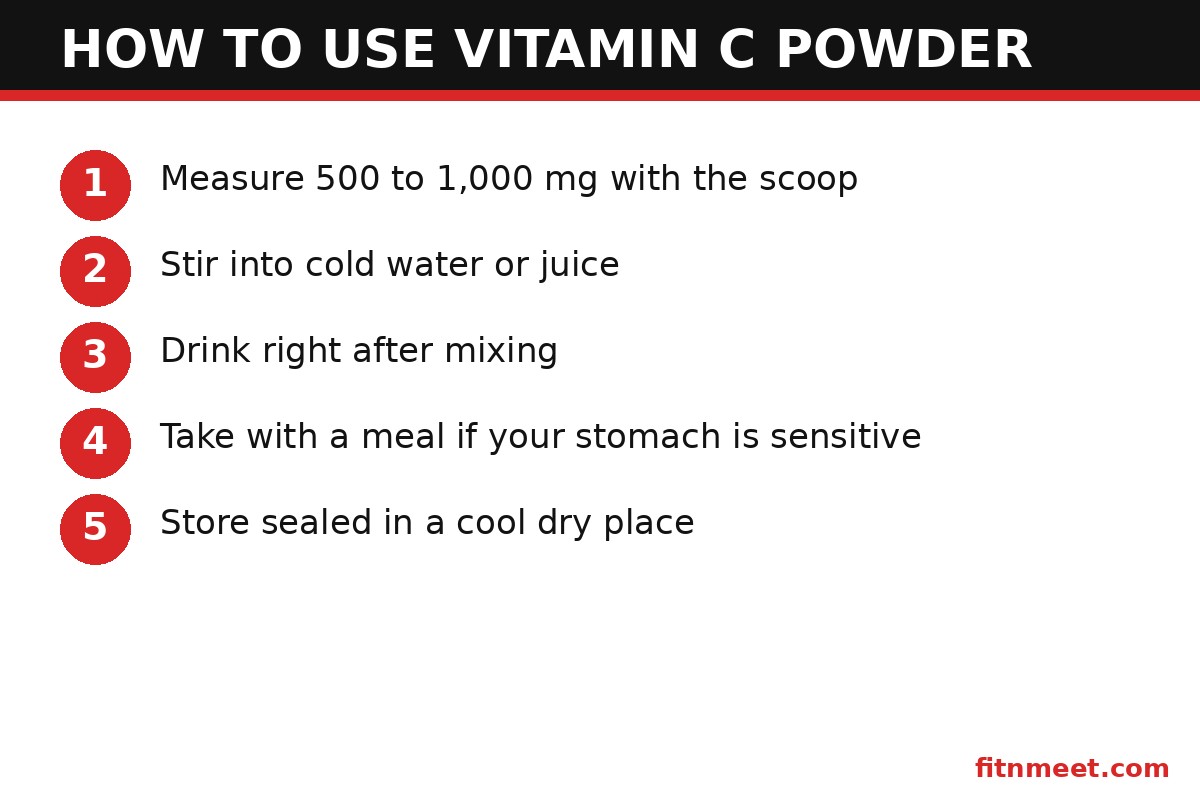
Using vitamin C powder correctly is simple, but a few details make the difference between a pleasant routine and a sour stomach. Follow these steps:
- Measure your dose. Use the scoop that comes in the tub, or a milligram scale for precision. A level scoop is usually 1 gram (1,000 mg), while a quarter scoop is roughly 250 mg. Do not eyeball it — scoops vary between brands.
- Pick your liquid. Stir vitamin C powder into a full glass of cold water, juice, or a smoothie. Orange juice masks the tartness completely. Avoid hot liquids, because heat degrades vitamin C over time.
- Mix and drink promptly. Ascorbic acid dissolves in seconds with a quick stir. Drink it within 10 to 15 minutes — vitamin C oxidizes in air and light, so a glass left sitting all morning loses potency.
- Time it with food if you are sensitive. Plain ascorbic acid on an empty stomach can cause mild nausea or heartburn in some people. Taking it with breakfast solves this for almost everyone. If it still bothers you, switch to the buffered sodium ascorbate form of vitamin C powder.
- Split large doses. Your gut absorbs vitamin C best in smaller amounts. If you take 1,000 mg, splitting it into two 500 mg servings — morning and evening — delivers more into your bloodstream than one big dose. This is one of the easiest wins with the powdered format, since measuring half-scoops is trivial.
- Store it properly. Keep vitamin C powder sealed, dry, and away from light. Moisture causes clumping and degrades potency; a tub left open in a humid kitchen will lose strength within weeks.
A common question is whether you can add vitamin C powder to a protein shake. Yes — it mixes fine and the flavor disappears into most shakes. Just add it right before drinking rather than pre-mixing a bottle for the whole day.
Vitamin C Powder Dosage: How Much Should You Take?
The right dose of vitamin C powder depends on your goal. Here is a practical guide based on official reference values and common usage:
| Goal | Daily dose of vitamin C powder | Notes |
|---|---|---|
| Prevent deficiency | 75–90 mg | The official RDA; easy to get from food alone |
| General daily supplement | 200–500 mg | Covers needs with margin; well absorbed |
| Immune support / cold season | 500–1,000 mg | Split into two doses for better absorption |
| Smokers | RDA + 35 mg extra | Smoking depletes vitamin C faster |
| Upper limit (do not exceed regularly) | 2,000 mg | Above this, diarrhea and cramps become likely |
For most healthy adults, 200 to 500 mg of vitamin C powder per day is the sweet spot — comfortably above the RDA, well below the level where side effects appear, and cheap. There is little evidence that pushing beyond 1,000 mg daily provides additional benefit for already-healthy people, because absorption drops off and the excess is excreted.
Special cases deserve a quick note. Pregnant and breastfeeding women need slightly more (85 mg and 120 mg respectively). People with kidney disorders or a history of kidney stones should talk to a doctor before using high-dose vitamin C powder, since vitamin C breaks down into oxalate, which can contribute to stones in susceptible individuals. And if you take certain medications — including some chemotherapy drugs and blood thinners — check with your clinician first, as high-dose vitamin C can interact.
Side Effects and Safety of Vitamin C Powder
Vitamin C has a strong safety record — it is water-soluble, so your body excretes what it does not use — but the powdered format makes it easy to overshoot without noticing. The most common side effects of high-dose vitamin C powder are digestive: nausea, stomach cramps, and diarrhea, which typically appear above 2,000 mg per day. That 2,000 mg figure is the official tolerable upper intake level for adults, set precisely because of gastrointestinal upset. If you notice loose stools after starting the powder, halve your dose instead of pushing through.
Two groups should be extra cautious. People with a history of kidney stones should avoid megadoses, because vitamin C breaks down partly into oxalate, which can contribute to calcium-oxalate stones in susceptible individuals. People with iron-overload conditions such as hemochromatosis should check with a doctor first, since vitamin C increases iron absorption. For context on how supplement doses relate to label claims, see the FDA’s guide to Daily Values on supplement labels.
A practical safety rule: buy from reputable sellers, keep the tub sealed and dry (moisture degrades ascorbic acid fast), and treat “more” with suspicion — 200 to 500 mg covers nearly everyone.
Vitamin C Powder vs Capsules: Which Is Better?
Both deliver the same vitamin; the real differences are convenience, cost, and dose control. Here is the honest head-to-head:
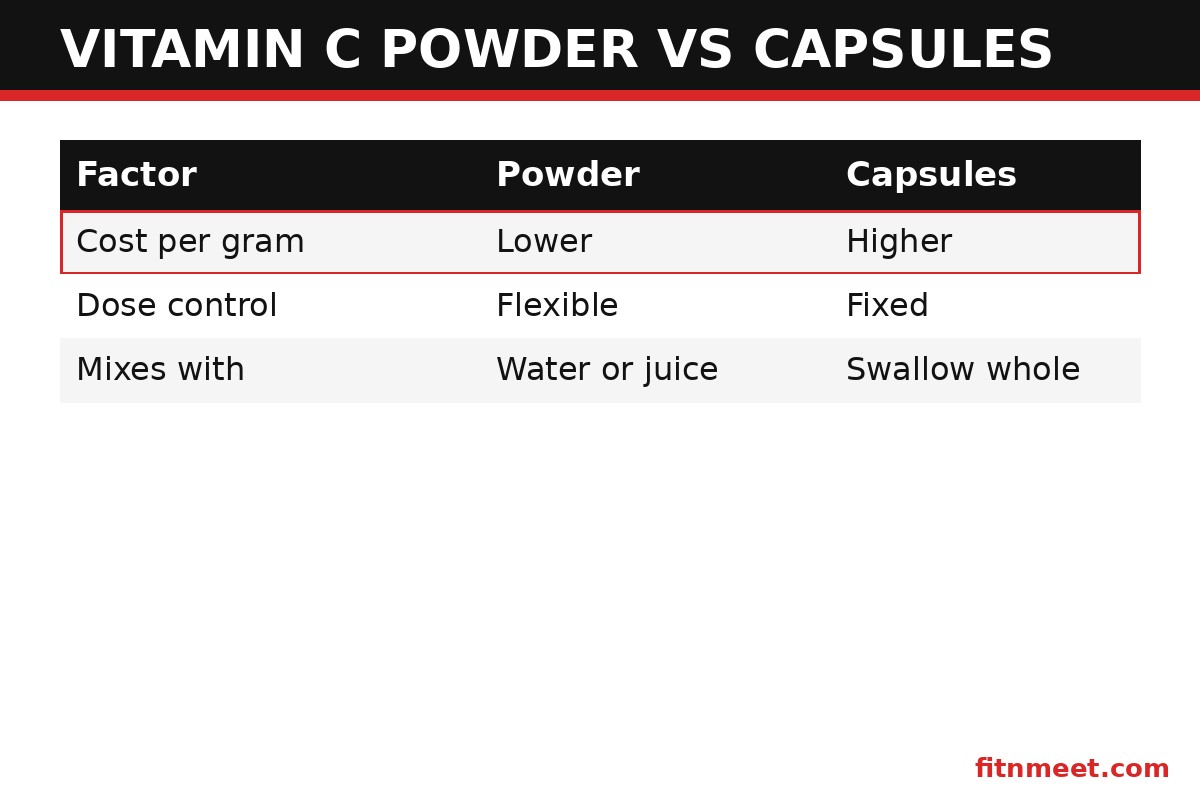
| Factor | Vitamin C Powder | Capsules / Tablets |
|---|---|---|
| Absorption | Same | Same |
| Dose flexibility | Excellent — measure any amount | Fixed per pill |
| Cost per gram | Lowest | Higher |
| Convenience | Needs mixing | Swallow and go |
| Additives | Usually none | Binders and coatings |
| Travel-friendly | Tub is bulky | Easy to carry |
The verdict: choose the powdered form if you want flexible dosing and the lowest price per gram; choose capsules if you travel constantly or dislike mixing drinks. Neither is “stronger” — any marketing that claims otherwise is selling you something.
Alternatives to Vitamin C Powder
If the powdered format does not appeal to you, these alternatives cover the same ground:
- Capsules and tablets — the simplest swap; look for products with minimal fillers.
- Buffered calcium ascorbate — a gentler, less acidic option for sensitive stomachs, available in both powder and pill form.
- Whole-food vitamin C — one large orange provides roughly 100 mg; bell peppers, kiwi, and strawberries deliver even more per serving.
- Chewable tablets — convenient, but they often contain added sugars and flavorings.
For general immune and recovery support, most people do best pairing vitamin C with the fundamentals: adequate protein, sleep, and smart training recovery. Browse FitnMeet’s vitamins and workout recovery collections to build that foundation.
Frequently Asked Questions
How much vitamin C powder should I take daily?
For most healthy adults, 200 to 500 mg of vitamin C powder per day is the sweet spot. That is comfortably above the 90 mg RDA for men and 75 mg for women, and well below the 2,000 mg upper limit where digestive side effects appear. There is little evidence that higher daily doses add benefit for already-healthy people.
Is vitamin C powder better than tablets or capsules?
Absorption is essentially the same, so neither form is stronger. Vitamin C powder wins on dose flexibility and cost per gram, while capsules win on convenience, especially when traveling. Choose based on your routine, not on absorption claims.
Can I take vitamin C powder every day?
Yes. Vitamin C is water-soluble, so your body excretes the excess rather than storing it. A daily 200 to 500 mg serving of the powder is safe for most healthy adults long-term. If you have kidney disease or a history of kidney stones, check with a doctor first.
What are the side effects of vitamin C powder?
The main side effects are digestive: nausea, cramps, and diarrhea, usually at doses above 2,000 mg per day. Buffered sodium ascorbate powder is gentler on sensitive stomachs. Very high long-term doses may raise kidney stone risk in susceptible people.
Does vitamin C powder help prevent colds?
Regular vitamin C intake does not prevent most people from catching colds, but a well-known Cochrane review found it shortened cold duration by about 8% in adults and 14% in children. Keeping your levels topped up during cold season is reasonable; expecting immunity is not.
Can I mix vitamin C powder into a protein shake or smoothie?
Yes. The powder dissolves easily and its tart flavor disappears into most shakes and smoothies. Add it right before drinking rather than pre-mixing hours ahead, since vitamin C degrades with prolonged exposure to air and light.
Conclusion
Vitamin C powder is the most flexible and economical way to supplement vitamin C: it absorbs just as well as capsules, lets you dial in any dose from 100 mg to a full gram, and costs less per gram than any pill. Stick to 200 to 500 mg daily, split larger doses for better absorption, and keep expectations honest — it supports immunity, collagen, and iron absorption, but it is not a miracle shield. Browse FitnMeet’s shop for vitamins and training essentials, and explore more guides in our health articles.
This article is for informational purposes only and is not medical advice. Consult a healthcare professional before starting any supplement.