
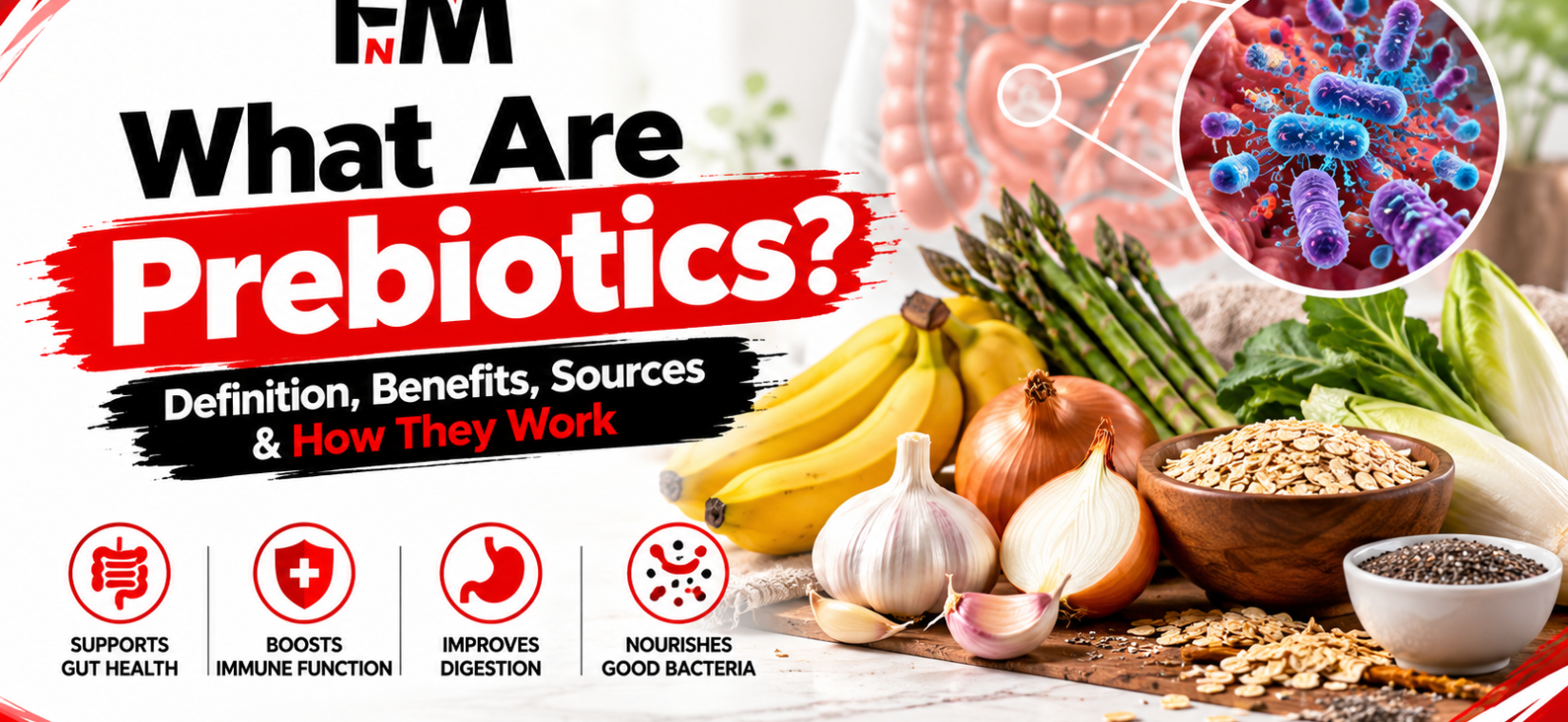
What are prebiotics? They are specialized plant fibers that feed the beneficial bacteria in your gut. Unlike probiotics, which are live bacteria, prebiotics are the fuel those microbes need to thrive. Common prebiotics include inulin and fructooligosaccharides from garlic, onions, bananas, and oats, supporting digestion and immunity.
Prebiotics: Key Stats Snapshot
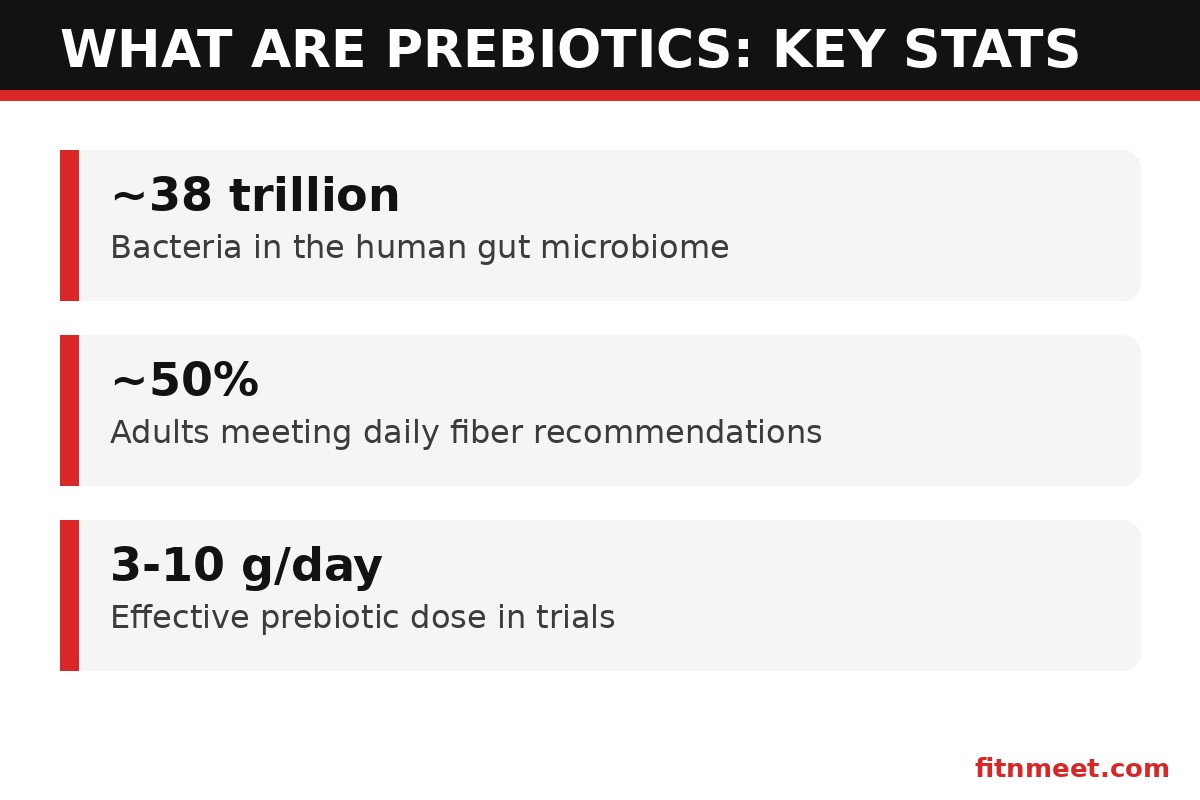
~38 trillion bacteria live in the human gut · Adults get only ~50% of recommended fiber · Prebiotic fiber trials show benefits at 3–10 g/day
If you have ever wondered “what are prebiotics and why does everyone suddenly talk about them,” the numbers explain the hype. The gut microbiome — the community of roughly 38 trillion microorganisms in your digestive tract — influences everything from digestion to immune function to mood. What are prebiotics? They are how you feed the good members of that community. Yet most adults consume only about half the 25–38 grams of daily fiber experts recommend, which means most guts are underfed.
Here is the short version before we go deeper: what are prebiotics, in one line? They are non-digestible fibers that pass through your stomach and small intestine intact, then get fermented by beneficial gut bacteria in the colon. That fermentation produces short-chain fatty acids like butyrate, which nourish the gut lining and calm inflammation. Everything else in this guide — the benefits, the sources, the dosage — flows from that one mechanism.
What Are Prebiotics? The Full Definition
So what are prebiotics, precisely? The International Scientific Association for Probiotics and Prebiotics (ISAPP) defines a prebiotic as “a substrate that is selectively utilized by host microorganisms conferring a health benefit.” In plain English: prebiotics are compounds — mostly fibers — that your body cannot digest but your beneficial gut bacteria can, and feeding those bacteria improves your health.
Three criteria make a true prebiotic: it must resist stomach acid and digestive enzymes, be fermented by gut microbes, and selectively stimulate the growth of beneficial bacteria like Bifidobacteria and Lactobacilli. The best-studied prebiotics are inulin, fructooligosaccharides (FOS), galactooligosaccharides (GOS), and resistant starch. You can read the technical background on Wikipedia’s prebiotic nutrition page.
What are prebiotics not? They are not probiotics (live bacteria), not digestive enzymes, and not a laxative — though their fiber content does support regularity. Think of it this way: if your gut is a garden, probiotics are the seeds and prebiotics are the fertilizer. So what are prebiotics, exactly? Food for your microbes — not microbes themselves. So what are prebiotics, exactly? Food for your microbes — not microbes themselves. Both help, but they do completely different jobs. Understanding what prebiotics are — food for microbes, not microbes themselves — is the key to using them correctly.
Benefits of Prebiotics (With the Numbers)
What are prebiotics actually proven to do? Here are the best-supported benefits, each with the evidence behind it:
Digestive health & regularity — the #1 reason people ask “what are prebiotics”
Up to 30%
increase in beneficial Bifidobacteria seen in trials of inulin-type prebiotics over 2–4 weeks
Prebiotics consistently increase populations of beneficial gut bacteria and soften stool. A 2017 meta-analysis in the American Journal of Clinical Nutrition found prebiotic supplementation improved stool frequency and consistency across multiple trials. If regularity is your goal, this is the most reliable benefit prebiotics offer.
Immune support
~70%
of the immune system resides in gut-associated lymphoid tissue — the exact tissue prebiotics nourish
Short-chain fatty acids produced when bacteria ferment prebiotics help regulate immune cells. Trials in children and older adults have linked prebiotic intake to fewer respiratory infections, though effects are modest and strain-dependent.
Calcium and mineral absorption
20%+
improvement in calcium absorption observed in adolescent trials using inulin-type prebiotics
Fermentation lowers colon pH, which keeps minerals like calcium and magnesium soluble and absorbable. Studies in teenagers — a group with high calcium needs for bone growth — showed meaningful absorption gains.
Blood sugar and appetite control
10–15 g/day
of prebiotic fiber reduced post-meal glucose spikes and modestly lowered calorie intake in controlled trials
Prebiotics slow digestion and trigger satiety hormones (GLP-1, PYY). They will not replace a good diet, but they are a legitimate supporting tool for blood sugar management.
How Prebiotics Work in the Body
Once you know what prebiotics are, the mechanism is straightforward. Here is the journey of a prebiotic fiber through your body:
- Mouth to stomach: Prebiotic fibers pass through untouched — human enzymes cannot break their chemical bonds.
- Small intestine: Still intact. Unlike sugars and starches, prebiotics are not absorbed here.
- Colon: Beneficial bacteria ferment the fiber, multiplying in the process and crowding out less helpful microbes.
- Fermentation products: The bacteria release short-chain fatty acids — mainly acetate, propionate, and butyrate. Butyrate is the preferred fuel of colon cells and strengthens the gut barrier.
- Systemic effects: These fatty acids enter the bloodstream, influencing inflammation, metabolism, and even signaling to the brain via the gut-brain axis.
This selective feeding is what separates prebiotics from generic fiber. Cellulose (in celery, for example) adds bulk but is poorly fermented; inulin is vigorously fermented by exactly the bacteria you want more of. When people ask “what are prebiotics good for,” the honest answer starts here: they are precision fuel for your microbiome.
Prebiotics: Dosage and How to Use Them
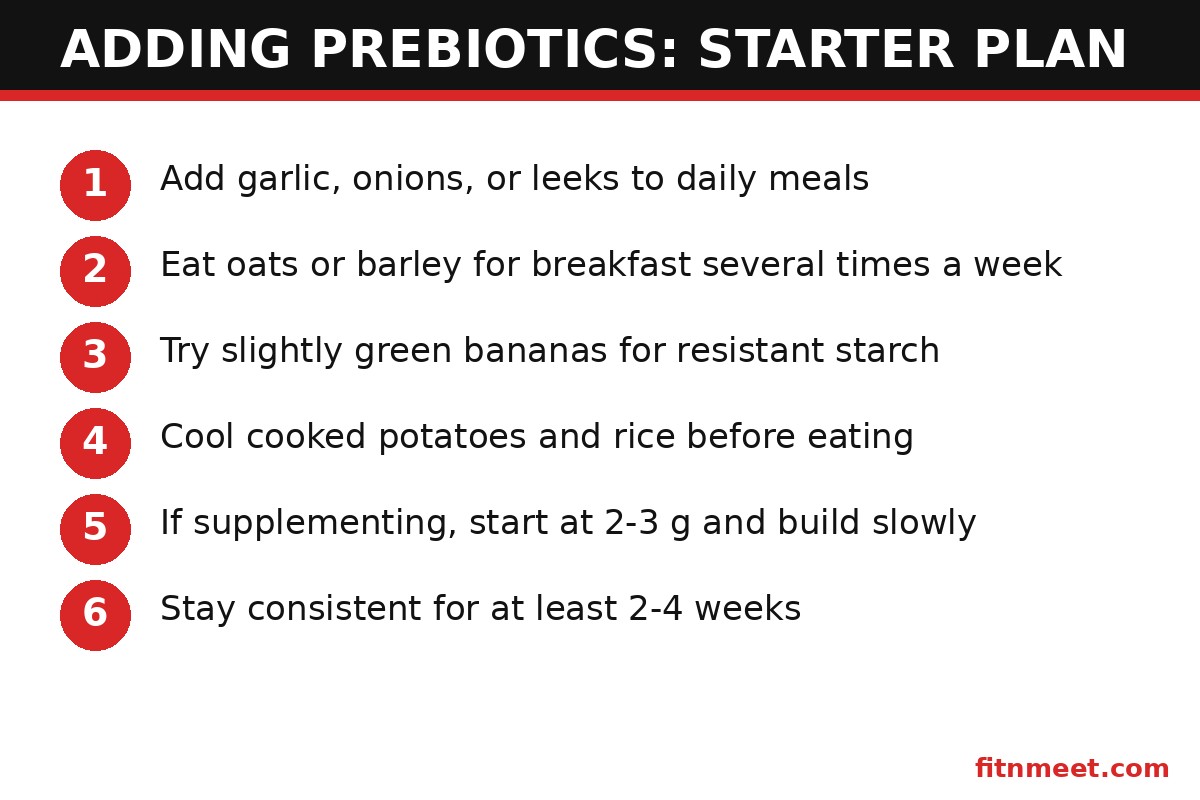
What are prebiotics dosed at in research? Most trials showing benefits use 3–10 grams of prebiotic fiber per day, on top of normal dietary fiber. Here is how to build up sensibly:
- Week 1–2: Start with food sources only — add garlic, onions, leeks, asparagus, bananas, and oats to meals. Aim for an extra 3–5 g of prebiotic fiber daily.
- Week 3+: If using a supplement (inulin or FOS powder), start at 2–3 g daily and increase by 2 g every few days.
- Maintenance: Most people settle at 5–10 g of supplemental prebiotics daily, or simply eat prebiotic-rich foods consistently.
- Timing: Split doses across meals to minimize gas; taking prebiotics with food slows fermentation slightly.
More is not better: jumping straight to 15+ grams often causes bloating and gas, which makes people quit. Gradual beats aggressive. And prebiotics work best alongside a generally high-fiber diet — they supplement good eating, they do not replace it. For gut-friendly nutrition support, see FitnMeet’s health support collection.
Prebiotics vs Probiotics vs Synbiotics: Comparison
Now that you know what prebiotics are, here is how they stack up against their cousins:
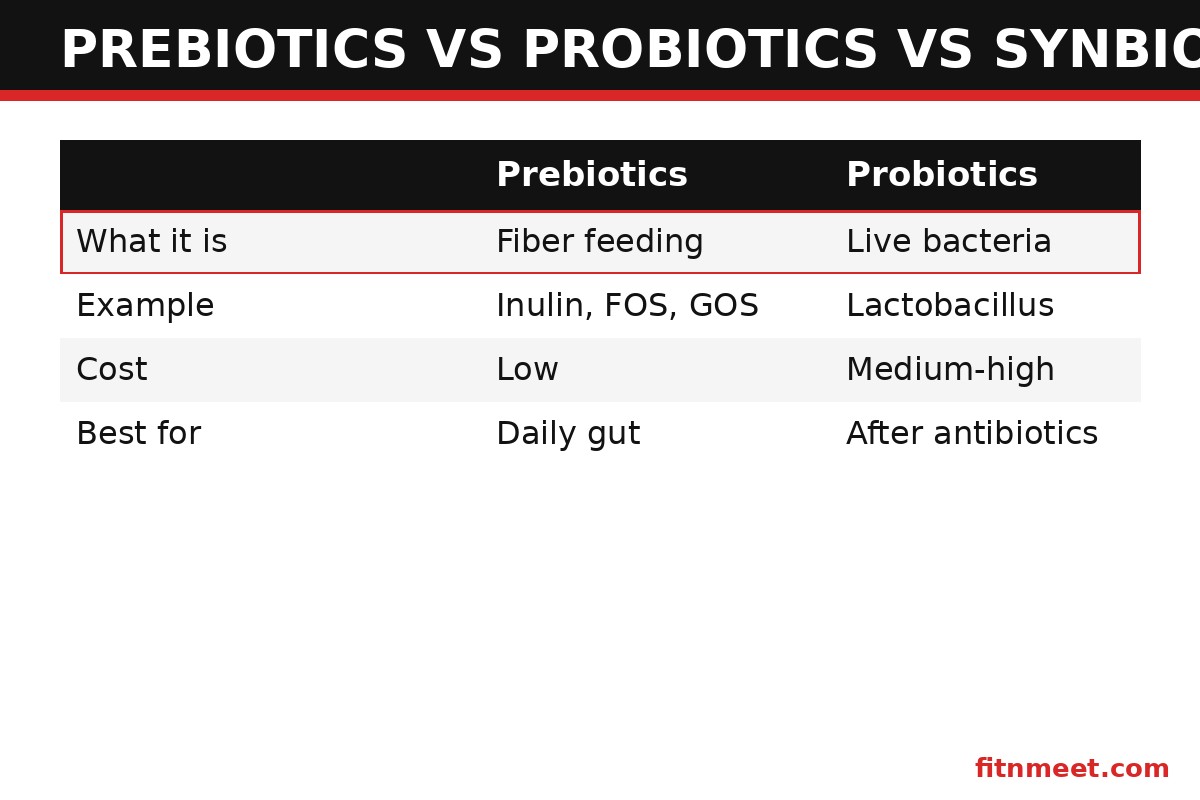
| Prebiotics | Probiotics | Synbiotics | |
|---|---|---|---|
| What it is | Fiber that feeds gut bacteria | Live beneficial bacteria | Prebiotic + probiotic combined |
| Examples | Inulin, FOS, GOS, resistant starch | Lactobacillus, Bifidobacterium strains | Both together in one product |
| Survives stomach acid? | Yes — that is the point | Often not fully | Mixed |
| Evidence strength | Strong for regularity, moderate for immunity | Strong for specific strains/conditions | Emerging, promising |
| Cost | $ (cheap) | $$–$$$ | $$–$$$ |
| Best for | Daily gut maintenance, feeding existing good bacteria | After antibiotics, specific digestive issues | Maximum microbiome support |
For most healthy people, the best value play is prebiotics from food plus a basic probiotic only when needed (for example, during or after antibiotics). The U.S. National Center for Complementary and Integrative Health has a balanced overview of probiotics and gut health worth reading alongside this guide.
Prebiotics: Side Effects and Safety
What are prebiotics’ downsides? They are very safe, but not side-effect free:
- Gas and bloating: The most common issue — fermentation produces gas by definition. Starting low and increasing slowly prevents most problems.
- Stomach cramps: Usually a sign of too much, too fast. Cut the dose in half and rebuild.
- FODMAP sensitivity: People with IBS following a low-FODMAP diet should be cautious — many prebiotics (inulin, FOS) are high-FODMAP and can trigger symptoms.
- Rare: Allergic reactions to specific prebiotic sources (e.g., chicory root) are uncommon but possible.
What are prebiotics from a safety standpoint? They are generally recognized as safe by the FDA and are fine for long-term daily use. People with SIBO (small intestinal bacterial overgrowth), IBS, or those who are pregnant should check with a clinician first.
Best Food Sources of Prebiotics (Alternatives to Supplements)
You do not need a supplement to answer “what are prebiotics” with your diet. These foods are naturally rich in prebiotic fibers, ranked by typical content: For more fiber-rich food guides, explore the FitnMeet nutrition articles.
- Chicory root — the richest source (~65% inulin by weight); often used as the base of prebiotic supplements
- Jerusalem artichoke — ~30% inulin; nutty and versatile
- Garlic & onions — FOS-rich; cooking reduces but does not eliminate content
- Leeks & asparagus — solid inulin sources, easy to add to meals
- Bananas (slightly green) — resistant starch plus FOS; riper bananas have less
- Oats & barley — beta-glucan plus resistant starch
- Cooked-then-cooled potatoes & rice — cooling converts starch to resistant starch
A practical tip: cooling cooked starches (potato salad, overnight oats) measurably increases their resistant starch content. Small kitchen habits like this add prebiotics without supplements or extra cost.
Still wondering what are prebiotics compared to ordinary fiber? The difference is selectivity: all prebiotics are fiber, but not all fiber is prebiotic. Cellulose in celery adds bulk with little fermentation, while inulin is eagerly fermented by Bifidobacteria. That selectivity is why researchers distinguish the two — and why simply eating more generic fiber does not always deliver the targeted microbiome benefits that true prebiotics provide. When shopping, look for the specific terms inulin, FOS, GOS, or resistant starch on labels rather than vague fiber claims.
A practical way to apply this: audit one day of eating and count your prebiotic sources. Most people find they eat plenty of total fiber from grains but almost no inulin-type prebiotics — the garlic-onion-leek family is the easiest fix. Adding half an onion and two garlic cloves to dinner daily contributes roughly 2–3 grams of FOS, a meaningful step toward the 3–10 gram research range, with zero supplements and almost zero cost.
Frequently Asked Questions
What are prebiotics in simple terms?
What are prebiotics, simply put? They are special fibers in plant foods that feed the good bacteria in your gut. Your body can’t digest them, but your beneficial gut microbes can — and when they feast on prebiotics, they multiply and produce compounds that support digestion, immunity, and overall health.
What are prebiotics vs probiotics?
What are prebiotics compared to probiotics? Prebiotics are the food (fibers like inulin and FOS) while probiotics are the live beneficial bacteria themselves. Prebiotics feed bacteria you already have; probiotics add new bacteria. They work well together — a combination product is called a synbiotic.
What are prebiotics foods I should eat daily?
The best everyday prebiotic foods are garlic, onions, leeks, asparagus, slightly green bananas, oats, barley, and cooked-then-cooled potatoes or rice. Including two or three of these daily typically provides 3-8 grams of prebiotic fiber without any supplement.
How long do prebiotics take to work?
Most people notice improved regularity within 1-2 weeks of consistent prebiotic intake. Measurable shifts in gut bacteria populations appear in studies after 2-4 weeks. Immune and metabolic benefits build over 1-3 months of daily use.
Can prebiotics cause gas?
Yes — gas is the most common side effect, since fermentation naturally produces it. Starting with a low dose (2-3 grams) and increasing gradually over two weeks prevents most discomfort. Persistent severe bloating may indicate FODMAP sensitivity or SIBO; see a clinician if it doesn’t settle.
Are prebiotics safe to take every day?
Yes. Prebiotics are fibers with FDA generally-recognized-as-safe status and are suitable for indefinite daily use. People with IBS, SIBO, or those following a low-FODMAP diet should introduce them cautiously and ideally under professional guidance.
Conclusion
So what are prebiotics, in the end? They are the fertilizer for your gut garden — specialized fibers that feed beneficial bacteria and, through them, support digestion, immunity, mineral absorption, and metabolic health. The evidence is strongest for regularity and gut bacteria balance, promising for immunity and blood sugar, and the cost of entry is low: eat more garlic, onions, oats, and bananas, or add a few grams of inulin daily.
Want to support your gut alongside your training? Explore FitnMeet’s health support and vitamins collections, browse the full shop, or read more nutrition explainers on the FitnMeet blog.
This article is for informational purposes only and is not medical advice. Consult a healthcare professional before starting any supplement, especially if you have a digestive disorder, are pregnant, or take medication.