
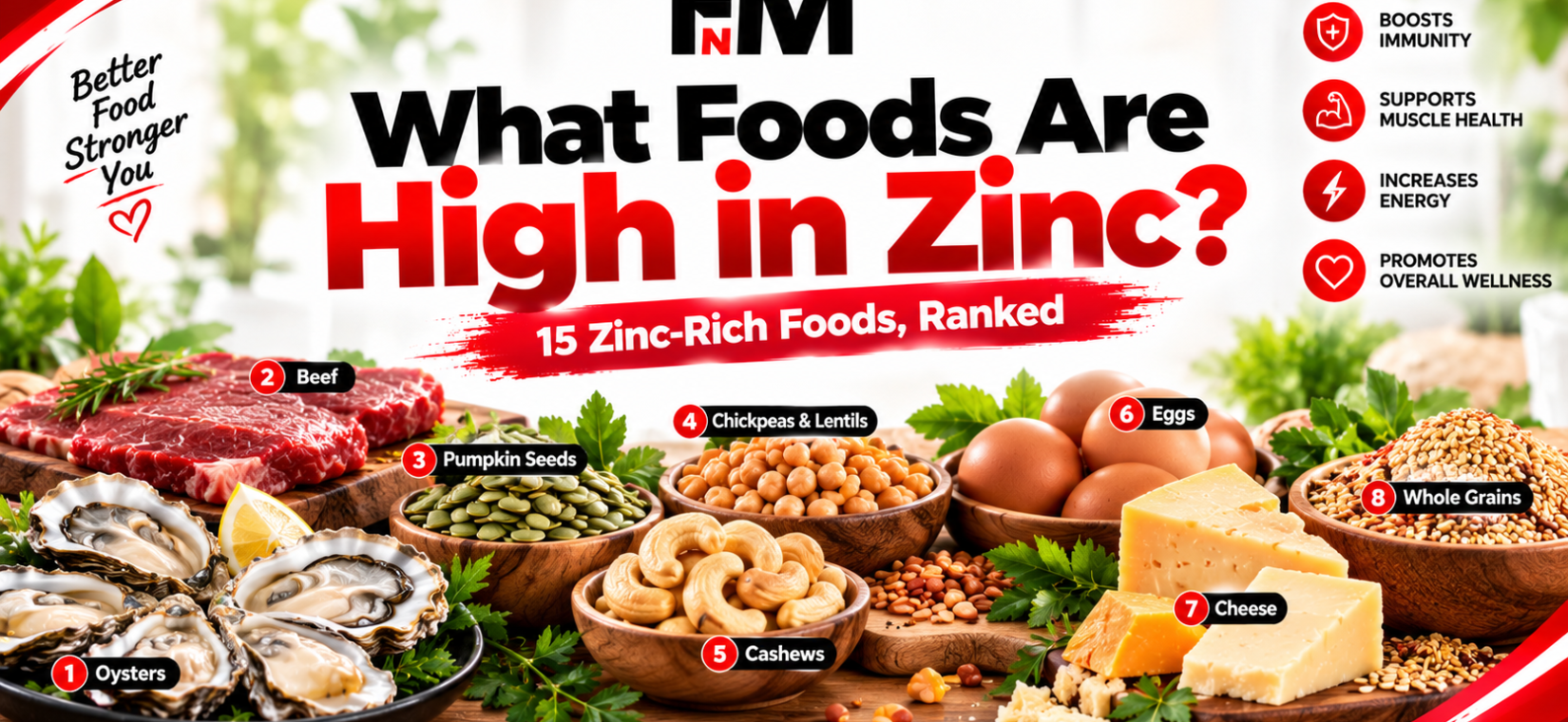
What foods are high in zinc? Oysters top the list — 3 ounces provide 74 mg, nearly 7 times the daily need. Next come beef (7 mg per 3 oz), crab (6.5 mg), and pork (2.9 mg). Men need 11 mg and women 8 mg of zinc daily, and animal foods deliver it in the most absorbable form.
Picture this: you train consistently, sleep decently, and eat what most people would call clean — yet you catch every cold going around, small cuts take forever to heal, and food tastes oddly bland. Your doctor runs labs and finds the culprit: low zinc. It is one of the most common — and most fixable — mineral gaps in active people. Anyone searching for what foods are high in zinc usually lands here after a deficiency scare. This guide answers it with exact numbers, so you can close the gap with food first.
The Scenario: Why Zinc Goes Missing
Back to our lifter. He eats chicken breast, rice, and broccoli on repeat — the classic “clean” template. Here is the problem: chicken breast has barely 1 mg of zinc per serving, rice has almost none, and broccoli has little. He is eating ~4–5 mg of zinc daily against an 11 mg requirement, and heavy training increases losses through sweat. He had never once asked what foods are high in zinc — until the lab results forced the question. Nobody told him that “eating clean” and “eating complete” are different things.
This is the most common way people end up googling “what foods are high in zinc”: not from a bizarre diet, but from a monotonous healthy one. The fix is not a supplement — it is variety, specifically the foods ranked below.
What Is Zinc and What Does It Do?
Zinc is an essential trace mineral involved in over 300 enzymatic reactions: immune cell function, protein synthesis, wound healing, DNA synthesis, and the senses of taste and smell. Your body stores very little of it, so a steady dietary supply matters — unlike iron, there is no deep reserve to draw on during lean weeks. Small wonder that “what foods are high in zinc” is one of the most-searched nutrition questions among lifters.
This is why the question of what foods are high in zinc matters more for athletes than for sedentary people. For lifters, two roles stand out. First, zinc supports testosterone production within the normal range; deficiency is associated with lower levels, though megadosing does not raise them above normal. Second, intense training increases zinc losses in sweat and urine, raising requirements for athletes versus sedentary people. The NIH’s zinc fact sheet and Wikipedia’s zinc overview cover the biochemistry in depth.
Why Zinc Matters for Active People
Athletes asking what foods are high in zinc are asking the right question — here is what is at stake:
- Immune defense. Zinc deficiency measurably weakens immune response; even marginal deficiency is linked to more frequent colds — the classic “always sick during a hard training block” pattern.
- Recovery and wound healing. Cuts, callus tears, and surgical recovery all demand zinc-dependent enzymes. Slow healing is a textbook deficiency sign.
- Taste and appetite. Zinc-dependent taste buds dull without it; lifters in a building phase who “can’t face food” sometimes have a zinc problem, not a motivation problem.
- Skin health. Acne-like rashes around the mouth and slow-healing skin lesions are documented deficiency signs.
- Hair shedding. Diffuse hair loss is associated with low zinc — one reason it appears in hair-loss discussions alongside iron and vitamin D.
Top 15 Zinc-Rich Foods, Ranked
The definitive answer to “what foods are high in zinc,” with milligrams per standard serving (values per NIH and USDA data):
| Rank | Food | Serving | Zinc (mg) | % Daily Value |
|---|---|---|---|---|
| 1 | Oysters, cooked | 3 oz (6 medium) | 74 | 673% |
| 2 | Beef chuck roast | 3 oz | 7.0 | 64% |
| 3 | Crab, Alaska king | 3 oz | 6.5 | 59% |
| 4 | Beef patty, lean | 3 oz | 5.3 | 48% |
| 5 | Lobster | 3 oz | 3.4 | 31% |
| 6 | Pork chop | 3 oz | 2.9 | 26% |
| 7 | Baked beans | ½ cup | 2.9 | 26% |
| 8 | Turkey, dark meat | 3 oz | 2.4 | 22% |
| 9 | Pumpkin seeds | 1 oz | 2.2 | 20% |
| 10 | Yogurt, plain | 8 oz | 1.7 | 15% |
| 11 | Cashews | 1 oz | 1.6 | 15% |
| 12 | Chickpeas | ½ cup | 1.3 | 12% |
| 13 | Oatmeal, fortified | 1 packet | 1.1 | 10% |
| 14 | Milk | 1 cup | 1.0 | 9% |
| 15 | Chicken breast | 3 oz | 1.0 | 9% |
Memorize the top five rows and you will never need to ask what foods are high in zinc again. Notice the pattern that answers it structurally: shellfish and red meat dominate, dairy and legumes contribute modestly, and the stereotypical “clean” proteins (chicken breast, white fish, egg whites) sit at the bottom. Our lifter’s chicken-and-rice routine never stood a chance.
How to Eat More Zinc: A Story-Framed Plan
Our lifter’s turnaround, told as the week it happened — built entirely around the question of what foods are high in zinc:
- Monday — the swap. He replaces two chicken-breast dinners with lean beef (5.3 mg each). Daily zinc jumps from ~5 mg to ~10 mg with one change. Lesson: when asking what foods are high in zinc, start with the simplest swap, not a supplement.
- Wednesday — the snack upgrade. Afternoon almonds become pumpkin seeds (2.2 mg/oz) and cashews (1.6 mg/oz). Another ~3 mg, zero extra cooking.
- Friday — the breakfast fix. Plain oatmeal gets a cup of milk (1 mg) and he switches to a fortified packet (1.1 mg). Small numbers, but they stack.
- Sunday — the wildcard. He tries oysters for the first time — six of them deliver 74 mg, more than his entire previous week. He decides monthly oysters are now a tradition.
- Ongoing — the rule. Red meat or shellfish 3–4 times weekly, seeds/nuts daily, dairy daily. Labs rechecked in 3 months: zinc normal, colds gone, taste back.
You do not need his exact week — the principle is the swap ladder: upgrade your protein source first (biggest lever), then snacks, then breakfast. Explore nutrition guides and vitamin and mineral resources for more deficiency-proofing strategies. If you would rather supplement than overhaul your diet, the FitnMeet shop carries mineral formulas for lifters still asking what foods are high in zinc.
Notice the pattern in his week: he never needed a master list of what foods are high in zinc — he needed one swap at a time, starting with the highest-leverage protein change.
How Much Zinc You Need Daily
| Group | RDA (mg/day) | Easy food combo hitting it |
|---|---|---|
| Men 19+ | 11 | 3 oz beef (7 mg) + 1 oz pumpkin seeds (2.2 mg) + 1 cup milk (1 mg) |
| Women 19+ | 8 | 3 oz pork chop (2.9 mg) + ½ cup chickpeas (1.3 mg) + 8 oz yogurt (1.7 mg) + cashews (1.6 mg) |
| Pregnant women | 11 | Same as men, spread across meals |
| Breastfeeding women | 12 | Add an extra dairy or legume serving |
| Athletes (heavy training) | 11–15* | Men’s baseline + extra meat serving on hard days |
*Athletes have no separate official RDA, but sweat losses justify eating toward the higher end of food-based intake.
Once you know what foods are high in zinc, hitting these targets is straightforward. The tolerable upper limit is 40 mg/day from all sources — hard to hit with food (you would need 6+ oyster servings), but easy to exceed with high-dose zinc supplements, which is the real risk scenario. For broader mineral coverage, see our health-support nutrition guides.
What to Watch For: Absorption Traps
- Phytates. Whole grains, legumes, and nuts contain phytates that bind zinc and cut absorption by up to 50%. Soaking beans and choosing leavened bread helps; vegetarians should eat toward the higher end of intake.
- Iron vs zinc competition. Very high iron supplements taken at the same time can inhibit zinc absorption. Separate doses by a few hours if you supplement both.
- Calcium in excess. Extremely high calcium intakes may modestly reduce zinc absorption — normal dairy intake is fine.
- Alcohol. Chronic heavy drinking impairs zinc absorption and increases urinary losses — one reason deficiency clusters in this group.
- The oyster caveat. Oysters are the answer to “what foods are high in zinc,” but eat them cooked from reputable sources; raw oysters carry foodborne-illness risk.
- Protein helps. Animal protein enhances zinc absorption — another reason meat and shellfish beat plant sources mg-for-mg.
Zinc Sources Compared
To put the “what foods are high in zinc” ranking in practical context, here is how the source types stack up:
| Source type | Example | Zinc per serving | Absorption | Verdict |
|---|---|---|---|---|
| Shellfish | Oysters, crab | 6.5–74 mg | Excellent | The gold standard — weekly is plenty |
| Red meat | Beef, pork | 2.9–7 mg | Excellent | The everyday workhorse |
| Poultry/dairy | Turkey, yogurt, milk | 1–2.4 mg | Good | Solid supporting cast |
| Legumes/nuts/seeds | Chickpeas, cashews, pumpkin seeds | 1.3–2.9 mg | Moderate (phytates) | Essential for vegetarians; pair with animal foods if possible |
| Supplements | Zinc picolinate/gluconate | 15–50 mg | Good | Plan B — useful for confirmed deficiency, risky blind |
Bookmark the table above for the next time someone asks you what foods are high in zinc — the shellfish and red-meat rows answer it for nearly every diet.
This article is for informational purposes only and is not medical advice. Consult a healthcare professional before starting any supplement or exercise program.
Frequently Asked Questions
What foods are high in zinc?
Oysters are by far the highest (74 mg per 3 oz serving), followed by beef (7 mg), crab (6.5 mg), pork chop (2.9 mg), baked beans (2.9 mg), pumpkin seeds (2.2 mg), and yogurt (1.7 mg). Animal foods provide the most absorbable zinc.
What fruit is highest in zinc?
No fruit is a meaningful zinc source — even the best (blackberries, pomegranate) provide under 0.5 mg per serving. If you are asking what foods are high in zinc, look to shellfish, meat, legumes, nuts, and seeds instead of fruit.
How can vegetarians get enough zinc?
Prioritize pumpkin seeds (2.2 mg/oz), cashews (1.6 mg/oz), chickpeas and lentils (1-2 mg per half cup), and fortified cereals. Soak beans and choose leavened breads to reduce phytates, and eat toward higher total milligrams since plant zinc absorbs less efficiently.
How much zinc do I need per day?
Once you know what foods are high in zinc, the RDA is easy to hit: 11 mg for adult men and 8 mg for adult women (11 mg pregnant, 12 mg breastfeeding). Athletes training hard should eat toward the higher end due to sweat losses. The upper safe limit is 40 mg/day from all sources.
What are the signs of zinc deficiency?
Frequent colds, slow wound healing, dulled taste and smell, hair shedding, and skin rashes around the mouth are classic signs. Deficiency is confirmed with blood tests — do not megadose on symptoms alone.
Can you get too much zinc from food?
Essentially no — you would need to eat oysters daily in large amounts to approach the 40 mg upper limit. Zinc excess almost always comes from supplements, and chronic excess causes copper deficiency, nausea, and weakened immunity.
Conclusion
Our lifter’s story ends the way most zinc stories do: not with a supplement bottle, but with a grocery list. Oysters for the win, beef and pork for the week, seeds and dairy for the gaps — that is the complete answer to what foods are high in zinc. Check your own plate against the top-15 table, make one swap this week, and give it a month. Your immune system will notice before you do. Share this ranking with the next person who asks what foods are high in zinc — you might save them a deficiency.
Want more deficiency-proofing guides? Join the FitnMeet community for practical nutrition that keeps lifters healthy, strong, and rarely sick.