
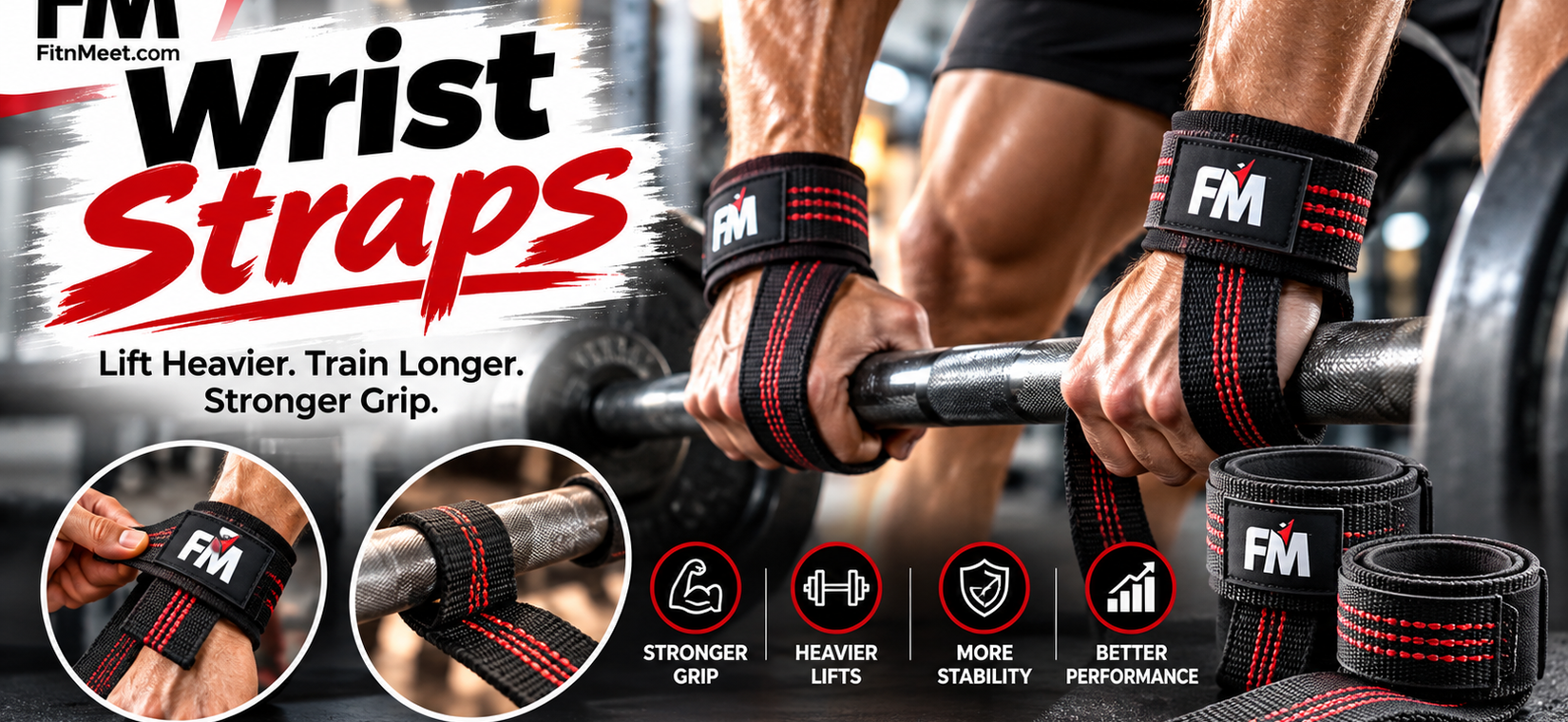
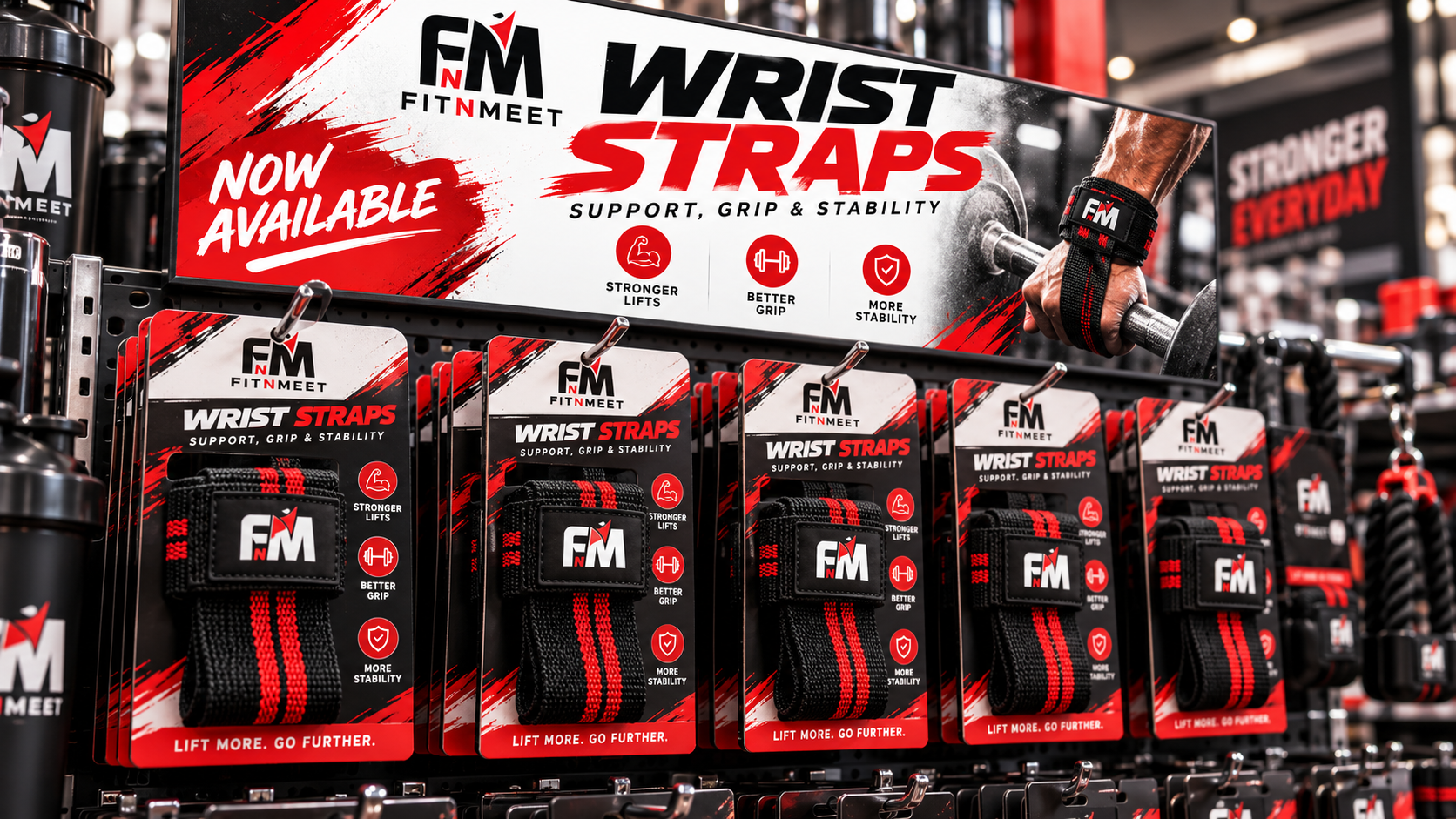
Wrist straps are 20 to 24 inch fabric strips that loop around your wrist and the barbell to reinforce your grip on pulling exercises. They let your back and legs do the work on deadlifts, rows, and pulldowns even when grip would otherwise fail first. They are a tool for overload, not a replacement for grip training.
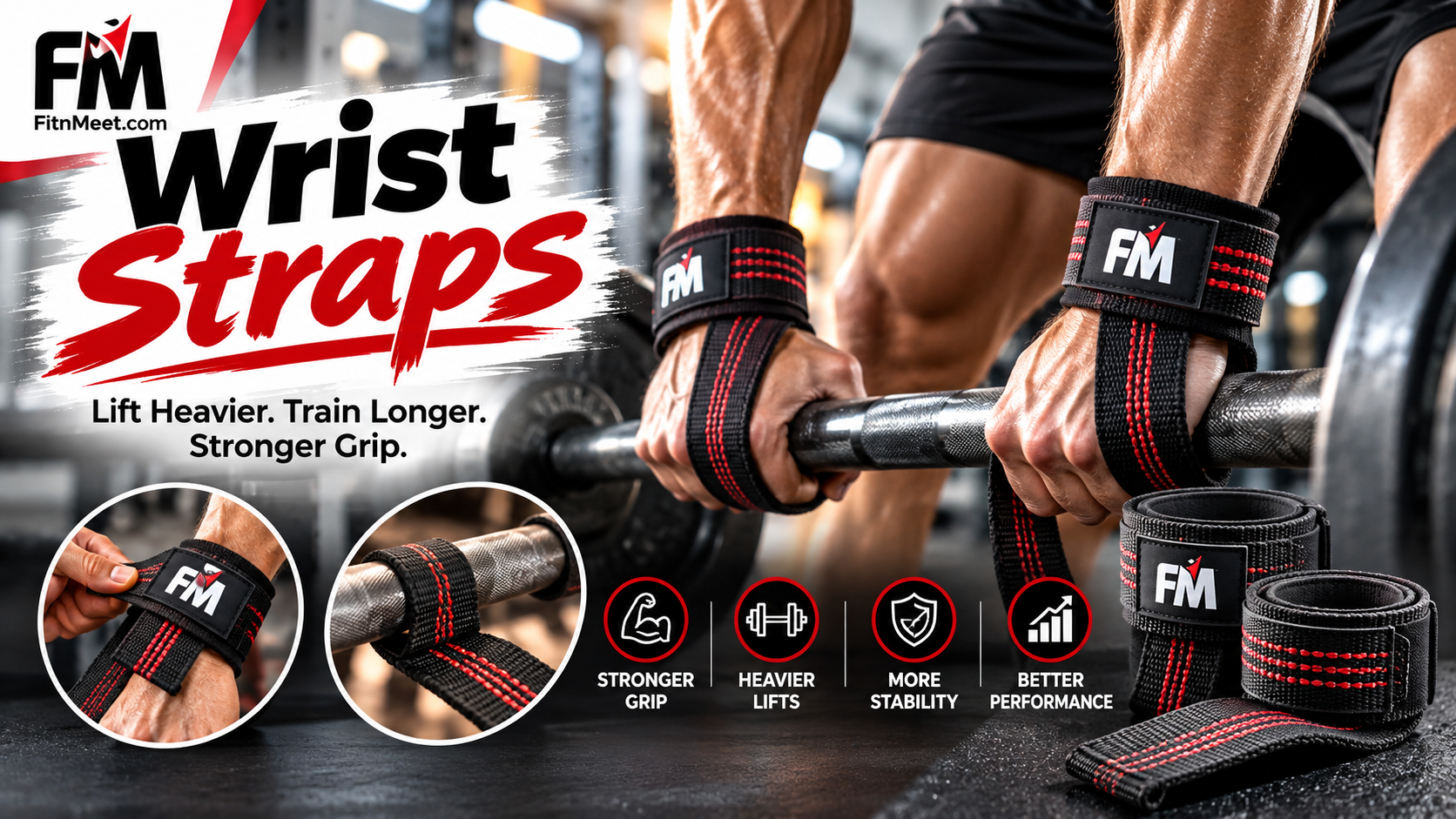
The Direct Answer
Q: What do wrist straps do, in 30 seconds?
A: Wrist straps wrap around your wrist and the bar to mechanically link your hand to the weight. Your grip stops being the limiting factor on deadlifts, rows, shrugs, and pulldowns, so your target muscles, lats, traps, glutes, hamstrings, receive full overload. Wrap them only for heavy working sets, keep training grip separately, and choose lasso straps for versatility or figure-8 straps for maximal deadlifts.
If your deadlift stalls because the bar rolls out of your fingers while your back and legs feel fresh, wrist straps solve exactly that problem. Grip strength develops more slowly than back and leg strength, and on heavy pulls the hands are almost always the weak link. A pair of wrist straps costs little, weighs nothing, and can add 10 to 20 kilograms to your working deadlift overnight, not by making you stronger, but by letting your existing strength express itself.
Wrist Straps: Fast Facts
- What: fabric loops (cotton, nylon, or leather) securing wrist to bar on pulls.
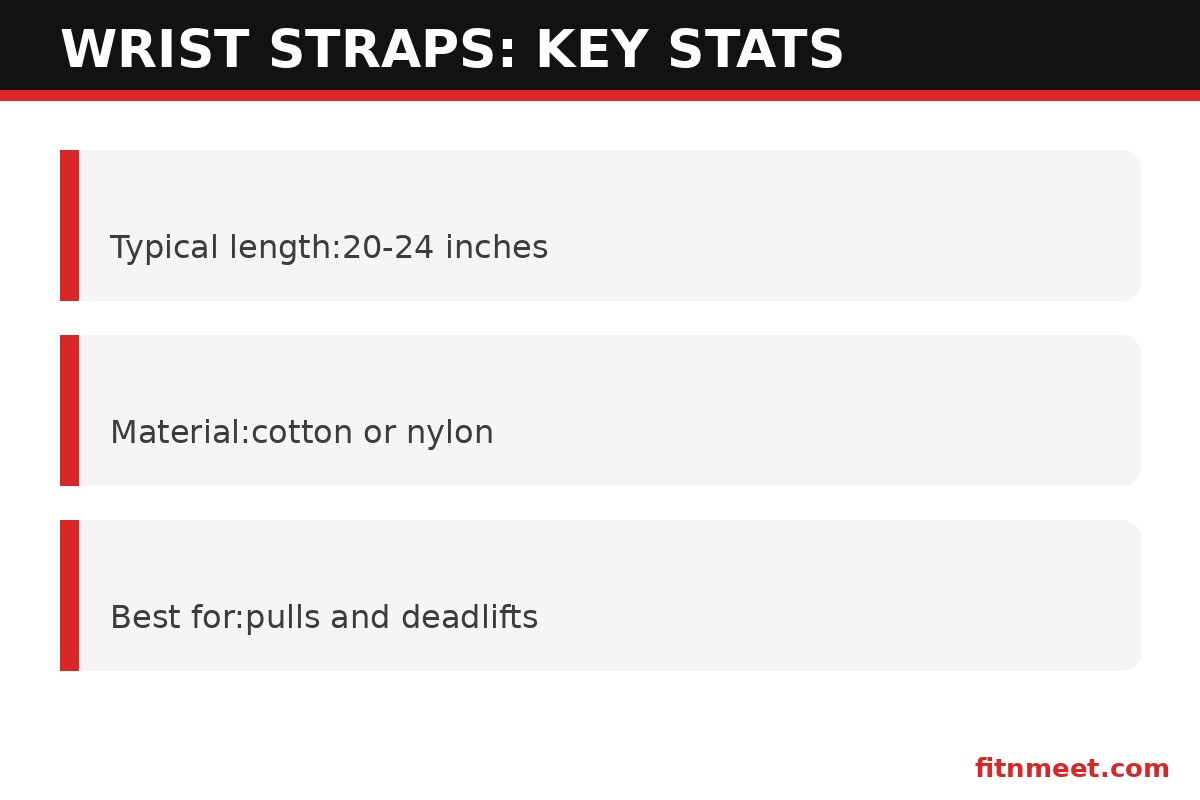
- Length: typically 20 to 24 inches; longer straps suit thicker bars and axle work.
- Main uses: deadlifts, barbell rows, dumbbell rows, shrugs, lat pulldowns, Romanian deadlifts.
- Do NOT use for: bench press, overhead press, squats, or Olympic lifts (snatch, clean and jerk).
- Types: lasso (adjustable loop, most versatile), figure-8 (locked loop, strongest), hook-and-loop (quickest).
- Rule of thumb: straps on for top sets above ~80 percent; grip-only for warm-ups and accessories.
- Grip training still required: straps supplement grip work; they must not replace it.
- Competition legality: allowed in strongman, banned in powerlifting deadlifts.
What Are Wrist Straps?
Wrist straps are among the oldest and simplest lifting accessories: a strip of heavy-duty cotton, nylon, or leather, roughly 1.5 inches wide and 20 to 24 inches long, with a loop sewn at one end. You slide your hand through the loop, wrap the free end around the barbell or dumbbell handle one or two times, and grip over the wrap. The strap wedges between your palm and the bar, creating friction and a mechanical tether so the bar cannot roll out of your fingers.
Three designs dominate. Lasso straps thread the free end through a sewn loop to form an adjustable noose around the wrist; they fit any wrist and any bar, cinch tight under load, and release with a twist of the hand. They are the default recommendation for most lifters. Figure-8 straps form a fixed double loop: one loop around the wrist, the other around the bar, creating an extremely secure connection popular with strongman competitors and heavy deadlifters. They are the strongest option but slower to set up and harder to bail from. Hook-and-loop (Velcro) straps wrap and fasten like a wristband, offering the fastest setup for high-rep bodybuilding work at the cost of slightly less security under maximal loads.
Materials matter for feel and durability. Cotton straps are comfortable, absorb chalk well, and break in nicely, but stretch slightly over time. Nylon straps are stiffer, thinner, and nearly indestructible, favored by competitive deadlifters who want zero give. Leather straps sit between, offering excellent grip on the bar with good longevity. Padded neoprene cuffs add wrist comfort for high-volume use. Whatever the material, proper wrist straps are rated far beyond any load a human can lift; failure virtually always comes from wrapping technique, not the strap. For pulling fundamentals, see our strength training guides.
Q: Are wrist straps the same as wrist wraps?
A: No, and confusing them is the most common beginner mistake. Straps connect your hand to the bar to help your grip on pulls. Wrist wraps stabilize the wrist joint itself on presses. Straps for deadlifts and rows; wraps for bench and overhead press. Different tools, different jobs.
Benefits of Wrist Straps
Your back gets the workout your grip was stealing. This is the core benefit. On a heavy set of Romanian deadlifts, the limiting factor should be the hamstrings and glutes, not the fingers. Studies of grip endurance show forearm flexors fatigue far faster than the large pulling muscles; without lifting straps, lifters routinely terminate back and posterior-chain sets 2 to 4 reps early. Straps remove that bottleneck, letting programmed volume actually reach the target muscles.
Heavier overload for hypertrophy. Muscle growth tracks closely with mechanical tension and volume at sufficient loads. If grip caps your barbell row at 80 kg when your lats could handle 100 kg for sets of 8, you are leaving growth stimulus on the table every session. The straps close that 20 kg gap immediately, and the extra tension compounds across months of training. Support that heavier training with the FitnMeet muscle development collection.
Reduced forearm and elbow overuse. Lifters who white-knuckle every pull often develop aggravated forearms, elbow irritation, or thumb joint soreness from excessive gripping force. By sharing the load between the strap and the hand, these straps reduce peak gripping demands on heavy sets, giving irritated tendons room to calm down while training continues.
Higher-rep pulling without grip failure. High-rep sets of shrugs, dumbbell rows, and lat pulldowns are notorious for grip giving out at rep 12 of a 15-rep target. Straps let you finish the set as programmed, which matters for hypertrophy blocks where the prescription is 12 to 20 reps. The deadlift’s grip demands illustrate why even elite pullers strategize around hand strength.
Training around hand injuries. Torn calluses, jammed thumbs, and minor finger sprains need not derail back training. Straps let lifters train productively while hands heal, maintaining pulling volume that would otherwise be lost for weeks.
How to Use Wrist Straps
Q: What is the correct way to wrap the straps?
A: Follow these steps every time until it becomes automatic:
- Thread the strap. Push the free end through the sewn loop to form a circle. Slide your hand through so the strap’s tail points toward your fingers and the loop sits snug at the base of your palm.
- Position at the bar. Place your palm on the bar with the strap tail hanging on the far side of the bar (away from you).
- Wrap away from you. Bring the tail back over the bar toward you, wrapping it around the bar one full turn. For maximal security, add a second wrap. Always wrap in the same rotational direction on both hands.
- Roll the slack tight. With the strap around the bar, rotate your wrists forward (as if revving a motorcycle) to wind the strap snug. There should be no loose fabric.
- Grip over the wrap. Close your hand firmly over the strap-covered bar. The strap should feel like an extension of your grip, not a loose tether.
- Lift, then unwrap deliberately. After the set, rotate your wrists backward to loosen before letting go. Never just drop the bar and yank your hands free; a tight strap can trap fingers.
Practice with an empty bar first. Most lifters need 2 to 3 sessions before wrapping feels natural, and rushing the learning curve with 180 kg on the bar is how straps get a bad reputation. Chalk the strap lightly for extra bite on maximal attempts. Browse the FitnMeet shop for training accessories that pair with a smart pulling program.
People Also Ask About Wrist Straps
Do these straps weaken your grip?
Only if you let them. Research and coaching experience agree: lifters who strap every set and never train grip directly lose grip strength over time, while lifters who strap heavy top sets but keep warm-ups, accessories, and dedicated grip work (farmer’s carries, hangs, plate pinches) strapless maintain or improve grip. The strap is not the problem; the programming is. A simple rule: if the set is under 80 percent or under 6 reps of grip challenge, go strapless.
Can beginners use straps?
Beginners should wait 3 to 6 months. Early training should build raw grip strength alongside everything else, and novices rarely pull loads where grip is the true limiter. Once deadlifts and rows get heavy enough that the bar slips before the target muscles fatigue, straps become appropriate. Learning to wrap correctly also takes coordination beginners are better off spending on the lifts themselves.
Lasso vs figure-8 lifting straps: which should I buy?
Buy lasso straps first. They handle every exercise, fit any wrist, adjust in seconds, and release quickly if you need to bail. Add figure-8 straps later if you get serious about maximal deadlifts or strongman, where their locked double-loop connection is unmatched. Most lifters never need more than a good pair of lasso straps. For more gear guides and training accessories, browse the FitnMeet fitness articles.
How long should straps be?
Standard 20 to 22 inch straps suit most lifters and standard barbells. Choose 24 inch or longer if you have large hands, use thick axle bars, or deadlift with a very wide grip. Shorter straps wrap faster but offer less security on thick bars; longer straps are more versatile at the cost of slightly fiddlier wrapping.
Q: Can you use lifting straps on dumbbells?
A: Yes. The wrapping technique is identical: loop around the wrist, wrap the tail around the dumbbell handle, roll tight, and grip. Straps are especially useful for heavy dumbbell rows and shrugs where the handle diameter challenges grip.
Wrist Straps Comparisons
| Factor | Lasso Wrist Straps | Figure-8 Wrist Straps | Lifting Hooks / Grips |
|---|---|---|---|
| Security under max load | Very good | Excellent (locked loop) | Good; hook can slip on thick bars |
| Setup speed | Fast (5-10 seconds) | Slower (15-20 seconds) | Fastest |
| Versatility | All pulls, any bar | Best for deadlifts; awkward elsewhere | Pulls; poor for rows |
| Bail-out safety | Easy twist release | Harder; hands stay connected | Easy |
| Grip training effect | Some grip still required | Minimal grip required | Minimal grip required |
| Durability | Years (cotton/nylon) | Years | Hooks wear; pads compress |
| Best for | Most lifters, all-around | Max deadlifts, strongman | High-rep bodybuilding, injured hands |
Versus mixed grip and hook grip, these straps trade specificity for comfort: a mixed grip is competition-legal and builds grip, but risks biceps tears on the supinated side and creates muscular asymmetries over time; hook grip is secure and legal but famously painful to learn. Straps sidestep both issues for training, which is precisely why powerlifters train strapped and compete hook or mixed. Versus chalk alone, straps win whenever the load exceeds what your hands can hold regardless of friction; chalk improves the hand-bar interface, straps bypass it. And versus going strapless entirely, the honest answer is that both have a place: strapless work builds the grip, strapped work builds everything else.
Safety: When NOT to Use Wrist Straps
Lifting straps are safe on pulls but genuinely dangerous on the wrong lifts. Never use straps for Olympic lifts (snatch, clean and jerk): if you miss a snatch, strapped hands cannot release the bar, and the falling barbell can dislocate shoulders or fracture wrists. Olympic lifters use hook grip for this exact reason. Never strap for bench press, overhead press, or squats: the strap serves no purpose there and creates a tethering hazard if you lose the bar.
Even on appropriate lifts, follow safety rules. Do not wrap so tightly that your hands go numb; numbness means circulation compromise, and a numb hand cannot protect itself. Unwrap fully between sets rather than leaving straps dangling, which catch on plates and racks. Inspect straps periodically: frayed stitching at the loop is the failure point, and a strap that tears mid-deadlift drops the load unexpectedly. Replace worn straps; they are cheap.
The subtler safety issue is grip-strength debt. A lifter who straps 100 percent of pulls for a year may discover their deadlift exceeds what their hands can hold by 30 kg or more, which becomes a competition problem in powerlifting (straps banned) and a real-world problem whenever they lift something heavy without straps. Keep at least half your pulling volume strapless, add dedicated grip work twice weekly, and re-test strapless grip strength quarterly. Our FitnMeet home base links to full programming resources for balanced development.
Full FAQ
What are wrist straps used for?
Wrist straps are used to reinforce grip on heavy pulling exercises: deadlifts, barbell and dumbbell rows, shrugs, lat pulldowns, and Romanian deadlifts. They loop around the wrist and the bar so grip fatigue does not end the set before the target muscles are fully worked.
Do wrist straps help you lift more weight?
They let you express the strength you already have. Most lifters add 10 to 20 kg to working deadlifts and rows immediately with wrist straps, because grip was the limiting factor. They do not build muscle directly; they remove the grip bottleneck so back, trap, and leg muscles receive full overload.
Will wrist straps weaken my grip?
Not if programmed sensibly. Keep warm-ups, accessories, and dedicated grip work (farmer’s carries, dead hangs, plate pinches) strapless, and reserve wrist straps for heavy top sets above roughly 80 percent. Lifters who strap every set and skip grip training do lose grip strength over time.
What is the difference between wrist straps and wrist wraps?
Wrist straps connect your hand to the bar to assist grip on pulling exercises. Wrist wraps stabilize the wrist joint itself on pressing exercises like bench press and overhead press. Use straps for deadlifts and rows; use wraps for presses. They are completely different tools.
Are wrist straps allowed in powerlifting?
No. Powerlifting federations ban wrist straps on the deadlift; competitors use mixed grip or hook grip instead. Wrist straps are allowed in strongman competitions. Most powerlifters train heavy pulls with straps and practice competition grip separately.
How do you put on wrist straps?
Thread the free end through the sewn loop, slide your hand through, place your palm on the bar, wrap the tail around the bar, roll your wrists forward to wind it tight, then grip over the wrap. Practice with an empty bar for 2 to 3 sessions first.
Can you use wrist straps for pull-ups?
Yes, though it takes practice. Loop and wrap the straps around the pull-up bar the same way as a barbell. They help lifters whose grip fails before their lats on high-rep sets, but most coaches prefer building pull-up grip naturally and reserving straps for weighted pull-ups.
How long do wrist straps last?
Quality cotton or nylon wrist straps last several years of regular training. Inspect the stitching at the loop periodically; fraying there is the failure point. Replace straps when stitching loosens or the fabric thins, since a torn strap mid-deadlift drops the load unexpectedly.
This article is for informational purposes only and is not medical advice. Consult a healthcare professional before starting any supplement or exercise program.
Conclusion
Wrist straps are the rare accessory that delivers exactly what it promises: your pulls stop ending when your grip quits. Learn the wrap, reserve straps for heavy top sets, keep training your grip directly, and never strap an Olympic lift. Do that, and an inexpensive pair of straps becomes one of the highest-ROI purchases in your gym bag. Explore FitnMeet’s training resources to keep building balanced, long-lasting strength.