
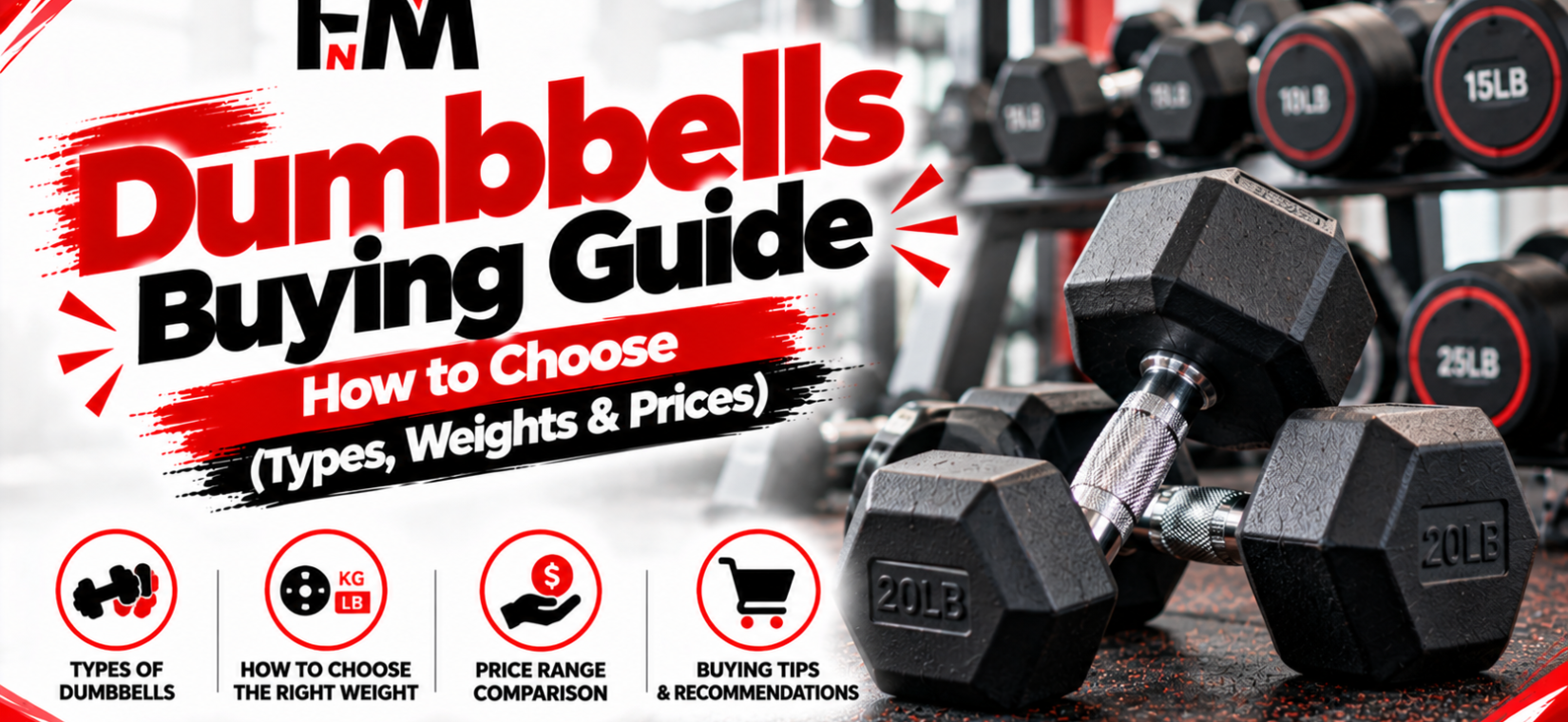
Weight Rack: The Science-Backed Guide to Types, Safety & SetupBuying dumbbells sounds simple until you face the wall of options: hex, round, adjustable, urethane, neoprene, with prices from $20 to well over $1,000. Buy wrong and you end up with weights that roll across the floor, rust in the garage, or gather dust because they never fit your training. This guide cuts through the noise so you buy the right dumbbells once, matched to your space, budget, and training style.
Below you will find every type compared honestly, exactly what weight range to buy for your goals, what you should pay per pound, the small features that separate good dumbbells from bad ones, where to buy, how to maintain them, the mistakes that cost buyers hundreds, and answers to the most common questions.
Fixed vs Adjustable Dumbbells
The first decision is the biggest one, and it comes down to space and budget.
Fixed dumbbells
One weight per dumbbell, sold in pairs or sets. Rubber hex dumbbells are the workhorse choice: they do not roll, they survive drops, and they are grab-and-go fast with zero adjustments between sets. The downside is real estate. A full run from 5 to 50 lb needs a rack and serious floor space, and buying the whole set at once is a four-figure purchase.
Adjustable dumbbells
One pair replaces 15 or more fixed pairs. The NUOBELL adjustable dumbbells change weight with a twist of the handle, perfect for home gyms where space and budget matter. The rugged adjustable dumbbells offer a tougher pin-adjusted alternative for lifters who want a more traditional feel.
Verdict: home gym with limited space goes adjustable. A dedicated gym room or commercial use goes fixed hex set.
Dumbbell Types and Coatings Compared
Coating affects durability, noise, floor safety, smell, and price. Here is the honest breakdown.
Rubber hex
The best value for most buyers. The hexagonal heads prevent rolling, the rubber coating protects floors and deadens noise, and odor is minimal with quality brands. Our top recommendation for home gyms. Expect to pay roughly $1.50 to $2.50 per pound.
Urethane
Tougher than rubber, zero smell, and the coating resists cracking far longer, which is why it is the standard in commercial gyms. The catch is price, often $2.50 or more per pound. Worth it for a facility; overkill for most home gyms.
Bare iron and chrome
The classic feel and the cheapest per pound, around $1 to $1.50. Downsides: they rust without care, they are loud when set down, and they will damage unprotected floors. Fine for a garage gym with mats and realistic expectations.
Neoprene and vinyl coated
Colorful, comfortable to grip, and gentle on floors and furniture. Best for light weights under 15 lb, aerobics, physical therapy, and beginners. Not a serious strength-training tool beyond light work, since the coating tears under heavy use.
Studio and boutique styles
Designer weights with premium finishes. You are paying for aesthetics; performance is identical to standard rubber at the same weight. Buy them if you love the look, not for function.
What Weight Dumbbells Should You Buy?
Match the weight to your training, not your ego:
- New to lifting: 5 to 20 lb range. Learn movement patterns before chasing load. Light weights with perfect form beat heavy weights with bad form every time.
- General fitness and circuits: 10 to 35 lb covers most upper-body work, metabolic circuits, and accessory movements.
- Muscle building: up to 50 to 75 lb for heavy presses, rows, and Bulgarian split squats. Your chest and back will outgrow light pairs fast.
- Lower-body focused: heavier is better. Goblet squats and Romanian deadlifts can use 60 to 100+ lb quickly.
- One-pair solution: an adjustable set spanning 5 to 50 lb or more.
Beginners often do best starting lighter, while experienced lifters should buy for where they will be in six months, not where they are today. Buying too light is the most common regret. Outgrowing a pair in eight weeks is an expensive lesson.
How Many Pairs Do You Actually Need?
For fixed weights, three pairs (light, medium, heavy) is the practical minimum, for example 10s, 25s, and 40s. That covers warm-ups, upper-body work, and heavier compound lifts. Five pairs (adding 15s and 30s) gives you smooth 5-lb jumps for progressive overload on presses and rows.
A full 5 to 50 lb run in 5-lb increments is the dream setup: ten pairs, one rack, zero compromises. It is also a major purchase, which is exactly why adjustable models exist. One adjustable pair gives you every increment without the rack, the floor space, or the second mortgage.
Dumbbell Price Guide: What Should You Pay?
- Budget fixed pairs: about $1 to $1.50 per lb (iron or basic rubber)
- Quality rubber hex pairs: about $1.50 to $2.50 per lb
- Adjustable pairs (5 to 50 lb): $300 to $600, far cheaper than the equivalent fixed set
- Urethane and commercial: $2.50+ per lb
Two pricing realities worth knowing. First, price per pound drops as weight increases, so heavy pairs are relatively better value. Second, demand spikes every January, and buying in fall often saves 10 to 20 percent on the same products. And remember the hidden cost of fixed sets: the rack. A two-tier rack for ten pairs adds $150 to $300 to the real total.
7 Features to Check Before You Buy
Beyond type and weight, these details separate weights you will love from ones you will resent.
1. Handle diameter
Standard handles run 28 to 35 mm. Thicker handles challenge your grip more; thinner suits smaller hands. If possible, grip before you buy. Handle feel is personal and you will notice it every session.
2. Knurling
The crosshatch pattern on the grip. Good knurling is grippy without tearing your palms; cheap chrome handles turn slippery when you sweat. Adjustable models vary widely here, so read reviews about grip comfort.
3. Weight tolerance
Quality manufacturers hold plus or minus 2 to 3 percent of stated weight. Cheap pairs can be off by 5 percent or more, which matters when your left and right weights disagree. Reputable brands publish their tolerance.
4. End caps and head security
On fixed models, the heads must be permanently secured, welded or bolted, not just glued. Loose heads are a safety hazard. Hex models with welded heads are the safest bet.
5. Adjustment mechanism
Twist-handle systems are fastest; pin-adjusted systems are simpler and often tougher. Either way, test how quickly you can change weight. If it takes 30 seconds, your supersets are dead.
6. Length at heavy settings
Adjustable models get longer as weight increases, which can feel awkward for presses. Check the dimensions at maximum weight, not just the marketing photos at minimum.
7. Warranty
A lifetime or 5-year warranty signals manufacturer confidence. A one-year warranty on $500 adjustables is a red flag. The mechanism is the failure point, and you want coverage.
Where to Buy Dumbbells
Specialty fitness retailers beat general marketplaces on the thing that matters most after the sale: real product support and equipment that matches your other gear. Big-box stores compete on price for basic pairs; Amazon wins on delivery speed but support is a lottery.
For a matched home-gym setup, weights plus an adjustable weight bench plus a rack, buying from one specialty store keeps everything compatible and gives you a single point of contact when something needs warranty service. Buying the cheapest pair from five different sellers saves dollars and costs hours.
Dumbbell Maintenance and Storage
These are nearly indestructible, but “nearly” still benefits from basics:
- Store pairs on a rack or flat on the floor, never leaning against a wall where they can roll or fall.
- Rubber hex models are the safest choice for bare floors. Add mats underneath to protect both floors and coatings from drops.
- Wipe down handles after sweaty sessions to prevent rust on bare-iron and chrome finishes.
- Check the locking mechanisms on adjustable models every few weeks so weight settings stay secure.
- Do not drop adjustable models. The mechanism is precise, not bombproof. Fixed hex weights tolerate drops far better.
- Keep them dry. A damp garage rusts even coated handles over time; airflow or a dehumidifier solves it.
With basic care, a quality set lasts decades, which is exactly why buying right the first time matters so much.
6 Mistakes to Avoid When Buying
1. Buying too light
The number one regret. You will outgrow 10s faster than you think. When in doubt, buy the heavier option or choose adjustable.
2. Ignoring the rack cost
Ten pairs of fixed weights without a rack is a pile on your floor. Budget $150 to $300 for storage, or go adjustable.
3. Choosing on price alone
The cheapest options have the worst knurling, loosest tolerances, and shortest warranties. The price gap between bad and good is small; the quality gap is enormous.
4. Forgetting your floor
Bare iron on hardwood is a renovation project waiting to happen. Match the coating to your flooring, or budget for mats.
5. Skipping the grip test
You will hold these thousands of times. Handle diameter and knurling comfort matter more than any spec sheet suggests.
6. Buying adjustables for drop-heavy training
If your program involves dropping weights, such as Olympic-style work or training to failure, fixed models are the tool. Adjustables reward care, not abuse.
3 Ready-Made Dumbbell Buying Plans
Decision fatigue is real, so here are three proven setups. Pick the one that matches your budget and space.
Plan A: The Apartment Minimalist ($300 to $600)
One pair of adjustable dumbbells covering 5 to 50 lb, plus a foldable flat bench if space allows. Total footprint: a corner of your living room. This setup handles every major movement pattern, including press, row, squat, hinge, lunge, and carry, and the adjustables grow with you for years. It is the highest value per dollar in all of strength training.
Plan B: The Garage Gym Core ($800 to $1,500)
An adjustable pair for quick weight changes plus three fixed rubber hex pairs (light, medium, heavy) for drop-friendly work and supersets, an adjustable bench, and rubber mats. This hybrid covers heavy compound lifts and fast circuits without compromise, and the fixed pairs absorb the abuse the adjustables should not take.
Plan C: The Dedicated Strength Room ($2,000+)
A full 5 to 50 lb rubber hex run on a two-tier rack, an adjustable bench, and mats. Maximum durability, zero adjustment time between sets, and a setup that lasts decades. This is the buy-once, cry-once approach for lifters who know they are in it for the long haul.
Whichever plan you choose, the dumbbells themselves are only half the equation. Consistent progressive training is what builds the muscle, as the research linked above confirms.
Dumbbell Buying FAQs
Are adjustable models worth it?
For home gyms, almost always yes. One $400 to $500 adjustable pair replaces roughly $1,500 or more of fixed weights plus a rack, and takes up the footprint of a shoebox.
Hex vs round: which is better?
Hex for home gyms: no rolling, better value, safer on floors. Round rubber suits commercial settings where racks manage the rolling.
How much should I expect to pay?
Expect $1 to $2.50 per pound for quality fixed weights, or $300 to $600 for a 5 to 50 lb adjustable pair. Urethane and commercial lines run higher.
Can I build muscle with just a pair?
Absolutely. Presses, rows, squats, lunges, Romanian deadlifts, and loaded carries with progressive overload build serious muscle, and a 2022 systematic review and meta-analysis on PubMed confirmed that progressive resistance training increases muscle strength. Pair training with enough protein; our muscle-building nutrition guide covers the eating side.
What is the best choice for beginners?
Neoprene 5 to 15 lb pairs or a light adjustable set. Master form first; the weight will follow quickly enough.
How many does a home gym need?
Minimum: three fixed pairs (light, medium, heavy) or one adjustable pair covering 5 to 50 lb. Ideal: a full 5 to 50 lb fixed run or a premium adjustable set.
Do I need a bench too?
Not strictly, but a bench unlocks chest presses, supported rows, step-ups, and Bulgarian split squats, roughly doubling your exercise menu. An adjustable bench paired with dumbbells is the classic home-gym core.
How long do they last?
Decades. Quality fixed weights are essentially lifetime purchases, and even adjustable mechanisms last many years with basic care. This is buy-once equipment, which is why the upfront research pays off.
The Bottom Line
Most home-gym buyers should choose between quality adjustable dumbbells (space and budget win) and a rubber hex fixed set (durability and simplicity win). Match the weight range to your training six months from now, not today. Check handle feel, weight tolerance, and warranty before price. And sort out storage, or skip it entirely with adjustables. Get these decisions right once, and your dumbbells will outlast every other purchase in your gym.