
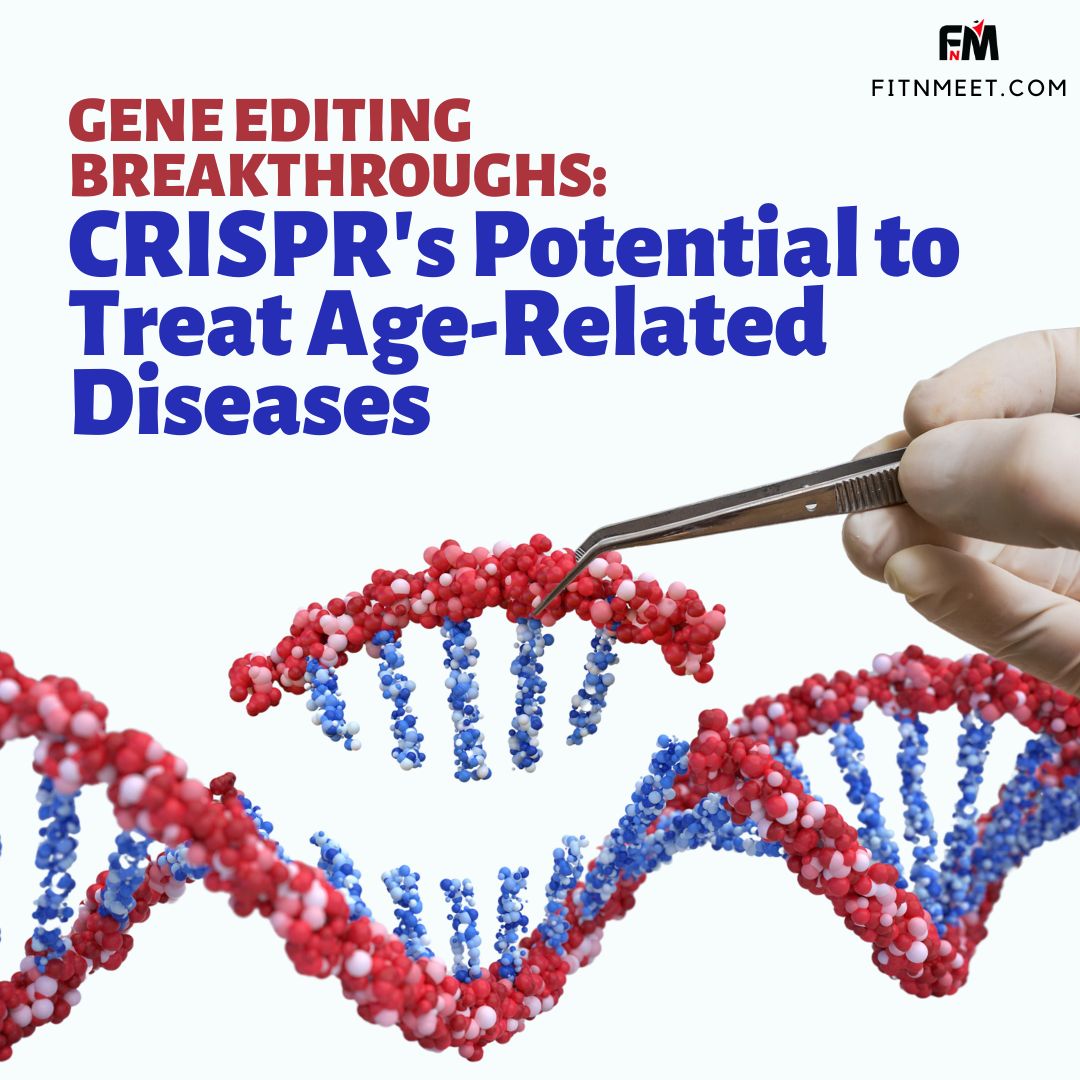
Greetings, fellow explorers of the future! Ever wonder if we could hit the pause button on aging? Well, buckle up because we’re about to dive into some mind-blowing developments. CRISPR, the gene-editing superstar, is shaking things up in the world of age-related diseases. Let’s explore how this groundbreaking technology might be the key to keeping us young and healthy longer.
precision medicine tailored to DNA is advancing rapidly.
discover your biological age to track your progress.
What’s the Deal with CRISPR?
CRISPR, short for “Clustered Regularly Interspaced Short Palindromic Repeats,” is a revolutionary gene-editing tool that allows scientists to modify DNA with high precision. Think of it as a pair of molecular scissors that can snip and edit DNA sequences at specific locations. This technology utilizes two main components: a guide RNA (gRNA) that directs the Cas9 enzyme to the target DNA sequence, and the Cas9 enzyme itself, which acts as the molecular scissors to cut the DNA.
Once the DNA is cut, the cell’s natural repair mechanisms kick in. Researchers can harness these processes to introduce desired modifications, such as correcting disease-causing mutations or deleting harmful gene sequences. This versatility positions CRISPR as a powerful tool for addressing genetic disorders and diseases with a strong genetic component.
telomere science for youthfulness explores another genetic aging factor.
The Age-Old Problem of Aging
Let’s face it, getting older isn’t always a picnic. With age comes wisdom, sure, but also a host of health issues we’d rather avoid, including heart disease, Alzheimer’s, and arthritis. These conditions have plagued humanity for centuries, and we’ve been fighting an uphill battle against them. But what if we could tackle these issues at their source? That’s where CRISPR steps in, offering a fresh approach to age-old problems.
CRISPR’s Potential: More Than Just Hype
Now, you might be thinking, “Sounds great, but is it for real?”
Here’s the deal:
- Proven Promise: CRISPR is not just theoretical – it’s already showing promise in labs worldwide. For instance, studies have demonstrated its effectiveness in targeting genes associated with various diseases.
- Early Results: Early trials are turning heads in the medical community, with significant advancements in treating genetic disorders and cancers.
However, it’s essential to keep in mind that CRISPR is a tool, and like any tool, its impact depends on how we use it.
Targeting Age-Related Diseases: The CRISPR Approach
So, how exactly could CRISPR help with age-related diseases? Let’s break it down:
Alzheimer’s Disease
CRISPR could target genes associated with Alzheimer’s risk, such as the APP gene, which is linked to the production of amyloid-beta, a protein that forms harmful plaques in the brain. By reducing the buildup of these proteins, CRISPR might help slow the progression of the disease.
Heart Disease
Gene editing could address genetic factors that increase heart disease risk. For example, researchers are exploring how CRISPR can modify genes involved in lipid metabolism to naturally lower cholesterol levels, potentially reducing the risk of heart attacks and strokes.
Cancer
CRISPR has shown promise in identifying and eliminating cancer cells more effectively. By enhancing the immune response against tumors, CRISPR could empower the body’s natural defenses to fight cancer more effectively. Clinical trials are already underway, demonstrating CRISPR’s potential in treating various cancers, including leukemia and solid tumors.
Arthritis
Gene editing could target inflammation at its genetic roots, offering new avenues for treating chronic pain conditions like arthritis. By modifying genes involved in inflammatory responses, CRISPR could potentially reduce pain and improve mobility for millions of people.
The Future’s Looking Bright (and Maybe a Bit Younger)
Here’s the exciting part: we’re just scratching the surface. As CRISPR technology evolves, so does its potential to tackle age-related diseases. We’re not just talking about treating symptoms anymore; we’re looking at the possibility of preventing these diseases before they even start.
Imagine a world where we could:
- Predict Genetic Risks: Identify genetic predispositions early in life.
- Make Precise Genetic Tweaks: Implement targeted interventions to prevent diseases.
- Boost Natural Repair Mechanisms: Enhance the body’s ability to heal itself.
Sounds like sci-fi, right? But it’s closer to reality than you might think.
3D printing organs for aging is another exciting frontier.
Real-World Applications: CRISPR in Action
Let’s look at some real examples of CRISPR making waves:
- Clinical Trials: Trials for sickle cell disease are showing promising results. Researchers are using CRISPR to modify patients’ blood cells, effectively curing the disease in some cases (Source).
- Muscular Dystrophy: Researchers are exploring CRISPR to combat muscular dystrophy by correcting mutations in the dystrophin gene, which is crucial for muscle function.
- Genetic Blindness: Ongoing work aims to use CRISPR against genetic forms of blindness, with early trials indicating success in restoring vision in animal models (Source).
These aren’t just lab experiments – they’re real steps toward transforming lives.
The Challenges: It’s Not All Smooth Sailing
Now, let’s not get ahead of ourselves. CRISPR is amazing, but it’s not without its challenges:
- Ethical Concerns: How far should we go in editing human DNA? The implications of germline editing, where changes could be passed to future generations, raise significant ethical questions. The potential for “designer babies” and genetic inequality is a pressing concern.
- Accuracy: Even tiny mistakes in gene editing could have significant consequences. Researchers are actively working on improving the precision of CRISPR to minimize off-target effects.
- Accessibility: Will these treatments be available to everyone? Ensuring equitable access to CRISPR therapies is crucial as we advance. Addressing disparities in healthcare access will be essential in realizing the full potential of this technology.
The Human Side of Gene Editing
Behind all the science and tech, there are real people hoping for breakthroughs. Imagine telling someone with a family history of Alzheimer’s that we might prevent it. Or giving hope to a child with a rare genetic disorder. That’s the true power of CRISPR – it’s not just about extending life, but improving its quality.
What’s Next for CRISPR and Age-Related Diseases?
So, where do we go from here?
- More Research: We’re still learning about the long-term effects of gene editing and its implications for human health.
- Refinement of Techniques: Making CRISPR even more precise and safe is a priority for researchers.
- Expanding Applications: Exploring new ways to use CRISPR against aging will be essential as we move forward.
The road ahead is long, but incredibly exciting.
Wrapping It Up: The CRISPR Promise
CRISPR’s potential to treat age-related diseases is more than just hype – it’s a glimpse into a future where we might outsmart aging. We’re not talking about living forever, but about living better, healthier lives. As we continue to unlock the secrets of our genes, who knows what other doors we might open?
FAQs
- What exactly is CRISPR?
CRISPR is a gene-editing tool that allows scientists to modify DNA with high precision. It’s like a genetic cut-and-paste tool. - Can CRISPR really stop aging?
CRISPR can’t stop aging entirely, but it has the potential to address many age-related diseases, potentially improving health in older age. - Is CRISPR being used in humans right now?
Yes, CRISPR is being used in clinical trials for various conditions, including some genetic disorders and certain types of cancer. - Are there any risks to using CRISPR?
Like any medical treatment, CRISPR comes with risks, including potential off-target effects. Research is ongoing to make it safer and more precise. - How soon could CRISPR treatments be widely available?
It’s hard to say exactly, but some CRISPR-based treatments could be available within the next 5-10 years, depending on research progress and regulatory approvals.
As we continue to explore the potential of CRISPR, we stand on the brink of a new era in medicine—one that promises not just to extend our lives but to enhance the quality of those lives. The journey of CRISPR and age-related diseases is just beginning, and it’s one heck of an exciting ride.