
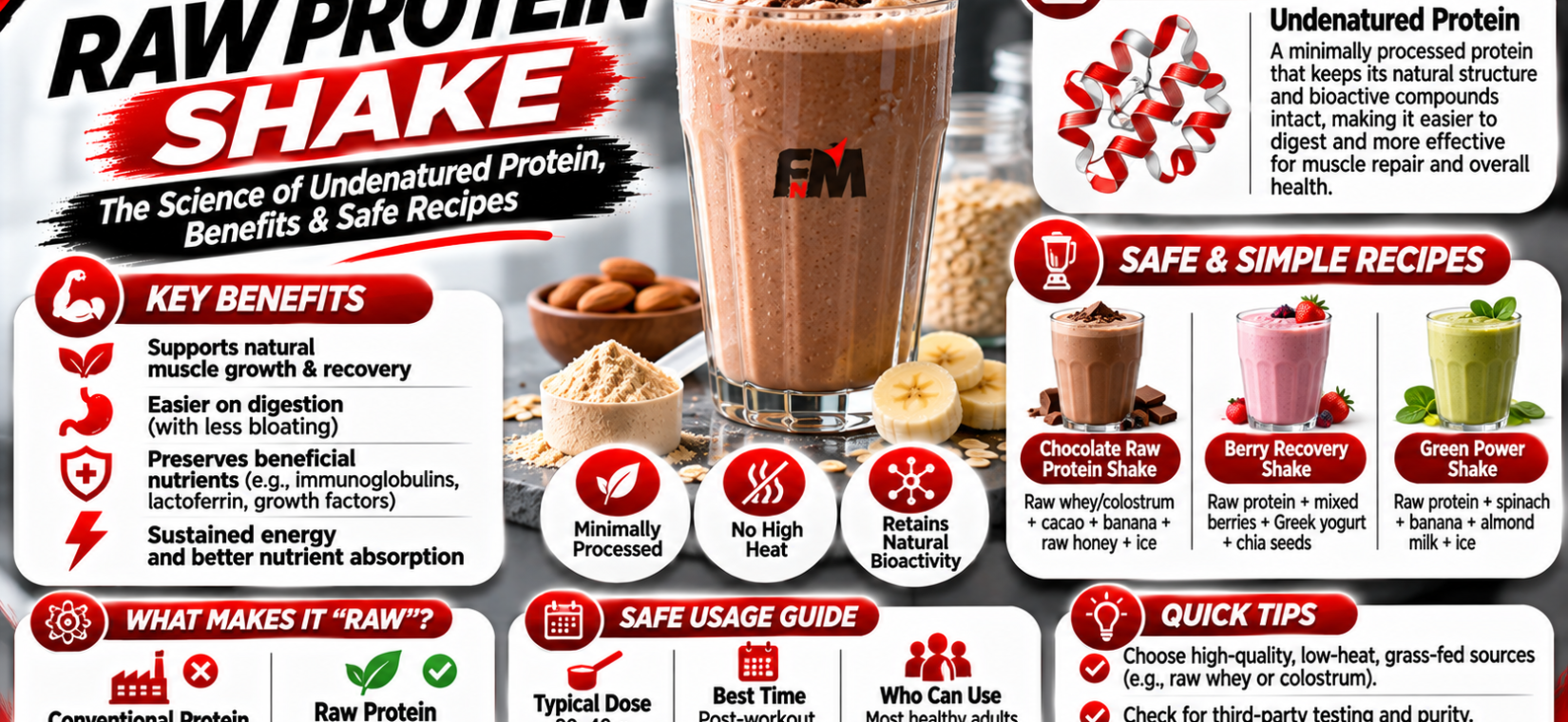
Raw protein shake is a protein shake made with minimally processed, unheated protein sources like raw hemp, sprouted rice, or unflavored pea protein. Fans choose raw to preserve natural enzymes and avoid denatured proteins. In practice, the body digests both raw and processed protein similarly, so raw is more a philosophy than a proven advantage.
What Is a Raw Protein Shake? (Mechanism)
The word “raw” on a protein product does not mean the powder was never heated — it means the protein was processed at low temperatures to preserve its native structure. To understand why that matters, consider what heat does to protein. Proteins are long chains folded into precise three-dimensional shapes, and those shapes determine function. When whey is exposed to high heat during processing (as in ion-exchange extraction or aggressive spray-drying), the chains unfold — denaturation. Denatured protein still provides amino acids for muscle building, but it loses the bioactive fractions: lactoferrin, immunoglobulins (IgG), alpha-lactalbumin, and glycomacropeptide, which have immune and gut-health functions beyond basic nutrition.
A raw protein shake is therefore defined by two things: a cold-processed, undenatured protein base (typically cold-microfiltered whey or minimally processed plant protein) and raw whole-food additions — uncooked fruits, vegetables, nuts, seeds, and oats — instead of artificial flavors, colors, and sweeteners. The mechanism of benefit is straightforward: preserving native protein structure retains the cysteine-rich fractions that serve as precursors for glutathione, the body’s master antioxidant, while whole-food ingredients contribute fiber, phytonutrients, and enzymes destroyed by heavy processing.
This is distinct from the “raw food” movement’s more extreme claims. A raw protein shake is not about eating raw eggs or raw milk — both carry real pathogen risks discussed below. It is about minimizing unnecessary processing: cold filtration instead of heat treatment, real vanilla or cocoa instead of artificial flavor systems, and dates or banana instead of sucralose. The background biochemistry of whey fractions is summarized on Wikipedia’s whey protein page.
What the Research Says
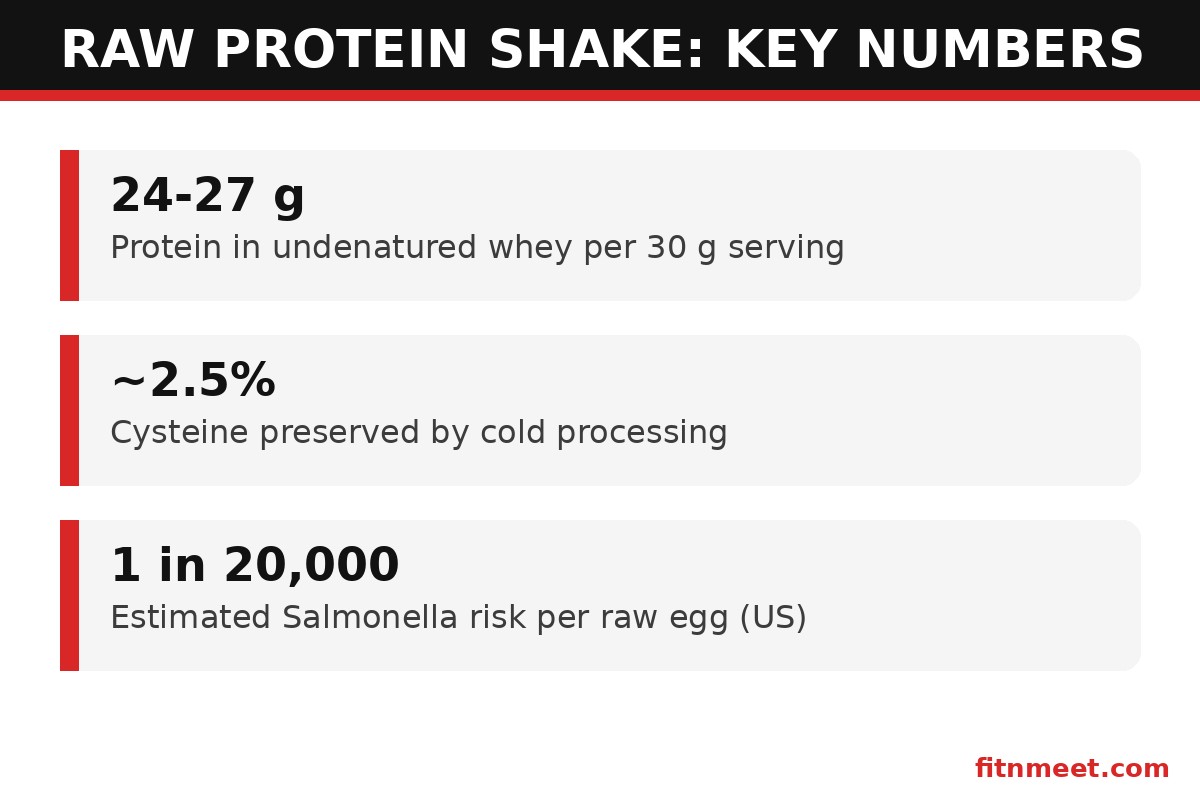
Study spotlight — Bounous et al., Clinical and Investigative Medicine: In trials of undenatured whey protein concentrate, supplementation raised tissue glutathione levels in participants — an effect attributed to the preserved cysteine content (about 2.5% of undenatured whey). Heat-denatured whey showed a weaker effect. Sample sizes were small (n = 10–20 per group), but the mechanism is biochemically consistent.
The glutathione finding is the most-cited scientific rationale for a raw protein shake. Glutathione is a tripeptide (glutamate-cysteine-glycine) whose synthesis is limited by cysteine availability, and undenatured whey is one of the richest dietary cysteine sources. A 2003 review in the Journal of the American College of Nutrition noted that whey protein’s immune-supporting effects in animal and small human studies tracked with its undenatured, cysteine-rich fractions rather than total protein content.
Study spotlight — whey vs casein, Boirie et al., Proceedings of the National Academy of Sciences (1997): In 16 young men, whey protein produced a faster, higher spike in muscle protein synthesis than casein after ingestion, driven by rapid amino acid appearance (leucine peaking within 60 minutes). This fast-digestion property applies to raw-style whey as well and underpins post-workout use.
On the whole-food side, the evidence for raw fruits, vegetables, nuts, and oats in shakes is the general whole-food literature: higher fiber intake (each raw-food shake adds roughly 5–10 g of fiber) is associated with better glycemic control and gut-microbiome diversity in large cohort studies. No trial has tested “raw protein shake” as a branded intervention — the science supports its components (undenatured whey, whole fruit, nuts, oats), not the label as magic.
Study spotlight — protein dose-response, Morton et al., British Journal of Sports Medicine (2018): A meta-analysis of 49 trials and 1,863 participants found protein supplementation augmented strength and fat-free mass gains from resistance training, with benefits plateauing around 1.6 g/kg/day total intake. A raw protein shake contributes 25–35 g toward that target like any quality shake.
Raw Protein Shake Benefits
A well-built raw protein shake offers layered benefits from its protein base and its whole-food ingredients. The undenatured protein delivers 24–27 g of complete protein per 30 g serving with a full essential amino acid profile, including roughly 2.5–3 g of leucine — the key trigger for muscle protein synthesis. Because cold processing preserves cysteine-rich fractions, the same serving supports glutathione synthesis more effectively than heat-denatured equivalents, a plausible (if modest) advantage for immune resilience during heavy training blocks.
The raw whole-food components add what powders cannot. A banana plus a cup of berries contributes roughly 5 g of fiber, 400–500 mg of potassium, and a spectrum of polyphenols. Two tablespoons of almond butter add 7 g of protein, 18 g of mostly monounsaturated fat, and vitamin E. Rolled oats contribute beta-glucan fiber linked to cholesterol management. Together, a raw protein shake becomes a genuine mini-meal of 400–550 calories with a balanced macro split — far more satiating than a water-mixed isolate shake of 120 calories.
Digestive tolerance is another practical benefit. Many lifters report less bloating with raw-style shakes, plausibly because they skip the sugar alcohols, gums (xanthan, guar), and artificial sweeteners common in standard powders — additives that cause GI distress in sensitive individuals. And for the ingredient-conscious, a raw protein shake has a label you can read: whey, banana, berries, almond butter, oats. Five ingredients instead of twenty-five.
How a Raw Protein Shake Works in the Body
Digestion of a raw protein shake proceeds in stages. Within 15–30 minutes of drinking, the liquid whey fraction empties from the stomach rapidly, delivering amino acids — especially leucine — to the bloodstream and triggering muscle protein synthesis via the mTOR pathway. The whole-food components (oats, nut butter, fruit fiber) slow overall gastric emptying, extending amino acid delivery over 2–3 hours and blunting the blood-sugar response that a pure-sugar shake would cause.
The preserved bioactive fractions take a different route. Lactoferrin and immunoglobulins partially survive digestion and interact with gut-associated lymphoid tissue, the immune system’s largest outpost. Cysteine from undenatured whey enters cells and feeds glutathione synthesis, supporting antioxidant defenses — particularly relevant during high-volume training, when oxidative stress rises. Meanwhile, the 5–10 g of fiber feeds colonic bacteria, producing short-chain fatty acids like butyrate that nourish the gut lining.
Net effect: a raw protein shake functions as a fast-plus-slow protein delivery system wrapped in whole-food micronutrients. It is not “more anabolic” than an equivalent standard shake in any dramatic sense — the 1.6 g/kg/day total-protein rule from the Morton meta-analysis still governs results. The advantage is nutritional breadth and tolerance, not a secret muscle-building mechanism. The NIH Office of Dietary Supplements fact sheet on exercise performance covers protein’s evidence base in detail.
Raw Protein Shake Dosage and Recipes
Protocol-style dosing for a raw protein shake:
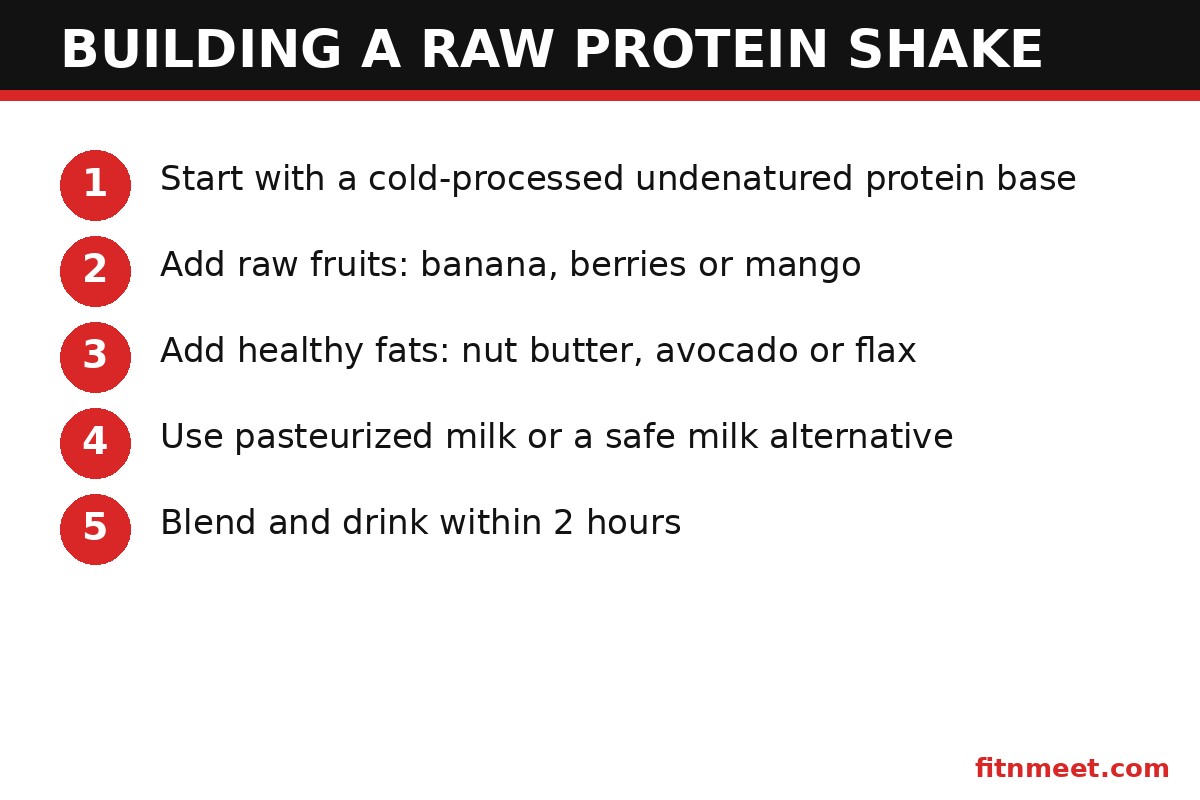
- Choose your protein base (25–35 g protein target). Use 1 scoop (28–35 g) of cold-processed undenatured whey or a minimally processed plant blend. Check the label for “cold-microfiltered” or “undenatured” — if it lists only “whey protein concentrate” with no processing detail, assume standard heat processing.
- Add raw fruit (1–2 servings). One banana (105 calories, 27 g carbs) plus one cup of frozen berries (85 calories, 4 g fiber) is the classic base. Frozen fruit also thickens the shake without ice.
- Add a fat source (150–200 calories). Two tablespoons of almond or peanut butter, a quarter avocado, or one tablespoon of flaxseed. Fat slows digestion and adds staying power.
- Add oats for carbs (optional, training days). Half a cup of rolled oats adds 150 calories, 27 g carbs, and 4 g fiber — ideal for post-workout glycogen replenishment.
- Choose a safe liquid (300–400 ml). Pasteurized milk, or oat/almond milk for dairy-free. Blend 45–60 seconds and drink within 2 hours (or refrigerate up to 24 hours).
Sample recipe — classic raw protein shake: 1 scoop undenatured whey vanilla, 1 banana, 1 cup frozen mixed berries, 2 tbsp almond butter, ½ cup rolled oats, 350 ml pasteurized milk. Totals: roughly 640 calories, 45 g protein, 70 g carbs, 18 g fat, 12 g fiber. Adjust portions to your calorie target — drop the oats and halve the nut butter for a 400-calorie version.
Frequency: 1 serving daily fits most training diets, typically post-workout or as breakfast. Two servings work during aggressive muscle-gain phases if whole-food protein falls short. Quality undenatured bases are available alongside conventional options in the FitnMeet protein collection, including whey protein isolate for those prioritizing protein purity.
Side Effects and Safety
A raw protein shake is safe for most healthy people, but the “raw” concept has sharp edges that demand respect. Raw eggs are the classic hazard: the estimated Salmonella contamination rate is about 1 in 20,000 eggs in the US — low per egg, but meaningful across daily use, and Salmonella from eggs can cause severe illness. There is no nutritional reason to add raw eggs to a shake when pasteurized egg-white protein or whey exists. Skip them.
Raw (unpasteurized) milk is the second hazard. Between 1998 and 2018, the CDC recorded 202 outbreaks linked to raw milk, causing thousands of illnesses from Listeria, E. coli, and Campylobacter — pathogens that pasteurization reliably kills while reducing nutrient content negligibly. A raw protein shake should use pasteurized milk; “raw” refers to minimal processing of the protein and produce, not to skipping food-safety pasteurization. The FDA details these risks on its raw milk dangers page.
Standard shake cautions still apply: whey can cause bloating or acne in dairy-sensitive individuals; very high protein intakes (above 2.5 g/kg/day habitually) are unnecessary for most and can displace other nutrients; and people with kidney disease should moderate protein under medical guidance. Those managing training nutrition more broadly can explore the FitnMeet health support range.
Raw Protein Shake vs Alternatives
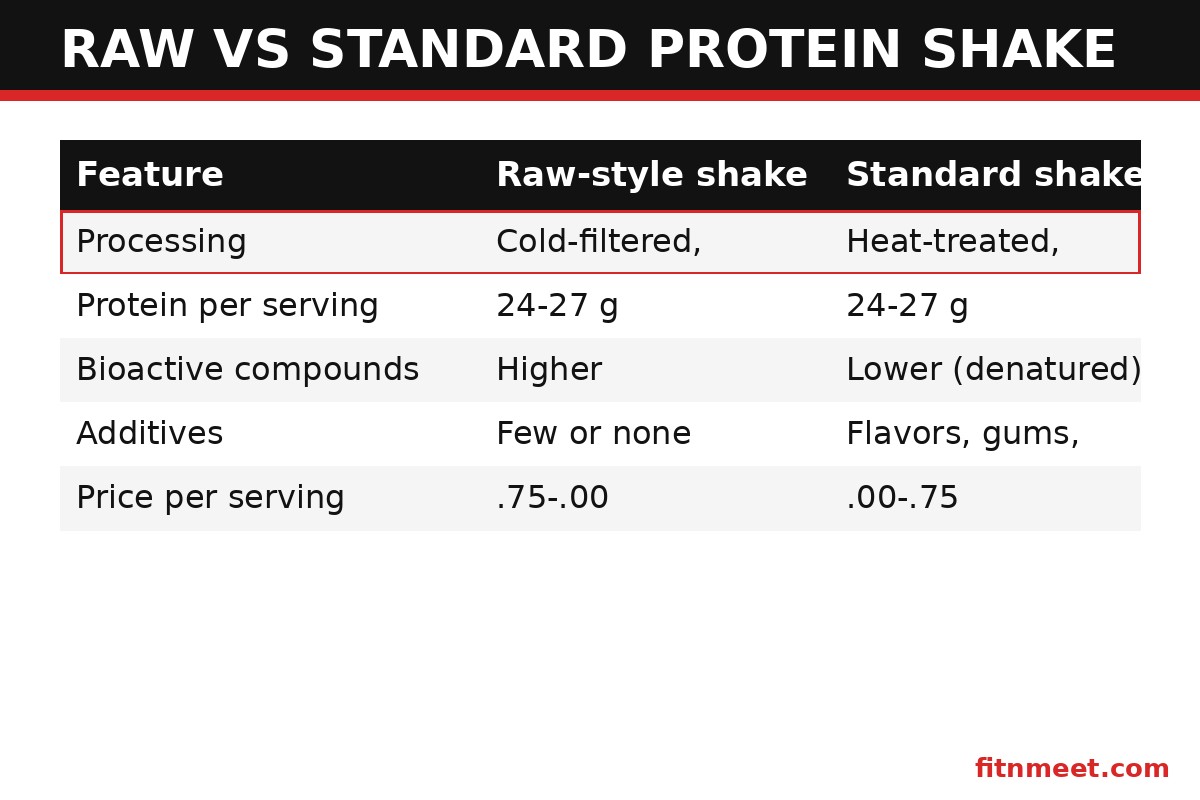
| Feature | Raw protein shake | Standard flavored shake | Whole-food meal |
|---|---|---|---|
| Protein per serving | 25–35 g | 24–30 g | 30–50 g |
| Processing | Cold-filtered, minimal | Heat-treated, instantized | None (home cooking) |
| Bioactive fractions | Preserved | Mostly denatured | N/A |
| Fiber | 5–12 g | 1–3 g | 8–15 g |
| Prep time | 3–5 min | 1 min | 20–40 min |
| Cost per serving | $1.75–$3.00 | $1.00–$1.75 | $3.00–$6.00 |
| Best for | Daily driver | Budget, travel | Maximum nutrition |
The honest ranking: a whole-food meal beats any shake nutritionally, a raw protein shake is the best shake format for daily use, and a standard shake wins on cost and convenience. Most successful diets use all three — raw protein shake as the daily workhorse, standard shakes for travel, whole-food meals as the foundation. More evidence-based explainers live in our nutrition section.
Frequently Asked Questions
What is a raw protein shake?
A raw protein shake is a protein shake made with minimally processed ingredients: a cold-processed, undenatured protein powder blended with raw whole foods like fruit, nut butter, and oats instead of artificial flavors and sweeteners. It preserves heat-sensitive bioactive compounds such as lactoferrin and immunoglobulins.
Is a raw protein shake better than a regular protein shake?
A raw protein shake offers better nutritional breadth: preserved bioactive whey fractions, 5 to 12 g of fiber from whole foods, and no artificial additives. For pure muscle building, research shows total daily protein (about 1.6 g per kg) matters more than the shake type. The raw version wins on overall nutrition quality, not on dramatically greater muscle gains.
What does undenatured protein mean?
Undenatured protein retains its natural three-dimensional structure because it was processed at low temperatures (cold microfiltration) rather than high heat. This preserves bioactive fractions like lactoferrin, immunoglobulins, and cysteine-rich proteins that support glutathione production. Denatured protein still provides complete amino acids but loses these extra functional compounds.
Can I put raw eggs in a protein shake?
You should not put raw eggs in a protein shake. Raw eggs carry a Salmonella risk of roughly 1 in 20,000 eggs, and offer no advantage over pasteurized egg-white protein or whey. Use pasteurized liquid egg whites if you want egg protein in a shake.
Is raw milk safe in a protein shake?
No, raw (unpasteurized) milk is not safe. The CDC recorded 202 raw-milk-linked outbreaks between 1998 and 2018, causing thousands of illnesses. Pasteurization kills pathogens with negligible nutrient loss. Use pasteurized milk or a plant-based alternative in your raw protein shake.
How many calories are in a raw protein shake?
A typical raw protein shake contains 400 to 650 calories depending on ingredients: about 120 to 150 from protein powder, 100 to 200 from fruit, 150 to 200 from nut butter, and optionally 150 from oats. Adjust portions to fit your daily calorie target.
How often should I drink a raw protein shake?
One raw protein shake per day suits most active people, typically post-workout or as breakfast. Two daily servings can help during muscle-gain phases if whole-food protein falls short. Whole-food meals should still provide the majority of your daily protein.
Conclusion
The science gives the raw protein shake a qualified endorsement: undenatured whey genuinely preserves cysteine-rich fractions that support glutathione synthesis, and whole-food ingredients add fiber and micronutrients no powder can match. But the research also sets boundaries — total daily protein near 1.6 g/kg drives muscle outcomes regardless of shake style, and “raw” never justifies raw eggs or raw milk, whose pathogen risks are documented in hundreds of CDC-recorded outbreaks. Build your shake around cold-processed protein, real fruit, nuts, and oats, keep everything else pasteurized, and you have a daily driver worth keeping.
For evidence-led protein choices, browse FitnMeet’s protein range — compare processing methods and ingredient lists, and choose the base your raw protein shake deserves.
This article is for informational purposes only and is not medical advice. Consult a healthcare professional before starting any supplement.