
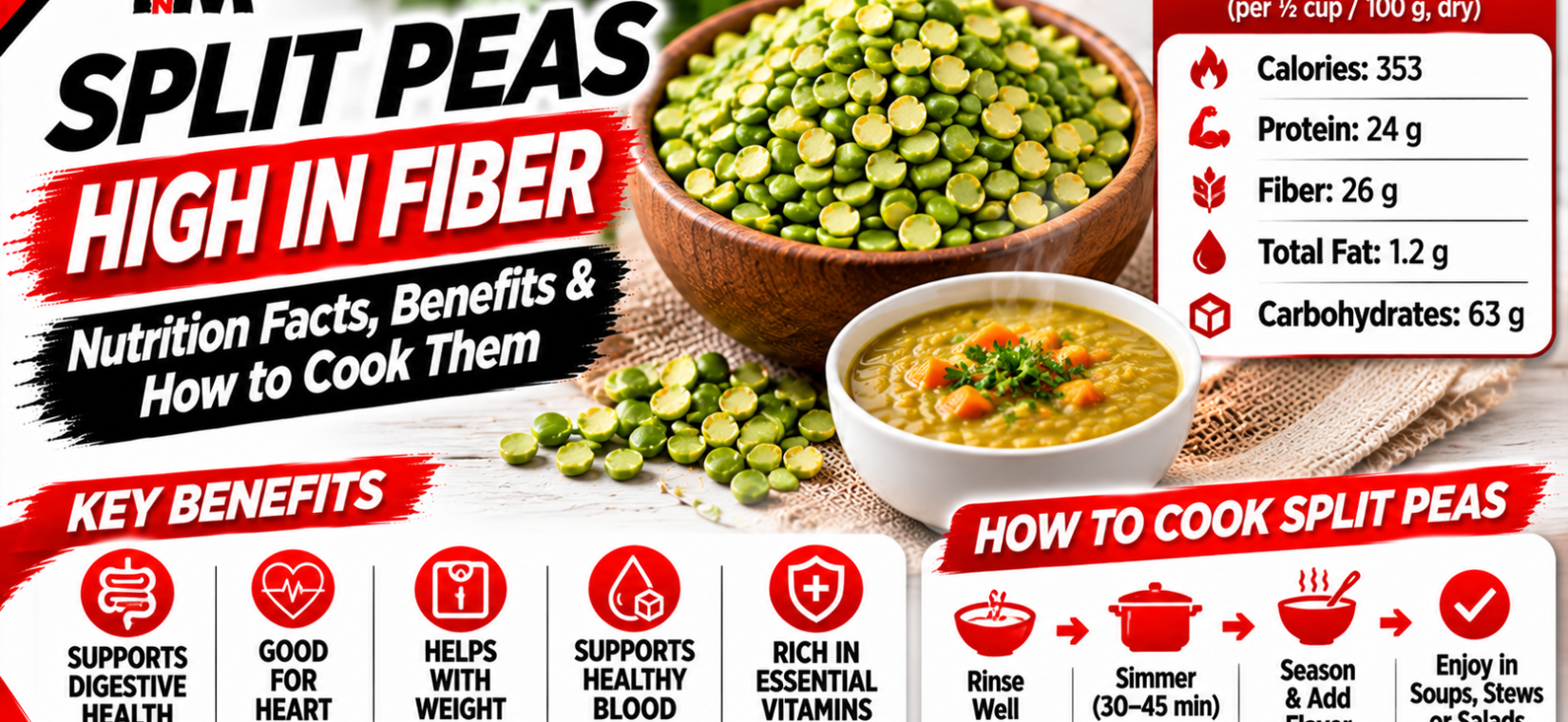
Split peas high in fiber are dried peas with about 16 grams of fiber per cooked cup, among the highest of any legume. That fiber supports digestion, steady blood sugar, and satiety. Split peas high in fiber also deliver around 16 grams of plant protein per cup, making them a cheap, filling base for soups and stews.
16.3 g fiber per cooked cup · 58% DV in one serving · 16 g protein for 231 calories · $0.15 approximate cost per serving
Key Stats: Split Pea Fiber at a Glance
16.3 g
Dietary fiber per cooked cup (198 g). USDA data puts split peas among the very highest-fiber legumes — a single serving of split peas high in fiber covers more than half the 28 g daily value for fiber recommended on the FDA’s Nutrition Facts label.
2×
More fiber per cup than brown rice. A cup of cooked brown rice offers about 3.5 g of fiber; a cup of split peas high in fiber delivers roughly four to five times that. When people ask about split peas high in fiber, the comparison to everyday staples makes the answer obvious.
32
Estimated glycemic index. Split peas high in fiber rank low on the glycemic index (around 25–32 in published tables), meaning their carbohydrates digest slowly — a direct consequence of their dense fiber and resistant-starch content. Low-GI foods produce smaller blood-sugar spikes than refined grains.
What Are Split Peas?
Split peas are field peas (Pisum sativum) that have been dried, peeled, and split in half along their natural seam. They come in two varieties — green and yellow — that are nutritionally nearly identical. Unlike dried beans, split peas cook relatively quickly and need no soaking, which is one reason split-pea soup became a staple comfort food across Northern Europe and North America. You can read the full botanical background on Wikipedia’s split pea page.
What makes split peas high in fiber is their structure: the seed coat and cotyledon are rich in both soluble and insoluble fiber. Soluble fiber dissolves into a gel in the digestive tract, slowing digestion and feeding beneficial gut bacteria. Insoluble fiber adds bulk and keeps things moving. Split peas high in fiber deliver a meaningful dose of both types in every serving, which is why dietitians consistently rank them near the top of high-fiber food lists. A deeper explainer on fiber types is available on Wikipedia’s dietary fiber page.
Beyond fiber, a cup of cooked split peas high in fiber provides about 16 grams of protein, significant potassium (around 710 mg), folate (about 127 mcg), iron, magnesium, and B vitamins — all for 231 calories and roughly 0.8 grams of fat. For lifters and active people reading FitnMeet’s nutrition articles, split peas high in fiber are one of the rare foods that simultaneously check the high-protein and high-fiber boxes without a high calorie cost.
Benefits of Split Peas High in Fiber
Digestive health and regularity
16.3 g of fiber per cup is the headline number, and regularity is its most immediate payoff. Insoluble fiber adds stool bulk and speeds transit time, while soluble fiber is fermented by gut bacteria into short-chain fatty acids like butyrate, which nourish the colon lining. Populations with higher fiber intakes consistently show lower rates of constipation and diverticular disease in observational research.
Blood-sugar control
The viscous soluble fiber in split peas high in fiber slows carbohydrate absorption, flattening the post-meal blood-sugar curve. With a glycemic index around 32, split peas high in fiber are a genuinely low-GI carbohydrate source — useful context for anyone managing energy levels through the day or supporting healthy blood-sugar control alongside training. Pairing split peas high in fiber with protein further blunts glycemic response.
Heart health
Soluble fiber binds bile acids in the gut, prompting the liver to pull cholesterol from the blood to make more — a well-established mechanism behind fiber’s cholesterol-lowering effect. Meta-analyses of fiber trials show that each additional 10 g of daily fiber is associated with meaningful reductions in LDL cholesterol and coronary risk. A diet featuring split peas high in fiber is an easy way to close the gap, since most adults get only about 15 g of fiber daily against the 28 g target.
Satiety and weight management
Fiber slows gastric emptying, which keeps you fuller longer on fewer calories. At 231 calories with 16 g each of fiber and protein, a cup of split peas high in fiber delivers exceptional satiety per calorie — the combination of protein plus fiber is the most filling macronutrient pairing studied. For anyone in a fat-loss phase, swapping a refined-carb side for split peas high in fiber is a high-leverage change. FitnMeet’s weight-loss collection covers the supplement side of the same goal.
Gut microbiome support
The fermentable fiber and resistant starch in split peas high in fiber act as prebiotics — food for beneficial gut bacteria. Greater microbial diversity is associated with better metabolic health in a growing body of research, and legumes are among the most potent dietary drivers of that diversity. For more science-backed reads on digestion and gut-friendly eating, explore the FitnMeet health articles alongside these split peas high in fiber ideas.
How Split Pea Fiber Works in Your Body
Understanding the mechanism helps you get more from the food. When you eat split peas high in fiber, the soluble fiber fraction forms a viscous gel in the stomach and small intestine. This gel does three things: it slows the rate at which food leaves the stomach (satiety), it slows glucose absorption into the bloodstream (glycemic control), and it traps bile acids, carrying them out in stool so the liver must use circulating cholesterol to replace them (cholesterol lowering).
The insoluble fiber fraction mostly passes through intact, adding bulk and mechanically stimulating intestinal movement. Then, in the large intestine, gut bacteria ferment the remaining soluble fiber and resistant starch, producing short-chain fatty acids. Butyrate, the most studied of these, is the preferred fuel of colon cells and has anti-inflammatory effects in the gut lining. This fermentation is also what produces gas — the well-known social side effect of suddenly eating a lot of legumes, covered in the side-effects section below.
Building a high-fiber meal plan around training? Browse FitnMeet’s shop for protein and recovery staples that pair perfectly with fiber-rich whole foods like split peas high in fiber.
How Much to Eat: Serving Guide
Use this checklist to add split peas to your diet without digestive drama:
- ☐ Start with half a cup cooked (about 8 g fiber) if your current fiber intake is low. Jumping straight to a full cup can cause bloating.
- ☐ Drink extra water. Fiber absorbs water — increase fluid intake as fiber intake rises, aiming for at least 8 cups of water daily.
- ☐ Cook them thoroughly. Simmer split peas high in fiber 30–45 minutes until completely soft. Undercooked legumes are harder to digest. No soaking required.
- ☐ Rinse canned or dried peas before cooking to wash away surface starches that contribute to gas.
- ☐ Eat them 3–4 times per week to steadily raise your average fiber intake toward the 28 g daily target.
- ☐ Try yellow split peas high in fiber as dal. They cook into the creamy Indian lentil dish dal in about 30 minutes — an easy, high-protein, high-fiber meal.
- ☐ Batch-cook soup. A big pot of split-pea soup keeps 4–5 days refrigerated and freezes well; one bowl delivers roughly half your daily fiber.
One full cup of cooked split peas high in fiber content gives you 16.3 g fiber, 16.3 g protein, 41.5 g carbohydrates, 0.8 g fat, 710 mg potassium, and 127 mcg folate for 231 calories (USDA FoodData Central values). It’s difficult to find a better nutritional bargain per dollar — dried split peas typically cost well under $2 per pound.
Split Peas vs Other High-Fiber Legumes
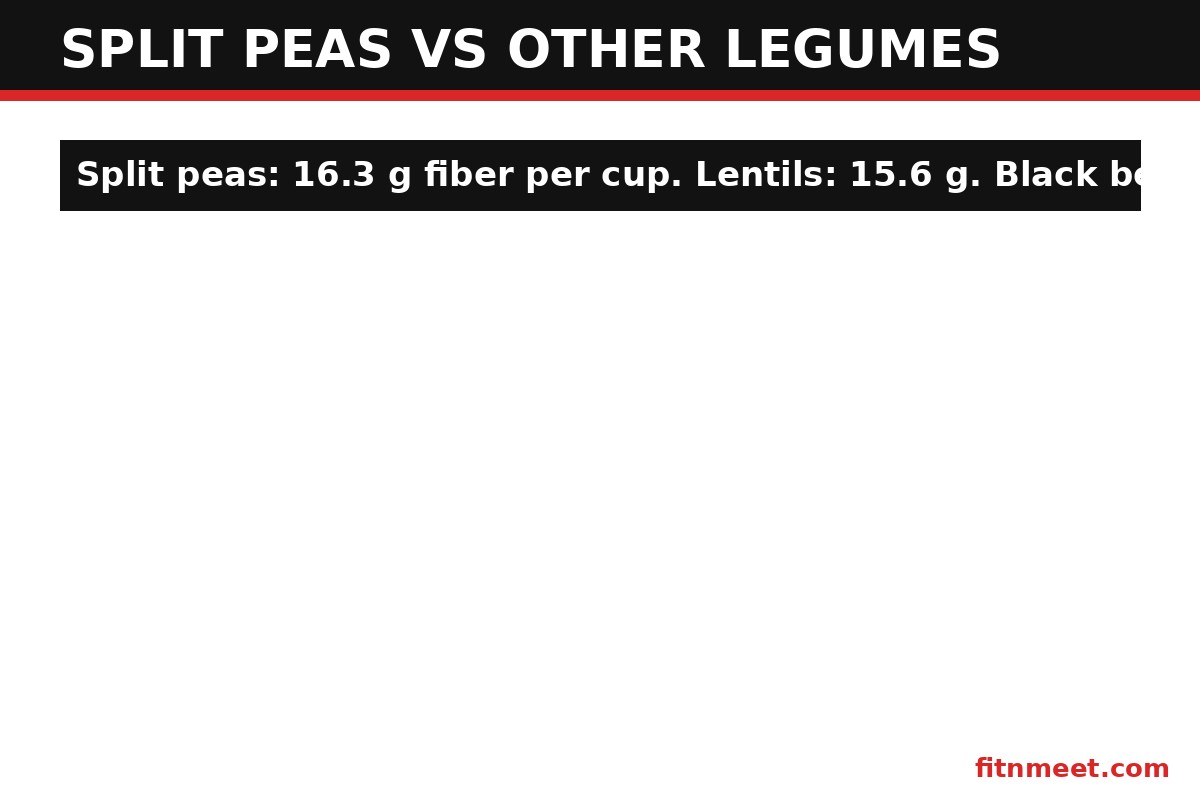
| Food (1 cup cooked) | Fiber (g) | Protein (g) | Calories | Cook time |
|---|---|---|---|---|
| Split peas | 16.3 | 16.3 | 231 | 30–45 min, no soak |
| Lentils | 15.6 | 17.9 | 230 | 20–30 min, no soak |
| Black beans | 15.0 | 15.2 | 227 | 60–90 min + soak |
| Chickpeas | 12.5 | 14.5 | 269 | 60–90 min + soak |
| Kidney beans | 13.4 | 13.4 | 225 | 60–90 min + soak |
Split peas high in fiber win on fiber per cup, require no soaking, and cook faster than most beans — the practical trifecta. Lentils are the closest rival and an excellent alternative if you want variety. For more legume-centered eating ideas, browse FitnMeet’s blog for high-protein meal guides.
Side Effects and Digestive Adjustment
Split peas high in fiber are safe for nearly everyone, but their high fiber content demands respect during the adjustment period:
- Gas and bloating. The fermentable fiber that feeds good gut bacteria also produces gas. This is normal and typically fades within 1–2 weeks of regular consumption as your microbiome adapts. Starting with half-cup servings minimizes it.
- Temporary digestive discomfort. Jumping from 15 g to 35 g of daily fiber overnight can cause cramping. Increase gradually — add about 5 g per week.
- Hydration matters. Fiber without water can worsen constipation rather than relieve it. Increase fluids in parallel with fiber.
- Medication timing. Very high fiber meals can slightly slow absorption of some medications. If you take daily prescriptions, keep meal timing consistent and mention major diet changes to your pharmacist.
- Rare pea allergy. True pea allergy exists but is uncommon. Anyone with a known legume allergy should introduce split peas high in fiber cautiously.
Alternatives to Split Peas
If split peas high in fiber aren’t your thing, several foods deliver comparable fiber. Lentils (15.6 g fiber per cup) are the closest match with a faster cook time. Black beans (15 g) work better in Mexican-style dishes. Chia seeds pack about 10 g of fiber per ounce — the most fiber-dense option, ideal for smoothies. Raspberries offer 8 g per cup for a fruit-based source. And oats provide 4 g per cooked cup plus beta-glucan soluble fiber. Rotating among these keeps your gut bacteria diverse and your meals interesting — and if you want to support the nutrition side of training, FitnMeet’s health support collection is worth a look.
This article is for informational purposes only and is not medical advice. Consult a healthcare professional before starting any supplement or exercise program.
Frequently Asked Questions
Are split peas high in fiber?
Yes. One cooked cup (198 g) of split peas contains about 16.3 grams of dietary fiber, roughly 58 percent of the 28-gram daily value. That makes split peas one of the highest-fiber foods available, ahead of most beans, lentils, and all whole grains per serving.
How much fiber is in a cup of split pea soup?
A typical one-cup serving of homemade split pea soup contains 8 to 12 grams of fiber, depending on how concentrated the recipe is. Thicker soups with more peas per cup land at the higher end of that range.
Are green or yellow split peas higher in fiber?
Green and yellow split peas are nutritionally almost identical, each providing about 16 grams of fiber per cooked cup. Choose based on flavor and recipe tradition rather than nutrition differences.
Do split peas cause gas?
They can, especially when you first add them to your diet. The fermentable fiber in split peas is broken down by gut bacteria, producing gas as a byproduct. Starting with half-cup servings and increasing gradually over one to two weeks usually resolves the issue.
Are split peas good for weight loss?
Yes. With 16 grams each of fiber and protein for only 231 calories per cup, split peas are among the most filling foods per calorie. The fiber-protein combination slows digestion and keeps you full longer, which supports eating less overall.
How long do split peas take to cook?
Split peas need 30 to 45 minutes of simmering until soft, and unlike dried beans they require no soaking. Yellow split peas tend to break down faster, making them ideal for creamy soups and dal.
Are split peas a complete protein?
Split peas are rich in protein (16 g per cup) but, like most legumes, are lower in the amino acid methionine. Pairing them with grains such as rice or bread over the course of the day provides a complete amino acid profile.
Conclusion
Split peas high in fiber content is no exaggeration: 16.3 grams per cup puts them at the top of the legume charts, ahead of lentils and beans, with 16 grams of protein riding along for just 231 calories. They’re cheap, they need no soaking, and they cook into soups, dals, and stews that keep you full for hours. Start with half-cup servings, drink your water, and let your gut adapt — then make split peas high in fiber a weekly staple. Want to build the rest of your nutrition around training? Explore FitnMeet’s shop for protein and performance essentials.