
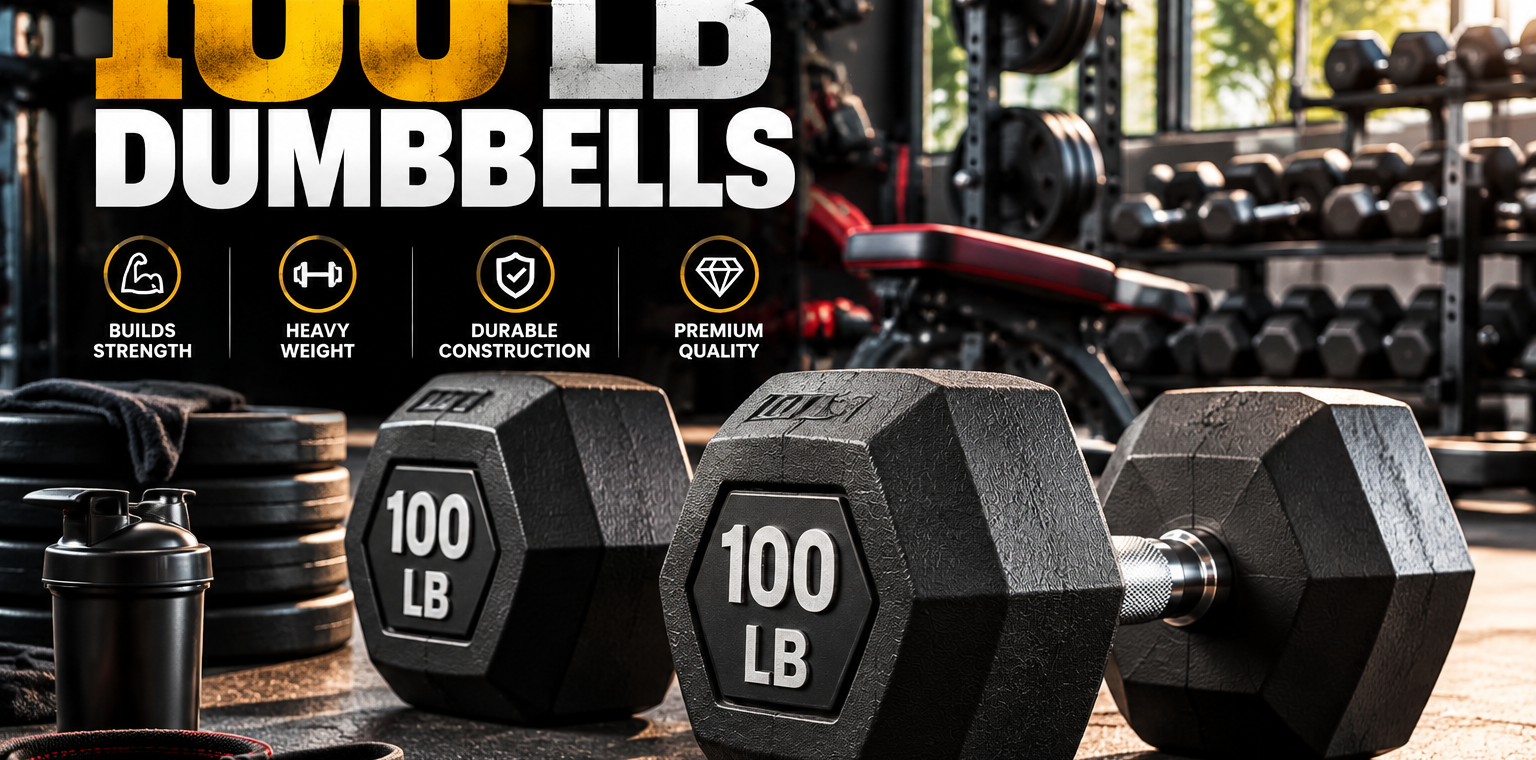
100 lb dumbbells are heavy fixed or adjustable dumbbells used by advanced lifters for building maximal strength and muscle mass. A pair of 100 lb dumbbells unlocks heavy dumbbell bench presses, rows, Romanian deadlifts, and farmer’s carries — but they demand a proper rack, safety setup, and a structured progression plan before you touch them.
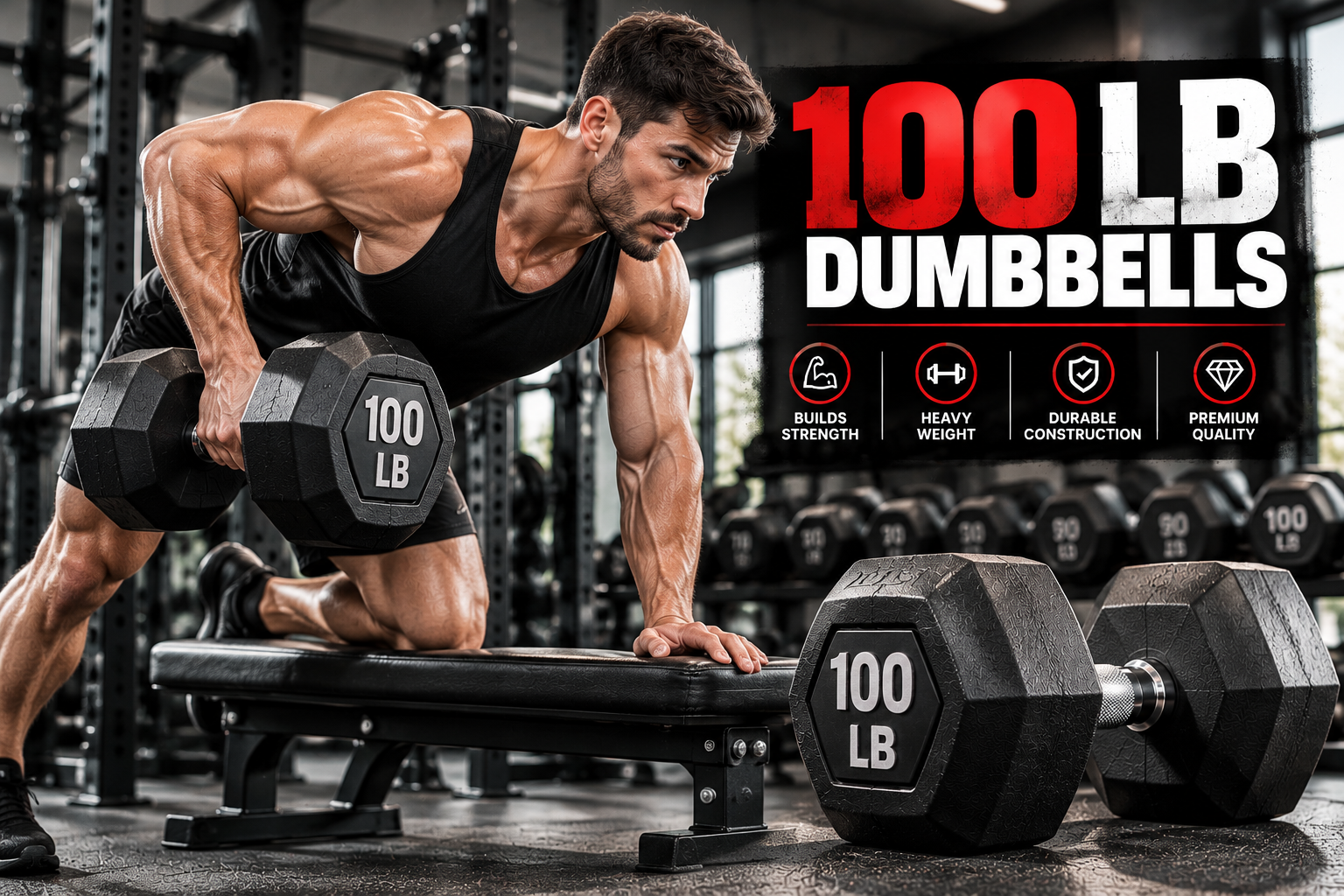
There is a moment in every serious lifter’s journey when the dumbbell rack runs out. You have pressed the 80s for clean sets of 10, the 90s are moving, and you are eyeing the big end of the rack. 100 lb dumbbells represent a genuine milestone — pressing them for reps puts you in rare company in any commercial gym. But heavy dumbbells punish sloppy setup, weak stabilizers, and ego lifting in ways a barbell never will.
This advanced guide covers the quick verdict, the mechanisms that make heavy dumbbell work uniquely effective, advanced benefits, complete training protocols with timing and cycling, dosage ranges (sets, reps, frequency), safety and interactions, head-to-head comparisons, and FAQs. No fluff — just the programming and preparation that separate a milestone from a hospital visit.
100 lb Dumbbells: The Quick Answer
Should you train with 100 lb dumbbells? If you can dumbbell bench press 80 lb dumbbells for 8 clean reps with full control, yes — you are ready to start working the 100s into your programming. If you cannot, the 100s are a goal to build toward over the next 6–12 months, not equipment to buy tomorrow.
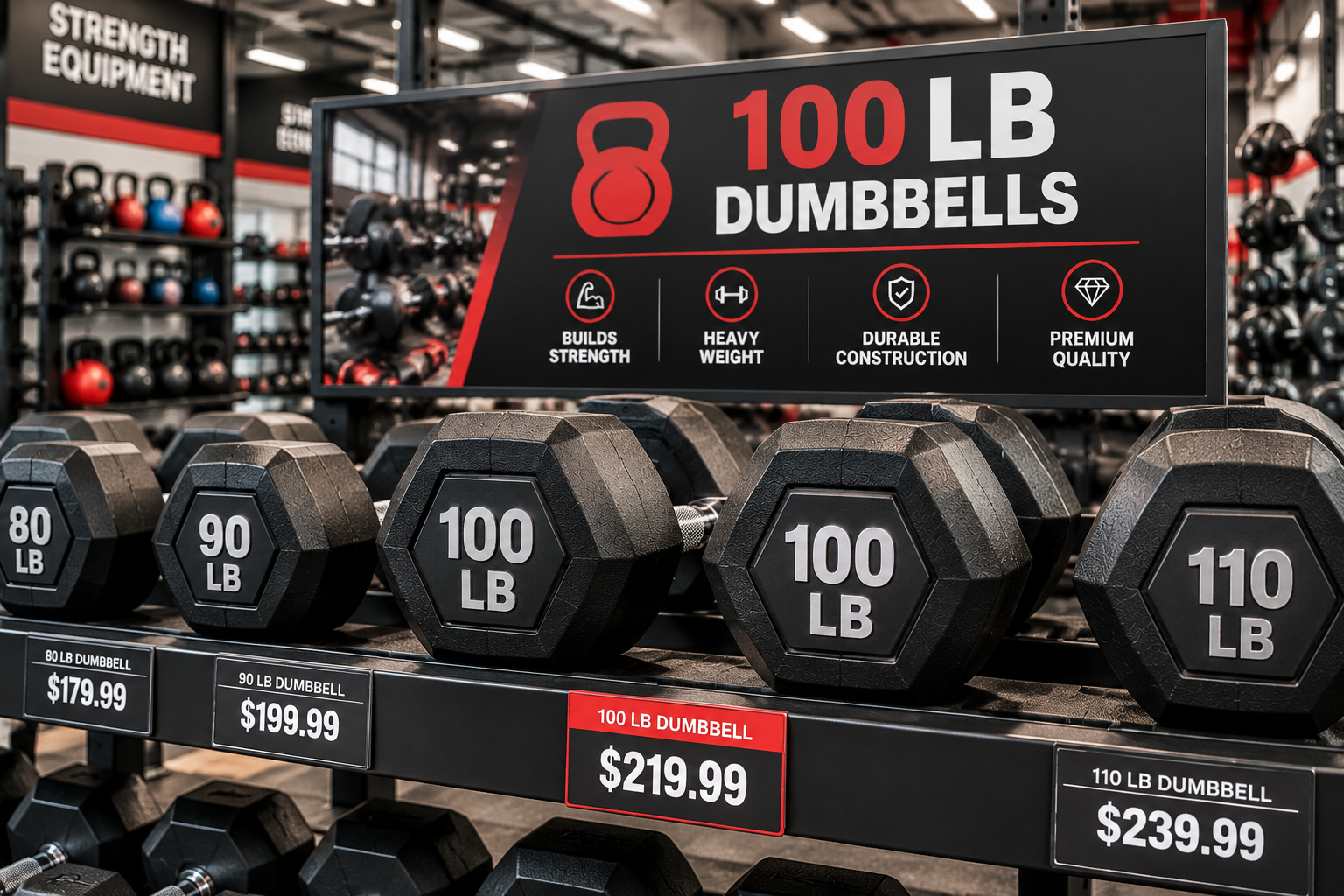
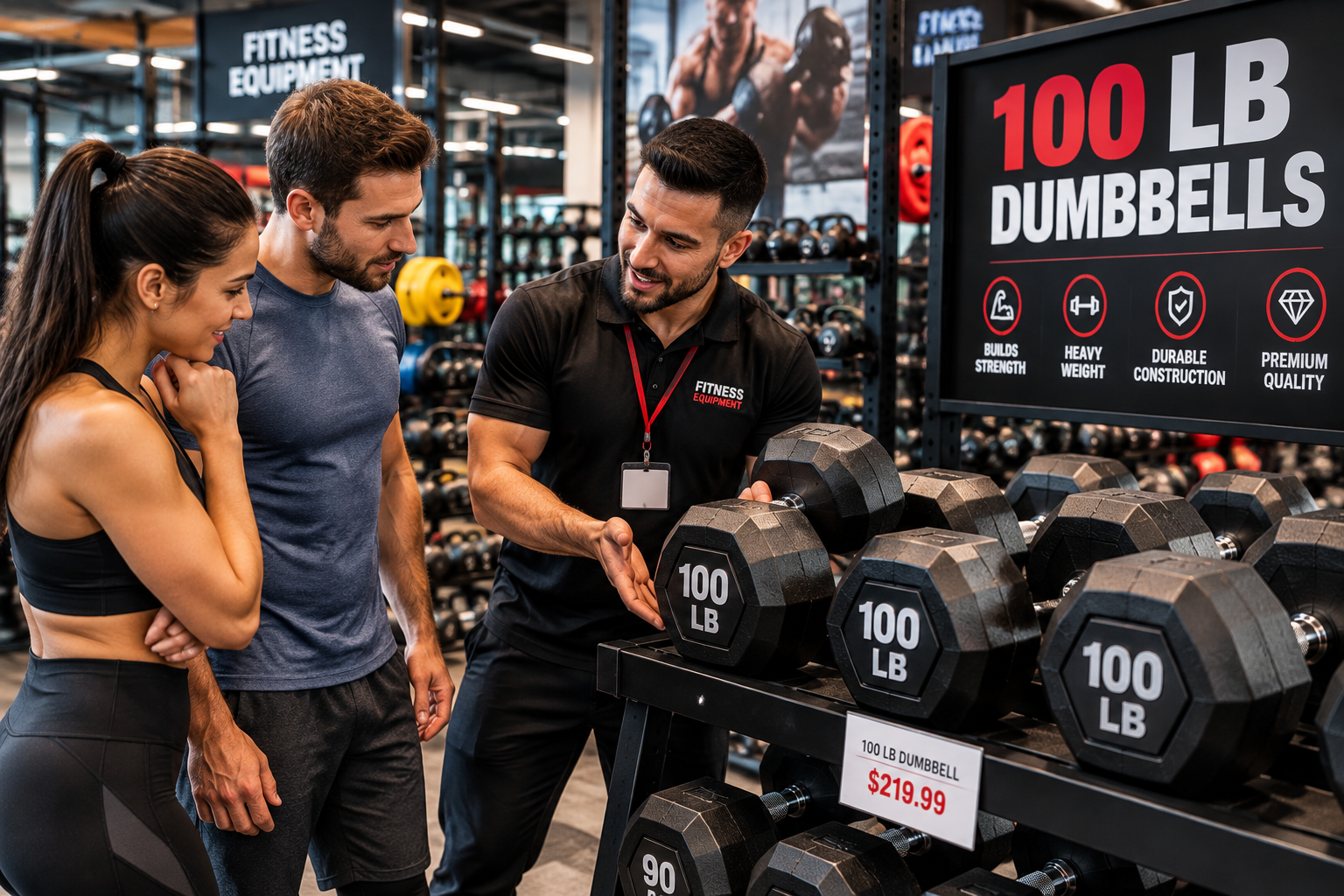
A pair of 100 lb dumbbells costs roughly $300–$600 for rubber hex fixed dumbbells, or $500–$900+ for a single adjustable dumbbell that reaches 100+ lbs per hand (high-end adjustable models run $700–$1,000 per pair). You also need a rack rated for the weight, 3–4 feet of clear floor space per side for safe bailouts, and ideally a spotter or power-rack-style safety setup for pressing movements.
The honest quick answer on 100 lb dumbbells: they are the most versatile heavy implement an advanced home-gym lifter can own. One pair covers heavy pressing, rowing, hinging, carrying, and unilateral leg work. But they are unforgiving — every protocol in this guide assumes you already have years of lifting experience and respect for load management.
Mechanisms: Why Heavy Dumbbells Work Differently
Heavy dumbbell training is not just “barbell training with two bars.” The mechanics of 100 lb dumbbells create distinct physiological demands:
Independent limb loading. Each arm moves its own 100 lb implement with no shared bar to compensate. This exposes and corrects strength asymmetries — most lifters discover a 5–10% side-to-side difference the first time they press heavy dumbbells. Over a training block, 100 lb dumbbells force the weaker side to catch up, which transfers directly to barbell strength.
Stabilizer recruitment. Without a fixed bar path, the shoulder stabilizers (rotator cuff, serratus anterior) and core musculature work significantly harder to control two independent masses. EMG research on dumbbell versus barbell pressing consistently shows higher stabilizer activation with dumbbells. At 100 lbs per hand, that stabilization demand is enormous — which is precisely why 100 lb dumbbells build the kind of “usable” strength that transfers to sports and real-world tasks.
Greater range of motion. Dumbbells allow a deeper stretch at the bottom of presses and flyes than a barbell, which stops at the chest. That extra 2–3 inches of stretch under 100 lbs of load creates powerful hypertrophy stimulus through loaded stretch — one of the best-documented drivers of muscle growth.
Neutral grip options. Heavy dumbbells allow neutral (palms-facing) pressing and rowing, which many lifters with cranky shoulders tolerate far better than a straight bar. This makes 100 lb dumbbells a joint-friendlier heavy pressing option for lifters with shoulder history.
Unilateral overload without spinal loading. Single-arm rows, Bulgarian split squats, and single-leg RDLs with heavy dumbbells deliver massive leg and back stimulus with a fraction of the spinal compression of heavy barbell squats and deadlifts. For lifters managing back issues, this mechanism is the entire argument.
The Wikipedia overview of dumbbells covers the implement’s history and basic mechanics behind modern heavy dumbbell training.
Advanced Benefits of 100 lb Dumbbells
- Maximal pressing strength without a spotter-dependent barbell. Heavy dumbbell bench pressing with 100 lb dumbbells builds pressing power you can bail out of safely — drop the weights to the sides instead of getting pinned under a bar.
- Asymmetry correction at high loads. Years of barbell-dominant training hide imbalances. A 6–8 week block centered on 100 lb dumbbells exposes and fixes them, often unlocking stalled barbell PRs.
- Back thickness from heavy rows. 100 lb single-arm rows for sets of 8–12 build lat and upper-back mass that carries over to deadlifts and pull-ups. Few home-gym tools load the back this heavily unilaterally.
- Grip and carry capacity. Farmer’s carries with 100 lb dumbbells (200 lbs total) forge grip strength, trap development, and core rigidity simultaneously — one of the highest-ROI movements in strength training.
- Hinge-pattern loading without a barbell. Dumbbell Romanian deadlifts with 100s load the posterior chain heavily with a more forgiving learning curve and lower spinal shear than heavy barbell RDLs.
- Unilateral leg strength. Bulgarian split squats and step-ups holding 100 lb dumbbells are brutally effective quad and glute builders that spare the spine — ideal for lifters who have outgrown bodyweight single-leg work.
- Training density and versatility. One pair of 100 lb dumbbells replaces an entire rack of lighter dumbbells for an advanced lifter’s heavy work, plus a barbell for pressing and rowing variations. Minimal footprint, maximal utility.
Training Protocols: Timing, Phases, and Cycling
Timing rules for heavy dumbbell sessions: schedule them early in the workout when the nervous system is fresh — never after exhausting barbell work. Allow 48–72 hours before training the same patterns heavy again. Heavy 100 lb dumbbells pressing and barbell benching in the same week is fine; doing both maximally in the same session is not.
Cycling: run heavy dumbbell blocks for 8–10 weeks, then rotate to a barbell-dominant or volume block for 4–6 weeks. Perpetual maximal dumbbell work beats up the shoulders and elbows; planned cycling keeps progress sustainable year after year. Support heavy blocks with proper recovery nutrition — connective tissue adapts slower than muscle. Try whey isolate for lean muscle recovery.
Dosage Ranges: Sets, Reps, and Frequency
| Goal | Sets × Reps | Rest | Frequency |
|---|---|---|---|
| Maximal strength (press) | 5 × 3–5 | 3–5 min | 1–2×/week |
| Hypertrophy (press/row) | 4 × 8–12 | 2–3 min | 2×/week |
| Carries (farmer’s) | 3–5 × 30–60 m | 2–3 min | 1–2×/week |
| Unilateral legs (split squat) | 3–4 × 6–10/leg | 2–3 min | 1–2×/week |
| Hinge (DB RDL) | 4 × 8–12 | 2–3 min | 1×/week |
The heavy-dumbbell dosage principle: total heavy volume per session should stay in the 15–25 hard-set range for pressing and pulling combined. Heavy dumbbell work is systemically fatiguing — 10 brutal sets with the 100s beats 20 junk sets. Track every session; when you can complete all prescribed reps with 1–2 reps in reserve, add a rep before adding load (micro-loading heavy fixed dumbbells is impractical, so rep progression is your tool).
For lifters programming around the 100 lb dumbbells milestone, FitnMeet’s strength training guides cover periodization frameworks that slot heavy dumbbell blocks into long-term plans. Add balance training with a balance board for accessories.
Interactions and Safety
100 lb dumbbells demand more safety planning than any other dumbbell weight because failed reps cannot be muscled through. Non-negotiable rules:
- Learn the kick-up. Rest the dumbbells on your thighs seated, then rock back while driving knees up to launch the weights to your shoulders. Practice with 60s and 80s until it is automatic before attempting 100 lb dumbbells.
- Know your bailout. On a failed press rep, lower the weights to your chest, sit up explosively, and drop them to the floor at your sides — never over your face. Clear 3–4 feet per side and use rubber flooring or crash pads.
- Protect the shoulders. Keep shoulder blades retracted, tuck elbows to roughly 45 degrees (not flared to 90), and stop pressing movements 1–2 inches above the chest if you feel anterior shoulder pinching. Heavy 100 lb dumbbells pressing with flared elbows is a rotator cuff injury waiting to happen.
- Respect fatigue interactions. Do not program heavy dumbbell pressing the day after heavy barbell benching. Cumulative shoulder fatigue is the number-one driver of heavy dumbbell injuries. Sleep 7–9 hours; under-recovered stabilizers fail first.
- Warm up like it matters — because it does. 5 minutes of general warm-up, then ramp-up sets: 40s × 8, 60s × 6, 80s × 4 before touching the 100s. Cold stabilizers under 100 lbs is how strains happen.
- Equipment checks. Fixed hex dumbbells: check for loose heads monthly. Adjustables: verify the locking mechanism engages fully every single set. A 100 lb dumbbell coming apart mid-press is catastrophic.
The NIH’s exercise safety resources reinforce the fundamentals: progress gradually, prioritize form, and stop when pain (not effort) appears. For joint support during heavy blocks, see FitnMeet’s joint and health support range. Try joint-friendly mobility exercises for recovery.
100 lb Dumbbells vs Alternatives
| Option | Strengths | Weaknesses | Best for |
|---|---|---|---|
| Fixed 100 lb dumbbells | Bombproof, fast weight changes, best knurling | Expensive per pair, need a rack, no micro-loading | Dedicated heavy press/row work |
| Adjustable to 100+ lbs | One pair covers 10–100+ lbs, small footprint | Slower changes, bulkier handles, mechanism risk | Home gyms needing full range |
| Barbell + plates | Maximum absolute load, micro-loading easy | Needs rack/spotter, fixed bar path, asymmetries hidden | Powerlifting-specific strength |
| Staying at 80s | Safer, higher reps, less setup demand | Strength ceiling, less maximal stimulus | Hypertrophy-focused lifters |
The verdict: 100 lb dumbbells (fixed or adjustable) are the best heavy pressing tool for lifters who train alone or want unilateral strength. Barbells still rule for absolute maximal loading. Most advanced home gyms end up with both — and FitnMeet’s shop can help you round out whichever side of the setup you are building. For a different implement, see kettlebell exercises and buying guide.
Frequently Asked Questions
How strong do you need to be to use 100 lb dumbbells?
A good benchmark is pressing 80 lb dumbbells for 8 clean reps, or a 225+ lb barbell bench press. You should also be comfortable with the dumbbell kick-up technique and controlled eccentrics before handling 100 lb dumbbells.
Are 100 lb dumbbells good for building muscle?
Yes — they are excellent for hypertrophy. The independent loading, greater range of motion, and heavy stabilizer demand of 100 lb dumbbells create a powerful growth stimulus, especially for pressing, rowing, and unilateral leg work in the 8 to 12 rep range.
Fixed vs adjustable 100 lb dumbbells — which is better?
Fixed hex dumbbells are tougher and faster to use but cost more per pair and need a rack. High-end adjustable dumbbells that reach 100+ lbs save space and money overall. For pure heavy pressing, fixed 100 lb dumbbells feel better; for home gyms, adjustables win on practicality.
How do you safely get 100 lb dumbbells into pressing position?
Use the kick-up: sit with the dumbbells on your thighs, then rock back while driving your knees up to launch the weights to shoulder height. Practice with lighter dumbbells until the motion is automatic, and always know your bailout plan before the set starts.
Can you build a complete program around 100 lb dumbbells?
Largely yes. Heavy dumbbell bench, single-arm rows, Romanian deadlifts, Bulgarian split squats, overhead presses, and farmer’s carries with 100 lb dumbbells cover every major movement pattern. Add pull-ups and you have a complete advanced program with minimal equipment.
How often should you train heavy with 100 lb dumbbells?
One to two heavy sessions per week per movement pattern, with 48 to 72 hours between them. Heavy dumbbell work is neurally demanding — more frequency stalls progress and invites shoulder and elbow overuse injuries.
Conclusion
100 lb dumbbells are a milestone implement: unmatched for unilateral heavy strength, stabilizer development, and versatile home-gym training — but only in experienced hands with proper setup. Earn them with a structured 8–10 week progression, respect the safety rules on every set, and cycle your heavy blocks intelligently. Do that, and the 100s will build the kind of dense, transferable strength that shows up everywhere from your bench PR to carrying groceries. Ready to build toward them? Explore FitnMeet’s muscle-development resources and shop the training gear that supports serious lifting.
This article is for informational purposes only. Consult a qualified coach or healthcare professional before attempting heavy lifting, especially with a history of shoulder, back, or joint issues.