
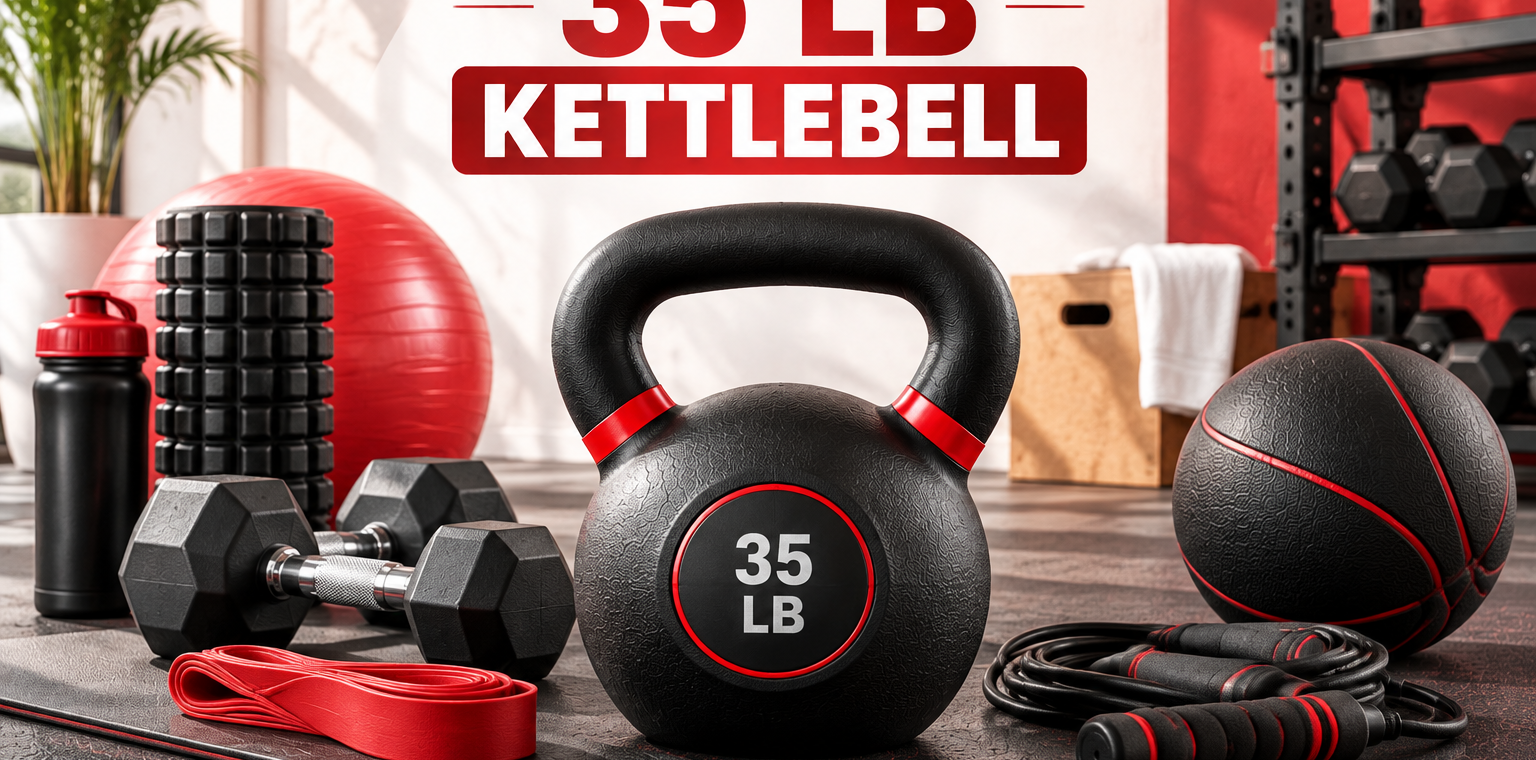
A 35 lb kettlebell (16 kg) is the classic intermediate kettlebell weight and the standard next step for lifters who have outgrown a 26 lb bell. A 35 lb kettlebell is heavy enough for productive swings, goblet squats, presses and rows, yet light enough to learn new skills safely, making it the single most useful bell for most home gyms.
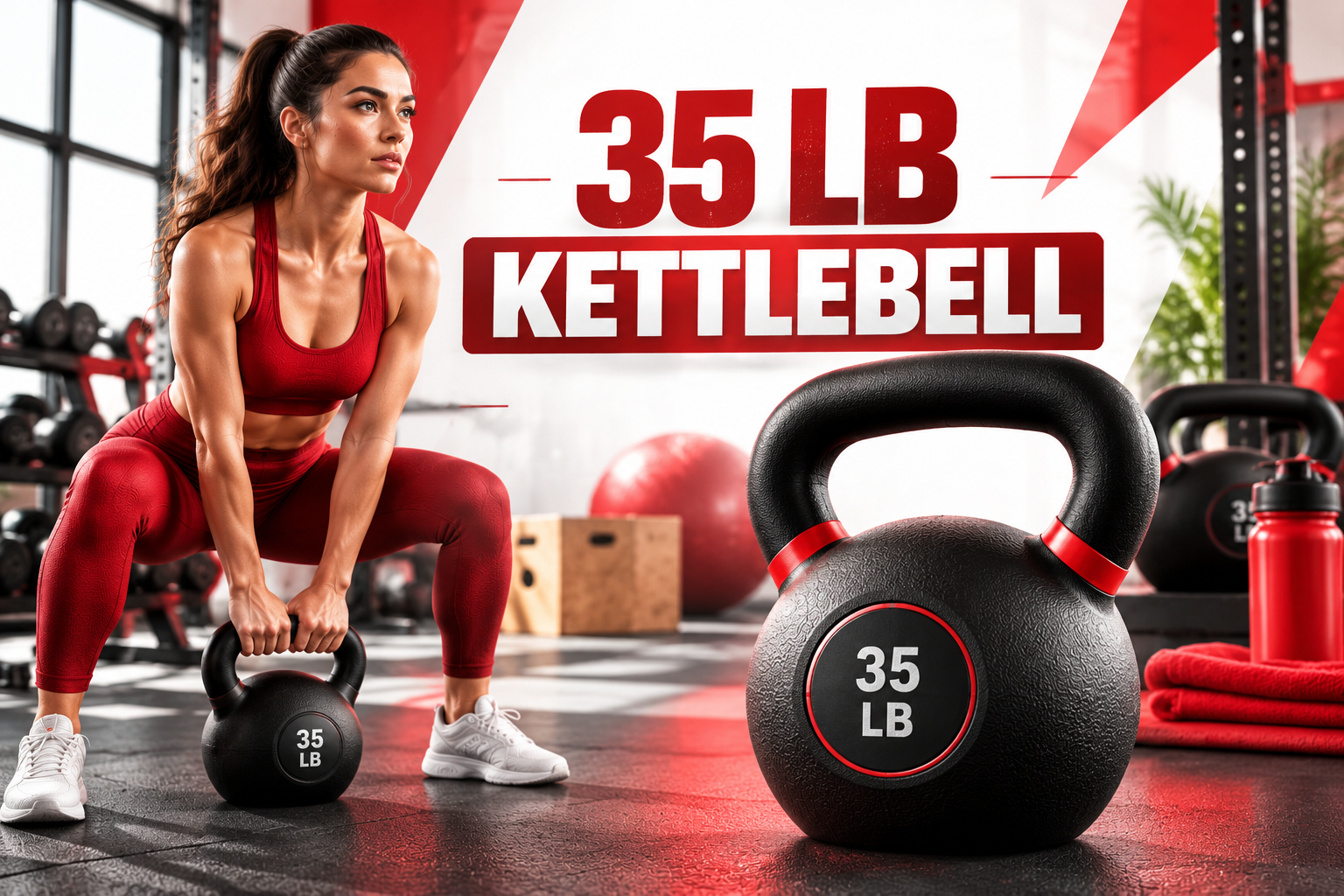
35 lb Kettlebell: Key Stats Snapshot
16 kg
The metric equivalent. Kettlebells originated in Russia, where 16 kg (35.3 lb) is the traditional “pood-adjacent” training weight. A 35 lb kettlebell sits at the exact boundary between beginner and intermediate loading.
10+
Full-body movements one bell can train. Swings, goblet squats, deadlifts, presses, rows, cleans, snatches, Turkish get-ups, lunges and carries — this bell covers all of them for intermediate lifters.
2–3x
Weekly sessions for steady progress. Most lifters training with this bell two to three times per week add reps or sets weekly for 8 to 12 weeks before needing a heavier bell.
~600
Calories a hard 30-minute kettlebell session can burn. Research on kettlebell snatch intervals measured oxygen consumption equivalent to very vigorous exercise, which is why this bell is a favorite conditioning tool.
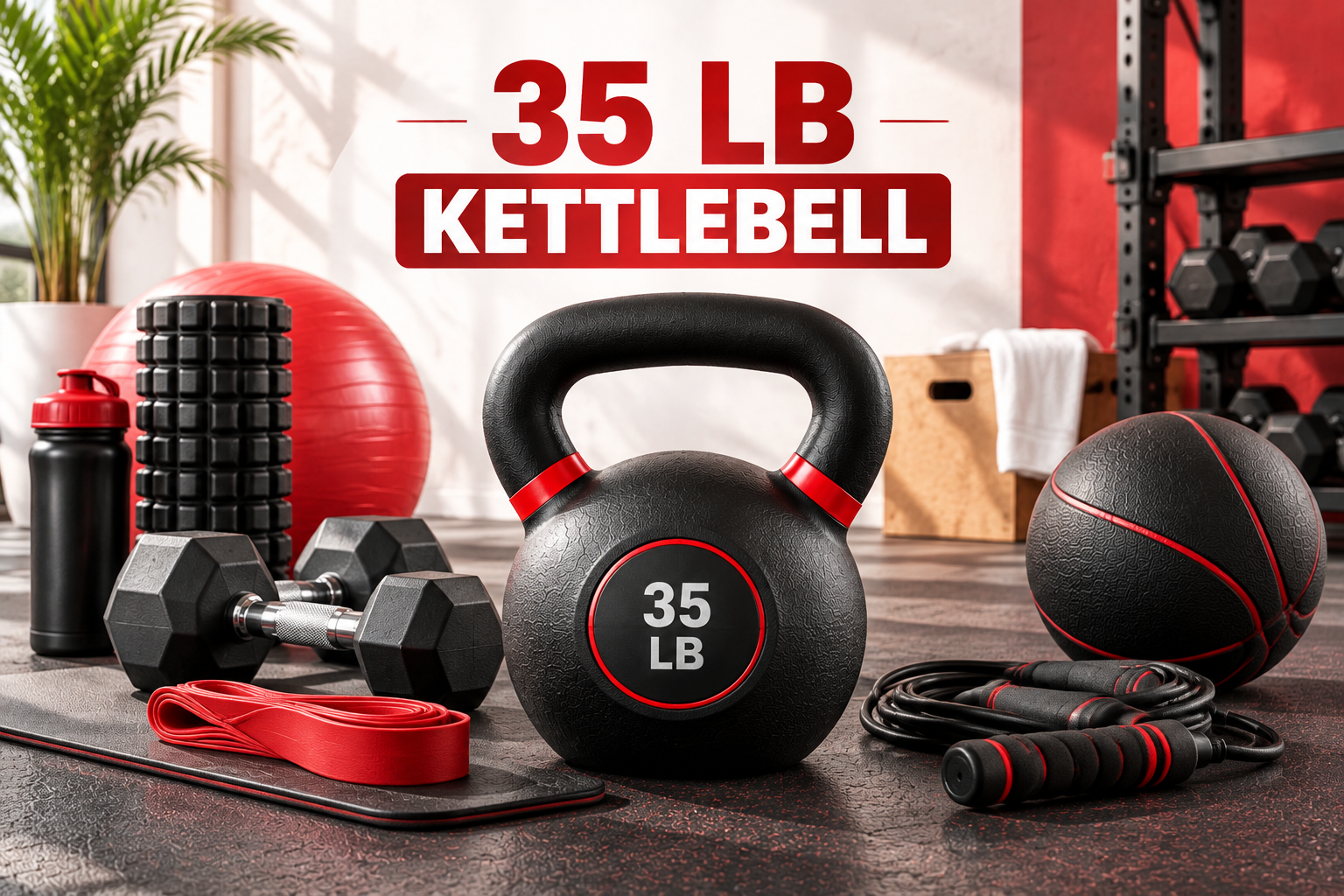
What Is a 35 lb Kettlebell?
This bell is a cast-iron or steel weight shaped like a cannonball with a handle, weighing 35 pounds (16 kilograms). Unlike a dumbbell, where the mass sits in line with the grip, a kettlebell’s mass hangs below the handle. That offset center of gravity is what makes kettlebell training unique: every rep forces your grip, forearms, shoulders and core to stabilize a shifting load.
The 35 lb kettlebell occupies a specific place in the standard progression. Common kettlebell sizes run 18 lb (8 kg), 26 lb (12 kg), 35 lb (16 kg), 44 lb (20 kg) and 53 lb (24 kg). This is the weight where training gets serious — it is the traditional starting weight for men with some lifting background and the standard second bell for women progressing from 26 lb.
Two main styles exist. Cast-iron kettlebells grow in physical size as they get heavier, while competition kettlebells keep identical dimensions at every weight with a steel shell and consistent 33 mm handle. For this weight, either style works; competition bells are preferable if you plan to learn cleans and snatches, because the uniform size keeps technique consistent as you go heavier.
Benefits of Training With a 35 lb Kettlebell
- Full-body strength in one tool: This single bell trains legs, back, shoulders, arms and grip in a single 30-minute session. Few tools match its training economy.
- Powerful hip hinge development: The two-hand swing with this bell teaches explosive hip extension — the same movement pattern behind deadlifts, sprinting and jumping.
- Serious grip training: The offset load and thick handle build crushing grip strength that carries over to deadlifts, pull-ups and manual work.
- Conditioning without running: Swing intervals with this bell elevate heart rate into the vigorous zone. Studies of kettlebell protocols report VO2 and heart-rate responses comparable to sprint interval training.
- Core stability under load: Turkish get-ups, windmills and single-arm work with this weight forces the trunk to resist rotation and lateral flexion — real-world core strength.
- Joint-friendly loading: Kettlebell movements are ballistic but low-impact. It builds power without the joint pounding of running or jumping.
- Minimal space, minimal cost: One 35 lb kettlebell and six square feet of floor is a complete gym. It is among the cheapest entries into serious strength training.
Fuel Your Kettlebell Sessions
Hard swing intervals demand real recovery nutrition. Pair your kettlebell training with quality protein from FitnMeet’s protein collection, and check the workout recovery category for post-session support. Learn about eating to fuel your training. Try whey protein for post-workout recovery.
How a 35 lb Kettlebell Works Your Body
The defining movement is the swing. You hinge at the hips, grip the 35 lb kettlebell with both hands, hike it between your legs, then snap the hips forward to project the bell to chest height. The glutes and hamstrings do the work; the arms are just straps connecting the bell to the body. A proper swing with a 35 lb kettlebell trains the entire posterior chain — calves, hamstrings, glutes, spinal erectors and lats — in one explosive repetition.
Grind movements work differently. A goblet squat with the bell held at the chest teaches upright torso position and deep hip mobility while loading the quads and glutes. A single-arm press with this bell demands shoulder stability through a long range of motion, and the offset weight recruits the obliques to prevent leaning. Rows, cleans and snatches each add their own demands, but the principle is constant: the bell’s hanging mass makes stabilizers work overtime.
This is also why this bell punches above its weight. Because the load sits away from the body and moves ballistically, this bell can feel substantially heavier than a 35 lb dumbbell during swings — the physics of a pendulum multiplies force at the bottom of the arc. Respect the bell, learn the hinge first, and the 35 lb kettlebell will build strength that transfers to every other lift you do.
Programming Your 35 lb Kettlebell Workouts
How you program this bell depends on your goal. For strength, use low reps with full rest: 5 sets of 5 goblet squats, 5 sets of 5 single-arm presses per side, and 5 sets of 5 single-arm rows per side, resting 2 to 3 minutes between sets. For conditioning, use interval swings: 30 seconds of two-hand swings, 30 seconds rest, repeated 10 to 20 times. Include a mobility routine for adults over 50 in your warm-up.
A balanced weekly template with one bell looks like this. Day 1 (strength): goblet squats 5×5, single-arm press 5×5 per side, single-arm row 5×8 per side, Turkish get-up 3×2 per side. Day 2 (conditioning): swing intervals 15×30/30, goblet squat holds, farmer carries. Day 3 (skill + volume): cleans 5×5 per side, snatch practice 5×3 per side, lunges 3×10 per side. Add one rep or one set per week; when all sets feel easy, you have outgrown the bell for that movement.
Progression with a single bell comes from density before load: more reps in the same time, shorter rests, slower eccentrics, single-leg or single-arm variations. When you can swing this bell for 10×10 with crisp form and press it for 5×8 per side, it is time to add a 44 lb bell — but keep this bell forever for warm-ups, technique work and high-rep finishers.
35 lb Kettlebell Workout Checklist
- ☐ Hip hinge mastered with bodyweight before your first swing
- ☐ Six feet of clear space in every direction
- ☐ Flat, stable surface — no thick foam mats that wobble
- ☐ Chalk on hands if you sweat; no gloves for swings (they increase blistering)
- ☐ Warm-up: 3 minutes of halos, goblet squats and hip bridges with the bell
- ☐ Park the bell safely — swing it back between the legs and set it down, never drop from height
- ☐ Stop the set when form breaks, not when you are exhausted
35 lb Kettlebell vs Other Weights
| Option | Best for | Limitation |
|---|---|---|
| 26 lb kettlebell | True beginners, learning the swing | Outgrown within 2–3 months by most men |
| 35 lb bell | Intermediate all-round training | Too heavy for first-time swing learners |
| 44 lb kettlebell | Strong lifters, heavy swings | Too heavy for presses and get-ups for most |
| 35 lb dumbbell pair | Traditional pressing and curls | Cannot swing; no ballistic training |
| Adjustable kettlebell | Tight budgets, small spaces | Handle geometry changes with weight; less durable |
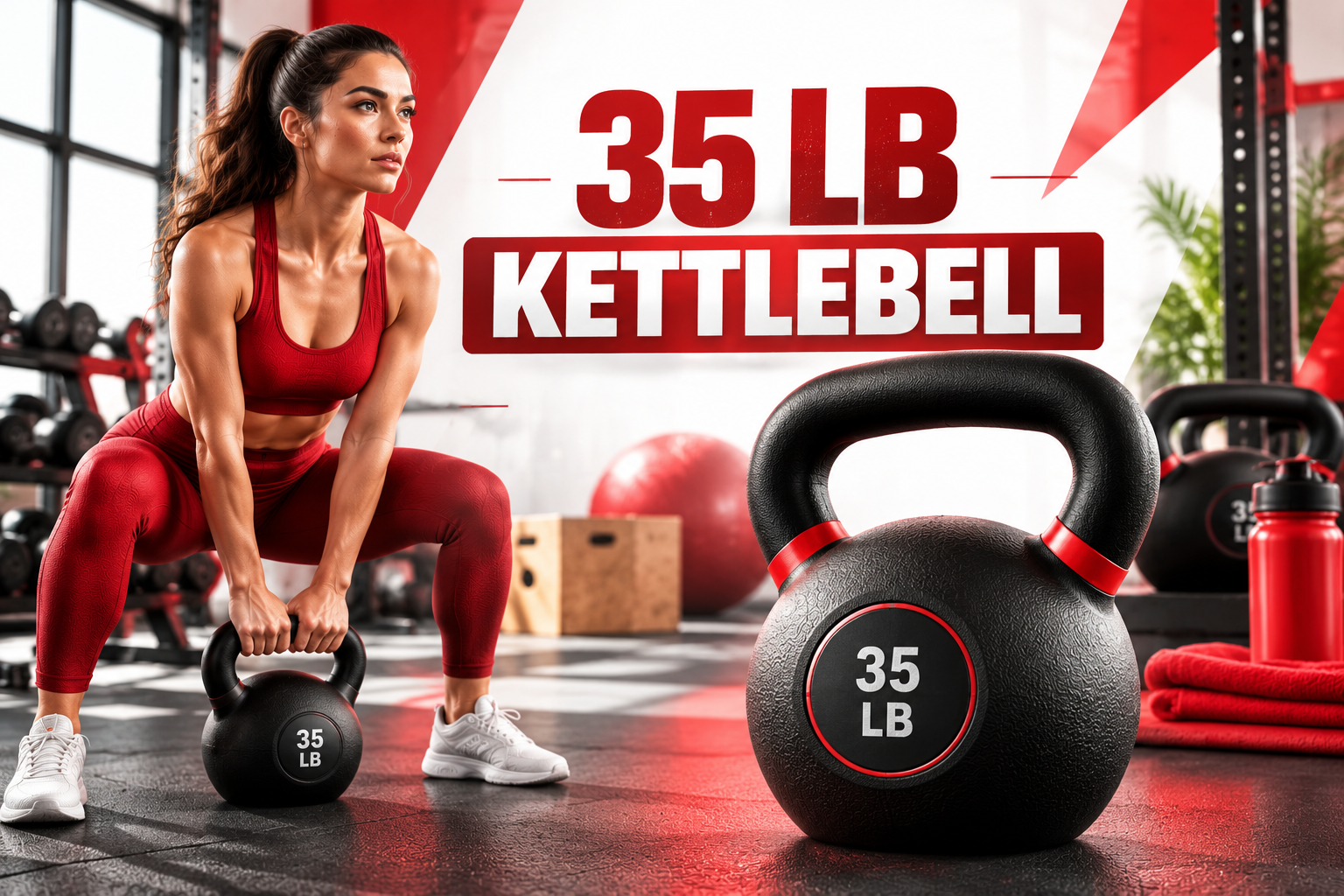
The 35 lb kettlebell hits the sweet spot: heavy enough to drive adaptation for a year or more, light enough to learn technique safely. If you can only own one bell, make it this one — then add a heavier bell later for swings and deadlifts. For general training background, Wikipedia’s kettlebell article covers the tool’s history and standard movements. Complement your training with a balance board for stability training.
Safety and Common Mistakes
The number one mistake is squatting the swing — bending the knees deeply and lifting with the quads instead of hinging at the hips. A swing is a hinge, not a squat: hips go back, shins stay near vertical, and the power comes from snapping the hips forward. Film yourself from the side; if your knees travel far forward, relearn the hinge with deadlifts before swinging this bell again.
Mistake two is muscling the bell up with the shoulders. The arms should stay relaxed — think of them as ropes. If your shoulders are fried after swings but your glutes feel fresh, you are lifting with your arms. Drop the weight or the reps until the hips do the work.
Mistake three is letting the bell pull you forward on the downswing. Actively hike the bell high between the legs and keep the lats engaged, as if you are trying to break the handle. And never chase a falling bell — if you lose it, step back and let it fall. A bell dropped on a foot is a trip to urgent care; a dented floor is just a story.
Alternatives to a 35 lb Kettlebell
- A 35 lb dumbbell: Covers presses, rows and squats but cannot replicate swings or snatches. Fine for grinds, useless for ballistics.
- Resistance bands: Anchor a heavy band for hinge-pattern pulls and presses. Good for travel, but band tension curves differ from free weights.
- Sandbag (35–40 lb): Shifting sand trains grip and core brutally. Excellent for carries and cleans; awkward for presses.
- Bodyweight progressions: Pistol squat progressions, one-arm push-up progressions and Nordic curls build serious strength with zero equipment — slower to load, but free.
- Gym cable station: Cable pull-throughs mimic the swing’s hip hinge with constant tension. Useful if you train at a commercial gym without kettlebells.
Whatever tool you choose, the training principles stay the same — progressive overload, full-body movements and consistency. Browse FitnMeet’s shop and the fitness blog category for programming ideas that work with any equipment. For heavy pressing, see dumbbell training for advanced lifters.
Frequently Asked Questions
Is a 35 lb kettlebell good for beginners?
A 35 lb kettlebell suits beginners who already have some strength training background, and it is the classic starting weight for most men. True beginners with no lifting experience should start with a 26 lb (12 kg) bell to learn the swing safely, then progress to this bell within a few months.
What exercises can I do with a 35 lb kettlebell?
With a 35 lb kettlebell you can perform swings, goblet squats, deadlifts, single-arm presses, rows, cleans, snatches, Turkish get-ups, lunges, windmills and farmer carries. It is a complete full-body gym in one tool for intermediate lifters.
Is this bell weight enough to build muscle?
Yes, for most people. A 35 lb kettlebell builds muscle through progressive overload: add reps, sets, and density, use slower tempos and single-arm variations. Lifters typically progress on one 35 lb kettlebell for 8 to 12 weeks or more before needing heavier weight.
How many swings should I do with this bell?
Beginners should start with 5 sets of 10 two-hand swings with a 35 lb kettlebell, resting 60 to 90 seconds between sets. For conditioning, try 10 to 20 rounds of 30 seconds work and 30 seconds rest. Stop the set when your form breaks down.
Should I buy a cast-iron or competition bell?
Both work well at 35 lb. Cast-iron bells are cheaper and fine for swings and grinds. Competition kettlebells keep the same size and 33 mm handle at every weight, which helps if you plan to learn cleans and snatches and progress to heavier bells later.
Can a woman use a 35 lb kettlebell?
Absolutely. A 35 lb kettlebell is the standard progression bell for women moving up from 26 lb, and many athletic women start here for swings. For overhead pressing and Turkish get-ups, some women will need more time to build up to this weight — that is normal.
Conclusion
A 35 lb kettlebell is the most versatile single weight you can own: heavy enough for real strength and conditioning, light enough to learn safely, and capable of training your entire body in a corner of your living room. Learn the hinge, program swings plus grinds two to three times weekly, and progress with density before chasing heavier bells.
Ready to train harder and recover faster? Browse FitnMeet’s sports nutrition collection to fuel your kettlebell sessions.
This article is for informational purposes only and is not medical advice. Consult a healthcare professional before starting any new exercise program.