
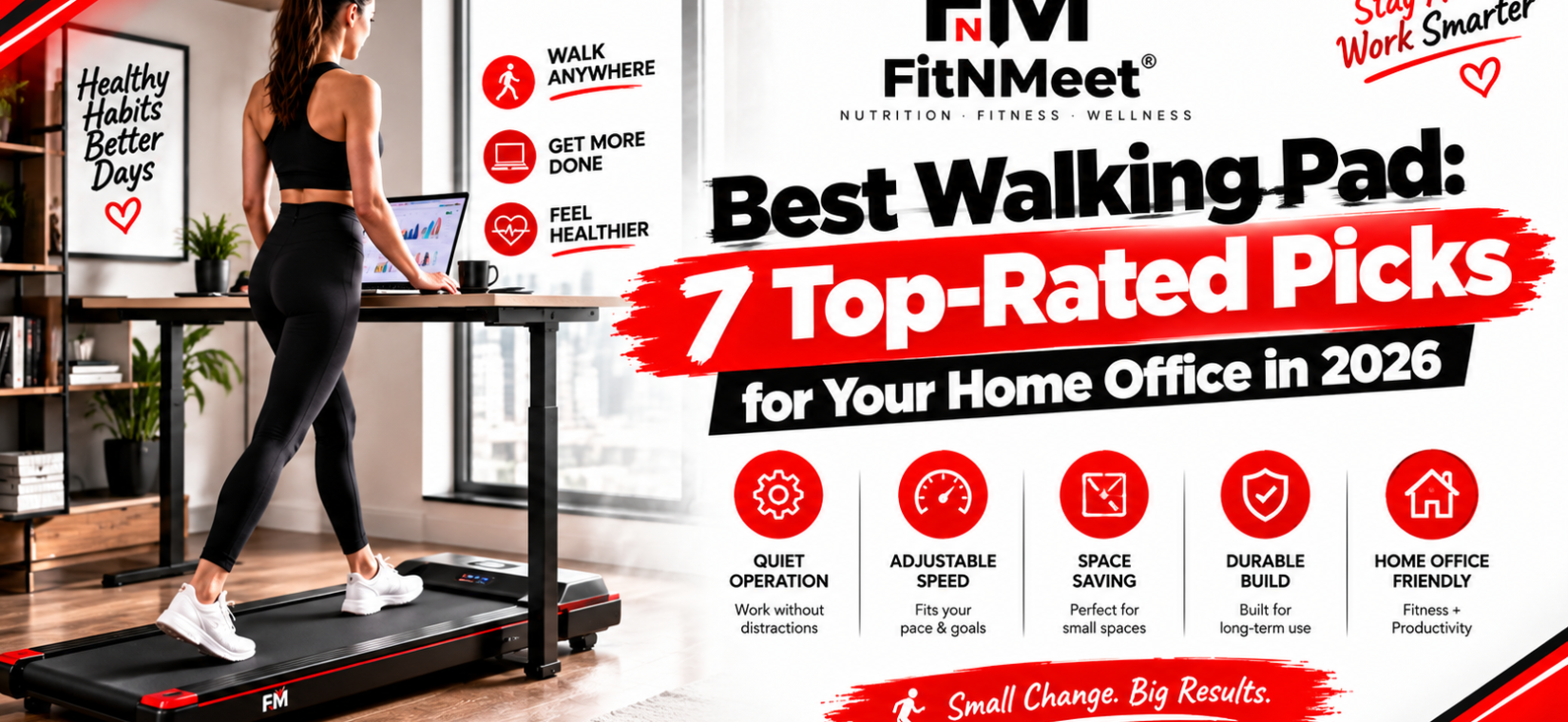
Finding the best walking pad for your home or office can transform your daily routine. These compact, low-profile treadmills fit under a standing desk or in a small corner, letting you log thousands of steps without leaving the house. Whether you want to hit 10,000 steps a day, lose weight, or simply move more while you work, the best walking pad makes it effortless.
This guide covers everything: what a walking pad is, 7 proven benefits, the 7 features that matter when shopping, what to look for in each category, how to choose the right model, workout plans, the science of daily steps, mistakes to avoid, maintenance, pricing, and answers to common questions.
What Is a Walking Pad?
A walking pad is a slim, lightweight treadmill designed primarily for walking rather than running. Unlike traditional treadmills, the best walking pad models are compact, quiet, and often foldable, built to slide under a desk or against a wall when not in use. Most top out at 3 to 4 mph, which is ideal for steady-state walking while working or watching TV.
The category exploded with remote work: millions of people who sit 8+ hours daily needed movement that fits around meetings, not the other way around. A walking pad turns dead desk time into active time — the most efficient exercise hack for busy professionals.
7 Benefits of Using a Walking Pad
1. Hit your step goal effortlessly: Research links higher daily step counts with lower all-cause and cardiovascular mortality. A large meta-analysis found that mortality risk decreases as daily steps increase (PubMed, 2023). A walking pad makes those steps automatic — no willpower required.
2. Burn calories while you work: Walking at 2 mph burns roughly 150 to 200 calories per hour depending on body weight, adding up to meaningful weight loss over weeks. Two hours of under-desk walking can burn 300–400 calories — equivalent to a solid gym session, done while answering emails. For more on the science of weight management, see our guide on what science says about supplements and weight loss.
3. Protect your joints: Walking is low-impact and knee-friendly. If joint pain holds you back, read how retro-walking helped heal one writer’s knees. Gentle walking variations can be transformative for stiff, achy joints.
4. Boost energy and focus: Light movement during the workday fights afternoon slumps better than another coffee, improving both mood and productivity. Many users report sharper thinking during walking meetings.
5. No gym commute: Your workout is always a few steps away, eliminating the biggest barrier to consistency. The best exercise is the one with zero friction.
6. Quiet operation: The best walking pad models run quietly enough for calls and meetings, typically under 60 decibels — quieter than normal conversation.
7. Space saving: Most fold flat or slide under furniture, perfect for apartments and small home offices where a full treadmill would dominate the room.
How Many Steps Do You Really Need?
The famous 10,000-step target started as a marketing slogan, but the science behind it is increasingly solid. The 2023 meta-analysis linked above found mortality benefits climbing steeply up to about 7,000–9,000 daily steps, with diminishing returns beyond. The key insight: going from 3,000 to 7,000 steps delivers most of the benefit.
For a desk worker averaging 3,000 steps, a walking pad that adds 4,000–5,000 steps during work hours is transformative — it moves you from sedentary to the heart of the benefit zone without a single dedicated workout. That is the real value proposition: not peak fitness, but escaping the dangers of all-day sitting.
7 Key Features to Compare When Shopping
When evaluating the best walking pad for your needs, compare these seven factors:
1. Motor power: Look for at least 1.0 to 1.5 HP for smooth, consistent walking. Stronger motors run quieter and last longer. Underpowered motors strain, overheat, and die young — this is the number one spec not to cheap out on.
2. Speed range: Most walking pads reach 3.5 to 4 mph. If you want light jogging, look for 2-in-1 models reaching 6+ mph with a raised handrail.
3. Weight capacity: Standard models support 220 to 265 lb. Heavier users should prioritize 300 lb or greater capacity for motor longevity — running a motor near its limit shortens its life dramatically.
4. Belt size: A 16 to 18-inch wide, 40 to 47-inch long belt suits most walkers. Taller users need longer decks; a cramped belt changes your gait and causes discomfort.
5. Noise level: Look for models under 55 to 60 decibels so you will not disturb calls or housemates. Brushless motors are the quietest.
6. Incline: Even a slight incline dramatically increases calorie burn. Premium models offer powered incline up to 5 to 9 percent — a game-changer for workout intensity without more time.
7. Portability: Transport wheels and fold-flat designs matter when space is tight. Check the folded dimensions against your storage spot before buying.
Best Walking Pad by Category: What to Look For
Best overall: Prioritize a 2.0+ HP motor, 300 lb capacity, quiet operation, and a clear LED display. Expect to invest more for long-term durability — the daily-use workhorse.
Best budget: Focus on the essentials: a reliable motor, simple speed control, and compact folding. Solid options exist without premium extras; just do not go below 1.0 HP.
Best for small spaces: Look for the slimmest folded profile (under 5 inches tall) plus transport wheels for easy storage under beds or behind doors.
Best for heavy users: Prioritize 300 to 350 lb weight capacity and a reinforced frame. The motor works hardest here, so buy headroom.
Best quiet: Brushless motors and shock-absorbing belts keep noise minimal for shared spaces and work calls. Check real-world decibel tests, not just marketing claims.
Best with incline: Powered incline multiplies workout intensity without increasing impact — the closest a walking pad gets to hill training.
Best 2-in-1: Models with a removable handrail and higher top speeds double as jogging treadmills for dedicated cardio sessions.
Walking Pad vs Treadmill: Which Is Better?
Walking pads win for compact spaces, under-desk use, quiet operation, and budget. Full treadmills win for running, intense training, incline variety, and heavier runners. A 2-in-1 walking pad splits the difference for walkers who occasionally jog.
Choose a walking pad if your primary goal is daily steps and under-desk movement. Choose a full treadmill if you run regularly or need 10+ mph speeds and steep incline. Most remote workers are better served by the walking pad.
How to Choose the Best Walking Pad for You
The best walking pad for you depends on your primary use: under-desk walking while working, dedicated cardio sessions, or both. Measure your available space, including clearance under your desk — a pad that does not fit under your desk defeats its purpose. Set a budget, as quality ranges from affordable to premium. Read verified buyer reviews with attention to long-term motor reliability and customer service responsiveness, not just first-week impressions.
Walking Pad Price Guide
- Budget ($200–$350): Basic motors (1.0 HP), minimal features, shorter warranties. Fine for light use; expect 1–2 years of daily service.
- Mid-range ($350–$600): The sweet spot. 1.5–2.0 HP motors, quieter operation, better belts, 2+ year warranties. This is where most buyers should land.
- Premium ($600–$1,000+): 2.0+ HP brushless motors, powered incline, app connectivity, 300+ lb capacity, 5-year warranties. For heavy daily use.
The price-to-longevity curve is steep: a $500 pad typically outlasts two $250 pads. For something you will use 2 hours daily, buy the better motor.
3 Walking Pad Workout Plans
Plan 1 — The under-desk accumulator: Walk at 1.5–2 mph during emails and calls, aiming for 60–90 minutes total across the day. This alone adds 4,000–6,000 steps. Keep intensity low enough to type comfortably.
Plan 2 — The lunch-hour burner: 30 minutes at 3–3.5 mph with incline if available. This is real cardio — expect 150–250 calories and a proper sweat. Pair with sensible nutrition; our protein for weight loss guide covers the eating side.
Plan 3 — The evening wind-down: 20–30 minutes at 2 mph while watching TV. Lowers stress, aids digestion, and adds steps without feeling like exercise.
Tips for Getting the Most from Your Walking Pad
Start at 1 to 1.5 mph while working until you adjust to typing and walking simultaneously — most people adapt within a week. Wear supportive shoes rather than slippers; your feet will thank you after an hour. Keep water nearby. Build up to 60 to 90 minutes of daily walking, broken into sessions across the day. Use the handrail, if included, when starting out. And position the pad so the belt center aligns with your natural stance — drifting to one side causes uneven wear.
Walking Pad Maintenance
A walking pad needs minimal but regular care:
- Lubricate the belt every 3 months (or per the manual) with silicone lubricant to reduce motor strain.
- Center the belt if it drifts — most pads have rear adjustment bolts; a centered belt wears evenly.
- Vacuum underneath monthly. Dust is a motor’s enemy, and pads sit close to the floor where dust collects.
- Wipe down the belt after sweaty sessions to prevent odor and material breakdown.
- Do not exceed the weight rating. Overloading is the fastest way to kill a motor.
6 Mistakes to Avoid
1. Buying too weak a motor: A 0.75 HP motor for daily 2-hour use will burn out. Match motor power to your actual usage, then add headroom.
2. Ignoring belt size: A short belt forces short strides and hip discomfort. If you are over 6 feet tall, prioritize deck length.
3. Walking too fast while working: Above 2 mph, typing accuracy and call quality suffer. Save faster paces for dedicated sessions.
4. Skipping shoes: Barefoot or slipper walking for an hour daily invites foot pain. Supportive walking shoes matter.
5. Never lubricating: A dry belt strains the motor silently until it fails. Set a calendar reminder.
6. Expecting running performance: Walking pads are not treadmills. Trying to sprint on a 3.5 mph max pad is a disappointment you can avoid by reading the specs.
Who Should (and Shouldn’t) Buy a Walking Pad
Buy one if: you work from home and sit 6+ hours daily; you want more steps without gym time; you need quiet, compact cardio; you are returning from injury and need low-impact movement; or you simply hate dedicated cardio sessions.
Skip it if: you are a runner (buy a treadmill); you already walk 10,000+ steps daily; you have zero floor space even for a folded pad; or you know you will not use it — the best walking pad is the one that does not become a clothes rack. Be honest about your habits before buying.
Best Walking Pad FAQs
Can you lose weight with a walking pad? Yes. Consistent daily walking creates a calorie deficit that drives fat loss, especially combined with sensible nutrition. Two hours of daily under-desk walking can burn 300–400 calories — significant over weeks and months.
Is a walking pad worth it? If you struggle to find time for exercise, a walking pad removes barriers by weaving movement into your existing routine. For remote workers, it is often the highest-ROI fitness purchase.
Walking pad vs. treadmill: which is better? Walking pads win for compact spaces and under-desk use. Full treadmills win for running and intense training. See the full comparison above.
How loud is a walking pad? Quality models run at 50–60 decibels — quieter than conversation. You can take calls while walking slowly, though faster paces add footfall noise.
Can you run on a walking pad? Most are designed for walking up to 3.5–4 mph. 2-in-1 models with handrails reach 6+ mph for light jogging. Check the max speed before buying if running matters to you.
How long do walking pads last? 2–5 years with daily use, depending on motor quality and maintenance. Better motors and regular lubrication push toward the high end.
Do walking pads need assembly? Most arrive nearly fully assembled — unfold, plug in, and walk. Typically 10 minutes from box to first steps.
Can I use a walking pad on carpet? Yes, but place a mat underneath for stability, airflow, and carpet protection. Hard floors are ideal.
The best walking pad is ultimately the one you will use every day. Prioritize motor quality, noise level, and a size that fits your space, and you will have a reliable tool for hitting your step goals year-round.