
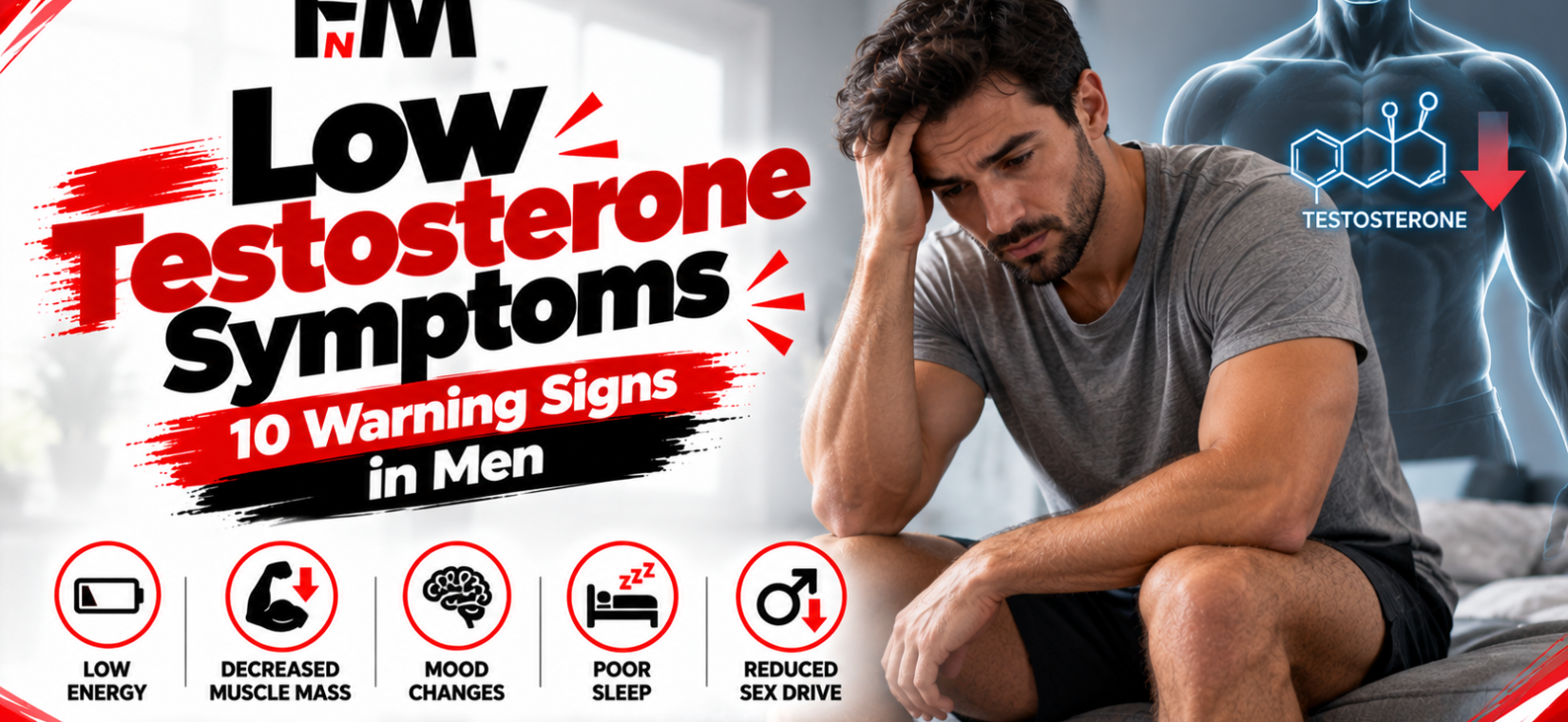
Low testosterone symptoms affect millions of men, yet many write them off as normal aging. Fatigue that sleep doesn’t fix, a fading libido, stubborn belly fat, and low motivation can all signal that testosterone has dropped below a healthy range. Recognizing the warning signs of low testosterone is the first step toward getting answers — this guide covers the 10 most common symptoms, what causes them, how diagnosis works, and when to talk to a doctor.
Medical disclaimer: This article is for informational purposes only and is not medical advice. Only a qualified healthcare provider can diagnose low testosterone. Do not start or stop any treatment based on this guide alone.
This comprehensive guide also explains what testosterone does, why levels decline, each symptom in detail, conditions that mimic low testosterone, what to expect at the doctor’s office, treatment options per clinical guidelines, lifestyle strategies, what the evidence says about supplements, and answers to frequently asked questions.
What Is Low Testosterone?
Testosterone is the primary male sex hormone, produced mainly in the testes. It drives muscle mass, bone density, red blood cell production, libido, and mood. Levels naturally peak in early adulthood and decline roughly 1% per year after age 30 to 40. When levels fall below the normal range and symptoms appear, clinicians call it male hypogonadism — commonly known as low testosterone.
Understanding Testosterone: The Basics
Testosterone belongs to a class of hormones called androgens. In men, the testes produce about 95% of it, with the adrenal glands contributing the rest. Production is controlled by the hypothalamic-pituitary-gonadal axis: the brain signals the pituitary, which signals the testes. Disruption at any point — brain, pituitary, or testes — can lower levels.
Testosterone circulates in two forms: bound to proteins (mainly SHBG and albumin) and “free” (unbound and biologically active). Total testosterone measures all of it; free testosterone measures the active fraction. Both matter clinically, which is why proper testing looks beyond a single number.
10 Common Low Testosterone Symptoms
1. Persistent fatigue
One of the most reported low testosterone symptoms is deep, unrelenting tiredness — even after a full night’s sleep. Testosterone influences energy metabolism and red blood cell production, so low levels can leave you feeling drained. This is not ordinary tiredness; it is a heaviness that rest does not resolve and that interferes with work and daily life.
2. Reduced libido
A noticeable drop in sex drive is a hallmark sign. Testosterone is the main driver of male libido, and declining levels often reduce interest in sex. Distinguishing this from stress-related or relationship-related changes matters — a persistent, unexplained decline over months warrants evaluation.
3. Erectile difficulties
Testosterone supports the nitric oxide pathways involved in erections. While many factors affect erectile function — vascular health, nerves, psychology — low testosterone can make erections less frequent or less firm. When erectile changes accompany other symptoms on this list, hormonal causes become more likely.
4. Loss of muscle mass
Testosterone is anabolic — it helps build and maintain muscle. Men with low levels often notice weaker workouts, slower recovery, and shrinking muscle despite consistent training. Strength losses that do not respond to good programming and nutrition deserve investigation.
5. Increased body fat
Low testosterone shifts body composition toward fat storage, particularly around the abdomen. This belly fat can further suppress testosterone (fat tissue converts testosterone to estrogen via aromatase), creating a frustrating cycle. Breaking it usually requires addressing both the hormonal and lifestyle sides simultaneously.
6. Mood changes and low motivation
Irritability, low mood, and a general lack of drive are frequently reported. Some men describe it as feeling “flat” — less competitive edge, less enthusiasm, less resilience to setbacks. These mood symptoms overlap with depression, which is why proper evaluation matters rather than assuming a single cause.
7. Brain fog and poor concentration
Difficulty focusing, forgetfulness, and mental sluggishness can accompany hormonal decline. Men often describe it as thinking through fog — tasks that were once easy require more effort. Like mood changes, this symptom has many possible causes, so it should be evaluated in context.
8. Reduced bone density
Testosterone helps maintain bone mineral density. Over years, deficiency can contribute to thinning bones and higher fracture risk. This is a silent symptom — you will not feel it until a bone density scan or, worse, a fracture reveals it. Long-standing untreated deficiency carries the greatest risk.
9. Sleep disturbances
Low testosterone is linked with poorer sleep quality and insomnia — which in turn further suppresses morning testosterone, since much of the daily testosterone pulse occurs during sleep. Breaking this bidirectional cycle matters: improving sleep supports hormones, and addressing hormones can improve sleep.
10. Decreased body hair and smaller testes
Physical signs can include thinning body and facial hair and reduced testicular size — both reflect diminished androgen activity. These are among the more specific physical signs, as fewer other conditions cause them in combination with the symptoms above.
Why Testosterone Declines: Beyond Aging
Aging is the most common cause, but it isn’t the only one. Understanding the full picture helps identify modifiable factors:
- Obesity: Excess fat, especially visceral fat, suppresses testosterone through aromatization and inflammation. Weight loss is among the most effective natural interventions.
- Type 2 diabetes and metabolic syndrome: Strongly associated with lower testosterone; the relationship runs both directions.
- Chronic stress: Elevated cortisol directly suppresses the reproductive axis.
- Poor sleep and sleep apnea: Fragmented sleep blunts the nocturnal testosterone pulse. Sleep apnea is a particularly common and treatable contributor.
- Excessive alcohol: Chronic heavy drinking impairs testicular function.
- Medications: Opioids, some antidepressants, and corticosteroids can lower testosterone.
- Medical conditions: Pituitary disorders, testicular injury, hemochromatosis, and certain genetic conditions.
Any of these can trigger low testosterone symptoms, sometimes as early as your 30s. The good news: lifestyle factors are significant — and modifiable.
Conditions That Mimic Low Testosterone
Many conditions cause fatigue, low libido, and mood changes. Before assuming testosterone is the culprit, clinicians consider:
- Depression and anxiety: Overlap heavily with low-T symptoms including fatigue, low motivation, and reduced libido.
- Hypothyroidism: Causes fatigue, weight gain, low mood, and reduced libido.
- Sleep apnea: Produces profound daytime fatigue and can itself lower testosterone.
- Anemia: Causes fatigue and reduced exercise capacity.
- Chronic illness and medications: Many systemic conditions and drugs affect energy, mood, and sexual function.
This overlap is exactly why self-diagnosis is unreliable and proper testing is essential.
What Causes Low Testosterone?
Aging is the most common cause, but as detailed above, obesity, diabetes, stress, poor sleep, alcohol, medications, and pituitary or testicular conditions all contribute. A thorough evaluation looks at the whole picture rather than testosterone in isolation.
How Is Low Testosterone Diagnosed?
Diagnosis requires both symptoms and blood work — typically repeat morning total testosterone measurements below the reference range, drawn before 10 AM when levels peak. The Endocrine Society’s clinical practice guideline on testosterone therapy in men with hypogonadism outlines when testing and treatment are appropriate (read the guideline on PubMed). Self-diagnosing from symptoms alone isn’t enough, since many conditions can mimic these signs.
What to Expect at the Doctor’s Office
A proper evaluation typically includes:
- Symptom review: Your doctor will ask about the onset, duration, and severity of symptoms.
- Physical exam: Including assessment of body hair, muscle mass, testicular size, and signs of other conditions.
- Morning blood tests: Total testosterone on two separate mornings, plus LH, FSH, prolactin, and sometimes SHBG and free testosterone to identify where the problem originates.
- Screening for contributors: Sleep apnea, depression, thyroid function, diabetes, and medication review.
Come prepared with a symptom timeline and a list of medications and supplements. Honest answers about alcohol, sleep, and sexual function help your doctor help you.
Treatment Options: What the Guidelines Say
For confirmed hypogonadism, the Endocrine Society guideline supports testosterone therapy for men with symptoms and unequivocally low levels, with ongoing monitoring of testosterone, hematocrit, and prostate health. Treatment decisions are individualized — weighing symptom severity, fertility plans (testosterone therapy impairs sperm production), cardiovascular risk, and patient preferences.
Testosterone therapy is prescription-only and requires medical supervision. It is not appropriate for age-related decline without clinical deficiency, and it carries risks that must be monitored. This guide does not recommend for or against therapy — that decision belongs to you and your doctor.
Natural Ways to Support Healthy Testosterone Levels
Only a doctor can diagnose the cause of low testosterone symptoms and treat clinical deficiency, but these habits support healthy hormone levels:
- Lift weights: Resistance training is one of the most reliable natural testosterone supporters. Compound movements (squats, deadlifts, presses) with progressive overload work best.
- Sleep 7–9 hours: Much of the daily testosterone pulse is tied to sleep, particularly deep sleep. Treat sleep apnea if present.
- Maintain a healthy weight: Excess body fat converts testosterone to estrogen via aromatase. Even modest weight loss can meaningfully raise levels.
- Manage stress: Chronically elevated cortisol suppresses testosterone production. Regular exercise, sleep, and stress-management practices all help.
- Eat enough: Adequate protein, healthy fats, and micronutrients such as zinc and vitamin D matter. Chronic dieting and very low-fat diets can suppress testosterone.
- Limit alcohol: Heavy drinking impairs testicular function; moderation supports hormonal health.
- Get sunlight or vitamin D: Vitamin D deficiency is associated with lower testosterone; correction may help if you are deficient.
Supplements: What the Evidence Actually Shows
Some men explore herbal support. Tribulus has a long history of traditional use for male vitality, though human evidence for testosterone-raising effects is limited and mixed — it is best viewed as a traditional wellness botanical rather than a proven therapy. Formulas like FitnMeet’s natural testosterone support blend combine time-tested botanicals. For a deeper, evidence-based dive, see our guide to testosterone pills: benefits, dosage, and the evidence.
An honest summary: no supplement reliably raises testosterone in men with clinical deficiency. Supplements may complement a healthy lifestyle, but they are not substitutes for diagnosis and medical care. Be skeptical of products promising dramatic hormonal changes — if it sounds too good to be true, it is.
When to See a Doctor
See a clinician if several low testosterone symptoms persist for weeks — especially low libido paired with fatigue — or if you notice erectile difficulties, depressed mood, or loss of muscle. A simple blood test can clarify what’s going on. Don’t guess, and don’t delay: many causes are treatable, and the evaluation is straightforward.
Frequently Asked Questions
At what age do low testosterone symptoms start?
Levels begin declining around age 30 to 40, but noticeable symptoms most often appear in the 40s through 60s. Younger men can be affected by medical conditions, obesity, medications, or pituitary issues — age alone does not rule out evaluation.
Can low testosterone cause weight gain?
Yes — indirectly. Weight gain is one of the more frustrating low testosterone symptoms: lower testosterone reduces muscle mass and energy, making fat gain easier, especially around the midsection. The resulting fat further suppresses testosterone, creating a cycle that combined lifestyle and medical approaches can break.
Is low testosterone reversible?
Often, at least partially. Weight loss, better sleep, exercise, stress management, and treating underlying conditions (like sleep apnea) can raise levels meaningfully. Clinical hypogonadism may need medical therapy — an individualized decision with your doctor.
Does testosterone therapy have risks?
Yes. Prescription testosterone can increase red blood cell count, affect prostate health markers, impair fertility, and influence cardiovascular risk. This is why it requires diagnosis, prescription, and ongoing monitoring — never self-administered or obtained without medical supervision.
Can stress alone cause these symptoms?
Chronic stress can suppress testosterone and independently cause fatigue, low libido, and mood changes. Stress management is worthwhile regardless, but persistent symptoms still warrant medical evaluation to rule out other causes.
How quickly can lifestyle changes help?
Meaningful improvements in sleep, weight, and training consistency can shift levels within 8–12 weeks, though individual responses vary. Track symptoms alongside habits to see what moves the needle for you.
The Bottom Line
Low testosterone symptoms — from fatigue and low libido to mood changes and muscle loss — are common, but they aren’t something you have to accept silently. Track your symptoms, get tested if they persist, and build the lifestyle foundations that support healthy hormones. Work with a qualified clinician for diagnosis and treatment decisions. If you’re exploring natural support alongside a healthy routine, FitnMeet’s testosterone support formula is designed to complement — not replace — proper medical care.
This content is educational and is not a substitute for professional medical advice, diagnosis, or treatment. Always seek the advice of your physician with questions about a medical condition.