
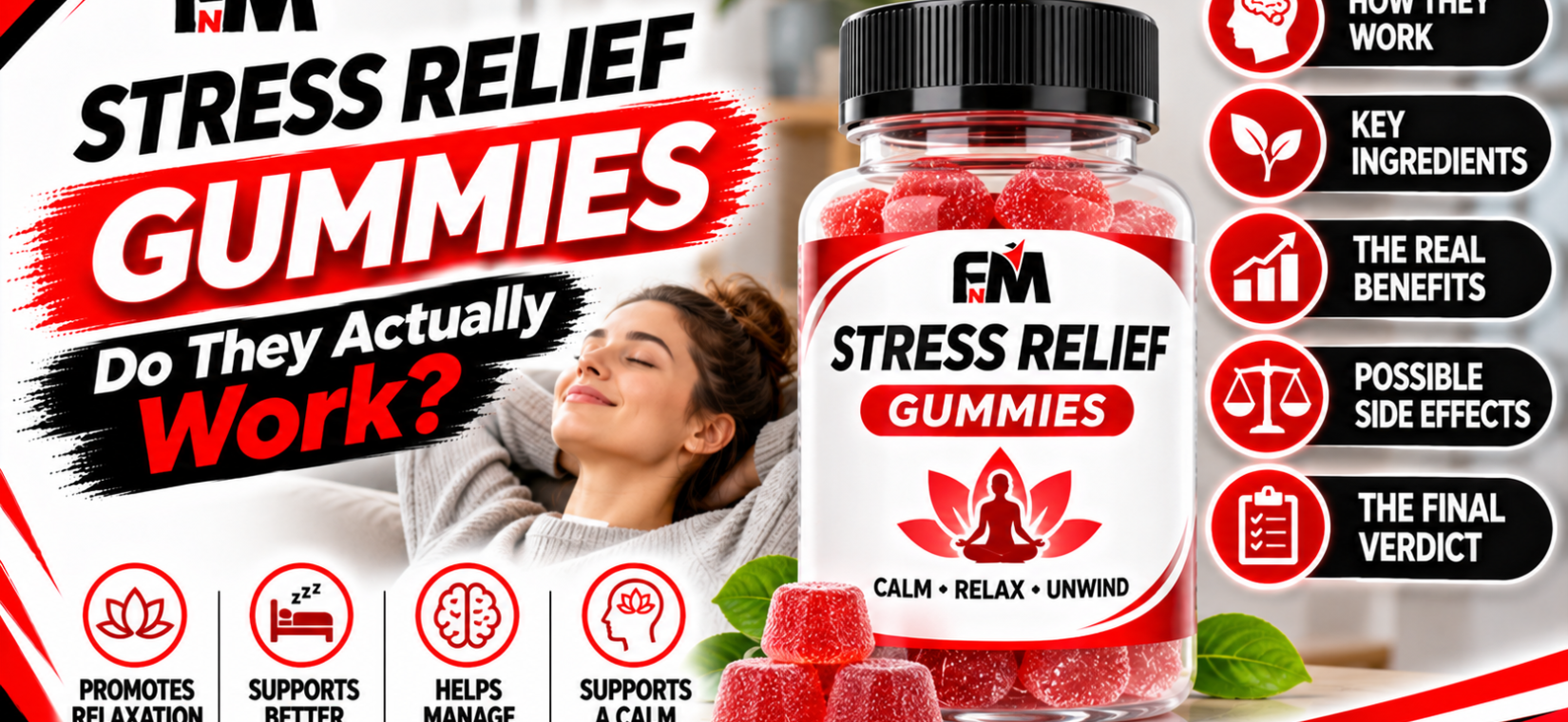
Stress relief gummies are chewable supplements — usually containing ashwagandha, L-theanine, magnesium, or lemon balm — marketed to reduce stress and promote calm. Stress relief gummies can modestly lower perceived stress when they contain clinically studied doses of proven ingredients, but many brands underdose the actives. The gummy format itself adds nothing; the ingredients do all the work.
Calming gummies are everywhere: drugstore shelves, Instagram ads, podcast sponsors. They promise calm in a tasty chew, no pills, no tea-brewing, no effort. And honestly? The convenience is real. But the calming-gummy category is also one of the least regulated corners of the supplement industry, where a gummy with 50 mg of ashwagandha dust sits next to one with a genuine clinical dose — same price, same promises, wildly different effects.
This FAQ-first guide answers every important question about calming gummies: what they are, whether the evidence supports them, real benefits, how to use them, what people also ask, how they compare to capsules and teas, safety, and full FAQs. Short answers up front, depth below.
Stress Relief Gummies: Fast Facts
- What they are: chewable supplements with calming ingredients — most commonly ashwagandha, L-theanine, magnesium, lemon balm, passionflower, or chamomile.
- Do stress relief gummies work? They can, if the active ingredients are present at studied doses. The gummy format itself has no special effect — it is a delivery vehicle.
- How fast? L-theanine-based gummies may promote calm within 30–60 minutes. Ashwagandha-based ones typically need 2–4 weeks of daily use.
- Typical dose: 1–2 gummies daily, but judge by milligrams of actives on the label, not gummy count.
- Biggest trap: “proprietary blends” that hide individual ingredient amounts — the number-one red flag when shopping for them.
- Safety: generally well tolerated; check interactions if you take thyroid, blood pressure, sedative, or diabetes medication.
- Cost: $15–$40/month. Cost per milligram of active ingredient is the only price comparison that matters.
What Are Stress Relief Gummies?
These chewable, candy-like supplements formulated with ingredients associated with calm and stress resilience. Unlike regular candy, they contain concentrated plant extracts, amino acids, or minerals. The base is typically gelatin or pectin (vegan options use pectin), plus sweeteners, flavoring, and coloring — which is worth noting, because some gummies contain 2–4 grams of sugar per serving.
The most common active ingredients in calming gummies:
Ashwagandha (Withania somnifera). An adaptogenic herb studied at 300–600 mg daily of standardized root extract. Multiple randomized trials report reductions in perceived stress scores and, in some trials, lower morning cortisol versus placebo over 8 weeks. This is the best-evidenced calming ingredient in the category — and the most commonly underdosed.
L-theanine. An amino acid from tea leaves, studied at 100–400 mg. It promotes alpha brain-wave activity associated with relaxed alertness, without sedation. Effects begin 30–60 minutes after ingestion. Many calming gummies pair it with small amounts of caffeine-free calming herbs.
Magnesium. An essential mineral involved in over 300 enzymatic reactions, including nervous system regulation. The adult RDA is 310–420 mg depending on age and sex, and surveys suggest a large share of adults fall short. Magnesium-containing gummies typically provide 100–400 mg per serving.
Lemon balm, passionflower, chamomile. Traditional calming herbs with modest evidence for mild anxiety relief, usually at extract doses of 300–600 mg. They appear in many calming formulas, often at doses too low to match studied amounts — check the label.
The Wikipedia entry on ashwagandha summarizes the herb’s traditional use and the state of clinical research behind the most popular calming-gummy ingredient.
Benefits: What Stress Relief Gummies Can (and Can’t) Do
- Modestly lower perceived stress (ashwagandha formulas). The strongest claim in the calming-gummy world: standardized ashwagandha extract at 300–600 mg/day reduced stress questionnaire scores in several 8-week trials. Effect sizes are moderate — think “takes the edge off,” not transformation.
- Promote calm without drowsiness (L-theanine formulas). L-theanine’s signature benefit is relaxed focus — calmer without the sedation of sleep aids. Good L-theanine gummies for daytime use lean on this ingredient.
- Support sleep quality indirectly. Lower evening stress often means faster sleep onset. Magnesium gummies taken in the evening may help here, though dedicated sleep support works better for true insomnia.
- Fill genuine nutrient gaps (magnesium formulas). If your diet is low in magnesium — common with high processed-food intake — gummies with 200–400 mg magnesium correct a real deficiency, which can manifest as tension, poor sleep, and irritability.
- Build a calming ritual. Underrated: the act of taking your gummies at the same time daily, paired with 5 minutes of slow breathing, creates a behavioral wind-down cue. Rituals reduce stress on their own.
- What they can’t do: fix chronic overwork, replace therapy for anxiety disorders, or override 5 hours of sleep and 400 mg of caffeine. They are a 5–10% improvement tool, not a lifestyle substitute.
For broader stress-management nutrition, FitnMeet’s vitamin range and health support collection cover the foundational nutrients that calming gummies are meant to complement, not replace.
How to Use Stress Relief Gummies
Step 1: Read the supplement facts panel, not the front label. Find the milligrams of each active ingredient per serving. If the label says “Calm Blend 500 mg” without breaking it down, put it back — hidden doses are the top reason calming gummies disappoint.
Step 2: Match the ingredient to your need. Daytime tension without drowsiness → L-theanine-based gummies (100–200 mg). Chronic, grinding stress over weeks → ashwagandha-based (300–600 mg standardized extract). Evening wind-down and muscle tension → magnesium-based (200–400 mg).
Step 3: Time it right. L-theanine gummies: 30–60 minutes before the stressful event. Ashwagandha gummies: same time daily for at least 2–4 weeks before judging. Magnesium gummies: 1–2 hours before bed.
Step 4: Start low, assess honestly. Take the minimum serving for one week. Rate your stress 1–10 daily. Their effects are subtle — without tracking, placebo and real effect are indistinguishable.
Step 5: Pair with the fundamentals. Gummies plus 7–9 hours of sleep, daily movement, and less evening caffeine will outperform gummies alone by an order of magnitude. The gummies are the garnish, not the meal. For more lifestyle guidance around sleep and daily habits, browse the FitnMeet health articles.
Questions People Also Ask
Do stress relief gummies make you sleepy?
They should not — and if they do, something is off. Proper calming gummies promote calm alertness, not sedation. L-theanine and ashwagandha are non-sedating at normal doses. If a gummy knocks you out, check the label for melatonin, valerian, or antihistamines — some “stress” gummies are actually sleep gummies in disguise.
How long do stress relief gummies take to work?
It depends on the ingredient. L-theanine-based gummies act within 30–60 minutes. Ashwagandha builds over 2–4 weeks of consistent daily use. Magnesium’s calming effects develop over days to weeks as body stores replenish. Anyone promising instant results from an adaptogen is selling, not informing.
Can you take stress relief gummies every day?
For most healthy adults, yes — daily use is how ashwagandha and magnesium deliver their studied benefits. That said, cycling (8–12 weeks on, 2–4 weeks off) is a reasonable approach for adaptogen-based gummies, and it is smart to reassess whether you still need them every few months.
Do stress relief gummies help with anxiety?
They may ease mild, everyday anxious feelings, but calming gummies are not treatments for anxiety disorders. If anxiety interferes with work, sleep, or relationships, see a healthcare professional. Supplements complement treatment; they do not replace it.
Stress Relief Gummies vs Capsules vs Tea
| Format | Dose accuracy | Convenience | Downsides |
|---|---|---|---|
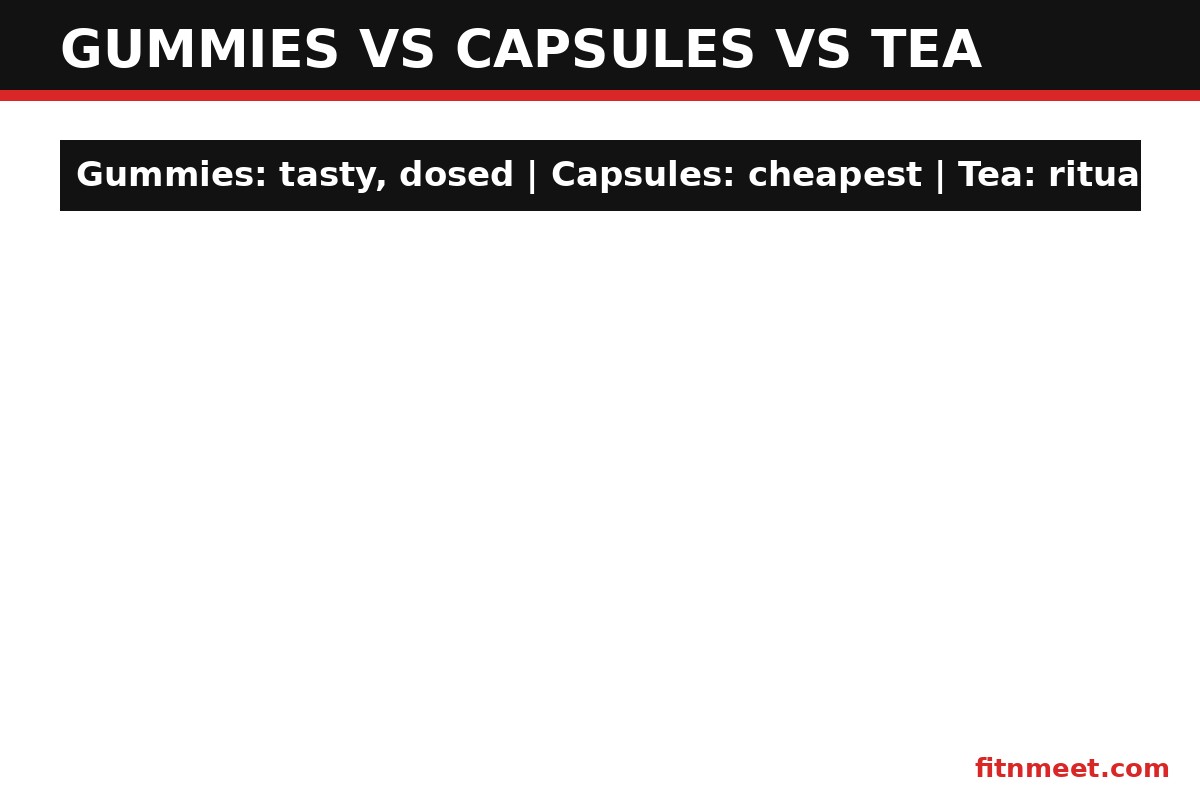
| Stress relief gummies | Medium — actives limited by gummy size | Highest — tasty, no water needed | Sugar content, lower max doses, pricier per mg |
| Capsules | Highest — easy to hit clinical doses | Good — portable, tasteless | Pill fatigue for some users |
| Tea (chamomile, lemon balm) | Lowest — variable extraction | Medium — brewing ritual itself calms | Weakest doses, inconvenient on the go |
| Powder (magnesium, theanine) | High — scoop-measured | Medium — mix into drinks | Taste, measuring hassle |
The honest ranking: if you will actually take gummies daily but would skip capsules, the gummies win — consistency beats optimal format. If you want clinical doses at the lowest cost per milligram, capsules win. Choose the format you will use for 8+ weeks, because that is the timeframe the evidence is built on.
Safety, Side Effects, and Dosage
Dosage guide: judge by active milligrams, not gummy count. Ashwagandha: 300–600 mg/day of standardized root extract (look for % withanolides on the label). L-theanine: 100–200 mg per dose, up to 400 mg/day. Magnesium: 200–400 mg/day from supplements (stay under the 350 mg/day supplemental upper limit for magnesium unless a clinician advises otherwise — note this limit applies to supplements, not food).
Common side effects of calming gummies are mild: stomach upset or nausea (usually from sugar alcohols or taking on an empty stomach), and occasional headache. Ashwagandha can cause digestive discomfort at high doses; magnesium in citrate or oxide forms can loosen stools — glycinate forms are gentler.
Interactions to check: ashwagandha may affect thyroid hormone levels and can interact with thyroid, blood pressure, diabetes, and immunosuppressant medications. Magnesium can interfere with absorption of certain antibiotics and blood pressure drugs — separate by 2+ hours. Anyone pregnant, nursing, or scheduled for surgery should avoid ashwagandha-containing gummies unless a clinician approves.
Quality control: dietary supplements are lightly regulated, so third-party testing (USP, NSF, or ConsumerLab seals) is your best quality signal. The FDA’s dietary supplement guidance and the NIH Office of Dietary Supplements ashwagandha fact sheet are the two most trustworthy references for evaluating any calming-gummy label.
Frequently Asked Questions
Do stress relief gummies actually work?
They can, but only at proper doses. Gummies with 300 to 600 mg of standardized ashwagandha or 100 to 200 mg of L-theanine have clinical evidence for modest stress reduction. Gummies with tiny undisclosed doses — hidden in proprietary blends — are unlikely to do anything.
What is the best ingredient in stress relief gummies?
Ashwagandha has the strongest evidence for lowering perceived stress over 8 weeks at 300 to 600 mg daily. L-theanine is best for fast calm within an hour without drowsiness. Magnesium helps if your diet is deficient. The best calming gummies match the ingredient to your specific need.
How many stress relief gummies should I take per day?
Follow the active-ingredient dose, not the gummy count. Most brands suggest 1 to 2 per day. Check that the serving delivers meaningful milligrams of ashwagandha, L-theanine, or magnesium — if two gummies only provide 50 mg of actives, the product is underdosed regardless of directions.
Are stress relief gummies safe?
For most healthy adults, yes at recommended doses. Mild stomach upset is the most common issue. Check with a clinician first if you take thyroid, blood pressure, diabetes, sedative, or immunosuppressant medication, or if you are pregnant or nursing.
Can stress relief gummies replace anxiety medication?
No. Calming gummies may ease everyday tension but are not treatments for anxiety disorders and must never replace prescribed medication. If anxiety affects your daily life, work with a healthcare professional — supplements can complement, not substitute, proper care.
When is the best time to take stress relief gummies?
L-theanine gummies work best 30 to 60 minutes before stressful events. Ashwagandha gummies should be taken at the same time daily for 2 to 4 weeks. Magnesium gummies are best 1 to 2 hours before bed to support evening wind-down.
Do stress relief gummies have side effects?
Usually mild: stomach upset, nausea, or headache, often from sugar alcohols or empty-stomach dosing. High-dose magnesium can cause loose stools. Ashwagandha may affect thyroid levels with long-term use. Choose third-party tested gummies to minimize quality-related issues.
Conclusion
Calming gummies are a convenient delivery format for genuinely useful calming ingredients — ashwagandha, L-theanine, and magnesium all have real evidence behind them. But the format is also where underdosed, overhyped products hide. Buy by milligrams, not marketing: 300–600 mg standardized ashwagandha, 100–200 mg L-theanine, or 200–400 mg magnesium, from third-party tested brands. Give adaptogens 2–4 weeks, track honestly, and keep the fundamentals — sleep, movement, daylight — as your foundation. Ready to build a calmer routine? Browse FitnMeet’s wellness range and support recovery from the inside out.
This article is for informational purposes only and is not medical advice. Consult a healthcare professional before starting any supplement.