
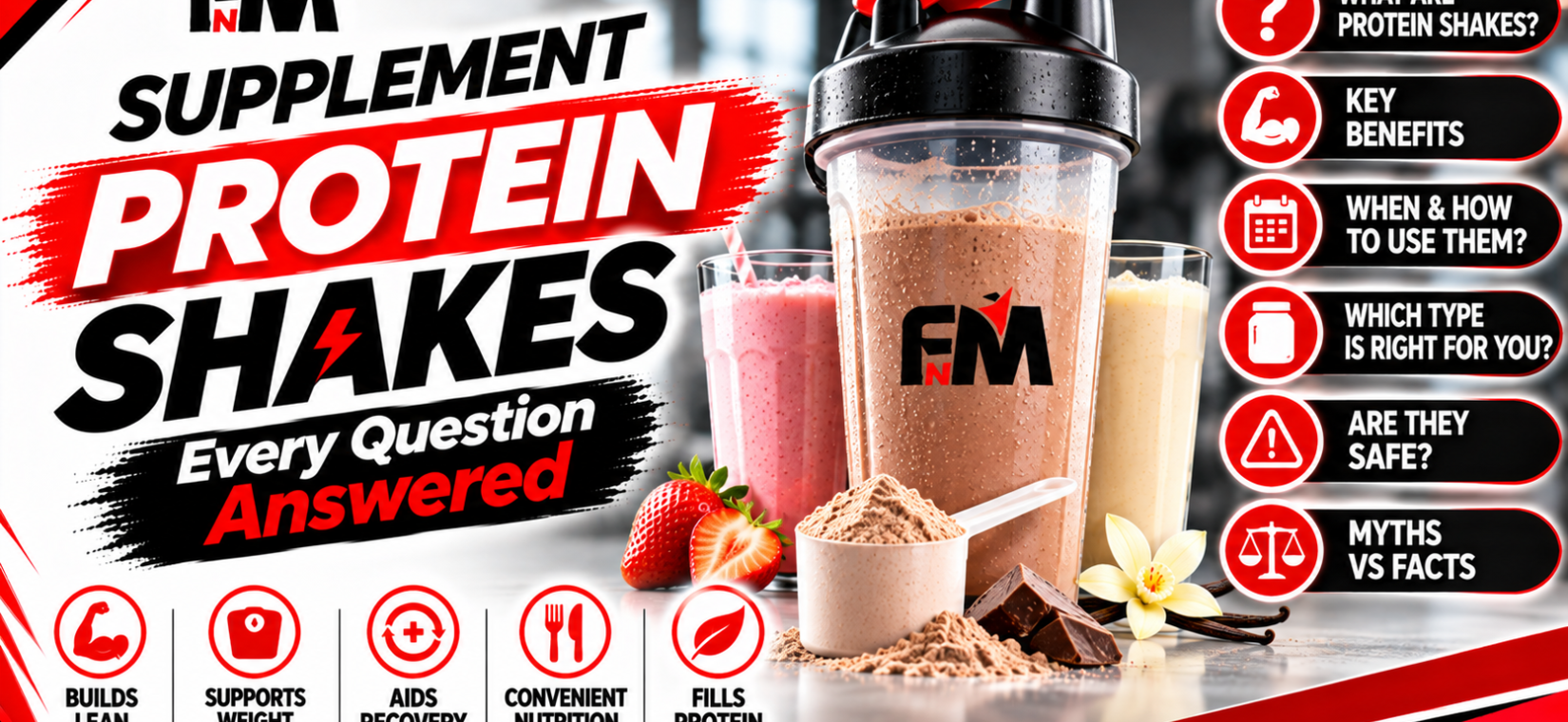
Supplement protein shakes are drinks made from powdered protein — whey, casein, or plant blends — mixed with water or milk to deliver 20–30 grams of protein per serving. Athletes use them to hit daily protein targets for muscle repair and growth when whole-food meals fall short. One shake costs under a dollar and takes 30 seconds to prepare.
The Short Answer
Q: What are supplement protein shakes, in one sentence?
A: They are powdered-protein drinks that deliver a concentrated dose of muscle-building amino acids quickly, cheaply, and conveniently.
Q: Do I need them to build muscle?
A: No — but most lifters struggle to eat 1.6–2.2 g of protein per kilogram of bodyweight from food alone, and supplement protein shakes make the target achievable without force-feeding chicken breasts. For training programs built to drive that growth, explore the FitnMeet muscle development collection.
Q: When should I drink one?
A: Within 2 hours after training, or any time your daily intake is short — the “anabolic window” is wider than old magazines claimed, but post-workout remains the most practical slot.
Fast Facts
Short on time? These are the numbers that matter — everything else in this guide is detail around them. If you remember only the first three, you know enough to buy wisely and use shakes effectively.
- 20–30 g protein per typical serving of supplement protein shakes.
- 1.6–2.2 g/kg/day protein target for muscle building (Morton et al., 2018 meta-analysis of 49 studies).
- ~$0.75–$1.50 cost per serving — cheaper than most whole-food protein sources per gram.
- 9 essential amino acids in whey, making it a complete protein.
- 2 hours — the practical post-workout window for a shake, though total daily intake matters most.
- 3rd-party tested (NSF, Informed Sport) is the quality seal to look for.
What Are Supplement Protein Shakes?
Supplement protein shakes start as protein powder — whey (from milk), casein (slow-digesting milk protein), egg, or plant blends (pea, rice, soy, hemp) — mixed with liquid. Whey dominates the market because it is a complete protein with high leucine content (the amino acid that triggers muscle protein synthesis) and mixes easily. A 2018 meta-analysis in the British Journal of Sports Medicine covering 49 studies and 1,863 participants confirmed that protein supplementation significantly enhances muscle strength and size gains during resistance training (NIH: Protein and athletic performance).
What is actually in the tub? Quality supplement protein shakes list protein as the first ingredient, with minimal fillers. Watch for: protein per serving (aim 20–30 g), sugar (keep under 8 g), and third-party testing seals. Avoid “proprietary blends” that hide individual ingredient amounts — transparency is a quality signal (Wikipedia: Whey protein).
Reading the label separates good supplement protein shakes from candy in disguise. Check the ingredient list length — under 10 ingredients is a good sign. “Protein blend” without individual amounts is a red flag; you want to see whey protein concentrate/isolate or specific plant proteins named with their weights. Sweeteners matter too: sucralose and stevia are the common choices, and neither meaningfully affects health at these doses, but if you dislike the taste of one, try the other before abandoning shakes entirely.
A: No. Endurance athletes, older adults fighting muscle loss, and busy people skipping meals all benefit — anyone with a protein gap is a candidate.
What Are the Benefits?
- Muscle repair and growth: The 49-study meta-analysis found consistent strength and size benefits from supplementation during training.
- Convenience: 30 seconds to make versus 30 minutes to cook — adherence beats perfection.
- Satiety and weight management: Protein is the most satiating macronutrient; a shake between meals curbs overeating.
- Recovery: Post-workout amino acids reduce muscle soreness and speed repair.
- Older adults: After 40, muscle loss (sarcopenia) accelerates; supplement protein shakes help preserve lean mass.
- Cost efficiency: Per gram of protein, powder beats meat, fish, and restaurant meals.
The older-adult benefit deserves emphasis. After age 40, adults lose 3–8% of muscle mass per decade — a process called sarcopenia that accelerates after 60 and drives frailty, falls, and loss of independence. Resistance training plus adequate protein is the evidence-backed countermeasure, and for older adults with smaller appetites, a daily shake is often the difference between sufficient and insufficient intake. It is one of the simplest longevity interventions available.
A: No. Muscle growth requires sustained training and a calorie surplus — a shake alone changes nothing about your physique except your protein intake.
How Do You Use Them?
Q: What is the simplest way to start?
A: One scoop with 300–400 ml of water or milk, shaken for 20 seconds, drunk within 2 hours after training. That is the entire protocol for week one.
Q: How many shakes per day?
A: One to two. Calculate your food protein first; use supplement protein shakes to fill the gap, not replace meals. Two shakes plus three protein-rich meals hits most targets. For more on structuring your full supplement routine, browse the FitnMeet sports nutrition range.
Q: Water or milk?
A: Water for fewer calories and faster absorption; milk for taste, extra protein (8 g per cup), and creaminess. Post-workout, either works.
Q: Can I cook with protein powder?
A: Yes — oats, pancakes, and smoothies all work. High heat can denature whey (changing texture, not safety), so add it after cooking where possible.
Q: Any recipes beyond water and powder?
A: Plenty. The classic: one scoop vanilla whey, one banana, 300 ml milk, handful of oats, ice — roughly 40 g protein and genuinely delicious. Chocolate peanut butter: chocolate whey, a tablespoon of peanut butter, milk, ice. Berry recovery: vanilla or unflavored powder, frozen berries, Greek yogurt, water. These turn supplement protein shakes from a chore into a treat, which is what makes the habit stick for years.
Questions People Also Ask
These are the questions search engines surface most often about this topic — the doubts that stop people from starting. Each gets a straight, evidence-based answer with no sales pitch.
Do supplement protein shakes cause kidney damage?
In healthy people, no. High protein intakes (up to 2.2 g/kg and beyond) show no kidney harm in studies of healthy adults. Those with existing kidney disease should consult a doctor — but protein does not cause kidney disease.
What is the difference between whey and mass gainers?
Whey-based supplement protein shakes deliver protein with minimal calories (~120–150 per scoop). Mass gainers add hundreds of carbohydrate calories per serving for hard gainers who cannot eat enough. Different tools for different goals.
Can I take supplement protein shakes on rest days?
Yes — muscle repair continues for 24–48 hours after training, and daily protein consistency matters more than workout-day timing. Keep the habit daily.
Do plant-based supplement protein shakes work as well?
Nearly. Pea-rice blends match whey’s amino profile closely enough that studies show comparable muscle gains. Soy is complete on its own. Single-source hemp or rice alone is less optimal — choose blends.
How Do They Compare?
Not all powders are interchangeable. The table below lays out the practical differences — protein content, digestion speed, lactose, and who each type suits — so you can match the product to your body and budget.
| Type | Protein/serving | Digestion speed | Lactose | Best for |
|---|---|---|---|---|
| Whey concentrate | 20–25 g | Fast | Some | General use, best value |
| Whey isolate | 25–30 g | Fastest | Minimal | Lactose-sensitive lifters |
| Casein | 20–25 g | Slow (hours) | Some | Nighttime anti-catabolic |
| Pea-rice blend | 20–25 g | Moderate | None | Vegan athletes |
| Soy isolate | 20–25 g | Moderate | None | Complete plant option |
For most lifters, whey concentrate-based supplement protein shakes are the rational default: complete amino profile, fastest absorption, lowest cost. Upgrade to isolate only if lactose bothers you; choose plant blends for dietary reasons, not performance ones. Explore whey protein isolate and the full protein category at FitnMeet.
Are Supplement Protein Shakes Safe?
Short answer: yes, for healthy adults. Protein powders are among the most studied supplements in sports nutrition, with safety data spanning decades. The details below cover the edge cases worth knowing.
- Generally recognized as safe: Whey and plant proteins are foods, not drugs, with decades of safe use.
- Digestive issues: Lactose in concentrate causes bloating in sensitive users — switch to isolate.
- Heavy metals: Choose third-party tested products (NSF Certified for Sport, Informed Sport); independent tests have found contaminants in some untested brands.
- Kidney/liver: No harm shown in healthy adults at recommended intakes; pre-existing conditions warrant medical advice.
- Not a meal replacement: Shakes lack the fiber, micronutrients, and phytonutrients of whole foods — supplement, do not substitute.
One more consideration: artificial sweeteners. Most powders use sucralose, acesulfame potassium, or stevia, all approved by food safety authorities at these doses. If you prefer to avoid them entirely, unflavored whey isolate plus your own fruit gives you full control — it tastes blander, but smoothies fix that. The dose of sweetener in a daily shake is small; pick whatever keeps you drinking it consistently.
A: Protein itself is safe for teens, but whole foods should come first and total intake should match a dietitian’s guidance for growing athletes. Avoid products with added stimulants or creatine blends marketed to adults.
Full FAQ
What are supplement protein shakes?
Supplement protein shakes are drinks made from powdered protein (whey, casein, or plant blends) mixed with water or milk, delivering 20-30 g of protein per serving to support muscle repair, growth, and daily protein targets.
When is the best time to drink supplement protein shakes?
Within 2 hours after training is the most practical slot, but total daily protein intake matters more than precise timing. Many people also use a shake between meals or at breakfast to hit their 1.6-2.2 g/kg daily target.
How many supplement protein shakes per day?
One to two per day for most lifters. Calculate protein from whole foods first, then use shakes to fill the remaining gap. Shakes should supplement meals, not replace them.
Whey vs plant supplement protein shakes: which is better?
Whey offers the best value, fastest absorption, and highest leucine content. Pea-rice blends perform nearly as well for muscle growth and suit vegans or the lactose-intolerant. Choose based on diet and digestion, not hype.
Do supplement protein shakes have side effects?
They are generally safe. Lactose in whey concentrate can cause bloating (switch to isolate). Choose third-party tested brands to avoid contaminants. People with kidney disease should consult a doctor before high protein intakes.
Can supplement protein shakes help with weight loss?
Yes, indirectly. Protein is the most satiating macronutrient, so a shake between meals reduces hunger and overeating. Combined with training, shakes help preserve muscle while losing fat — the key to keeping weight off.
Conclusion
Start with one scoop after your next workout and build the habit from there. Track your total daily protein for a week — most people are surprised how far short they fall, and that gap is exactly what the shake fills. Supplement protein shakes are not magic — they are math. If your diet falls 30–60 g short of your protein target, one or two shakes close the gap for about a dollar a day, backed by a 49-study meta-analysis showing real gains in muscle and strength. Choose a transparent, third-party tested powder, drink it consistently, train hard, and let the fundamentals work. Browse FitnMeet’s shop for quality protein options.
This article is for informational purposes only and is not medical advice. Consult a healthcare professional before starting any supplement.