
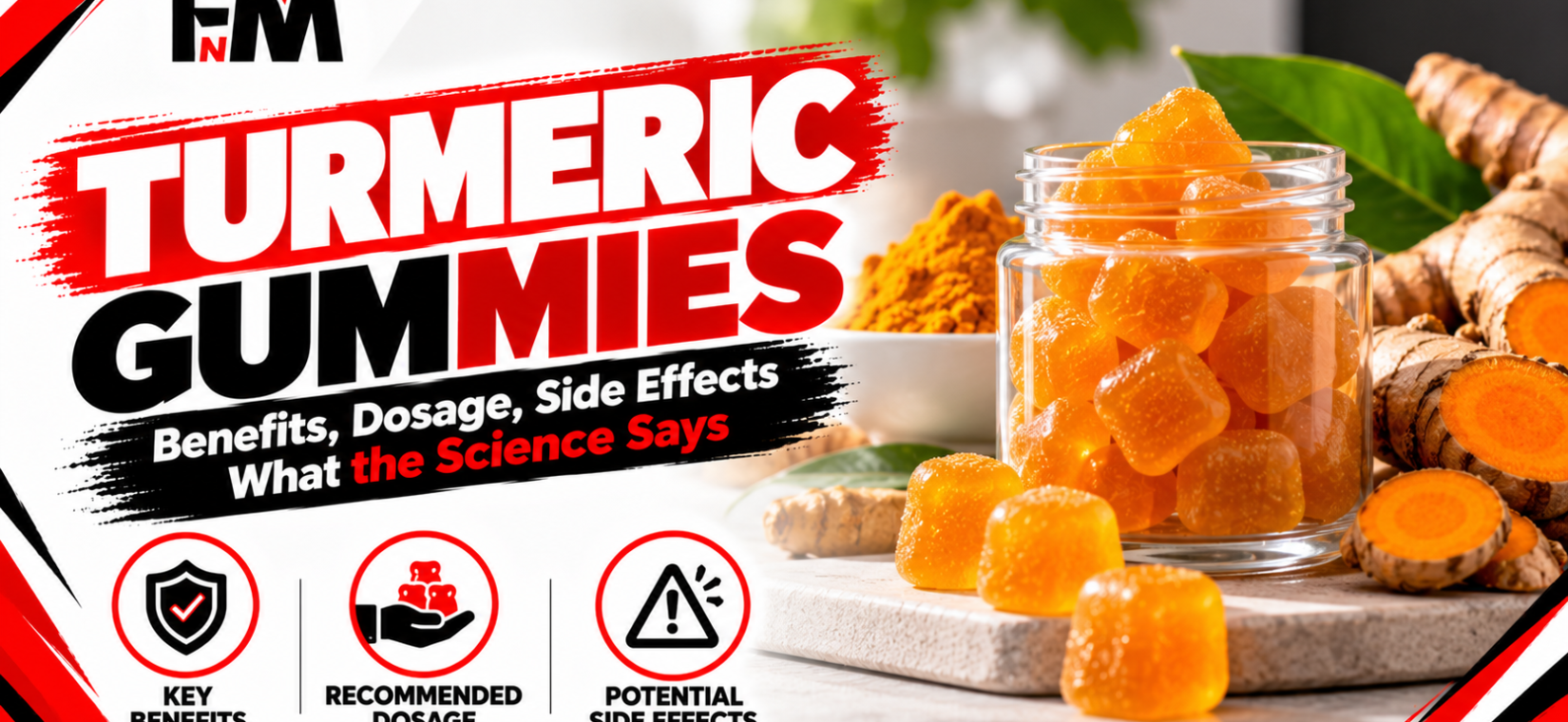
Turmeric gummies are chewable supplements made from turmeric root extract, standardized for curcumin — the compound responsible for turmeric’s anti-inflammatory and antioxidant effects. Clinical research suggests curcumin may help reduce markers of inflammation and ease osteoarthritis-related joint discomfort, though most strong trials used higher doses than a typical gummy serving provides.
Definition: Turmeric gummies are flavored, chewable dietary supplements containing concentrated turmeric extract (Curcuma longa), usually standardized for curcuminoids. They deliver curcumin — turmeric’s primary active compound — in a convenient, taste-masked format, often with added black pepper extract to improve absorption.
What Are Turmeric Gummies?
The gummies are chewable dietary supplements that pack concentrated turmeric root extract into a sweet, fruit-flavored chew. Instead of swallowing capsules or stirring bitter turmeric powder into drinks, you chew one or two gummies and get a measured dose of curcumin — the bright-yellow polyphenol that gives turmeric its color and most of its studied health effects.
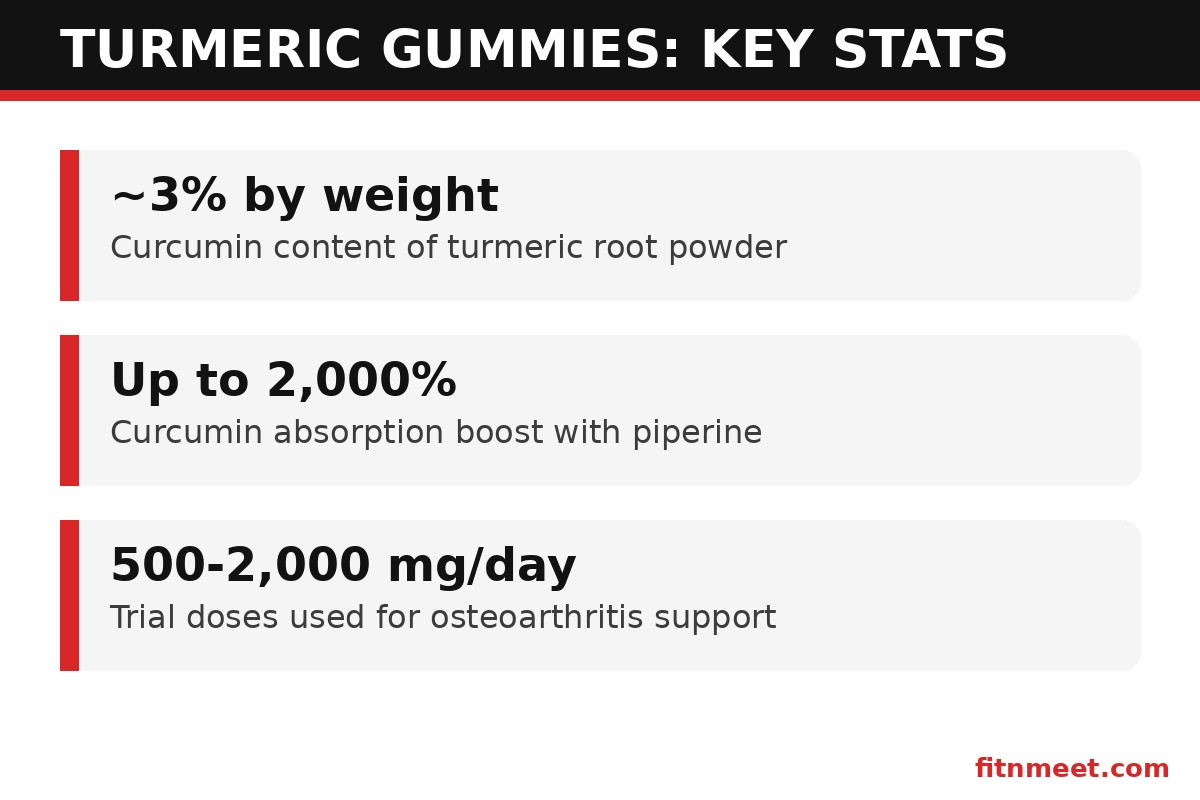
A typical turmeric gummies product contains 250 to 500 milligrams of turmeric extract per gummy, sometimes standardized to a stated percentage of curcuminoids. Raw turmeric root powder is only about 3 percent curcumin by weight, which is why extracts matter: a 500 mg extract standardized to 95 percent curcuminoids delivers roughly 475 mg of active curcuminoids, while 500 mg of plain turmeric powder would deliver only about 15 mg. That distinction is the single most important thing to understand when comparing turmeric gummies labels.
Many this gummy supplement also include black pepper extract (piperine), ginger, or vitamin D3. Piperine is there for a specific reason: curcumin on its own has poor oral bioavailability — most of it is metabolized and cleared before it reaches the bloodstream. A landmark 1998 study by Shoba and colleagues, published in Planta Medica, found that 20 mg of piperine increased curcumin’s bioavailability by 2,000 percent in humans. Without an absorption enhancer, turmeric gummies deliver far less usable curcumin than the label dose suggests.
The gummy format itself is a trade-off. On the plus side, turmeric gummies are convenient, portable, and far more pleasant than turmeric powder, which tastes earthy and stains everything it touches. On the minus side, gummies usually carry 3 to 5 grams of added sugar per serving, use gelatin (not suitable for vegans unless the label says pectin-based), and tend to offer lower curcumin doses per serving than capsules. Understanding that trade-off helps you decide whether these gummies fit your goals or whether a capsule is the more practical choice.
Why Turmeric Gummies Matter: Curcumin and Inflammation
To understand why turmeric gummies exist at all, you need to understand curcumin — and why inflammation is the story behind it.
Curcumin (diferuloylmethane) is the principal curcuminoid in turmeric, alongside demethoxycurcumin and bisdemethoxycurcumin. It has been used in Ayurvedic and traditional Chinese medicine for centuries, primarily for digestive complaints and inflammatory conditions. Modern research began isolating its mechanisms in the late 20th century and found that curcumin interacts with multiple molecular targets involved in the inflammatory cascade, including the transcription factor NF-kB, which regulates genes for pro-inflammatory cytokines such as TNF-alpha, IL-1, and IL-6.
That multi-target activity is unusual. Most anti-inflammatory drugs block one pathway; curcumin appears to modulate several at once. A 2014 meta-analysis by Sahebkar in Phytotherapy Research, pooling randomized controlled trials, found that curcumin supplementation significantly reduced circulating C-reactive protein (CRP) — a standard clinical marker of systemic inflammation — with larger effects at higher doses and longer durations. Subsequent meta-analyses have reported reductions in IL-6 and TNF-alpha as well, though effect sizes vary across populations.
Why does this matter for a gummy? Because chronic, low-grade inflammation is implicated in joint degeneration, metabolic syndrome, cardiovascular risk, and slower recovery from intense training. If curcumin can modestly lower inflammatory markers — as the trial data suggests — then a convenient daily format like the gummies makes consistent intake realistic for people who would never stick with capsules or golden-milk routines. Consistency is the entire point: the trials showing benefits used daily supplementation for 8 to 12 weeks, not occasional use.
The caveat is dose. The positive trials generally used 500 to 2,000 mg of standardized turmeric extract per day. Many turmeric gummies provide 250 to 500 mg of extract per serving — and some use non-standardized turmeric powder, which delivers far less curcumin. So the science behind turmeric gummies is real, but the dose in your specific gummy determines whether that science applies to you. Always read the supplement facts panel, not the front-of-bottle marketing.
This gummy supplement Benefits: What the Research Shows
Turmeric gummies are marketed for everything from glowing skin to faster workout recovery. Here is what the clinical evidence actually supports — and where the marketing runs ahead of the data.
Joint comfort and osteoarthritis symptoms
This is the best-studied benefit. A 2016 meta-analysis by Daily and colleagues in the Journal of Medicinal Food, pooling randomized trials of turmeric extracts for arthritis, concluded that curcumin-containing products reduced arthritis symptoms — particularly pain and physical function scores — and in some trials performed comparably to non-steroidal anti-inflammatory drugs such as ibuprofen. A separate trial by Kuptniratsaikul and colleagues (n=107 patients with knee osteoarthritis) found 1,500 mg of turmeric extract daily produced pain relief similar to 1,200 mg of ibuprofen over six weeks, with fewer gastrointestinal complaints. If joint comfort is your goal, turmeric gummies with a meaningful extract dose are the most evidence-aligned use case — but note the effective trial doses (1,000-1,500 mg/day) exceed what a single gummy typically provides.
Inflammatory markers
As noted above, meta-analyses of randomized trials show curcumin lowers CRP, and some show reductions in IL-6 and TNF-alpha. For athletes and active adults, lower systemic inflammation is associated with better recovery between hard sessions, though no trial has directly tested these gummies on training recovery in a well-powered design. The effect is real but modest — think supportive nutrition, not a replacement for sleep, programming, or medical treatment.
Antioxidant support
Curcumin is a direct free-radical scavenger and, perhaps more importantly, appears to upregulate the body’s own antioxidant enzymes, including superoxide dismutase, catalase, and glutathione peroxidase. A widely cited 2017 review by Hewlings and Kalman in Foods summarized curcumin’s antioxidant and anti-inflammatory actions across preclinical and clinical work, noting that its poor bioavailability remains the main barrier to translating laboratory effects into human outcomes. This is another reason turmeric gummies that include piperine or lipid-based delivery are preferable to plain turmeric powder chews.
Mood and cognitive support
The evidence here is preliminary but interesting. A 2017 meta-analysis by Ng and colleagues in the Journal of the American Medical Directors Association pooled six randomized trials and found curcumin supplementation associated with reduced depressive symptoms, with stronger effects at higher doses and longer durations. Small trials have also explored curcumin for memory and attention in older adults. These findings are encouraging, not conclusive — sample sizes were small and formulations varied.
Metabolic health
Several randomized trials and meta-analyses suggest curcumin can modestly improve fasting blood glucose, HbA1c, triglycerides, and LDL cholesterol in people with metabolic syndrome or type 2 diabetes. The effect sizes are small to moderate, and turmeric gummies should never replace prescribed medication. Still, for someone already managing diet and exercise, a daily curcumin habit is a reasonable adjunct — with a doctor’s awareness, since curcumin can lower blood sugar and interact with diabetes drugs.
What the gummies are NOT proven for
Honesty matters here. Turmeric gummies have not been shown to “detox” the liver, melt body fat, cure arthritis, or prevent cancer in humans. Laboratory studies showing curcumin killing cancer cells in petri dishes used concentrations that oral supplements cannot achieve in the body. Treat turmeric gummies as a well-tolerated anti-inflammatory food supplement with genuine but modest effects — not a miracle cure.
How to Use This gummy supplement (Step-by-Step)
Getting the most out of turmeric gummies comes down to label reading, timing, and consistency. Follow these steps:
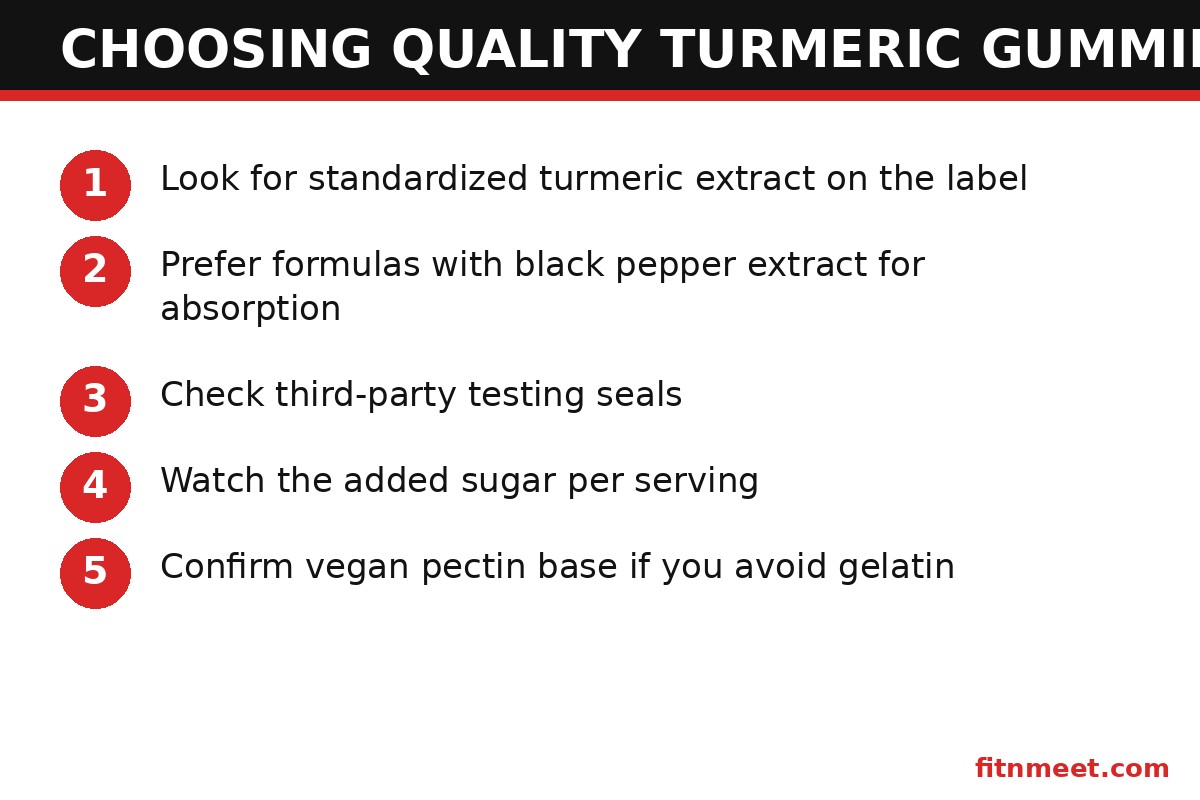
- Read the supplement facts panel, not the front label. Look for “turmeric extract” with a stated curcuminoid percentage (ideally 95 percent standardized) rather than just “turmeric powder.” Note the per-serving dose and how many gummies make a serving.
- Check for an absorption enhancer. Prefer turmeric gummies that include black pepper extract (piperine) or a lipid/phospholipid delivery system. Without one, most of the curcumin passes through unabsorbed.
- Take them with a meal containing some fat. Curcumin is fat-soluble. Taking these gummies with breakfast or dinner that includes healthy fats (eggs, nuts, olive oil, yogurt) meaningfully improves uptake compared with taking them on an empty stomach.
- Split the dose if the label allows. If your gummies provide two per serving, taking one in the morning and one in the evening keeps blood levels steadier than a single bolus — curcumin has a short half-life of a few hours.
- Be consistent for at least 8 to 12 weeks. The clinical trials showing reduced inflammatory markers and joint benefits ran for two to three months. Judging turmeric gummies after a week is like judging a training program after two workouts.
- Track something measurable. Note morning joint stiffness, post-workout soreness, or any marker your doctor follows (such as CRP). Subjective “I feel better” is fine, but a simple log keeps you honest about whether the turmeric gummies are earning their place.
- Reassess at three months. If nothing has changed — no difference in comfort, recovery, or labs — the dose may be too low, the formula may lack an absorption enhancer, or curcumin may simply not be your lever. Switch to a standardized capsule or move on.
The gummies Dosage: How Much Should You Take?
There is no official recommended daily allowance for curcumin — it is a supplement, not an essential nutrient. But the trial literature gives us a working range: most positive human studies used 500 to 2,000 mg of standardized turmeric extract per day, typically providing 475 to 1,900 mg of curcuminoids.
Now compare that with turmeric gummies on the shelf. A common gummy serving (2 gummies) delivers 250 to 500 mg of turmeric extract — and many products do not standardize curcuminoid content at all. If your gummies provide 500 mg of non-standardized extract at roughly 3 percent curcumin, you are getting about 15 mg of curcumin per serving: a fraction of trial doses. This is the central dosage problem with turmeric gummies, and it is why label scrutiny matters more than brand loyalty.
Practical guidance:
- Start with the label serving (usually 1-2 gummies daily) for the first two weeks to check tolerance.
- Aim for the equivalent of at least 500 mg standardized extract daily if joint or inflammation support is the goal — that may mean taking the full serving or choosing a more concentrated product.
- Do not exceed the label maximum without professional guidance. Trials have used up to 8 grams of curcumin daily for short periods without serious toxicity, but gastrointestinal side effects climb with dose, and gummies add sugar with every extra chew.
- Take with food containing fat, as described above — timing matters as much as milligrams for a poorly absorbed compound.
If you need trial-level doses (1,000 mg+ of curcuminoids daily), this gummy supplement becomes expensive and sugar-heavy. At that point, standardized capsules with piperine are the more sensible delivery format — and the comparison table below makes that trade-off explicit.
Turmeric Gummies Side Effects and Safety
Turmeric has a long history of culinary use, and curcumin is generally well tolerated in trials — but “natural” does not mean “risk-free,” and turmeric gummies carry a few specific cautions.
Common, mild side effects
- Digestive upset: nausea, mild diarrhea, or stomach discomfort, especially at higher doses or on an empty stomach. Taking these gummies with food usually resolves this.
- Headache or dizziness: reported infrequently in trials.
- Skin rash: rare, but turmeric allergy exists.
- Added-sugar effects: unique to gummies — 3 to 5 grams of sugar per serving adds up, and sugar alcohols in “sugar-free” turmeric gummies can cause bloating.
Who should be cautious
- People on blood thinners or antiplatelet drugs (warfarin, aspirin, clopidogrel): curcumin may slow blood clotting and increase bleeding risk. The NIH Office of Dietary Supplements flags this interaction explicitly.
- People with gallbladder disease or gallstones: turmeric stimulates bile production and gallbladder contraction, which can trigger symptoms.
- People on diabetes medication: curcumin can lower blood sugar; combined with glucose-lowering drugs, that can push levels too low.
- Pregnant or breastfeeding women: culinary turmeric in food is fine, but medicinal-dose turmeric gummies have not been established as safe in pregnancy — avoid them unless your clinician approves.
- Upcoming surgery: stop the gummies 1 to 2 weeks before scheduled surgery because of the bleeding-risk interaction.
One more safety note: dietary supplements are not pre-approved by the FDA. Under the Dietary Supplement Health and Education Act, manufacturers are responsible for ensuring safety, and the FDA acts after problems surface. That is why third-party testing seals (USP, NSF, or Informed-Sport) on your turmeric gummies matter — they verify that the bottle contains what the label claims and is free of common contaminants. You can read the FDA’s overview of how dietary supplements are regulated to understand what that means for label claims.
Turmeric Gummies vs Alternatives: Comparison
This gummy supplement are one of several ways to get curcumin. Here is how they stack up:
| Format | Typical curcumin dose | Absorption support | Pros | Cons |
|---|---|---|---|---|
| Turmeric gummies | 15-500 mg curcuminoids/serving | Sometimes (piperine) | Taste, convenience, easy habit | Added sugar, often low dose, cost per mg |
| Standardized capsules | 500-1,000 mg curcuminoids/capsule | Often (piperine/phospholipids) | Trial-level doses, no sugar, cheapest per mg | Swallowing pills, less enjoyable |
| Turmeric powder (culinary) | ~15 mg per teaspoon | No (unless cooked with fat/pepper) | Cheap, whole-food, versatile | Tiny curcumin dose, stains, taste |
| Liquid liposomal curcumin | 250-500 mg/serving | Yes (liposomal) | Good absorption, no pills | Price, taste, shorter shelf life |
| Fresh turmeric root | ~200 mg per 100 g root | No | Whole-food, juicing-friendly | Impractical doses, staining, perishable |
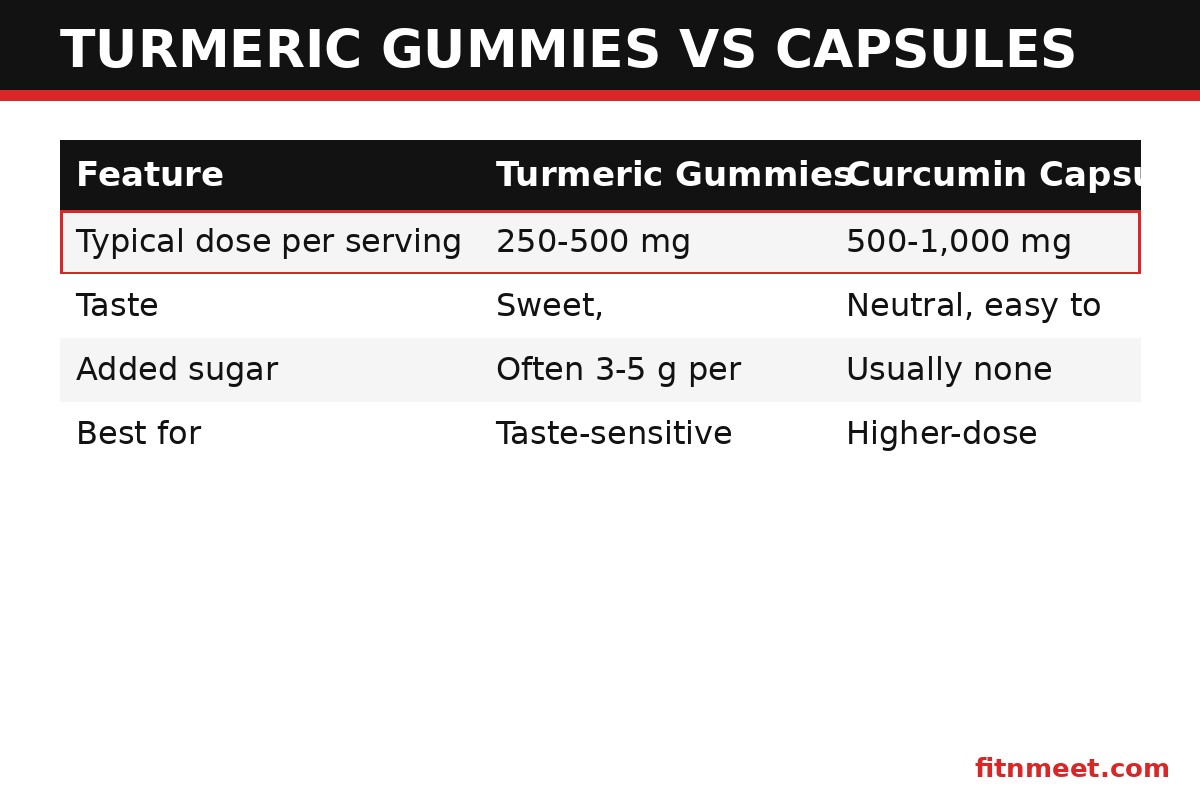
The honest summary: turmeric gummies win on adherence — the best supplement is the one you actually take daily. They lose on dose-per-dollar and sugar content. If you enjoy the ritual and your gummies are standardized with an absorption enhancer, they are a legitimate option. If you need the 1,000 mg+ doses used in arthritis trials, capsules are the rational pick.
Alternatives to These gummies
If turmeric gummies are not the right fit — or you want to stack complementary support — consider these evidence-backed alternatives:
- Standardized curcumin capsules with piperine: the format used in most clinical trials; the direct upgrade when turmeric gummies under-dose you.
- Omega-3 fish oil: EPA and DHA have their own anti-inflammatory trial literature and pair well with curcumin; a staple of most health support routines.
- Ginger extract: a fellow rhizome with modest anti-inflammatory and anti-nausea evidence; some the gummies already include it.
- Boswellia serrata: frankincense extract with randomized-trial support for osteoarthritis symptoms, sometimes combined with curcumin in joint formulas.
- Collagen peptides + vitamin C: for joint structure support rather than inflammation — a different mechanism, often stacked with curcumin by active adults browsing vitamins and joint-support options.
- Whole-food turmeric in cooking: curries made with fat and black pepper deliver small but real curcumin doses as part of an anti-inflammatory eating pattern.
Whatever you choose, keep the same standard: standardized extract, stated curcuminoid content, an absorption strategy, and third-party testing. You can compare formats side by side in the FitnMeet shop and the anti-aging and healthy-aging collection, where curcumin-based products sit alongside other recovery staples.
Frequently Asked Questions
Do turmeric gummies actually work?
Turmeric gummies can work if they contain a meaningful dose of standardized turmeric extract with an absorption enhancer such as piperine. Clinical trials show curcumin reduces inflammatory markers and eases osteoarthritis symptoms, but most positive trials used 500 to 2,000 mg of extract daily — more than many gummies provide. Check the supplement facts panel for curcuminoid content before judging the format.
How many turmeric gummies should I take per day?
Follow the label serving, usually 1 to 2 gummies daily. For inflammation or joint support, aim for products whose daily serving provides at least 500 mg of standardized turmeric extract. Take turmeric gummies with a meal containing some fat to improve curcumin absorption, and do not exceed the label maximum without professional guidance.
Are turmeric gummies better than capsules?
Turmeric gummies are better for taste and daily adherence, but capsules are usually better for dose: standardized capsules commonly deliver 500 to 1,000 mg of curcuminoids per capsule with no added sugar, while gummies often provide less extract per serving plus 3 to 5 grams of sugar. Choose gummies for convenience and capsules when you need trial-level doses.
When is the best time to take turmeric gummies?
Take turmeric gummies with a meal that contains some fat, since curcumin is fat-soluble and absorbs poorly on an empty stomach. Morning or evening both work; consistency over 8 to 12 weeks matters far more than the hour. If your serving is two gummies, splitting them between morning and evening may keep levels steadier.
Can turmeric gummies help with arthritis?
Curcumin has the strongest evidence for osteoarthritis symptoms: a 2016 meta-analysis of randomized trials found turmeric extracts reduced arthritis pain and improved function, with some trials showing effects comparable to ibuprofen. Turmeric gummies may help if they deliver an adequate standardized dose, but they are a complement to — not a replacement for — medical treatment of arthritis.
Who should not take turmeric gummies?
Avoid medicinal-dose turmeric gummies if you take blood thinners, have gallbladder disease or gallstones, are pregnant or breastfeeding, or have surgery scheduled within two weeks — unless your clinician approves. People on diabetes medication should monitor blood sugar, since curcumin can lower it. Those with turmeric allergy should avoid them entirely.
Conclusion
Turmeric gummies are a genuinely convenient way to take curcumin — and curcumin itself has solid, if modest, clinical support for lowering inflammatory markers and easing osteoarthritis discomfort. The format’s weakness is dose: many turmeric gummies under-deliver compared with the 500-2,000 mg extract doses used in trials, and the added sugar is a real cost. Choose these gummies that list standardized curcuminoid content, include piperine or another absorption enhancer, carry third-party testing, and keep sugar low — then give them a consistent 8 to 12 weeks with a meal containing fat before you judge the results.
Ready to compare options? Browse FitnMeet’s curated recovery and wellness range to find a curcumin formula that matches your goals and your standards.
This article is for informational purposes only and is not medical advice. Consult a healthcare professional before starting any supplement, especially if you take medication or have a medical condition.
For background on curcumin’s chemistry and pharmacology, see the Curcumin article on Wikipedia and the NIH Office of Dietary Supplements turmeric fact sheet.