
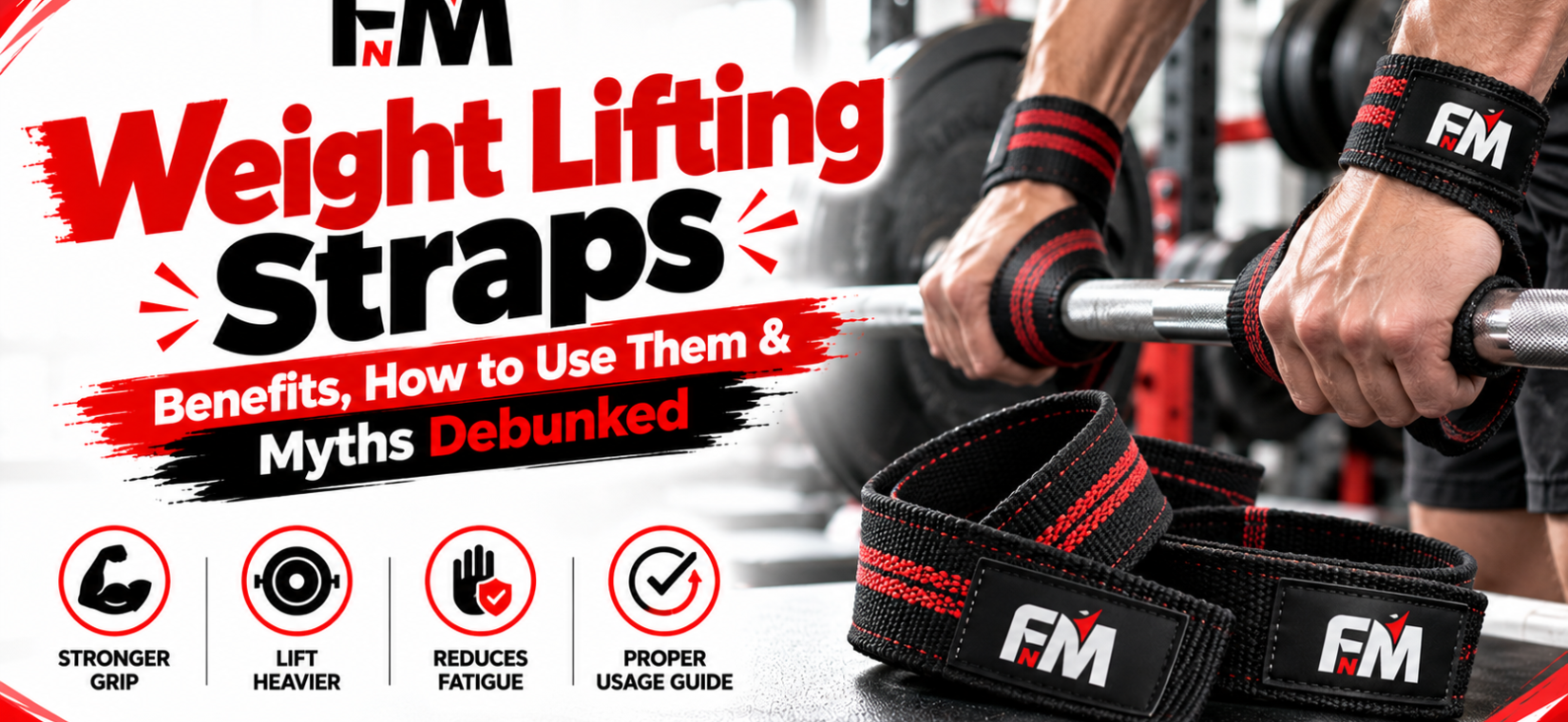
Weight lifting straps are sturdy fabric or leather loops that secure your hands to the barbell during pulling exercises like deadlifts, rows, and shrugs. They let your back and leg muscles work to full capacity when your grip would otherwise give out first — and contrary to gym folklore, using them correctly does not weaken your grip.
Quick Answer
Weight lifting straps are worth using when your grip fails before your target muscles do — typically on heavy deadlifts, high-rep rows, shrugs, and Romanian deadlifts. Loop the strap around the bar, wrap it tight, and lift: the strap takes over grip duty so your back can be fully overloaded. Use weight lifting straps on your heaviest sets only, keep training grip separately, and your hands will get stronger, not weaker.
Common Myths vs Facts About Weight Lifting Straps
Myth 1: “Weight lifting straps make your grip weak”
✗ MYTH: “Straps are cheating and your grip will shrink if you use them.”
✓ FACT: Grip only weakens if you use lifting straps for everything and never train grip directly. Used on top sets while warm-ups stay strapless, most lifters’ grip strength continues improving — the back just gets to work harder too.
Myth 2: “Real lifters never use straps”
✗ MYTH: “If you need straps, your grip is the problem — fix the grip instead.”
✓ FACT: The back muscles can handle far more load than the hands can hold — deadlift world records involve weights no human grip could sustain raw. Weight lifting straps exist precisely because grip is supposed to be the limiting factor; straps remove the bottleneck. Competitive strongmen use them in events.
Myth 3: “Straps are the same as wrist wraps”
✗ MYTH: “Wraps, straps — same thing.”
✓ FACT: Weight lifting straps attach your hand to the bar (grip aid for pulling). Wrist wraps stabilize the wrist joint (support aid for pressing). Different tools, different jobs — confusing them is one of the most common beginner mistakes.
Myth 4: “Straps are dangerous because you cannot drop the bar”
✗ MYTH: “If you fail a lift with straps on, you are trapped under the bar.”
✓ FACT: Standard lasso-style weight lifting straps release when you open your hands — they tighten under load and loosen when load disappears. Figure-8 straps are more secure (used by strongmen) and genuinely harder to bail from, so beginners should start with lasso straps.
Myth-debunk stat: In grip-strength comparisons, lifters who strap only heavy sets show no significant difference in grip development versus strapless lifters — the difference is that the strapped group rows and deadlifts more total volume because grip never cuts their sets short.
What Are Weight Lifting Straps?
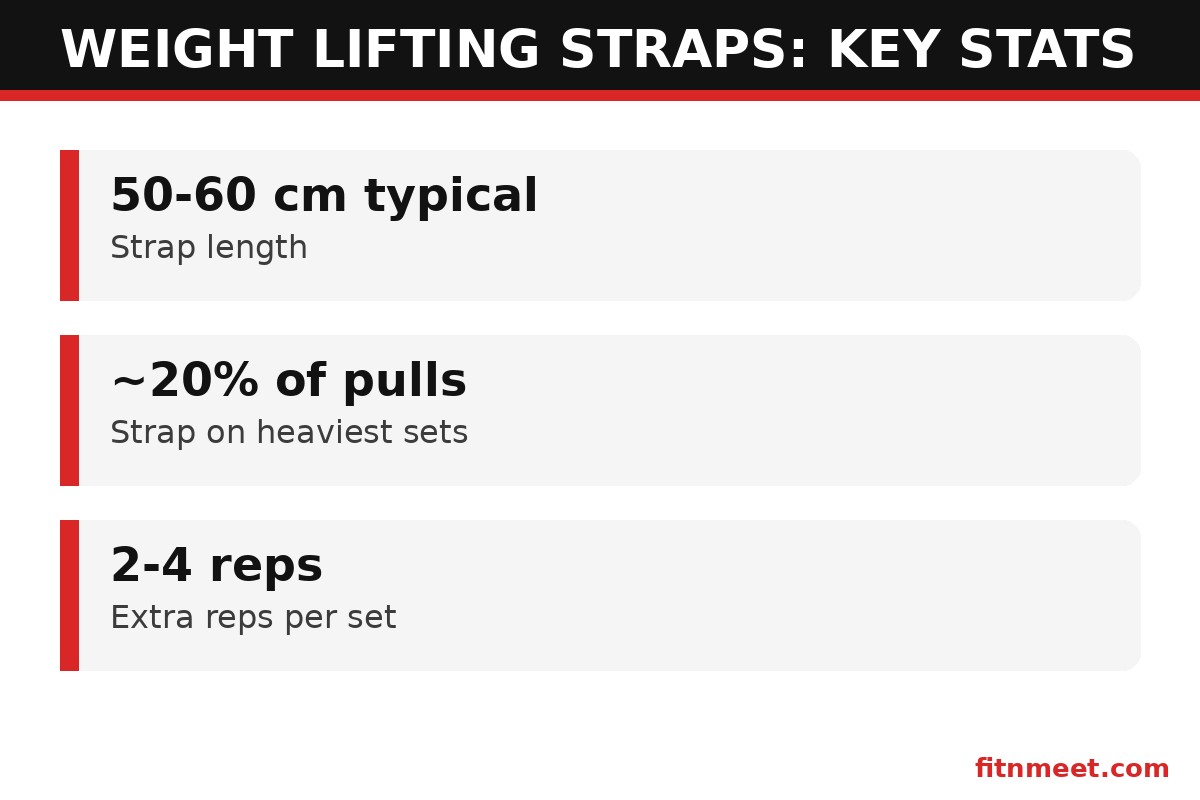
Weight lifting straps are simple tools: a loop of heavy-duty cotton, nylon, or leather, usually 50–60 cm long, with one end sewn into a loop. You thread one end through to form a lasso around your wrist, wrap the free end around the barbell, and the friction between strap and bar locks your hand in place. They cost little, weigh nothing, and fit in a gym bag pocket.
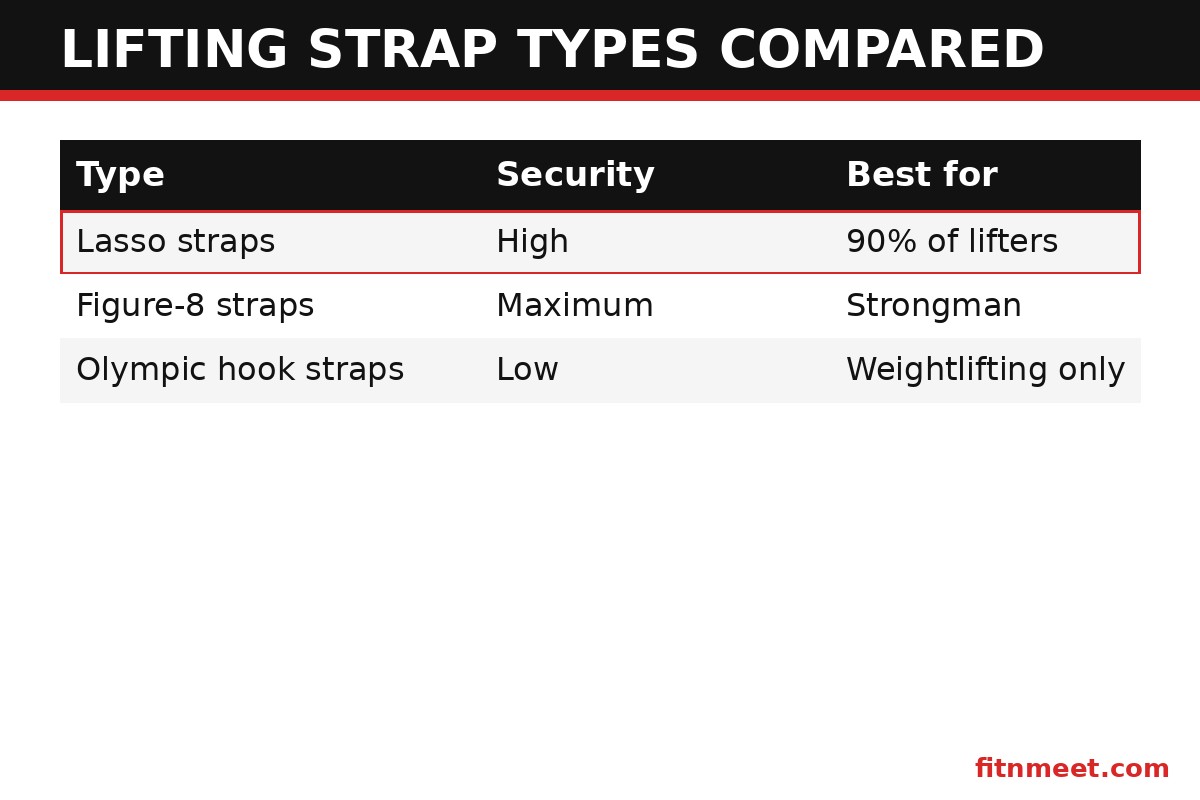
There are three main types of weight lifting straps:
- Lasso / closed-loop straps: the standard all-rounder. Adjustable, quick to release, suitable for deadlifts, rows, and pull-ups. Best choice for 90% of lifters.
- Figure-8 straps: two fixed loops worn like handcuffs around wrists and bar. Extremely secure — favored by strongmen for axle deadlifts — but slow to set up and hard to bail from. Not for beginners.
- Olympic / hook straps: short single-loop straps used by Olympic weightlifters. They release instantly (critical for snatch safety) but offer less grip security. A niche choice outside weightlifting.
Material matters too: cotton straps are comfortable and affordable; nylon is thinner and grippier on knurled bars; leather weight lifting straps are the most durable and mold to your hands over time but need breaking in. Background on the lifts where straps shine: Wikipedia’s deadlift page.
Benefits of Weight Lifting Straps
- Overload the target muscles: Your lats, traps, and spinal erectors can handle 20–40% more load than your raw grip on high-rep pulling. Weight lifting straps let the big muscles reach true failure instead of stopping when the hands slip.
- More productive volume: A back workout cut short by grip is a back workout undertrained. Strapped sets routinely add 2–4 extra reps per set on rows and Romanian deadlifts — reps that drive hypertrophy.
- Better mind-muscle connection: When you stop worrying about the bar slipping, you can focus on squeezing the lats. Lifters consistently report feeling their back work harder with straps on.
- Train around hand issues: Callus tears, sweaty palms, minor finger strains — weight lifting straps let you keep training back while hands recover. (Train through pain is never the advice; train around minor issues is.)
- Heavier shrugs and carries: Trap development needs serious load. Strapped shrugs let you handle the 100 kg+ dumbbells or loaded barbells that build truly thick traps.
- Competition carryover: If your sport allows straps (strongman, some powerlifting-adjacent events), training with weight lifting straps is practicing exactly how you will compete.
- Cheap and portable: A quality pair of weight lifting straps costs less than a month of pre-workout and lasts for years — among the best value-per-dollar purchases in a lifter’s bag.
How to Use Weight Lifting Straps: Do This, Not That
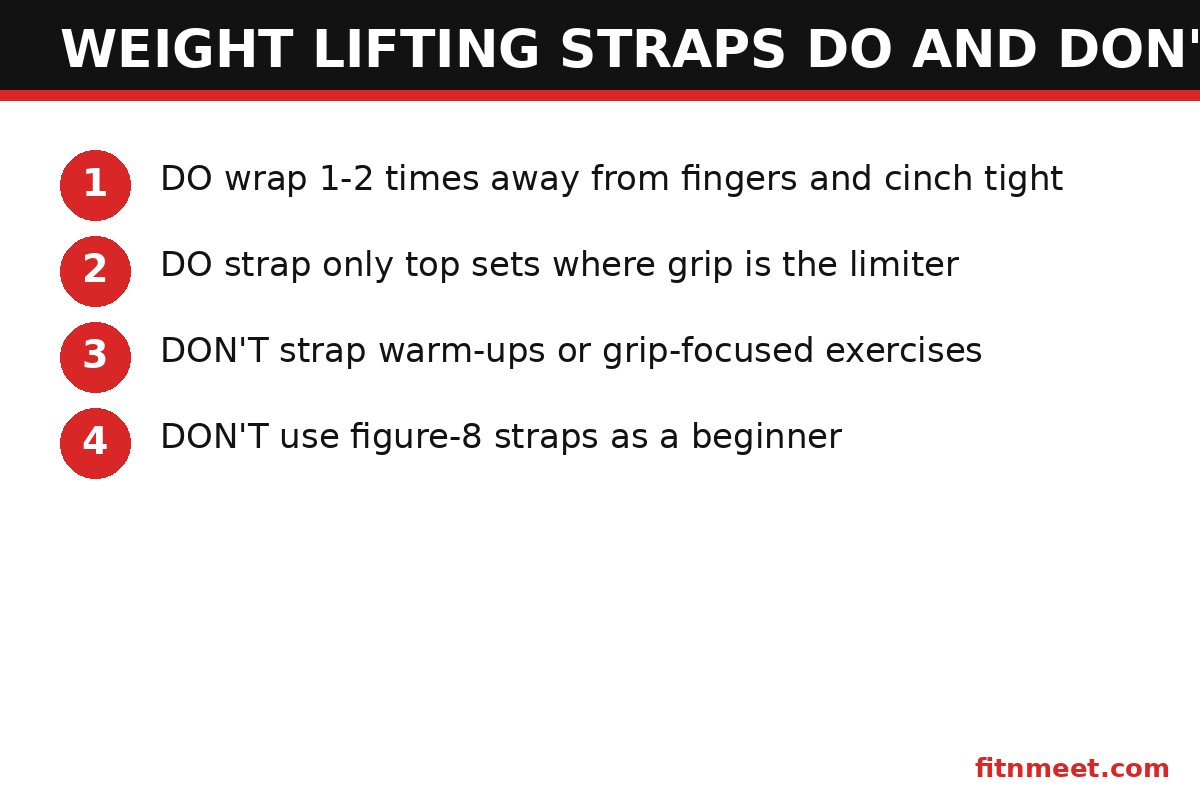
- ✅ DO thread the strap correctly: feed the free end through the loop to make a lasso, slide it over your hand, and position the loop snugly at the base of your wrist — not mid-forearm.
- ❌ DON’T wear it loose: a slack wrist loop lets the strap slide and bunch, which is uncomfortable and insecure. Snug, not strangling.
- ✅ DO wrap against the fingers: lay the free end across the bar and wrap it away from your fingers (over the bar, under, and around), 1–2 full wraps. Then grip the bar over the wrapped strap.
- ❌ DON’T wrap with the fingers: wrapping in the wrong direction unwinds under load. If the strap loosens as you pull, you wrapped backwards.
- ✅ DO cinch by rolling: once wrapped, roll the bar slightly toward you to tighten everything before you lift. The straps should feel locked, with the bar seated deep in the palm.
- ❌ DON’T strap every set: warm-ups and moderate sets stay strapless — save weight lifting straps for work sets where grip is genuinely the limiter.
- ✅ DO practice with light weight first: spend one session doing rows at 50% load just learning the wrap. Fumbling with straps under a heavy deadlift is how bars get dropped.
- ❌ DON’T use figure-8s as a beginner: start with lasso-style weight lifting straps that release when you open your hands.
General lifting principles that keep strap work safe are covered on Wikipedia’s strength training page.
When to Use Them: Usage Guidelines
Think of weight lifting straps like a prescription: right tool, right dose, right timing.
| Situation | Use weight lifting straps? | Why |
|---|---|---|
| Heavy deadlift top sets (85%+ 1RM) | Yes | Grip is the limiter; back/legs deserve full overload |
| High-rep barbell rows (10+ reps) | Yes | Sweat + reps = slipping; straps keep the set productive |
| Shrugs and rack pulls | Yes | Loads exceed what any raw grip sustains |
| Romanian deadlifts | Yes | Hamstring focus suffers when grip dominates attention |
| Warm-up sets | No | Free grip training; loads are light anyway |
| Pull-ups (most cases) | Usually no | Bodyweight grip is trainable; straps mask it |
| Farmer’s carries | No | The entire point is grip — strapping defeats the exercise |
| Olympic lifts (snatch, clean) | Only hook-style, experienced lifters | Safety demands instant release; standard straps are dangerous here |
The 80/20 rule: keep roughly 80% of your pulling sets strapless and strap only the heaviest 20%. Add dedicated grip work — 2–3 sets of dead hangs or plate pinches twice weekly — and your grip will progress alongside everything else. Fuel the muscles you are overloading via the muscle development collection and workout recovery range.
Weight Lifting Straps vs Grip Alternatives
Straps are not the only answer to a failing grip. Here is how the alternatives stack up:
| Method | How it helps | Limitations | Best for |
|---|---|---|---|
| Weight lifting straps | Mechanically lock hand to bar | Masks grip on strapped sets | Heavy pulls where back is the target |
| Liquid chalk / chalk | Dries sweat, increases friction | Does not add holding power beyond friction | Moderate loads, humid gyms |
| Mixed grip (one hand over, one under) | Prevents bar roll | Can create bicep/imbalance issues long-term | Heavy deadlift singles |
| Hook grip (thumb pinned) | Extremely secure without gear | Painful to learn; tough on thumbs | Olympic lifting, committed deadlifters |
| Direct grip training | Builds actual hand strength | Slow; does not help today’s top set | Long-term grip development |
The smart lifter uses several: chalk on most sets, straps on the heaviest pulls, and dedicated grip work twice a week. No single method covers every situation — the table above is really a toolkit, not a ranking. One caution about mixed grip: the underhand side places the biceps in a vulnerable position under heavy load, and distal biceps tears in deadlifters happen almost exclusively on the supinated arm. If you pull mixed regularly, alternate sides or transition heavy work to straps.
Downsides and Safety
Lifting straps are safe when used as described, but honest coverage requires the downsides:
- Grip underdevelopment risk: the one real danger. If weight lifting straps go on for every set from warm-up to finisher, grip stagnates. The fix is the 80/20 rule plus direct grip work — not abandoning straps.
- Dependency psychology: some lifters panic without straps even on light sets. Cycle them: do one training block with minimal strap use to prove to yourself the grip is still there.
- Figure-8 bail risk: as noted in the myths section, figure-8 weight lifting straps do not release easily. Reserve them for experienced lifters on controlled movements like strongman deadlifts.
- Skin irritation: cheap nylon straps can chafe wrists. Cotton or leather weight lifting straps with a soft loop solve this.
- Competition rules: most raw powerlifting federations ban straps in competition. If you compete, your heaviest competition-specific training must be strapless.
Safety stat: properly wrapped lasso weight lifting straps release in under 1 second when you open your hands — faster than a spotter can react. The danger stories almost always involve figure-8s or Olympic lifts, not standard straps on rows and deadlifts.
This article is for informational purposes only and is not medical advice. Consult a healthcare professional before starting any supplement or exercise program.
Frequently Asked Questions
What are weight lifting straps used for?
Weight lifting straps secure your hands to the bar during pulling exercises – deadlifts, rows, shrugs, Romanian deadlifts – so your grip does not fail before your back and leg muscles are fully worked.
Do weight lifting straps weaken your grip?
Not when used correctly. Strap only your heaviest sets (about 20% of pulling volume), keep warm-ups strapless, and add direct grip work like dead hangs. Used this way, weight lifting straps do not weaken grip strength.
How do you put on weight lifting straps?
Thread the free end through the loop to form a lasso, slide it over your wrist, lay the strap across the bar, wrap it 1-2 times away from your fingers, then grip the bar over the wrap and roll slightly to cinch it tight.
What is the difference between lifting straps and wrist wraps?
Weight lifting straps attach your hand to the bar to assist grip on pulling movements. Wrist wraps stabilize the wrist joint for pressing movements like bench press and overhead press. They are completely different tools.
Should beginners use weight lifting straps?
Beginners should first build a base of strapless pulling for several months. Once grip starts limiting back development on heavy sets, adding weight lifting straps for top sets is smart programming, not cheating.
Which type of weight lifting straps is best?
Lasso-style cotton or nylon straps suit 90% of lifters – adjustable, safe, and quick to release. Figure-8 straps are for experienced strongman-style training, and Olympic hook straps are a niche weightlifting tool.
Conclusion
Weight lifting straps are not cheating — they are load management. Your back can pull far more than your hands can hold, and refusing straps on heavy sets just means undertraining the biggest muscles in your upper body. Strap the top sets, train grip separately, and you get the best of both: a back that grows and hands that keep up.
Explore training gear and recovery support in the FitnMeet shop, dig into programming in the strength training articles, and keep learning on the FitnMeet blog.