
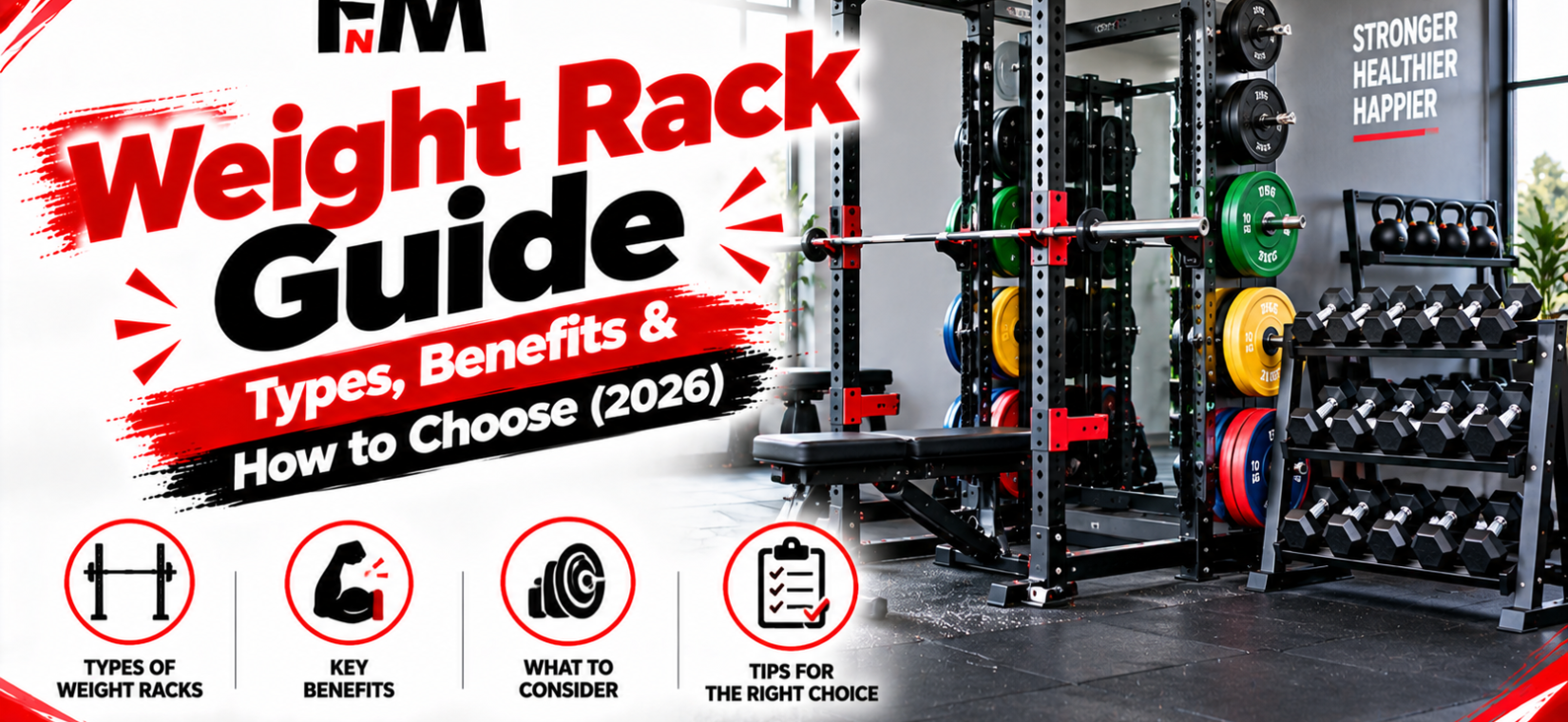
What Is a Weight Rack?
A weight rack is a sturdy steel frame designed to hold barbells, weight plates, and dumbbells safely during strength training. It is the centerpiece of any serious home gym — the piece of equipment that lets you squat, bench press, and overhead press heavy weights alone, with safety catches protecting you if a lift fails.
Whether you call it a power rack, squat rack, or weight rack, the concept is the same: four upright posts (or two, for half racks) with adjustable J-hooks to hold the bar and safety spotter arms to catch it. If you train with a barbell at home, a weight rack is the single most important purchase you’ll make.
Types of Racks
Full power rack
Four uprights connected into a cage. Maximum safety and versatility — you lift inside the rack with spotter arms on both sides. Best for solo lifters going heavy. See our power rack with weight storage for a space-efficient option.
Half rack
Two uprights with an open front. Takes up less space and costs less, while still offering J-hooks and spotter arms. A great compromise for smaller home gyms.
Squat stand
Two independent uprights with no connecting frame. The most compact and affordable option, but less stable — best paired with a spotter or kept to moderate weights.
Foldable wall-mounted rack
Mounts to the wall and folds away when not in use. Perfect for garage gyms that need to park a car, though installation must be rock solid.
Benefits of Training with a Weight Rack
1. Lift heavy alone, safely
Adjustable safety arms catch a failed squat or bench press. This is the feature that makes home barbell training viable without a training partner. ACSM guidelines on resistance training progression emphasize safe loading practices for solo lifters.
2. One station for every big lift
Squats, bench press, overhead press, rack pulls, pin presses — a single rack replaces thousands of dollars of machines.
3. Built to last decades
A quality steel rack with 11-gauge uprights will outlive every other piece of equipment you own. Buy once, lift forever.
4. Expandable over time
Dip attachments, landmines, pull-up bars, and plate storage all bolt onto standard racks. Start basic and add attachments like our power rack dip attachment as you progress.
How to Choose the Right Weight Rack
Check the steel gauge and weight capacity
Look for 11-gauge (3mm) steel uprights and a rated capacity of at least 700–1,000 lbs. Anything less may flex under heavy loads.
Measure your space and ceiling
Standard racks are about 4×4 feet footprint and 7+ feet tall. Measure your ceiling height — you need clearance for pull-ups plus your head. Also check hole spacing: 1-inch spacing through the bench zone allows precise J-hook placement.
Confirm barbell compatibility
Most racks fit standard 7-foot Olympic barbells. If you own a shorter bar, verify the inside width of the rack before buying.
Look at the accessories
Quality J-hooks with plastic lining (protects bar knurling), numbered uprights, and included safety arms separate good racks from great ones.
Consider plate storage
Built-in weight horns keep plates off the floor and add stability to the rack. A rack with storage like the ST power rack with weight storage saves serious floor space.
Weight Rack Safety Tips
- Always set safety arms just below your lowest bar position for each lift.
- Bolt the rack to the floor or platform if the manufacturer recommends it.
- Face inward when squatting so a failed rep falls onto the safeties, not behind you.
- Inspect J-hooks and pins monthly for wear.
- Never use damaged or bent safety arms.
Weight Rack FAQs
What’s the difference between a power rack and a squat rack?
A power rack is a four-post cage you lift inside; a squat rack (or squat stand) is typically two uprights. Power racks offer more safety and attachment options, while squat stands save space and money.
How much space do I need for a weight rack?
Plan for at least 8×8 feet of floor space: 4×4 for the rack itself plus room to load plates and move around the bar. Add ceiling height of 8+ feet for pull-ups.
Can I bench press in a weight rack?
Yes — set the J-hooks at bench height, place a bench inside the rack, and set the safety arms just above your chest. It’s the safest way to bench alone.
Do I need to bolt down my weight rack?
Heavy 4-post racks are often stable unbolted, but bolting is always safer — especially for kipping pull-ups or if you train on uneven garage floors.
What attachments are worth it?
Dip bars, a landmine, and extra J-hooks cover 90% of needs. Add a dip attachment first — dips are one of the best upper-body builders there is.