
L glutamine benefits center on gut and immune support rather than muscle building. Glutamine is the most abundant amino acid in muscle tissue and fuels intestinal cells and lymphocytes during stress, illness, or heavy training. Typical supplemental doses range from 5 to 10 grams daily, with most evidence supporting recovery, gut lining integrity, and immune function after intense exercise.
L Glutamine Benefits, Explained Simply
Start here: Think of glutamine as fuel for your body’s repair crews. Your muscles, your gut lining, and your immune cells all burn through glutamine when they are working hard. Normally your body makes enough. But after brutal workouts, during illness, or under major stress, demand can exceed supply — and that is the window where l glutamine benefits show up in research.
Here is the one-paragraph version of everything below: l glutamine benefits are real but specific. It is not a muscle-building steroid alternative (it will not directly grow muscle like protein or creatine). It is a well-studied recovery and gut-health amino acid with its strongest evidence in clinical settings (burns, trauma, gut disorders) and promising — though mixed — evidence for athletes. If you are new to supplements, glutamine is a sensible “second tier” choice: get your protein, sleep, and training right first, then consider it.
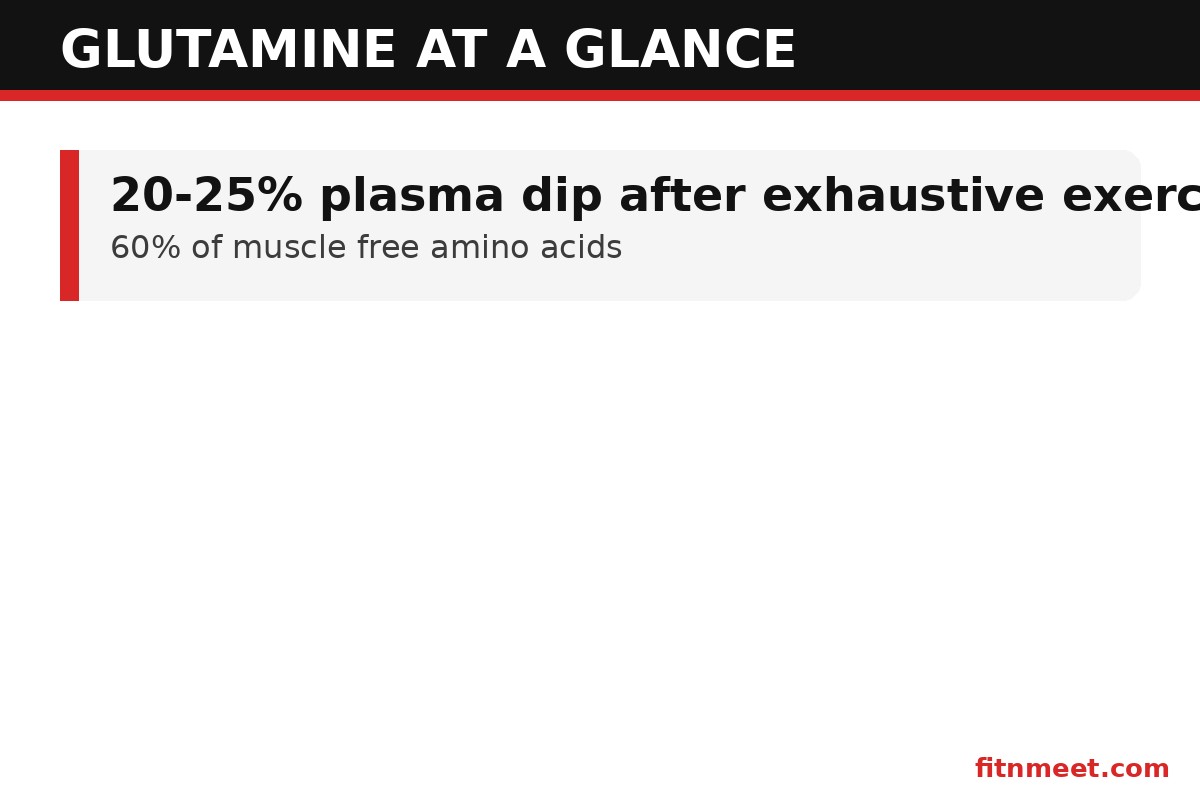
One stat to remember: glutamine makes up roughly 60% of the free amino acids in your skeletal muscle — it is literally the most abundant amino acid in the tissue you are trying to build and repair.
What Is L-Glutamine?
Glutamine is a conditionally essential amino acid. “Essential” means your body cannot make it; “non-essential” means it can. “Conditionally essential” is the middle ground: your body normally makes enough, but under certain conditions — intense prolonged exercise, injury, burns, major surgery, severe illness — demand outstrips production and it becomes temporarily essential.
The “L” just denotes the molecular shape (levorotatory) that biology uses — all dietary and supplemental glutamine is L-glutamine. Your body synthesizes it mainly in skeletal muscle from glutamate and ammonia, then ships it through the blood to tissues that consume it fastest:
- Enterocytes (gut lining cells) — glutamine is their preferred fuel, more than glucose.
- Immune cells (lymphocytes, macrophages) — they burn glutamine at high rates when activated.
- Kidneys — which use it for acid-base balance.
Plasma glutamine levels can drop by 20–25% after prolonged exhaustive exercise (marathons, tournaments), and researchers have linked this dip to the temporary immune suppression athletes experience after extreme efforts — the so-called “open window” for upper respiratory infections. This is the physiological basis for most l glutamine benefits claims in sports. The Wikipedia article on glutamine summarizes its biochemistry clearly.
Why Beginners Should Care About L Glutamine Benefits
If you are new to training, here is why l glutamine benefits might matter to you sooner than you think:
You get sore — a lot, at first
Delayed-onset muscle soreness (DOMS) peaks 24–72 hours after unfamiliar training. Some trials suggest glutamine supplementation modestly reduces soreness markers and speeds strength recovery after eccentric (muscle-damaging) exercise. The effect is small — think 10–20% less soreness, not elimination — but for a beginner trying to stay consistent through the painful first month, small edges compound.
Your gut takes a beating too
Hard exercise temporarily redirects blood away from the gut, increasing intestinal permeability (“leaky gut”) for a few hours post-workout. Because gut cells run on glutamine, supplementation is studied for protecting gut barrier function in athletes — with several trials showing reduced permeability markers after heat-stress and endurance exercise.
Beginners get sick when they overdo it
The classic beginner error is doing too much too soon, then catching a cold in week three. While glutamine is not an immune “booster” in the marketing sense, maintaining plasma glutamine during heavy training blocks is associated with better immune cell function in some studies — one more reason experienced coaches list it among sensible recovery supports. FitnMeet’s workout recovery collection covers the full recovery stack beginners should know.
Start here — the honest hierarchy: (1) train sensibly, (2) eat enough protein (~1.6–2.2 g/kg/day), (3) sleep 7–9 hours, (4) then consider l glutamine benefits as a recovery optimizer. Supplements amplify good foundations; they do not replace them.
Getting Started: Your 5-Step Beginner Plan
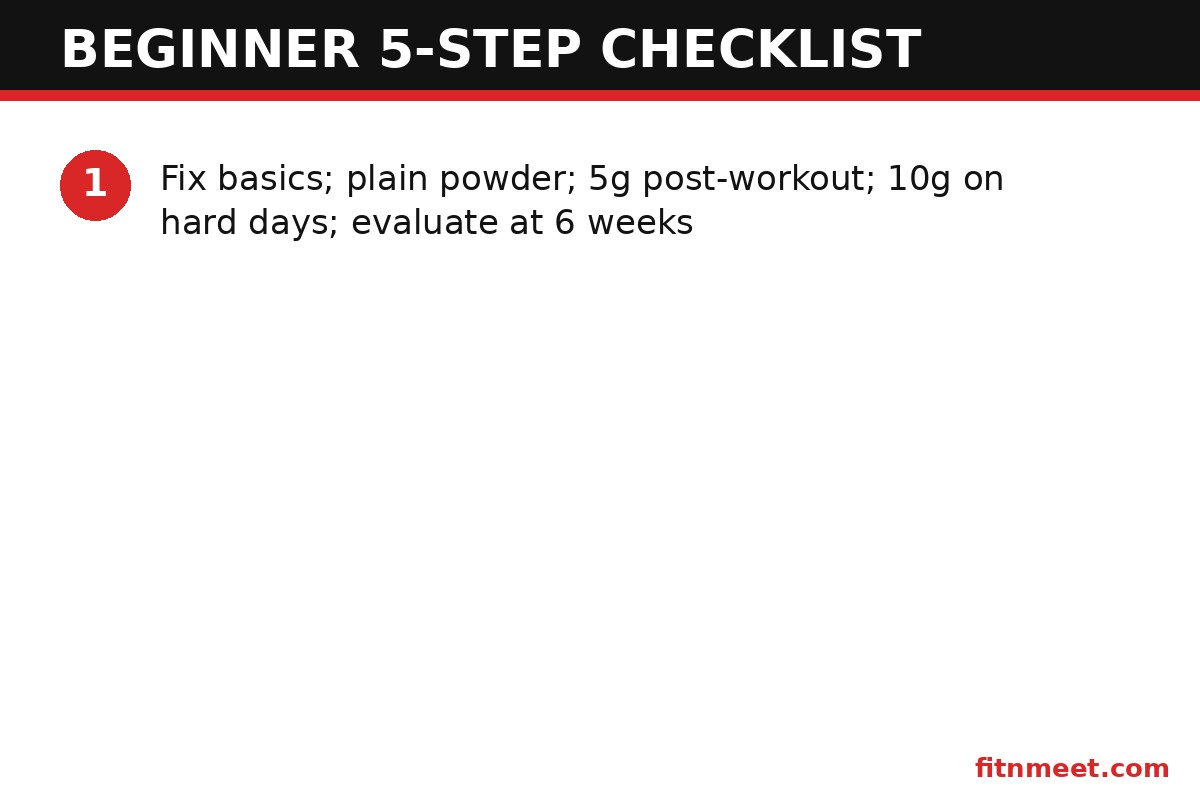
- Step 1 — Fix the basics first (weeks 1–2). Before buying anything, lock in consistent training 3× per week, daily protein targets, and a regular sleep schedule. If those are not in place, no supplement’s l glutamine benefits will be visible through the noise.
- Step 2 — Choose a plain L-glutamine powder. You want 100% L-glutamine with no proprietary blends — it is a cheap, single-ingredient product. Capsules work but require swallowing 5–10 pills to match a 5 g powder scoop.
- Step 3 — Start with 5 g post-workout. Mix into water or your protein shake (glutamine is heat-stable enough for room-temperature liquids but degrades in very hot drinks over time). Take it within an hour after training.
- Step 4 — Add a second 5 g dose on hard days. On your toughest sessions — or during illness recovery — a morning dose plus post-workout dose (10 g total) matches the upper end of studied athletic protocols.
- Step 5 — Evaluate after 4–6 weeks. Track soreness duration, training consistency, and how often you get sick. If nothing changes, glutamine may simply not be your limiting factor — and that is useful information, not a failure.
L Glutamine Benefits: What Research Supports
1. Muscle recovery and soreness
Evidence: moderate, mixed. Several small trials report reduced creatine kinase (a muscle damage marker) and faster strength recovery with 5–10 g/day glutamine after damaging exercise. Others find no difference vs placebo. The fair summary: l glutamine benefits for recovery are plausible and small — worth trying, not worth expecting miracles from.
2. Gut barrier integrity
Evidence: moderate to good. Glutamine is the primary fuel for intestinal cells, and trials in endurance athletes show reduced intestinal permeability after heat and exercise stress with supplementation (typically 0.9 g/kg acute doses in research, lower for daily use). Clinical nutrition has used glutamine for gut support in critical illness for decades.
3. Immune support during heavy training
Evidence: modest. The famous 1998 Castell study found glutamine supplementation reduced reported infections in marathon runners vs placebo — but later studies have been inconsistent. Current view: maintaining glutamine availability supports normal immune function during stress; it does not supercharge immunity above baseline.
4. Clinical recovery (burns, trauma, surgery)
Evidence: strong (medical setting). In hospitals, glutamine is an established part of nutrition support for burn and trauma patients, associated with fewer infections and shorter stays in meta-analyses. This is the strongest l glutamine benefits evidence that exists — though it does not directly transfer to healthy lifters.
5. What glutamine does NOT do
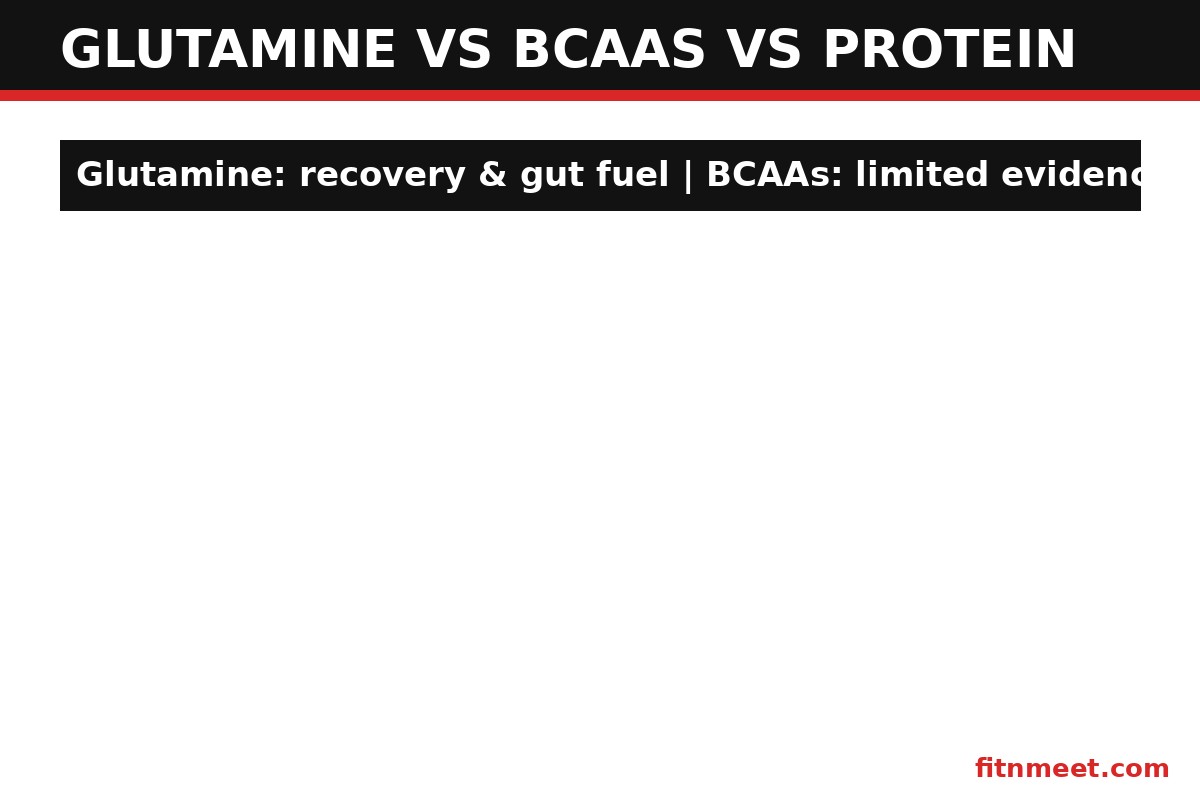
It does not directly build muscle (it is not anabolic like leucine), does not meaningfully raise growth hormone at normal doses despite old claims, and does not replace protein. Anyone selling l glutamine benefits as a mass-gainer is misrepresenting the science.
Common Beginner Mistakes
- Expecting steroid-like muscle gains. Glutamine supports recovery; it does not trigger hypertrophy directly. Pair it with adequate protein from FitnMeet’s protein collection for actual muscle building.
- Taking it instead of eating protein. Whole protein provides all essential amino acids including glutamine precursors. A 25 g whey shake already delivers ~4–5 g of glutamine naturally.
- Mixing it into boiling drinks. Glutamine degrades into pyroglutamate in sustained heat. Warm is fine; boiling is not.
- Judging it after 3 days. Recovery supplements need 4–6 weeks of consistent use before you can fairly evaluate them.
- Buying “glutamine blends.” Proprietary blends hide doses. Pure L-glutamine powder is inexpensive — if it costs like a premium product, you are overpaying for marketing.
- Ignoring the obvious: no l glutamine benefits will compensate for 5 hours of sleep and 60 g of daily protein. Foundations first.
Dosage Basics
Keep it simple:
- Standard daily dose: 5 g per day, post-workout — the most common studied athletic dose.
- Heavy training or recovery: 5 g twice daily (10 g total), split morning and post-workout.
- Upper studied range: up to 0.3 g/kg/day (~20–25 g for most adults) has been used in clinical research without safety signals — but there is no athletic reason to go this high.
- Timing: post-workout is the sensible default; on rest days, take it in the morning. Consistency matters more than precision.
- With or without food: either works; mixing into your post-workout protein shake is convenient and the shake itself already contains glutamine peptides.
Learn the nutritional foundations that make any supplement work better in FitnMeet’s nutrition guides, and browse the shop for straightforward, single-ingredient recovery formulas.
Safety & Side Effects
Glutamine is one of the safest supplements available — it is, after all, the most abundant amino acid in the human body:
- General safety: doses up to 20–30 g/day have been used in clinical trials without significant adverse effects. Your body is built to handle it.
- Mild effects: some people report slight stomach cramping at high single doses — splitting into 5 g servings solves this.
- Kidney/liver disease: anyone with impaired kidney or liver function should consult a doctor first, since amino acid metabolism runs through these organs.
- Medication notes: glutamine may theoretically interact with anti-seizure medications and some chemotherapy agents — disclose supplement use to your doctor, as always.
- Regulatory status: sold as a dietary supplement; the FDA’s supplement pages explain labeling rules, and NIH resources cover amino acid research generally.
Frequently Asked Questions
What are the main l glutamine benefits?
The best-supported l glutamine benefits are: supporting muscle recovery and reducing soreness after hard training (modest effect), fueling gut lining cells and protecting intestinal barrier function during exercise stress, and supporting normal immune function during periods of heavy training or illness. It is not a direct muscle-builder.
How much L-glutamine should a beginner take?
Start with 5 grams per day, taken post-workout mixed into water or a protein shake. On very hard training days, 5 grams twice daily (10 g total) is reasonable. Evaluate results after 4-6 weeks of consistent use before deciding whether to continue.
When is the best time to take L-glutamine?
Post-workout within an hour is the sensible default, since that is when muscles and the gut are most depleted. On rest days, morning dosing works fine. Mixing it into your post-workout protein shake is convenient — whey protein already contains glutamine, and the combination covers recovery from multiple angles.
Does L-glutamine build muscle?
Not directly. Glutamine is not anabolic in the way leucine or complete protein is — it will not trigger muscle protein synthesis by itself. Its role is supportive: better recovery, healthier gut, steadier immune function, which indirectly lets you train more consistently. For direct muscle building, prioritize total daily protein (1.6-2.2 g/kg).
Is L-glutamine safe for long-term use?
Yes, for healthy adults. Glutamine is the most abundant amino acid in the body, and clinical trials have used 20-30 g/day without significant adverse effects. People with kidney or liver disease, or those on anti-seizure or chemotherapy medications, should consult a doctor first.
Can I get enough glutamine from food instead of supplements?
Mostly, yes. Meat, fish, eggs, dairy, and legumes are rich in glutamine — a 25 g whey protein shake provides roughly 4-5 g. Supplements make sense mainly when training demands are very high, during illness recovery, or when you want the targeted 5-10 g research doses without extra calories.
Conclusion
You now know more about l glutamine benefits than 95% of supplement buyers: it is the body’s most abundant amino acid, a genuine recovery and gut-health supporter with its strongest evidence in clinical settings, and a sensible second-tier supplement once your training, protein, and sleep are dialed in. Start with 5 g post-workout, give it 4–6 honest weeks, and let your own results decide.
Every expert was once a beginner — and every consistent lifter has a solid recovery routine. Explore FitnMeet’s beginner-friendly protein and recovery collections to build yours on a foundation that actually works.
This article is for informational purposes only and is not medical advice. Consult a healthcare professional before starting any supplement.