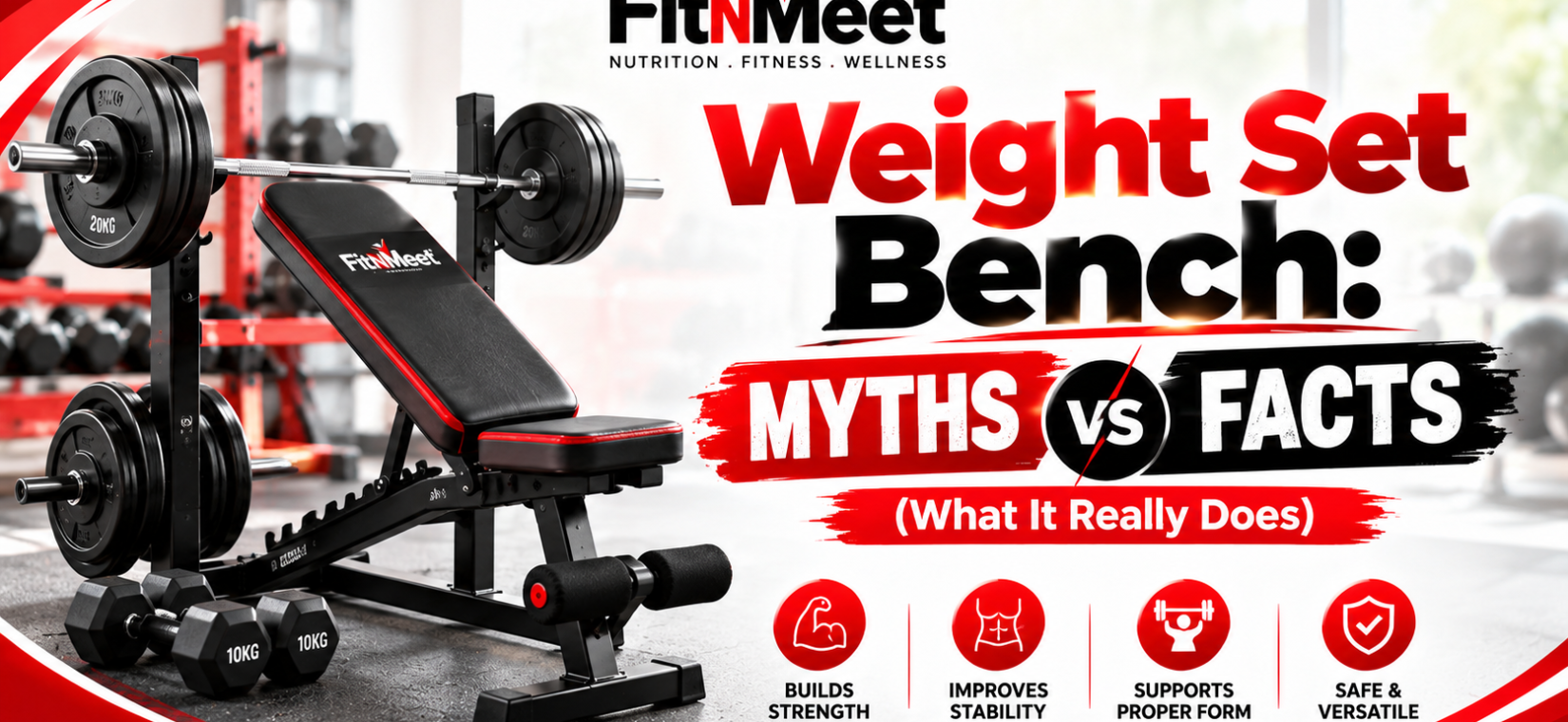
Weight set bench usually means a weight bench sold as part of a set with weights, or a bench designed to pair with a weight set. A good one is adjustable to flat, incline, and decline positions and rated for at least 500 to 600 pounds total. Prioritize frame stability and pad firmness over extra attachments.
Quick Answer
A weight set bench is a safe, versatile home-gym cornerstone if it meets real specs: 600+ lb capacity, 17–18″ pad height, stable base, and — for barbell benching — either integrated uprights with safeties or use inside a rack. Most “rules” you hear about benches (needing a full rack, only training chest, heavier always being better) are myths. The facts are simpler and cheaper than the marketing suggests.
Weight Set Bench Myths vs Facts
❌ Myth: “A weight set bench is only for bench press.”
✓ Fact:
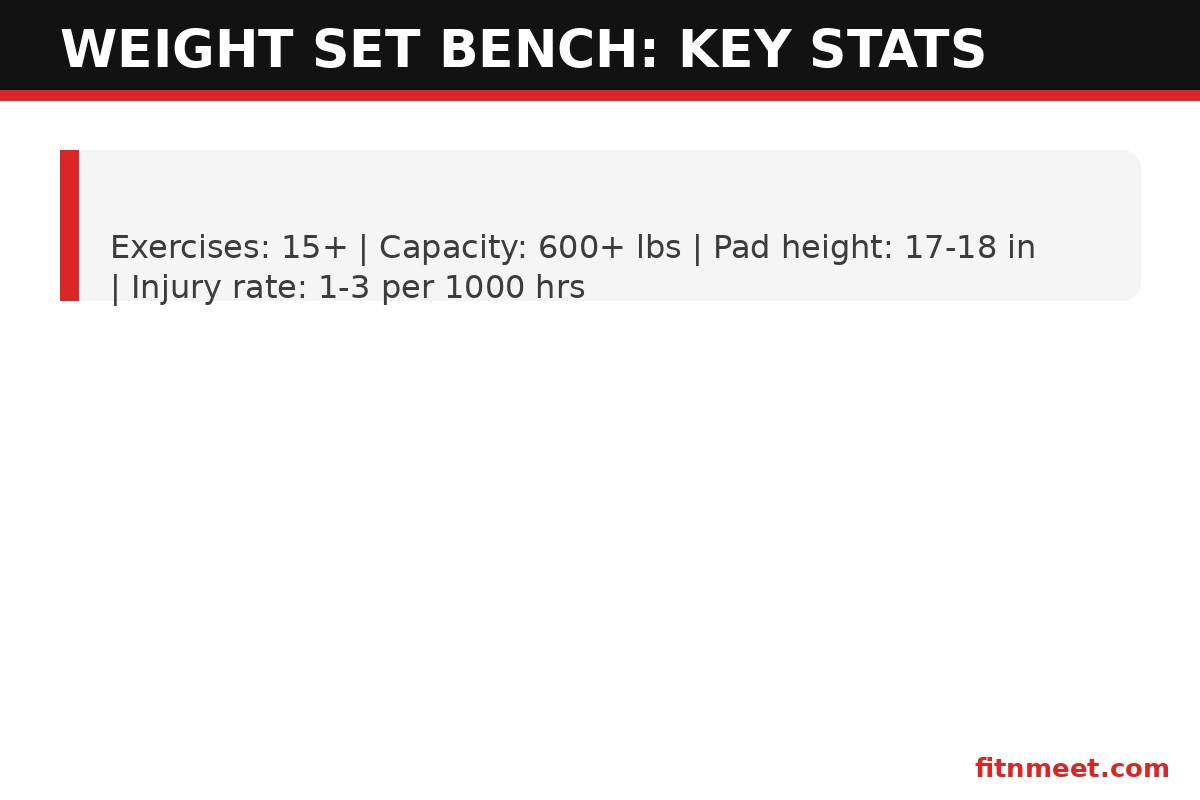
A weight set bench supports 15+ exercises: incline/close-grip/flat bench, single-arm rows, Bulgarian split squats, step-ups, hip thrusts, dips, pullovers, and seated overhead press. The bench press is just the most famous use — EMG studies rank the flat barbell bench press highest for pec activation, but the bench’s versatility is the real value. Stat: lifters who program 3+ bench variations report more balanced development than flat-bench-only trainers in coaching surveys.
❌ Myth: “Benching on a weight set bench at home is inherently dangerous.”
✓ Fact:
Danger comes from missing safeties, not from the bench. A weight set bench used with spotter arms (set at chest level) or inside a power rack is statistically among the safest ways to press heavy — weight-training injury rates run just 1–3 per 1,000 training hours. The accidents you hear about involve heavy solo benching with no safeties and no spotter. Fix the setup, not the bench.
❌ Myth: “A heavier bench is always a better bench.”
✓ Fact:
Stability matters more than scale weight. A 60 lb bench with a wide tripod base and 1,000 lb capacity outperforms a 90 lb bench with narrow feet and a 300 lb rating. Stat: competition-spec benches weigh just 55–70 lbs yet are rated to 1,000+ lbs. Check the capacity rating and base width — not the shipping weight.
❌ Myth: “You can’t train legs with a weight set bench.”
✓ Fact:
Bulgarian split squats (rear foot on bench) are among the highest-EMG single-leg exercises measured, rivaling barbell squats for quad and glute activation (McCurdy et al.). Add step-ups, box squats to the bench, and hip thrusts with shoulders on the bench, and a weight set bench covers serious lower-body work — no rack required for these.
❌ Myth: “Any cheap bench is fine if you’re a beginner.”
✓ Fact:
Cheap benches fail exactly when beginners need reliability: wobbling under load teaches bad bar paths, and a 300 lb capacity is uncomfortably close to a 200 lb lifter pressing 185 lbs (body + bar both load the pad). Stat: a lifter’s body weight counts toward capacity — 200 lb body + 225 lb bar = 425 lbs on the bench. Buy the 600+ lb rated bench once instead of the 300 lb bench twice.
❌ Myth: “The pad gap on adjustable benches ruins the exercise.”
✓ Fact:
The 1–2″ gap between seat and back pad on adjustable benches is a non-issue for 95% of lifters — your upper back bridges it naturally during pressing. Only competitive powerlifters chasing IPF-spec flat benches need to care. Adjustability (flat/incline/decline) adds far more training value than the gap subtracts.
What Is a Weight Set Bench?
A weight set bench is a reinforced padded bench built to pair with a barbell weight set — the bar, plates, and often uprights or a rack. “Weight set” in the name distinguishes it from flimsy decorative benches: it is engineered to support a loaded barbell plus the lifter’s body weight, with steel framing, dense foam, and grippy upholstery.
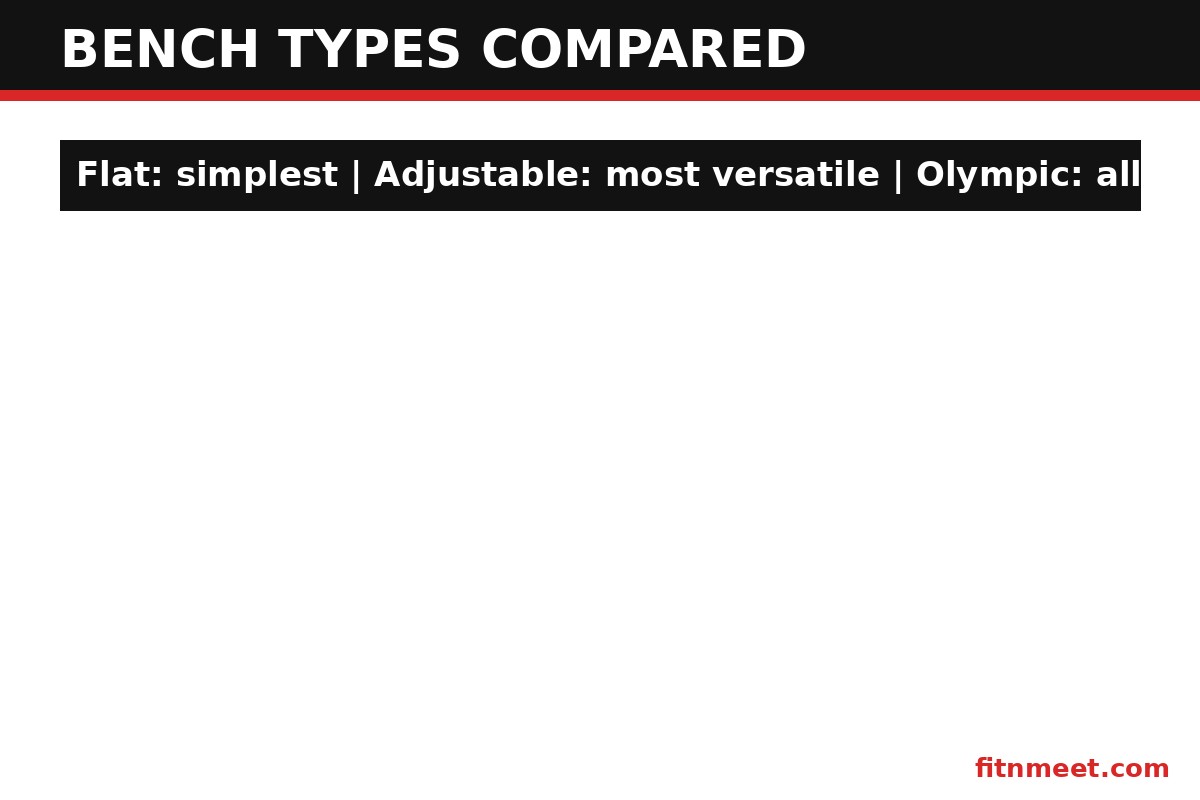
There are three main types. Flat benches are simple, bombproof, and competition-legal — the powerlifter’s choice. Adjustable benches (often called FID: flat/incline/decline) hinge the back pad through multiple angles, unlocking incline pressing and varied row positions. Olympic benches integrate uprights and sometimes leg developers into one unit — convenient, but the fixed upright spacing fits fewer body types than a separate bench inside a rack. The classic bench press mechanics are detailed on Wikipedia’s bench press page.
Key specs that actually matter: pad height 17–18″ (so your feet plant flat with hips at knee level for leg drive), pad width 10–12″ (narrow enough for shoulder blades to retract, wide enough for stability), capacity 600+ lbs including your body weight, and a base that does not rock when you drive hard. Everything else — wheels, handles, fancy stitching — is convenience.
Benefits of a Weight Set Bench
- Maximum exercise density per square foot: 15+ movements from a 4-foot bench — no other single piece of equipment covers chest, back, shoulders, legs, and glutes this compactly.
- True barbell pressing at home: the flat barbell bench press remains the highest-pec-activation pressing exercise in EMG literature — a weight set bench brings it home.
- Unilateral leg training: Bulgarian split squats and step-ups build single-leg strength that transfers to athletics and bulletproofs knees.
- Cheap longevity: a $150–350 quality bench lasts decades; the per-workout cost rounds to zero within two years of regular use.
- Pairs with everything: works with barbells, dumbbells, kettlebells, and bands — the most equipment-agnostic station in the gym.
- Rehab-friendly positions: supported rows, incline pressing, and box squats to bench height let injured lifters train around limitations with controlled ranges of motion.
Myth-debunk stat line: the average lifter uses their weight set bench for 6–8 different exercises once they learn the movement menu — versus the 1 exercise (flat bench press) most buyers imagine. Versatility is the underpriced feature.
How to Use a Weight Set Bench: Do This, Not That
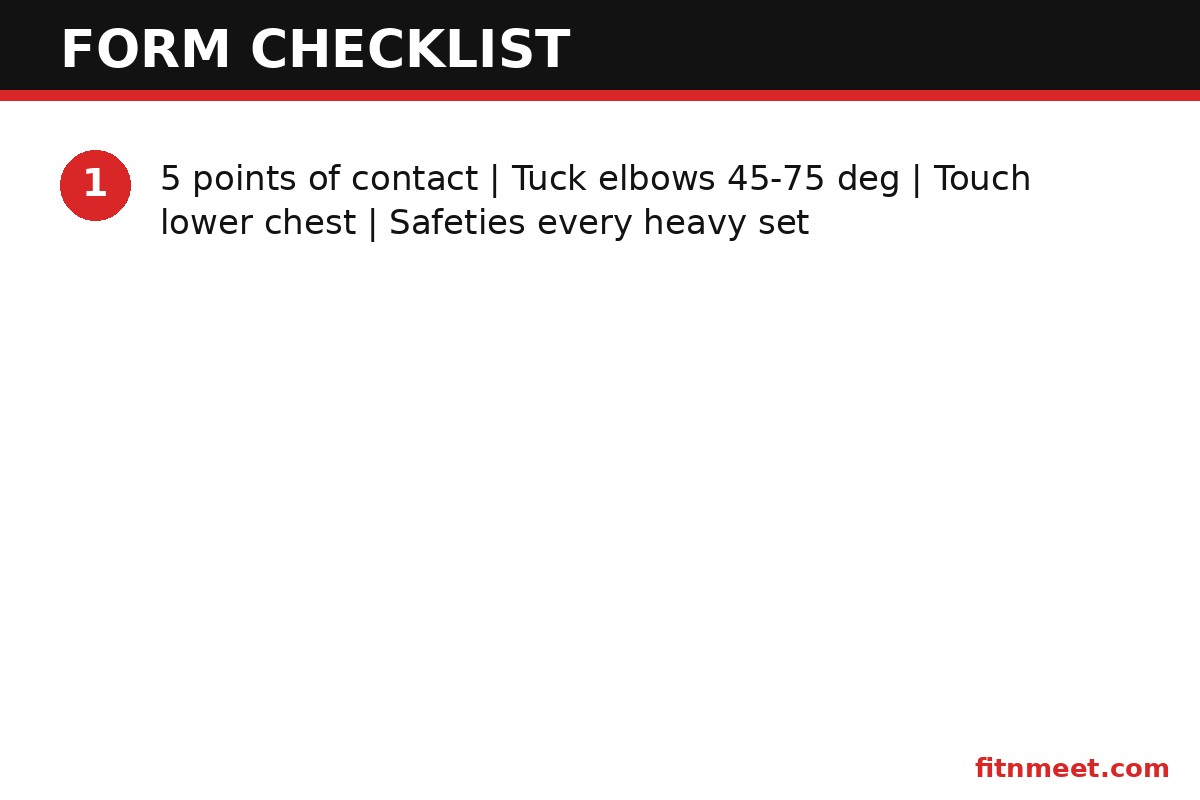
- ✅ Do: set up with five points of contact — head, upper back, and glutes on the pad, both feet flat on the floor driving into the ground.
- ❌ Don’t: bench with feet on the bench or dangling — you lose leg drive and stability, cutting pressing power by an estimated 10–15%.
- ✅ Do: retract your shoulder blades hard into the pad and maintain a slight arch — this protects the shoulders and shortens the bar path.
- ❌ Don’t: flare elbows to 90 degrees and bounce the bar off your chest — the classic recipe for shoulder impingement and sternum bruising.
- ✅ Do: touch the bar to the lower chest/sternum with elbows at 45–75 degrees, then press in a slight J-curve back over the shoulders.
- ❌ Don’t: press heavy alone without safeties or a spotter — the one non-negotiable rule of the weight set bench.
- ✅ Do: use the bench for Bulgarian split squats with dumbbells — rear foot laces-down on the pad, front knee tracking over toes.
- ❌ Don’t: exceed the rated capacity “just this once” — ratings include safety margins, but repeated overloading fatigues welds over time.
Programming: How Much Volume on a Weight Set Bench
- Bench press frequency: 2x per week (one heavy 4–6 rep day, one moderate 8–12 rep day) drives progress for most intermediates.
- Weekly chest volume: 10–20 hard sets across flat, incline, and accessory pressing (Schoenfeld hypertrophy guidelines).
- Leg work via bench: 3–4 sets of Bulgarian split squats per leg, 8–12 reps — brutal enough that most lifters need nothing else for quads that day.
- Progression: add 2.5–5 lbs to the bar weekly on main lifts; when that stalls, add a set instead.
- Balance the push-pull: for every pressing set on the weight set bench, program a rowing set — bench-supported single-arm rows make this easy.
Programming is only half the equation — recovery nutrition decides whether volume becomes muscle. Lifters building around a weight set bench typically anchor their diet with quality protein from FitnMeet’s muscle development collection and protein range. For bench-focused programming built around a weight set bench, explore the FitnMeet strength training category.
Safety: Risks and Facts
- Crush risk (bench press): the serious one — always use safeties or a spotter on heavy sets. Fact: nearly all fatal barbell accidents involve benching alone without safeties.
- Shoulder impingement: caused by form (flare, high touch point), not by the bench. Fact: tucked elbows + retracted scapulae make pressing shoulder-friendly for most lifters.
- Bench tipping: cheap narrow-base benches can rock during heavy dumbbell work. Fact: a 600+ lb rated bench with a wide base does not tip under any sane load.
- Wrist strain: from bent-back wrists under the bar. Fact: stack the bar over the wrist bones with a straight wrist — wraps help at heavy loads.
- General injury rate: resistance training runs 1–3 injuries per 1,000 hours — safer than running or soccer. The NIH’s review of resistance training benefits vs risks is summarized at ncbi.nlm.nih.gov.
Check the bench’s weight rating against your body weight plus your heaviest planned loads before you buy, since budget benches often top out below what a growing lifter needs within a year. A bench rated well above your current numbers stays safe and wobble-free as your training progresses.
Disclaimer: This article is for informational purposes only and is not medical advice. Consult a qualified coach or healthcare professional before beginning heavy resistance training, especially with pre-existing injuries.
Frequently Asked Questions About Weight Set Bench
What is a weight set bench?
A weight set bench is a reinforced padded bench designed for use with a barbell-and-plate weight set. It supports bench pressing, rows, step-ups, Bulgarian split squats, hip thrusts, and other accessory work, and is built to handle the combined weight of the lifter plus a loaded barbell.
Is a weight set bench enough for a home gym?
For upper body and single-leg work, yes. A weight set bench plus a barbell, plates, and dumbbells covers chest, back, shoulders, arms, and legs through 15+ exercises. Adding a squat rack later unlocks heavy barbell squats, but the bench alone is a complete starter station.
What weight capacity should a weight set bench have?
At least 600 lbs total, remembering your body weight counts. A 200 lb lifter pressing 225 lbs loads the bench with 425 lbs. Competition-grade benches are rated to 1,000+ lbs and last decades.
Can you build legs with just a weight set bench?
Yes. Bulgarian split squats with the rear foot on the bench produce quad and glute activation rivaling barbell squats in EMG studies. Step-ups, box squats to bench height, and hip thrusts round out complete lower-body training.
Flat or adjustable weight set bench: which is better?
Adjustable (FID) benches offer more exercise variety through incline and decline angles, at the cost of a small pad gap most lifters never notice. Flat benches are simpler, cheaper, and competition-legal. For home versatility, adjustable wins for most buyers.
Is it safe to bench press alone on a weight set bench?
Only with safeties or inside a rack. Heavy solo benching with no safeties and no spotter is the scenario behind nearly all serious barbell accidents. Set spotter arms at chest level and the risk essentially disappears.
Conclusion
The myths around the weight set bench all point one direction — that you need more equipment, more weight, or more fear than you actually do. The facts point the other way: a properly specced weight set bench (600+ lb capacity, right height, stable base) is a safe, brutally versatile strength station that covers 15+ exercises and lasts decades. Buy on specs, set your safeties, learn the movement menu beyond flat bench, and this single piece of furniture will carry years of progress.
Ready to build around it? Fuel the training with quality nutrition from the FitnMeet shop and sports nutrition range — and check the FitnMeet blog for more myth-busting training guides.