
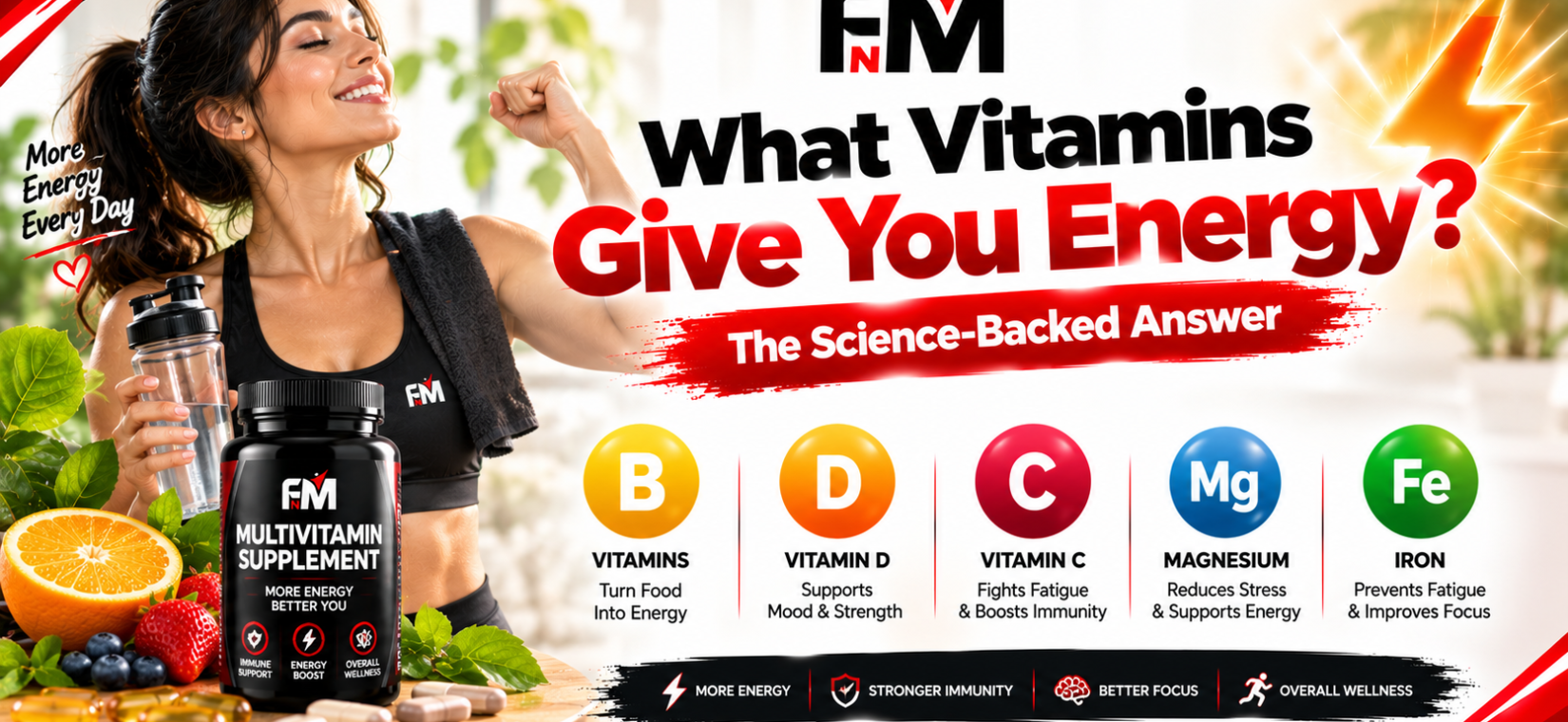
What vitamins give you energy? No vitamin creates energy directly — calories do that. But B vitamins (especially B12), iron, and vitamin D drive energy metabolism, and deficiencies cause real fatigue. Correcting a shortfall restores normal energy; without a deficiency, extra vitamins add nothing.
In 30 seconds: B12, folate, B6, iron, and vitamin D are the nutrients most tied to fatigue. Deficiency → tiredness; sufficiency → normal energy; excess → no extra boost. That is the short answer to what vitamins give you energy — test before you supplement.
What Vitamins Give You Energy: Fast Facts
- No vitamin contains energy. Energy comes from calories (carbs, fat, protein). Vitamins are helpers — coenzymes that let your cells convert food into usable energy (ATP).
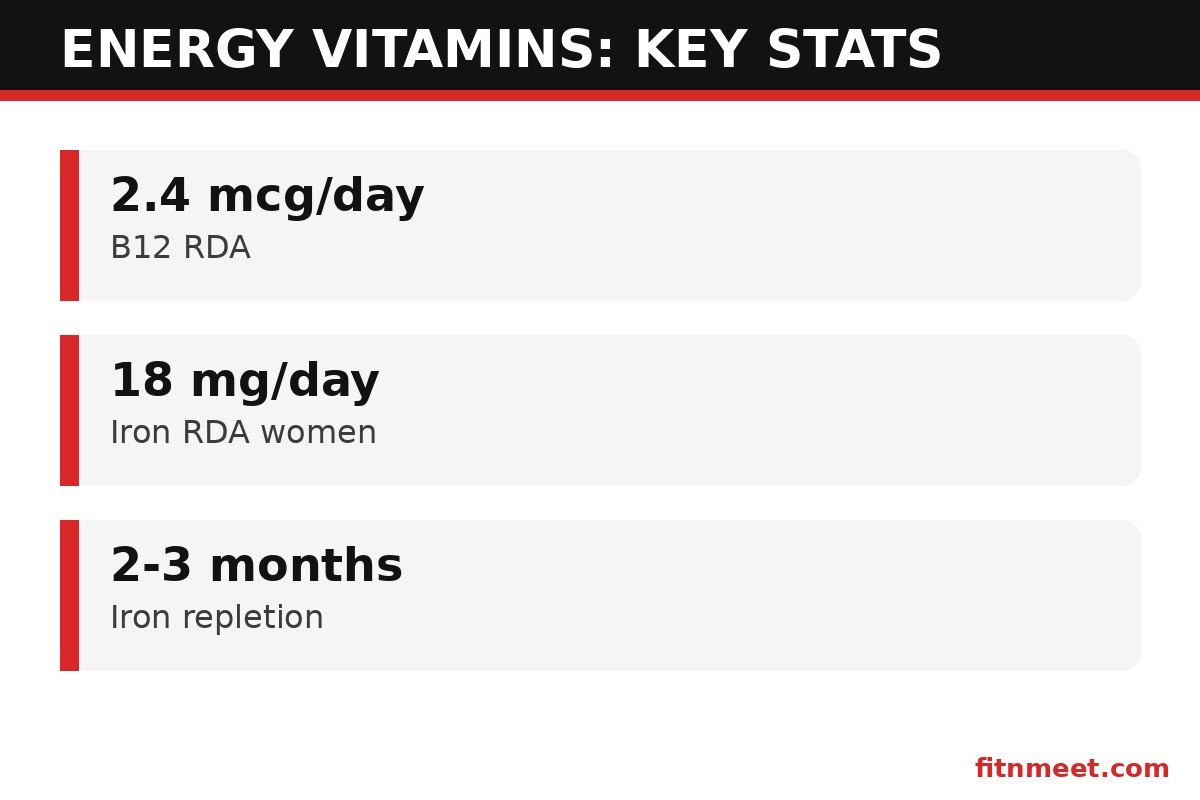
- B12 deficiency causes fatigue. Vitamin B12 is needed for red blood cell formation and nerve function; deficiency leads to megaloblastic anemia and exhaustion. The RDA is just 2.4 mcg/day.
- Iron deficiency is the top nutritional cause of fatigue worldwide. Iron carries oxygen in hemoglobin; low iron means less oxygen delivery and crushing tiredness. Women of childbearing age are most at risk.
- Vitamin D deficiency is linked to fatigue. Observational studies associate low vitamin D status with tiredness, and correction trials show modest improvements in deficient individuals.
- Testing beats guessing. The only reliable way to answer what vitamins give you energy for your body is bloodwork — B12, ferritin, and 25-hydroxyvitamin D cover the big three.
- More is not better. Once sufficiency is reached, extra vitamins do not increase energy — they just make expensive urine (water-soluble) or risk toxicity (fat-soluble).
If you searched for what vitamins give you energy because afternoons feel impossible, start with the testing protocol below — most people asking what vitamins give you energy discover the answer is simpler (and cheaper) than a cabinet full of bottles.
What Does “What Vitamins Give You Energy” Really Mean?
Q: Do energy vitamins actually give you energy?
A: Not the way caffeine does. Vitamins enable energy production from food. Think of calories as fuel and B vitamins as the engine parts — without the parts, the fuel cannot be used efficiently.
The question “what vitamins give you energy” is really asking which micronutrient shortfalls masquerade as low energy. The answer centers on three systems. Energy metabolism: B vitamins (B1, B2, B3, B6, B12, folate) act as coenzymes in the pathways that convert carbohydrates, fats, and proteins into ATP. Oxygen delivery: iron (in hemoglobin) and B12/folate (in red blood cell production) determine how much oxygen reaches working muscles and the brain. Everything else: vitamin D, magnesium, and others play supporting roles where deficiency correlates with fatigue.
The critical distinction: these nutrients restore normal energy when deficient. A B12-deficient vegan who starts supplementing often reports dramatic improvement within weeks — because a real deficit is being fixed. A well-nourished omnivore taking the same B12 notices nothing. This is why the honest answer to “what vitamins give you energy” always starts with: find out if you are deficient first. You can read the biochemistry of these compounds on Wikipedia’s vitamin page.
Benefits of Correcting Energy-Related Deficiencies
Q: Which vitamin deficiency causes the most fatigue?
A: Iron deficiency — it is the most common nutritional deficiency worldwide, and fatigue is its hallmark symptom. B12 deficiency is a close second, especially in vegans and adults over 50.
Below is what the evidence says about each candidate answer to what vitamins give you energy — who it helps, how deficiency shows up, and what correction looks like.
Vitamin B12: the nerve and blood vitamin
B12 is required for DNA synthesis in red blood cells and for maintaining myelin sheaths around nerves. Deficiency causes megaloblastic anemia — large, dysfunctional red blood cells — producing fatigue, weakness, and eventually neurological symptoms. At-risk groups: vegans/vegetarians (B12 comes almost exclusively from animal foods), adults over 50 (reduced absorption), and people on long-term acid-reflux medication. The NIH notes deficiency can take years to develop because the liver stores B12 — which also means symptoms creep up slowly and get blamed on aging. See the NIH vitamin B12 fact sheet for the full clinical picture.
Iron: the oxygen courier
Iron sits at the center of hemoglobin, the molecule that carries oxygen from lungs to tissues. When iron runs low, oxygen delivery drops and fatigue follows — often accompanied by pale skin, brittle nails, and restless legs. The RDA is 8 mg/day for men and 18 mg/day for women of childbearing age (menstrual losses drive the difference). Athletes, frequent blood donors, and pregnant women are high-risk groups. The NIH iron fact sheet details assessment and dosing.
Vitamin D: the sunlight vitamin
Vitamin D receptors exist in muscle tissue, and deficiency correlates with muscle weakness and fatigue in observational research. Randomized trials of vitamin D for fatigue show modest benefits — but primarily in people who were deficient to begin with. With an estimated 1 billion people worldwide having insufficient vitamin D status, it is a reasonable screening candidate for persistent tiredness, especially in winter or for indoor workers.
B-complex supporting cast: B6, folate, B1, B2, B3
These B vitamins serve as coenzymes throughout energy metabolism — B1 (thiamine) in carbohydrate metabolism, B2 and B3 in the electron transport chain, B6 in amino acid metabolism, folate alongside B12 in red blood cell formation. Overt deficiencies are uncommon in varied diets but occur with heavy alcohol use, restrictive eating, or malabsorption. A B-complex supplement is the efficient way to cover the group when diet is uncertain.
How to Use Energy Vitamins: FAQ-Style Steps
Q: Should I just take a multivitamin for energy?
A: A basic multivitamin is reasonable insurance, but it will not fix a significant deficiency — therapeutic doses of iron or B12 exceed what multis provide. Test, then target.
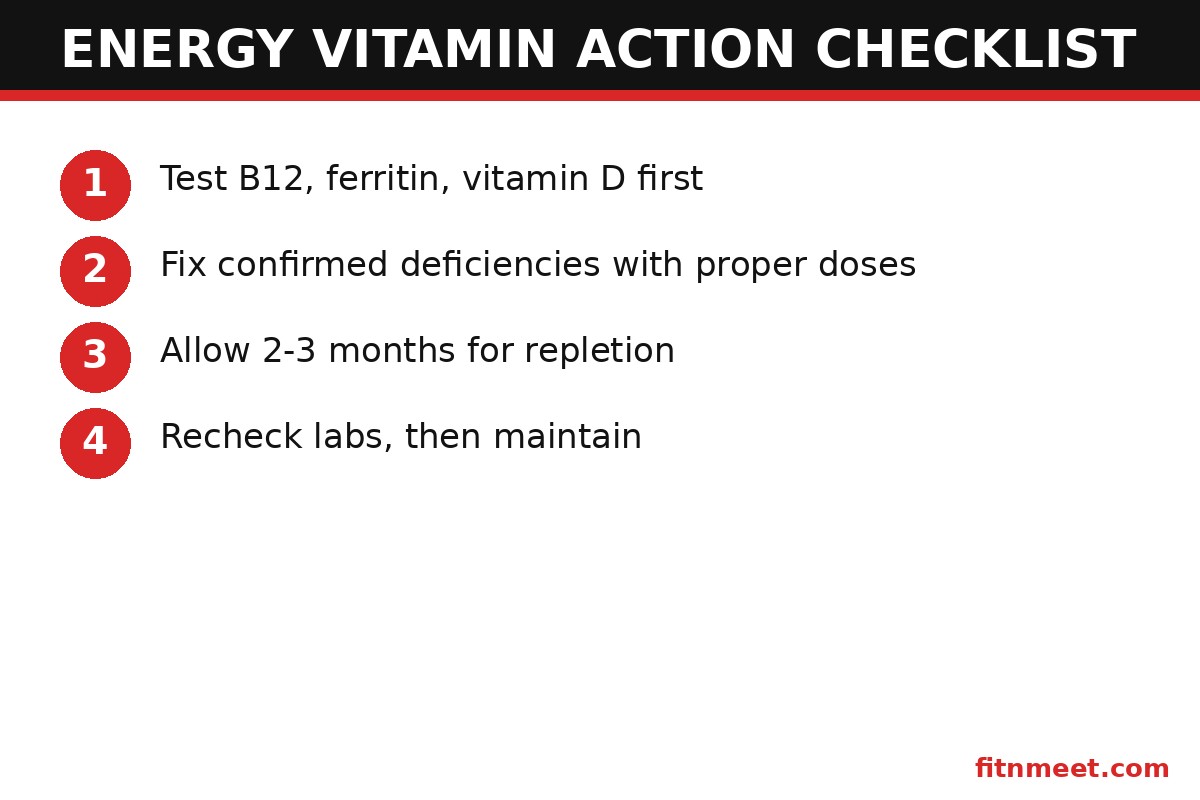
Step 1 — Get tested. Ask your clinician for: serum B12, ferritin (iron stores) plus hemoglobin, and 25-hydroxyvitamin D. This is the only way to answer “what vitamins give you energy” for you specifically. Guessing wastes money and misses real causes of fatigue like thyroid issues or sleep apnea.
Step 2 — Fix confirmed deficiencies with proper doses. B12 deficiency: typically 1,000–2,000 mcg/day oral (high-dose oral works even for absorption issues) or injections per medical guidance. Iron deficiency: 60–120 mg elemental iron daily on an empty stomach with vitamin C, away from coffee/tea and calcium. Vitamin D deficiency: often 2,000–4,000 IU/day until levels normalize, then 600–1,000 IU maintenance. For readers wondering what vitamins give you energy during the correction phase: most people notice improvement in 3–6 weeks for B12 and iron, once stores begin rebuilding.
Step 3 — Give it time. Iron repletion takes 2–3 months; B12 neurological symptoms may need months to fully resolve; vitamin D levels rise over weeks. Do not judge a protocol after ten days.
Step 4 — Recheck and maintain. Retest after 3 months, then maintain with diet plus a sensible daily supplement. Ongoing high-dose iron without monitoring risks overload — repletion is not a permanent prescription.
People Also Ask About Energy Vitamins
What vitamin gives you the most energy?
None “gives” energy — but correcting an iron deficiency typically produces the most dramatic turnaround, because oxygen delivery affects everything. Among B vitamins, B12 gets the reputation because its deficiency is common and its correction is strikingly effective.
Why am I tired all the time even though I eat well?
Common non-dietary causes: poor sleep quality, sleep apnea, thyroid disorders, depression, and overtraining. Among nutritional causes, iron and B12 top the list even in decent diets — absorption issues, heavy menstrual bleeding, or vegetarian eating can create deficiencies despite good food choices. If fatigue persists beyond 2–3 weeks, see a clinician rather than self-supplementing blindly. For food-first strategies to cover these nutrients, explore the FitnMeet nutrition articles.
Do energy drinks count as vitamins for energy?
No. Energy drinks provide caffeine (a stimulant) and sugar — borrowed energy with a crash. They mask fatigue; vitamins fix the metabolic machinery. Different tools, different jobs.
Can too many vitamins make you tired?
Ironically, yes — iron overload causes fatigue, joint pain, and organ damage, and excessive vitamin D raises calcium to toxic levels. This is why testing beats guessing: the treatment for deficiency becomes the poison in excess.
What vitamins give you energy in the morning?
Morning fatigue that coffee barely touches often traces to poor sleep or iron deficiency rather than a missing vitamin. That said, people asking what vitamins give you energy first thing in the morning should check B12 and vitamin D status — both are commonly low in indoor workers, and both correlate with daytime tiredness. A B-complex with breakfast covers the water-soluble bases while you wait for lab results.
What vitamins give you energy for workouts?
For training specifically, the question of what vitamins give you energy has a narrower answer: adequate iron (oxygen delivery to working muscle), B vitamins (energy metabolism during exercise), and vitamin D (muscle function). Athletes — especially endurance athletes and menstruating women — should monitor ferritin, since sports-related iron depletion is widespread and directly caps performance.
Energy Vitamins Compared
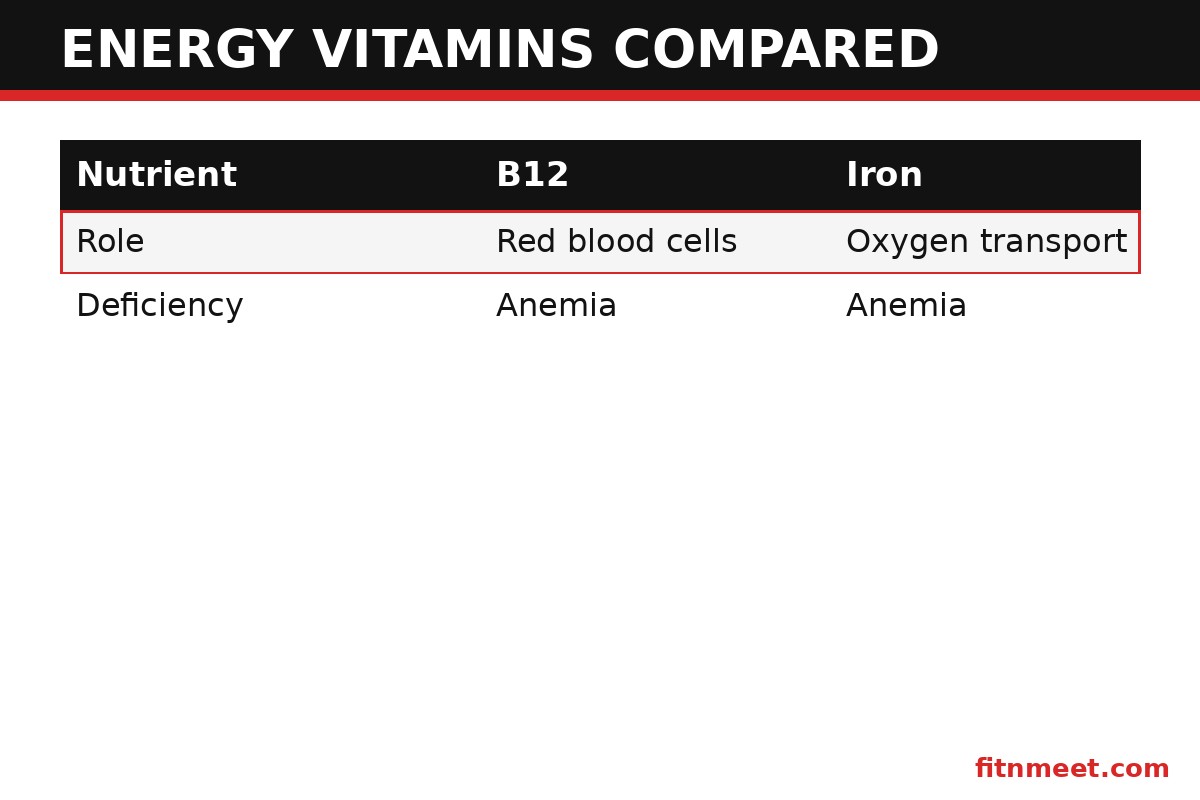
| Nutrient | Energy role | Deficiency fatigue mechanism | RDA (adult) | Top food sources |
|---|---|---|---|---|
| Vitamin B12 | Red blood cell formation, nerve function | Megaloblastic anemia | 2.4 mcg | Meat, fish, dairy, eggs |
| Iron | Hemoglobin oxygen transport | Iron-deficiency anemia | 8 mg (M) / 18 mg (W) | Red meat, lentils, spinach |
| Vitamin D | Muscle function, various | Muscle weakness, fatigue | 600–800 IU | Sunlight, fatty fish |
| Folate (B9) | Red blood cell formation with B12 | Megaloblastic anemia | 400 mcg | Leafy greens, legumes |
| Magnesium | ATP metabolism cofactor | Weakness, cramps, poor sleep | 400–420 mg (M) / 310–320 mg (W) | Nuts, seeds, whole grains |
The pattern across the table: each nutrient’s fatigue mechanism is specific and testable. That specificity is what separates evidence-based answers to “what vitamins give you energy” from generic “energy blend” marketing — real deficiencies have real biomarkers, and real corrections have measurable outcomes. For foundational coverage, browse FitnMeet’s vitamins collection and health support range.
Safety: What Vitamins Give You Energy Without Risk?
Water-soluble vitamins (B-complex, C) have wide safety margins — excess is excreted, though very high B6 doses can cause nerve issues over time. The real caution concerns fat-soluble vitamins and minerals: vitamin D toxicity causes hypercalcemia; vitamin A toxicity damages the liver; iron overload damages organs. Upper limits exist for a reason: vitamin D 4,000 IU/day, iron 45 mg/day (supplemental guidance varies — follow clinical direction for repletion doses).
A final caution: researching what vitamins give you energy at midnight often ends with a cart full of bottles. Test first, buy second.
Practical safety rules: test before megadosing; never take high-dose iron without confirmed deficiency; separate iron from coffee, tea, calcium, and thyroid medication by 2+ hours; and tell your doctor about all supplements, since even “natural” nutrients interact with medications. Pregnant women should use prenatal formulations rather than assembling their own stack.
What Vitamins Give You Energy: Full FAQ
What vitamins give you energy when you are tired?
B12, iron, and vitamin D are the nutrients most linked to fatigue. If deficiency is causing your tiredness, correcting it restores normal energy within weeks to months. If you are not deficient, extra vitamins will not increase your energy.
Does B12 give you energy?
When people ask what vitamins give you energy, B12 tops the list — but it restores energy only if you are deficient. B12 deficiency causes anemia and fatigue, and supplementation reverses it dramatically. In people with normal B12 levels, extra B12 has no energizing effect — including B12 injections.
What vitamin deficiency causes extreme fatigue?
Iron deficiency is the most common cause worldwide, producing fatigue through reduced oxygen delivery. B12 and folate deficiencies cause megaloblastic anemia with similar exhaustion. Vitamin D insufficiency is also associated with persistent tiredness.
Should I take iron for energy?
Only with confirmed deficiency. Iron is the correct treatment for iron-deficiency fatigue, typically 60 to 120 mg elemental iron daily for 2 to 3 months. Taking iron without deficiency risks iron overload, which itself causes fatigue and organ damage.
How long does it take for vitamins to increase energy?
Iron repletion takes 2 to 3 months; B12 improves energy within weeks but neurological symptoms may need months; vitamin D levels rise over several weeks. There is no overnight fix — anyone promising instant results is selling stimulants, not vitamins.
What vitamins give you energy when you feel burned out?
There is no single best vitamin — it depends on the deficiency. Get tested for B12, ferritin/iron, and vitamin D first. The best vitamin for your tiredness is whichever one your bloodwork shows you are missing.
Conclusion
So, what vitamins give you energy? The honest, evidence-based answer: the ones you are deficient in — most often B12, iron, or vitamin D. Vitamins enable energy production; they do not contain energy. Test your levels, correct what is low with proper doses, give it time, and recheck. That unglamorous process outperforms every “energy blend” on the market, because it fixes the actual problem instead of masking it. Bookmark this page the next time someone asks you what vitamins give you energy — the answer is always the same: test, correct, recheck.
If bloodwork points to a gap, explore foundational support in the FitnMeet vitamins collection and the full FitnMeet shop at FitnMeet — and let real nutrition do what marketing only promises.
This article is for informational purposes only and is not medical advice. Consult a healthcare professional before starting any supplement.