
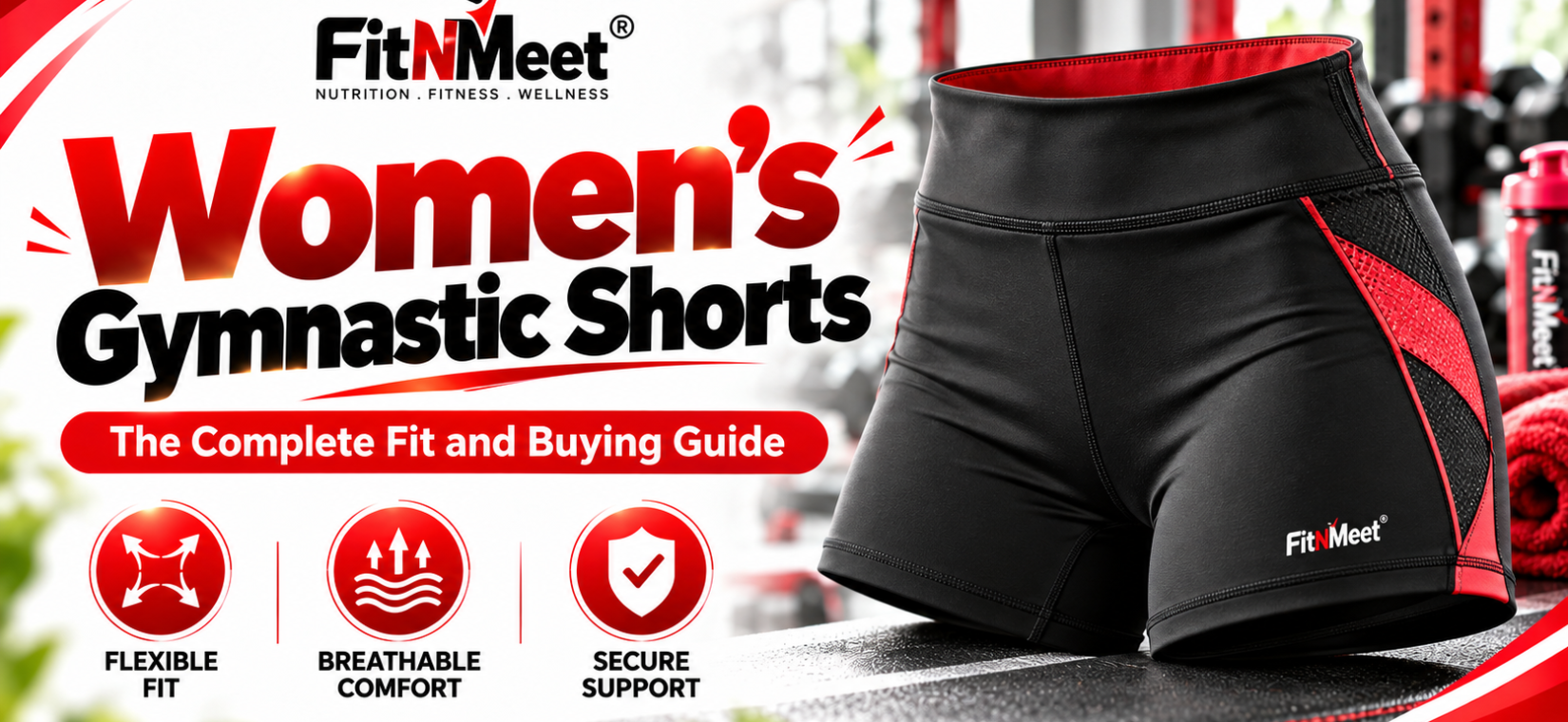
Women’s gymnastic shorts are high-cut, compression-fit shorts designed for tumbling, bars, beam, and floor work — cut to stay in place through full range of motion without restricting splits or kicks. The best pairs use a nylon-spandex or polyester-spandex blend with 4-way stretch, flatlock seams, and a built-in liner, sized snug to the hip with zero excess fabric.
Women’s Gymnastic Shorts: Quick Answer
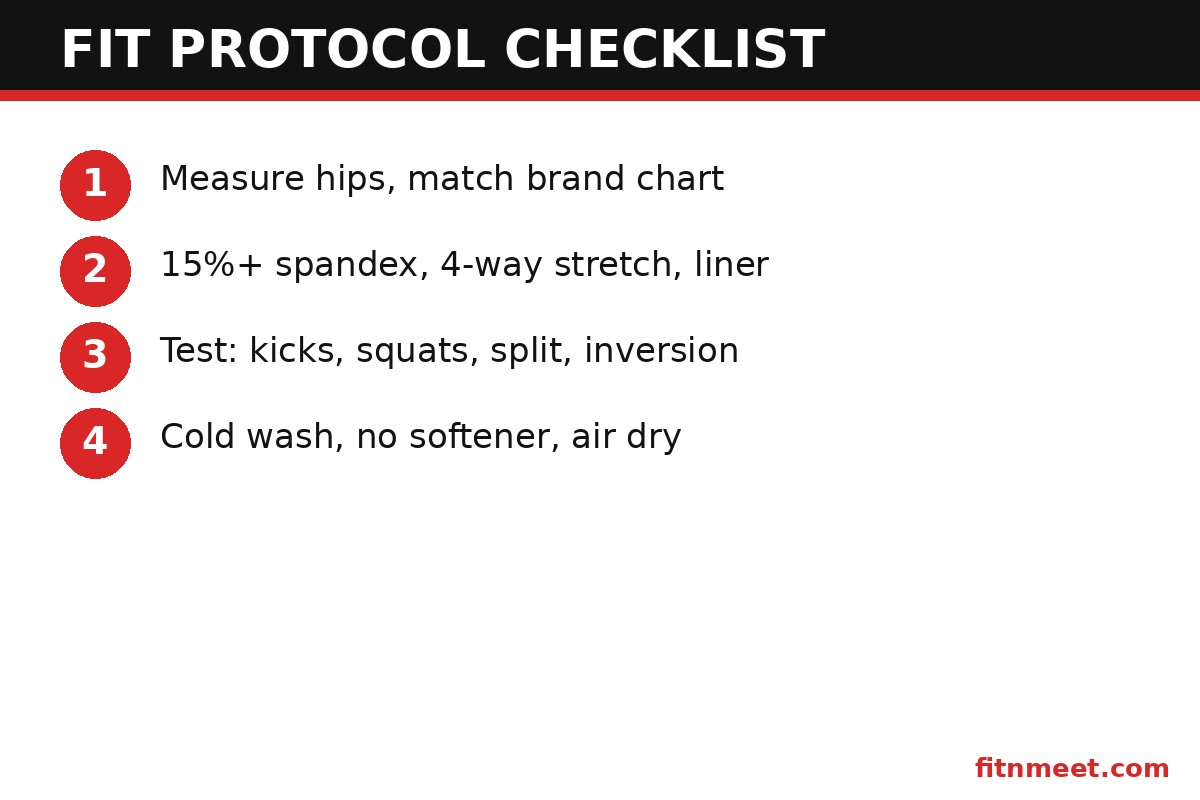
FIT PROTOCOL — Measure hips at the fullest point → match the brand’s hip chart (not your jean size) → choose 2–4″ inseam for training, shorter for competition → test with 5 kicks, 5 squats, 1 split → zero ride-up, zero restriction = correct.
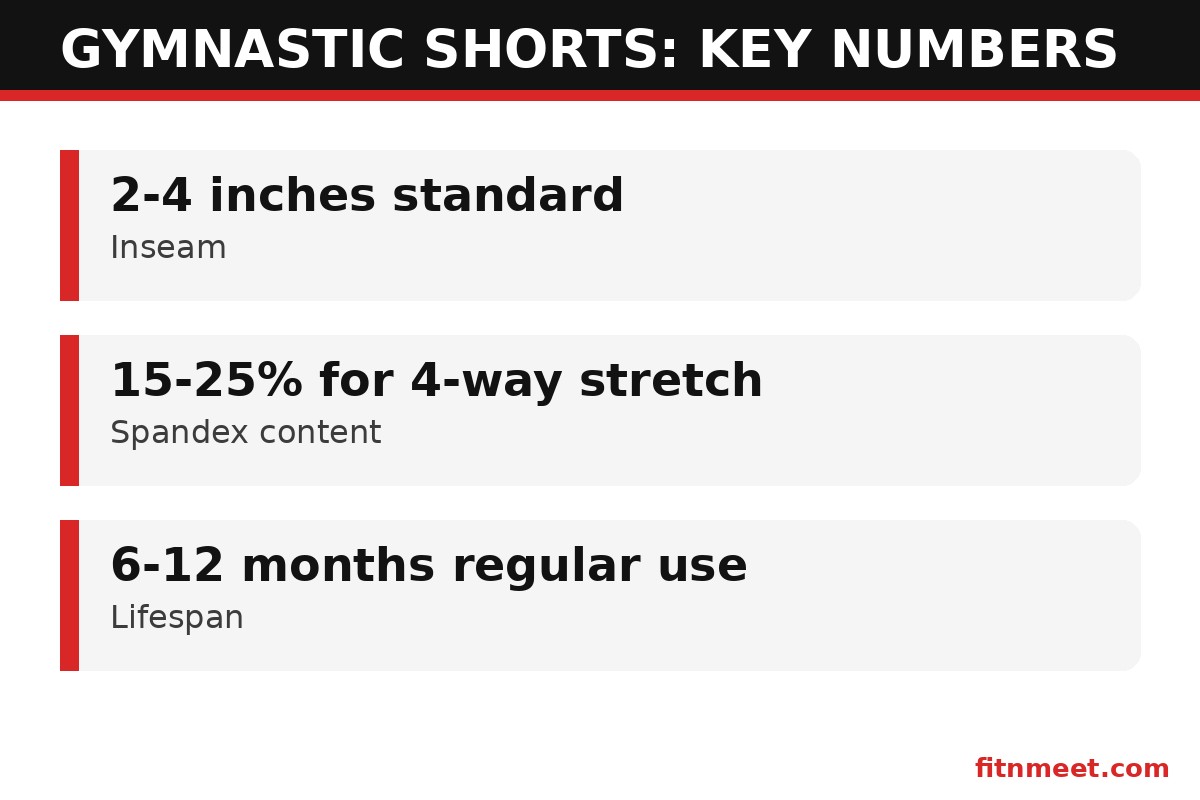
Buy women’s gymnastic shorts snug, not comfortable-loose. Unlike lifestyle shorts, the performance fit is compressive: the garment should move with the skin, not slide over it. If you are between sizes, size down for training — the spandex content (typically 15–25%) handles the stretch, and a slightly tight pair outperforms a slightly loose one in every movement test.
How Women’s Gymnastic Shorts Work: Design Mechanisms
Every design choice in women’s gymnastic shorts solves a specific movement problem. Understanding the mechanisms turns buying from guesswork into engineering:
1. Compression fit (the stay-put mechanism). A compressive knit grips the thigh and hip so the garment cannot migrate during inversions, tumbling passes, or bar work. This is the core difference between women’s gymnastic shorts and regular athletic shorts — looseness is a failure mode here, not a comfort feature.
2. Four-way stretch (the mobility mechanism). Quality pairs stretch both lengthwise and crosswise (4-way) rather than just crosswise (2-way). The test: pull the fabric diagonally — if it gives equally in all directions, it is 4-way. Splits, straddles, and high kicks demand diagonal give; 2-way knits bind at the hip crease.
3. High-cut leg opening (the range-of-motion mechanism). The leg opening sits high on the thigh — typically a 2–4 inch inseam — so the fabric never catches at the knee or bunches behind it during pikes and tucks. The cut looks brief compared to street shorts; that is intentional.
4. Built-in liner (the coverage mechanism). Most women’s gymnastic shorts include an integrated brief liner, eliminating the need for separate underwear and guaranteeing coverage during any rotation. This is non-negotiable for bar and beam work.
5. Flatlock seams (the anti-chafe mechanism). Flat seams lie flush against the skin instead of ridged. During high-rep tumbling, raised seams cause friction burns at the inner thigh — flatlock construction, standard on good women’s gymnastic shorts, prevents it.
6. Moisture management (the grip mechanism). Nylon and polyester wick sweat outward; cotton absorbs and holds it. Wet fabric slips on apparatus and chafes — which is why cotton has no place in women’s gymnastic shorts. Background on the key fiber is on Wikipedia’s spandex page, and the sport’s movement demands on Wikipedia’s gymnastics overview.
Advanced Benefits of Women’s Gymnastic Shorts
- Unrestricted range of motion. A proper pair adds effectively zero resistance to splits, kicks, and tumbling — the garment becomes biomechanically invisible, which is the entire design goal.
- Apparatus safety. Snug women’s gymnastic shorts cannot catch on bars, hooks, or beam edges. Loose clothing near apparatus is a genuine snag hazard; compression fit eliminates it.
- Proprioceptive feedback. Light compression sharpens body awareness — gymnasts report better “feel” of hip and thigh position, useful for form correction in skills training.
- Temperature regulation. Wicking synthetics keep the skin drier than cotton through long sessions, reducing both chafing and the slippery-skin problem on landings.
- Layering versatility. Women’s gymnastic shorts work over or under leotards: over for warmth and modesty in training, under as the coverage layer in some programs.
- Durability per dollar. A $25–40 pair of quality women’s gymnastic shorts typically survives 6–12 months of 4–5 sessions per week — far better cost-per-wear than fashion athletic shorts.
The Fit Protocol: Measuring, Sizing, Testing
Follow this protocol in order — it is the apparel equivalent of a training program, and skipping steps is how fitting rooms fill with returns.
Phase 1 — Measure (2 minutes).
- Measure hips at the fullest point and waist at the natural waistline, over thin clothing.
- Write down both numbers in inches or cm. Do not use your jean size — vanity sizing makes street sizes meaningless for compression garments.
- If you are growing (youth athletes), measure monthly; women’s gymnastic shorts have roughly a 6-month fit lifespan for adolescents.
Phase 2 — Select (5 minutes).
- Match your hip measurement to the brand’s size chart first; waist second. Hip drives the fit in women’s gymnastic shorts.
- Between sizes? Size down for competition/training performance, up only if the pair will double as casual wear.
- Check the fabric content: aim for 80–85% nylon or polyester with 15–20% spandex. Below 12% spandex, the fit will not hold through a session.
- Verify the liner: built-in brief, full coverage, no loose edges.
Phase 3 — Test (3 minutes, in the garment).
- 5 high kicks per leg — the shorts should not ride up or require adjustment.
- 5 deep squats — no binding at the hip crease, no see-through stretch at the seat.
- 1 split (or max straddle) — full range with zero fabric resistance and zero seam digging.
- 30-second handstand or inversion — the liner stays put, coverage holds.
- Any adjustment needed during the test = wrong size or wrong cut. Pass all four or keep looking.
PROTOCOL NOTE — New pairs feel tighter than expected for the first 1–2 wears. Spandex relaxes ~5% with initial use. Judge the fit after one wash and one session, not in the fitting room.
Size Ranges and Fit Tables
Sizing varies by brand, but the structure below is typical for women’s gymnastic shorts. Always check the specific brand chart — this table teaches you how to read one:
| Size | Hip (in) | Waist (in) | Typical inseam | Best for |
|---|---|---|---|---|
| XS | 32–34 | 24–25 | 2–2.5″ | Petite / youth XL crossover |
| S | 34–36 | 25–27 | 2.5–3″ | Most teen gymnasts |
| M | 36–38 | 27–29 | 3″ | Average adult |
| L | 38–41 | 29–32 | 3–3.5″ | Athletic / muscular build |
| XL | 41–44 | 32–35 | 3.5–4″ | Plus / tall athletes |
| Fabric blend | Stretch | Wicking | Durability | Price tier |
|---|---|---|---|---|
| 85% nylon / 15% spandex | Excellent | Very good | High | $$ |
| 80% polyester / 20% spandex | Excellent | Excellent | Very high | $$ |
| 90% polyester / 10% spandex | Moderate | Good | High | $ |
| Cotton blends | Poor | Poor | Low | $ — avoid |
The 80/20 polyester-spandex blend is the expert consensus pick for women’s gymnastic shorts: maximum wicking, excellent stretch, and the best resistance to chlorine and repeated washing. Nylon blends feel softer and more premium but cost more; both outperform cotton by every metric that matters in the gym.
Fabric Care, Skin Safety, and Longevity
Washing protocol (extends life 2–3×):
- Cold wash, gentle cycle, inside out — heat is the enemy of spandex elasticity.
- Mild detergent only; never fabric softener — it coats wicking fibers and kills moisture management permanently.
- Air dry or tumble low. High dryer heat degrades spandex within months; air-dried women’s gymnastic shorts keep their compression for a year or more.
- Wash after every session. Dried sweat contains salts that break down elastic fibers over time.
Skin safety: quality women’s gymnastic shorts use flatlock seams and tagless designs specifically to prevent chafing, but two issues still occur. Contact irritation affects a small percentage of athletes — usually a reaction to latex-based elastic or fragranced detergent, fixed by switching products. Inner-thigh chafing during high-volume tumbling usually means the shorts are too loose (fabric bunches) rather than too tight — counterintuitive but consistent. If chafing persists with correct fit, a thin layer of anti-chafe balm on the inner thigh solves it.
Replacement signals: when the waistband no longer snaps back, the fabric goes translucent when stretched, or the shorts start migrating mid-session, the spandex is done. Continuing to train in a dead pair reintroduces every problem the compression was solving. Budget for replacement every 6–12 months of regular training.
Women’s Gymnastic Shorts vs Alternatives
| Factor | Women’s gymnastic shorts | Volleyball shorts | Compression shorts (unisex) | Leggings |
|---|---|---|---|---|
| Inseam | 2–4″ | 2–3″ | 5–9″ | Full length |
| Built-in liner | Usually yes | Sometimes | Rarely | No |
| Apparatus safety | Excellent | Good | Good | Fair (snag risk) |
| Heat (summer gyms) | Coolest | Cool | Warm | Hottest |
| Modesty coverage | Moderate | Moderate | High | Highest |
| Best for | Gymnastics training | Volleyball, general | Running, lifting | Yoga, casual |
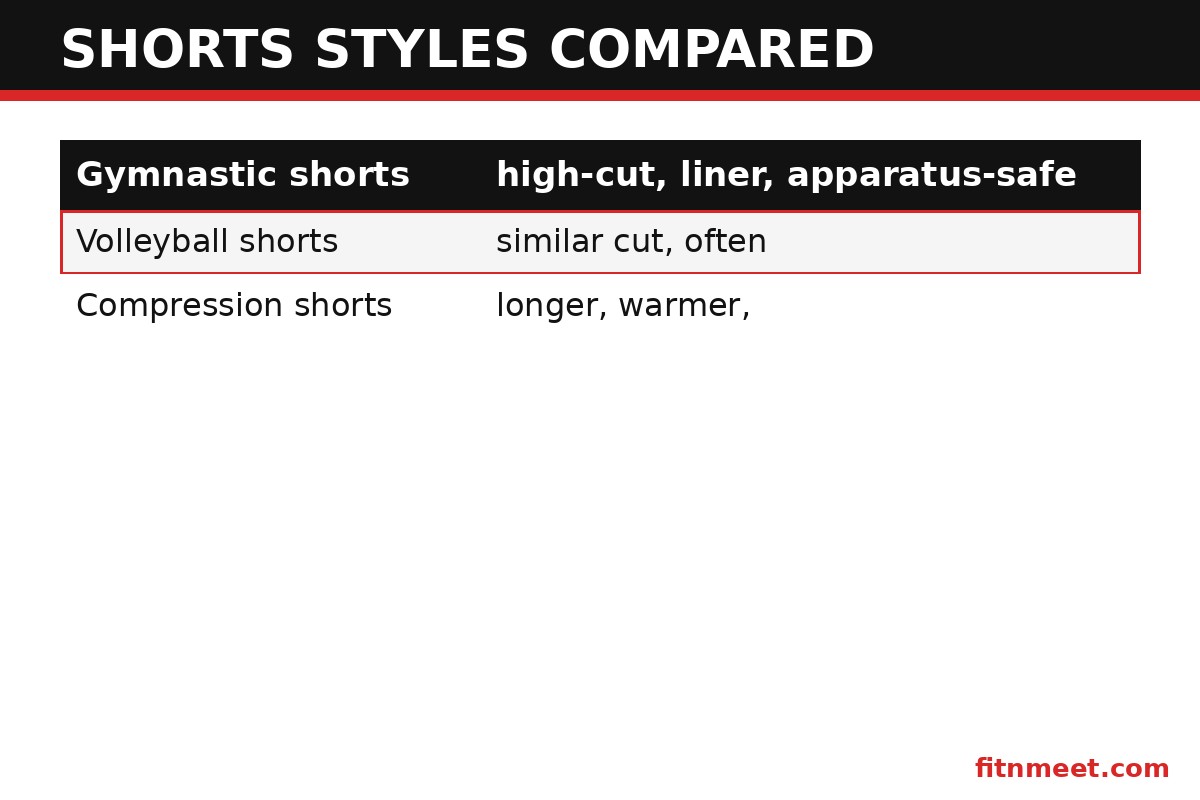
Volleyball shorts are the closest cousin — similar cut, often interchangeable for general training — but they typically lack the built-in liner and gymnastics-specific high cut. Compression shorts add coverage at the cost of heat and knee clearance. For pure gymnastics work, purpose-built women’s gymnastic shorts win; for cross-training days, any of the alternatives work fine. General training apparel guidance lives with FitnMeet’s fitness guides. For training programs that make the most of your gear, explore the FitnMeet strength training category.
Common Buying Mistakes to Avoid
The most expensive mistake is sizing up for comfort. A pair that feels relaxed in the fitting room will ride up on the first tumbling pass — buy the size that feels snug standing still, because the fabric relaxes slightly once warm. Second, do not substitute regular athletic or running shorts: without the high cut and compression, they bind at the hip crease during splits and can catch on bars. Third, check the liner before you buy; some budget options skip it, which means buying separate briefs and doubling your cost anyway. Fourth, ignore fashion-first picks with drawstrings or metal hardware — both snag on apparatus and violate most gym dress codes. Finally, never buy without checking your gym’s competition rules if you compete: some organizations specify solid colors or inseam minimums, and a perfect pair you cannot wear on the floor is money wasted.
This article is for informational purposes only and is not medical advice. Consult a healthcare professional before starting any supplement or exercise program.
Frequently Asked Questions
How should women’s gymnastic shorts fit?
Snug and compressive — they should move with your skin, not slide over it. Match your hip measurement to the brand’s chart (not your jean size), and between sizes, size down for training. Test with high kicks, deep squats, a split, and an inversion: zero ride-up and zero restriction means correct fit.
What is the best fabric for women’s gymnastic shorts?
An 80/20 polyester-spandex or 85/15 nylon-spandex blend with 4-way stretch. These wick sweat, hold compression through sessions, and survive repeated washing. Avoid cotton blends — cotton absorbs sweat, loses shape, and chafes during tumbling.
What inseam is best for women’s gymnastic shorts?
2–4 inches is standard. Shorter (2–2.5″) suits competition and smaller athletes; 3–4″ gives slightly more coverage for training. The high cut is functional — it keeps fabric clear of the knee during pikes, tucks, and tumbling.
Do women’s gymnastic shorts have a built-in liner?
Most quality pairs do — an integrated brief liner that guarantees coverage during inversions and eliminates the need for separate underwear. Always verify before buying; shorts without liners are a compromise for gymnastics work.
Can you wear women’s gymnastic shorts for other sports?
Yes — they work well for volleyball, dance, cheer, and general training. They are less ideal for running (minimal coverage, no pockets) or cold weather. For lifting and CrossFit-style work, longer compression shorts give more coverage.
How do you wash women’s gymnastic shorts?
Cold wash inside out on gentle, mild detergent, no fabric softener ever, and air dry or tumble low. Heat degrades spandex — air-dried pairs keep compression for 12+ months while hot-dried pairs can die in under 6.
How often should you replace women’s gymnastic shorts?
Every 6–12 months of regular training (4–5 sessions/week). Replace when the waistband stops snapping back, fabric goes translucent when stretched, or the shorts migrate mid-session — dead spandex reintroduces every problem compression was solving.
Are women’s gymnastic shorts the same as volleyball shorts?
Close but not identical. Volleyball shorts share the short, fitted cut but often lack the built-in liner and gymnastics-specific high leg opening. For gymnastics training, purpose-built women’s gymnastic shorts are better; for general court sports, volleyball shorts are fine.
Conclusion
The right women’s gymnastic shorts disappear during training — no adjusting, no binding, no thinking about them at all. Get there with the protocol: measure hips, match the chart, demand 15%+ spandex with 4-way stretch and a built-in liner, then pass the kick-squat-split-inversion test. Replace every 6–12 months before the spandex dies quietly.
For training apparel and gear that supports your work in the gym, browse FitnMeet’s shop — and if sizing questions come up, the FitnMeet FAQ and about page have you covered.