
A weighted jump rope is a skipping rope with added weight — typically 1 to 5 pounds — in the handles or the rope. It increases cardio and upper-body demand, building shoulder endurance, grip strength, and coordination while burning roughly 10–15 calories per minute. Heavier ropes favor strength; lighter ones favor speed.
In 30 seconds: it adds 1–5 lb to classic skipping for more upper-body work and calorie burn. Best for: cardio, coordination, shoulder endurance. Start with 1 lb, size handles to armpits, train 10–20 minutes, 3x per week. Heavier is not automatically better.
Weighted Jump Rope: Fast Facts
- What it is: a rope weighing 1–5 lb total, with weight in the handles, the rope, or both.
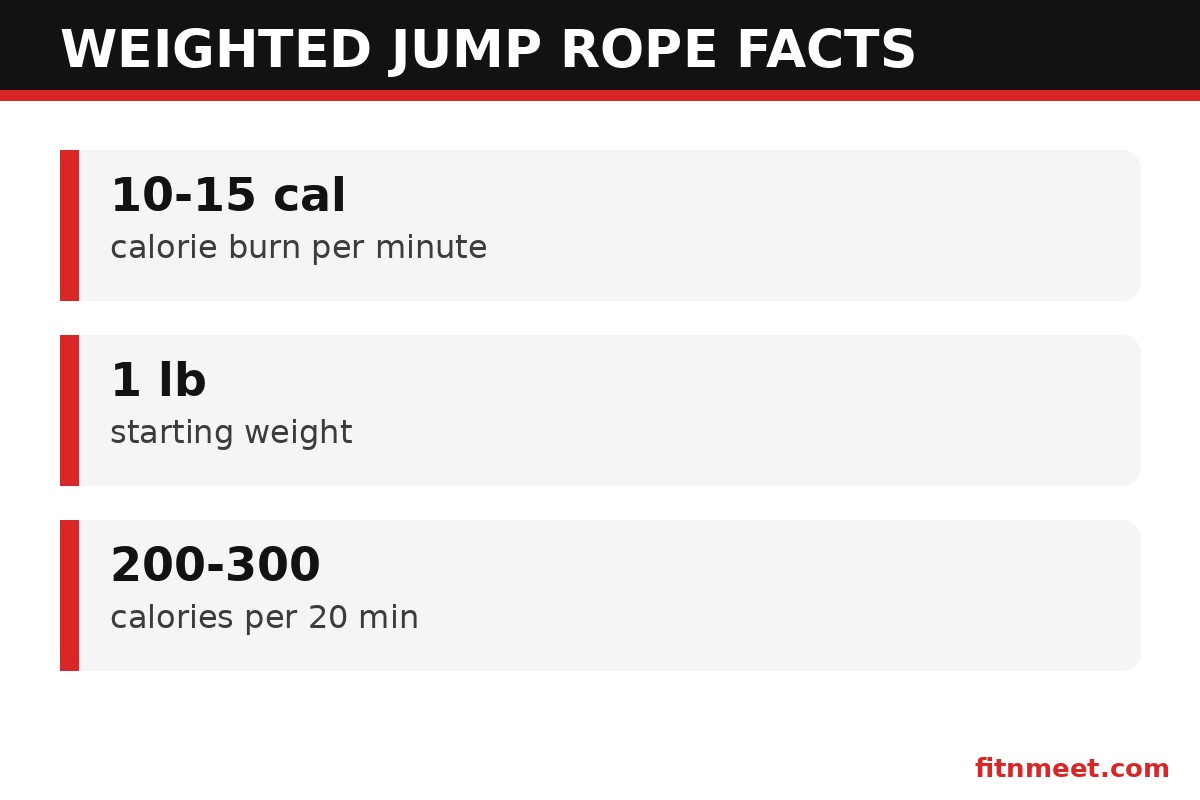
- Calorie burn: roughly 10–15 calories per minute depending on weight and pace — comparable to running at 8 mph.
- Main muscles: calves, shoulders, forearms, grip, and core — more upper-body involvement than a regular rope.
- Best starting weight: 1 lb for most beginners; 2–3 lb for experienced jumpers.
- Session length: 10–20 minutes is plenty; weighted ropes fatigue shoulders fast.
- Space needed: about 6 x 6 feet with 1–2 feet of ceiling clearance above your head.
- Learning curve: if you can jump a regular rope, you can jump a weighted one — the timing is the same, only the effort changes.
What Is a Weighted Jump Rope?
It looks like a normal skipping rope but carries extra load. The weight lives in one of three places: weighted handles (removable weights inside the grips, common in 1–2 lb ropes), a weighted rope (a thick, heavy cable, common in 2–5 lb “battle rope” style ropes), or both. Handle-weighted ropes feel most like normal jumping with extra shoulder work; rope-weighted versions demand far more from the wrists and forearms.
The physics is simple: extra mass means your shoulders, lats, and grip must work harder to turn the rope, while your legs do the same jumping work as always. The result is a hybrid — cardio plus upper-body muscular endurance in one tool. You can read the history of the underlying exercise on Wikipedia’s skipping rope page and the physiology on Wikipedia’s aerobic exercise page.
Q: Is a weighted jump rope just a heavy skipping rope?
A: Essentially yes — but the weight distribution matters. Handle weight loads the shoulders; rope weight loads the wrists and forearms. A 2 lb handle-weighted rope and a 2 lb rope-weighted rope feel completely different in use.
What Are the Benefits of a Weighted Jump Rope?
- Higher calorie burn: the added resistance raises energy cost versus a speed rope. At a moderate pace, it burns roughly 200–300 calories in 20 minutes — competitive with running, in a fraction of the space.
- Shoulder and arm endurance: the standout benefit. Boxers have used weighted ropes for decades to build the shoulder stamina that keeps hands up for 12 rounds. Expect noticeable delt and forearm fatigue within minutes at first.
- Grip strength: controlling a heavy turning rope taxes the forearms and grip — useful carryover for deadlifts, pull-ups, and racket sports.
- Coordination and rhythm: the heavier rope turns slower and gives more feedback, which actually makes timing easier to learn than with a wispy speed rope. Many coaches start beginners on a slightly weighted rope for this reason.
- Bone density: jumping is high-impact loading — studies in premenopausal women found regular rope jumping improved hip bone mineral density. The weighted version adds no extra bone benefit over regular jumping (impact comes from landing), but it keeps the cardio stimulus while you get it.
- Portability: a weighted jump rope coils into a gym bag and delivers a full cardio-plus-upper-body session anywhere — hotel rooms, parks, garages.
Q: Will a weighted jump rope build muscle?
A: It builds muscular endurance in the shoulders, forearms, and calves — not size. For hypertrophy you still need progressive resistance training. Think of it as conditioning with a strength flavor, not a muscle builder.
How Do You Use a Weighted Jump Rope?
Q: How do I size a weighted jump rope?
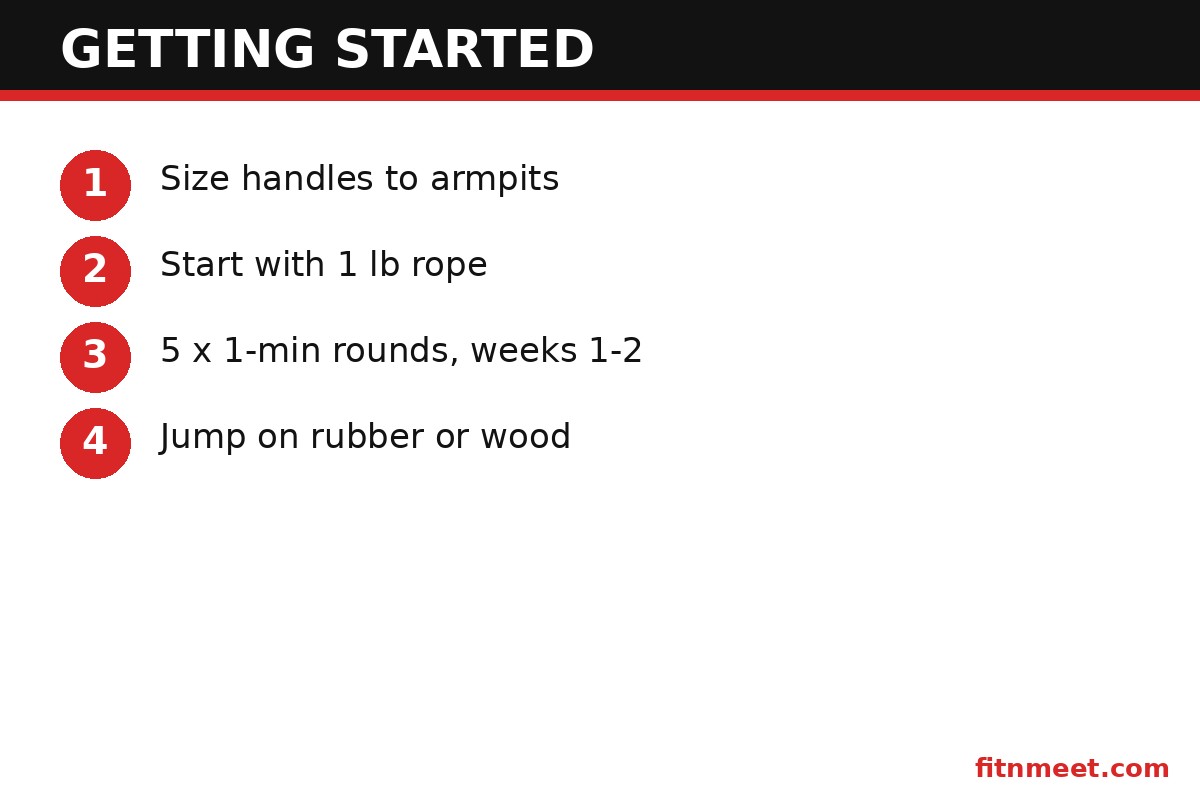
A: Stand on the center of the rope with one foot. The handles should reach your armpits (slightly lower — mid-chest — for speed work, armpit height for weighted work). Most weighted ropes are adjustable: slide the handle, re-knot or clip, and trim excess.
Q: What is the basic technique?
A: Elbows tucked near your ribs, hands slightly forward of hips, wrists doing the turning (not big arm circles). Jump 1–2 inches off the ground on the balls of your feet, knees soft. The rope should whisper under your feet, not slap the floor.
Q: How should a beginner train with it?
A: Follow FAQ-style steps:
- Weeks 1–2: 5 x 1-minute rounds with 1-minute rests, 1 lb rope, basic bounce. Goal: rhythm, not exhaustion.
- Weeks 3–4: 8 x 1-minute rounds, 30-second rests. Add alternate-foot step.
- Weeks 5–8: 10–15 minutes continuous-ish (30s on/15s off intervals), try 2 lb rope.
- Ongoing: 3 sessions per week, 10–20 minutes, mixing intervals (Tabata-style 20s on/10s off works brutally well with a weighted rope).
Q: What surface should I jump on?
A: Wood, rubber gym flooring, or a mat. Avoid concrete — it punishes joints and shreds ropes. A jump rope mat extends rope life dramatically on rough surfaces.
If you train outdoors, smooth asphalt is acceptable with a mat; grass is joint-friendly but the rope catches on it. Indoors, interlocking foam tiles over hard floors are the budget-friendly option most home gyms use.
People Also Ask About Weighted Jump Ropes
Q: How heavy should my weighted jump rope be?
A: Start at 1 lb. Move to 2 lb when 15 minutes feels easy. Ropes of 3–5 lb are specialty tools for short, intense sets — not for learning. A 1 lb weighted jump rope already doubles the upper-body demand of a speed rope.
Q: Is a weighted jump rope good for weight loss?
A: It is an efficient calorie burner (200–300 calories per 20 minutes), which supports a calorie deficit — but no rope outruns diet. Pair 3 weekly sessions with sensible eating; the rope handles the cardio side. For sensible-eating guidance to pair with your training, explore the FitnMeet nutrition articles.
Q: Weighted jump rope vs running — which is better?
A: Similar calorie burn per minute, but the weighted jump rope adds upper-body endurance and coordination that running lacks, in far less space and with less joint pounding per minute (though each landing is higher impact). Runners get specificity; rope jumpers get variety and portability.
Q: Can beginners use a weighted jump rope?
A: Yes — arguably it is easier to learn timing on a slightly weighted rope because you can feel where the rope is. Start with 1 lb, master the basic bounce before trying tricks, and keep sessions short.
Q: How long until I see results?
A: Coordination improves in 2–3 weeks; visible conditioning changes in 6–8 weeks of 3x weekly sessions. Shoulder endurance is usually the first thing people notice — carrying groceries gets easier before the mirror changes.
Weighted Jump Rope vs Regular Jump Rope
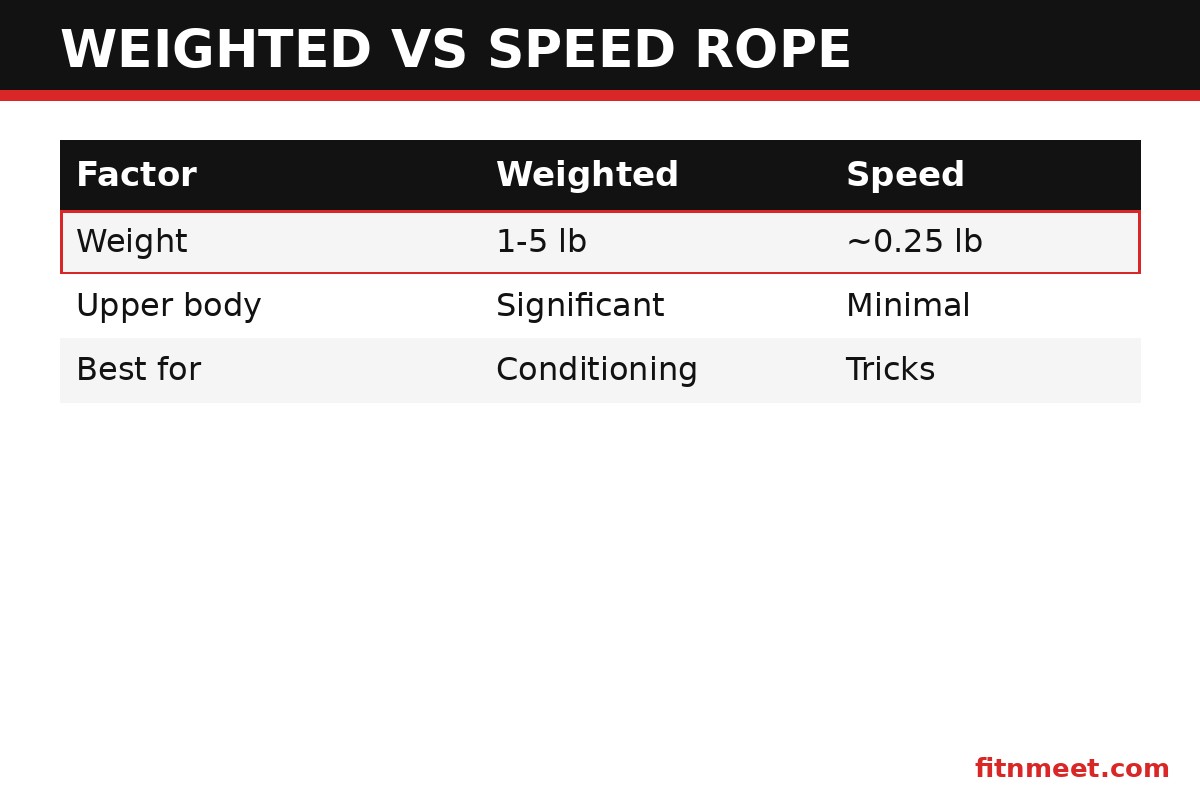
| Factor | Weighted jump rope | Regular (speed) rope |
|---|---|---|
| Weight | 1–5 lb | ~0.25 lb |
| Calorie burn | Higher (10–15/min) | High (8–12/min) |
| Upper body | Significant shoulder/forearm work | Minimal |
| Speed/tricks | Harder — built for effort, not speed | Ideal for double-unders, crossovers |
| Learning curve | Easier timing (feel the rope) | Faster, less feedback |
| Best for | Conditioning + upper-body endurance | Cardio, agility, CrossFit-style WODs |
Many experienced jumpers own both: the weighted jump rope for conditioning days, the speed rope for skill and metcon work. If you must choose one, pick weighted for general fitness and the speed rope if your sport (boxing footwork aside) demands fast, technical jumping.
Is a Weighted Jump Rope Safe?
- Start light: jumping straight to a 3+ lb rope with untrained shoulders invites rotator-cuff irritation. Earn heavier ropes over weeks.
- Surface matters: concrete + weighted rope = joint stress and shredded equipment. Use rubber, wood, or a mat.
- Form first: low 1–2 inch jumps, soft knees, wrists turning. High, stiff-legged jumping with a heavy rope is how shins and Achilles get angry.
- Who should be cautious: anyone with shoulder impingement, wrist injuries, severe knee/ankle issues, or pelvic-floor concerns should check with a professional first — the impact and the upper-body load are both real.
- Footwear: wear supportive cross-trainers, not barefoot on hard floors. The repetitive landing adds up.
- Warm up first: 2–3 minutes of easy bouncing on a light rope, arm circles, and ankle mobility drills prepare the exact tissues you are about to load. Cold shoulders plus a 3 lb rope is the most common recipe for a strained rotator cuff in this sport.
- Space check: clear 6 x 6 feet and check ceiling clearance — a heavy rope plus a ceiling fan is a bad combination.
Start with short intervals — thirty seconds on, thirty seconds off — until your shoulders and calves adapt to the extra load, which usually takes two to three weeks. Jumping on a mat or sprung floor protects your joints far better than concrete, so surface choice matters as much as rope weight.
Training note: This article is for informational purposes only and is not medical advice. Consult a qualified coach or healthcare professional before beginning a jump-rope program, especially if you have a history of joint injury or a medical condition.
Full FAQ: Weighted Jump Rope
What does a weighted jump rope do?
It adds 1-5 lb of resistance to skipping, increasing calorie burn and upper-body demand. It builds shoulder endurance, grip strength, coordination, and cardio fitness in one portable tool.
Is a 2 lb jump rope good?
Yes — 2 lb is the sweet spot for most trained beginners. It roughly doubles upper-body demand versus a speed rope while still allowing 10-15 minute sessions. Start at 1 lb if you are new to jumping entirely.
How many calories does a weighted jump rope burn?
Roughly 10-15 calories per minute at moderate effort, or 200-300 calories in a 20-minute session — depending on rope weight, pace, and body weight. That is comparable to running at a solid pace.
Can you lose belly fat with a weighted jump rope?
A weighted jump rope burns calories efficiently, which supports fat loss as part of a calorie deficit — but spot reduction is a myth. Pair 3 weekly sessions with sensible nutrition for real body-composition change.
How often should I use a weighted jump rope?
3 sessions per week of 10-20 minutes is the sweet spot for most people. The shoulders and calves need recovery — daily heavy-rope sessions lead to overuse irritation. Alternate with strength training or rest days.
Weighted jump rope or speed rope for beginners?
A light weighted rope (1 lb) is often easier to learn on because you can feel the rope’s position, which helps timing. Choose a speed rope later if you want tricks and double-unders; choose weighted for conditioning.
Conclusion
It is one of the highest-value conditioning tools you can own: cheap, portable, and brutally effective at building cardio, coordination, and shoulder endurance in 10–20 minute sessions. Start with 1 lb, learn the basic bounce, progress gradually, and respect your shoulders — the results will follow. Keep a simple log — rounds completed, rope weight, rest needed — and progress one variable at a time. Small, consistent jumps in volume beat heroic single sessions every time. Grab a rope, clear some space, and start with five easy rounds.
Ready to add it to your training? Browse FitnMeet’s shop for training essentials, fuel your sessions with the sports nutrition range, support your goals with the weight loss collection, and keep learning in FitnMeet fitness articles.