
What Are BCAAs?
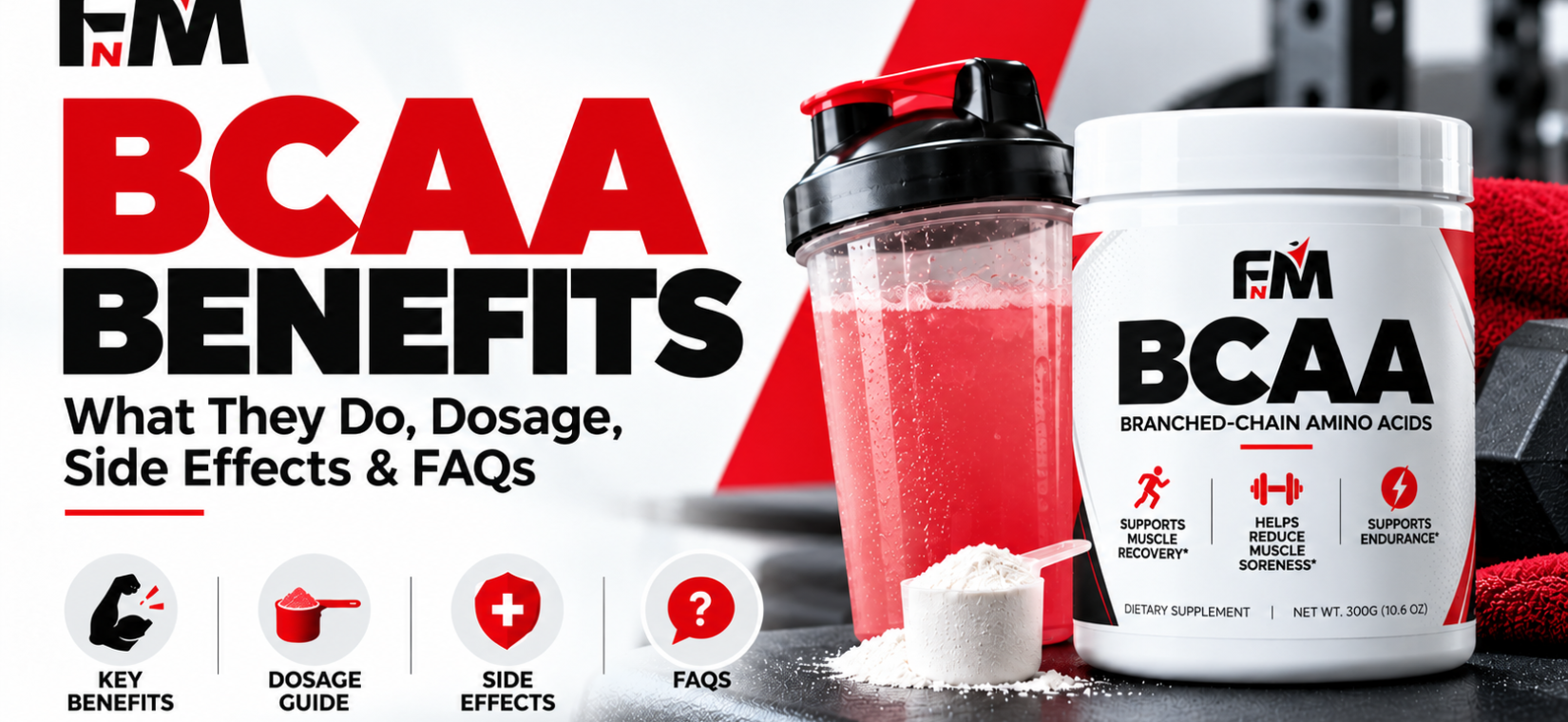
BCAA benefits start with understanding what BCAAs are: branched-chain amino acids — leucine, isoleucine, and valine — three essential amino acids your body can’t produce on its own. They make up about 35% of the essential amino acids in muscle protein, which is why athletes and lifters have used BCAA supplements for decades to support training and recovery. Understanding these BCAA benefits helps you decide if supplementation fits your goals.
Unlike most amino acids, BCAAs are metabolized directly in muscle tissue rather than the liver, so they’re available to working muscles fast — during and after exercise, exactly when you need them.
Top BCAA Benefits
1. Supports muscle protein synthesis
Leucine — the most studied of the three BCAAs — directly triggers muscle protein synthesis, the process your body uses to repair and build muscle after training. This is the central mechanism behind most BCAA benefits.
2. Reduces exercise-induced muscle soreness
Research on BCAA benefits for muscle soreness shows supplementation before and after intense training reduces delayed-onset muscle soreness (DOMS), helping you train hard more frequently.
3. Fights workout fatigue
BCAAs compete with tryptophan (a fatigue-related amino acid) for entry into the brain during exercise. Higher BCAA availability during long sessions is linked to reduced perceived effort and delayed fatigue — key BCAA benefits for endurance athletes.
4. Helps preserve muscle during dieting
When you’re in a calorie deficit, your body may break down muscle for energy. BCAAs provide an alternative fuel source for muscles, helping protect hard-earned mass while cutting.
5. Convenient and fast-absorbing
BCAA powders mix instantly and absorb quickly, making them practical intra-workout nutrition. Flavored options like BCAA watermelon or BCAA fruit punch make hydration during training genuinely enjoyable.
BCAA Dosage: How Much Should You Take?
Research typically uses 5–10 grams of BCAAs around training — either pre-workout, intra-workout, or split between both. A standard 2:1:1 ratio (leucine:isoleucine:valine) matches the proportions most studied. The BCAA benefits described above are typically seen at these doses.
- Pre/intra-workout: 5–10g in water, sipped during training
- On rest days: optional; whole protein sources usually suffice
- While cutting: 10g between meals can help protect muscle
Always follow the label directions on your specific product, such as our BCAA grape (325g, 50 servings).
BCAAs vs EAAs vs Whey Protein
BCAAs
Three amino acids only. Best for targeted intra-workout support and fasted training.
EAAs (essential amino acids)
All nine essential amino acids, including the three BCAAs. More complete than BCAAs alone — many lifters have switched to EAAs. While BCAA benefits are well-documented, EAAs offer a broader profile. Try BCAA + EAA strawberry candy for both.
Whey protein
Complete protein with all amino acids plus additional nutrients. Best for daily protein intake and post-workout recovery. BCAAs and whey complement each other rather than compete.
Are BCAAs Safe? Side Effects
BCAAs are among the most studied sports supplements and are considered safe for healthy adults at recommended doses. The BCAA benefits outweigh risks for most people. Possible mild effects at very high doses include nausea or stomach discomfort. People with ALS, maple syrup urine disease, or those who are pregnant should consult a doctor before use. As with any supplement, buy from reputable brands with transparent labels.
BCAA Benefits FAQs
Do BCAAs actually work?
For reducing soreness and fatigue during training, the evidence is reasonably strong. For building muscle beyond what adequate protein provides, the effect is modest — total daily protein intake matters more.
Should I take BCAAs or creatine?
They do different jobs: BCAAs support intra-workout performance and recovery; creatine increases strength and power output. Many athletes use both.
Can I take BCAAs every day?
Yes, daily use at label doses is fine, though they’re most useful on training days. On rest days, whole-food protein usually covers your needs.
When is the best time to take BCAAs?
During your workout (intra-workout) is the most popular and well-supported timing — sip 5–10g in water throughout your session.
What does BCAA taste like?
Unflavored BCAAs are bitter, which is why flavored versions dominate. Options like BCAA lemon-lime taste like regular sports drinks.