
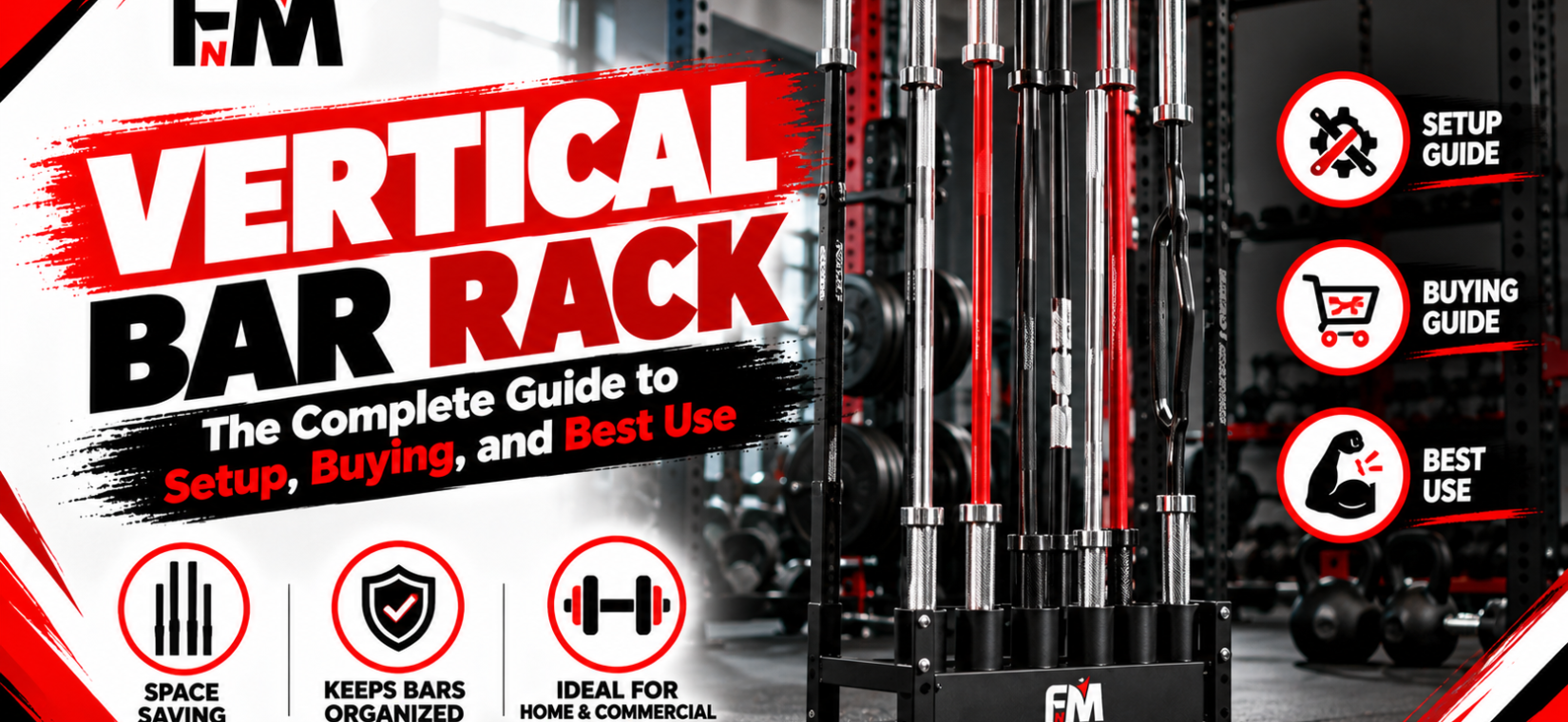
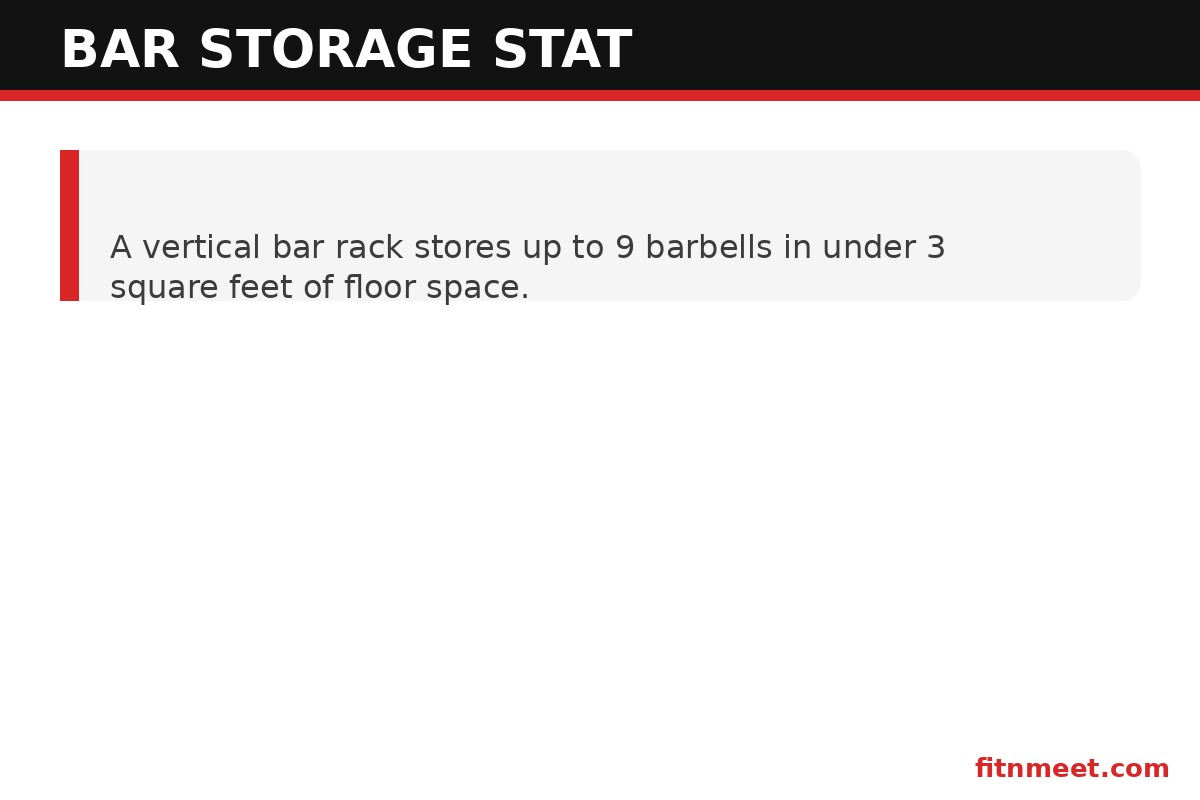
A vertical bar rack is a floor-standing holder that stores barbells upright, keeping them off the floor and out of the way. Most models hold 6 to 9 bars in under 3 square feet — the most space-efficient storage for Olympic, specialty, and curl bars.
Quick Answer
A vertical bar rack stores barbells standing upright in individual sleeves or slots. It saves 20+ square feet versus leaning bars against walls, protects bar knurling and sleeves from floor damage, and keeps training areas safe from tripping hazards. Expect to pay $40–$120 for a quality unit holding 6–9 bars.
What Is a Vertical Bar Rack?
A vertical bar rack is a storage stand that holds barbells in an upright position, with the bar’s end seated in a padded or rubber-lined cup and the shaft resting against a cradle. Unlike horizontal gun racks that mount to walls, it stands on the floor (or bolts to the floor) and needs only a small footprint — typically 24 × 24 inches.
Standard designs include single-column towers (6–9 bars in a circle), linear stands (bars in a row), and wall-leaning hybrids. Sleeves are usually lined with UHMW plastic or rubber to protect the bar’s finish. A good upright rack handles 20–45 lb Olympic bars as well as lighter technique bars, curl bars, and hex bars — anything with a 25–32 mm shaft diameter (Wikipedia: Barbell).
Why It Matters for Your Gym
Bars leaning in corners are a gym’s most common equipment killer. Every tip-over risks bent sleeves, chipped knurling, and cracked floor tiles — plus a genuine tripping hazard. A vertical bar rack solves all three problems at once for less than the cost of replacing one damaged bar.
There is a performance angle as well. Strength training delivers its well-documented benefits — muscle growth, bone density, metabolic health — only when you train consistently, and friction kills consistency. Every minute spent untangling bars from a corner pile is a minute of lost training time and a small excuse to skip accessory work. Organized equipment lowers the activation energy of every session, which is why commercial facilities invest heavily in storage: a tidy floor keeps members training instead of tidying. For programming ideas to put those bars to work, explore the FitnMeet strength training category.
There is a training benefit too: when bars are organized and visible, you actually use your specialty bars. Lifters with organized upright storage report using safety squat bars, trap bars, and curl bars more often simply because they are accessible instead of buried. In commercial gyms, organized storage also cuts the time staff spend re-racking and reduces liability from falling equipment.
Step-by-Step: Choosing and Setting Up Your Vertical Bar Rack
- Inventory your bars.
- Count every bar: Olympic, curl, trap, safety squat, technique.
- Note the longest bar — 7-foot bars need ~7.5 ft of ceiling height.
- Your rack should have at least one free slot for your next purchase.
- Measure your space.
- Allow a 30 × 30 inch footprint for a 9-bar tower model.
- Check ceiling height: bars stand fully upright inside the tower.
- Leave 2 feet of clearance around the rack for loading and unloading.
- Choose the construction.
- 11-gauge steel uprights are the durability standard.
- Rubber or UHMW-lined sleeves protect bar finishes.
- Weighted or bolt-down bases prevent tipping when fully loaded.
- Assemble on a level surface.
- Most units assemble in 15–30 minutes with included hardware.
- Use a level — a leaning tower stresses welds unevenly.
- Tighten bolts in a star pattern, then re-check after one week.
- Load heaviest bars first.
- Place the heaviest bars in the center or lowest slots for stability.
- Alternate bar directions so knurling patterns do not grind together.
- Keep your most-used bar in the easiest-access slot.
- Secure and maintain.
- Bolt the base to concrete or platform wood if the rack will hold 6+ bars.
- Wipe sleeves monthly — grit trapped in the sleeves scratches finishes.
- Inspect welds yearly for cracks, especially on budget models.
Capacity and Usage Guidelines
Most home-gym vertical bar rack models are rated for 6–9 bars and 300–500 lb total. Commercial towers can hold 12+. Practical guidelines:
- Do not exceed the manufacturer’s bar count — overstuffed sleeves chip bar coatings.
- Bars under 5 feet (short curl bars, kids’ technique bars) may sit too deep; use an adapter or the front slots.
- Store bars with collars removed — collars left on trap grit against neighboring bars in the rack.
- In humid garages, wipe bars with a light oil cloth monthly; upright storage exposes the full shaft to air.
Commercial gym owners take note: organized bar storage also speeds up class turnover in functional-training spaces, where multiple athletes share specialty bars between stations. When every bar has a visible home, end-of-class cleanup takes minutes instead of a staff member hunting down equipment across the floor. For home users, the same principle applies on a smaller scale — a tidy gym is a gym you actually train in.
Finally, think about resale value. Bars stored upright in lined sleeves keep their knurling sharp and finishes intact, which matters if you ever upgrade and sell. A well-kept bar holds its value remarkably well on the secondhand market, while a bar with chipped chrome and flattened knurling from years of corner-leaning sells for a fraction of its price.
Benefits of a Vertical Bar Rack
- Space efficiency: 9 bars in ~4 sq ft versus 25+ sq ft leaning against walls.
- Bar protection: No more tip-overs, floor strikes, or knurling damage.
- Safety: Eliminates the classic falling-bar hazard in home gyms with kids or pets.
- Accessibility: Every bar visible and grabbable in seconds — no digging.
- Floor protection: Steel bar ends chew up concrete and rubber flooring; upright storage keeps them contained.
- Professional look: An organized gym gets used more — psychology matters.
Mistakes to Avoid
- Buying before measuring ceiling height — the #1 return reason for upright racks.
- Ignoring sleeve diameter — fat 32 mm power bars need wider cups than 25 mm technique bars.
- Skipping the bolt-down on fully loaded towers; a 9-bar rack can topple if bumped.
- Storing bars wet — sweat left in sleeves corrodes finishes fast.
- Mixing specialty bars carelessly — a safety squat bar’s camber needs a wider slot.
Vertical Bar Rack vs Other Storage
| Storage type | Footprint | Capacity | Best for |
|---|---|---|---|
| Vertical bar rack | ~4 sq ft | 6–9 bars | Home gyms, small spaces |
| Wall-mounted horizontal | ~8 sq ft wall | 3–6 bars | Garages with stud walls |
| Leaning in corner | ~6 sq ft | Unlimited-ish | Nobody — damages bars |
| Under-bench storage | ~6 sq ft | 2–3 bars | Apartments, 1–2 bars |
A vertical bar rack wins for most home gyms on capacity-per-square-foot. Wall-mounted horizontal racks suit garages where floor space is precious but wall studs are available. Budget is another factor: a quality upright tower costs $40–$120, while a wall-mounted system with installation hardware often runs $150–$250 once you add lag bolts and backing boards. Renters should note that floor-standing designs need no drilling at all — a real advantage if your lease forbids wall modifications. Whichever route you choose, the worst option remains the corner lean, which costs nothing upfront and slowly destroys your bars. For training programs that use your newly organized bars, browse FitnMeet’s training guides.
Caring for Your Vertical Bar Rack
A quality vertical bar rack needs almost no maintenance, but a few habits extend its life dramatically. Vacuum or wipe the sleeves every month — chalk dust and grit are abrasive and will dull bar finishes over time. In a garage gym, check the base bolts each season; temperature swings loosen hardware, and a tower holding 400 lb of steel should never wobble. If the powder-coat chips, touch it up with spray paint to prevent rust, especially in humid climates. Rotate which slot holds your heaviest bar every few months so no single weld carries the load forever. Five minutes of care per month keeps the rack — and the bars it protects — in service for a decade.
Side Effects and Safety Notes
A vertical bar rack is inherently safe equipment, but respect the physics: 9 loaded Olympic bars weigh 400+ lb in a 2-foot footprint — bolt it down. Keep children from climbing the tower. Inspect welds and base bolts yearly, and never use a cracked or wobbling rack. Anchor to concrete with sleeve anchors or to platform plywood with lag bolts; drywall anchors are never acceptable for a loaded rack. Position the tower away from walkways and bench press stations where a bump is likely, and teach everyone in the household to pull bars straight up — yanking at an angle can tip even a bolted unit if the bar snags.
Frequently Asked Questions
What is a vertical bar rack used for?
A vertical bar rack stores barbells upright in individual sleeves, keeping them organized, protected, and off the floor. Most models hold 6-9 Olympic, curl, or specialty bars in about 4 square feet of floor space.
How much ceiling height does a vertical bar rack need?
A 7-foot Olympic bar standing in a vertical bar rack needs about 7.5 feet of ceiling clearance. Measure your tallest bar plus 6 inches before buying, and watch for ceiling fans or garage door tracks.
Is a vertical bar rack better than a horizontal wall rack?
For most home gyms, yes: a vertical bar rack holds more bars per square foot and needs no wall studs. Horizontal wall racks suit garages where floor space is extremely limited but sturdy wall studs are available.
How many bars can a vertical bar rack hold?
Home models typically hold 6-9 bars rated for 300-500 lb total; commercial towers hold 12 or more. Do not exceed the manufacturer’s count, since overstuffed sleeves chip bar coatings.
Do I need to bolt down a vertical bar rack?
For racks holding 6 or more bars, yes. Nine Olympic bars weigh 400+ lb in a small footprint and can topple if bumped. Bolt to concrete with sleeve anchors or to platform plywood with lag bolts.
Will a vertical bar rack damage my bars?
No — a quality vertical bar rack with rubber or UHMW-lined sleeves protects bars better than leaning them in corners. Keep sleeves clean of grit and remove collars before storing to avoid scratches.
Conclusion
A vertical bar rack is one of the highest-value purchases a home gym owner can make: under $120 to protect hundreds of dollars of bars, reclaim 20+ square feet, and eliminate a real safety hazard. Measure your ceiling, count your bars, bolt it down, and enjoy a gym that practically organizes itself. Pair your upgraded setup with proper fuel — explore FitnMeet for training nutrition.
This article is for informational purposes only and is not medical advice. Consult a healthcare professional before starting any new training routine.