
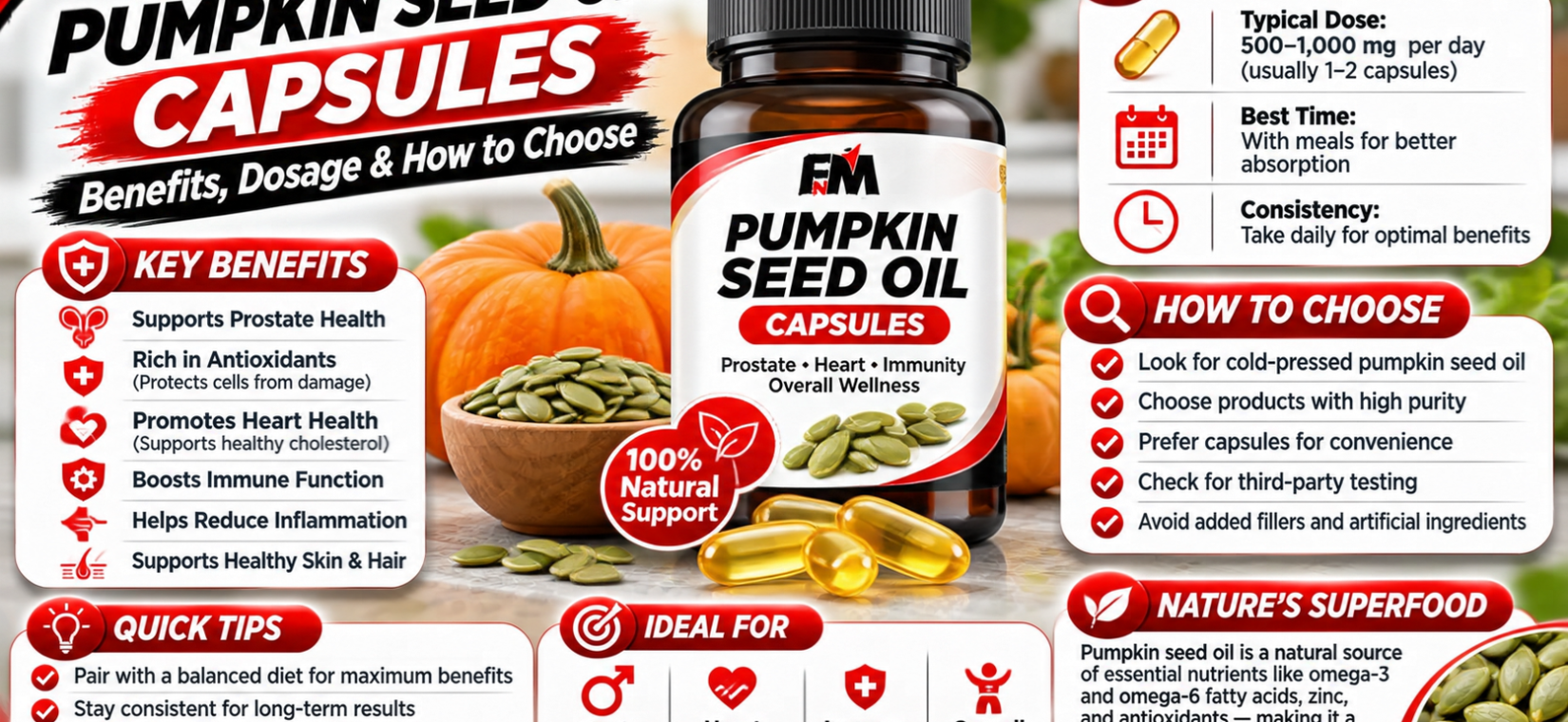
Pumpkin seed oil capsules are softgel supplements containing oil cold-pressed from pumpkin seeds, typically providing 500–1,000 mg of oil per serving. They are studied for prostate comfort, urinary health, and hair density, delivering phytosterols, zinc, and vitamin E in a tasteless, convenient form. This guide compares capsules against liquid oil and seeds, with dosage and safety details.
Quick Verdict on Pumpkin Seed Oil Capsules
✅ Our pick: Cold-pressed pumpkin seed oil capsules providing 1,000 mg per daily serving (usually 2 softgels), with no unnecessary fillers and third-party testing for purity. This matches the upper end of studied dosages and costs pennies per day. More evidence-based explainers live in our health section.
⛔ Skip if: you want pumpkin seed oil for cooking or salad dressings (buy the liquid oil instead); you are pregnant or nursing (discuss with your doctor first); or you expect overnight results — the human trials showing benefits ran 12–24 weeks.
The bottom line up front: pumpkin seed oil capsules are a legitimate, well-tolerated way to get the phytosterols and fatty acids of pumpkin seed oil without the taste or measuring. They are not miracle pills, but the human evidence — particularly for hair density and prostate comfort — is stronger than for most “men’s health” supplements on the shelf.
What Are Pumpkin Seed Oil Capsules?
Pumpkin seed oil capsules are dietary supplements made by cold-pressing oil from the seeds of pumpkins (typically the Styrian Cucurbita pepo variety) and sealing it into softgel capsules. Each capsule usually contains 500 mg of oil; the standard daily serving is 1–2 capsules. Unlike roasted pumpkin seeds you eat as a snack, the oil is concentrated: it delivers the seed’s fat-soluble compounds — phytosterols (especially beta-sitosterol), vitamin E (mainly gamma-tocopherol), zinc, and the omega-6 and omega-9 fatty acids linoleic and oleic acid — without the fiber, protein, or calories of whole seeds. You can read more about the oil itself on Wikipedia’s pumpkin seed oil page.
The capsule format exists to solve three problems with liquid pumpkin seed oil: taste (the oil is nutty but strong), dosing (measuring tablespoons is imprecise), and oxidation (oil in a sealed softgel is protected from air and light far better than an opened bottle). For someone taking pumpkin seed oil capsules daily for months — which is how the research used them — convenience directly determines consistency, and consistency determines results.
Did you know? A tablespoon of liquid pumpkin seed oil contains about 120 calories. Two pumpkin seed oil capsules deliver a studied dose of the oil’s active compounds for roughly 10–15 calories — which is why capsules are the preferred format for supplement purposes rather than culinary ones.
Pumpkin Seed Oil Capsules: Head-to-Head Comparisons
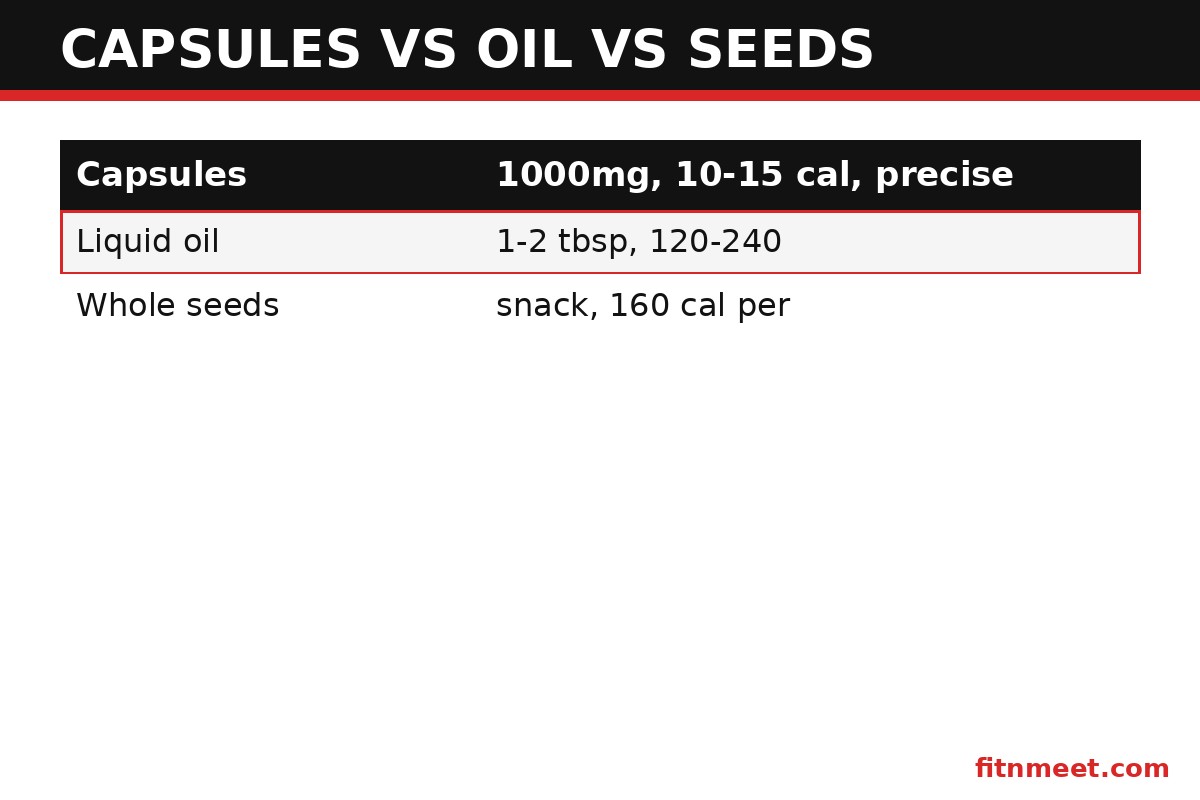
Table 1 — Capsules vs liquid oil vs whole seeds
| Factor | Pumpkin seed oil capsules | Liquid pumpkin seed oil | Whole roasted seeds |
|---|---|---|---|
| Typical dose | 500–1,000 mg oil/day | 1–2 tbsp/day (~14–28 g) | 30 g handful (~1 oz) |
| Calories per dose | 10–15 | 120–240 | ~160 |
| Phytosterols | Concentrated, standardized | High but variable | Moderate |
| Convenience | Highest — no taste, no measuring | Low — strong taste, spoon measuring | High — eat as snack |
| Best for | Daily supplementation | Cooking, dressings | Snacking, magnesium, protein |
| Cost per month | Low (~$8–15) | Medium (~$12–20) | Low (~$6–10) |
Table 2 — Pumpkin seed oil capsules vs other prostate/urinary options
| Option | Key actives | Human evidence level | Typical daily dose |
|---|---|---|---|
| Pumpkin seed oil capsules | Phytosterols, zinc, vitamin E | Moderate — RCTs for hair & BPH symptoms | 500–1,000 mg oil |
| Saw palmetto extract | Fatty acids, sterols | Mixed — large trials show little benefit for BPH | 320 mg |
| Beta-sitosterol (isolated) | Single phytosterol | Moderate — some BPH symptom trials | 60–130 mg |
| Prescription 5-ARI drugs | Finasteride/dutasteride | Strong — but prescription-only with side effects | Per doctor |
The comparison makes the positioning clear: pumpkin seed oil capsules sit in the sweet spot of meaningful human evidence, low cost, and excellent tolerability. They are not a replacement for medical treatment of diagnosed prostate conditions — but as a daily supplement, their evidence-to-risk ratio is among the best in the men’s-health aisle. For general wellness support alongside them, browse FitnMeet’s health support collection.
Benefits of Pumpkin Seed Oil Capsules
1. Hair density — the strongest evidence
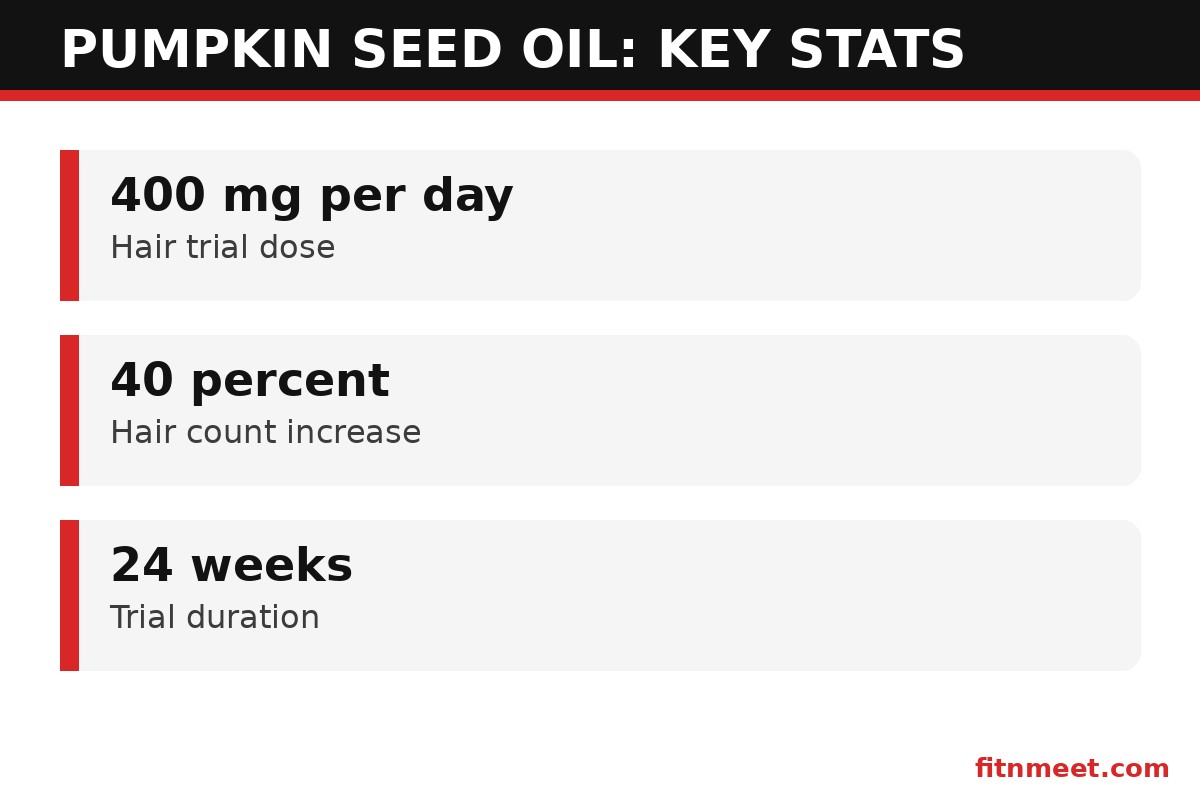
The most cited human trial (Cho et al., 2014, published in Evidence-Based Complementary and Alternative Medicine) gave 76 men with mild-to-moderate male pattern hair loss either 400 mg of pumpkin seed oil daily or placebo for 24 weeks. The pumpkin seed oil group saw a 40% increase in hair count versus 10% in the placebo group. That is a genuine randomized, double-blind result — rare air for a supplement. The proposed mechanism is mild inhibition of 5-alpha-reductase, the enzyme that converts testosterone to DHT, the hormone most responsible for pattern hair loss.
2. Prostate and urinary comfort
Multiple trials have studied pumpkin seed oil (in capsules and as extract) in men with benign prostatic hyperplasia (BPH) symptoms — frequent nighttime urination, weak stream, incomplete emptying. A 12-month study of over 1,400 men found that pumpkin seed extract reduced International Prostate Symptom Scores (IPSS) significantly from baseline. The phytosterols, particularly beta-sitosterol, are thought to support healthy urinary flow. Results are modest rather than dramatic, but they are consistent across studies.
3. Nutrient density in a small package
Pumpkin seed oil is a meaningful source of zinc (important for immune function and testosterone production — see the NIH zinc fact sheet) and vitamin E as gamma-tocopherol, a form with distinct anti-inflammatory properties compared to the alpha-tocopherol in most multivitamins (see the NIH vitamin E fact sheet). The oil’s linoleic acid (omega-6) content also supports skin barrier health.
4. Heart and metabolic markers
Small human trials suggest pumpkin seed oil may modestly support healthy blood pressure and cholesterol profiles, likely via its phytosterol content (phytosterols compete with cholesterol for absorption). The evidence here is preliminary — consider it a potential bonus, not a primary reason to supplement.
How to Choose: A 5-Question Decision Tree
Answer these in order to pick the right pumpkin seed oil capsules:
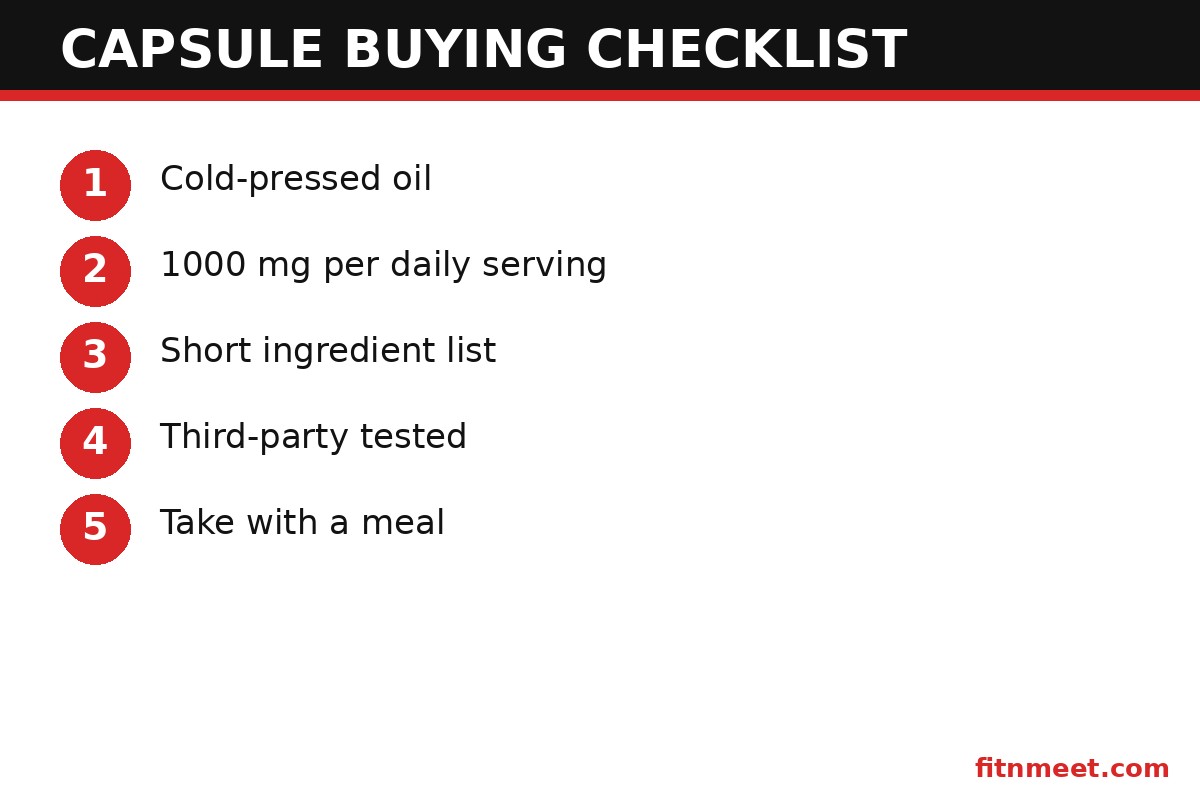
- Is it cold-pressed? Cold-pressing preserves the phytosterols and vitamin E that heat extraction degrades. If the label doesn’t say “cold-pressed,” keep shopping.
- What’s the oil per serving — and per capsule? Look for 1,000 mg of pumpkin seed oil per daily serving. Check whether that means 1 or 2 capsules; a bottle advertising “500 mg” that requires 2 capsules to reach the studied range is selling you half-doses.
- Is the ingredient list short? Ideal: pumpkin seed oil, softgel (gelatin or veggie cellulose), maybe vitamin E as a preservative. Long lists of fillers, artificial colors, or “proprietary blends” are red flags.
- Is it third-party tested? Look for NSF, USP, or Informed-Choice marks, or a brand that publishes certificates of analysis. Oils are vulnerable to oxidation and adulteration — testing matters more here than with most supplements.
- Do you need capsules at all? If you already drizzle pumpkin seed oil on salads daily, capsules add little. Capsules win for everyone else on consistency and calorie control.
✅ Decision shortcut: cold-pressed + 1,000 mg/day + short ingredient list + third-party testing = buy with confidence. Missing two or more of these = keep looking. Pair your choice with the rest of your daily stack from FitnMeet’s vitamins collection.
Pumpkin Seed Oil Capsules: Dosage
| Goal | Daily dose (oil) | Capsules (500 mg each) | Duration in studies |
|---|---|---|---|
| General wellness | 500 mg | 1 | Ongoing |
| Hair density support | 400–1,000 mg | 1–2 | 24 weeks |
| Prostate/urinary comfort | 500–1,000 mg | 1–2 | 12 weeks–12 months |
Take pumpkin seed oil capsules with a meal containing some fat — as a fat-soluble oil, absorption improves alongside dietary fat, and taking them with food minimizes the rare mild stomach upset. Morning or evening both work; consistency matters more than timing. Do not exceed the label’s serving size without a reason: more oil is not more effective, and the studied benefits all came from 400–1,000 mg/day, not megadoses.
Pumpkin Seed Oil Capsules: Safety and Side Effects
Pumpkin seed oil capsules are well tolerated — they are, after all, a concentrated food oil. In human trials, side effects were rare and mild, limited to occasional stomach discomfort or loose stools, usually resolved by taking the capsules with food. Three cautions are worth stating plainly:
- Blood pressure medication: pumpkin seed oil may mildly lower blood pressure. If you take antihypertensives, monitor your readings when starting and mention it to your doctor.
- Surgery: as with many plant oils, stop supplementation 1–2 weeks before scheduled surgery as a precaution.
- Pregnancy and nursing: whole pumpkin seeds are a normal food, but concentrated oil capsules have not been studied in pregnancy — get your doctor’s approval first.
Pumpkin seed oil capsules are a supplement, not a treatment: they do not cure BPH, do not regrow a fully bald scalp, and are not a substitute for medical evaluation of urinary symptoms, which can signal conditions needing proper diagnosis. For general questions about supplementation, see FitnMeet’s FAQ page.
Frequently Asked Questions
What do pumpkin seed oil capsules do?
Pumpkin seed oil capsules deliver concentrated pumpkin seed oil (phytosterols, zinc, vitamin E, and beneficial fatty acids) in softgel form. Human research supports benefits for hair density (40% hair-count increase over 24 weeks at 400 mg/day in one RCT) and prostate/urinary comfort in men with mild BPH symptoms. They are a supplement, not a medical treatment.
How many pumpkin seed oil capsules should I take per day?
Most evidence supports 500-1,000 mg of pumpkin seed oil daily, which is typically 1-2 capsules of 500 mg each. The hair-loss trial used 400 mg/day; prostate studies used up to 1,000 mg/day. Take them with a meal containing some fat for best absorption.
Are pumpkin seed oil capsules better than liquid pumpkin seed oil?
For supplementation, yes: capsules give precise dosing, no strong taste, fewer calories (10-15 vs 120+ per tablespoon of oil), and better protection from oxidation. Liquid oil is better for culinary use — salads and dressings — where you want the flavor. Whole seeds are best as a nutritious snack.
How long do pumpkin seed oil capsules take to work?
The human trials ran 12-24 weeks before measuring results, so expect 3-6 months of consistent daily use before judging effects on hair density or urinary comfort. This is a slow-building nutritional intervention, not a fast-acting drug.
Do pumpkin seed oil capsules have side effects?
They are well tolerated; the only commonly reported issues are mild stomach discomfort or loose stools, usually avoided by taking capsules with food. Caution is advised if you take blood pressure medication (the oil may mildly lower blood pressure) or are scheduled for surgery. Pregnant or nursing women should consult a doctor first.
Can women take pumpkin seed oil capsules?
Yes. While much of the research focuses on men’s prostate and hair-loss concerns, the nutritional content — zinc, vitamin E, phytosterols, and essential fatty acids — benefits everyone. The hair-density trial studied men, so women should view hair claims as promising but less directly evidenced.
Conclusion: The Comparison Winner
Against liquid oil, whole seeds, and rival prostate supplements, pumpkin seed oil capsules win the comparison for one reason: they deliver studied doses of the oil’s active compounds with the least friction — no taste, no measuring, 10 calories. Choose cold-pressed, 1,000 mg per daily serving, short ingredient list, third-party tested, and give it 3–6 months. That is the entire formula.
Ready to add them to your routine? Start with the checklist above, then explore FitnMeet’s health support and shop collections to build a complete, evidence-based daily stack.
This article is for informational purposes only and is not medical advice. Consult a healthcare professional before starting any supplement, especially if you take prescription medication, have a diagnosed prostate condition, or are pregnant or nursing.