
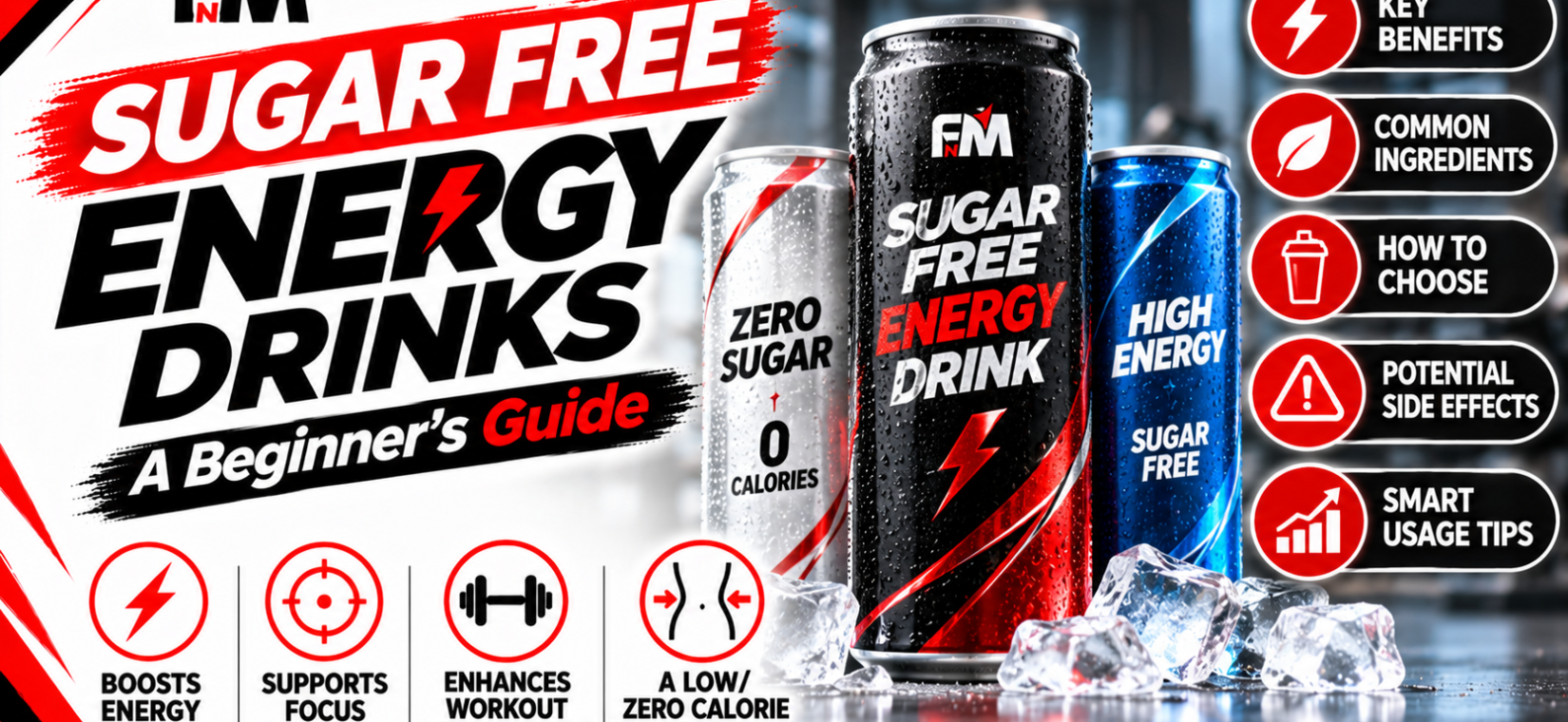
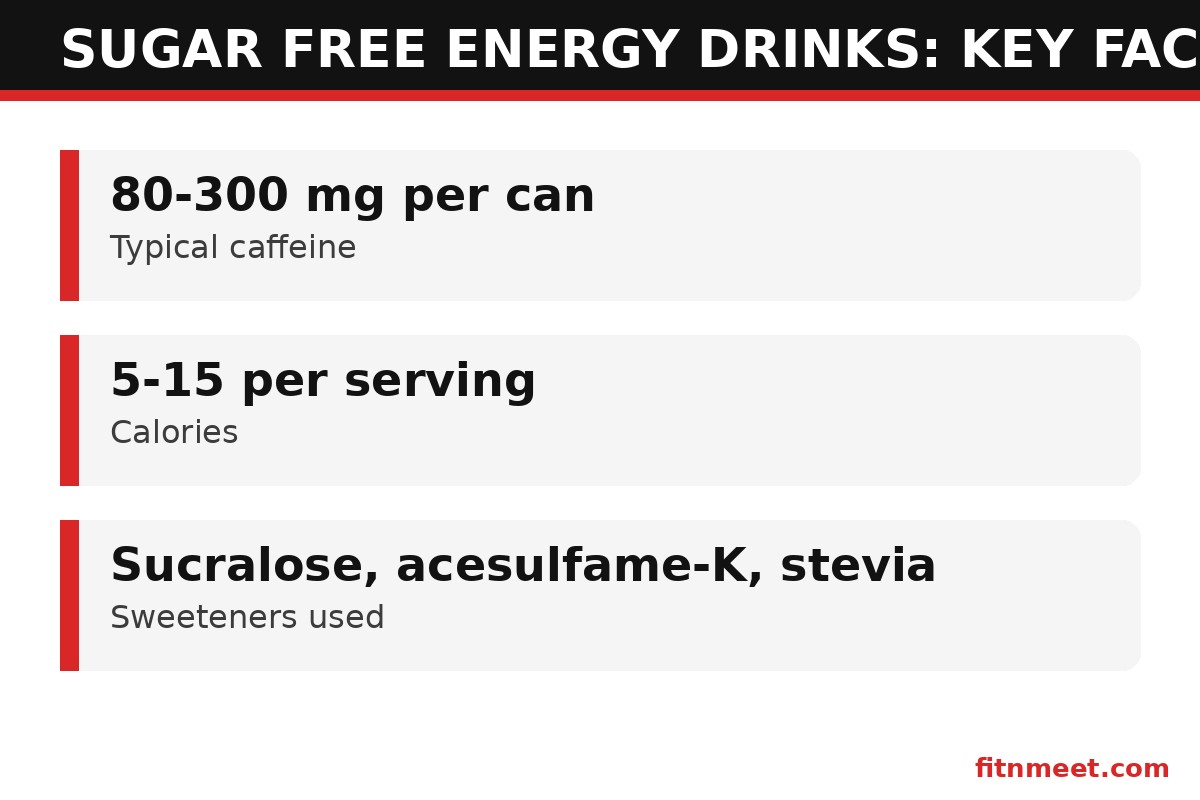
Sugar free energy drinks are carbonated beverages that deliver caffeine — usually 80–300mg per can — without sugar, using zero-calorie sweeteners instead. A typical can has 0–15 calories versus 150–200 in a regular energy drink. They work the same way as any caffeinated drink: the caffeine blocks sleepiness signals in your brain for 3–5 hours.
👋 Start here: New to sugar free energy drinks? Here is the one-paragraph version: they are just caffeinated sodas without the sugar. One standard can (about 150–200mg caffeine) is roughly like two cups of coffee. Drink it 30–45 minutes before you need focus, do not exceed 400mg caffeine per day from all sources, and skip them within 6 hours of bedtime. That is 90% of what you need to know — the rest of this guide fills in the details.
Sugar Free Energy Drinks, Explained Simply
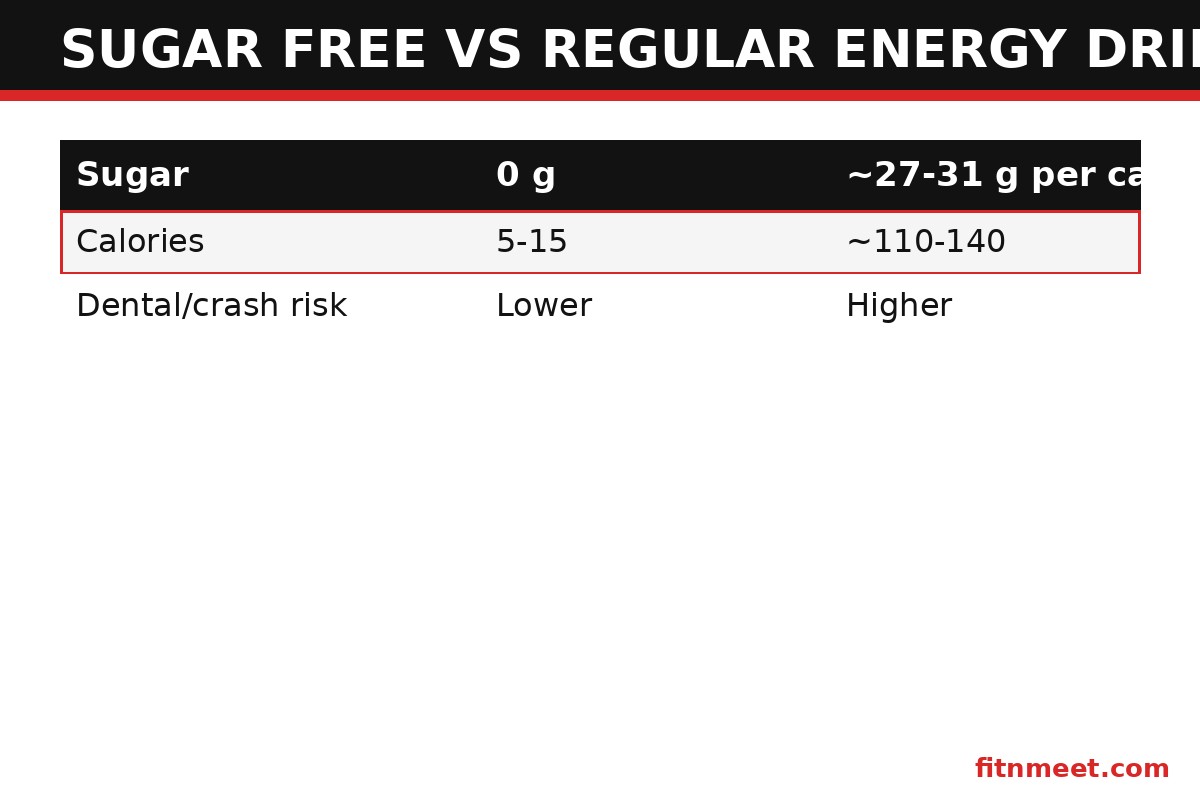
Think of sugar free energy drinks as coffee in a soda can — minus the sugar crash. A regular energy drink can pack 40–50 grams of sugar (about 12 teaspoons). Sugar free energy drinks swap all of that for sweeteners with zero calories, so you get the caffeine lift without the sugar load.
The simplest analogy: if a regular energy drink is a candy bar dissolved in soda water, sugar free energy drinks are the same buzz with the candy removed. One stat to remember: a single regular energy drink can contain more sugar than the American Heart Association’s entire daily recommended limit (36g for men, 25g for women) — sugar free versions contain none.
Who are they for?
Beginners usually arrive at sugar free energy drinks from one of three directions: they want pre-workout energy without sugar, they are cutting calories but still want caffeine, or they are managing blood sugar and need to avoid the glucose spike. All three are valid starting points.
Who should skip them?
Kids and teenagers, pregnant or breastfeeding women, and anyone sensitive to caffeine or with a heart condition should skip sugar free energy drinks or check with a doctor first. Caffeine is caffeine, with or without sugar.
What Are Sugar Free Energy Drinks?
What is actually inside the can?
Most sugar free energy drinks share a short ingredient list:
- Caffeine (80–300mg): the active ingredient. Usually from caffeine anhydrous or green tea/coffee extracts.
- Zero-calorie sweeteners: typically sucralose, acesulfame potassium (Ace-K), aspartame, or stevia/monk fruit in “natural” lines.
- Carbonated water + flavoring: the soda base.
- B-vitamins: niacin, B6, B12 — often at 100%+ of daily value. Mostly marketing; your body excretes the excess.
- Taurine: an amino acid included in many formulas; evidence for an extra energy effect beyond caffeine is weak.
- Sometimes: L-carnitine, electrolytes, or adaptogens, depending on the formula.
What does “sugar free” legally mean?
In the US, “sugar free” means less than 0.5g of sugar per serving — effectively zero. But read the label: some cans are 2 servings, and “zero sugar” does not mean zero calories (a few calories from other ingredients can remain) or zero sweetness. For the full category background, see Wikipedia’s energy drink article.
Why Beginners Care
Energy without the sugar crash
The #1 reason beginners choose sugar free energy drinks over regular ones: no sugar crash. A sugary drink spikes blood glucose, triggers insulin, and often leaves you more tired 60–90 minutes later. Sugar free energy drinks skip that rollercoaster — the caffeine rises and fades smoothly, like coffee. Stat: that avoided sugar load is 150–200 calories per can you do not have to burn off later.
Calorie control
At 0–15 calories per can, sugar free energy drinks fit easily into fat-loss or maintenance diets. Swapping one daily sugary energy drink for a sugar free version saves roughly 1,000–1,400 calories a week — equivalent to about a third of a pound of fat, with zero other changes. Pair sugar free energy drinks with a structured plan from the FitnMeet weight loss collection if fat loss is the goal.
Blood sugar friendliness
For people watching glucose — including those with prediabetes or diabetes — sugar free energy drinks do not spike blood sugar the way 50g of liquid sugar does. (Caffeine itself can slightly affect insulin sensitivity, so moderation still matters — more in the safety section.)
Gym and focus use
Many beginners use sugar free energy drinks as a casual pre-workout: 150–200mg caffeine 30–45 minutes before training is within the 3–6mg/kg range research supports for performance. Students and shift workers use them the same way for focus. If you train regularly, compare with dedicated options in the pre-workouts collection.
Getting Started: Your 5-Step Beginner Plan
Follow this plan for your first two weeks with sugar free energy drinks. It is designed to find your personal sweet spot without overshooting.
Step 1: Pick a moderate can (100–200mg caffeine)
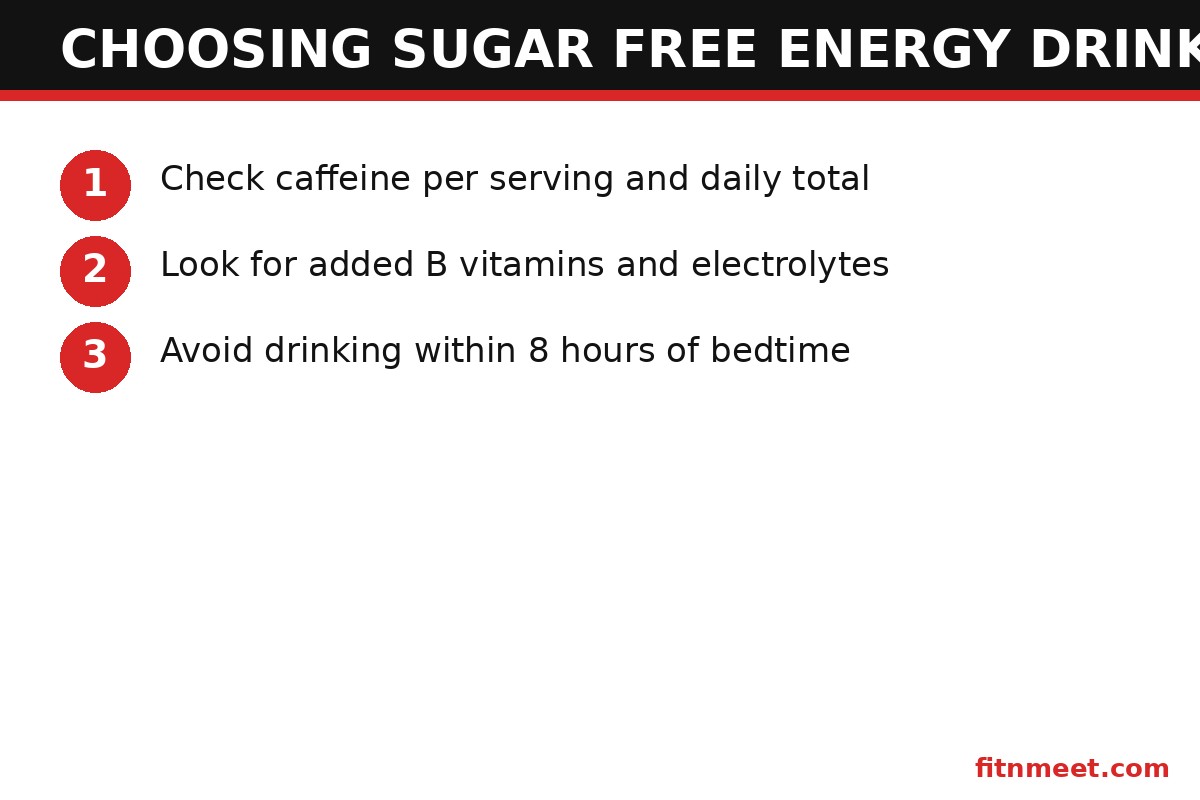
Ignore the 300mg mega-cans for now. Start with a standard 16oz can in the 150–200mg range — enough to feel, not enough to overwhelm. Check the caffeine number on the nutrition panel before you buy.
Step 2: Time it right
Drink it 30–45 minutes before you need the effect (workout, study session, long drive). Caffeine peaks in the blood around 45 minutes. Do not drink one within 6 hours of bedtime — caffeine’s half-life is 5–6 hours, so a 4pm can is still half-active at 10pm.
Step 3: Assess on an empty-ish stomach, once
Try your first can on a light stomach so you can feel the true effect. After that, most beginners prefer drinking sugar free energy drinks with a snack — it smooths the onset and avoids jitters.
Step 4: Track your total caffeine for 3 days
Write down every source: coffee, tea, pre-workout, chocolate, plus your can. Most beginners are shocked to find they were already at 300mg before adding anything. Keep the all-source total under 400mg/day (the widely cited safe daily ceiling for healthy adults).
Step 5: Decide your pattern
After two weeks, choose: daily single can, training-days only, or occasional use. Daily use builds tolerance (you will need the same dose just to feel normal); training-days-only keeps the effect punchy. There is no wrong answer — just an informed one.
Benefits of Sugar Free Energy Drinks
Alertness and reaction time
Caffeine’s best-proven benefit: 100–200mg improves alertness, reaction time, and vigilance for 3–5 hours. This is the core reason sugar free energy drinks exist, and the effect is as real as coffee’s. Stat: meta-analyses find caffeine improves cognitive performance most clearly in the 100–400mg range.
Workout performance
Caffeine at 3–6mg per kg of bodyweight (roughly 200–400mg for most adults) reliably improves endurance, sprint repeatability, and perceived effort. A single can before training lands many lifters right in that window — which is why sugar free energy drinks double as budget pre-workouts. Browse purpose-built formulas in the sports nutrition collection.
Zero-sugar energy
Every benefit above, without 40–50g of sugar. For daily users, that is the entire value proposition of sugar free energy drinks in one line: the lift without the metabolic cost.
Mood and motivation
Low-to-moderate caffeine doses are associated with improved mood and reduced perception of fatigue — helpful for early workouts or long workdays. The effect is modest and real, not transformative.
Common Mistakes Beginners Make
Mistake 1: Starting with the strongest can
Beginners grab a 300mg can because “more energy.” The result is usually jitters, anxiety, and a racing heart — not productivity. Start moderate; you can always have more tomorrow.
Mistake 2: Ignoring total daily caffeine
Two coffees (200mg) + a pre-workout (250mg) + an energy drink (200mg) = 650mg, well past the 400mg guideline. Sugar free energy drinks do not exist in isolation — count everything.
Mistake 3: Drinking them late
The 6-hour rule is the most violated and most regretted. A 5pm can to “push through” reliably becomes a midnight staring contest with the ceiling. Protect your sleep — it matters more than any afternoon boost.
Mistake 4: Using them as a sleep replacement
Caffeine masks fatigue; it does not erase sleep debt. Regularly replacing sleep with sugar free energy drinks degrades training recovery, mood, and immune function. If you need a can to function daily, the fix is sleep, not a stronger can.
Mistake 5: Assuming “sugar free” means “unlimited”
Zero sugar does not mean zero consequences. The caffeine ceiling still applies, and some people are sensitive to sugar alcohols or carbonation. Treat sugar free energy drinks as a tool with a dose, not water with benefits.
Dosage Basics: How Much Caffeine?
The numbers that matter
- Beginner can: 100–200mg caffeine (≈ 1–2 cups of coffee).
- Daily ceiling: 400mg caffeine from all sources (FDA-cited guideline for healthy adults).
- Performance dose: 3–6mg per kg bodyweight, taken 30–60 minutes pre-workout.
- Sleep cutoff: no caffeine within 6 hours of bed (8+ if you are sensitive).
For caffeine’s pharmacology in plain terms, Wikipedia’s caffeine article is a solid reference.
How to read the label like a beginner
Check three things: caffeine mg per can (not per serving — some cans hide 2 servings), sweetener type (pick your preference; all approved sweeteners are considered safe at normal intakes), and serving size (a “2 servings per container” can doubles every number on the panel).
Building tolerance (and resetting it)
Daily caffeine use builds tolerance within 1–2 weeks — the same can does less. A 7–14 day reset (tapering down, not cold turkey, to avoid withdrawal headaches) restores sensitivity. Many experienced users cycle: 5 days on, 2 days off.
Safety: What to Watch Out For
Caffeine side effects
Too much caffeine causes jitters, anxiety, rapid heartbeat, stomach upset, and insomnia. These are dose-dependent and reversible — cut back and they fade within hours. If you ever feel chest pain or a dangerously racing heart, seek medical care rather than waiting it out.
Who should be careful?
Pregnant women are generally advised to stay under 200mg caffeine/day. People with heart arrhythmias, uncontrolled high blood pressure, anxiety disorders, or acid reflux should talk to a doctor first. Teenagers should avoid high-caffeine drinks entirely — their smaller body weight makes standard cans proportionally much stronger.
Sweetener questions
The sweeteners in sugar free energy drinks (sucralose, Ace-K, aspartame, stevia) are all approved by food safety authorities at typical intakes. Aspartame is the one to note if you have phenylketonuria (PKU) — it contains phenylalanine and carries a warning label. Beyond that, the evidence does not support fearing approved sweeteners at one or two cans a day.
Do not mix with alcohol
Caffeine + alcohol is a genuinely risky combination: the stimulant masks how drunk you feel, leading to overconsumption and poor decisions. This applies to sugar free energy drinks exactly as much as regular ones.
This article is for informational purposes only and is not medical advice. Consult a healthcare professional before starting any supplement or exercise program.
Frequently Asked Questions
Are sugar free energy drinks bad for you?
In moderation (one can a day, under 400mg total daily caffeine), sugar free energy drinks are considered low-risk for healthy adults. The main risks are caffeine-related: sleep disruption, jitters, and overconsumption — not the absence of sugar.
Do sugar free energy drinks actually give you energy?
They provide caffeine, which blocks adenosine (the sleepiness signal) and increases alertness for 3–5 hours. They do not provide calories for energy — the ‘energy’ is your nervous system working with less fatigue signaling, not new fuel.
How much caffeine is in sugar free energy drinks?
Typically 80–300mg per can, with most standard 16oz cans landing at 150–200mg — roughly two cups of coffee. Always check the label, since some cans contain two servings.
Can sugar free energy drinks help you lose weight?
Indirectly. Swapping a 200-calorie sugary drink for a zero-calorie one saves significant calories over time, and caffeine mildly increases metabolic rate. But no drink causes fat loss on its own — diet and training do that.
Is it OK to drink sugar free energy drinks every day?
One can daily is fine for most healthy adults who stay under 400mg total caffeine and keep it 6+ hours from bedtime. Daily use builds tolerance, so many people cycle 5 days on, 2 days off to keep the effect.
What is the best time to drink a sugar free energy drink?
Thirty to 45 minutes before you need peak focus or a workout — that is when blood caffeine peaks. Avoid them within 6 hours of bedtime to protect sleep quality.
Conclusion
Sugar free energy drinks are one of the simplest upgrades a beginner can make: same caffeine kick, none of the sugar. Start with a moderate can, time it 30–45 minutes before you need it, count your total daily caffeine, and keep it away from bedtime. Do those four things and you will get everything these drinks offer with almost none of the downside.
You have got this — smart caffeine use is a small habit with an outsized payoff for training and focus. For more beginner-friendly nutrition guides, visit the FitnMeet blog, explore the pre-workouts collection when you are ready to level up, and browse everyday essentials in the FitnMeet shop.