
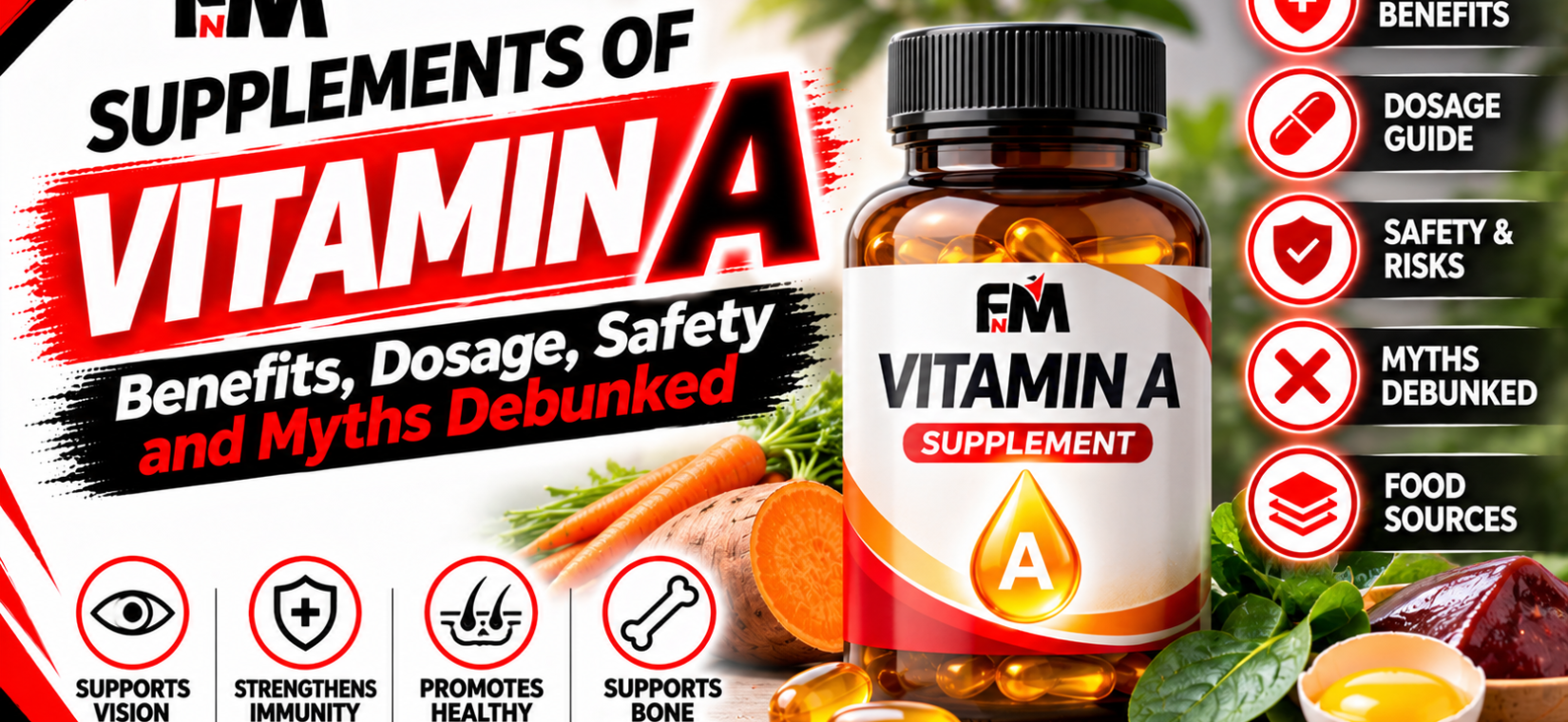
Supplements of vitamin A provide preformed retinol or provitamin beta-carotene to fill dietary gaps in vision, immune and skin health. Supplements of vitamin A are useful for people with diagnosed deficiency or restricted diets, but more is not better — the adult upper limit is 3,000 mcg RAE daily, and excess preformed vitamin A is toxic.
Supplements of Vitamin A: Quick Answer
Should you take supplements of vitamin A? Most people eating a varied diet do not need them — deficiency is uncommon in developed countries, and the vitamin is fat-soluble, meaning excess accumulates in the liver rather than being excreted. Supplements of vitamin A make sense in specific cases: diagnosed deficiency, fat-malabsorption disorders, highly restricted diets, or measles treatment protocols under medical supervision. For everyone else, food first, supplement only with a reason and a dose.
Myth-debunk stat line: Fewer than 1 in 20 adults in the US fall below the estimated average requirement for vitamin A — yet high-dose vitamin A products remain bestsellers. The gap between perceived need and actual need is where most supplement mistakes happen.
Common Myths vs Facts
Myth 1: “More vitamin A means better vision”
Myth 2: “Beta-carotene supplements are completely safe at any dose”
Myth 3: “Vitamin A supplements boost immunity against all infections”
Myth 4: “Natural food-based vitamin A can’t cause toxicity”
Myth 5: “Everyone should take vitamin A for skin”
Myth-debunk stat line: Chronic intakes above 3,000 mcg RAE/day of preformed vitamin A are associated with liver damage, bone fractures and birth defects — the tolerable upper limit is not a target, it is a ceiling.
What Are Supplements of Vitamin A?
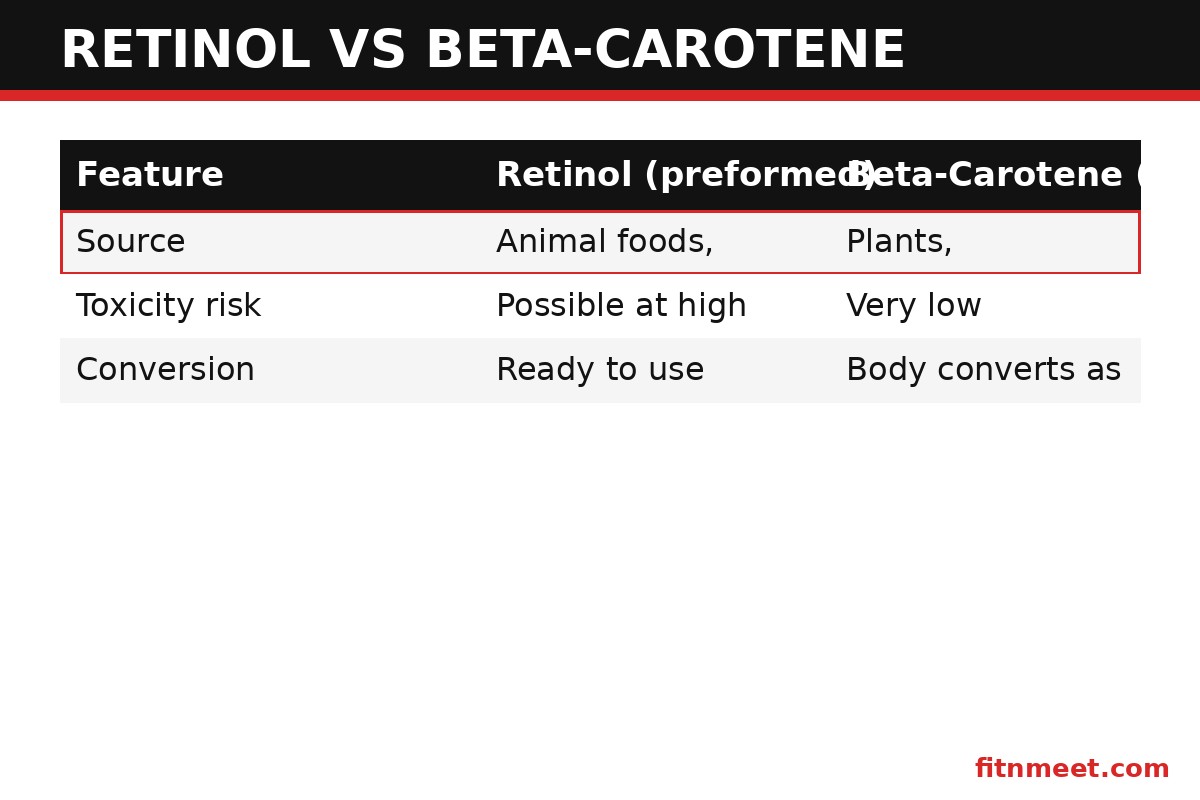
Supplements of vitamin A come in two fundamentally different forms. Preformed vitamin A (retinol, retinyl palmitate, retinyl acetate) is the active form, found in animal foods and most multivitamins. Provitamin A carotenoids (beta-carotene, alpha-carotene, beta-cryptoxanthin) come from plants and are converted to retinol by the body on demand. This distinction is the single most important thing to understand about supplements of vitamin A, because toxicity risk lives almost entirely on the preformed side.
The NIH Office of Dietary Supplements notes that vitamin A is essential for normal vision, immune function, reproduction, and cellular communication (NIH vitamin A fact sheet). Preformed vitamin A is measured in mcg RAE (retinol activity equivalents): 1 mcg retinol = 1 mcg RAE, while it takes 12 mcg of dietary beta-carotene to equal 1 mcg RAE — the conversion is inefficient by design, which is why carotenoids are self-limiting.
Supplements of vitamin A appear as standalone capsules (typically 3,000–7,500 mcg RAE — note how quickly these approach or exceed the upper limit), as part of multivitamins (usually 700–900 mcg RAE), and in “eye health” or “immune” formulas. Always check which form a product uses: a label listing “vitamin A (as beta-carotene)” carries minimal toxicity risk, while “vitamin A (as retinyl palmitate)” demands dose discipline.
Benefits of Supplements of Vitamin A
- Corrects deficiency-related night blindness: The classic, proven benefit — vitamin A restores rhodopsin production in the retina, reversing nyctalopia within weeks.
- Supports immune function in deficient populations: WHO data show high-dose vitamin A cuts measles mortality by ~50% and reduces all-cause child mortality in deficient regions.
- Maintains epithelial barriers: Vitamin A regulates the growth of skin and mucosal cells — the body’s first line of defense in the gut and airways.
- Supports reproductive health: Required for spermatogenesis and normal fetal development (at adequate, not excessive, levels).
- May support iron metabolism: Vitamin A deficiency impairs iron mobilization; correcting it can improve hemoglobin in deficient individuals.
- Thyroid and growth support in children: Deficient children given vitamin A show improved growth metrics in trial settings.
Notice the pattern: every strong benefit of supplements of vitamin A involves correcting a deficiency. In replete individuals, trials consistently show little to no added benefit — which is why testing or dietary assessment should precede supplementation.
Food remains the safest delivery system. A single medium sweet potato provides roughly 1,400 mcg RAE, a 3-ounce serving of beef liver delivers over 6,500 mcg RAE, and a cup of cooked spinach offers about 470 mcg RAE. Most adults who eat orange vegetables, leafy greens, eggs or dairy a few times per week already cover the 700–900 mcg RAE daily requirement without any pills — which is exactly why indiscriminate supplementation so often adds risk without benefit. For more on building a nutrient-dense diet from whole foods, explore the FitnMeet nutrition articles.
How to Use Supplements of Vitamin A: Do This, Not That
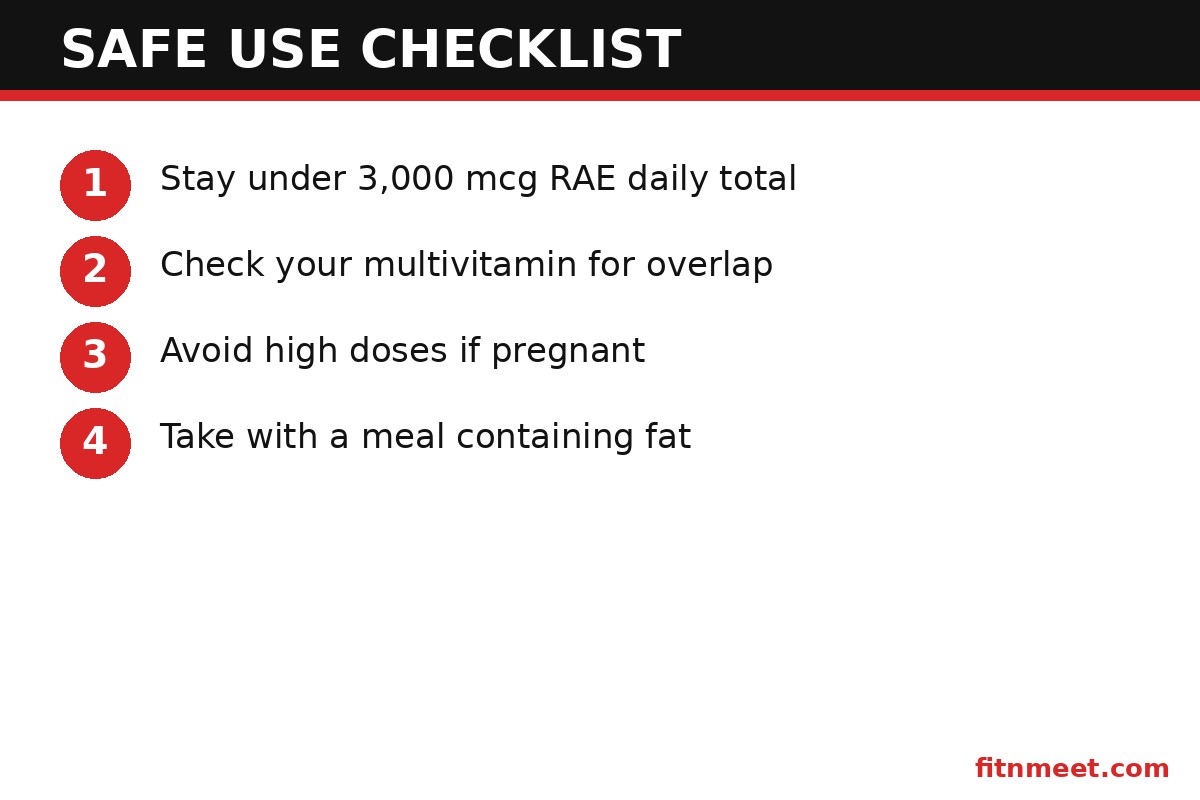
- Do take supplements of vitamin A with a meal containing fat — absorption of this fat-soluble vitamin improves 2–3x with dietary fat versus on an empty stomach.
- Don’t stack multiple sources: multivitamin + standalone + cod liver oil can silently push preformed intake past 3,000 mcg RAE.
- Do choose beta-carotene forms if you simply want insurance without toxicity risk.
- Don’t take high-dose retinol if you are pregnant or could become pregnant — excess preformed vitamin A is teratogenic. (Beta-carotene is the safer choice in pregnancy.)
- Do separate vitamin A from mineral oil or fat-blocking weight-loss drugs, which impair absorption.
- Don’t use supplements of vitamin A as an acne treatment — see a dermatologist instead of megadosing.
- Do recheck your total intake yearly, especially if your multivitamin formula changes.
Build Your Foundation First
Most people do better with a balanced multivitamin than with high-dose single nutrients. Browse FitnMeet’s vitamins collection and the health support category, or start at the FitnMeet shop.
Dosage: How Much Do You Need?
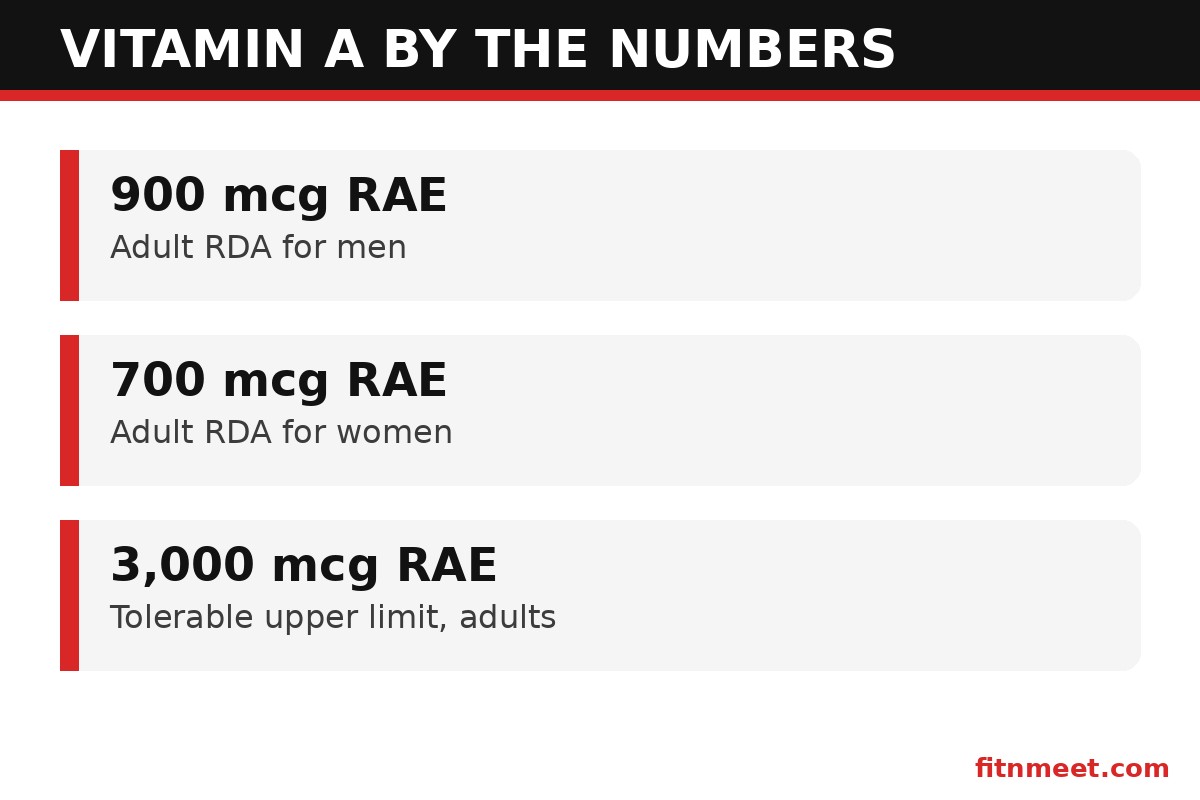
The Recommended Dietary Allowance is 900 mcg RAE/day for adult men and 700 mcg RAE/day for adult women, rising to 770 mcg in pregnancy and 1,300 mcg during lactation. Most mixed diets supply 500–800 mcg RAE without supplementation, which is why standalone supplements of vitamin A are unnecessary for many people.
If supplementing, match the dose to the reason. General insurance: a multivitamin providing 700–900 mcg RAE (preferably partly as beta-carotene) is sufficient. Correcting diagnosed deficiency: physicians typically prescribe 3,000–7,500 mcg RAE daily for a limited course, then retest — this is short-term therapy, not a lifestyle. Never exceed 3,000 mcg RAE/day of preformed vitamin A long-term without medical supervision; that is the tolerable upper intake level, and chronic excess is linked to liver injury, reduced bone mineral density and intracranial hypertension.
Children need proportionally less (300–600 mcg RAE depending on age) and are more vulnerable to toxicity — keep all supplements of vitamin A out of reach, as a handful of high-dose capsules can poison a toddler. For background on the vitamin’s biochemistry, see Wikipedia’s vitamin A article.
Side Effects and Safety
At RDA-level doses, supplements of vitamin A cause no side effects in healthy adults. Problems begin with chronic excess of preformed vitamin A: early signs include headache, nausea, dizziness, blurred vision and skin peeling; chronic toxicity brings liver enlargement, bone and joint pain, and hair loss. Acute single megadoses (above ~60,000 mcg RAE) can cause intracranial hypertension with severe headache and vomiting — a medical emergency.
The two groups who must be most careful: pregnant women (excess preformed vitamin A causes birth defects; stay below 3,000 mcg RAE total from all sources, and prefer beta-carotene) and smokers (avoid high-dose beta-carotene supplements, per the ATBC/CARET trial findings of increased lung cancer risk). People with liver disease or heavy alcohol use should also avoid supplemental preformed vitamin A, since the liver is both the storage site and the injury site.
Drug interactions are worth noting: isotretinoin and other retinoid medications plus supplements of vitamin A stack toward toxicity; tetracycline antibiotics combined with high-dose vitamin A raise intracranial hypertension risk; and orlistat-type fat blockers reduce absorption. When in doubt, a pharmacist can check your specific combination in under a minute.
Frequently Asked Questions
Are supplements of vitamin A safe?
Supplements of vitamin A are safe at recommended doses — up to 900 mcg RAE daily for men and 700 mcg for women. Preformed vitamin A (retinol) becomes toxic with chronic intake above 3,000 mcg RAE daily. Beta-carotene forms are far safer, except high doses should be avoided by smokers.
What is the difference between retinol and beta-carotene in supplements of vitamin A?
Retinol is preformed, active vitamin A — effective but potentially toxic in excess. Beta-carotene is a provitamin the body converts to retinol only as needed, making it self-limiting and much safer. Check which form your supplements of vitamin A use before judging the dose.
Can supplements of vitamin A improve eyesight?
Supplements of vitamin A correct night blindness caused by deficiency, which is their proven vision benefit. They do not sharpen already-normal vision, and megadoses will not improve eyesight — they only increase the risk of toxicity.
How much vitamin A per day is too much?
The tolerable upper intake level for preformed vitamin A is 3,000 mcg RAE daily for adults. Chronic intake above this is linked to liver damage, bone loss and birth defects. Count all sources — multivitamin, standalone supplements of vitamin A, and fish liver oils — toward this ceiling.
Should pregnant women take supplements of vitamin A?
Pregnant women should avoid high-dose preformed vitamin A, which can cause birth defects. A standard prenatal multivitamin is fine; the concern is extra standalone supplements of vitamin A or high-dose fish liver oils. Beta-carotene forms are the safer choice during pregnancy.
Do I need supplements of vitamin A if I eat well?
Probably not. Eggs, dairy, liver, orange vegetables and leafy greens supply ample vitamin A, and deficiency is uncommon with a varied diet. Consider supplements of vitamin A only with a diagnosed deficiency, a restricted diet, or fat-malabsorption issues — ideally confirmed by a clinician.
Conclusion
Supplements of vitamin A are a deficiency-correction tool, not a performance enhancer: valuable when stores are low, pointless and potentially harmful in megadoses when they are not. Know your form (retinol vs beta-carotene), respect the 3,000 mcg RAE ceiling, never stack sources blindly, and let food do most of the work. That is the honest, evidence-based take.
For balanced everyday coverage, read FitnMeet’s health guides and browse the vitamins collection.
This article is for informational purposes only and is not medical advice. Consult a healthcare professional before starting any supplement, especially if pregnant, nursing, or taking medication.