
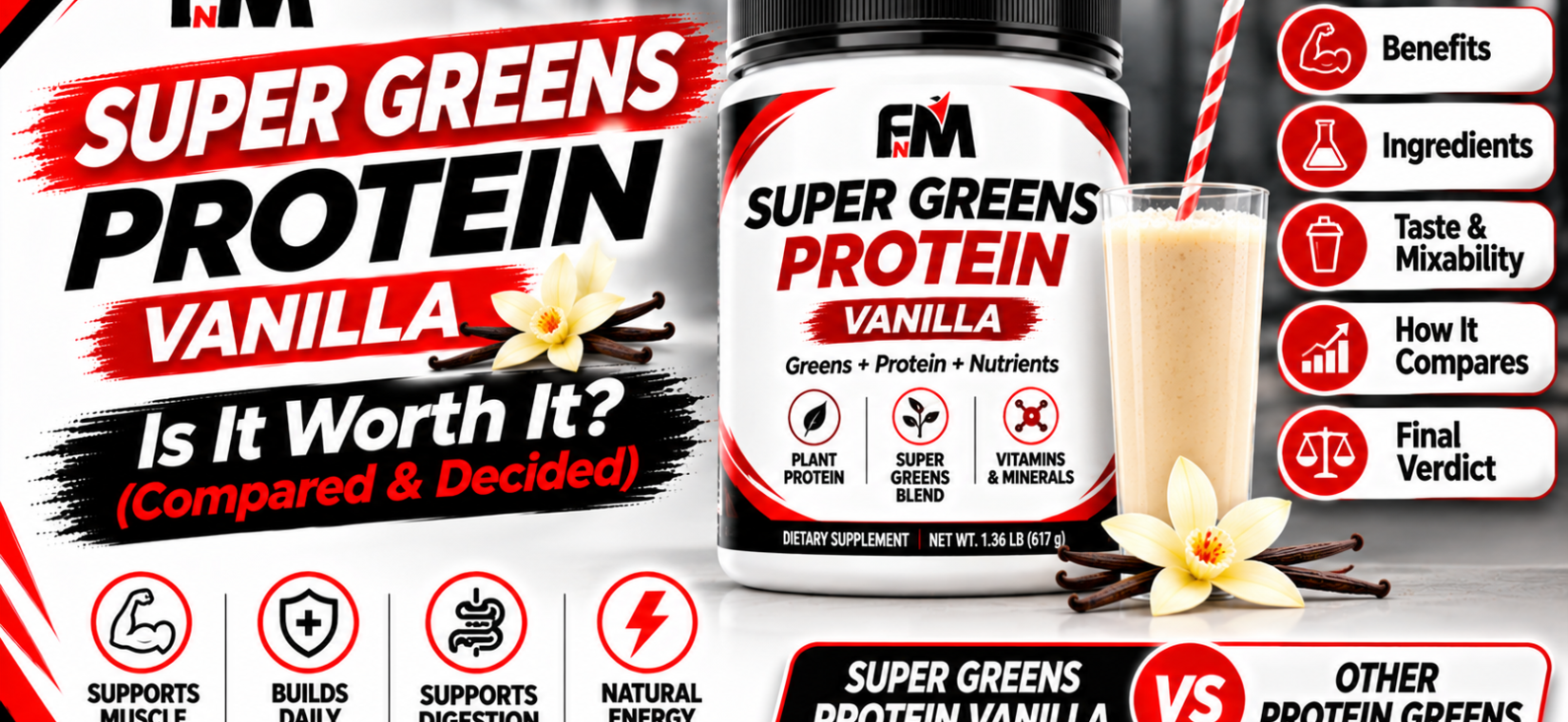
Super greens protein vanilla is a supplement powder combining plant protein with greens like spirulina, chlorella, and wheatgrass in a vanilla flavor. A serving typically offers 15 to 20 grams of protein plus a greens blend. Treat the greens as a bonus, not a vegetable replacement, and check protein content since some formulas are light on it.
Super Greens Protein Vanilla: Quick Verdict
✓ Our pick if…
- You want protein and greens in one shake
- You prefer vanilla flavor over chocolate or unflavored
- You already eat some vegetables but want insurance
- You will actually drink it daily — consistency wins
✗ Skip if…
- You need maximum protein per dollar (buy plain whey)
- You want a clinical greens dose (buy a dedicated greens powder)
- You are sensitive to sweeteners or vanilla flavoring
- You already eat 5+ vegetable servings daily
Bottom line: super greens protein vanilla is a convenience product that does two jobs adequately rather than one job excellently. For most active people who struggle to eat enough vegetables, that trade-off is worth the $0.50–$1.00 per-serving premium over plain protein. For budget-focused lifters chasing protein grams, plain protein plus actual vegetables wins on both cost and nutrition.
What Is Super Greens Protein Vanilla?
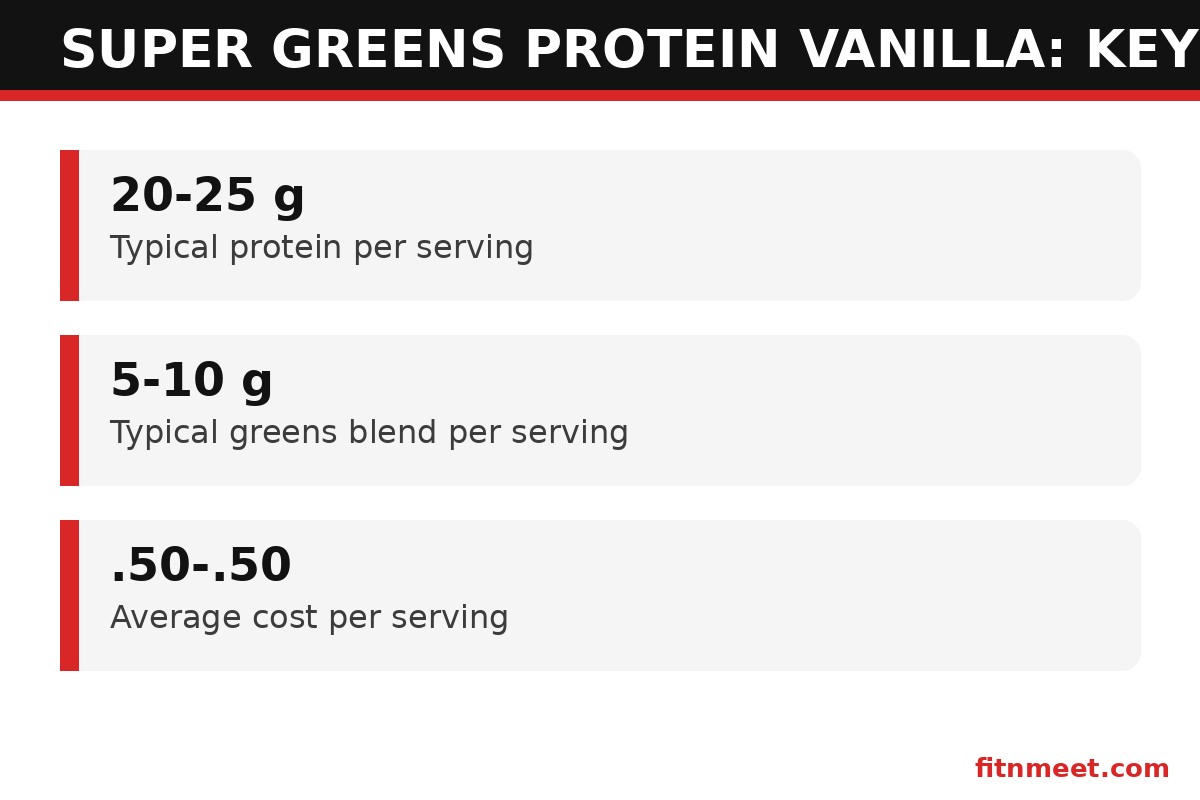
Super greens protein vanilla is a hybrid supplement: a protein powder (whey, plant-based, or a blend) formulated with a “super greens” ingredient complex and flavored with vanilla. A typical serving delivers 20–25 g of protein alongside 5–10 g of greens ingredients such as spirulina, chlorella, kale powder, spinach powder, wheatgrass, barley grass, and sometimes added probiotics, digestive enzymes, or adaptogens.
The vanilla flavoring is doing real work here. Unflavored greens-protein blends taste like pond water — the grassy, earthy notes of spirulina and chlorella are notoriously hard to mask. Vanilla (natural flavor, vanilla bean extract, or vanillin) plus a sweetener (stevia, monk fruit, or sucralose) makes super greens protein vanilla drinkable in plain water, which is the difference between a supplement you use and one that fossilizes in your pantry. That palatability is arguably the product category’s main innovation.
Nutritionally, think of super greens protein vanilla as protein powder first and greens supplement second. The 20–25 g of protein is a full, legitimate serving comparable to standard protein powders. The greens blend, at 5–10 g, is meaningful but modest — roughly equivalent to a small handful of powdered vegetables, not a replacement for eating vegetables. Common greens ingredients have real nutrient profiles: spirulina is about 60–70% protein by dry weight and rich in B vitamins, while whey protein remains the most studied protein source for muscle protein synthesis.
Head-to-Head Comparisons
Comparison 1: Super greens protein vanilla vs plain protein powder
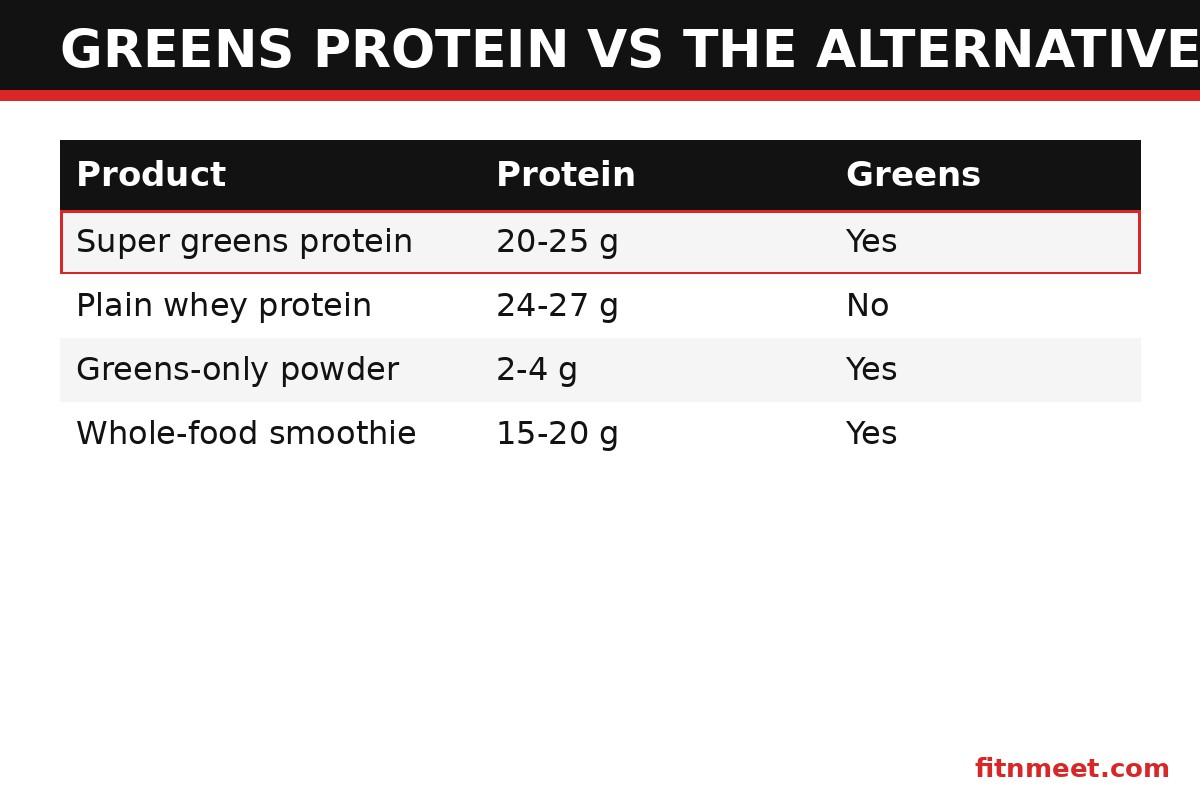
| Feature | Super greens protein vanilla | Plain whey/plant protein |
|---|---|---|
| Protein per serving | 20–25 g | 24–27 g |
| Greens blend | Yes (5–10 g) | No |
| Typical price/serving | $1.50–$2.50 | $1.00–$1.75 |
| Cost per 25 g protein | ~$1.75–$2.50 | ~$1.00–$1.60 |
| Micronutrient bonus | Moderate | Minimal |
| Flavor options | Mostly vanilla (some chocolate) | Wide (vanilla, chocolate, unflavored…) |
| Best for | Vegetable-gap coverage + protein | Max protein per dollar |
Winner depends on your diet. If you eat 4–5 vegetable servings daily, plain protein wins — you are paying extra for greens you do not need. If vegetables are your nutritional weak point (true for roughly 90% of American adults, who miss vegetable intake guidelines), super greens protein vanilla closes two gaps with one scoop.
Comparison 2: Super greens protein vanilla vs greens-only powder
| Feature | Super greens protein vanilla | Greens-only powder |
|---|---|---|
| Greens per serving | 5–10 g | 8–12 g |
| Protein per serving | 20–25 g | 2–4 g |
| Typical price/serving | $1.50–$2.50 | $1.00–$2.00 |
| Replaces a protein shake? | Yes | No |
| Replaces vegetables? | Partially | Partially (better) |
| Daily cost (both needs) | $1.50–$2.50 | $2.00–$3.75 (greens + protein) |
Winner: super greens protein vanilla for combined needs. Buying separate greens and protein powders costs $2.00–$3.75 daily versus $1.50–$2.50 for the combo. Only choose separate products if you want a full clinical greens dose or a specific protein type the combo does not offer.
Comparison 3: Super greens protein vanilla vs whole-food smoothie
| Feature | Super greens protein vanilla | Homemade smoothie |
|---|---|---|
| Protein | 20–25 g | 15–30 g (with Greek yogurt/whey) |
| Vegetable content | Powdered greens | Whole spinach, kale, etc. |
| Fiber | 2–5 g | 5–10 g |
| Prep time | 30 seconds | 5–10 minutes + cleanup |
| Cost per serving | $1.50–$2.50 | $2.00–$3.50 |
| Best for | Busy schedules, travel | Weekends, maximum nutrition |
Winner: whole food when time allows, super greens protein vanilla when it does not. A real smoothie with spinach, frozen berries, Greek yogurt, and a scoop of vanilla plant-based protein powder beats any greens-protein combo nutritionally. But the combo wins the weekday-morning reality test — and the best supplement is the one you actually take.
Super Greens Protein Vanilla Benefits
- Complete protein serving. At 20–25 g per scoop, super greens protein vanilla delivers a legitimate muscle-protein-synthesis stimulus — roughly 2–3 g of leucine in whey-based versions, hitting the leucine threshold for triggering muscle building.
- Greens insurance. The 5–10 g greens blend adds concentrated sources of vitamin K, iron, antioxidants, and chlorophyll you would otherwise miss on low-vegetable days.
- Digestive support. Many formulas include probiotics (1–10 billion CFU) and digestive enzymes, which some users find reduce the bloating that plain protein can cause.
- One-shake simplicity. Replacing two products (protein + greens) with one cuts cost, counter clutter, and decision fatigue — meaningful adherence advantages.
- Vanilla versatility. Vanilla mixes well with coffee, oats, yogurt, and fruit, unlike chocolate-greens combos that clash with everything. A vanilla base is the most recipe-friendly flavor in the category.
- Steadier energy. Protein plus fiber from greens slows digestion versus a plain carb breakfast, supporting steadier morning energy — relevant if your current breakfast is a pastry and regret.
How to Choose: Decision Guide
Answer these questions in order — your answers pick your product:
- Do you eat fewer than 3 vegetable servings daily?
- Yes → super greens protein vanilla makes sense for you. No → buy plain protein and save the premium.
- Whey or plant-based?
- Whey-based super greens protein vanilla typically has better leucine content and smoother vanilla flavor. Plant-based suits dairy-free diets but check for a complete amino acid profile (pea + rice blends work).
- What sweetens it?
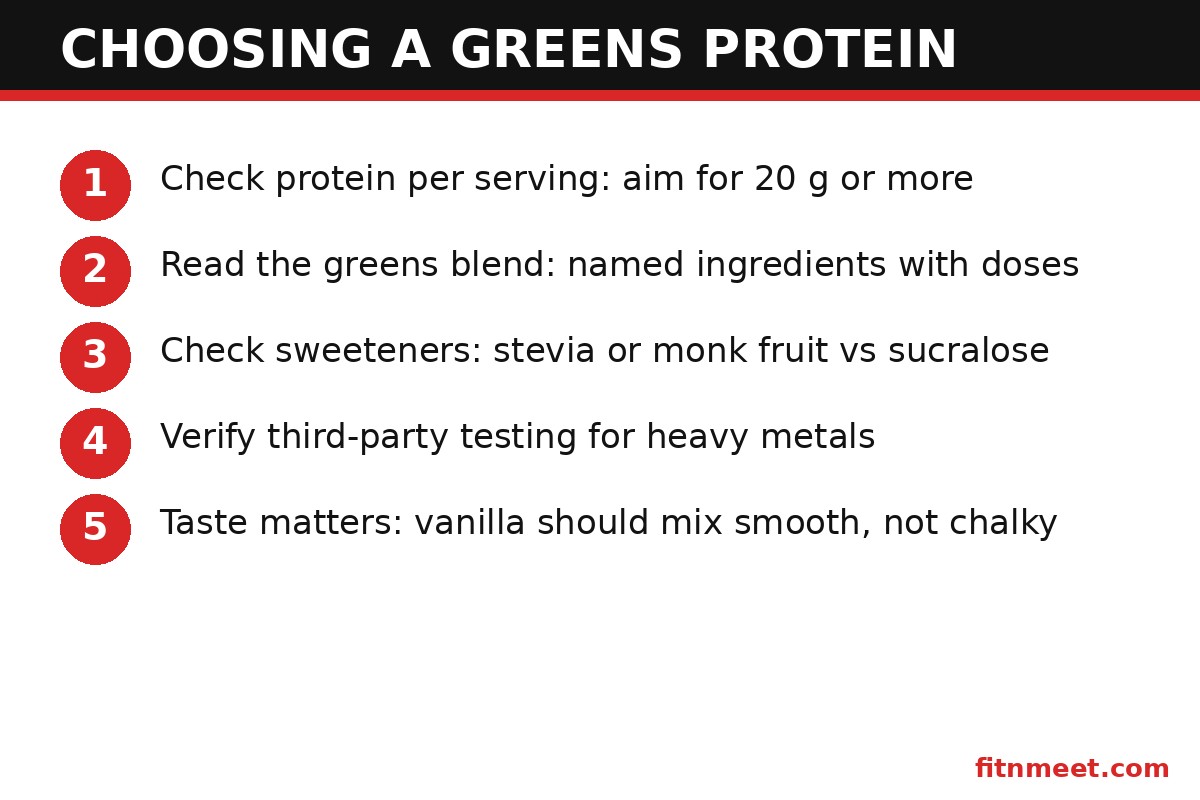
- Stevia or monk fruit → zero-calorie natural options most buyers prefer. Sucralose → tastes more like “real” vanilla to many, but some buyers avoid artificial sweeteners. Cane sugar → adds 5–15 g sugar; fine occasionally, not ideal daily.
- Is the greens blend transparent?
- Named ingredients with gram doses → buy with confidence. “Proprietary blend” with no breakdown → the greens may be fairy-dusted at trivial doses; pick another product.
- Is it third-party tested?
- NSF, Informed Sport, or USP seal → worth a premium, especially for competitive athletes. Greens ingredients can carry heavy-metal contamination; testing matters more here than with plain whey.
Super Greens Protein Vanilla Dosage
Dosing super greens protein vanilla is straightforward: one serving (one scoop, typically 30–45 g of powder) per day, mixed with 300–400 ml of water or milk. That single serving delivers the full 20–25 g protein and the complete greens blend — doubling up doubles cost without doubling benefit, since the greens dose is already adequate at one serving.
Timing is flexible. Post-workout, the protein supports muscle protein synthesis within the broader 24-hour protein window (the “anabolic window” is wider than old advice suggested — total daily protein matters most). As a breakfast replacement, super greens protein vanilla beats skipping breakfast or grabbing refined carbs; pair it with a piece of fruit or oats for a complete meal. As an afternoon snack, it curbs the 3–4 PM energy dip better than coffee alone. If you prefer a dedicated post-workout protein without the greens blend, whey protein isolate is the classic choice for pure muscle recovery.
Total daily protein target for active people is 1.6–2.2 g per kg of body weight. One serving of super greens protein vanilla covers roughly 15–25% of that for most adults — a meaningful contribution, not a complete solution. Fill the rest with whole-food protein: eggs, Greek yogurt, chicken, fish, legumes. Browse the FitnMeet protein collection to compare protein-first options alongside greens-protein combos.
Safety and Quality Concerns
The greens-protein combo is generally safe for healthy adults, but the category has specific quality concerns worth knowing. Heavy metals top the list: greens ingredients like spirulina, chlorella, and kale can accumulate lead, cadmium, and arsenic from soil and water. Independent testing programs have found detectable heavy metals in some greens powders — usually below danger thresholds, but a reason to choose third-party tested products. The FDA’s dietary supplement information page explains how supplements are regulated (as foods, with no pre-market approval), which is why third-party testing matters.
Digestive adjustment is common: the fiber, probiotics, and concentrated greens in this vanilla greens protein can cause gas or bloating for the first 3–7 days. Start with half a serving for a few days if you have a sensitive stomach. Vitamin K in greens can interact with blood-thinning medications like warfarin — anyone on anticoagulants should consult a physician first. People with thyroid conditions should note that raw kale-family ingredients contain goitrogens, though the amounts in a greens blend are small.
Pregnant and breastfeeding women should choose products specifically formulated or cleared for pregnancy, as some greens blends include herbs (like adaptogens) not studied in pregnancy. As with any supplement, the combo complements — never replaces — whole vegetables, and this article is general information, not medical advice.
Frequently Asked Questions
What is a greens protein powder?
The greens-protein combo is a protein powder combining 20 to 25 g of protein per serving with a 5 to 10 g greens blend (spirulina, chlorella, kale, wheatgrass and similar ingredients) in a vanilla flavor. It is designed to deliver protein plus vegetable nutrients in a single daily shake.
Is this vanilla greens protein healthy?
The combo can be a healthy addition for people who undereat vegetables, providing a full protein serving plus concentrated greens nutrients. Choose products with transparent ingredient doses, no more than 5 g of added sugar, and third-party testing for heavy metals. It supplements but does not replace whole vegetables.
How much protein is in a greens protein powder?
Most the greens-protein combo products provide 20 to 25 g of protein per serving, comparable to standard protein powders. Whey-based versions typically offer slightly more leucine for muscle protein synthesis than plant-based versions.
Can this vanilla greens protein replace vegetables?
No. The combo provides 5 to 10 g of powdered greens, which is a useful supplement but not equivalent to whole vegetables with their fiber, water content, and full phytonutrient spectrum. Think of it as insurance for low-vegetable days, not a replacement.
When should I drink a greens protein powder?
Drink the greens-protein combo whenever fits your routine: post-workout for recovery, as a breakfast replacement, or as an afternoon snack. Total daily protein intake matters more than timing. One serving per day is the standard dose; doubling up is unnecessary and expensive.
Does this vanilla greens protein help with weight loss?
The combo can support weight loss indirectly: 20 to 25 g of protein per serving increases satiety and helps preserve muscle in a calorie deficit. But it is not a fat burner, and vanilla-flavored versions with added sugar can work against weight-loss goals. Choose low-sugar formulas and track total calories.
Conclusion: The Decision
Comparing the options head-to-head, a greens protein powder wins for one specific buyer: the active person who wants protein and vegetable insurance in a single vanilla shake they will actually drink daily. It loses to plain protein on cost-per-gram and to dedicated greens powders on greens dose — but it beats buying both separately on total daily cost ($1.50–$2.50 vs $2.00–$3.75). If that buyer is you, choose a transparently labeled, third-party tested formula with 20 g+ protein and 5 g or less sugar, and take one serving daily.
Compare protein options at FitnMeet → Browse vanilla and plant-based proteins in the FitnMeet health support collection and pick the formula that fits your diet, budget, and taste buds.
This article is for informational purposes only and is not medical advice. Consult a healthcare professional before starting any supplement.