
It’s 7:40 on a school morning. Your six-year-old is coughing into her elbow, her little brother just sneezed on the cereal bowls, and a well-meaning relative texts: “Give them vitamin C!” You stand in the supplement aisle later that day staring at gummies, chewables, and powders — wondering what kids actually need, what’s safe, and what’s marketing. This guide to vitamin C for kids answers all of it.
Vitamin C for kids supports immune function, skin health, and iron absorption during growth. Most children get enough from fruit and vegetables, with daily needs ranging from 15 to 75 mg by age. Supplements like chewables or gummies help only when diet falls short; more is not better, since excess vitamin C just causes stomach upset.
A Morning Every Parent Knows
Back to that 7:40 a.m. scene. Maya’s mom did what millions of parents do: she bought the gummies. Two weeks later the cough was long gone — as most colds are, with or without supplements — but the gummy habit stayed, at 250 mg per little bear, several times the 25 mg her six-year-old actually needed. Nothing bad happened; vitamin C is water-soluble and the excess was quietly excreted. But she’d spent money solving a problem her daughter’s breakfast could have solved, and she’d never learned the numbers that would have told her so.
This guide is those numbers — plus the judgment calls around them. Because vitamin C for kids is one of those rare topics where the science is settled, the doses are small, and the main risk isn’t deficiency but confusion.
What Is Vitamin C for Kids?
Vitamin C (ascorbic acid) is a water-soluble vitamin humans cannot make themselves — unlike most animals, we lost the gene for it long ago, so children must get it from food or supplements every day. In kids’ bodies it does three headline jobs: it acts as an antioxidant protecting cells from damage, it is required to make collagen (the protein scaffolding of growing bones, cartilage, skin, and blood vessels), and it dramatically improves iron absorption from plant foods — a quiet superpower for kids who don’t eat much meat.
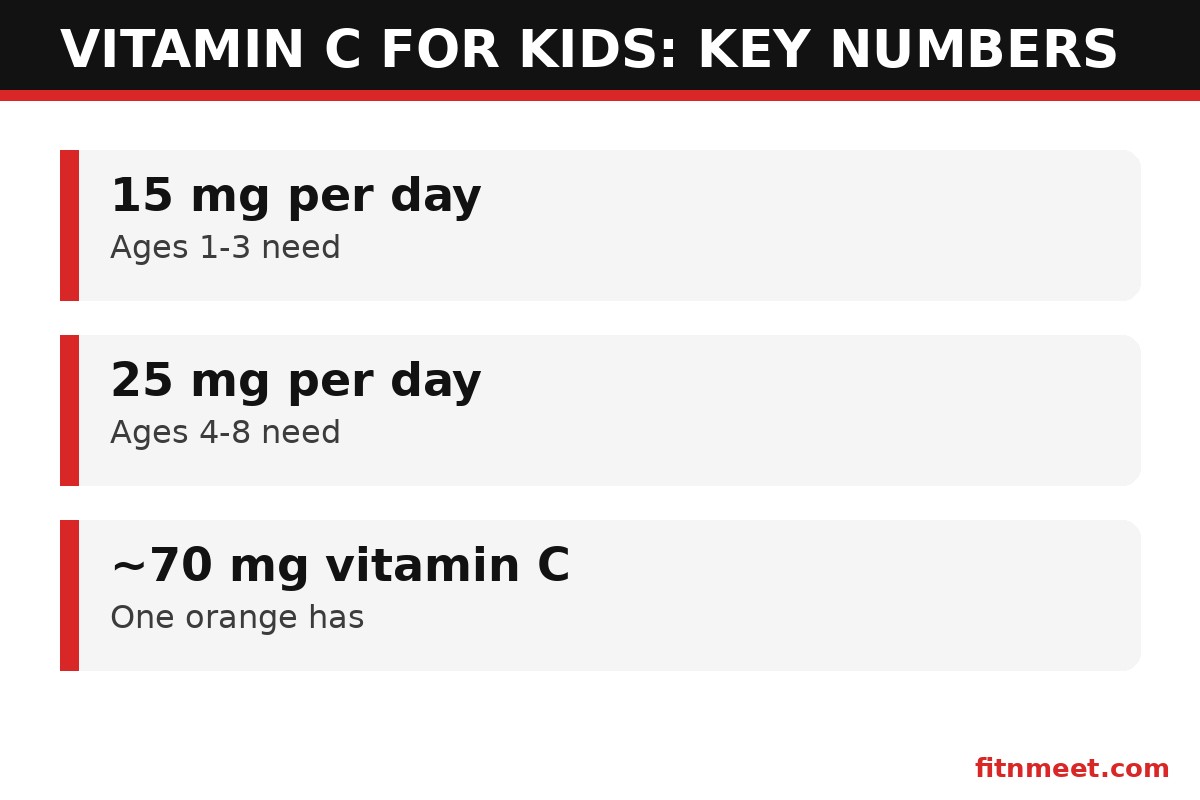
Because it’s water-soluble, the body doesn’t stockpile vitamin C the way it stores vitamin D. Kids need a steady daily supply, but “steady” doesn’t mean “large”: the amounts are tiny compared to adult supplement marketing. A single medium orange delivers about 70 mg — already covering a 9-year-old’s entire 45 mg daily requirement with room to spare. The NIH vitamin C fact sheet lays out the full requirements by age, and Wikipedia’s vitamin C article covers its biochemistry for the curious.
Why Vitamin C for Kids Matters
True vitamin C deficiency — scurvy — is rare in developed countries, but suboptimal intake is common in picky eaters. The kids most likely to run low aren’t the ones catching colds; they’re the ones eating beige diets: chicken nuggets, plain pasta, crackers, repeat. For them, vitamin C for kids isn’t about cold prevention — it’s about the slow, invisible work of collagen synthesis during growth spurts, wound healing from playground scrapes, and helping their bodies extract iron from the few plant foods they do eat.
There’s also a persistent myth to clear: vitamin C doesn’t prevent colds in the general population. Large reviews find regular supplementation doesn’t reduce cold incidence for most people — though it may slightly shorten duration, and it does reduce incidence in people under extreme physical stress (marathon runners, soldiers in subarctic conditions). For kids, the honest framing of vitamin C for kids is: essential nutrient, easy to get from food, worth supplementing only when diet falls short.
Vitamin C for Kids: Benefits
- Healthy growth. Collagen formation underpins bone, cartilage, and skin development — all running at full speed during childhood growth spurts.
- Wound healing. Scraped knees and playground injuries heal through collagen-dependent tissue repair; adequate vitamin C keeps that machinery supplied.
- Iron absorption. Vitamin C can double or triple non-heme iron absorption from plant foods — meaningful for kids who eat little meat.
- Immune support. Vitamin C concentrates in immune cells and supports their function; deficiency impairs immunity, while sufficiency maintains it. (Maintenance, not megadose magic.)
- Antioxidant protection. Growing bodies generate oxidative stress; vitamin C is one of the frontline dietary antioxidants.
- Gum and skin health. Bleeding gums and rough skin are classic early deficiency signs — rarely seen, but they show what the vitamin protects.
How to Give Vitamin C for Kids (A Parent’s Playbook)
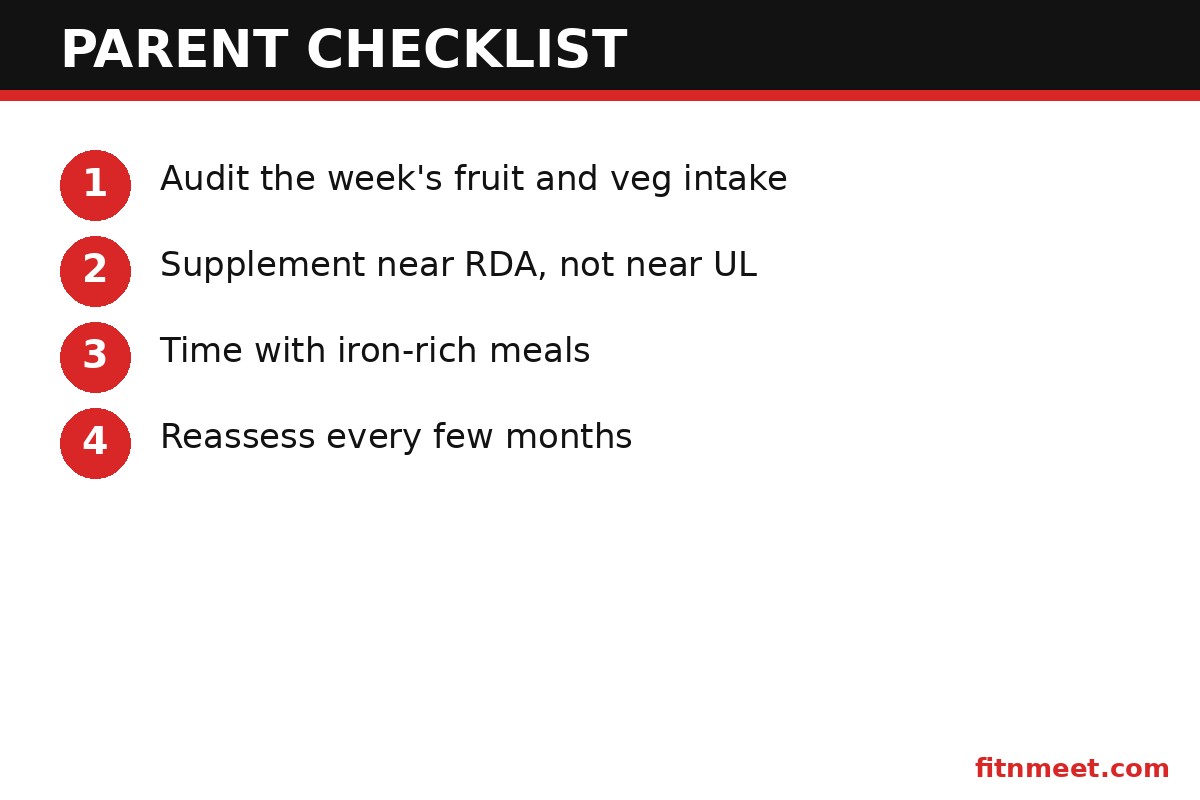
Step 1 — Start with the fruit bowl, like Maya’s mom eventually did. Before buying anything, audit a typical week: does your child eat at least one vitamin-C-rich food daily? One orange (70 mg), one cup of strawberries (89 mg), one kiwi (64 mg), or half a cup of broccoli (51 mg) each cover most age groups’ full daily need. If yes, you’re done — no supplement needed.
Step 2 — If diet falls short, choose the right form. For kids who need supplementation, chewable tablets or gummies dosed near the RDA (not 10× it) are the practical choice. Powders work for smoothies. Avoid “immune blast” formulas with 500–1000 mg — adult megadoses with kid marketing.
Step 3 — Time it with iron-rich meals. Serving vitamin C for kids alongside lentils, beans, or fortified cereals multiplies the iron those foods provide — the single smartest timing trick in this guide.
Step 4 — Keep it boring and consistent. Same time daily, with breakfast. Kids thrive on routine; a vitamin habit attached to an existing habit survives.
Step 5 — Reassess each season. Appetites change, picky phases pass. Every few months, ask again: does food cover it now? Many families supplement through a picky winter and stop when summer fruit arrives — that’s good parenting, not inconsistency.
Vitamin C for Kids: Dosage by Age
| Age | Daily need (RDA/AI) | Upper limit (UL) | Food that covers it |
|---|---|---|---|
| 1–3 years | 15 mg | 400 mg | ¼ cup strawberries |
| 4–8 years | 25 mg | 650 mg | ½ kiwi |
| 9–13 years | 45 mg | 1,200 mg | 1 small orange |
| 14–18 years (girls) | 65 mg | 1,800 mg | 1 cup strawberries |
| 14–18 years (boys) | 75 mg | 1,800 mg | 1 medium orange |
Values per NIH Office of Dietary Supplements. Teen smokers need an additional 35 mg/day.
Notice the gap between need and upper limit: a 6-year-old needs 25 mg but tolerates up to 650 mg — a 26-fold safety margin. That’s why accidental over-supplementation with kid gummies rarely causes harm. But “rarely harmful” isn’t “useful”: doses above ~200 mg in kids mostly produce expensive urine, and the sensible supplement dose of vitamin C for kids stays near the RDA, not near the UL.
If you supplement, match the dose to the age row, give it with food, and don’t stack multiple vitamin-C-containing products (multivitamin + immune gummy + fortified juice can quietly add up). For family-wide nutrition planning, the FitnMeet vitamins collection and nutrition guides help keep the whole household covered.
What to Watch For
- Tummy trouble. The most common issue: doses well above the RDA can cause diarrhea, nausea, or stomach cramps in kids. Drop the dose and it resolves.
- Sugar load in gummies. Many kid-targeted vitamin C gummies are essentially candy with a vitamin — 2–3 g of sugar per piece. Chewables or food sources avoid the sugar trap.
- Kidney stones (rare). Very high chronic doses increase urinary oxalate, a kidney stone risk factor. Staying near RDA-level doses of vitamin C for kids makes this a non-issue.
- False security. A gummy doesn’t offset a diet with zero vegetables. Supplements complement, never replace, real food.
- Iron overload interactions. In children with iron overload conditions (rare), vitamin C’s iron-boosting effect needs medical supervision.
- Teen megadosing. Adolescents experimenting with adult “immune” doses (1000 mg+) get GI distress, not immunity. Keep teens at their 65–75 mg RDA unless a clinician advises otherwise.
Vitamin C for Kids: Food vs Supplements
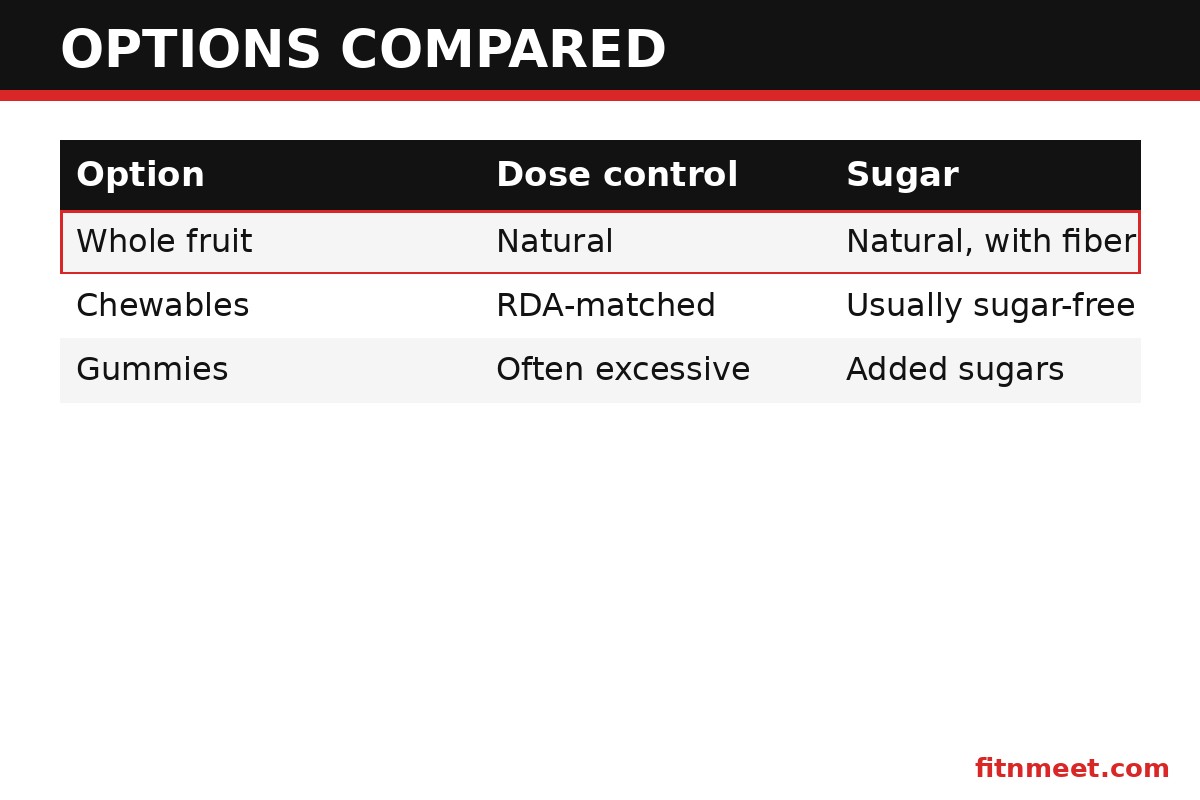
| Feature | Food sources | Gummies | Chewable tablets |
|---|---|---|---|
| Dose precision | Approximate | Fixed (often excessive) | Fixed, RDA-matched |
| Extra nutrients | Fiber, phytonutrients | Sugar, flavorings | Minimal |
| Kid acceptance | Varies (picky eaters!) | High | Moderate |
| Cost | Lowest | Highest per mg | Low |
| Sugar | Natural, with fiber | Added sugars | Usually sugar-free options |
| Best for | Every child, daily | Short-term picky phases | Ongoing supplementation |
The verdict most pediatric dietitians would sign: food wins whenever the child cooperates; RDA-matched chewables are the best supplement fallback; gummies are acceptable short-term bribery but a poor long-term plan. Vitamin C for kids works best as a quiet background habit, not a featured intervention.
Frequently Asked Questions
How much vitamin C do kids need per day?
It depends on age: 15 mg for ages 1-3, 25 mg for ages 4-8, 45 mg for ages 9-13, and 65 mg (girls) to 75 mg (boys) for teens 14-18. A single orange or cup of strawberries covers most of these amounts from food alone.
Is vitamin C safe for toddlers?
Yes, at appropriate doses. Toddlers aged 1-3 need 15 mg daily with an upper limit of 400 mg. Food sources are ideal; if supplementing, use a toddler-appropriate product dosed near 15 mg, not adult formulas.
Will vitamin C prevent my child from catching colds?
No. Large reviews show vitamin C does not prevent colds in the general population, though it may slightly shorten them. For kids, think of vitamin C as essential daily nutrition for growth and immunity maintenance, not cold prevention.
Can kids overdose on vitamin C?
True toxicity is extremely rare because excess vitamin C is excreted in urine. But doses far above the RDA can cause diarrhea, nausea, and stomach cramps in children. Keep supplemental vitamin C for kids near the age-based RDA and well under the upper limit.
Are vitamin C gummies good for kids?
They work but are not ideal long term: most contain added sugar and doses far above what kids need. RDA-matched chewable tablets are a better ongoing choice, and whole fruit is better than both.
Should I give my child vitamin C every day?
If their diet includes daily fruit or vegetables, no supplement is needed. If they are in a picky-eating phase with little produce, a daily RDA-level supplement is reasonable until eating improves. Reassess every few months.
Conclusion
Maya’s mom eventually learned the numbers: her daughter needed 25 mg, one orange covered it three times over, and the gummies were an expensive habit, not a health strategy. That’s the whole story of vitamin C for kids — small needs, easy food sources, supplements only as backup during picky phases, dosed by age and reassessed often. Keep it simple, keep it food-first, and save your worry for things that actually need it. For more family nutrition guidance, explore the FitnMeet blog, the health support collection, and the FitnMeet shop — and share this guide with the next parent standing confused in the supplement aisle.
This article is for informational purposes only and is not medical advice. Consult a healthcare professional before starting any supplement.